Skip to Content Facebook Feature Image

Sri Lanka tea workers struggle in poverty. Flooding cost many their lives

News

Sri Lanka tea workers struggle in poverty. Flooding cost many their lives
News

News

Sri Lanka tea workers struggle in poverty. Flooding cost many their lives

2025-12-20 10:04 Last Updated At:10:30

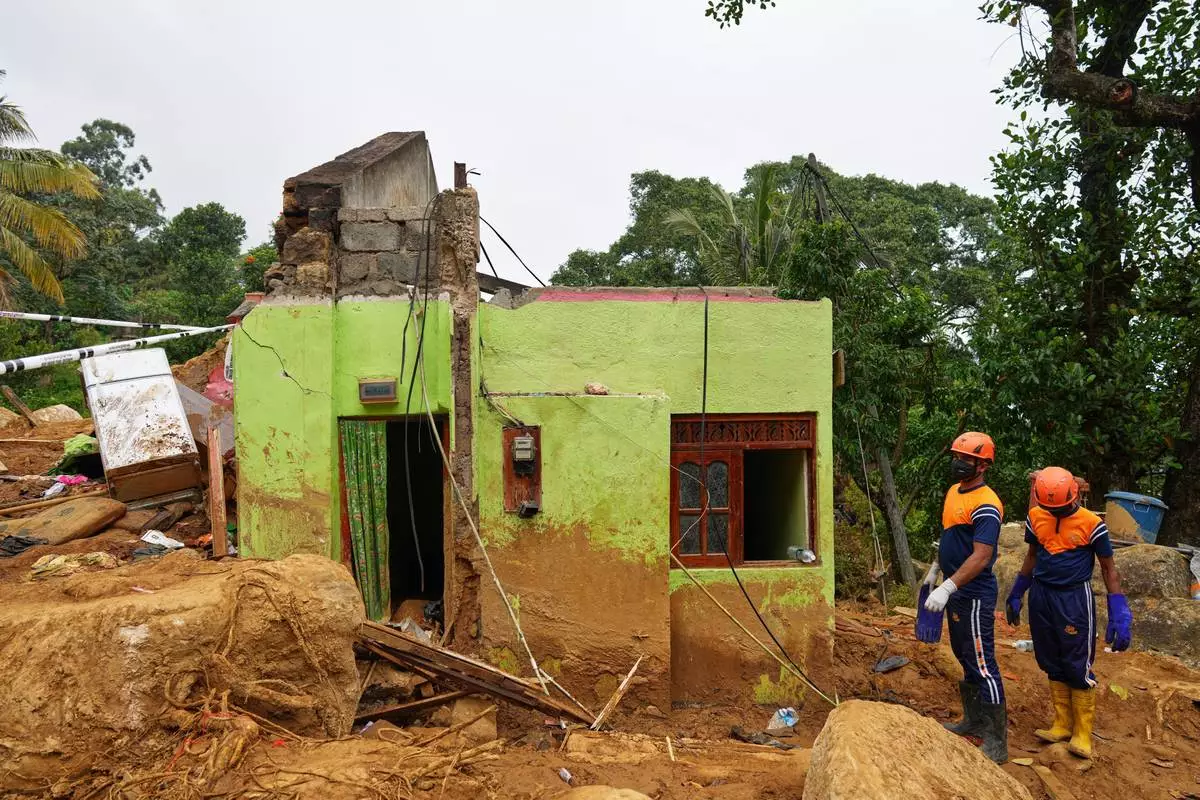
CRAIGHEAD ESTATE, Sri Lanka (AP) — Arumugam Manikavalli, awakened by ferocious rain and rumbling earth, fled her home for the safety of a nearby temple on the tea estate where she works. That same November evening, tea worker Kumaran Elumugam's small home was crushed by a landslide, killing six family members.

He survived only because he was away, at work, along with a daughter.

More Images
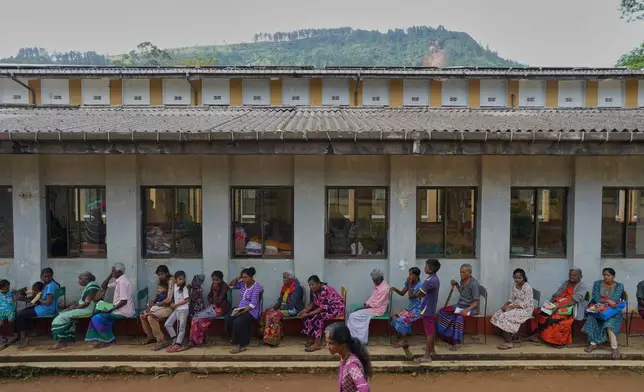
Displaced tea plantation workers and their families queue for aid at a safety center after Cyclone Ditwah led to floods and landslides at Craighead Estate in Nawalapitiya, Sri Lanka, Friday, Dec. 12, 2025. (AP Photo/Eranga Jayawardena)
Displaced tea plantation workers and their families queue for aid at a safety center after Cyclone Ditwah led to floods and landslides at Craighead Estate in Nawalapitiya, Sri Lanka, Friday, Dec. 12, 2025. (AP Photo/Eranga Jayawardena)

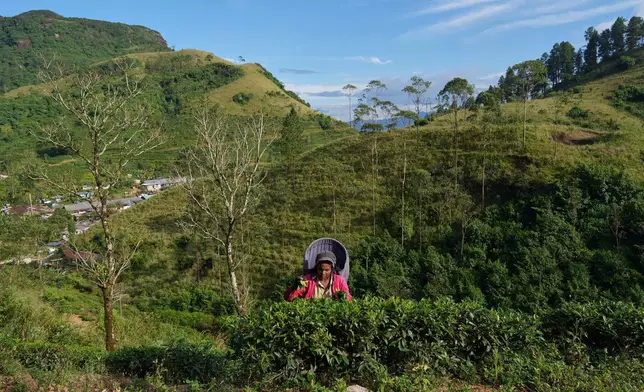
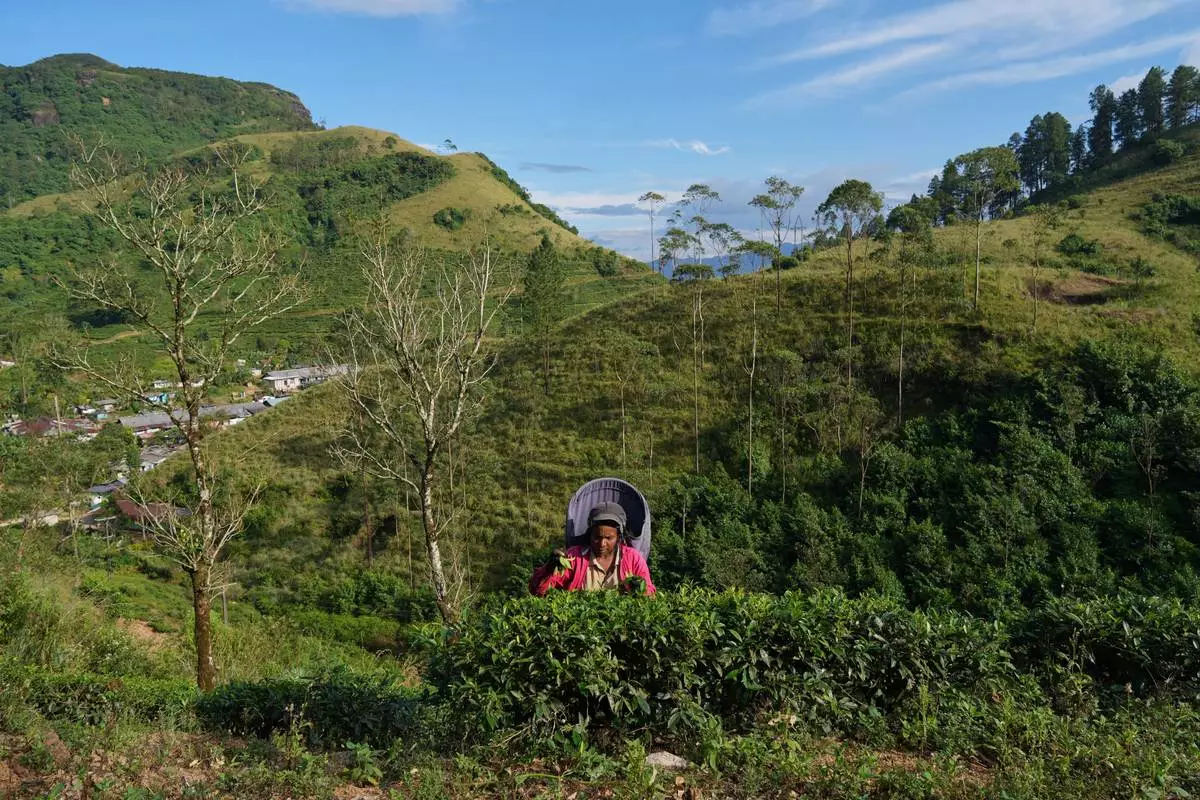
A worker plucks tea tips in an area affected by Cyclone Ditwah which led to floods and landslides in Galamuduna Estate in Dolosbage, Sri Lanka, Friday, Dec. 12, 2025. (AP Photo/Eranga Jayawardena)
A worker plucks tea tips in an area affected by Cyclone Ditwah which led to floods and landslides in Galamuduna Estate in Dolosbage, Sri Lanka, Friday, Dec. 12, 2025. (AP Photo/Eranga Jayawardena)

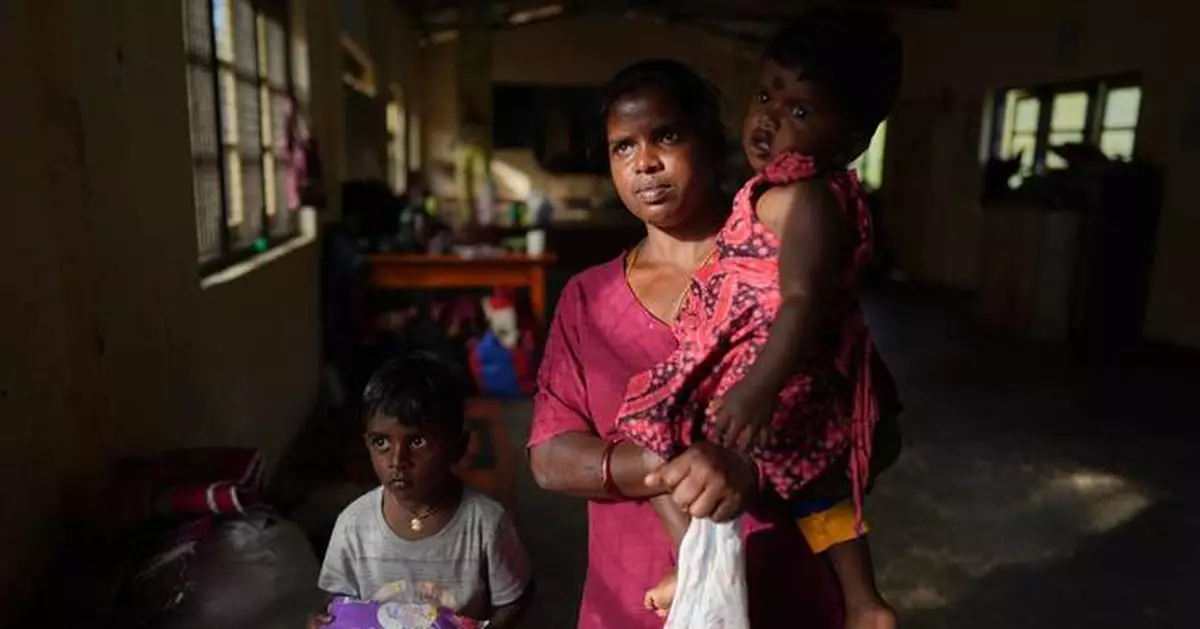
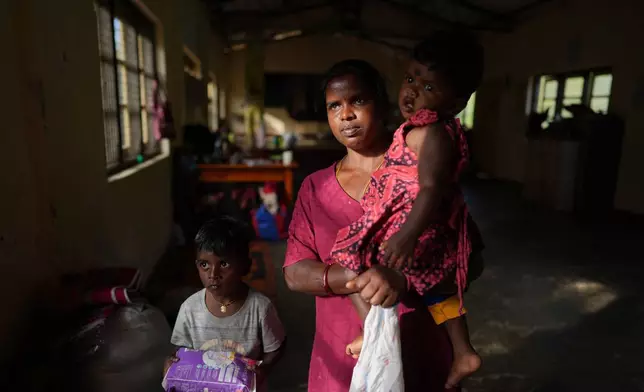
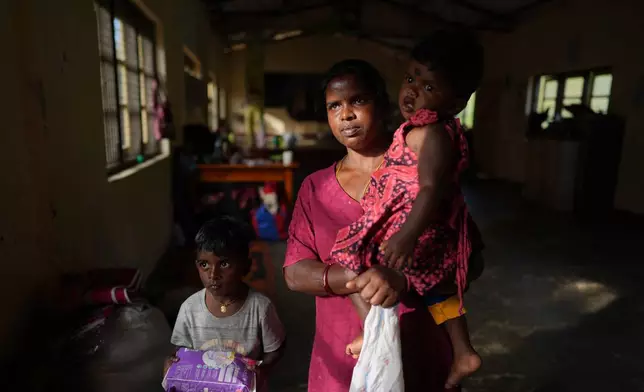
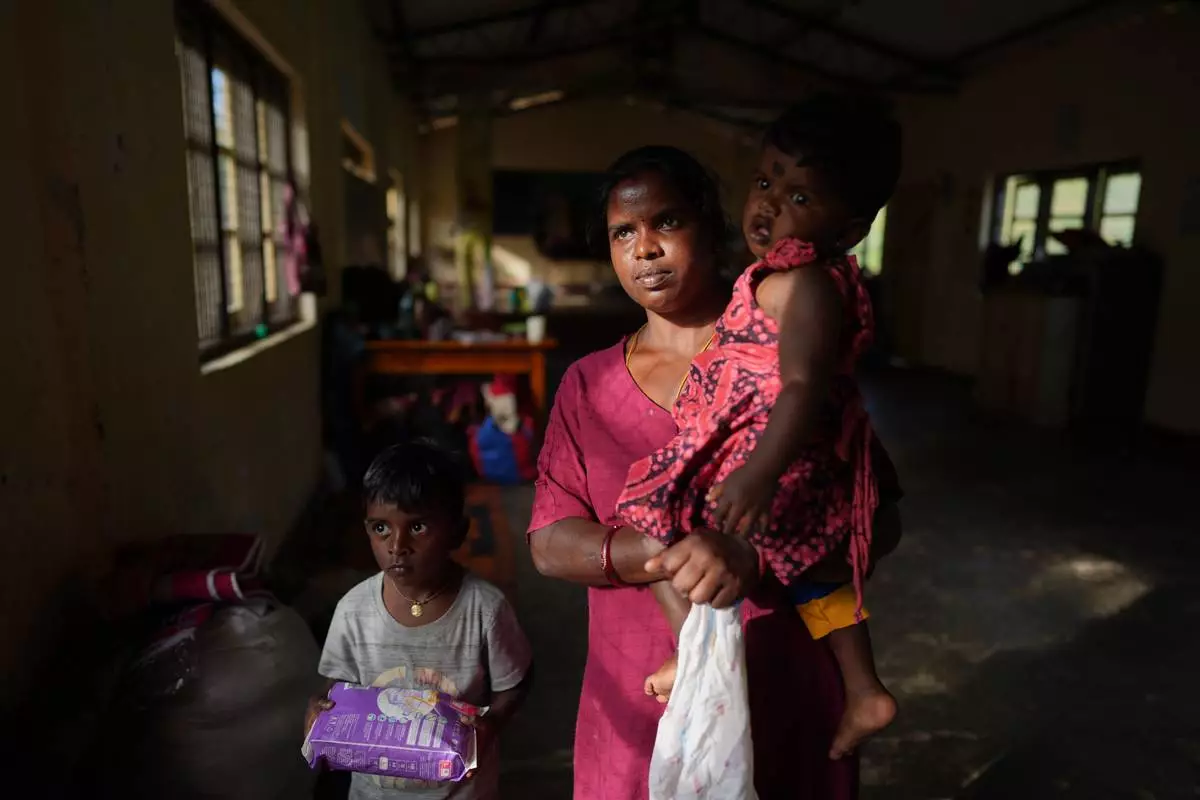
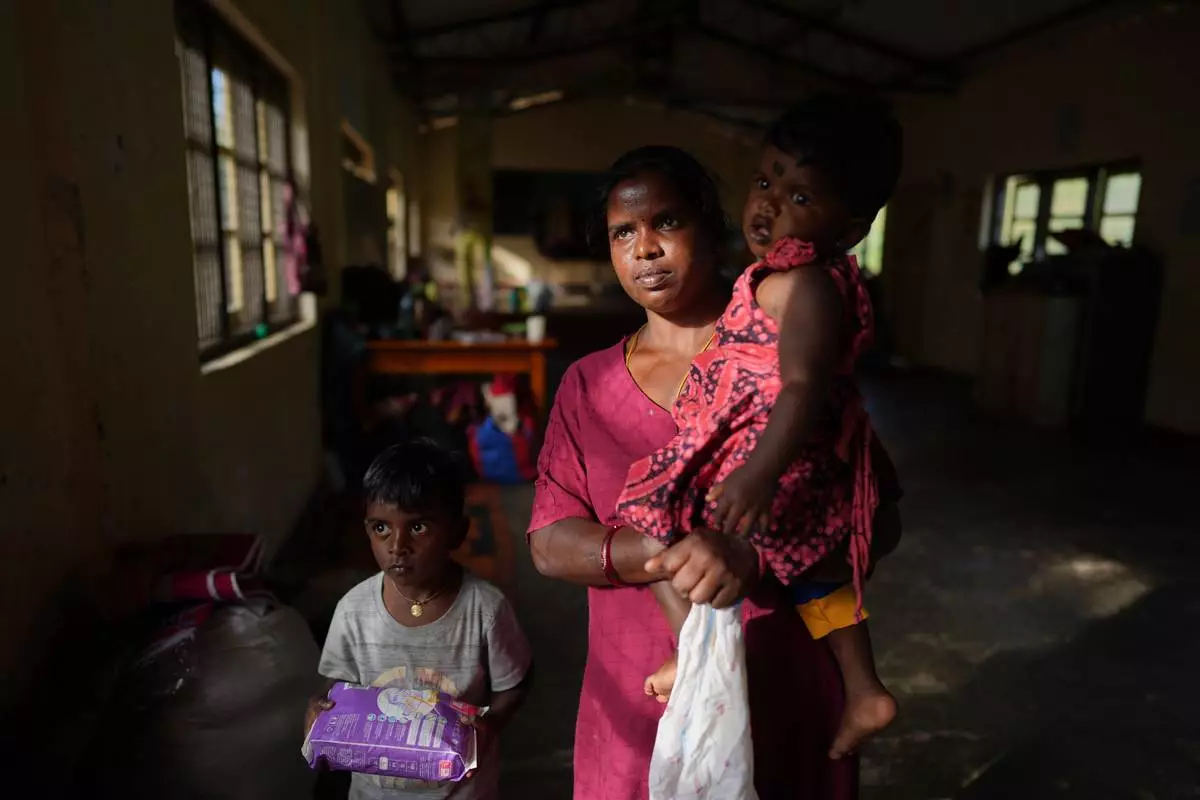
Sellamuttu Darshani Devi, a tea plantation worker evacuated after Cyclone Ditwah led to floods and landslides, shelters with her children at a safety center in Galamuduna Estate in Dolosbage, Sri Lanka, Friday, Dec. 12, 2025. (AP Photo/Eranga Jayawardena)

Sellamuttu Darshani Devi, a tea plantation worker evacuated after Cyclone Ditwah led to floods and landslides, shelters with her children at a safety center in Galamuduna Estate in Dolosbage, Sri Lanka, Friday, Dec. 12, 2025. (AP Photo/Eranga Jayawardena)

Displaced tea plantation workers from Cyclone Ditwah that led to floods and landslides express gratitude after receiving relief items from local residents at a safety center at Craighead Estate in Nawalapitiya, Sri Lanka, Thursday, Dec, 11, 2025. (AP Photo/Eranga Jayawardena)
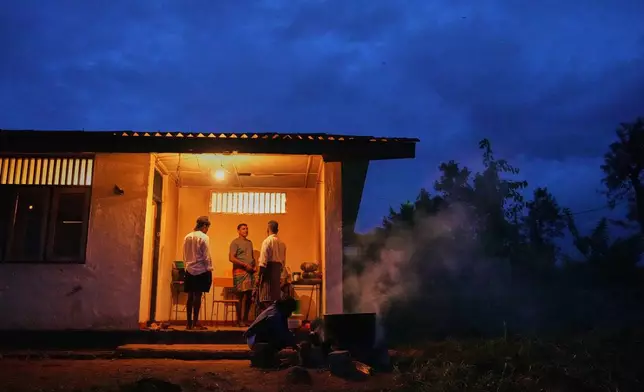
Displaced tea plantation workers from Cyclone Ditwah that led to floods and landslides express gratitude after receiving relief items from local residents at a safety center at Craighead Estate in Nawalapitiya, Sri Lanka, Thursday, Dec, 11, 2025. (AP Photo/Eranga Jayawardena)
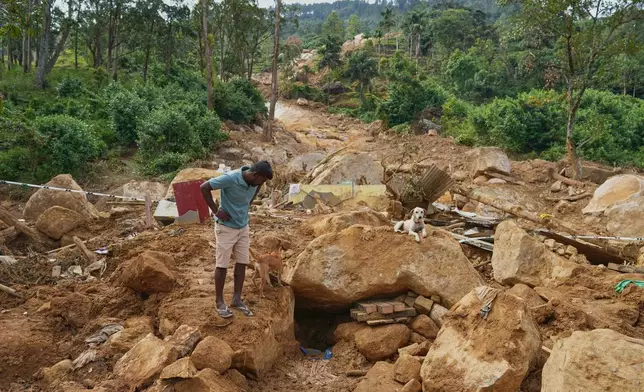
Tea plantation workers and their children who evacuated after Cyclone Ditwah led to floods and landslides take shelter at a safety center at Craighead Estate in Nawalapitiya, Sri Lanka, Thursday, Dec, 11, 2025. (AP Photo/Eranga Jayawardena)

Tea plantation workers and their children who evacuated after Cyclone Ditwah led to floods and landslides take shelter at a safety center at Craighead Estate in Nawalapitiya, Sri Lanka, Thursday, Dec, 11, 2025. (AP Photo/Eranga Jayawardena)

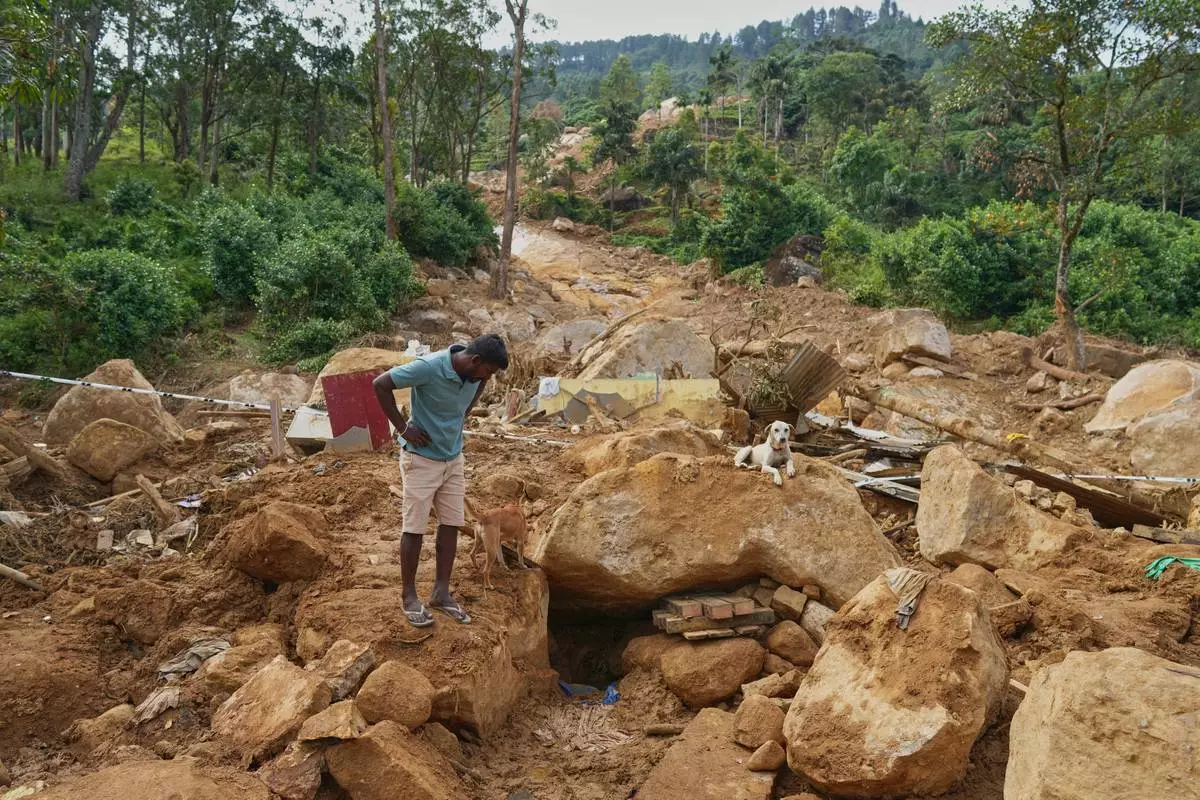
Marasamy Suresh, a tea plantation worker, looks at where the body of a boy is buried in the rubble of a plantation workers' living quarters after Cyclone Ditwah led to floods and landslides at Craighead Estate in Nawalapitiya, Sri Lanka, Friday, Dec.12, 2025. (AP Photo/Eranga Jayawardena)
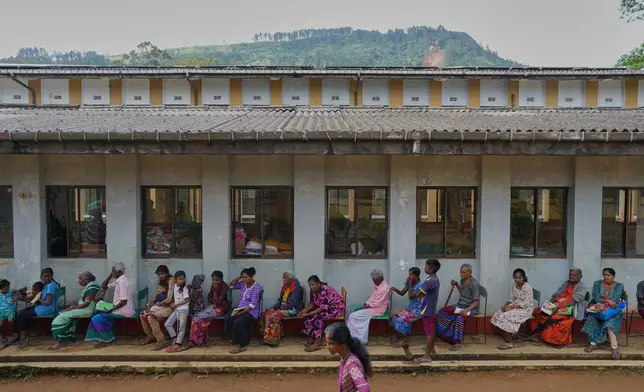
Marasamy Suresh, a tea plantation worker, looks at where the body of a boy is buried in the rubble of a plantation workers' living quarters after Cyclone Ditwah led to floods and landslides at Craighead Estate in Nawalapitiya, Sri Lanka, Friday, Dec.12, 2025. (AP Photo/Eranga Jayawardena)
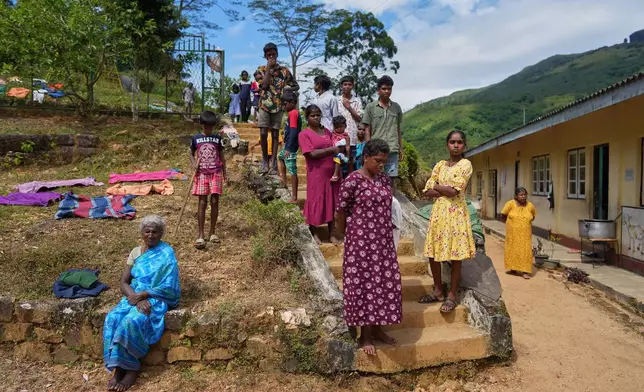
Displaced tea plantation workers and their families queue for aid at a safety center after Cyclone Ditwah led to floods and landslides at Craighead Estate in Nawalapitiya, Sri Lanka, Friday, Dec.12, 2025. (AP Photo/Eranga Jayawardena)

Displaced tea plantation workers and their families queue for aid at a safety center after Cyclone Ditwah led to floods and landslides at Craighead Estate in Nawalapitiya, Sri Lanka, Friday, Dec.12, 2025. (AP Photo/Eranga Jayawardena)

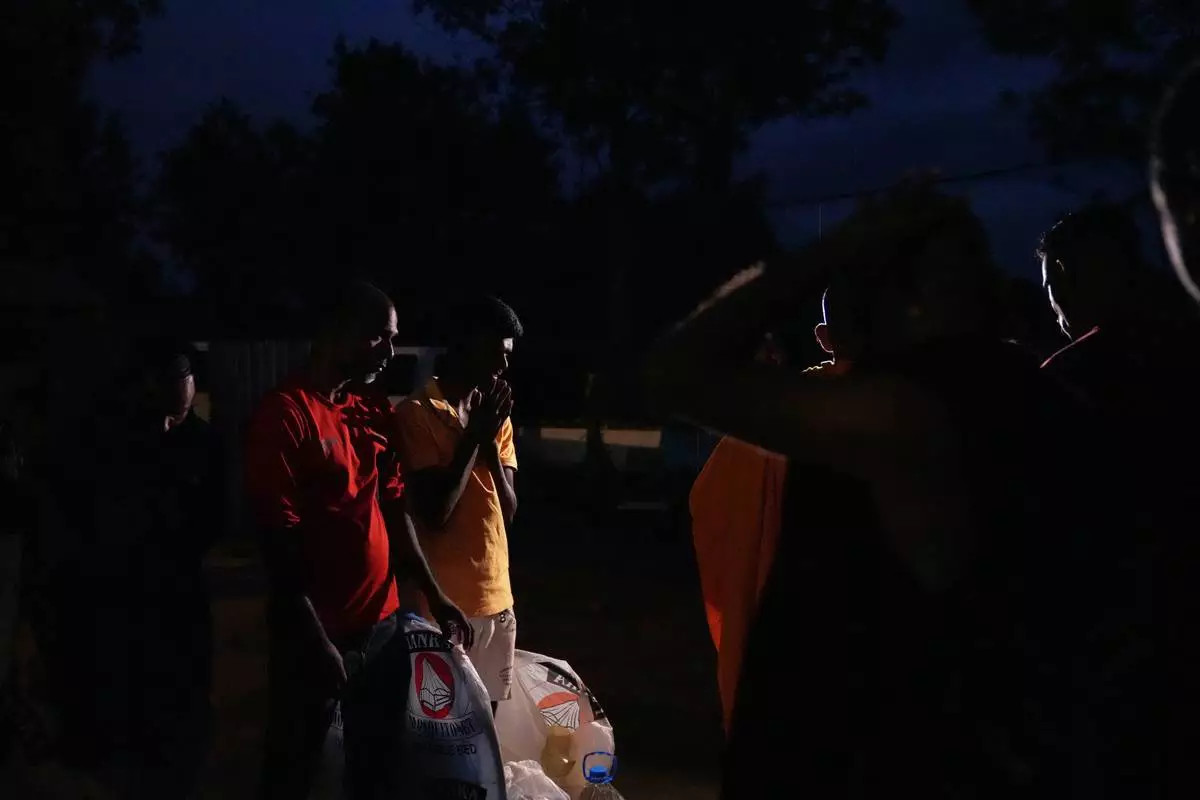
Tea plantation workers evacuated after Cyclone Ditwah led to floods and landslides spend time out of a safety center in Galamuduna Estate in Dolosbage, Sri Lanka, Friday, Dec.12, 2025. (AP Photo/Eranga Jayawardena)

Tea plantation workers evacuated after Cyclone Ditwah led to floods and landslides spend time out of a safety center in Galamuduna Estate in Dolosbage, Sri Lanka, Friday, Dec.12, 2025. (AP Photo/Eranga Jayawardena)

Tea plantation workers walk toward a safety center after their shift in an area affected by floods and landslides after Cyclone Ditwah in Galamuduna Estate in Dolosbage, Sri Lanka, Friday, Dec.12, 2025. (AP Photo/Eranga Jayawardena)
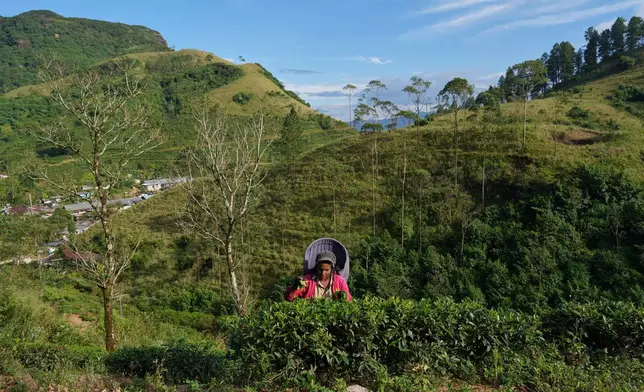
Tea plantation workers walk toward a safety center after their shift in an area affected by floods and landslides after Cyclone Ditwah in Galamuduna Estate in Dolosbage, Sri Lanka, Friday, Dec.12, 2025. (AP Photo/Eranga Jayawardena)

A worker plucks tea tips in an area affected by Cyclone Ditwah which led to floods and landslides in Galamuduna Estate in Dolosbage, Sri Lanka, Friday, Dec.12, 2025. (AP Photo/Eranga Jayawardena)
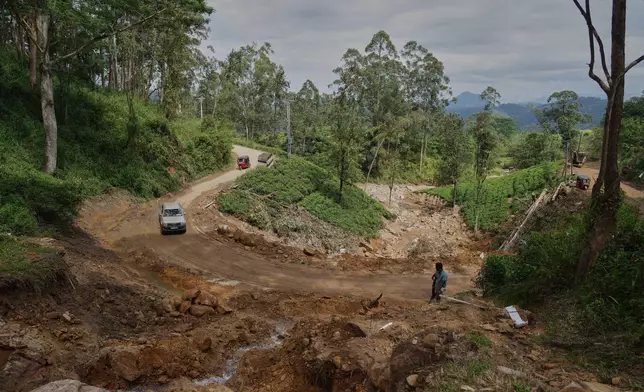
A worker plucks tea tips in an area affected by Cyclone Ditwah which led to floods and landslides in Galamuduna Estate in Dolosbage, Sri Lanka, Friday, Dec.12, 2025. (AP Photo/Eranga Jayawardena)

Vehicles move across a stretch of tea plantation destroyed by a landslide following Cyclone Ditwah in Craighead Estate in Nawalapitiya, Sri Lanka, Friday, Dec.12, 2025. (AP Photo/Eranga Jayawardena)
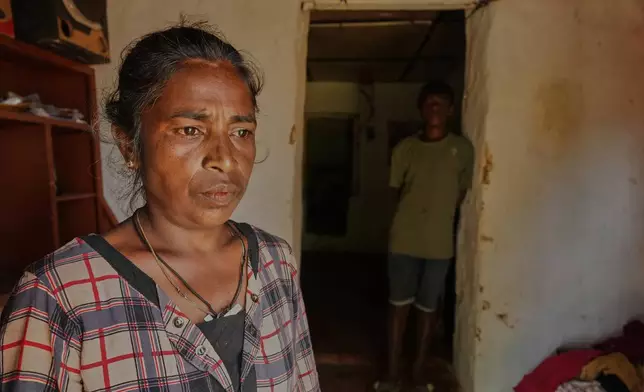
Vehicles move across a stretch of tea plantation destroyed by a landslide following Cyclone Ditwah in Craighead Estate in Nawalapitiya, Sri Lanka, Friday, Dec.12, 2025. (AP Photo/Eranga Jayawardena)

Arumugam Manikavalli stands at the doorway to her living quarters after Cyclone Ditwah led to floods and landslides at Craighead Estate in Nawalapitiya, Sri Lanka, Friday, Dec.12, 2025. (AP Photo/Eranga Jayawardena)

Arumugam Manikavalli stands at the doorway to her living quarters after Cyclone Ditwah led to floods and landslides at Craighead Estate in Nawalapitiya, Sri Lanka, Friday, Dec.12, 2025. (AP Photo/Eranga Jayawardena)

Mud fills the remains of a tea plantation worker's living quarters after a landslide at Craighead Estate in Nawalapitiya, Sri Lanka, Thursday, Dec, 11, 2025. (AP Photo/Eranga Jayawardena)
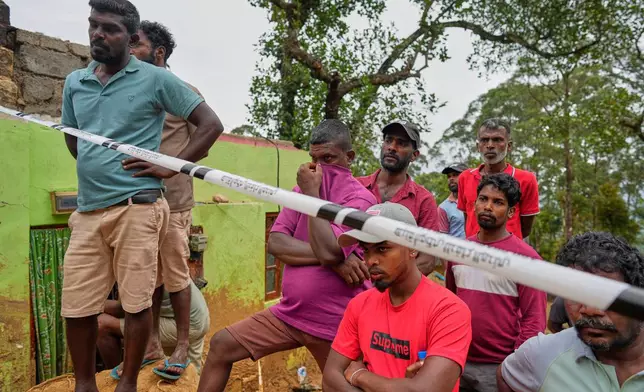
Mud fills the remains of a tea plantation worker's living quarters after a landslide at Craighead Estate in Nawalapitiya, Sri Lanka, Thursday, Dec, 11, 2025. (AP Photo/Eranga Jayawardena)

Family members and relatives of tea plantation workers watch rescuers try to dig out a buried body after a landslide following Cyclone Ditwah at Craighead Estate in Nawalapitiya, Sri Lanka, Thursday, Dec, 11, 2025. (AP Photo/Eranga Jayawardena)
Family members and relatives of tea plantation workers watch rescuers try to dig out a buried body after a landslide following Cyclone Ditwah at Craighead Estate in Nawalapitiya, Sri Lanka, Thursday, Dec, 11, 2025. (AP Photo/Eranga Jayawardena)

Sri Lankan army rescuers stand next to the remnants of a destroyed row of living quarters where tea plantation workers stayed after a landslide following Cyclone Ditwah at Craighead Estate in Nawalapitiya, Sri Lanka, Thursday, Dec, 11, 2025. (AP Photo/Eranga Jayawardena)

Sri Lankan army rescuers stand next to the remnants of a destroyed row of living quarters where tea plantation workers stayed after a landslide following Cyclone Ditwah at Craighead Estate in Nawalapitiya, Sri Lanka, Thursday, Dec, 11, 2025. (AP Photo/Eranga Jayawardena)

Sellamuttu Darshani Devi, a tea plantation worker evacuated after Cyclone Ditwah led to floods and landslides, shelters with her children at a safety center in Galamuduna Estate in Dolosbage, Sri Lanka, Friday, Dec.12, 2025. (AP Photo/Eranga Jayawardena)

Sellamuttu Darshani Devi, a tea plantation worker evacuated after Cyclone Ditwah led to floods and landslides, shelters with her children at a safety center in Galamuduna Estate in Dolosbage, Sri Lanka, Friday, Dec.12, 2025. (AP Photo/Eranga Jayawardena)

“My wife, son-in-law, daughter, mother-in-law, two grandsons are all dead,” Elumugam lamented. “The small one (granddaughter) is still under the mud.”

Elumugum and Manikavalli were among the fortunate to reach safety as heavy rains from Cyclone Ditwah led to floods and landslides across the South Asian island nation, killing more than 640 people and leaving more than a hundred missing. Multiple villages were submerged by landslides that left behind a rubble of cement, wood and roofing. In one area, the wreckage was dotted with clothing, schoolbooks, toys and a sports trophy.

Among the hardest hit were the hilly regions in the island's center and the tea plantation workers who live there. Many occupied primitive, 150-year-old structures that were swept away in landslides and flooding. Social workers said these plantation workers, already living in extremely distressed conditions, are now in an even more desperate situation.

Most tea plantation workers in Sri Lanka belong to the Malaiyaha Tamil ethnic group. Descendants of Tamil indentured laborers who were brought to work from southern India by British colonists more than 200 years ago, over 1 million people belong to this community, the fourth-largest ethnic group on the island.

Sri Lanka grows some of the world's finest tea, bringing billions of dollars into the country. But most Tamils in the hill regions earn well below the minimum wage of 1,200 rupees ($4) per day, with little or no access to education, health care or good jobs.

A report by the American Institute for Sri Lankan Studies said most tea plantation workers own no land or homes and are living in colonial-era working quarters barely bigger than 100 square feet but accommodating as many as eight family members. Multiple houses share bathrooms or have no sanitary facilities.

Many of the tea plantations, on flatter ground, were unaffected by the cyclone while the workers' homes, which were closer to mountain slopes, were destroyed, said Melanie Gunathilaka, a Colombo-based climate activist and researcher.

“The settlements were in much more dangerous areas," she said. “This shows the amount of value placed on the lives of these people.”

The Planters Association of Ceylon, the association for Sri Lanka's tea companies and estates, didn't immediately respond to a request for comment.

The government said more than 100,000 houses were destroyed or damaged across Sri Lanka. It has promised compensation packages to rebuild houses or to find safer lands and build new houses.

Sundaralingam Pradeep, Sri Lanka's deputy minister for plantations and community infrastructure, told The Associated Press that the government is negotiating with the tea companies to identify lands to build homes for all those affected by the disaster, including retirees still living in company line houses.

The minister said an Indian-assisted project to build 7,000 homes will provide the first batch of houses for the impacted workers.

Tea workers say help can't come soon enough.

“It doesn’t feel safe to be living here,” said Karuppiah Kamani, pointing to a huge rock next to her home at the edge of a tea plantation.

Sellamuttu Darshani Devi, another tea worker, and her family were asked to move as a precaution after the worst landslides. That's been routine for years, she said. Her house has so far been unaffected, but she's afraid to go back now.

“We are so scared when it rains,” Devi said.

She said despite the disaster she had to go pick tea leaves at the estates even now as tea company owners refused to provide any support unless they work. “When it gets sunny, the authorities tell us to go back. We need a home desperately,” she said.

Sri Lanka accounts for less than 1% of planet-warming gases in the atmosphere but is considered among nations most at risk from the extreme weather made worse by climate change.

According to the United Nations, Sri Lanka loses more than $300 million every year from climate-triggered extreme weather. At least 750,000 people are affected every year by extreme weather and nearly 19 million of Sri Lanka's 23 million people live in low-lying, landslide-prone or other disaster-vulnerable areas.

But building resilience is difficult. The country owes billions of dollars to the International Monetary Fund, other multilateral development banks, countries such as China, Japan and India and some private banks and private lenders. Sri Lanka is highly dependent on tourism, which was hit hard by the COVID-19 pandemic. Severe economic problems led to mass protests and the eventual ouster of the nation's established political elite.

“In countries like Sri Lanka, disasters don’t break the system. What disasters do is they expose the already broken systems,” said Sandun Thudugala of the Colombo-based nonprofit Law and Society Trust. Thudugala said Sri Lanka needs to rethink how it builds and plans, he said, taking into account a future where extreme weather is the norm.

Climate activist Gunathilaka said the country's debt burden has forced it to prioritize economic growth above everything else so they can repay on time. She said that Sri Lanka could prioritize building climate-resilient homes, invest in early warning infrastructure and have more money to respond to disasters if they didn't have to worry about the billions in loans and high interest rates that they come attached with.

Global leaders have acknowledged that countries need trillions of dollars to adapt to climate change.

For the people in Sri Lanka's hill provinces, the need is urgent.

“We are so scared, anything can happen anytime here,” said Chellaya Pathmanathan, a tea plantation worker whose family is sheltering in a government school after their home was damaged. He said the family doesn't have enough food to eat.

“We want to create a safe future for our kids. I hope someone can help us,” he said.

Follow Sibi Arasu on X at @sibi123.

AP photographer Eranga Jayawardena contributed to this report. Arasu reported from Bengaluru, India.

The Associated Press’ climate and environmental coverage receives financial support from multiple private foundations. AP is solely responsible for all content. Find AP’s standards for working with philanthropies, a list of supporters and funded coverage areas at AP.org.
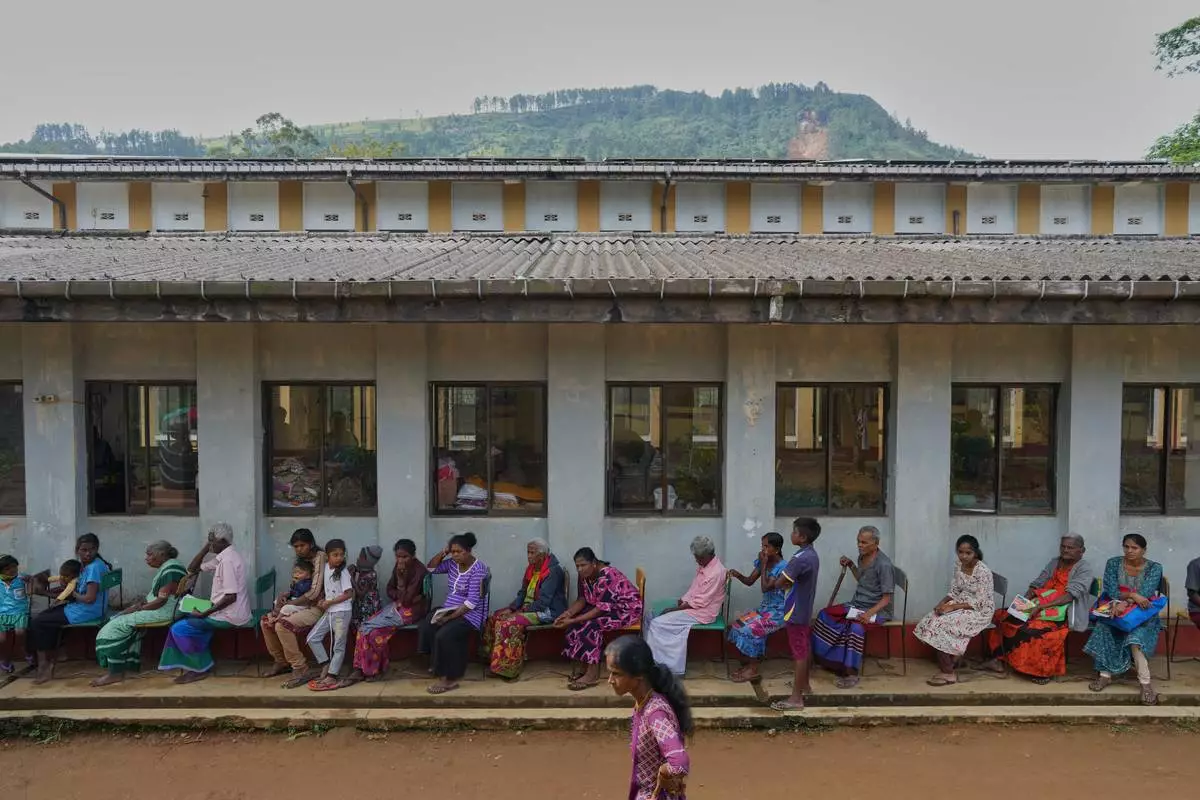
Displaced tea plantation workers and their families queue for aid at a safety center after Cyclone Ditwah led to floods and landslides at Craighead Estate in Nawalapitiya, Sri Lanka, Friday, Dec. 12, 2025. (AP Photo/Eranga Jayawardena)
Displaced tea plantation workers and their families queue for aid at a safety center after Cyclone Ditwah led to floods and landslides at Craighead Estate in Nawalapitiya, Sri Lanka, Friday, Dec. 12, 2025. (AP Photo/Eranga Jayawardena)

A worker plucks tea tips in an area affected by Cyclone Ditwah which led to floods and landslides in Galamuduna Estate in Dolosbage, Sri Lanka, Friday, Dec. 12, 2025. (AP Photo/Eranga Jayawardena)
A worker plucks tea tips in an area affected by Cyclone Ditwah which led to floods and landslides in Galamuduna Estate in Dolosbage, Sri Lanka, Friday, Dec. 12, 2025. (AP Photo/Eranga Jayawardena)
Sellamuttu Darshani Devi, a tea plantation worker evacuated after Cyclone Ditwah led to floods and landslides, shelters with her children at a safety center in Galamuduna Estate in Dolosbage, Sri Lanka, Friday, Dec. 12, 2025. (AP Photo/Eranga Jayawardena)

Sellamuttu Darshani Devi, a tea plantation worker evacuated after Cyclone Ditwah led to floods and landslides, shelters with her children at a safety center in Galamuduna Estate in Dolosbage, Sri Lanka, Friday, Dec. 12, 2025. (AP Photo/Eranga Jayawardena)

Displaced tea plantation workers from Cyclone Ditwah that led to floods and landslides express gratitude after receiving relief items from local residents at a safety center at Craighead Estate in Nawalapitiya, Sri Lanka, Thursday, Dec, 11, 2025. (AP Photo/Eranga Jayawardena)
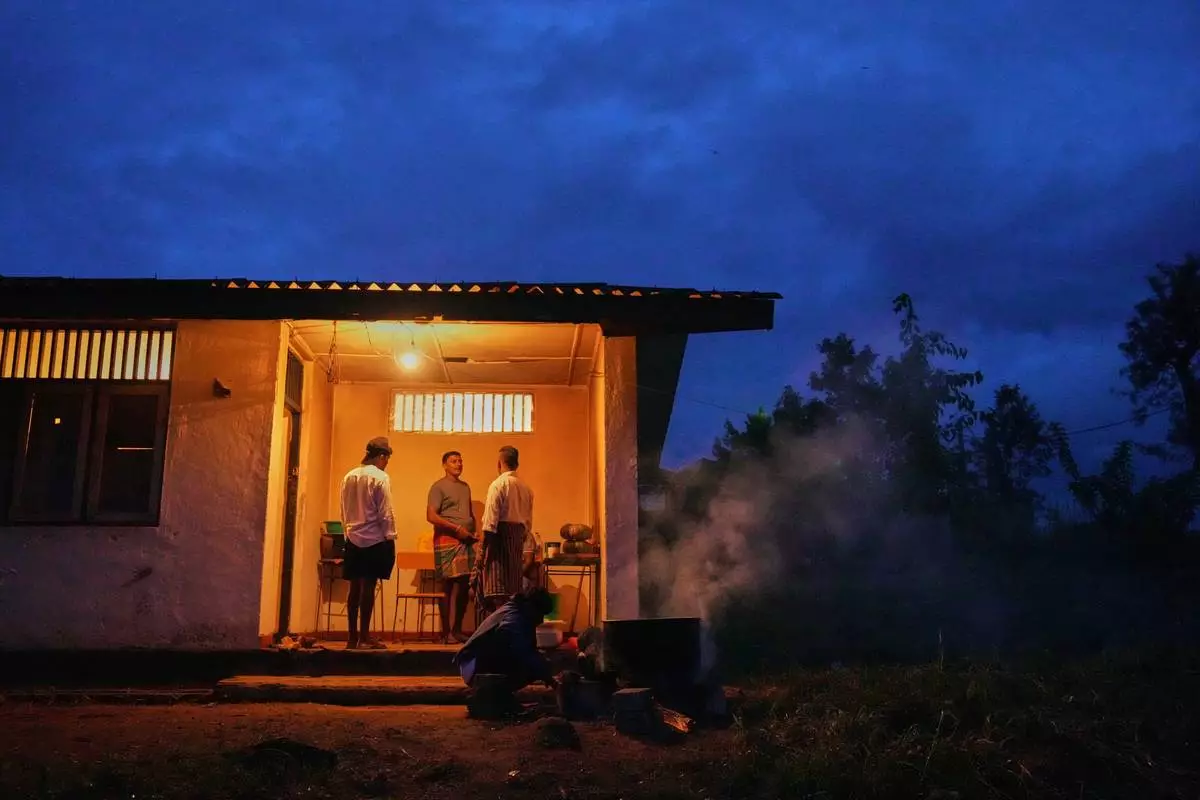
Displaced tea plantation workers from Cyclone Ditwah that led to floods and landslides express gratitude after receiving relief items from local residents at a safety center at Craighead Estate in Nawalapitiya, Sri Lanka, Thursday, Dec, 11, 2025. (AP Photo/Eranga Jayawardena)
Tea plantation workers and their children who evacuated after Cyclone Ditwah led to floods and landslides take shelter at a safety center at Craighead Estate in Nawalapitiya, Sri Lanka, Thursday, Dec, 11, 2025. (AP Photo/Eranga Jayawardena)

Tea plantation workers and their children who evacuated after Cyclone Ditwah led to floods and landslides take shelter at a safety center at Craighead Estate in Nawalapitiya, Sri Lanka, Thursday, Dec, 11, 2025. (AP Photo/Eranga Jayawardena)

Marasamy Suresh, a tea plantation worker, looks at where the body of a boy is buried in the rubble of a plantation workers' living quarters after Cyclone Ditwah led to floods and landslides at Craighead Estate in Nawalapitiya, Sri Lanka, Friday, Dec.12, 2025. (AP Photo/Eranga Jayawardena)
Marasamy Suresh, a tea plantation worker, looks at where the body of a boy is buried in the rubble of a plantation workers' living quarters after Cyclone Ditwah led to floods and landslides at Craighead Estate in Nawalapitiya, Sri Lanka, Friday, Dec.12, 2025. (AP Photo/Eranga Jayawardena)
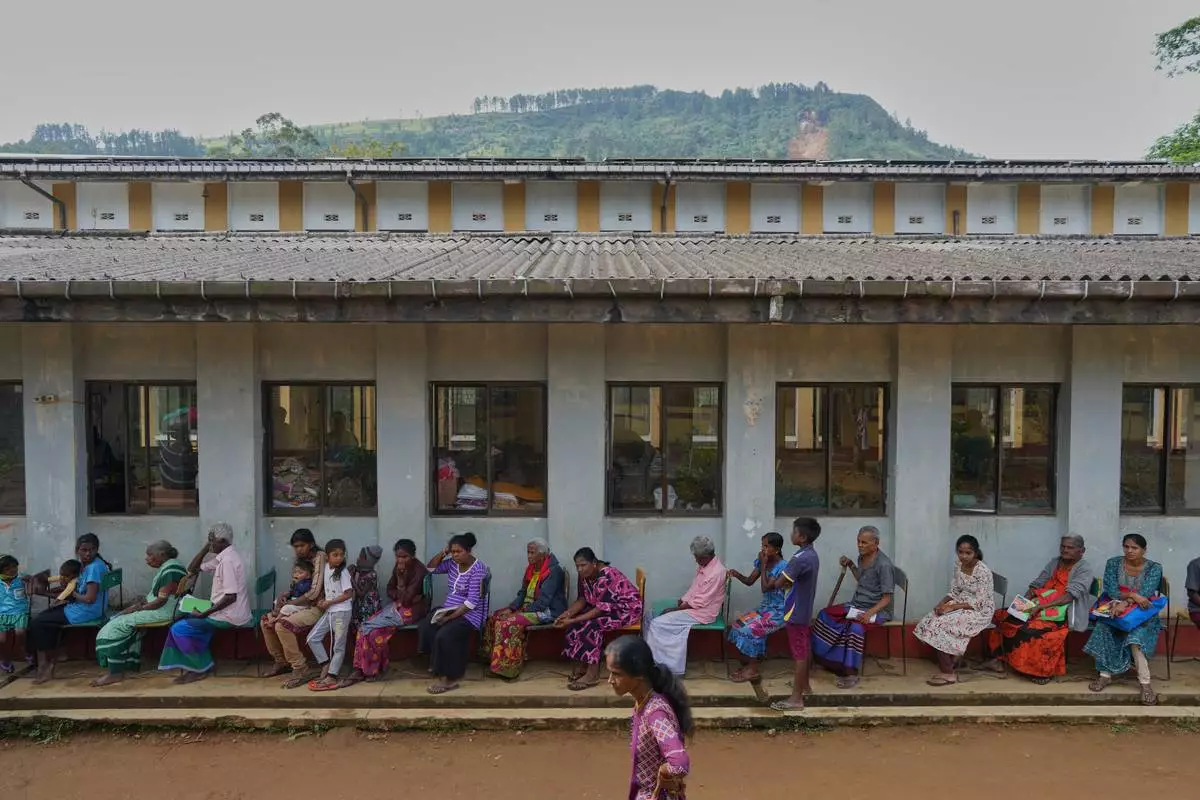
Displaced tea plantation workers and their families queue for aid at a safety center after Cyclone Ditwah led to floods and landslides at Craighead Estate in Nawalapitiya, Sri Lanka, Friday, Dec.12, 2025. (AP Photo/Eranga Jayawardena)

Displaced tea plantation workers and their families queue for aid at a safety center after Cyclone Ditwah led to floods and landslides at Craighead Estate in Nawalapitiya, Sri Lanka, Friday, Dec.12, 2025. (AP Photo/Eranga Jayawardena)

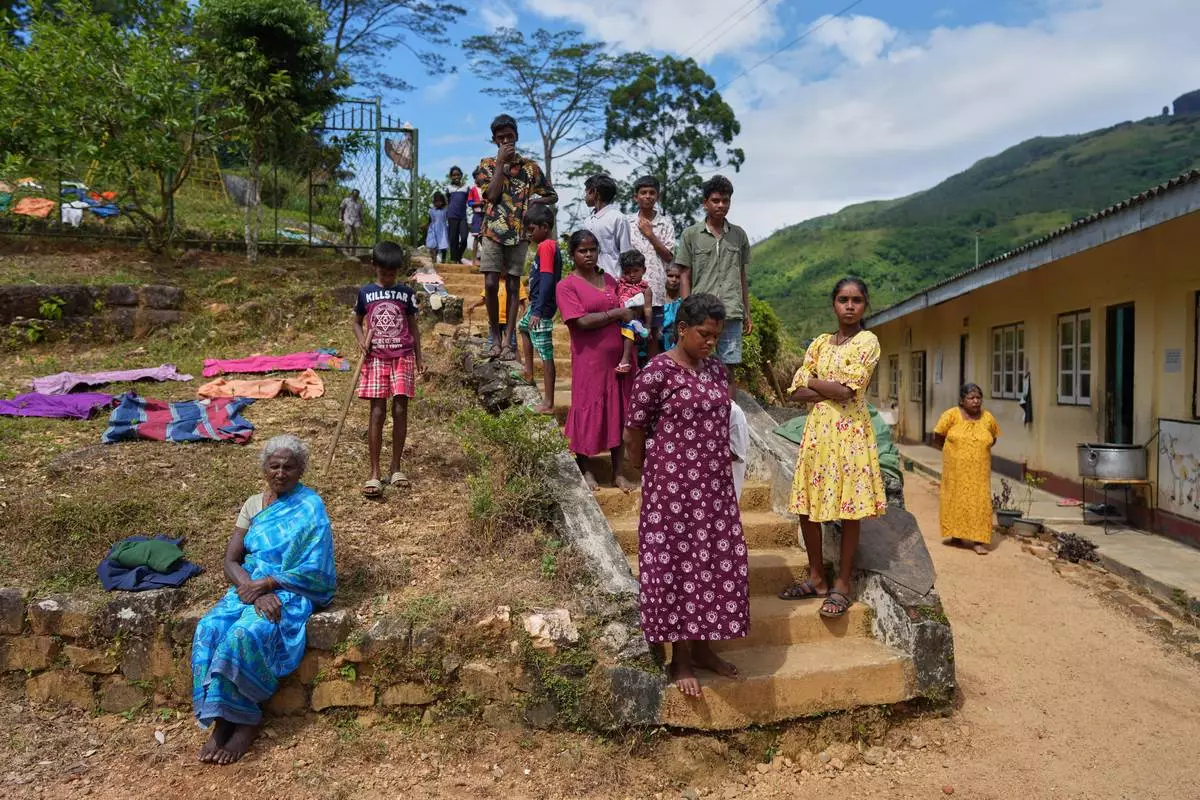
Tea plantation workers evacuated after Cyclone Ditwah led to floods and landslides spend time out of a safety center in Galamuduna Estate in Dolosbage, Sri Lanka, Friday, Dec.12, 2025. (AP Photo/Eranga Jayawardena)
Tea plantation workers evacuated after Cyclone Ditwah led to floods and landslides spend time out of a safety center in Galamuduna Estate in Dolosbage, Sri Lanka, Friday, Dec.12, 2025. (AP Photo/Eranga Jayawardena)

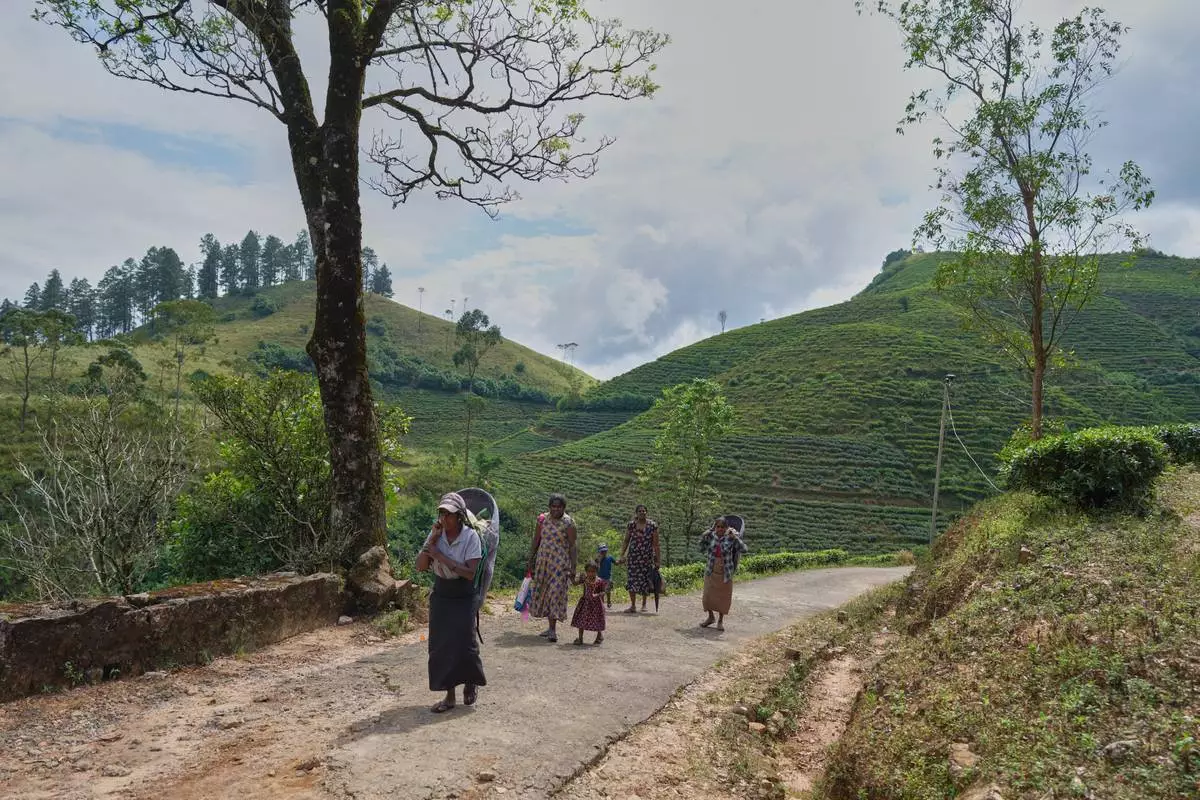
Tea plantation workers walk toward a safety center after their shift in an area affected by floods and landslides after Cyclone Ditwah in Galamuduna Estate in Dolosbage, Sri Lanka, Friday, Dec.12, 2025. (AP Photo/Eranga Jayawardena)
Tea plantation workers walk toward a safety center after their shift in an area affected by floods and landslides after Cyclone Ditwah in Galamuduna Estate in Dolosbage, Sri Lanka, Friday, Dec.12, 2025. (AP Photo/Eranga Jayawardena)

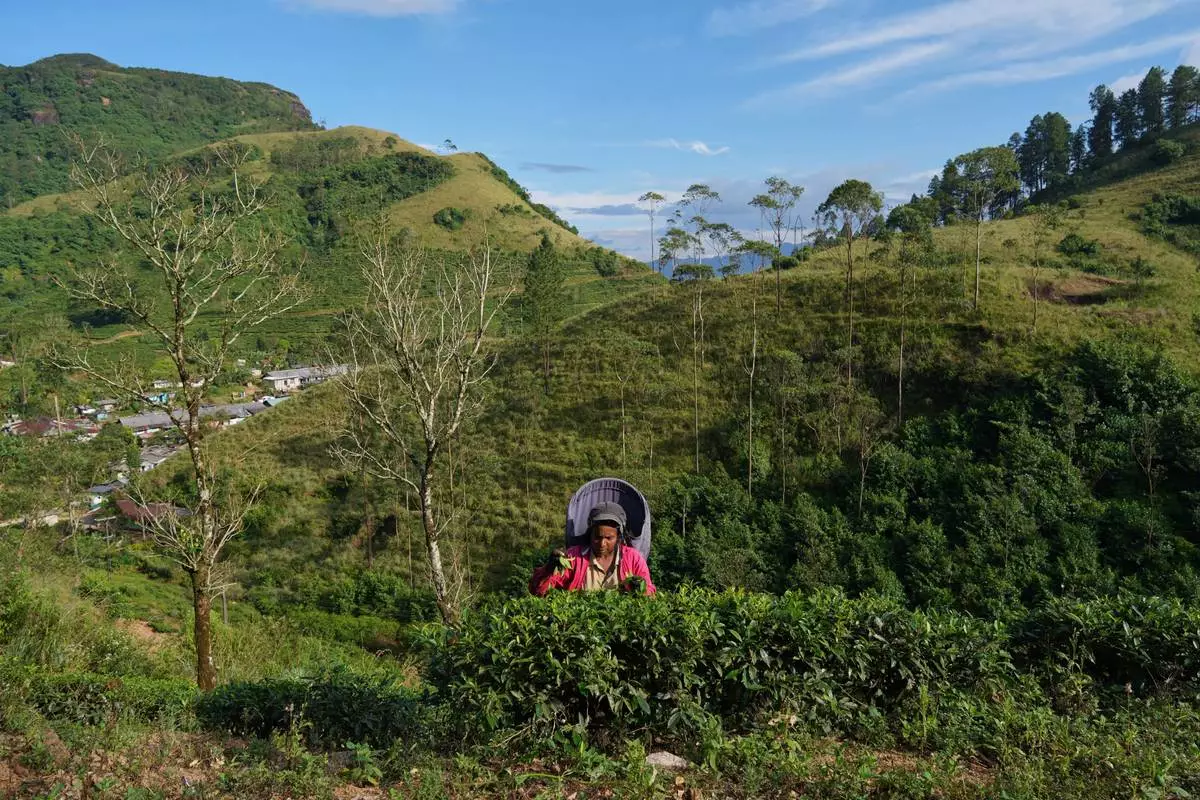
A worker plucks tea tips in an area affected by Cyclone Ditwah which led to floods and landslides in Galamuduna Estate in Dolosbage, Sri Lanka, Friday, Dec.12, 2025. (AP Photo/Eranga Jayawardena)
A worker plucks tea tips in an area affected by Cyclone Ditwah which led to floods and landslides in Galamuduna Estate in Dolosbage, Sri Lanka, Friday, Dec.12, 2025. (AP Photo/Eranga Jayawardena)

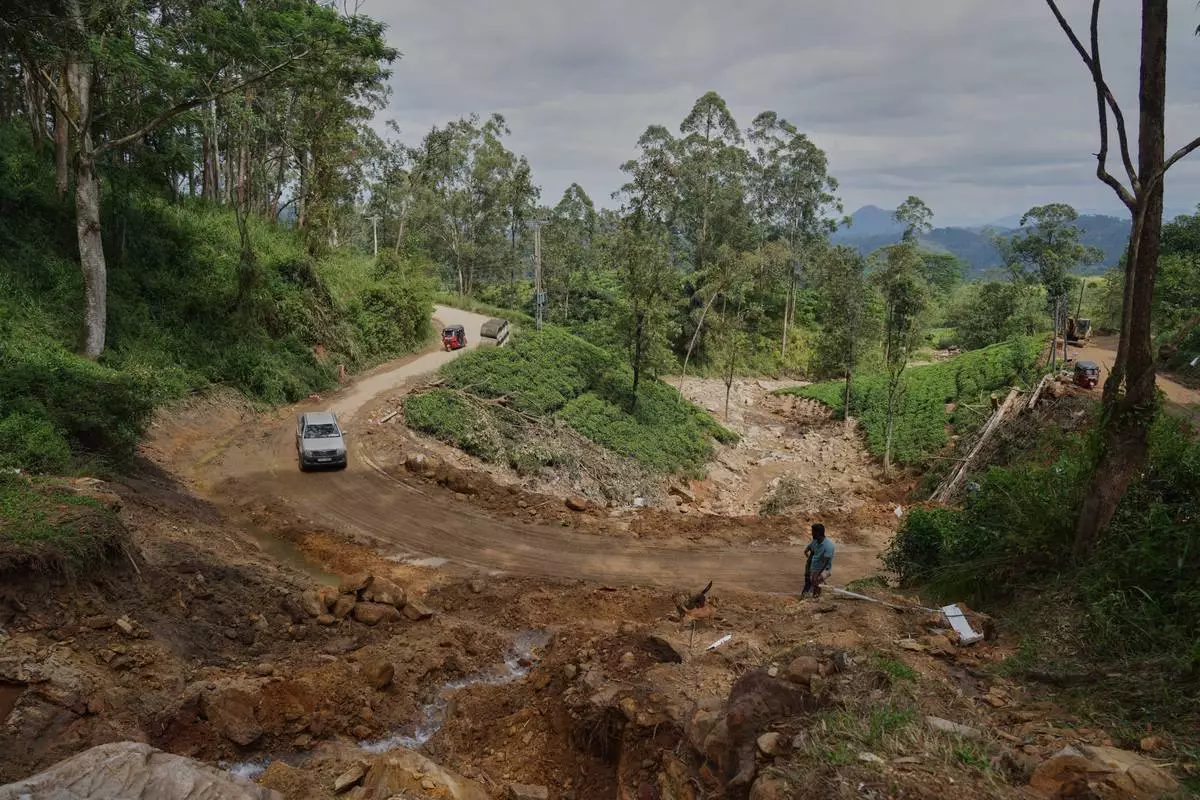
Vehicles move across a stretch of tea plantation destroyed by a landslide following Cyclone Ditwah in Craighead Estate in Nawalapitiya, Sri Lanka, Friday, Dec.12, 2025. (AP Photo/Eranga Jayawardena)
Vehicles move across a stretch of tea plantation destroyed by a landslide following Cyclone Ditwah in Craighead Estate in Nawalapitiya, Sri Lanka, Friday, Dec.12, 2025. (AP Photo/Eranga Jayawardena)

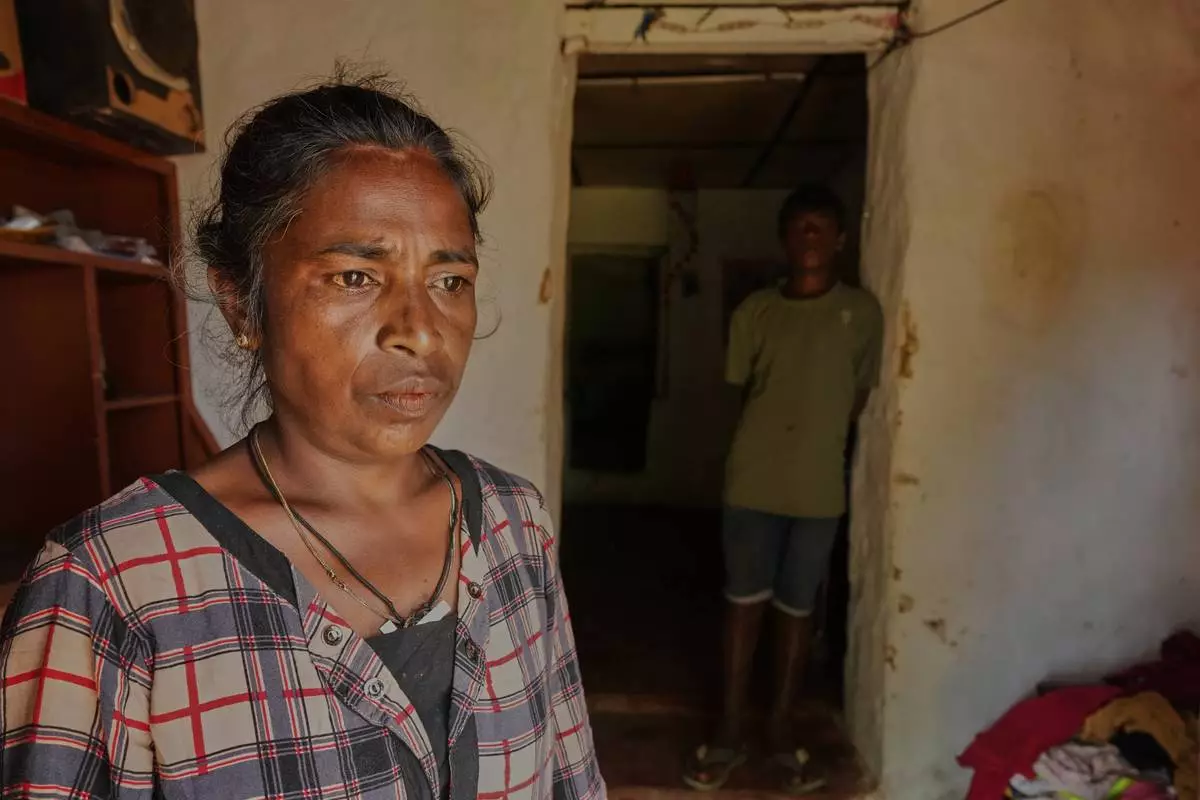
Arumugam Manikavalli stands at the doorway to her living quarters after Cyclone Ditwah led to floods and landslides at Craighead Estate in Nawalapitiya, Sri Lanka, Friday, Dec.12, 2025. (AP Photo/Eranga Jayawardena)
Arumugam Manikavalli stands at the doorway to her living quarters after Cyclone Ditwah led to floods and landslides at Craighead Estate in Nawalapitiya, Sri Lanka, Friday, Dec.12, 2025. (AP Photo/Eranga Jayawardena)

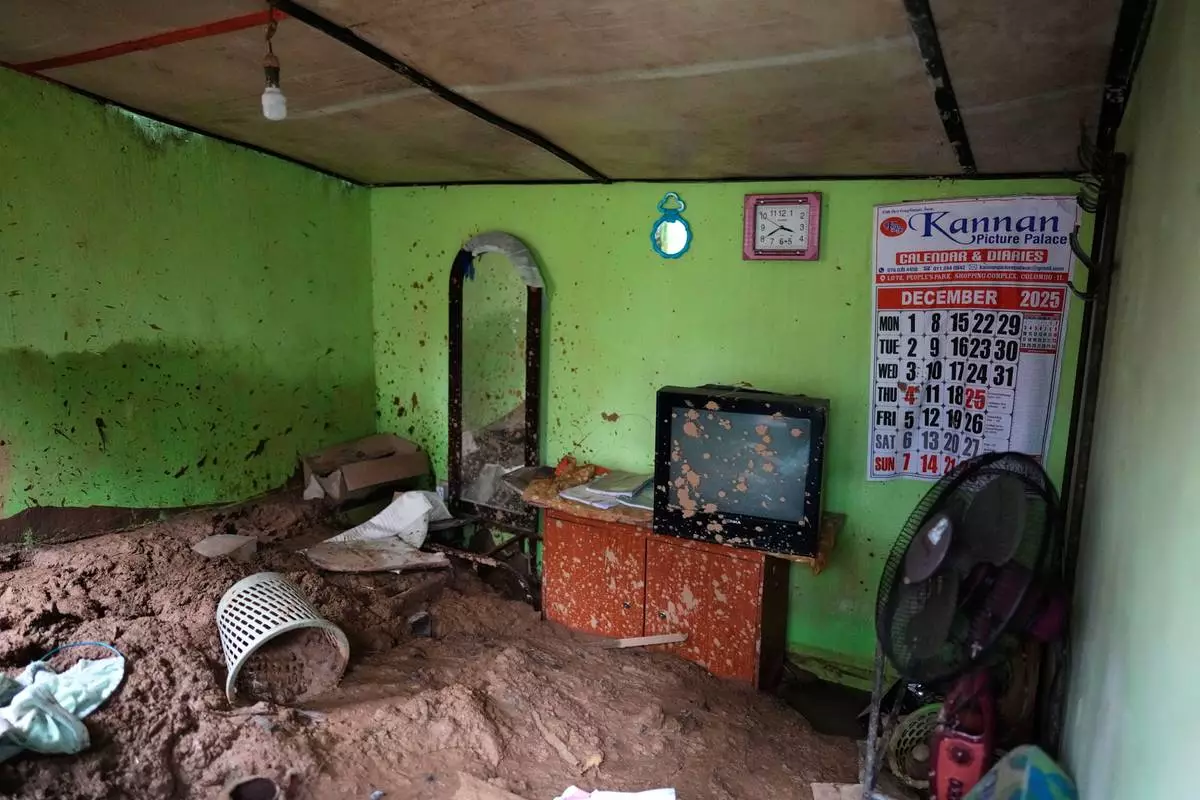
Mud fills the remains of a tea plantation worker's living quarters after a landslide at Craighead Estate in Nawalapitiya, Sri Lanka, Thursday, Dec, 11, 2025. (AP Photo/Eranga Jayawardena)
Mud fills the remains of a tea plantation worker's living quarters after a landslide at Craighead Estate in Nawalapitiya, Sri Lanka, Thursday, Dec, 11, 2025. (AP Photo/Eranga Jayawardena)
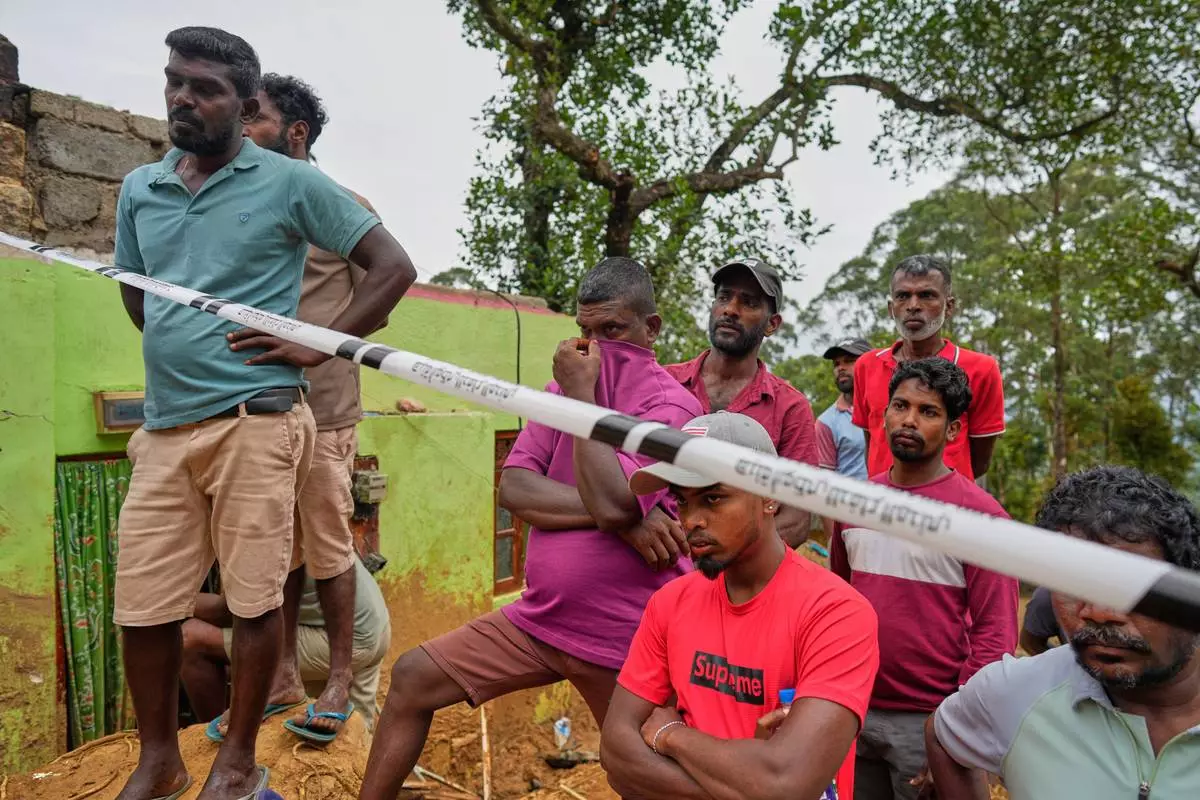
Family members and relatives of tea plantation workers watch rescuers try to dig out a buried body after a landslide following Cyclone Ditwah at Craighead Estate in Nawalapitiya, Sri Lanka, Thursday, Dec, 11, 2025. (AP Photo/Eranga Jayawardena)
Family members and relatives of tea plantation workers watch rescuers try to dig out a buried body after a landslide following Cyclone Ditwah at Craighead Estate in Nawalapitiya, Sri Lanka, Thursday, Dec, 11, 2025. (AP Photo/Eranga Jayawardena)

Sri Lankan army rescuers stand next to the remnants of a destroyed row of living quarters where tea plantation workers stayed after a landslide following Cyclone Ditwah at Craighead Estate in Nawalapitiya, Sri Lanka, Thursday, Dec, 11, 2025. (AP Photo/Eranga Jayawardena)

Sri Lankan army rescuers stand next to the remnants of a destroyed row of living quarters where tea plantation workers stayed after a landslide following Cyclone Ditwah at Craighead Estate in Nawalapitiya, Sri Lanka, Thursday, Dec, 11, 2025. (AP Photo/Eranga Jayawardena)

Sellamuttu Darshani Devi, a tea plantation worker evacuated after Cyclone Ditwah led to floods and landslides, shelters with her children at a safety center in Galamuduna Estate in Dolosbage, Sri Lanka, Friday, Dec.12, 2025. (AP Photo/Eranga Jayawardena)


Sellamuttu Darshani Devi, a tea plantation worker evacuated after Cyclone Ditwah led to floods and landslides, shelters with her children at a safety center in Galamuduna Estate in Dolosbage, Sri Lanka, Friday, Dec.12, 2025. (AP Photo/Eranga Jayawardena)

HONOLULU (AP) — Kaʻiulani Murphy is quick to spot white terns flapping their wings when she's guiding Polynesian voyaging canoes across the Pacific.

The birds hunt for food at sea and lay eggs on land. So traditional navigators like her, who look to the stars, waves and other elements in nature to pilot across the ocean, see the bird's presence as a sign that land is near.

These days voyagers returning to Honolulu have more white terns to track than at any other time in modern history. New data shows their numbers have jumped more than 50% in the past decade — evidence the seabirds are thriving amid the concrete towers, traffic-clogged roads and Waikiki hotels in the state’s largest metropolis.

They're defying the fate of many other native birds in Hawaii, where disease and predators that aren't native to the islands have caused indigenous bird numbers to collapse.

“This is our big city,” said Murphy, who has navigated canoes to Tahiti, Japan and Rapa Nui. “It’s crazy to me that they’re getting to such a big population within Honolulu.”

There were 691 eggs and chicks in Honolulu trees as of this week, said Rich Downs, coordinator of the volunteer organization Hui Manu-o-Kū.

The group takes its moniker from the Hawaiian name for the white tern, which means “bird of Kū,” the god of war.

Manu-o-Kū can breed year round, but activity peaks from winter into early spring. They're the only seabirds that don't build nests, but instead lay their eggs on bare tree branches, cliff ledges or window sills. After hatching, the young sit on a branch until they can fly, their strong claws helping them hold on even in strong storms.

They're found near islands in warm waters around the world, but in Hawaii they live mostly among remote, primarily uninhabited atolls in the northwest. The only place they've settled among the archipelago's larger islands is Oahu, which is home to 1 million people.

Scientists aren't sure why the birds are thriving in Honolulu. The city might be hospitable because humans have reduced the numbers of predators like rats and cats around restaurants and buildings. Busy roads can also deter predators. Barn owls and mongoose, other species that like to feed on terns, are rare in the urban core.

“All the lights and the noise, the commotion of people and traffic, and things like that, doesn’t seem to bother them,” said Eric VanderWerf, the executive director of Pacific Rim Conservation, a nonprofit that supports native birds in Hawaii and the Pacific.

Downtown trees offer favorable habitat. A cup created by the scar tissue of a trimmed tree branch is an ideal place for an egg, so well-maintained trees create plentiful homes.

The most recent population survey, conducted by Hui Manu-o-Kū in 2023 but unpublished until now, showed Oahu's population of breeding adults jumped 1.5 times to 3,600 compared to 2016.

It offers a stark contrast with Hawaii’s other native birds. Since humans arrived in Hawaii, 71 of 113 bird species found only on the islands have gone extinct. Those remaining are often listed as threatened or endangered. Many are found in small numbers in higher elevation forests.

While native to the islands, manu-o-Kū were not observed breeding on Oahu until 1961, when scientists saw a pair of adults with a single egg.

Decades later, as the bird's population soared, Honolulu named manu-o-Kū its official bird in 2007. School children sing songs about the species. An annual festival celebrates them every May.

Hui Manu-o-Kū staff tie blue plastic ribbons around the trunks of trees hosting eggs and chicks to alert tree trimmers to stay clear. The ribbons also help bird-watchers keep track of the white terns, as does an online map.

For eight years, Joyce Hsieh's been taking photos of the birds as they incubate their eggs, feed young birds and raise hatchlings. One of her preferred spots is a Target parking garage, because she can drive up to the third floor to reach the same level as the birds in nearby trees.

White terns have about the same body length as pigeons but a larger wingspan. They fly up to about 120 miles (193 kilometers) from land and feast on small fish and squid chased to the ocean surface by larger species like tuna.

Murphy, the traditional voyager, is Native Hawaiian. She sees parallels between Hawaii's birds and her people.

Diseases introduced by the first Europeans killed Native Hawaiians in vast numbers in the 1800s. But Hawaiians — resilient and adaptive like manu-o-Kū — are still here, and their population is growing.

When she encounters the birds offshore en route to Oahu, she said it's like seeing old friends.

“It’s just a special feeling,” she said.

A white tern nesting pair incubating their egg outside an office building parking garage, March 15, 2019, in downtown Honolulu. (Melody Bentz via AP)

A white tern nesting pair incubating their egg outside an office building parking garage, March 15, 2019, in downtown Honolulu. (Melody Bentz via AP)

Rich Downs, coordinator of the volunteer group Hui Manu-o-Ku, speaks at an exhibit of art depicting white tern seabirds displayed at Capitol Modern: The Hawaii State Art Museum, Saturday, March 28, 2026, in Honolulu. (AP Photo/Audrey McAvoy)

Rich Downs, coordinator of the volunteer group Hui Manu-o-Ku, speaks at an exhibit of art depicting white tern seabirds displayed at Capitol Modern: The Hawaii State Art Museum, Saturday, March 28, 2026, in Honolulu. (AP Photo/Audrey McAvoy)

Ka'iulani Murphy, a traditional navigator and Honolulu Community College professor, poses for a photo, Nov. 7, 2025, in Honolulu. (AP Photo/Audrey McAvoy)

Ka'iulani Murphy, a traditional navigator and Honolulu Community College professor, poses for a photo, Nov. 7, 2025, in Honolulu. (AP Photo/Audrey McAvoy)

A person looks at art depicting white tern seabirds displayed at Capitol Modern: The Hawaii State Art Museum, Saturday, March 28, 2026, in Honolulu. (AP Photo/Audrey McAvoy)

A person looks at art depicting white tern seabirds displayed at Capitol Modern: The Hawaii State Art Museum, Saturday, March 28, 2026, in Honolulu. (AP Photo/Audrey McAvoy)

A white tern brooding a newly hatched chick while holding onto the last of the eggshell with her beak, Nov. 16, 2022, in Honolulu's Diamond Head area. (Melody Bentz via AP)

A white tern brooding a newly hatched chick while holding onto the last of the eggshell with her beak, Nov. 16, 2022, in Honolulu's Diamond Head area. (Melody Bentz via AP)

Recommended Articles