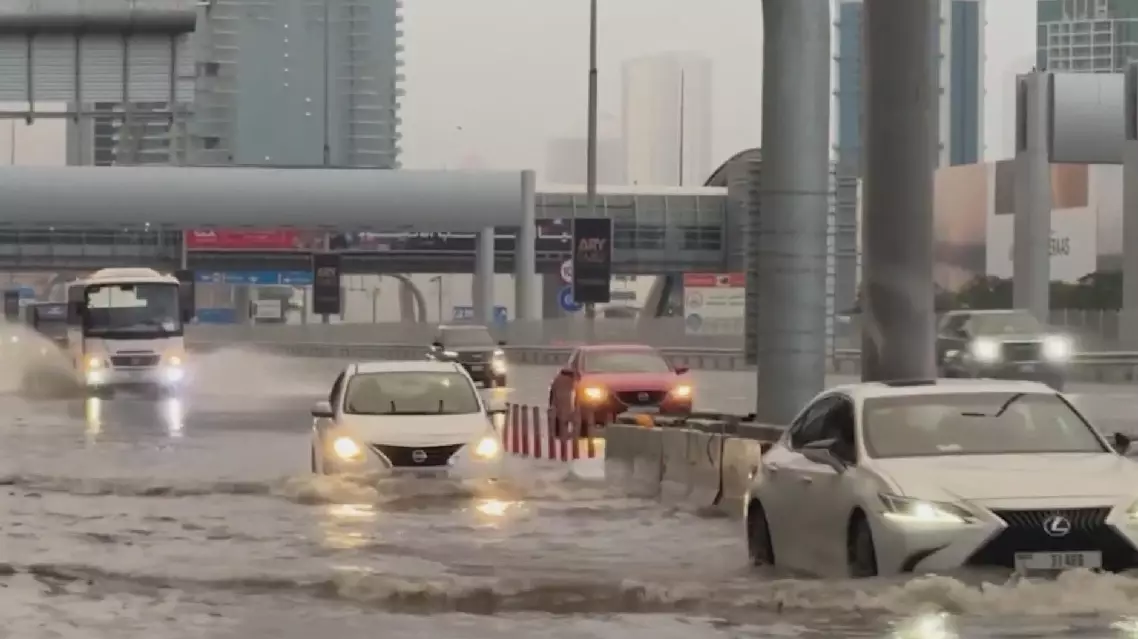
The United Arab Emirates (UAE), located on the arid Arabian Peninsula where rainfall is scarce, experienced rare torrential downpours from Thursday to Friday, leading to flooding in multiple areas.
The heavy rains, which have now stopped, inundated parts of the Emirate of Dubai's road networks, residential communities, commercial centers, and hotels. In response to the situation, the Dubai Roads and Transport Authority (RTA) has deployed more than 300 water-pumping facilities to drain waterlogged areas.
In a parking lot, the water level still reached up to 35 centimeters even after three hours of pumping operations.
The Dubai government has instructed public sector employees to work remotely and ordered the closure of public beaches, parks, and certain tourist attractions.
"Today I was supposed to be at work. We have something that is called 'Carlift,' but they are not working today. So I try to order a cab one hour in advance, two hours in advance of my work time. No cab was available, so I tried to take the metro," said Jessica, a resident in the city.
Due to the severe weather, Emirates Airlines canceled 13 flights originally scheduled to depart from Dubai International Airport on Friday.
Rare heavy rains flood parts of UAE
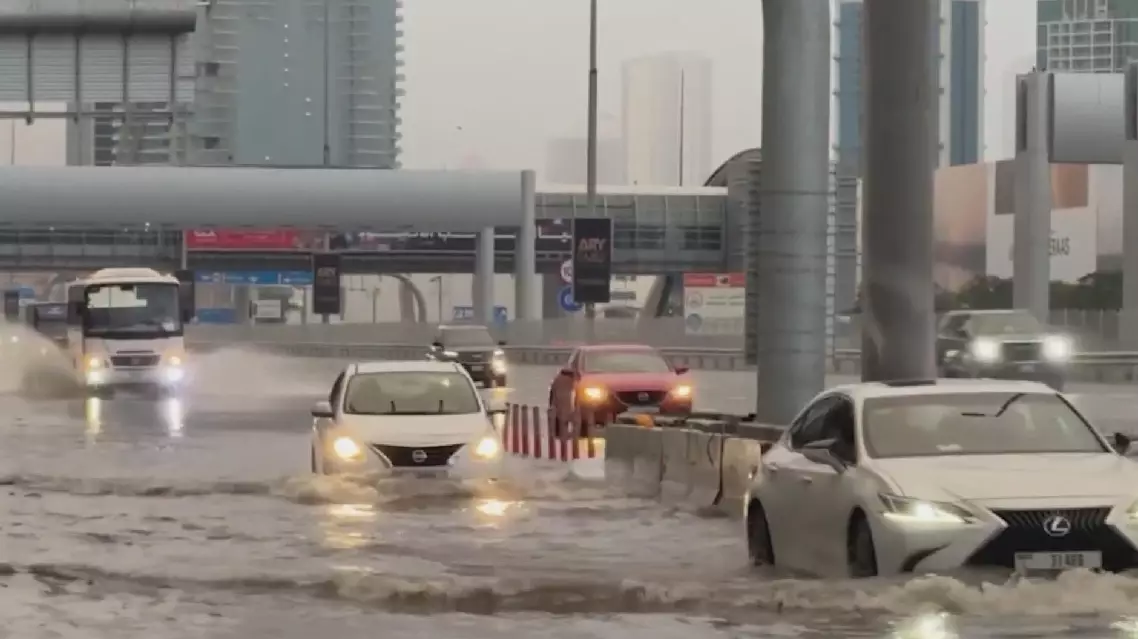
Rare heavy rains flood parts of UAE
India's manufacturing industry has been threatened by shortages in the global energy supply amid mounting tensions and escalating spillover effects spreading beyond the Middle Eastern battlefield.
Glass producers in the country are feeling the acute strain of natural gas shortages, which have forced many production lines to shut down. This, in turn, has impacted beverage companies that rely on glass containers.
"The glass is a critical part of the packaging and it accounts for nearly 45 percent of the cost of beer. Now, there is no gas supply coming. So, a lot of furnaces are unable to operate. Production lines are shutting down," said Vinod Giri, director general of the Brewers Association of India.
Fuel shortages are also hitting India’s metalworking sector, leading to price volatility for stainless-steel cookware. As these goods are essential to daily life, persistent supply instabilities are placing considerable strain on related businesses
"[Metal] prices continue to rise, making our business extremely difficult. We face raw material shortages, production halts, shutdowns in some areas, and worker exodus. Since the outbreak of the war, raw material prices have risen by 10 percent to 15 percent and continue to climb. We have no idea when the price hikes will stop," said Krishan Aggarwal, a stainless steel cookware trader.
Israel and the United States launched joint attacks on Tehran and several other Iranian cities on Feb. 28, killing Iran's then Supreme Leader Ali Khamenei, along with senior military commanders and civilians. Iran responded with waves of missile and drone strikes against Israel and U.S. assets in the Middle East, while tightening control over the Strait of Hormuz by restricting passage to vessels belonging to or affiliated with Israel and the United States.
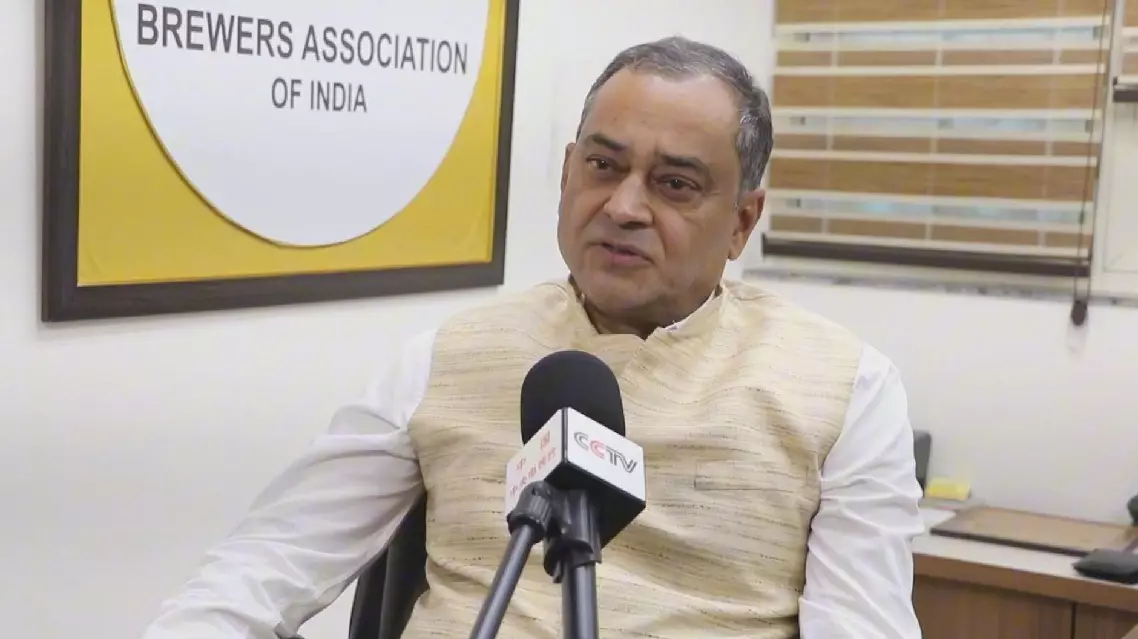
Spillover effects of Middle East conflict threaten manufacturing industry in India