China's commitment to address rat race competition will boost high-tech innovation, providing a driving force for the high-quality development, according to Zhang Wenlang, managing director and chief macro analyst at the China International Capital Corporation Limited (CICC) Research.
Speaking in an exclusive interview with China Global Television Network (CGTN) on Friday in Shanghai, Zhang highlighted the results of the Central Economic Work Conference, which concluded last week, on China's economy next year.
The work conference is a significant annual event in China where top leaders review the current year's economic performance and set priorities for the upcoming year.
"According to the conference, the second key task for economic work in 2026 is 'upholding innovation-driven development and accelerating the cultivation and expansion of new growth drivers.' With the emergence of DeepSeek in early 2025, market confidence in China's technological progress has been further reinforced. In fact, the stock market's tech sector has seen a notable rebound since the start of the year. So, looking forward, we believe the new wave of technological revolution led by AI and robotics will keep driving up China's total factor productivity and boosting its potential economic growth," said Zhang.
This year's Central Economic Work Conference highlighted the need to address the issue of rat race competition. Zhang said this focus is key to advancing reforms with high-quality development, and stressed the need to distinguish between healthy competition and wasteful rivalry.
"We believe this policy focus is central to advancing reforms and energizing high-quality development. So, in fact, healthy competition benefits consumers and drives industrial upgrading, whereas excessive competition wastes resources and stifles innovation. So, basically, measures are mainly divided into two categories, targeting local governments and enterprises, separately. For local governments, the policy guides against homogeneous industrial layouts, and seeks to halt regional 'race to the bottom' practices, including excessive subsidies for duplicating the same industries, a move that leads to redundant projects and resource squandering. So, the end goal is to build a unified national market. For enterprises, the priority should shift from competing on price to competing through product innovation and service upgrades," said the analyst.
"In fact, we do not expect the anti-involution initiative to be accomplished overnight. Instead, its progress will likely gather steam at a moderate pace in 2026 with significant disparities across sectors," he said.
On the outlook for 2026, Zhang said the top risk will come from external demand, particularly the economic performances of the United States.
"The top risk comes from external demand, particularly the U.S. economy. Even as the Fed has entered an easing cycle, the U.S. is exhibiting 'stagflation-like' symptoms, as economists put it, persistent inflationary pressure alongside slowing growth. One major worry for the U.S. economy is the potential AI bubble. Lately, investor concerns over some American AI companies have escalated, amid their soaring capital expenditure and persistent uncertainty about their profitability. So, the biggest opportunity is our technological innovation. Specifically, more 'DeepSeek Moments' emerging. By 'DeepSeek Moments,' I mean the recent phenomenon where Chinese tech teams make world-class breakthroughs in AI and hard tech, at a fraction of the cost and with impressive efficiency. So, we're seeing a structural shift. Chinese companies are moving from application innovation to core fundamental innovation," said Zhang.
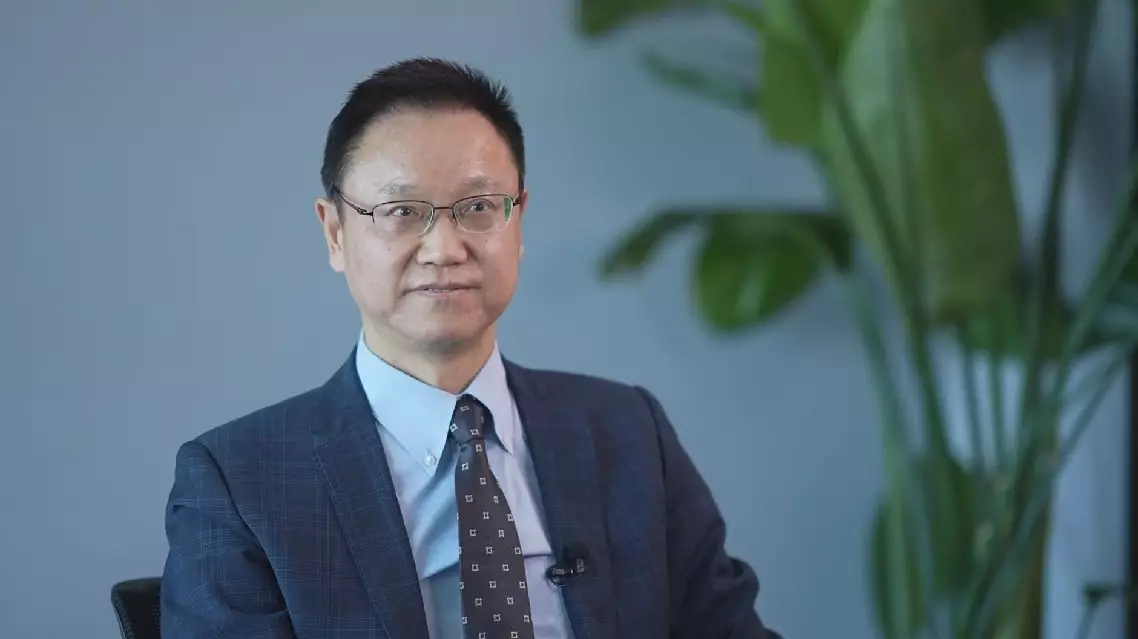
China's commitment to curb rat-race competition will drive innovation: economist