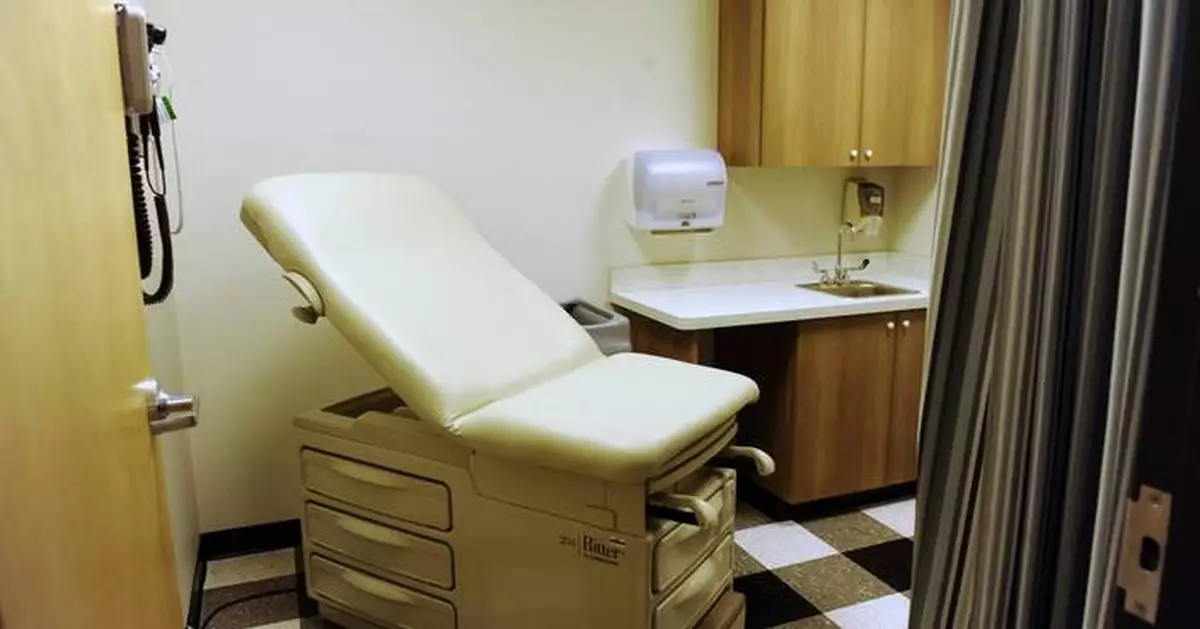
WASHINGTON (AP) — It’s not unusual for a 20-something to text Mom in a panic from the doctor’s office, seeking help answering a question. And patients of any age can struggle to recall all their medicines — or forget to mention a concern.
Getting the most out of a doctor’s visit requires some advance preparation. Even the professionals plan ahead.
“It is really hard — even for me as a doctor going to see my own family doctor — to remember the things that I wanted to bring up,” said Dr. Sarah Nosal, president of the American Academy of Family Physicians. “The worst is when you’ve had that moment with your doctor” only to recall another problem after walking out, she said. “You’ve lost that time.”
Her top tip: Bring a list of symptoms and questions to show at the start of the visit. The first item should be your top concern, but seeing the full list helps your doctor prioritize what’s most medically urgent.
“I’m actually going to be able to see, is there a red flag?” explained Nosal, who has some advice about prepping for a typical primary care visit.
Some illnesses require specialists like a cardiologist or rheumatologist. But regardless of your age or how healthy you are, research has long shown that a relationship with a primary care provider is important for overall health. It might be a family physician like Nosal, who cares for all ages, or an internist. Some patients choose gynecologists, geriatricians, or have a primary care team that includes nurse practitioners or physician assistants.
Primary care is more than preventive checkups to help avoid illness, such as vaccinations, cancer screenings or health advice. It also includes detecting and treating common problems like high blood pressure, and helping to find and coordinate specialty care.
“That ongoing relationship also helps me know your ‘normal,’” Nosal explained. “If something’s different or changes or you feel off, when you tell me that information and I also have known you over time, we can really figure out together what’s going on.”
Young adults navigating health care on their own for the first time may need help filling out forms with their personal medical history. Have you ever had general anesthesia? Is your tetanus shot up to date?
If you still have access to the patient portal at your former pediatrician’s office, you can see records of vaccinations and prior illnesses, or you may have to request them or quiz parents.
For all ages, family medical history is critical — and needs regular updating. Ask what diseases your close relatives have had and how they fared. For example, if Type 2 diabetes runs in the family, or Grandma had a stroke, or someone had cancer at a young age, that information could help tailor your preventive care, Nosal said.
Filling out paperwork from home makes it easier to check medicine bottles for the name and dose. Include both prescription and over-the-counter medicines, pills or creams — and don’t forget vitamins and supplements.
Why are the latter important? Some can interact with prescription medicines. Nosal cited some patients whose longtime treatments quit working after they started taking turmeric, a spice also sold as a supplement.
Also before your visit, check if the doctor received records of recent lab tests, hospitalizations or visits to other health providers, since electronic medical records aren’t always automatically shared.
Some symptoms are bad enough to prompt an urgent visit. But if you’ve got a checkup coming, whether it’s routine or to follow up on health problems, start a list of questions in advance.
Notice a pain when you move a certain way? Or chatting with a friend who just got a colonoscopy and wonder if you’re due? Pop those on your list right away, before you forget — and be specific in describing symptoms.
Nosal keeps a running list on her phone and, ahead of visits with her own doctor, sends it as a heads-up through her patient portal. Patients also can include their list on visit check-in forms.
The idea is to address the most urgent questions first, rather than patients running out of time before raising a key concern. Nosal said questions about mental or sexual health and wellness especially tend to come up at the last minute.
Whatever the medium, “please bring that list,” she said. “That’s the most critical of all pieces.”
People may know to ask questions about treatments, such as how well they work and what side effects to expect. But it’s also important to understand why a doctor makes a particular diagnosis or, conversely, isn’t as worried about a symptom as you might be.
Don’t hesitate to say, “Explain to me what else could be going on,” Nosal advised. “What would be the next step? How would you evaluate that for me, to know if it’s this or that?”
Most health advocacy groups also advise bringing along a friend or relative, especially if you have serious or multiple health problems. They can help ask questions and take notes.
“Whether you are 20 or you are 85, you will not remember everything from your medical visit,” Nosal said.
The Associated Press Health and Science Department receives support from the Howard Hughes Medical Institute’s Department of Science Education and the Robert Wood Johnson Foundation. The AP is solely responsible for all content.
FILE - An exam room at a medical clinic in Detroit on July 29, 2015. (Charles V. Tines/Detroit News via AP, File)

ALLENTOWN, Pa. (AP) — When Idalia Bisbal moved to this Pennsylvania city synonymous with America's working class, she hoped for a cheaper, easier life than the one she was leaving behind in her hometown of New York City.
About three years later, she is deeply disappointed.
“It's worse than ever,” the 67-year-old retiree, who relies on Social Security, said when asked about the economy. “The prices are high. Everything is going up. You can't afford food because you can't afford rent. Utilities are too high. Gas is too expensive. Everything is too expensive.”
Bisbal was sipping an afternoon coffee at the Hamilton Family Restaurant not long after Vice President JD Vance rallied Republicans in a nearby suburb. In the Trump administration's second high-profile trip to Pennsylvania in a week, Vance acknowledged the affordability crisis, blamed it on the Biden administration and insisted better times were ahead. He later served food to men experiencing homelessness in Allentown.
The visit, on top of several recent speeches from President Donald Trump, reflects an increasingly urgent White House effort to respond to the economic anxiety that is gripping both parties. Those worries are a vulnerability for Republicans in competitive congressional districts like the one that includes Allentown, which could decide control of the U.S. House in next year’s midterms.
But in confronting the challenge, there are risks of appearing out of touch.
Only 31% of U.S. adults now approve of how Trump is handling the economy, down from 40% in March, according to a poll from The Associated Press-NORC Center for Public Affairs Research. Yet Trump has called affordability concerns a “ hoax ” and gave the economy under his administration a grade of “A+++++.” Vance reiterated that assessment during his rally, prompting Bisbal to scoff.
“In his world,” Bisbal, a self-described “straight-up Democrat,” responded. “In the rich man’s world. In our world, trust me, it’s not an ‘A.’ To me, it’s an ‘F,’ ‘F,’ ‘F,’ ‘F,’ ‘F,’ ‘F.’”
With a population of roughly 125,000 people, Allentown anchors the Lehigh Valley, which is Pennsylvania's third-largest metro area. In a dozen interviews this week with local officials, business leaders and residents of both parties, there was agreement on one thing: Prices are too high. Some pointed to gas prices while others said they felt the shock more at the grocery store or in their cost of health care or housing.
Few shared Trump's unbridled boosterism about the economy.
Tony Iannelli, the president and CEO of the Greater Lehigh Valley Chamber of Commerce, called Trump's grade a “stretch,” saying “we have a strong economy but I think it's not yet gone to the next stage of what I would call robust.”
Tom Groves, who started a health and benefits consulting firm more than two decades ago, said the economy was at a “B+” as he blamed the Affordable Care Act, widely known as “Obamacare,” for contributing to higher health costs and he noted stock and labor market volatility. Joe Vichot, the chairman of the Lehigh County Republican Committee, referred to Trump's grade as a “colloquialism.”
Far removed from Washington's political theater, there was little consensus on who was responsible for the high prices or what should be done about it. There was, however, an acute sense of exhaustion at the seemingly endless political combat.
Pat Gallagher was finishing lunch a few booths down from Bisbal as she recalled meeting her late husband when they both worked at Bethlehem Steel, the manufacturing giant that closed in 2003. Now retired, she, too, relies on Social Security benefits and lives with her daughter, which helps keep costs down. She said she noticed the rising price of groceries and was becoming exasperated with the political climate.
“I get so frustrated with hearing about the politics,” she said.
That feeling is understandable in a place that often gets a front-row seat to the national debate, whether it wants the view or not. Singer Billy Joel's 1982 song “Allentown” helped elevate the city into the national consciousness, articulating simultaneous feelings of disillusionment and hope as factories shuttered.
In the decades since, Pennsylvania has become a must-win state in presidential politics and the backdrop for innumerable visits from candidates and the media. Trump and his Democratic rival in 2024, Kamala Harris, made several campaign swings through Allentown, with the then-vice president visiting the city on the eve of the election.
“Every race here, all the time,” Allentown’s mayor, Democrat Matt Tuerk, recalled of the frenzied race last year.
The pace of those visits — and the attention they garnered — has not faded from many minds. Some businesses and residents declined to talk this week when approached with questions about the economy or politics, recalling blowback from speaking in the past.
But as attention shifts to next year’s midterms, Allentown cannot escape its place as a political battleground.
Trump’s win last year helped lift other Republicans, like U.S. Rep. Ryan Mackenzie, to victory. Mackenzie, who unseated a three-term Democrat, is now one of the most vulnerable Republicans in Congress. To win again, he must turn out the Republicans who voted in 2024 — many of whom were likely more energized by Trump’s candidacy — while appealing to independents.
Mackenzie's balancing act was on display when he spoke to the party faithful on Tuesday, bemoaning the “failures of Bidenomics” before Vance took the stage at the rally. A day later, the congressman was back in Washington, where he joined three other House Republicans to rebel against the party’s leadership and force a vote on extending health care subsidies that expire at the end of the year.
Vichot, the local GOP chairman, called Mackenzie an “underdog” in his reelection bid and said the health care move was a signal to voters that he is “compassionate for the people who need those services.”
Lehigh County, home to Allentown and the most populous county in the congressional district, swung toward Trump last year. Harris' nearly 2.7 percentage point win in the county was the tightest margin for a Democratic presidential candidate since 2004. But Democrats are feeling confident after a strong performance in this fall's elections when they handily won a race for county executive.
Retaking the congressional seat is now a top priority for Democrats. Gov. Josh Shapiro, who faces reelection next year and is a potential presidential contender in 2028, endorsed firefighter union head Bob Brooks this week for the May primary.
Democrats are just a few seats shy of regaining the House majority and the first midterm after a presidential election historically favors the party that's out of power. If the focus remains on the economy, Democrats are happy.
The Uline supplies distribution factory where Vance spoke, owned by a family that has made large donations to GOP causes, is a few miles from the Mack Trucks facility where staff was cut by about 200 employees this year. The company said that decision was driven in part by tariffs imposed by Trump. Shapiro eagerly pointed that out in responding to Vance's visit.
But the image of Allentown as a purely manufacturing town is outdated. The downtown core is dotted by row homes, trendy hotels and a modern arena that is home to the Lehigh Valley Phantoms hockey team and hosts concerts by major artists. In recent years, Latinos have become a majority of the city's population, driven by gains in the Puerto Rican, Mexican and Dominican communities.
“This is a place of rapid change,” said Tuerk, the city's first Latino mayor. “It’s constantly changing and I think over the next three years until that next presidential election, we’re going to see a lot more change. It’s going to be an interesting ride.”
FILE - State Rep. Ryan Mackenzie speaks before Republican presidential nominee former President Donald Trump speaks at a campaign rally in Allentown, Pa., Oct. 29, 2024. (AP Photo/Matt Rourke, File)