SAO PAULO (AP) — Brazil's President Luiz Inácio Lula da Silva said on Saturday he hopes the massive free-trade deal between South American bloc Mercosur and the European Union will be signed in January. Protests on Friday by European farmers and opposition from France and Italy threatened to quash an agreement that has been under negotiation for more than 26 years.
Top EU officials had hoped to sign the EU-Mercosur deal in Brazil this weekend, but instead, European Commission President Ursula von der Leyen said Friday after a tense EU summit that the signature will be delayed ‘’a few extra weeks to address some issues with member states.’’
Lula told other South American leaders attending a summit in the Brazilian city of Foz do Iguacu, on the three-way border with fellow Mercosur members Argentina and Paraguay, that the meeting was only taking place because European negotiators had earlier signaled they would eventually sign the deal, and that did not happen. He added the delay was due to Italian Premier Giorgia Meloni requesting more time.
Von der Leyen needs the backing of at least two-thirds of EU nations to secure the deal. Italy’s opposition would give France enough votes to veto von der Leyen’s signature.
“Without political will and courage from leaders, it won’t be possible to finish a negotiation that has dragged for 26 years,” Lula, who spoke to Meloni on the phone on Friday and received a letter from EU leadership aiming for a deal in January, told his peers. “Meanwhile, Mercosur will continue to work with other partners.”
“The world is eager to make deals with Mercosur,” the Brazilian president added. “Many countries want that. And we certainly we will be able to finish the deals that were not finished during my presidency (of the bloc, due in the end of December).”
If signed, the trade deal would cover a market of 780 million people and a quarter of the globe’s gross domestic product, and progressively remove duties on almost all goods traded between the two blocs.
France has led opposition to the deal between the EU and the five active Mercosur countries — Brazil, Argentina, Uruguay, Paraguay and Bolivia. French President Emmanuel Macron said on Thursday at an EU summit he wouldn’t commit to supporting the deal next month either.
Macron added he has been in discussions with Italian, Polish, Belgian, Austrian and Irish colleagues among others about delaying it to address farmers’ concerns.
Lula argued Macron alone can't block an agreement.
“Let's hope that things happen for the good of our Mercosur, multilateralism and the development of our countries,” the Brazilian president said.

Brazilian President Luiz Inacio Lula da Silva takes a sip of coffee during a year-end press conference at Planalto presidential palace in Brasilia, Brazil, Thursday, Dec. 18, 2025. (AP Photo/Eraldo Peres)
When you unlock a phone, step into view of a security camera or drive past a license plate reader at night, beams of infrared light - invisible to the naked eye — shine onto the unique contours of your face, your body, your license plate lettering. Those infrared beams allow cameras to pick out and recognize individual human beings.
Over the past decade, facial recognition technology has gone from science fiction fantasy to worldwide reality — nowhere more so than in China, home to more security cameras than the rest of the world combined.
At airports and train stations, passengers line up for face scans at gates and by officers.
On the streets, cameras scan pedestrians and flag vehicles breaking traffic rules.
By law, anyone registering new SIM cards in China must show themselves to a face scanning camera, the images stored in telecom databases. And until recently, Chinese authorities required most guests to scan their faces when checking in to a hotel.
For many, such technology has offered convenience and safety, seamlessly woven into the backdrop of their lives. But for some, it's become an intrusive form of state control.
Associated Press investigations have found that such surveillance systems in China were to a large degree designed and built by American companies, playing a far greater role in enabling human rights abuses than previously known. It has cemented the rule of the Chinese Communist Party, offering it a powerful tool to control and monitor perceived threats to the state like dissidents, ethnic minorities and even its own officials.
Dozens who spoke to AP, from Tibetan activists to ordinary farmers to a former vice mayor, described being tracked and monitored by vast networks of cameras that stud the country, hampering their movements and alerting the police to their activities.
For years, such technology faced legal barriers in the country where it was first developed, the United States. But over the past five years, the U.S. Border Patrol has vastly expanded its surveillance powers, monitoring millions of American drivers nationwide in a secretive program to identify and detain people whose travel patterns it deems suspicious, AP found.
Under the Trump administration, billions are now being poured into a vast array of surveillance systems, including license plate readers across the U.S. that have ensnared innocent drivers for little more than taking a quick trip to areas near the border.
In this series of photographs, an infrared filter was used on a modified camera converted to capture the full spectrum of light, including ultraviolet, visible, and infrared.
This filter, which cuts out some visible light to better reveal infrared, is red by design in order to block certain light wavelengths.
AP photographers on three continents snapped photos showing how these beams are used to track vehicles and people, enable facial recognition - and ultimately, assert digital control.
—
This is a documentary photo story curated by AP photo editors.
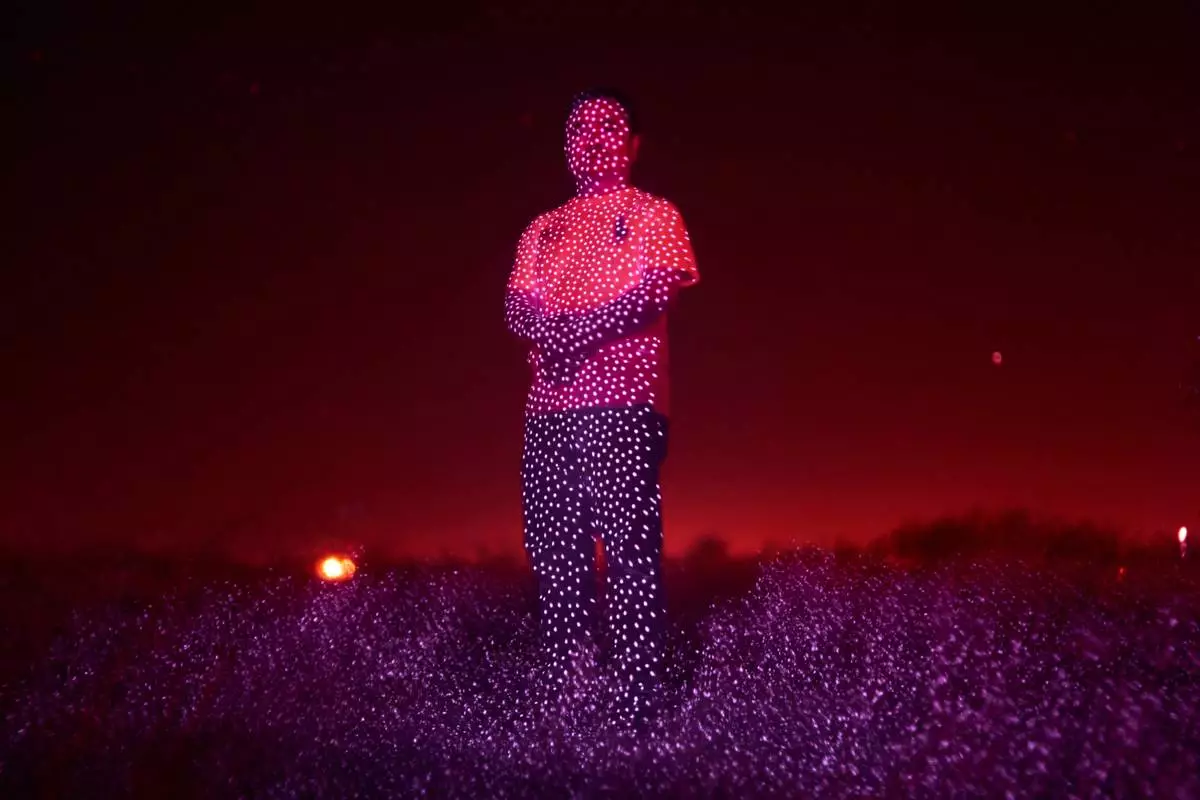
Retired Chinese official Li Chuanliang, who openly criticized the Chinese government after seeing first-hand how surveillance technology built up the government's power and is now being accused of corruption by Beijing, is illuminated by cellphone infrared facial recognition beams as he stands for a photo in the oil fields of Midland, Texas, where he's currently living in exile, Oct. 11, 2025. (AP Photo/David Goldman)
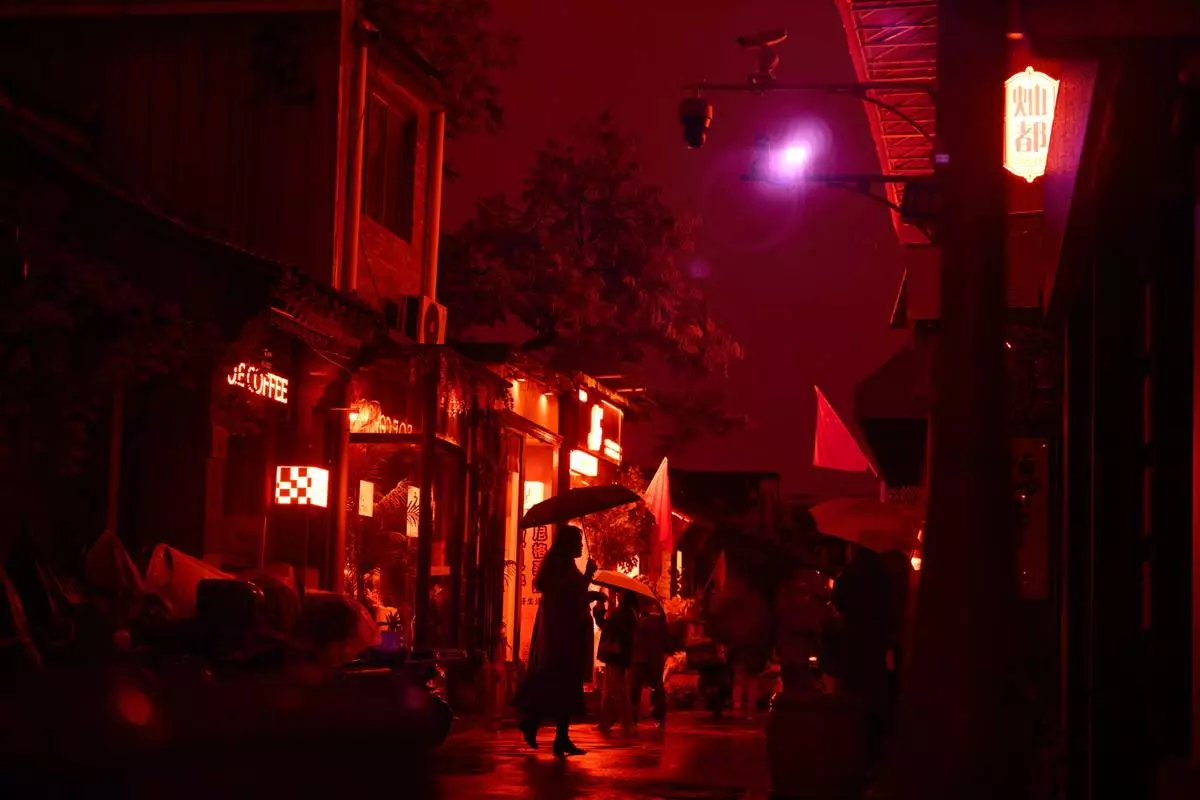
An infrared beam of light shines from a security camera watching over the Wudaoying alley in Beijing as pedestrians walk by, Oct. 10, 2025. (AP Photo/Ng Han Guan)
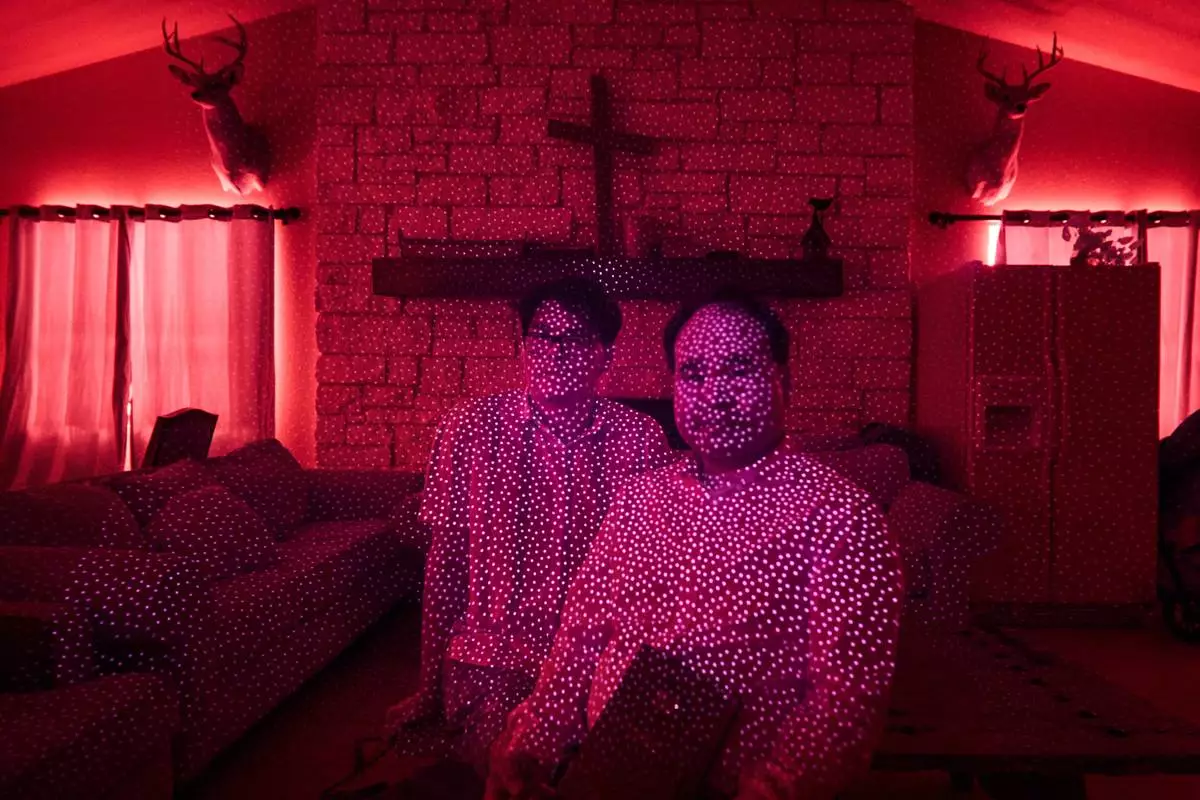
Pastor Pan Yongguang, right, and his son Paul, members of a Chinese church living in exile after fleeing from China, are illuminated by cellphone infrared facial recognition beams while sitting for a photo in the community room of the ranch compound where they're living in Midland, Texas, Oct. 11, 2025. (AP Photo/David Goldman)
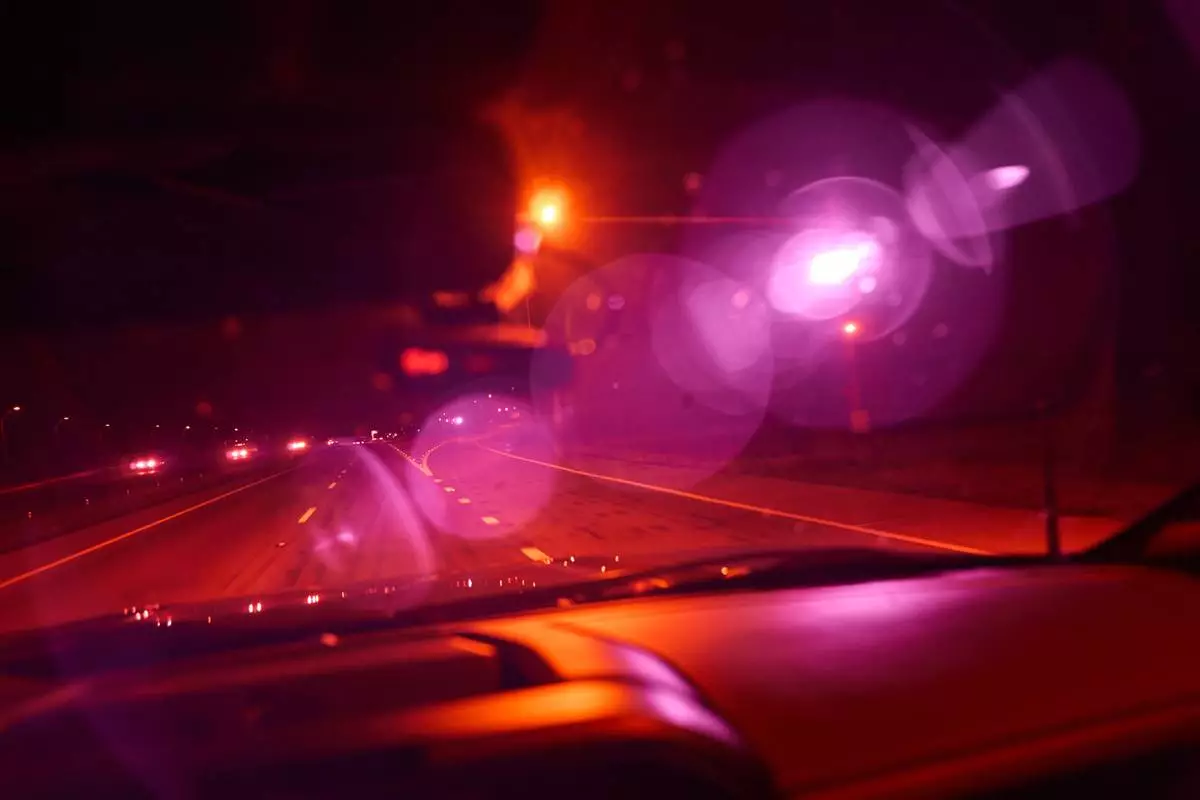
Alek Schott drives past the infrared beam of an automatic license plate reader recording vehicles along Interstate 10, a route he occasionally takes for work trips, near Seguin, Texas, Oct. 15, 2025. (AP Photo/David Goldman)
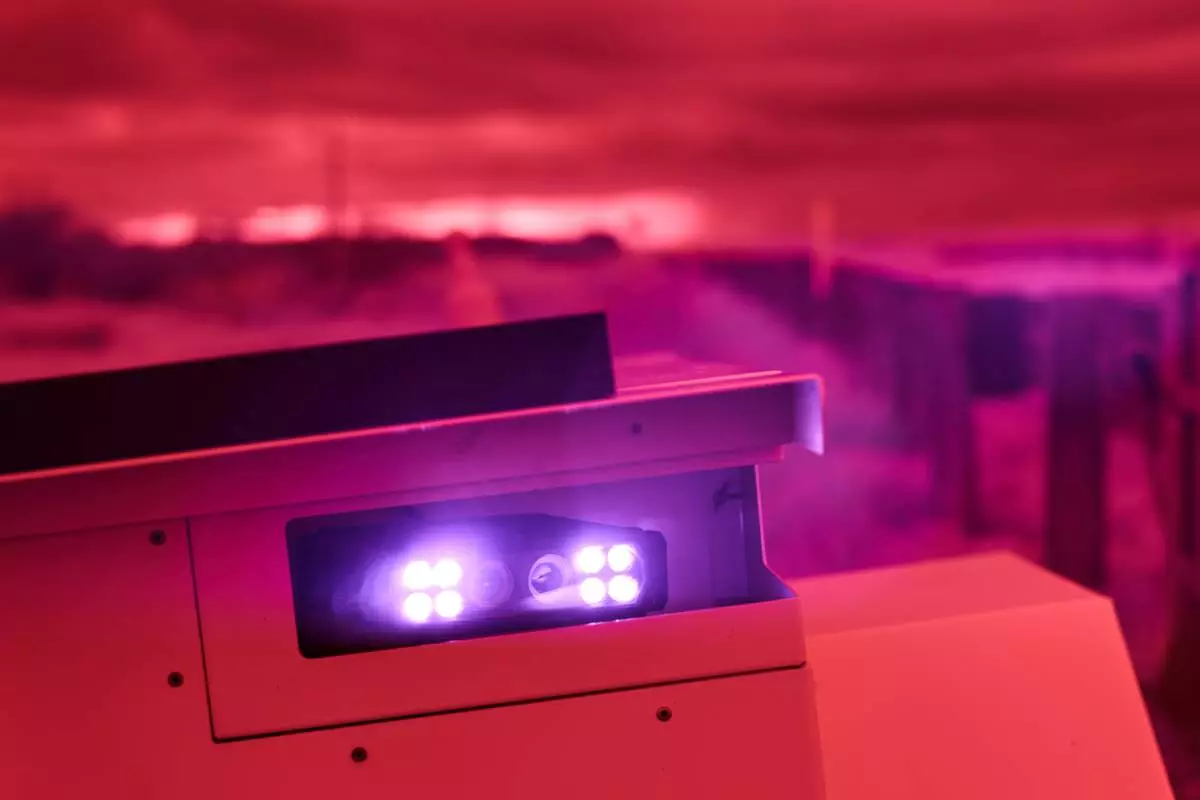
An infrared beam of light shines out of an automatic license plate reader recording vehicles passing along U.S. Highway 83, Oct. 13, 2025, in Laredo, Texas. (AP Photo/David Goldman)
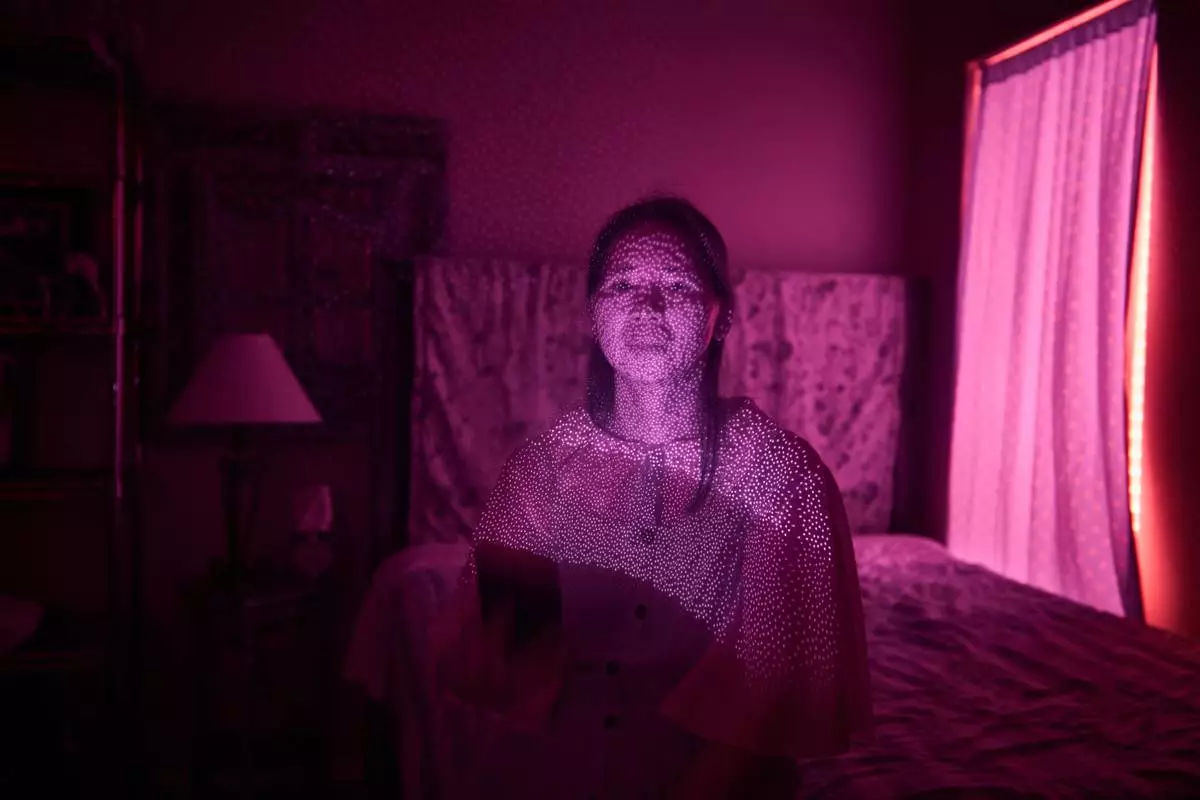
Dong e Li, a member of a Chinese church living in exile after fleeing from China, is illuminated by cellphone infrared facial recognition beams as she sits for a photo in her home, Oct. 13, 2025, in Midland, Texas. (AP Photo/David Goldman)
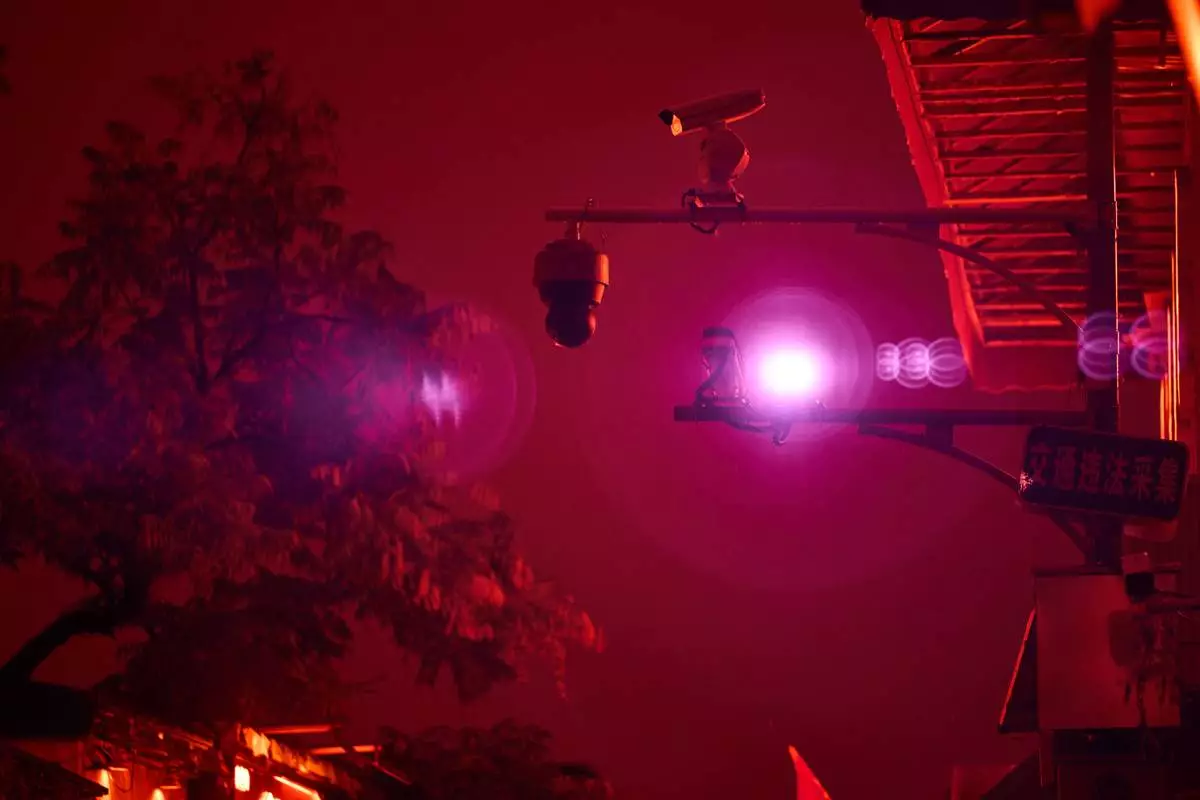
An infrared beam of light shines from a security camera watching over the Wudaoying alley in Beijing, Oct. 10, 2025. (AP Photo/Ng Han Guan)
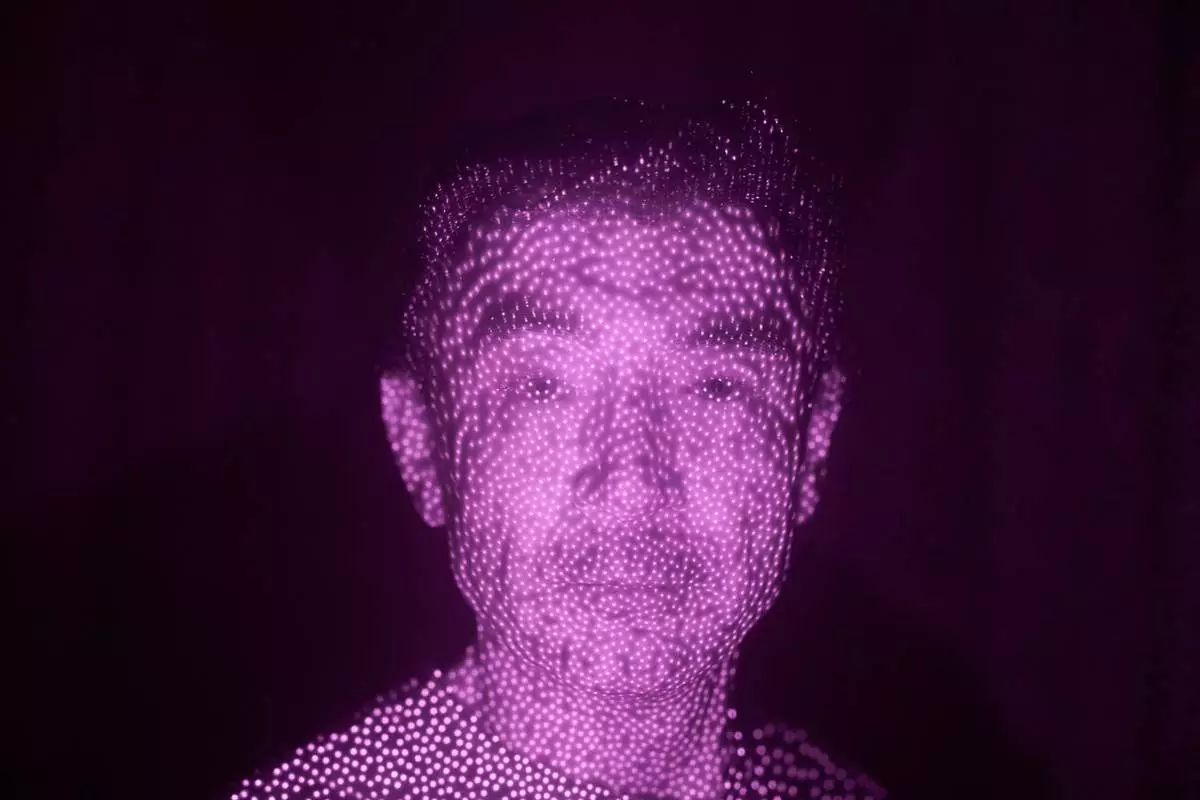
Former Xinjiang government engineer Nureli Abliz, who saw firsthand how surveillance technology flagged thousands of people in China for detention, even when they had committed no crime, is illuminated by cellphone infrared facial recognition beams as he sits for a photo in Mannheim, Germany, where he's currently living in exile, July 23, 2025. (AP Photo/David Goldman)
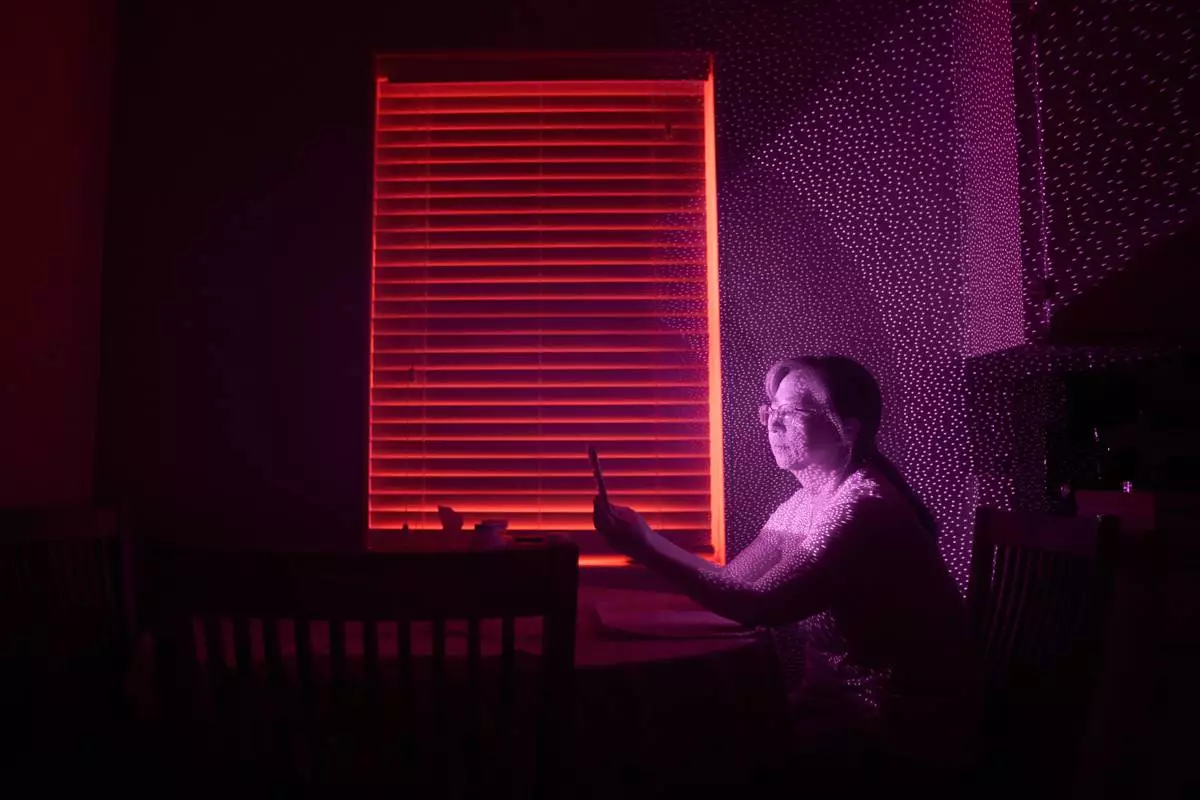
Guigiu Chen, who escaped China with her daughters after her husband, prominent rights lawyer Xie Yang, was detained, is illuminated by cellphone infrared facial recognition beams as she sits for a photo, Oct. 12, 2025, in Midland, Texas, where she's living in exile. (AP Photo/David Goldman)
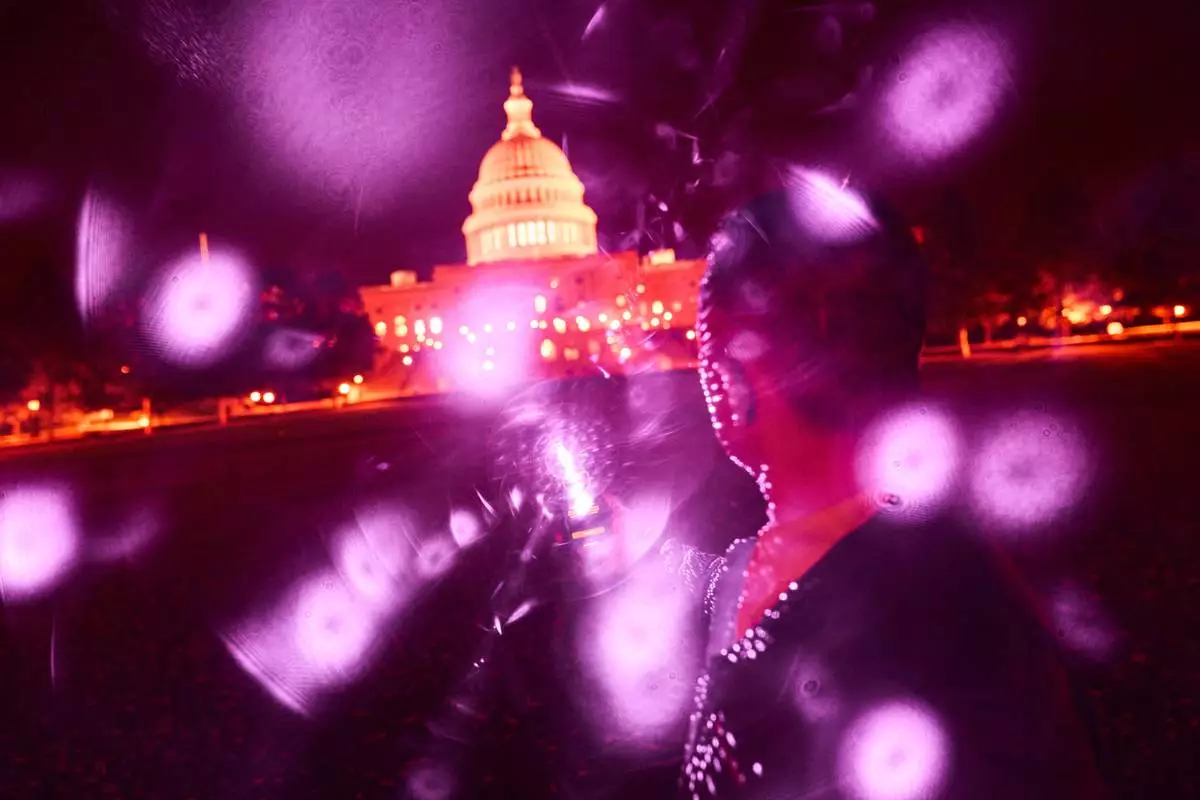
Infrared facial recognition beams are emitted from a cellphone held by a Uyghur man, who asked to remain anonymous for safety reasons, as he’s photographed in front of the U.S. Capitol, Oct. 16, 2025, in Washington, where he’s living in exile after escaping China. (AP Photo/David Goldman)
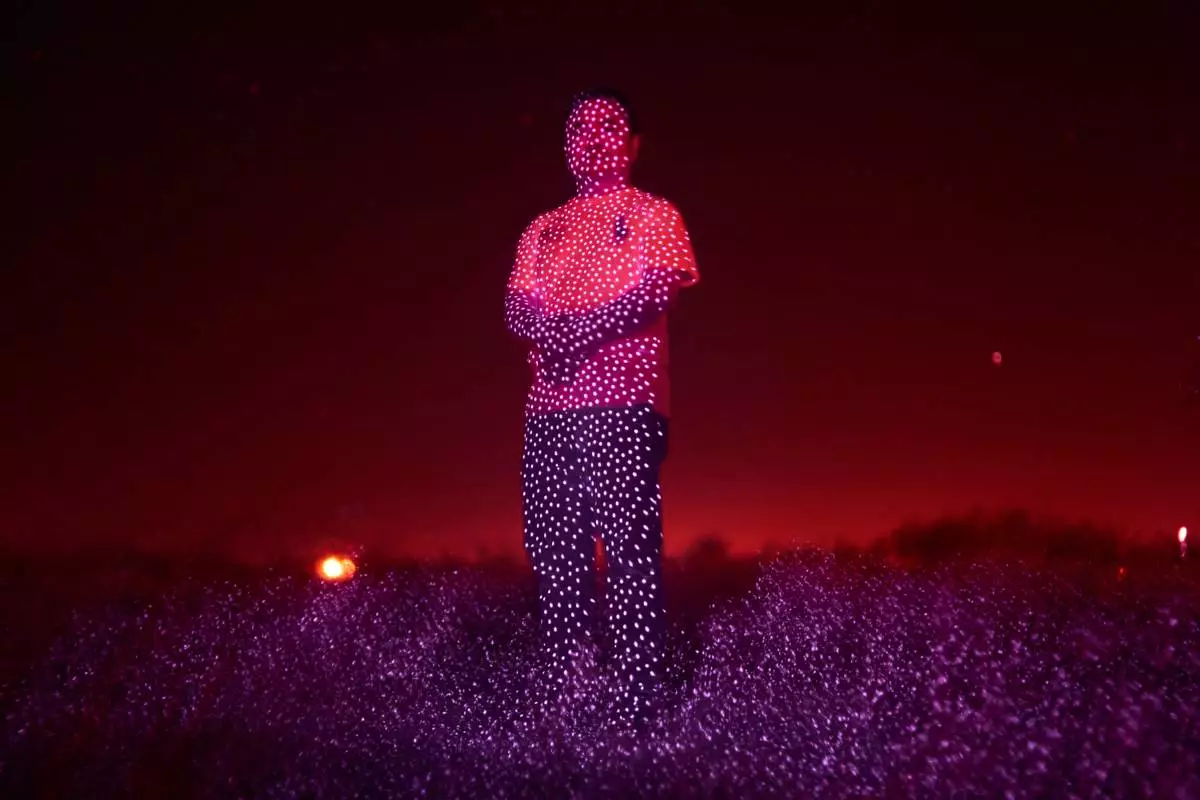
Retired Chinese official Li Chuanliang, who openly criticized the Chinese government after seeing first-hand how surveillance technology built up the government's power and is now being accused of corruption by Beijing, is illuminated by cellphone infrared facial recognition beams as he stands for a photo in the oil fields of Midland, Texas, where he's currently living in exile, Oct. 11, 2025. (AP Photo/David Goldman)
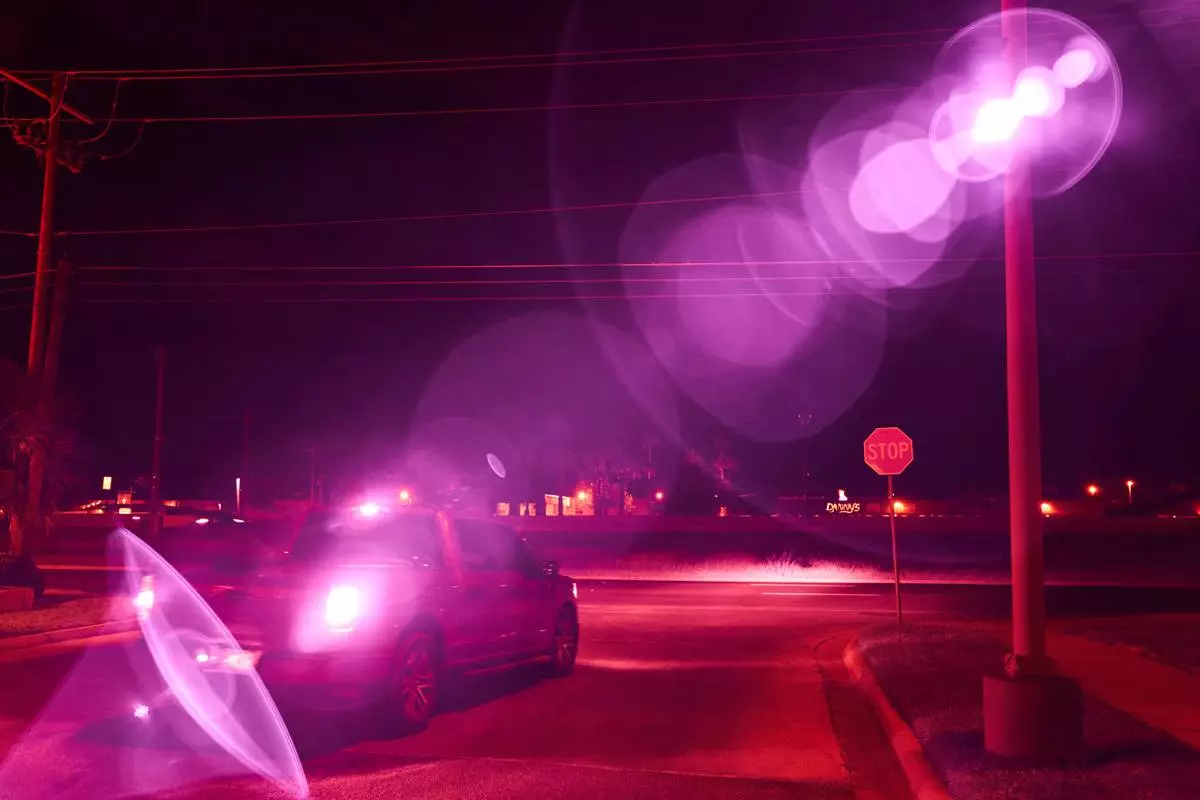
An infrared beam of light shines out of an automatic license plate reader as it records vehicles driving by, Oct. 13, 2025, in Laredo, Texas. (AP Photo/David Goldman)
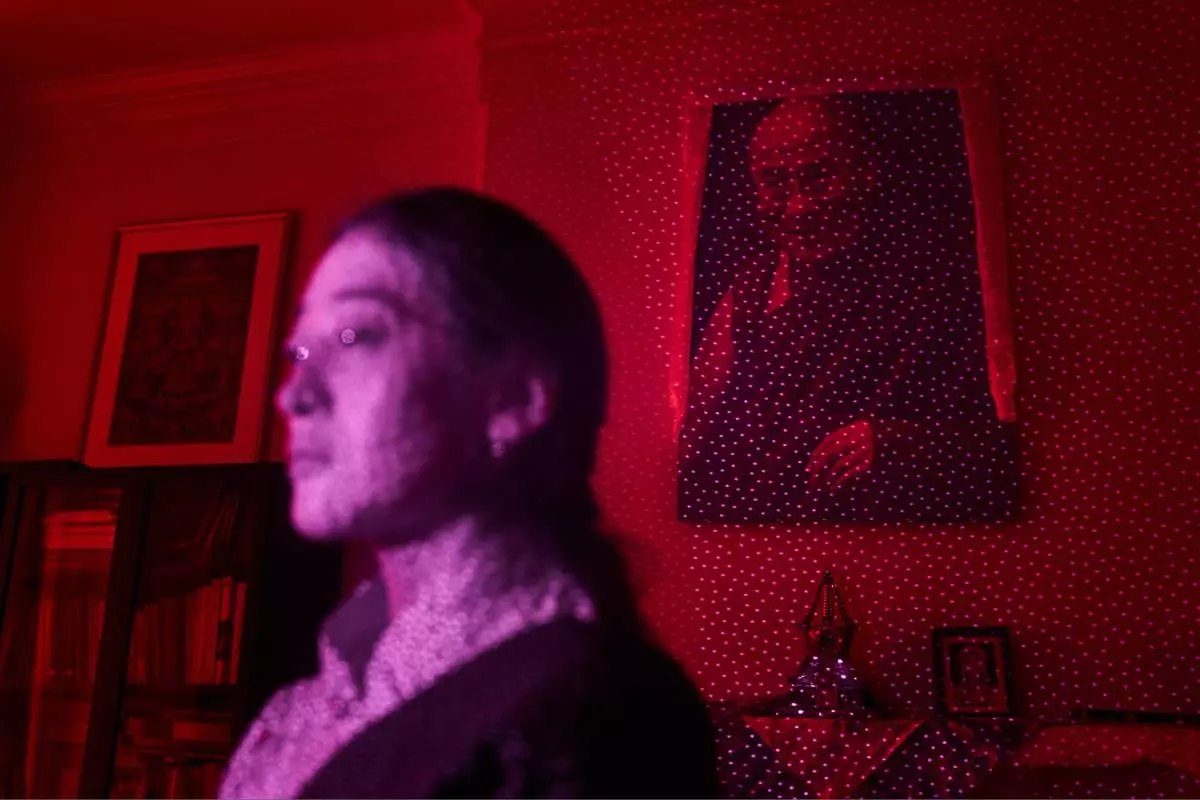
An image of the Dalai Lama and Namkyi, a Tibetan former political prisoner who was arrested and imprisoned at 15 for protesting Chinese rule, are illuminated by cellphone infrared facial recognition beams as Namkyi sits for a photo at the Office of Tibet, Oct. 7, 2025, in Washington. (AP Photo/David Goldman)
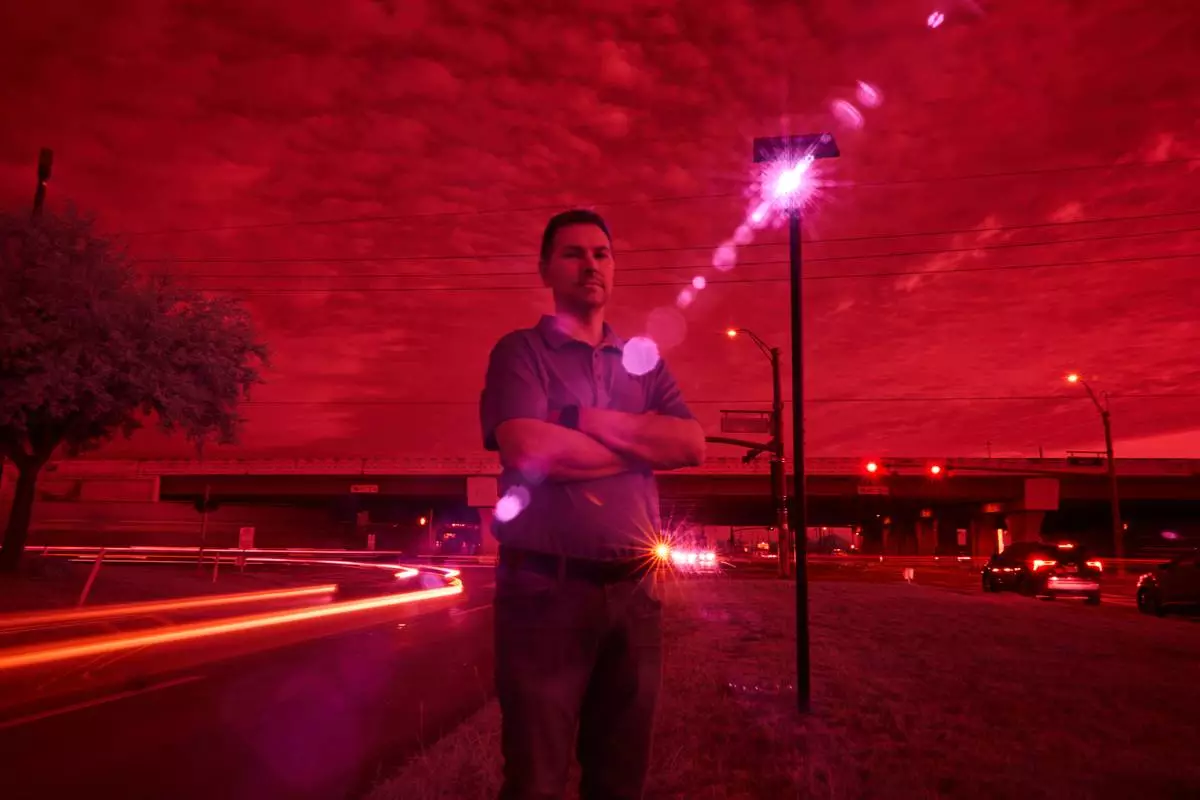
Alek Schott, who filed a lawsuit alleging violations of his constitutional rights when Texas sheriff's deputies stopped and searched his vehicle at the request of Border Patrol agents, is photographed, as an infrared beam of light from a Flock Safety automatic license plate reader records passing vehicles driving near his neighborhood, Oct. 16, 2025, in Houston. (AP Photo/David Goldman)

Wensheng Wen, rear right, and his wife, Lou Guangyzing, along with their children Xin, 11, from right, Gehua, 9, Jinghua, 3, Rou, 6, and Younghua, 3, members of a Chinese church living in exile after fleeing from China, are illuminated by beams of pulsed laser light from a cellphone's LiDAR scanner as they sit for a photo, Oct. 12, 2025, in Midland, Texas. (AP Photo/David Goldman)
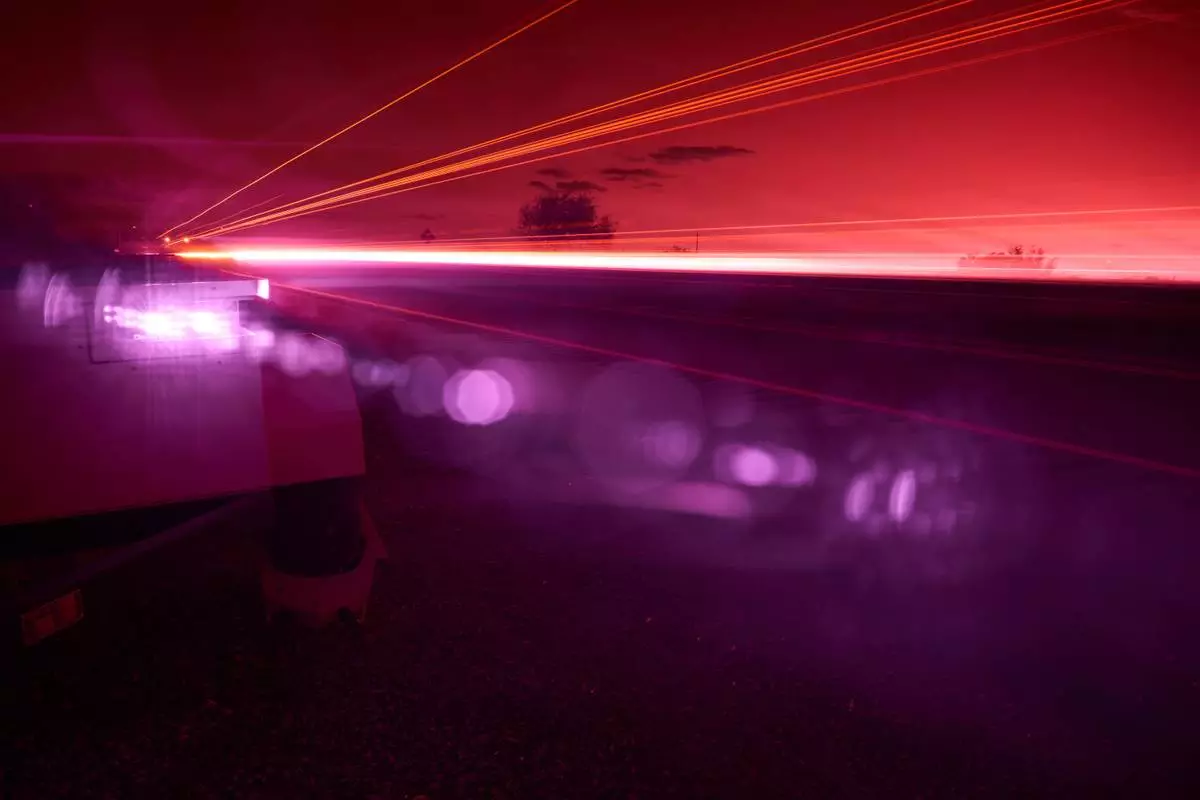
An infrared beam of light shines out of an automatic license plate reader recording vehicles passing along U.S. Highway 83, Oct. 13, 2025, in Laredo, Texas. (AP Photo/David Goldman)
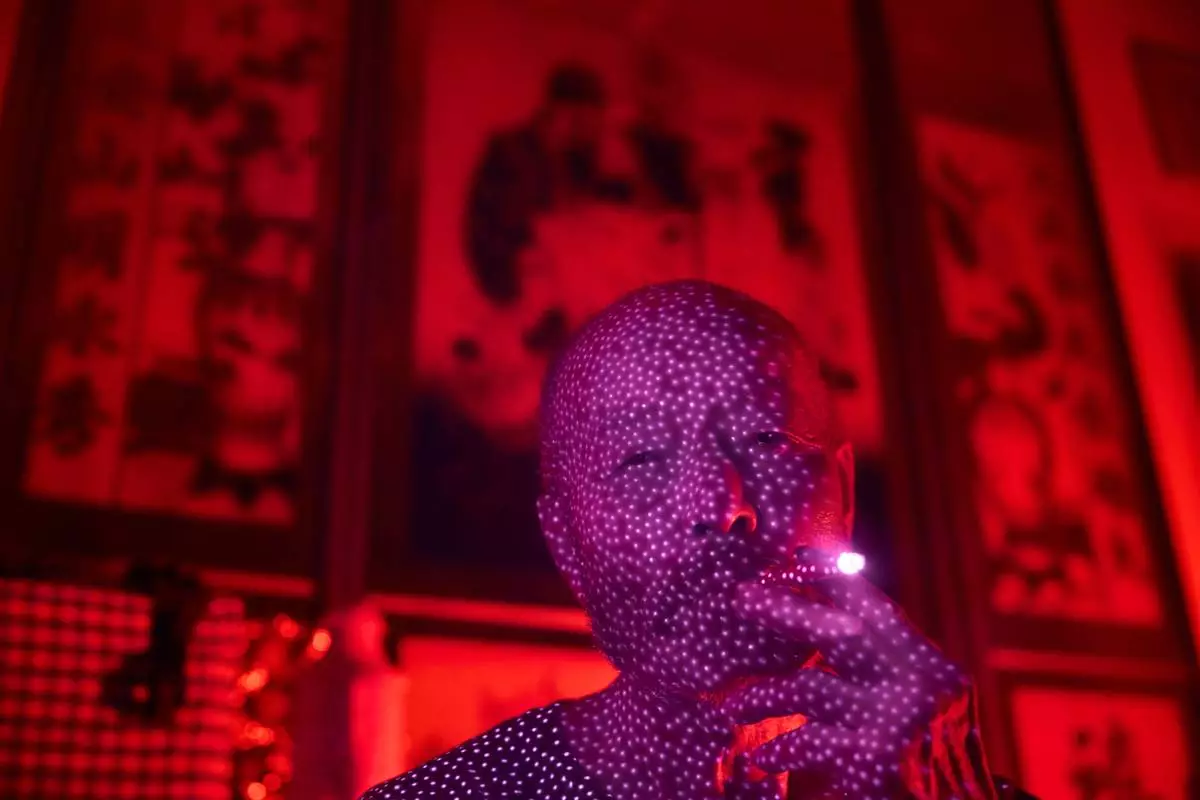
Yang Guoliang, who has been under surveillance by Chinese officials after complaining about a land dispute to the central government in Beijing, is illuminated by cellphone infrared facial recognition beams as he smokes a cigarette inside his home in Changzhou in eastern China's Jiangsu Province, Sept. 7, 2025. (AP Photo/Ng Han Guan)
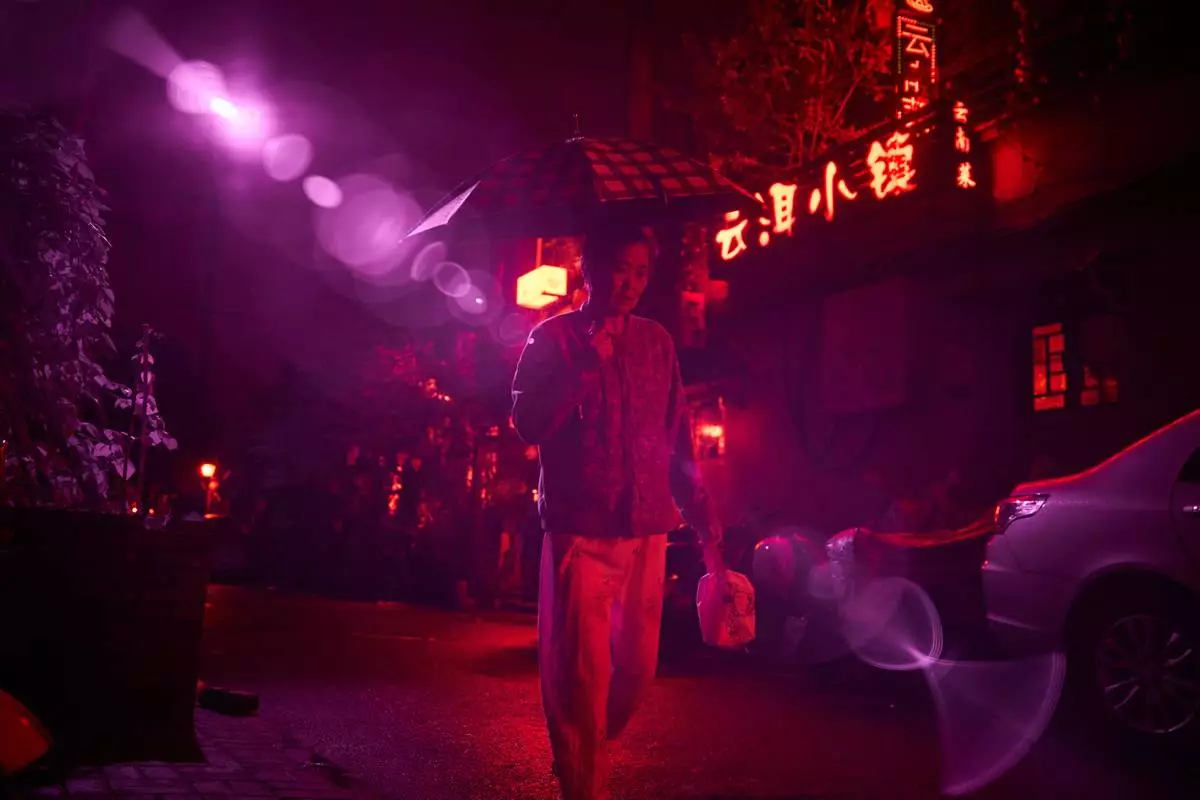
An infrared beam of light shines from a security camera watching over the Beigulou alleyway in Beijing as a pedestrian passes, Oct. 9, 2025. (AP Photo/Ng Han Guan)
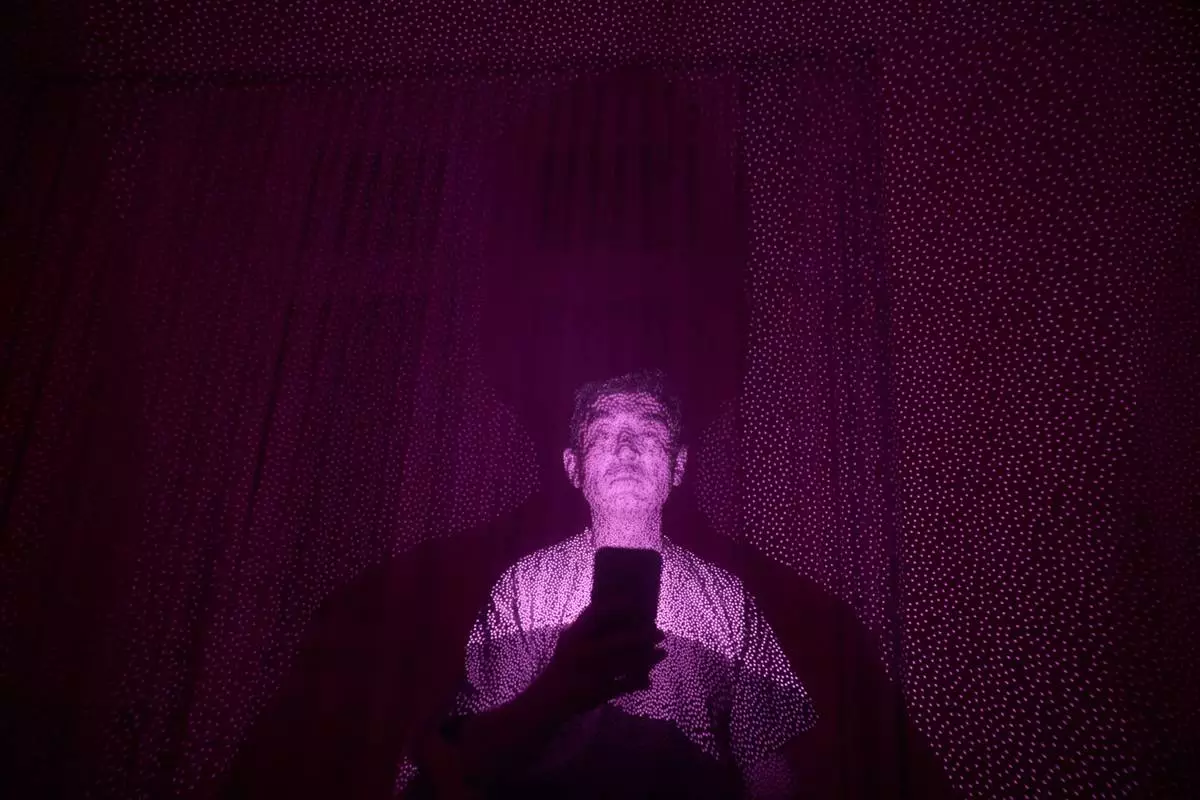
Former Xinjiang government engineer Nureli Abliz, who saw firsthand how surveillance technology flagged thousands of people in China for detention, even when they had committed no crime, is illuminated by cellphone infrared facial recognition beams as he sits for a photo in Mannheim, Germany, where he is currently living in exile, July 23, 2025. (AP Photo/David Goldman)