Skip to Content Facebook Feature Image

PHOTO ESSAY: Seeing the invisible - how AP photographers captured infrared technology

News

PHOTO ESSAY: Seeing the invisible - how AP photographers captured infrared technology
News

News

PHOTO ESSAY: Seeing the invisible - how AP photographers captured infrared technology

2025-12-20 03:37 Last Updated At:03:40

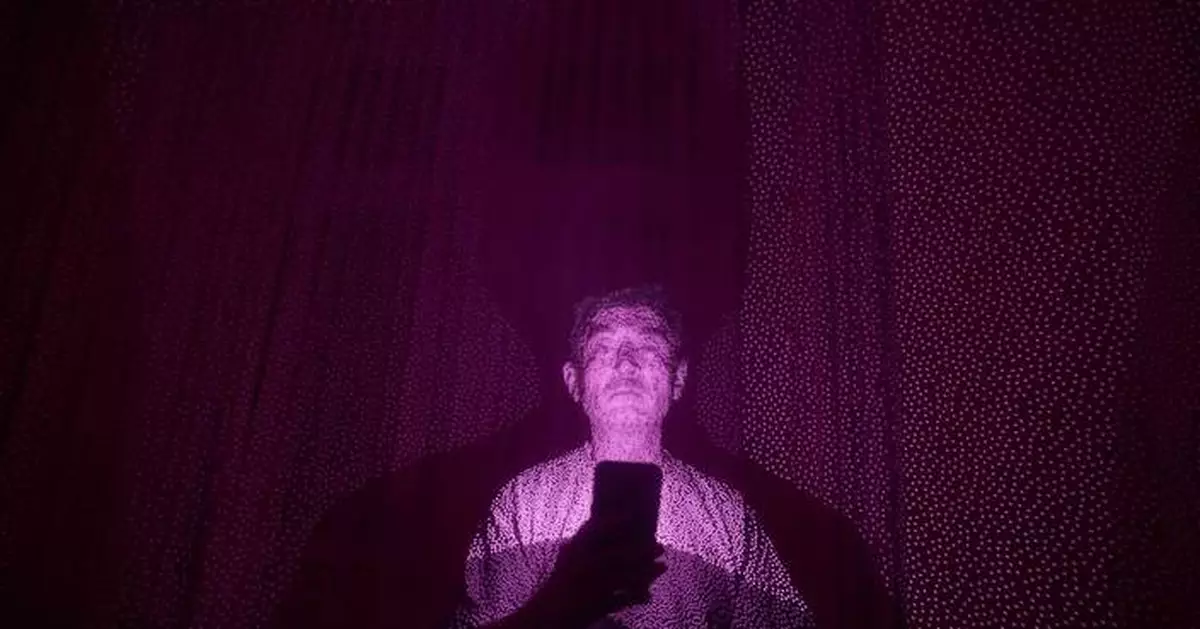
When you unlock a phone, step into view of a security camera or drive past a license plate reader at night, beams of infrared light - invisible to the naked eye — shine onto the unique contours of your face, your body, your license plate lettering. Those infrared beams allow cameras to pick out and recognize individual human beings.

Over the past decade, facial recognition technology has gone from science fiction fantasy to worldwide reality — nowhere more so than in China, home to more security cameras than the rest of the world combined.

More Images
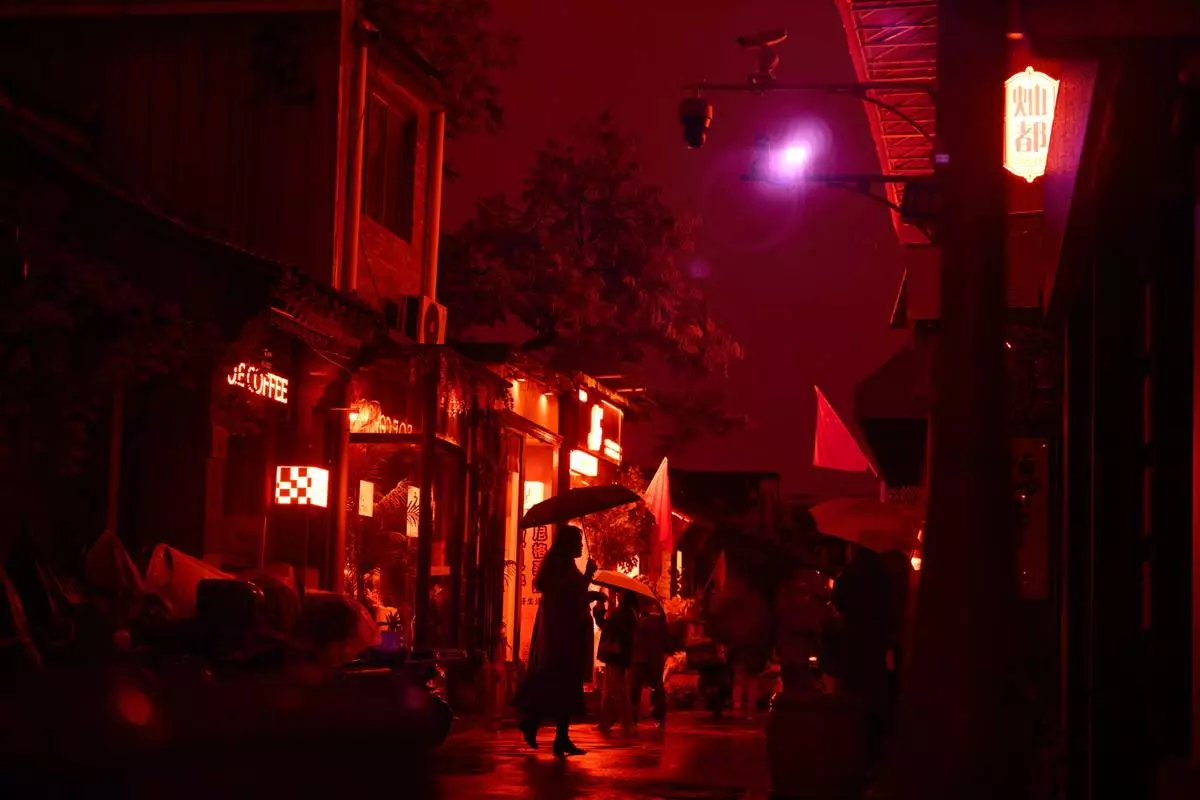
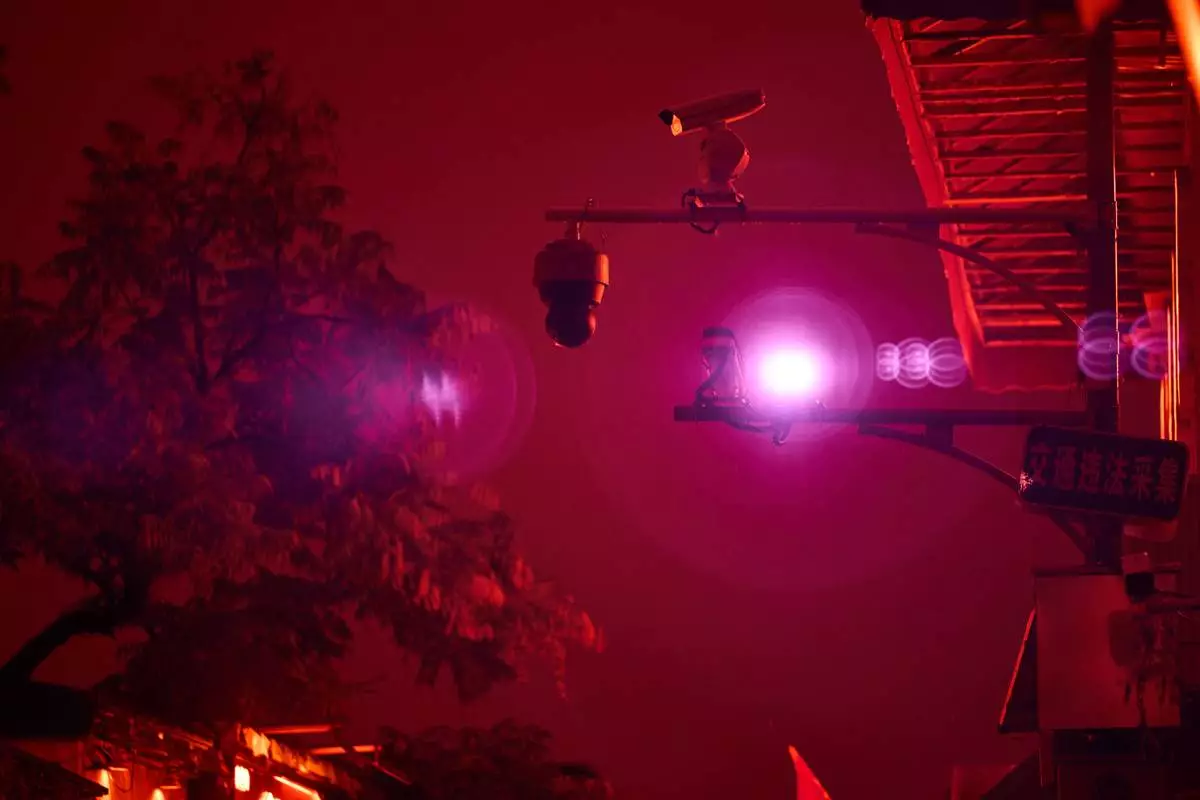
An infrared beam of light shines from a security camera watching over the Wudaoying alley in Beijing as pedestrians walk by, Oct. 10, 2025. (AP Photo/Ng Han Guan)

An infrared beam of light shines from a security camera watching over the Wudaoying alley in Beijing as pedestrians walk by, Oct. 10, 2025. (AP Photo/Ng Han Guan)

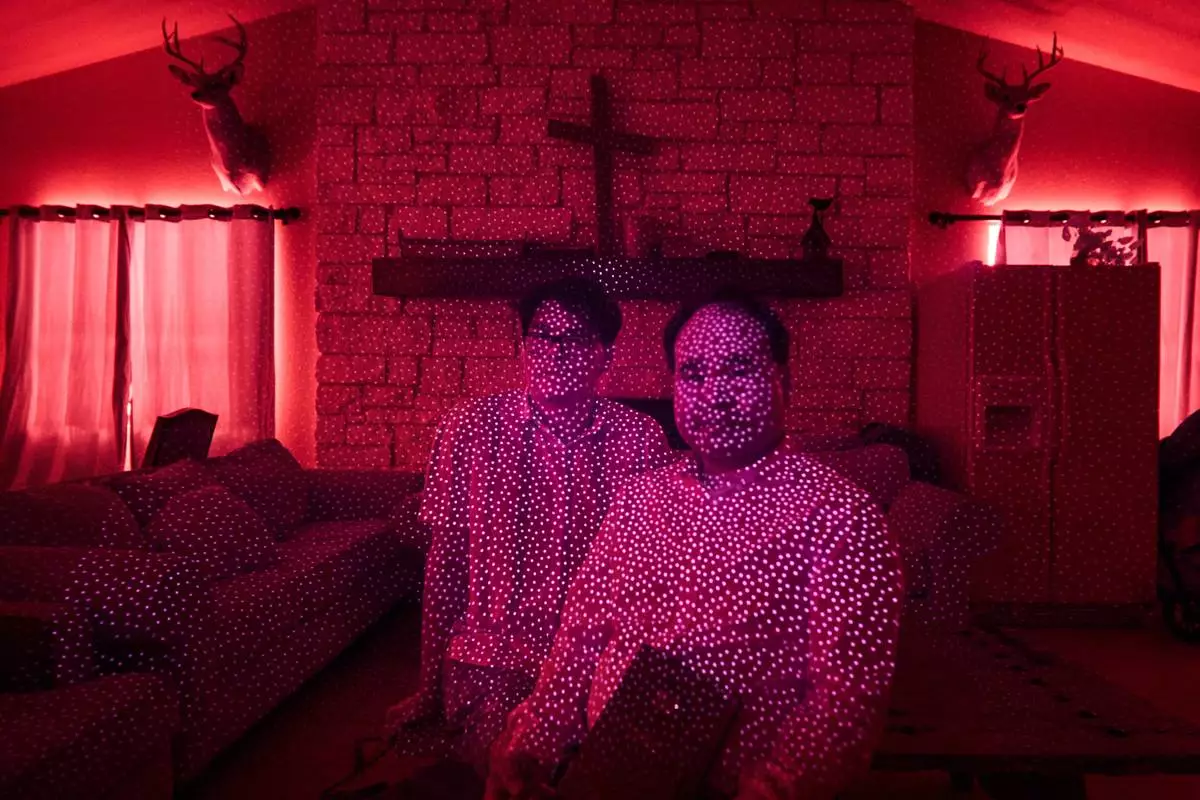
Pastor Pan Yongguang, right, and his son Paul, members of a Chinese church living in exile after fleeing from China, are illuminated by cellphone infrared facial recognition beams while sitting for a photo in the community room of the ranch compound where they're living in Midland, Texas, Oct. 11, 2025. (AP Photo/David Goldman)

Pastor Pan Yongguang, right, and his son Paul, members of a Chinese church living in exile after fleeing from China, are illuminated by cellphone infrared facial recognition beams while sitting for a photo in the community room of the ranch compound where they're living in Midland, Texas, Oct. 11, 2025. (AP Photo/David Goldman)

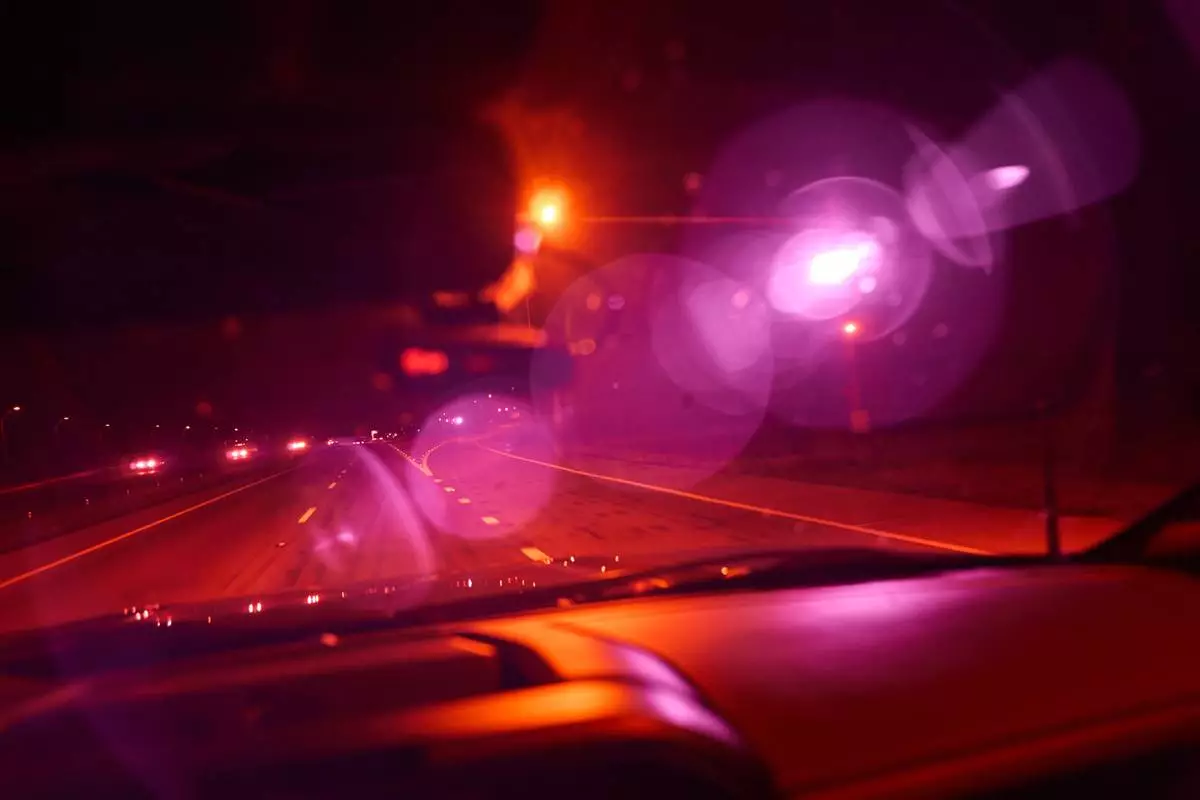
Alek Schott drives past the infrared beam of an automatic license plate reader recording vehicles along Interstate 10, a route he occasionally takes for work trips, near Seguin, Texas, Oct. 15, 2025. (AP Photo/David Goldman)

Alek Schott drives past the infrared beam of an automatic license plate reader recording vehicles along Interstate 10, a route he occasionally takes for work trips, near Seguin, Texas, Oct. 15, 2025. (AP Photo/David Goldman)

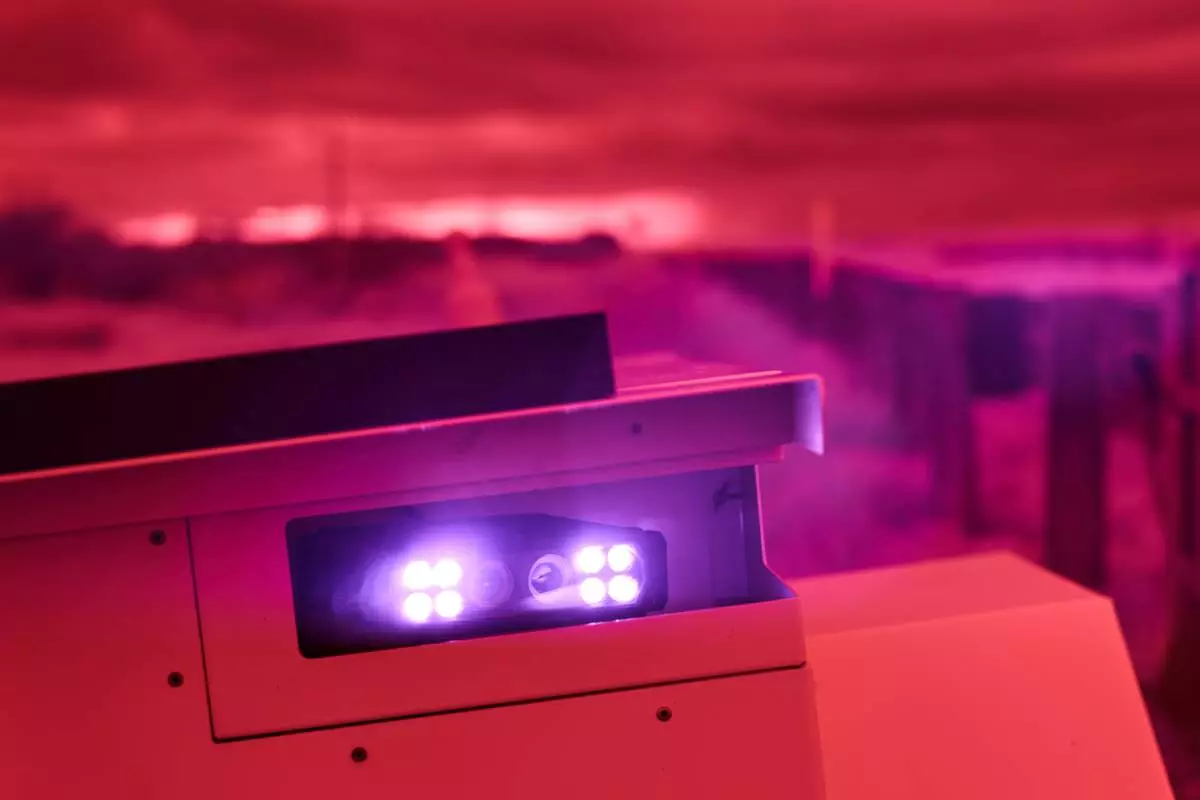
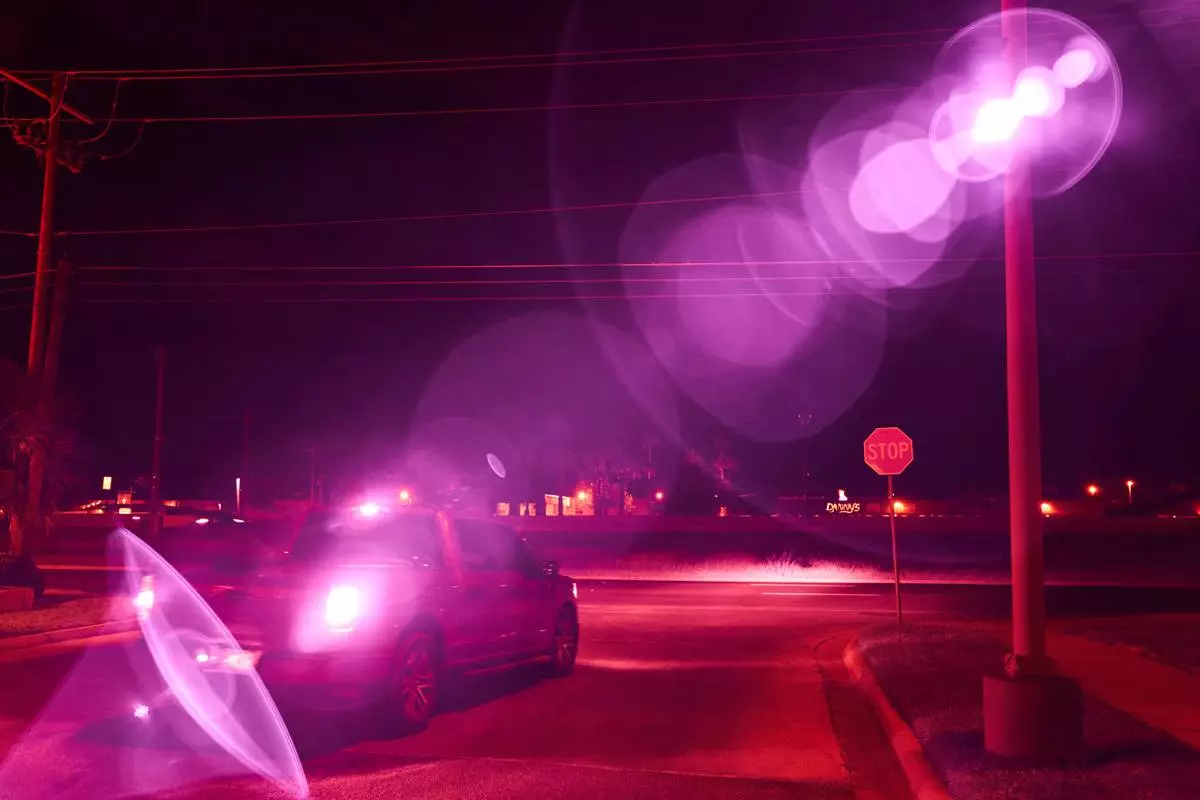
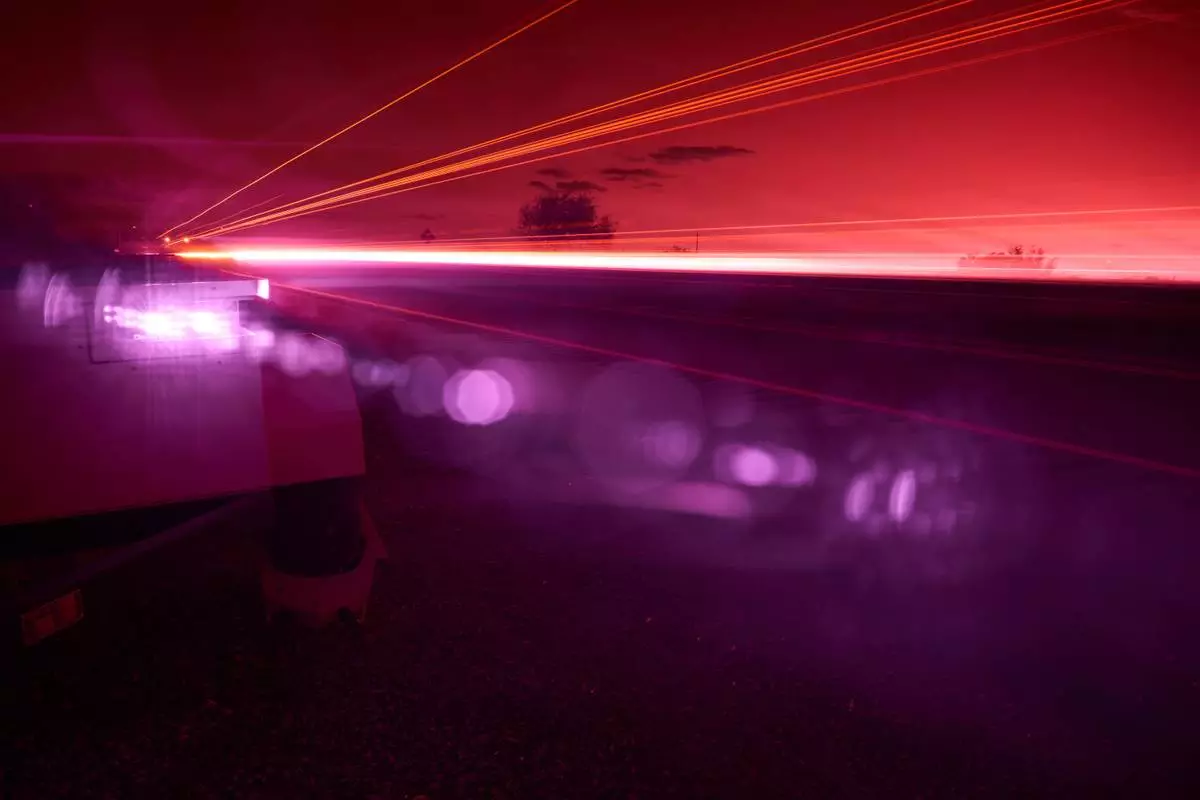
An infrared beam of light shines out of an automatic license plate reader recording vehicles passing along U.S. Highway 83, Oct. 13, 2025, in Laredo, Texas. (AP Photo/David Goldman)

An infrared beam of light shines out of an automatic license plate reader recording vehicles passing along U.S. Highway 83, Oct. 13, 2025, in Laredo, Texas. (AP Photo/David Goldman)

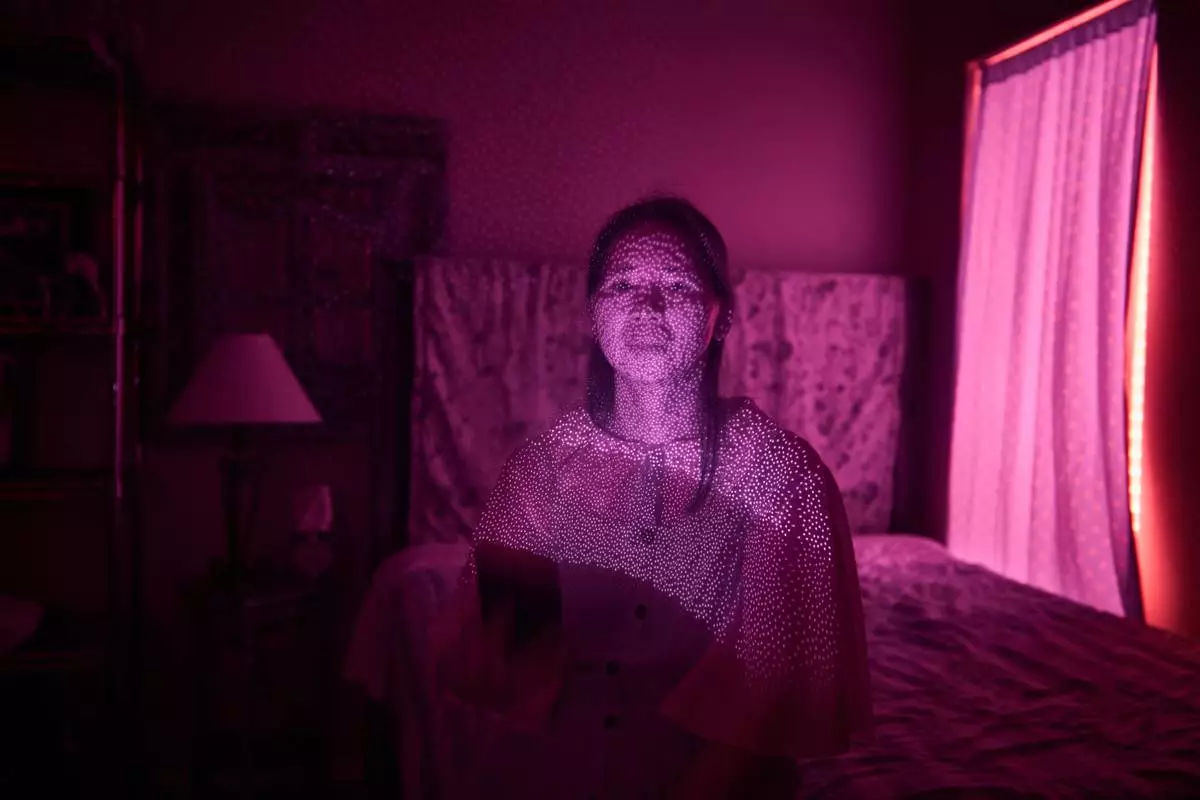
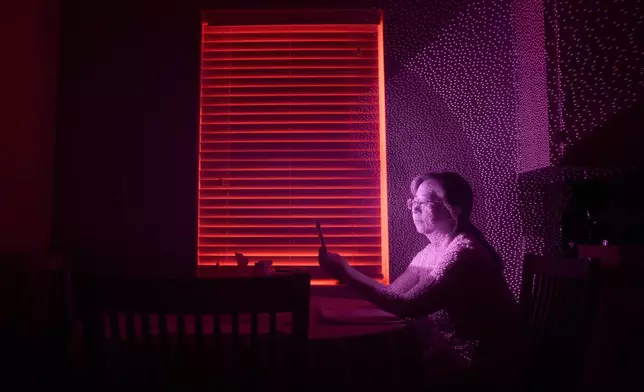
Dong e Li, a member of a Chinese church living in exile after fleeing from China, is illuminated by cellphone infrared facial recognition beams as she sits for a photo in her home, Oct. 13, 2025, in Midland, Texas. (AP Photo/David Goldman)

Dong e Li, a member of a Chinese church living in exile after fleeing from China, is illuminated by cellphone infrared facial recognition beams as she sits for a photo in her home, Oct. 13, 2025, in Midland, Texas. (AP Photo/David Goldman)

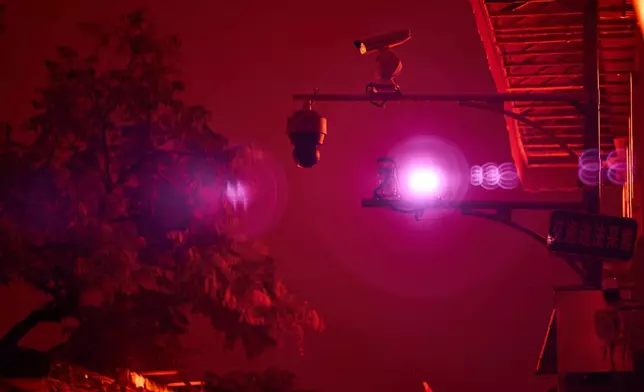
An infrared beam of light shines from a security camera watching over the Wudaoying alley in Beijing, Oct. 10, 2025. (AP Photo/Ng Han Guan)

An infrared beam of light shines from a security camera watching over the Wudaoying alley in Beijing, Oct. 10, 2025. (AP Photo/Ng Han Guan)

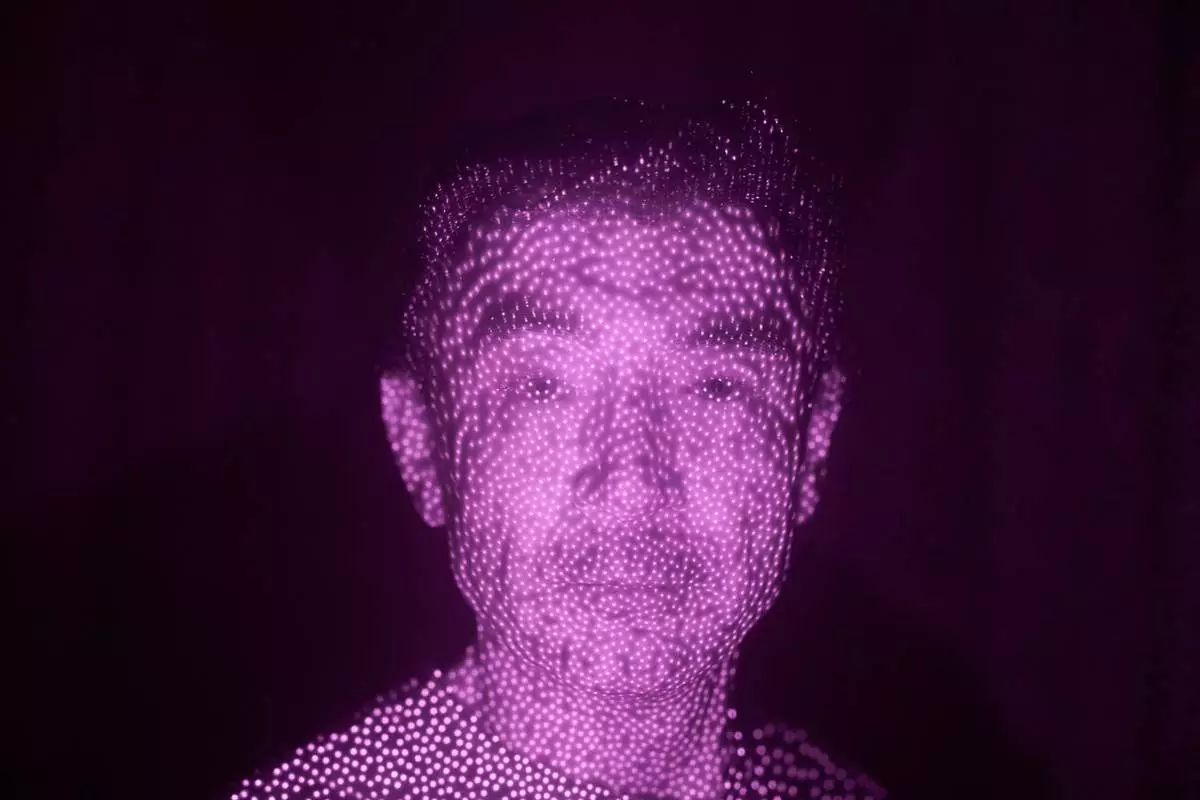
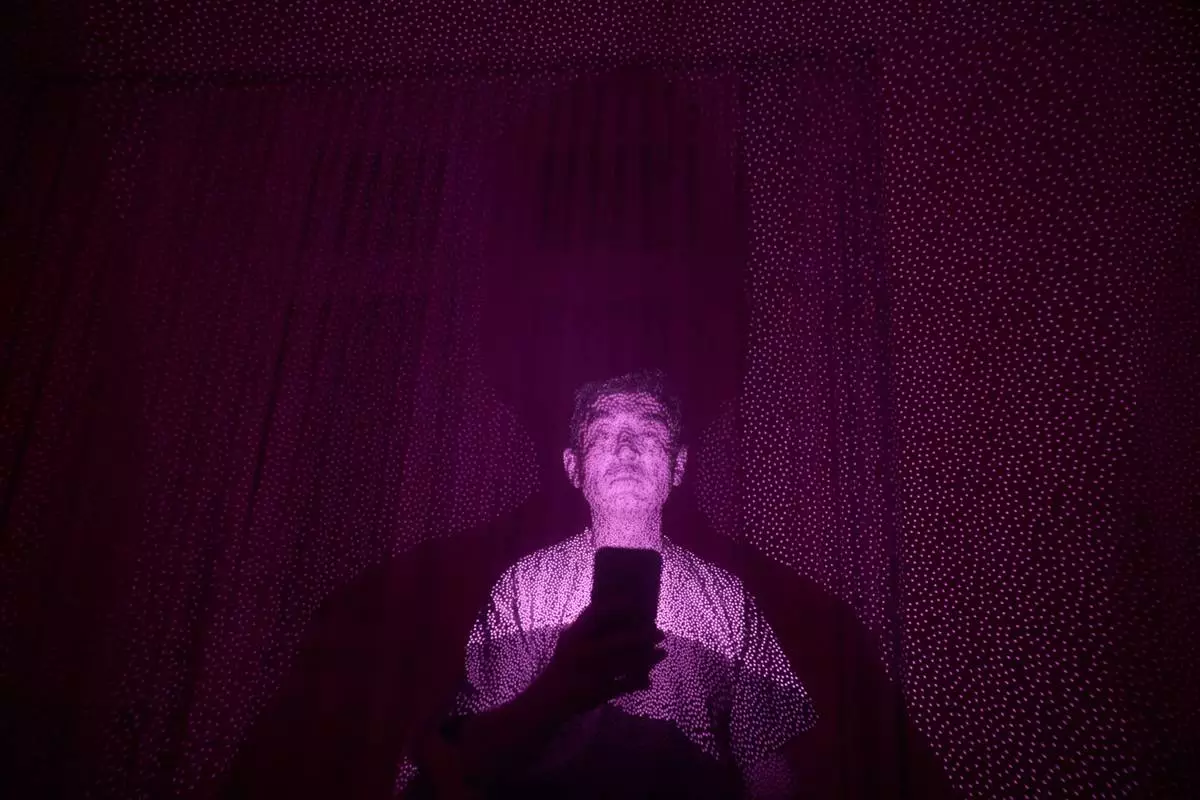
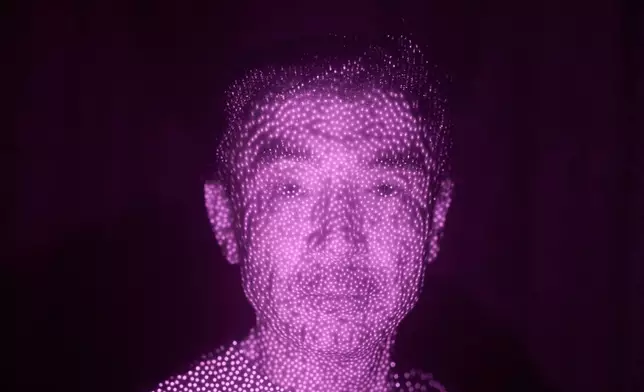
Former Xinjiang government engineer Nureli Abliz, who saw firsthand how surveillance technology flagged thousands of people in China for detention, even when they had committed no crime, is illuminated by cellphone infrared facial recognition beams as he sits for a photo in Mannheim, Germany, where he's currently living in exile, July 23, 2025. (AP Photo/David Goldman)

Former Xinjiang government engineer Nureli Abliz, who saw firsthand how surveillance technology flagged thousands of people in China for detention, even when they had committed no crime, is illuminated by cellphone infrared facial recognition beams as he sits for a photo in Mannheim, Germany, where he's currently living in exile, July 23, 2025. (AP Photo/David Goldman)

Guigiu Chen, who escaped China with her daughters after her husband, prominent rights lawyer Xie Yang, was detained, is illuminated by cellphone infrared facial recognition beams as she sits for a photo, Oct. 12, 2025, in Midland, Texas, where she's living in exile. (AP Photo/David Goldman)

Guigiu Chen, who escaped China with her daughters after her husband, prominent rights lawyer Xie Yang, was detained, is illuminated by cellphone infrared facial recognition beams as she sits for a photo, Oct. 12, 2025, in Midland, Texas, where she's living in exile. (AP Photo/David Goldman)

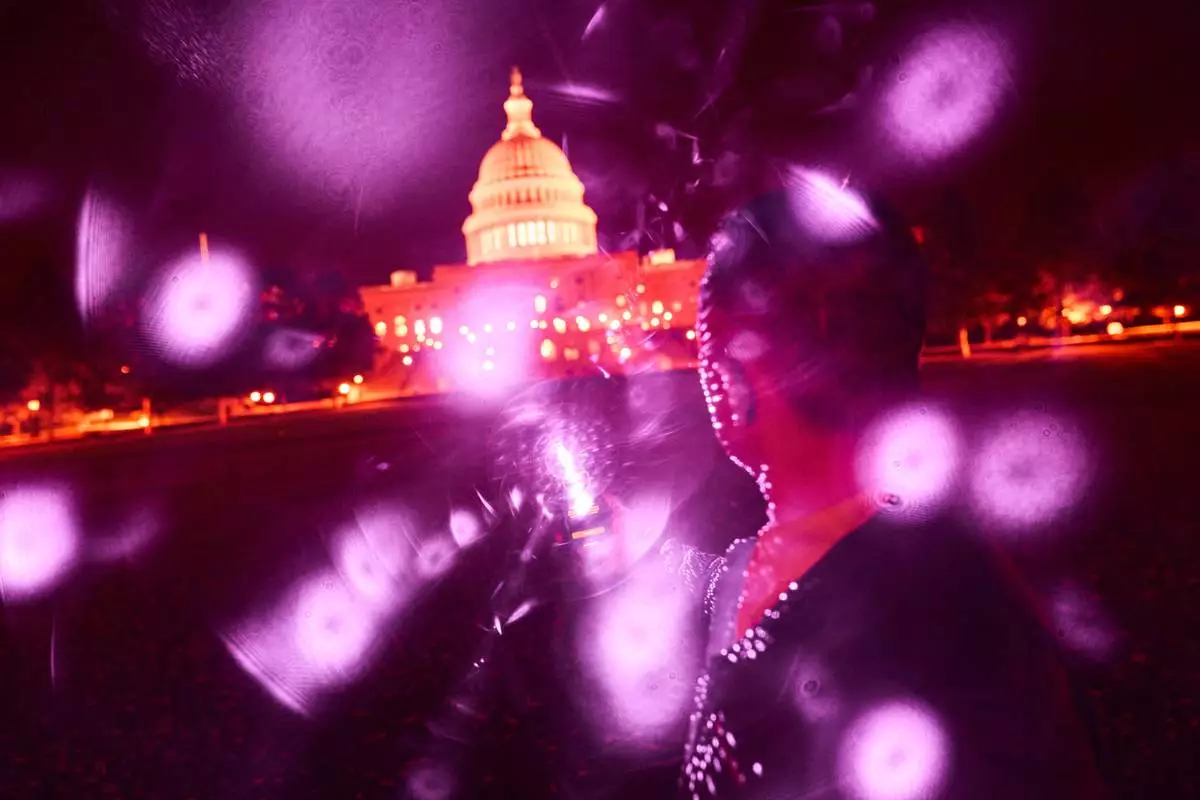
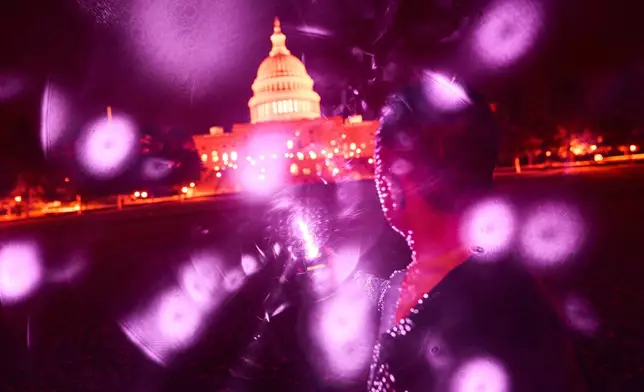
Infrared facial recognition beams are emitted from a cellphone held by a Uyghur man, who asked to remain anonymous for safety reasons, as he’s photographed in front of the U.S. Capitol, Oct. 16, 2025, in Washington, where he’s living in exile after escaping China. (AP Photo/David Goldman)

Infrared facial recognition beams are emitted from a cellphone held by a Uyghur man, who asked to remain anonymous for safety reasons, as he’s photographed in front of the U.S. Capitol, Oct. 16, 2025, in Washington, where he’s living in exile after escaping China. (AP Photo/David Goldman)

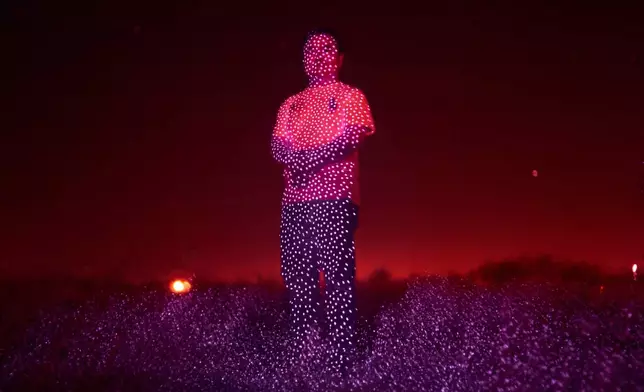
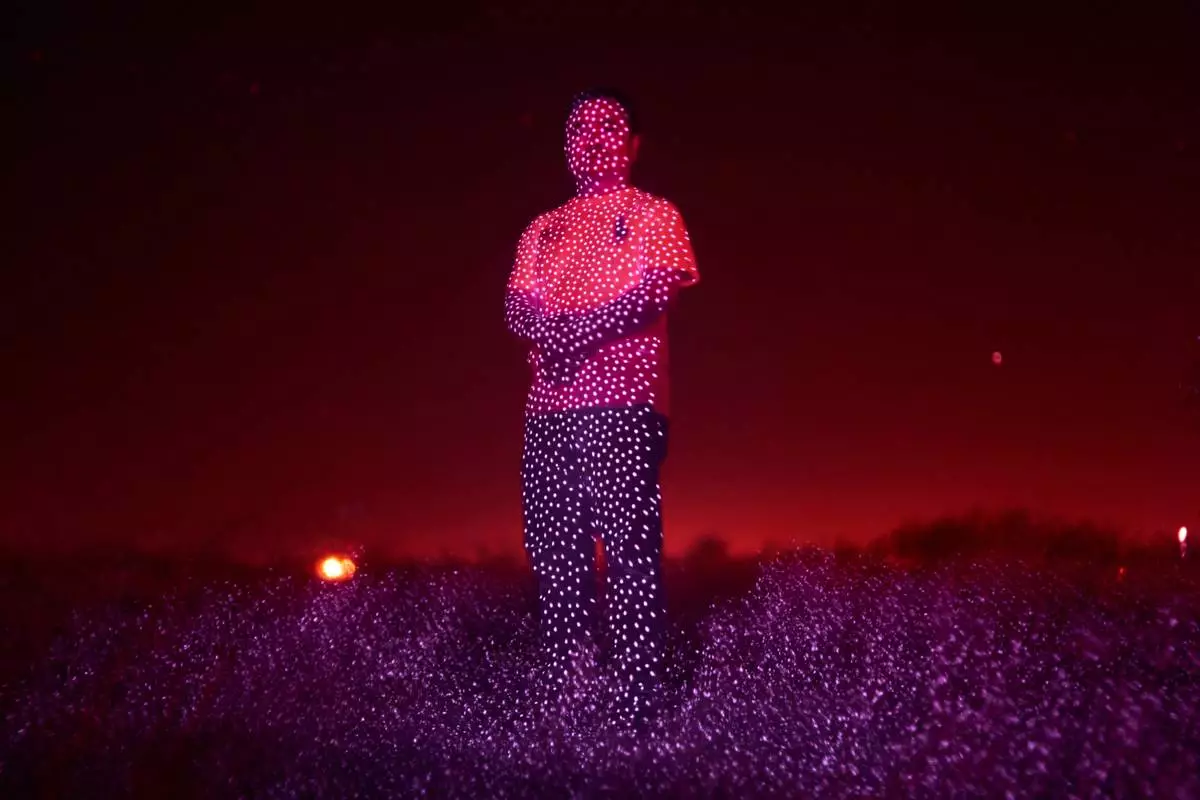
Retired Chinese official Li Chuanliang, who openly criticized the Chinese government after seeing first-hand how surveillance technology built up the government's power and is now being accused of corruption by Beijing, is illuminated by cellphone infrared facial recognition beams as he stands for a photo in the oil fields of Midland, Texas, where he's currently living in exile, Oct. 11, 2025. (AP Photo/David Goldman)

Retired Chinese official Li Chuanliang, who openly criticized the Chinese government after seeing first-hand how surveillance technology built up the government's power and is now being accused of corruption by Beijing, is illuminated by cellphone infrared facial recognition beams as he stands for a photo in the oil fields of Midland, Texas, where he's currently living in exile, Oct. 11, 2025. (AP Photo/David Goldman)

An infrared beam of light shines out of an automatic license plate reader as it records vehicles driving by, Oct. 13, 2025, in Laredo, Texas. (AP Photo/David Goldman)

An infrared beam of light shines out of an automatic license plate reader as it records vehicles driving by, Oct. 13, 2025, in Laredo, Texas. (AP Photo/David Goldman)

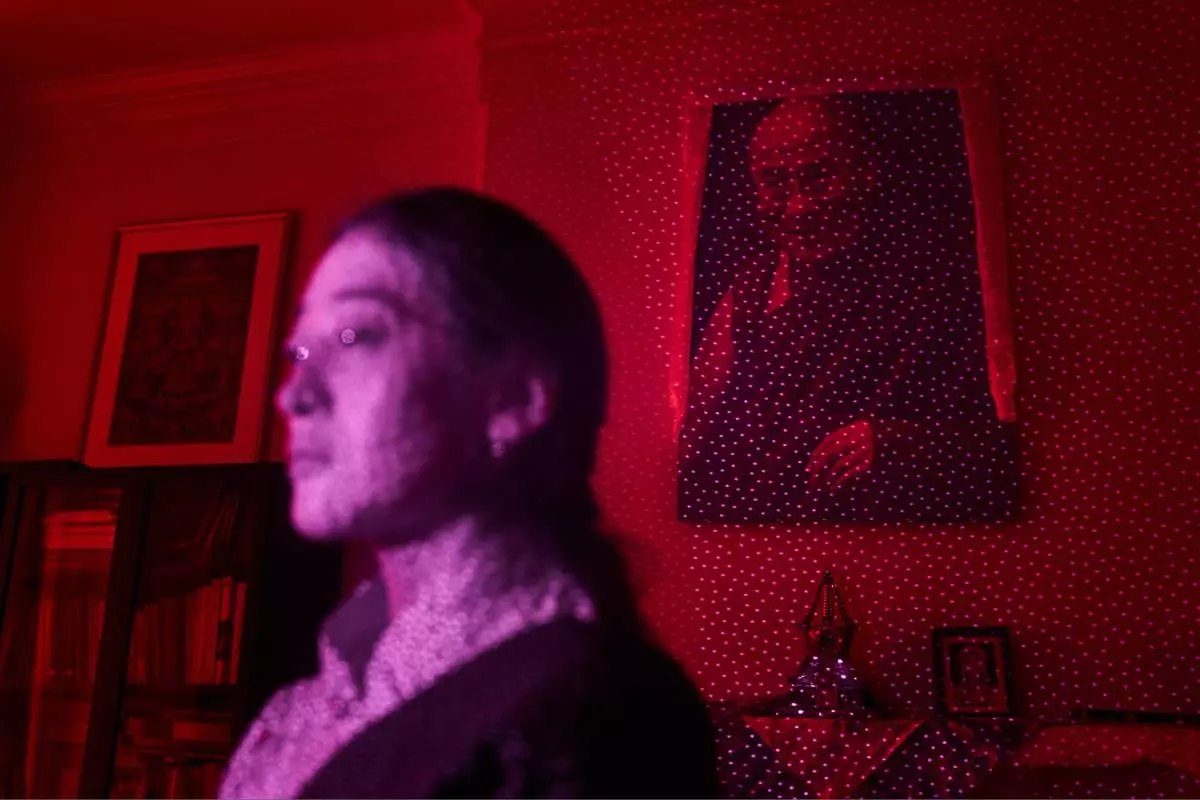
An image of the Dalai Lama and Namkyi, a Tibetan former political prisoner who was arrested and imprisoned at 15 for protesting Chinese rule, are illuminated by cellphone infrared facial recognition beams as Namkyi sits for a photo at the Office of Tibet, Oct. 7, 2025, in Washington. (AP Photo/David Goldman)

An image of the Dalai Lama and Namkyi, a Tibetan former political prisoner who was arrested and imprisoned at 15 for protesting Chinese rule, are illuminated by cellphone infrared facial recognition beams as Namkyi sits for a photo at the Office of Tibet, Oct. 7, 2025, in Washington. (AP Photo/David Goldman)

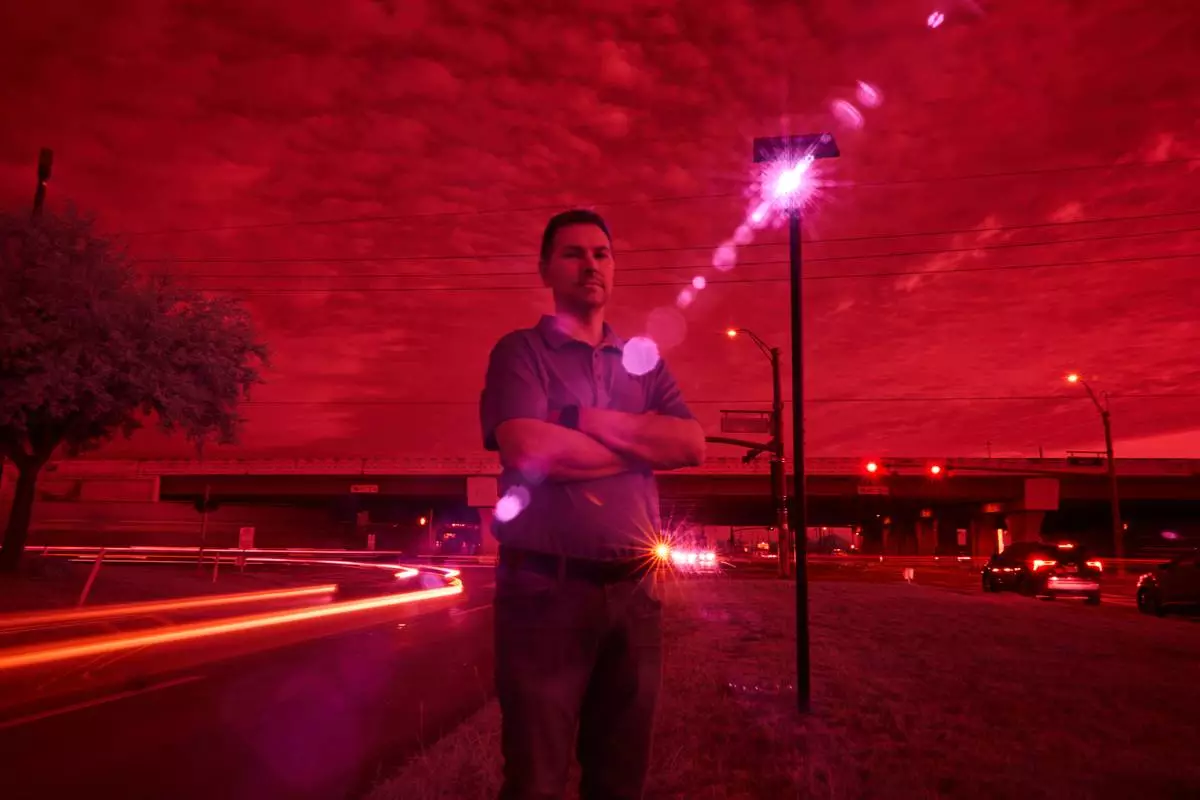
Alek Schott, who filed a lawsuit alleging violations of his constitutional rights when Texas sheriff's deputies stopped and searched his vehicle at the request of Border Patrol agents, is photographed, as an infrared beam of light from a Flock Safety automatic license plate reader records passing vehicles driving near his neighborhood, Oct. 16, 2025, in Houston. (AP Photo/David Goldman)

Alek Schott, who filed a lawsuit alleging violations of his constitutional rights when Texas sheriff's deputies stopped and searched his vehicle at the request of Border Patrol agents, is photographed, as an infrared beam of light from a Flock Safety automatic license plate reader records passing vehicles driving near his neighborhood, Oct. 16, 2025, in Houston. (AP Photo/David Goldman)

Wensheng Wen, rear right, and his wife, Lou Guangyzing, along with their children Xin, 11, from right, Gehua, 9, Jinghua, 3, Rou, 6, and Younghua, 3, members of a Chinese church living in exile after fleeing from China, are illuminated by beams of pulsed laser light from a cellphone's LiDAR scanner as they sit for a photo, Oct. 12, 2025, in Midland, Texas. (AP Photo/David Goldman)

Wensheng Wen, rear right, and his wife, Lou Guangyzing, along with their children Xin, 11, from right, Gehua, 9, Jinghua, 3, Rou, 6, and Younghua, 3, members of a Chinese church living in exile after fleeing from China, are illuminated by beams of pulsed laser light from a cellphone's LiDAR scanner as they sit for a photo, Oct. 12, 2025, in Midland, Texas. (AP Photo/David Goldman)

An infrared beam of light shines out of an automatic license plate reader recording vehicles passing along U.S. Highway 83, Oct. 13, 2025, in Laredo, Texas. (AP Photo/David Goldman)

An infrared beam of light shines out of an automatic license plate reader recording vehicles passing along U.S. Highway 83, Oct. 13, 2025, in Laredo, Texas. (AP Photo/David Goldman)

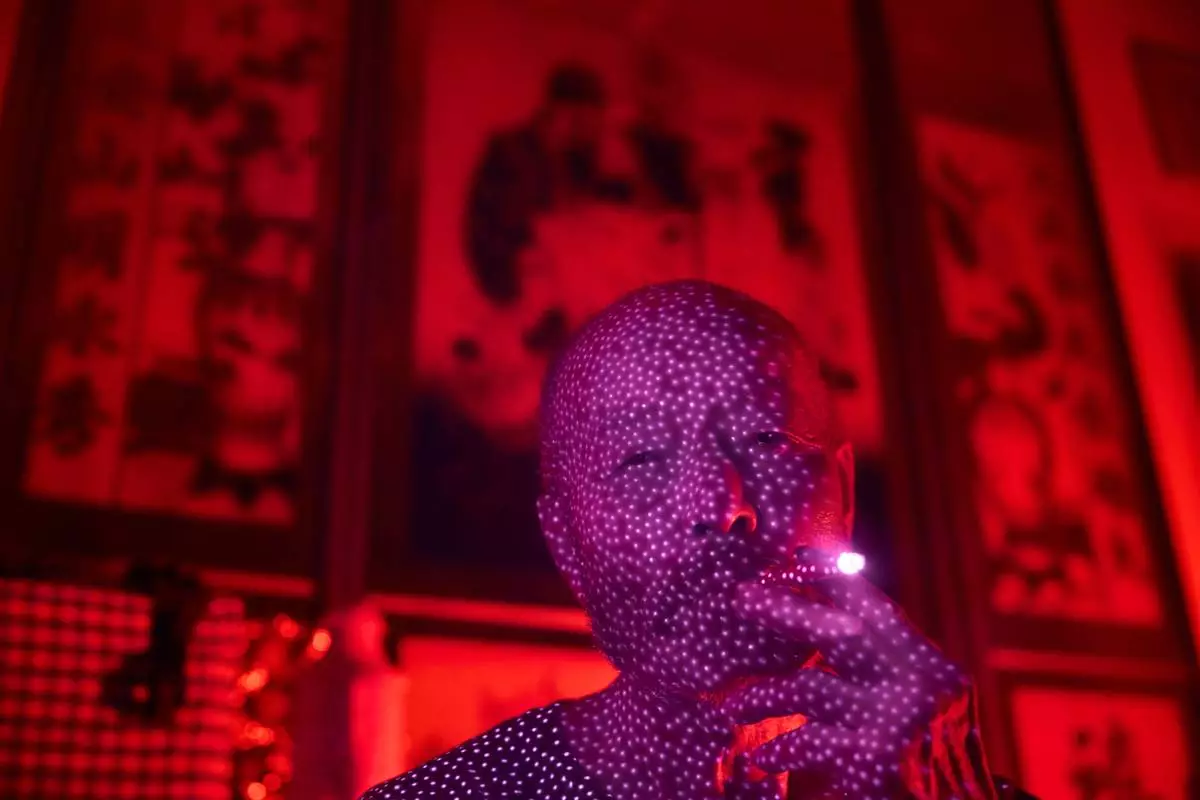
Yang Guoliang, who has been under surveillance by Chinese officials after complaining about a land dispute to the central government in Beijing, is illuminated by cellphone infrared facial recognition beams as he smokes a cigarette inside his home in Changzhou in eastern China's Jiangsu Province, Sept. 7, 2025. (AP Photo/Ng Han Guan)

Yang Guoliang, who has been under surveillance by Chinese officials after complaining about a land dispute to the central government in Beijing, is illuminated by cellphone infrared facial recognition beams as he smokes a cigarette inside his home in Changzhou in eastern China's Jiangsu Province, Sept. 7, 2025. (AP Photo/Ng Han Guan)

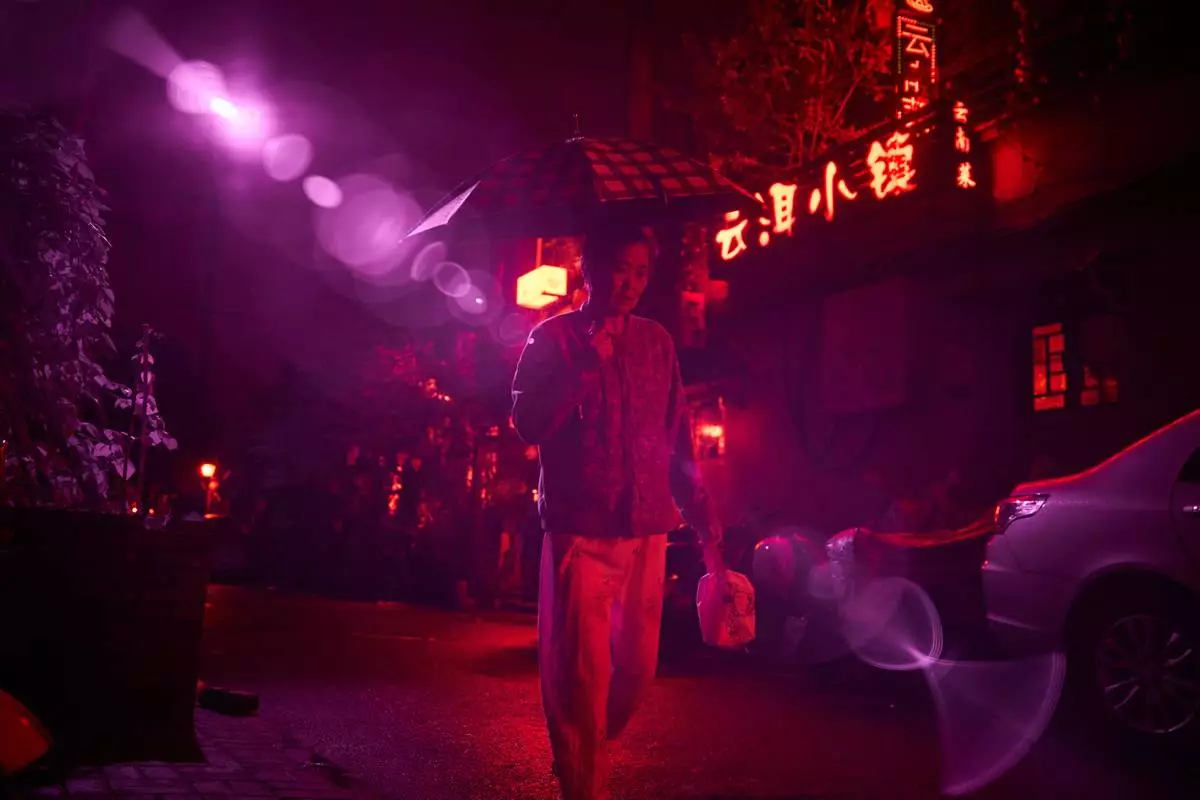
An infrared beam of light shines from a security camera watching over the Beigulou alleyway in Beijing as a pedestrian passes, Oct. 9, 2025. (AP Photo/Ng Han Guan)

An infrared beam of light shines from a security camera watching over the Beigulou alleyway in Beijing as a pedestrian passes, Oct. 9, 2025. (AP Photo/Ng Han Guan)

Former Xinjiang government engineer Nureli Abliz, who saw firsthand how surveillance technology flagged thousands of people in China for detention, even when they had committed no crime, is illuminated by cellphone infrared facial recognition beams as he sits for a photo in Mannheim, Germany, where he is currently living in exile, July 23, 2025. (AP Photo/David Goldman)

Former Xinjiang government engineer Nureli Abliz, who saw firsthand how surveillance technology flagged thousands of people in China for detention, even when they had committed no crime, is illuminated by cellphone infrared facial recognition beams as he sits for a photo in Mannheim, Germany, where he is currently living in exile, July 23, 2025. (AP Photo/David Goldman)

At airports and train stations, passengers line up for face scans at gates and by officers.

On the streets, cameras scan pedestrians and flag vehicles breaking traffic rules.

By law, anyone registering new SIM cards in China must show themselves to a face scanning camera, the images stored in telecom databases. And until recently, Chinese authorities required most guests to scan their faces when checking in to a hotel.

For many, such technology has offered convenience and safety, seamlessly woven into the backdrop of their lives. But for some, it's become an intrusive form of state control.

Associated Press investigations have found that such surveillance systems in China were to a large degree designed and built by American companies, playing a far greater role in enabling human rights abuses than previously known. It has cemented the rule of China's ruling Communist Party, offering it a powerful tool to control and monitor perceived threats to the state like dissidents, ethnic minorities and even its own officials.

Dozens who spoke to AP, from Tibetan activists to ordinary farmers to a former vice mayor, described being tracked and monitored by vast networks of cameras that stud the country, hampering their movements and alerting the police to their activities.

For years, such technology faced legal barriers in the country where it was first developed, the United States. But over the past five years, the U.S. Border Patrol has vastly expanded its surveillance powers, monitoring millions of American drivers nationwide in a secretive program to identify and detain people whose travel patterns it deems suspicious, AP found.

Under the Trump administration, billions are now being poured into a vast array of surveillance systems, including license plate readers across the U.S. that have ensnared innocent drivers for little more than taking a quick trip to areas near the border.

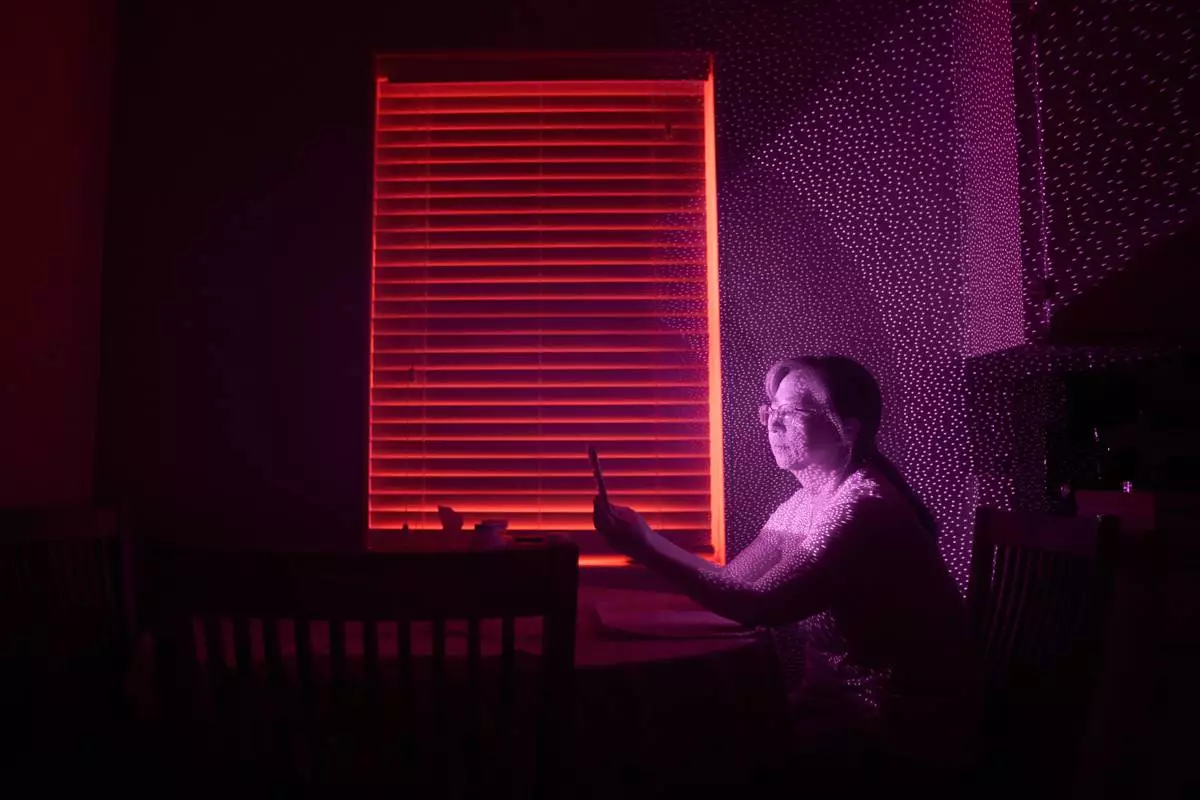
In this series of photographs, an infrared filter was used on a modified camera converted to capture the full spectrum of light, including ultraviolet, visible, and infrared.

This filter, which cuts out some visible light to better reveal infrared, is red by design in order to block certain light wavelengths.

AP photographers on three continents snapped photos showing how these beams are used to track vehicles and people, enable facial recognition - and ultimately, assert digital control.

This is a documentary photo story curated by AP photo editors.

An infrared beam of light shines from a security camera watching over the Wudaoying alley in Beijing as pedestrians walk by, Oct. 10, 2025. (AP Photo/Ng Han Guan)
An infrared beam of light shines from a security camera watching over the Wudaoying alley in Beijing as pedestrians walk by, Oct. 10, 2025. (AP Photo/Ng Han Guan)

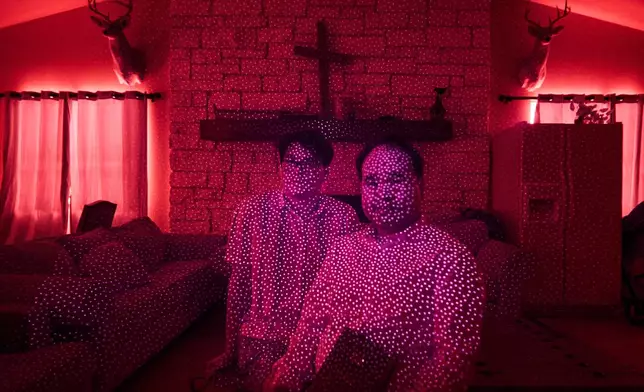
Pastor Pan Yongguang, right, and his son Paul, members of a Chinese church living in exile after fleeing from China, are illuminated by cellphone infrared facial recognition beams while sitting for a photo in the community room of the ranch compound where they're living in Midland, Texas, Oct. 11, 2025. (AP Photo/David Goldman)

Pastor Pan Yongguang, right, and his son Paul, members of a Chinese church living in exile after fleeing from China, are illuminated by cellphone infrared facial recognition beams while sitting for a photo in the community room of the ranch compound where they're living in Midland, Texas, Oct. 11, 2025. (AP Photo/David Goldman)

Alek Schott drives past the infrared beam of an automatic license plate reader recording vehicles along Interstate 10, a route he occasionally takes for work trips, near Seguin, Texas, Oct. 15, 2025. (AP Photo/David Goldman)
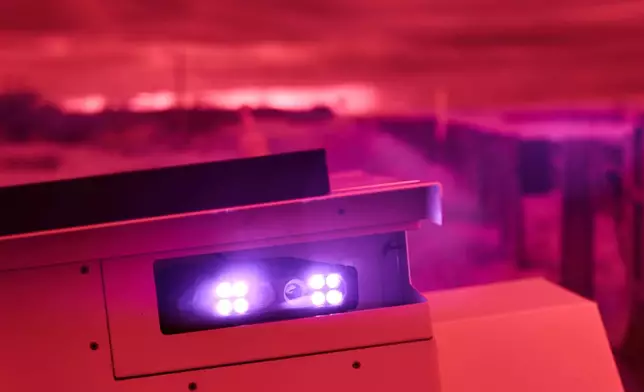
Alek Schott drives past the infrared beam of an automatic license plate reader recording vehicles along Interstate 10, a route he occasionally takes for work trips, near Seguin, Texas, Oct. 15, 2025. (AP Photo/David Goldman)

An infrared beam of light shines out of an automatic license plate reader recording vehicles passing along U.S. Highway 83, Oct. 13, 2025, in Laredo, Texas. (AP Photo/David Goldman)
An infrared beam of light shines out of an automatic license plate reader recording vehicles passing along U.S. Highway 83, Oct. 13, 2025, in Laredo, Texas. (AP Photo/David Goldman)

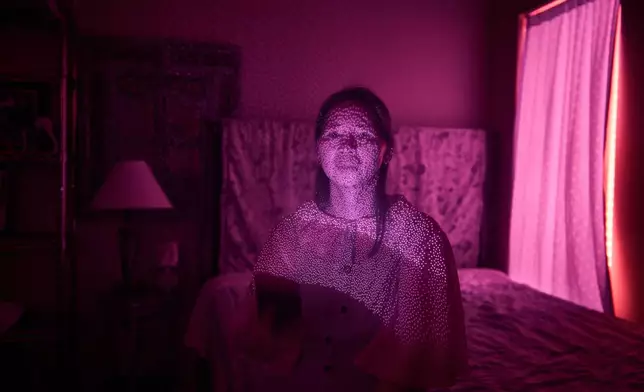
Dong e Li, a member of a Chinese church living in exile after fleeing from China, is illuminated by cellphone infrared facial recognition beams as she sits for a photo in her home, Oct. 13, 2025, in Midland, Texas. (AP Photo/David Goldman)
Dong e Li, a member of a Chinese church living in exile after fleeing from China, is illuminated by cellphone infrared facial recognition beams as she sits for a photo in her home, Oct. 13, 2025, in Midland, Texas. (AP Photo/David Goldman)

An infrared beam of light shines from a security camera watching over the Wudaoying alley in Beijing, Oct. 10, 2025. (AP Photo/Ng Han Guan)
An infrared beam of light shines from a security camera watching over the Wudaoying alley in Beijing, Oct. 10, 2025. (AP Photo/Ng Han Guan)

Former Xinjiang government engineer Nureli Abliz, who saw firsthand how surveillance technology flagged thousands of people in China for detention, even when they had committed no crime, is illuminated by cellphone infrared facial recognition beams as he sits for a photo in Mannheim, Germany, where he's currently living in exile, July 23, 2025. (AP Photo/David Goldman)
Former Xinjiang government engineer Nureli Abliz, who saw firsthand how surveillance technology flagged thousands of people in China for detention, even when they had committed no crime, is illuminated by cellphone infrared facial recognition beams as he sits for a photo in Mannheim, Germany, where he's currently living in exile, July 23, 2025. (AP Photo/David Goldman)

Guigiu Chen, who escaped China with her daughters after her husband, prominent rights lawyer Xie Yang, was detained, is illuminated by cellphone infrared facial recognition beams as she sits for a photo, Oct. 12, 2025, in Midland, Texas, where she's living in exile. (AP Photo/David Goldman)
Guigiu Chen, who escaped China with her daughters after her husband, prominent rights lawyer Xie Yang, was detained, is illuminated by cellphone infrared facial recognition beams as she sits for a photo, Oct. 12, 2025, in Midland, Texas, where she's living in exile. (AP Photo/David Goldman)

Infrared facial recognition beams are emitted from a cellphone held by a Uyghur man, who asked to remain anonymous for safety reasons, as he’s photographed in front of the U.S. Capitol, Oct. 16, 2025, in Washington, where he’s living in exile after escaping China. (AP Photo/David Goldman)
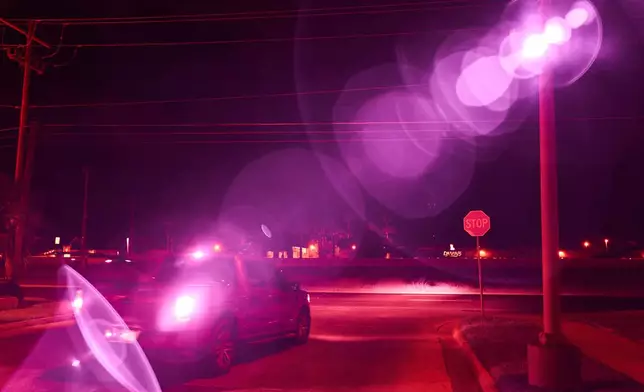
Infrared facial recognition beams are emitted from a cellphone held by a Uyghur man, who asked to remain anonymous for safety reasons, as he’s photographed in front of the U.S. Capitol, Oct. 16, 2025, in Washington, where he’s living in exile after escaping China. (AP Photo/David Goldman)

Retired Chinese official Li Chuanliang, who openly criticized the Chinese government after seeing first-hand how surveillance technology built up the government's power and is now being accused of corruption by Beijing, is illuminated by cellphone infrared facial recognition beams as he stands for a photo in the oil fields of Midland, Texas, where he's currently living in exile, Oct. 11, 2025. (AP Photo/David Goldman)

Retired Chinese official Li Chuanliang, who openly criticized the Chinese government after seeing first-hand how surveillance technology built up the government's power and is now being accused of corruption by Beijing, is illuminated by cellphone infrared facial recognition beams as he stands for a photo in the oil fields of Midland, Texas, where he's currently living in exile, Oct. 11, 2025. (AP Photo/David Goldman)

An infrared beam of light shines out of an automatic license plate reader as it records vehicles driving by, Oct. 13, 2025, in Laredo, Texas. (AP Photo/David Goldman)

An infrared beam of light shines out of an automatic license plate reader as it records vehicles driving by, Oct. 13, 2025, in Laredo, Texas. (AP Photo/David Goldman)

An image of the Dalai Lama and Namkyi, a Tibetan former political prisoner who was arrested and imprisoned at 15 for protesting Chinese rule, are illuminated by cellphone infrared facial recognition beams as Namkyi sits for a photo at the Office of Tibet, Oct. 7, 2025, in Washington. (AP Photo/David Goldman)
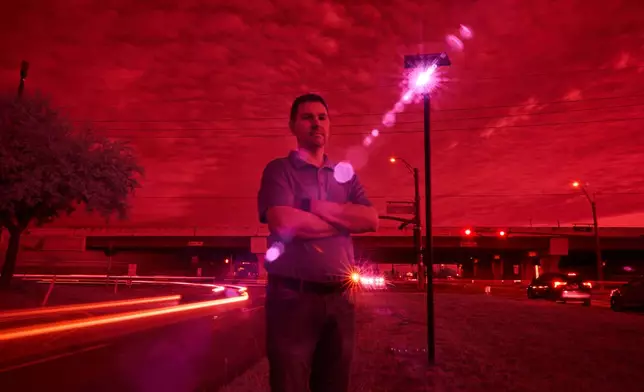
An image of the Dalai Lama and Namkyi, a Tibetan former political prisoner who was arrested and imprisoned at 15 for protesting Chinese rule, are illuminated by cellphone infrared facial recognition beams as Namkyi sits for a photo at the Office of Tibet, Oct. 7, 2025, in Washington. (AP Photo/David Goldman)

Alek Schott, who filed a lawsuit alleging violations of his constitutional rights when Texas sheriff's deputies stopped and searched his vehicle at the request of Border Patrol agents, is photographed, as an infrared beam of light from a Flock Safety automatic license plate reader records passing vehicles driving near his neighborhood, Oct. 16, 2025, in Houston. (AP Photo/David Goldman)

Alek Schott, who filed a lawsuit alleging violations of his constitutional rights when Texas sheriff's deputies stopped and searched his vehicle at the request of Border Patrol agents, is photographed, as an infrared beam of light from a Flock Safety automatic license plate reader records passing vehicles driving near his neighborhood, Oct. 16, 2025, in Houston. (AP Photo/David Goldman)

Wensheng Wen, rear right, and his wife, Lou Guangyzing, along with their children Xin, 11, from right, Gehua, 9, Jinghua, 3, Rou, 6, and Younghua, 3, members of a Chinese church living in exile after fleeing from China, are illuminated by beams of pulsed laser light from a cellphone's LiDAR scanner as they sit for a photo, Oct. 12, 2025, in Midland, Texas. (AP Photo/David Goldman)

Wensheng Wen, rear right, and his wife, Lou Guangyzing, along with their children Xin, 11, from right, Gehua, 9, Jinghua, 3, Rou, 6, and Younghua, 3, members of a Chinese church living in exile after fleeing from China, are illuminated by beams of pulsed laser light from a cellphone's LiDAR scanner as they sit for a photo, Oct. 12, 2025, in Midland, Texas. (AP Photo/David Goldman)

An infrared beam of light shines out of an automatic license plate reader recording vehicles passing along U.S. Highway 83, Oct. 13, 2025, in Laredo, Texas. (AP Photo/David Goldman)

An infrared beam of light shines out of an automatic license plate reader recording vehicles passing along U.S. Highway 83, Oct. 13, 2025, in Laredo, Texas. (AP Photo/David Goldman)

Yang Guoliang, who has been under surveillance by Chinese officials after complaining about a land dispute to the central government in Beijing, is illuminated by cellphone infrared facial recognition beams as he smokes a cigarette inside his home in Changzhou in eastern China's Jiangsu Province, Sept. 7, 2025. (AP Photo/Ng Han Guan)
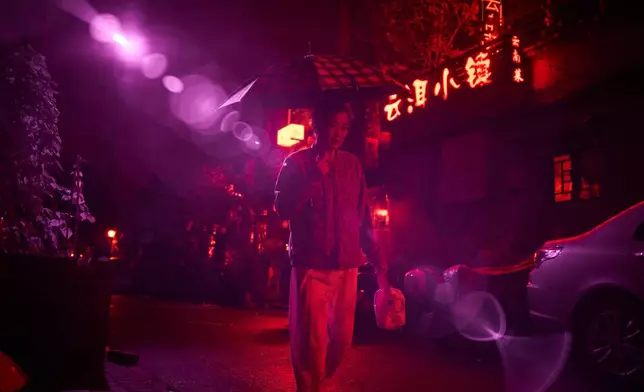
Yang Guoliang, who has been under surveillance by Chinese officials after complaining about a land dispute to the central government in Beijing, is illuminated by cellphone infrared facial recognition beams as he smokes a cigarette inside his home in Changzhou in eastern China's Jiangsu Province, Sept. 7, 2025. (AP Photo/Ng Han Guan)

An infrared beam of light shines from a security camera watching over the Beigulou alleyway in Beijing as a pedestrian passes, Oct. 9, 2025. (AP Photo/Ng Han Guan)
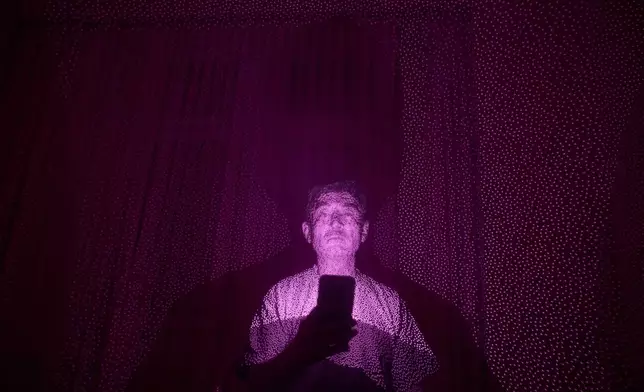
An infrared beam of light shines from a security camera watching over the Beigulou alleyway in Beijing as a pedestrian passes, Oct. 9, 2025. (AP Photo/Ng Han Guan)

Former Xinjiang government engineer Nureli Abliz, who saw firsthand how surveillance technology flagged thousands of people in China for detention, even when they had committed no crime, is illuminated by cellphone infrared facial recognition beams as he sits for a photo in Mannheim, Germany, where he is currently living in exile, July 23, 2025. (AP Photo/David Goldman)
Former Xinjiang government engineer Nureli Abliz, who saw firsthand how surveillance technology flagged thousands of people in China for detention, even when they had committed no crime, is illuminated by cellphone infrared facial recognition beams as he sits for a photo in Mannheim, Germany, where he is currently living in exile, July 23, 2025. (AP Photo/David Goldman)


Investigators on Friday were trying to sort out why a former Brown University student allegedly opened fire on the campus decades after he dropped out and later gunned down an esteemed Massachusetts college professor he attended school with in Portugal in the 1990s.

Claudio Neves Valente, who, like Massachusetts Institute of Technology professor Nuno F.G. Loureiro, was a Portuguese national living in the U.S., was found dead Thursday night from a self-inflicted gunshot wound, said Providence's police chief, Col. Oscar Perez.

The discovery of the 48-year-old Neves Valente's body at a New Hampshire storage facility ended the nearly weeklong hunt for the person who killed two students and wounded nine others in a Brown lecture hall last Saturday. Investigators believe the onetime Brown student killed Loureiro in his home in Brookline, a Boston suburb about 50 miles (80 kilometers) north of Providence, on Monday. Perez said as far as investigators know, Neves Valente acted alone.

Portugal’s foreign minister, Paulo Rangel, said Friday that the government was taken aback by revelations that a Portuguese man is the main suspect in the mass shooting at Brown and the killing of Loureiro. Police in Portugal said they were contacted by U.S. authorities Thursday once Neves Valente was named.

Rangel said Portugal has provided “very broad cooperation” in the case. He said in comments to the national news agency Lusa that “the investigation is far from over.”

Brown University President Christina Paxson said Neves Valente was enrolled there as a graduate student studying physics from the fall of 2000 to the spring of 2001.

“He has no current affiliation with the university,” she said.

Neves Valente and Loureiro attended the same academic program at a university in Portugal between 1995 and 2000, U.S. attorney for Massachusetts Leah B. Foley said. Loureiro graduated from the physics program at Instituto Superior Técnico, Portugal’s premier engineering school, in 2000, according to his MIT faculty page. That same year, Neves Valente was let go from his temporary student support and faculty liaison position at the Lisbon university, according to an archive of a termination notice from the school’s president at the time.

Neves Valente, who was born in Torres Novas, Portugal, about 75 miles (121 kilometers) north of Lisbon, had come to Brown on a student visa. He eventually obtained legal permanent resident status in September 2017, Foley said. It wasn't immediately clear where he was between taking a leave of absence from the school in 2001 and getting the visa in 2017. His last known residence was in Miami.

After officials revealed the suspect's identity, President Donald Trump suspended the green card lottery program that allowed Neves Valente to stay in the United States.

There are still “a lot of unknowns” in regard to motive, Rhode Island Attorney General Peter Neronha said. “We don’t know why now, why Brown, why these students and why this classroom,” he said.

The FBI previously said it knew of no links between the Rhode Island and Massachusetts shootings.

Police credited a person who had several encounters with Neves Valente for providing a crucial tip that led authorities to him.

After police shared security video of a person of interest, the witness — known only as “John” in a Providence police affidavit — recognized him and posted his suspicions on the social media forum Reddit. Reddit users urged him to tell the FBI, and John said he did.

John said he encountered Neves Valente about two hours before the attack in a bathroom in the engineering building, which was where the shooting occurred, and noticed he was wearing inappropriate clothing for the weather, according to the affidavit. Still before the attack, he again bumped into Neves Valente a couple blocks away and saw him suddenly turn away from a Nissan sedan when he saw John.

“When you do crack it, you crack it. And that person led us to the car, which led us to the name,” Neronha said.

His tip pointed investigators to a Nissan Sentra with Florida plates. That enabled Providence police to tap into a network of more than 70 street cameras operated around the city by surveillance company Flock Safety. Those cameras track license plates and other vehicle details.

After leaving Rhode Island, Providence officials said Neves Valente stuck a Maine license plate over his rental car’s plate to help conceal his identity.

Investigators found footage of Neves Valente entering an apartment building near Loureiro's in a Boston suburb. About an hour later, Neves Valente was seen entering the Salem, New Hampshire, storage facility where he was found dead, Foley said. He had with him a satchel and two firearms, Neronha said.

Loureiro, a 47-year-old physicist and fusion scientist, joined MIT in 2016 and was named last year to lead the school’s Plasma Science and Fusion Center, one of its largest laboratories. The scientist from Viseu, Portugal, had been working to explain the physics behind astronomical phenomena such as solar flares.

In Lisbon, he was remembered as a highly regarded researcher and instructor for “all the contributions he gave and what he could still have given, all the equations left unwritten,” said Professor Bruno Gonçalves, head of the Institute for Plasmas and Nuclear Fusion at Instituto Superior Técnico.

Gonçalves added, “It is difficult to imagine in what context someone would want to harm someone that works in this field.”

The two Brown students killed during a study session for final exams were 19-year-old sophomore Ella Cook and 18-year-old freshman MukhammadAziz Umurzokov. Cook was active in her Alabama church and served as vice president of the Brown College Republicans. Umurzokov’s family immigrated to the U.S. from Uzbekistan when he was a child, and he aspired to be a doctor.

As for the wounded, three had been discharged and six were in stable condition Thursday, officials said.

Although Brown officials say there are 1,200 cameras on campus, the attack happened in an older part of the engineering building that has few, if any, cameras. And investigators believe the shooter entered and left through a door that faces a residential street bordering campus, which might explain why the cameras Brown does have didn’t capture footage of the person.

Associated Press reporters Barry Hatton and Helena Alves in Lisbon, Portugal, Mark Scolforo in Harrisburg, Pennsylvania, Audrey McAvoy in Honolulu, Hallie Golden in Seattle and Matt O'Brien in Providence contributed.

A woman lights a candle at a memorial set up in front of the Barus and Holley engineering building at Brown University in Providence, RI, Thursday, Dec. 18, 2025. (AP Photo/ Mark Stockwell)

A woman lights a candle at a memorial set up in front of the Barus and Holley engineering building at Brown University in Providence, RI, Thursday, Dec. 18, 2025. (AP Photo/ Mark Stockwell)

Law enforcement officers search the area for the Brown University shooting suspect, Thursday, Dec. 18, 2025, in Salem, N.H. (AP Photo/Reba Saldanha)

Law enforcement officers search the area for the Brown University shooting suspect, Thursday, Dec. 18, 2025, in Salem, N.H. (AP Photo/Reba Saldanha)

FILE - People hold candles during a vigil in Providence, R.I., for those injured or killed in the previous day's shooting on the campus of Brown University, Sunday, Dec. 14, 2025. (AP Photo/Steven Senne, File)

FILE - People hold candles during a vigil in Providence, R.I., for those injured or killed in the previous day's shooting on the campus of Brown University, Sunday, Dec. 14, 2025. (AP Photo/Steven Senne, File)

Law enforcement officers are seen outside a storage facility where a suspect in the shooting at Brown University was found dead, Thursday, Dec. 18, 2025, in Salem, N.H. (AP Photo/Reba Saldanha)

Law enforcement officers are seen outside a storage facility where a suspect in the shooting at Brown University was found dead, Thursday, Dec. 18, 2025, in Salem, N.H. (AP Photo/Reba Saldanha)

Recommended Articles