BAGHDAD (AP) — Hundreds of traders and customs clearance company owners protested in central Baghdad on Sunday, demanding that Iraq's government reverse recently imposed customs tariffs that they say have sharply increased their costs and disrupted trade.
The new tariffs that came into effect on Jan. 1 were imposed as part of an attempt to decrease the country's debt and its reliance on oil revenues as oil prices have dropped.
Iraq faces debt of more than 90 trillion Iraqi dinars ($69 billion) — and a state budget that remains reliant on oil for about 90% of revenues, despite attempts to diversify.
But traders say the new tariffs — in some cases as high as 30% — have placed an unfair burden on them. Opponents have filed a lawsuit aiming to reduce the decision, which Iraq's Federal Supreme Court is set to rule on Wednesday.
The demonstrators gathered outside the General Customs Directorate Sunday, chanting slogans against corruption and rejecting the new fees.
“We used to pay about 3 million dinars per container, but now in some cases they ask for up to 14 million,” said Haider al-Safi, a transport and customs clearance company owner. “Even infant milk fees rose from about 495,000 dinars to nearly 3 million.”
He said that the new tariffs have caused a backlog of goods at the Umm Qasr port in southern Iraq and added that electric vehicles, previously exempt from customs duties, are now subject to a 15% fee.
“The main victim is the citizen with limited income, and government employee whose salary barely covers his daily living, those who have to pay rent, and have children with school expenses — they all will be affected by the market," said Mohammed Samir, a wholesale trader from Baghdad.
Protesters also accused influential groups of facilitating the release of goods in exchange for lower unofficial payments, calling it widespread corruption. Many traders, they said, are now considering routing their imports through the Kurdistan region, where fees are lower.
The protests coincided with a nationwide strike by shop owners, who closed markets and stores in several parts of Baghdad to oppose the tariff increase. In major commercial districts, shops remained shut and hung up banners reading “Customs fees are killing citizens."

Iraqi traders protest against the imposition of customs duties on imported goods in Baghdad, Iraq, Sunday, Feb. 8, 2026. (AP Photo/Hadi Mizban)

Iraqi traders protest against the imposition of customs duties on imported goods in Baghdad, Iraq, Sunday, Feb. 8, 2026. (AP Photo/Hadi Mizban)

Iraqi traders protest against the imposition of customs duties on imported goods in Baghdad, Iraq, Sunday, Feb. 8, 2026. (AP Photo/Hadi Mizban)
NEW YORK (AP) — U.S. stocks are hanging near their records Wednesday as oil prices fall and ease the pressure on households and businesses worldwide.
The S&P 500 slipped 0.1% below its all-time high set the day before. The Dow Jones Industrial Average was up 183 points, or 0.4%, as of 12:56 p.m. Eastern time, and the Nasdaq composite was 0.1% lower.
Stocks of companies with big fuel bills helped lead the way on hopes that lower oil prices will remove a big drag on their profits. Norwegian Cruise Line Holdings climbed 5.7%, and United Airlines rallied 7.3%. Delta Air Lines rose 3.7% and is on track to set an all-time high.
The price for a barrel of Brent crude oil fell 4.1% to $95.48 after the ceasefire between the United States and Iran appeared to hold despite the U.S. military launching what it called “self-defense” strikes in southern Iran. A barrel of benchmark U.S. crude fell even more, 4.2%, to $89.69 on hopes that the United States and Iran can reach an agreement to reopen the Strait of Hormuz and allow oil tankers to exit the Persian Gulf for deliveries again.
Stocks have been able to run to records despite the painful inflation and uncertainty caused by high oil prices largely because companies have reported surprisingly strong profits for the start of 2026, and the forecast is for them to continue.
Bath & Body Works rallied 11.2%, and Abercrombie & Fitch climbed 11.8% after both reported bigger profit for the latest quarter than analysts expected. That's even as U.S. consumers continue to say they're feeling discouraged about the economy and inflation.
Lululemon Athletica rose 3.6% after reaching a deal with its founder, Chip Wilson, where it will add a former chief marketing officer of ESPN and a former co-CEO of On to its board of directors.
On the losing side of Wall Street was Dick's Sporting Goods, which dropped 4.9% despite delivering a profit for the latest quarter that edged past expectations. Analysts pointed to how much profit it wrung out of each $1 in revenue, which some called a bit weak.
Oil-and-gas stocks also sank, hurt by the dropping prices for crude. Exxon Mobil fell 1.4%, and Chevron slipped 0.8%. Halliburton dropped 3% to bring its gain for the year so far back toward 40%.
In the bond market, Treasury yields eased after falling oil prices took pressure off inflation. The yield on the 10-year Treasury slipped to 4.48% from 4.50% late Tuesday and from 4.67% roughly a week ago.
It’s a respite following recent gains for yields in bond markets worldwide, which threatened to slow economies and undercut prices for stocks and all kinds of other investments. High yields have already forced the average long-term U.S. mortgage rate to its most expensive level since last summer, and they could curtail companies’ borrowing to build the artificial-intelligence data centers that have supported the U.S. economy’s growth recently.
In stock markets abroad, indexes were mixed across Europe and Asia. South Korea's Kospi was one of the world's best performers and jumped 2.3% after SK Hynix, which is a big beneficiary of the artificial-intelligence boom, soared 9.3%.
A day before, Micron Technology surged to become the latest Big Tech company to be worth more than $1 trillion on AI excitement. Its stock has more than tripled already in 2026, and analysts at UBS said Tuesday it could soar even more because of how fundamentally AI has improved demand for computer memory.
AP Business Writer Elaine Kurtenbach contributed to this report.
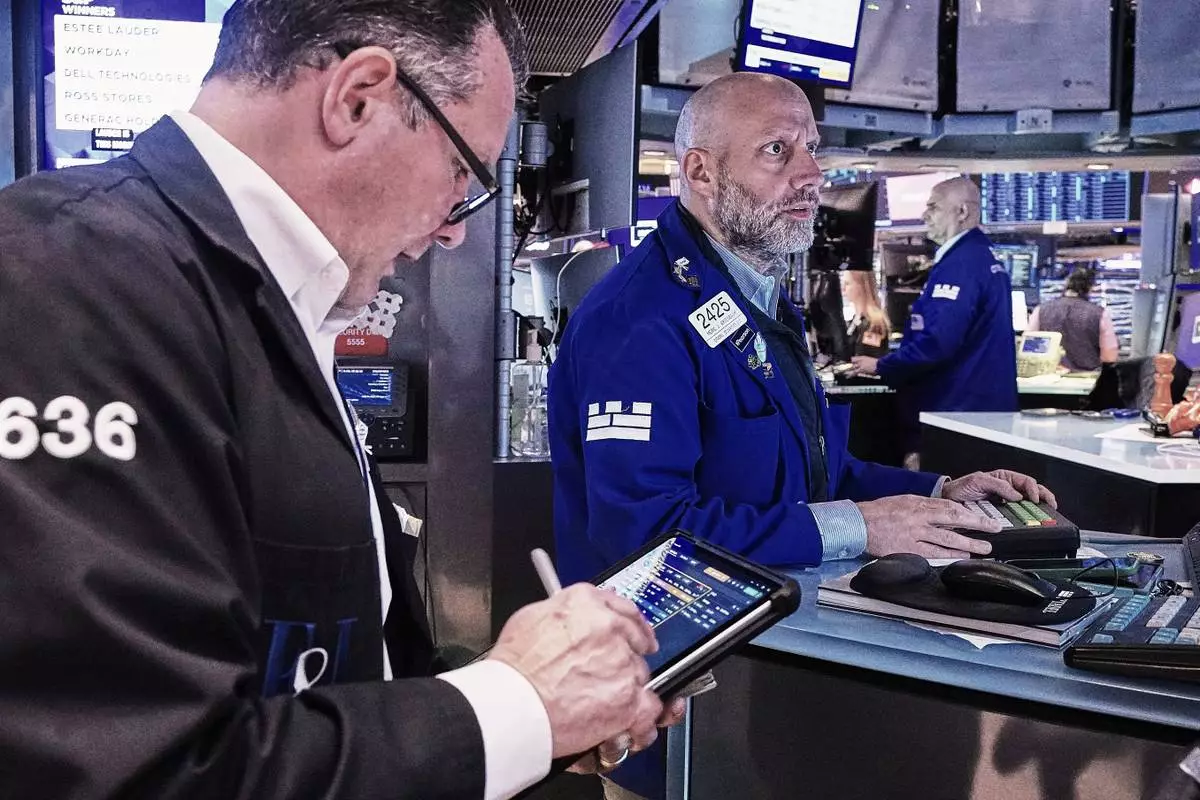
Trader Edward Curran, left, and specialist Meric Greenbaum, center, work on the floor of the New York Stock Exchange, Friday, May 22, 2026. (AP Photo/Richard Drew)
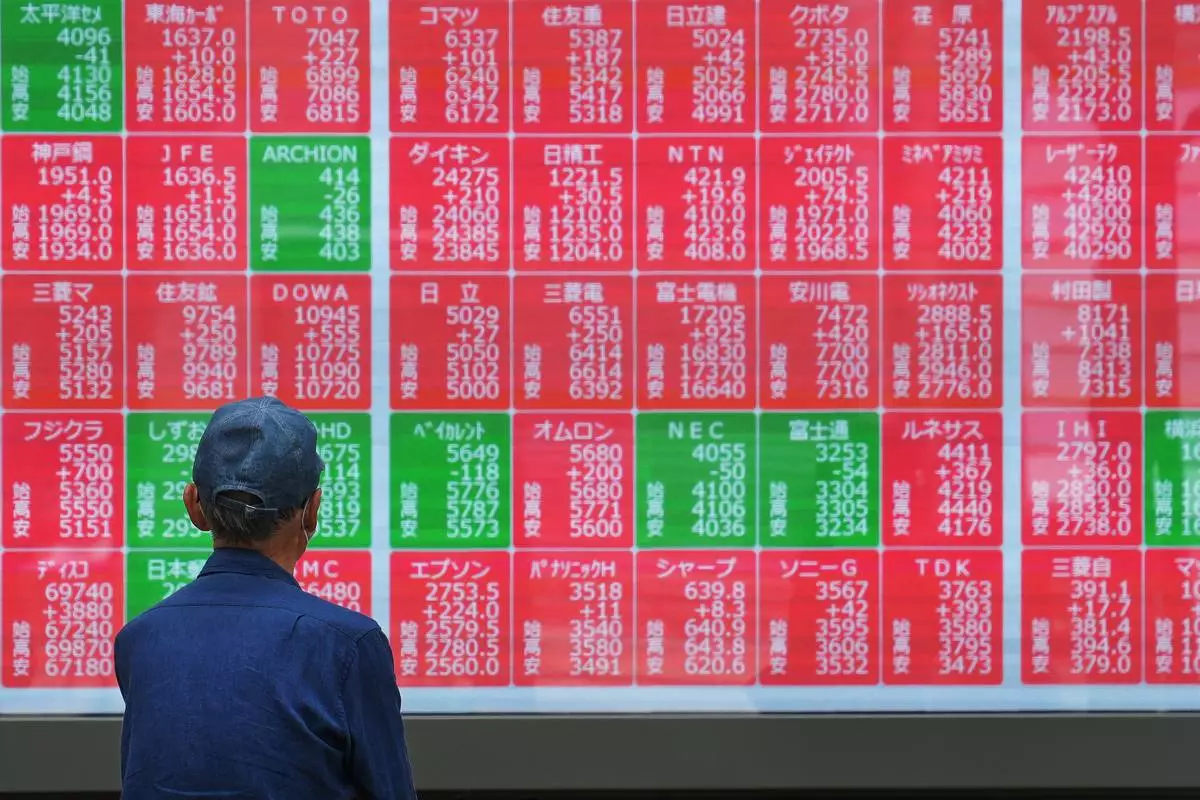
A person looks at an electronic stock board showing Japan's Nikkei index at a securities firm Monday, May 25, 2026, in Tokyo. (AP Photo/Eugene Hoshiko)
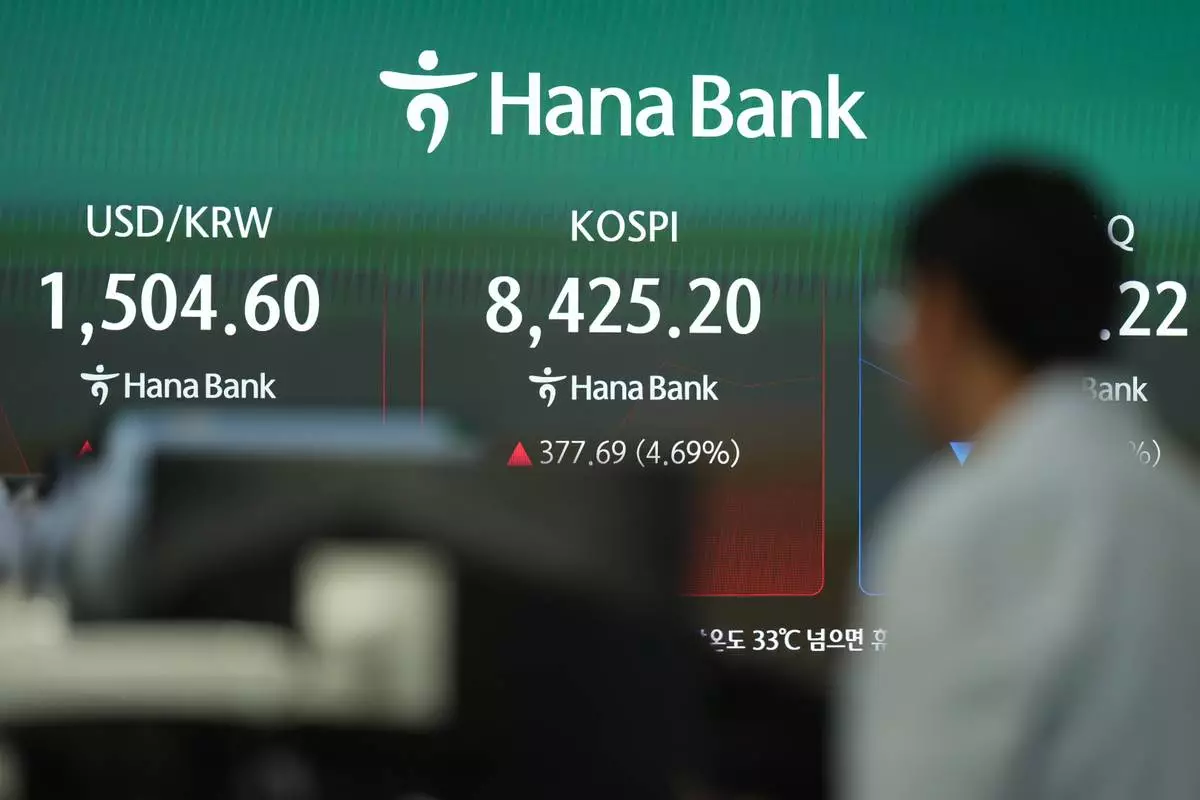
A dealer walks past near the screens showing the Korea Composite Stock Price Index (KOSPI) and the foreign exchange rate between U.S. dollar and South Korean won at a dealing room of Hana Bank in Seoul, South Korea, Wednesday, May 27, 2026. (AP Photo/Lee Jin-man)
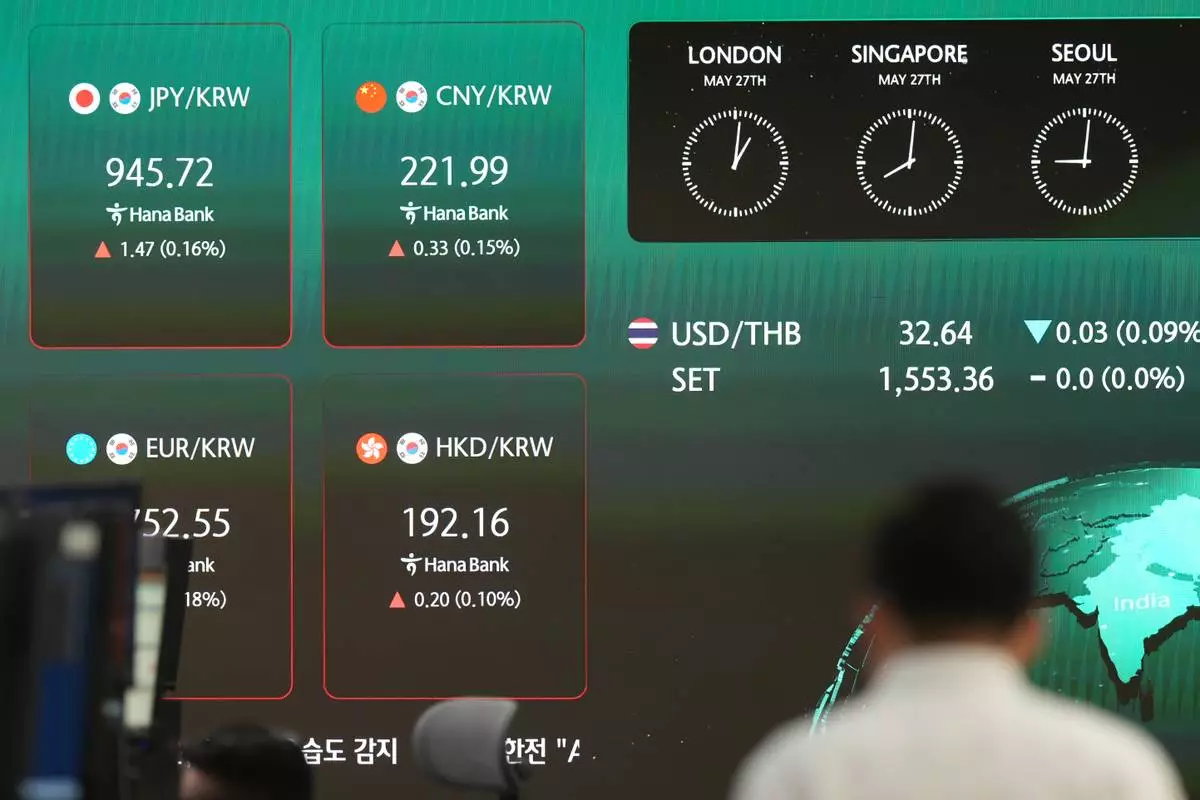
A dealer walks past near the screens showing the foreign exchange rates at a dealing room of Hana Bank in Seoul, South Korea, Wednesday, May 27, 2026. (AP Photo/Lee Jin-man)
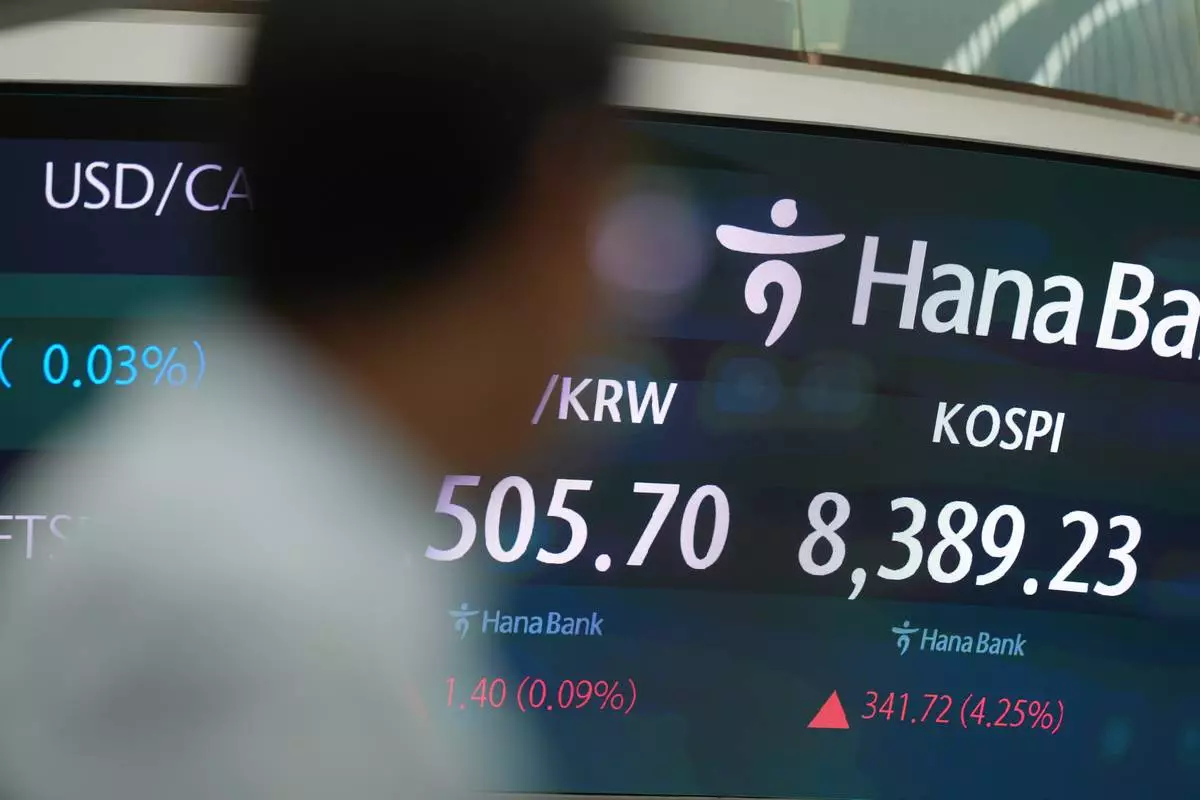
A dealer walks past near the screens showing the Korea Composite Stock Price Index (KOSPI) and the foreign exchange rate between U.S. dollar and South Korean won at a dealing room of Hana Bank in Seoul, South Korea, Wednesday, May 27, 2026. (AP Photo/Lee Jin-man)
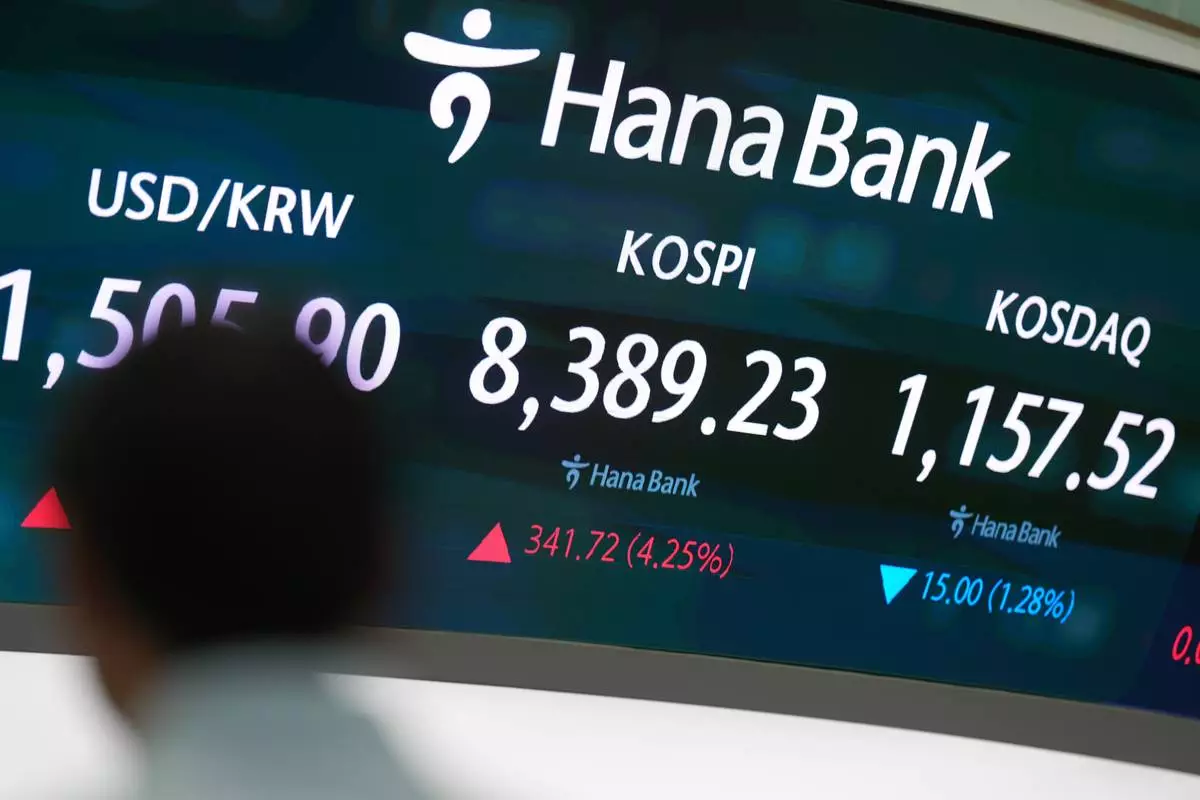
A dealer stands near the screens showing the Korea Composite Stock Price Index (KOSPI), the foreign exchange rate between U.S. dollar and South Korean won and the Korean Securities Dealers Automated Quotations (KOSDAQ) at a dealing room of Hana Bank in Seoul, South Korea, Wednesday, May 27, 2026. (AP Photo/Lee Jin-man)