The architects of the Bazball revolution that England aimed to use to summit test cricket have conceded the preparation wasn't quite right for the Ashes. That's not to say the strategy will be shelved.
After arriving on Australian shores with great expectations, coach Brendon McCullum and captain Ben Stokes were intent on imposing the attack-at-all-costs strategy on the contest for the oldest trophy in cricket.
Click to Gallery
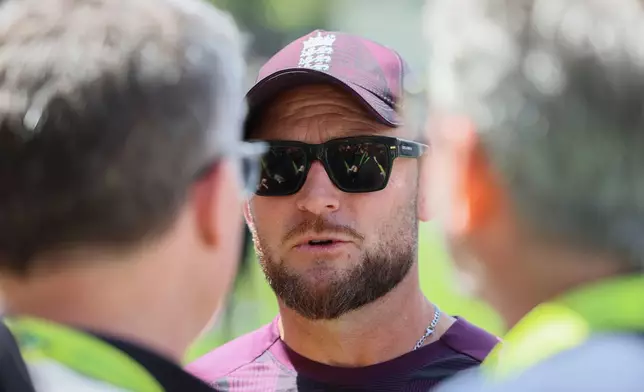
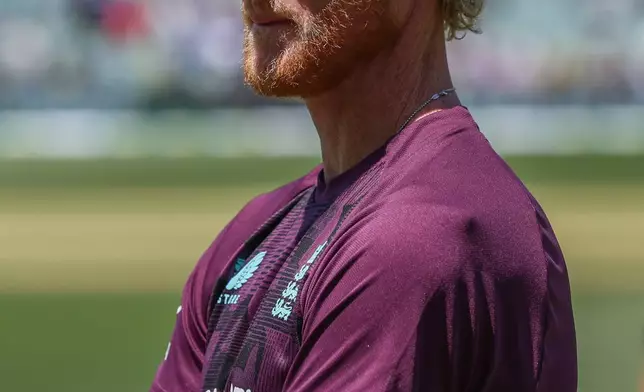
England head coach Brendon McCullum talks to the media after Australia won the third Ashes Test against England in Adelaide, Australia, Sunday, Dec. 21, 2025. (AP Photo/James Elsby)
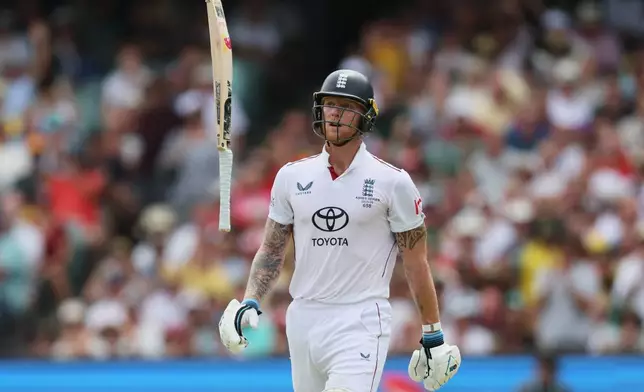
England's Ben Stokes throws his bat as he reacts after he was out bowled during play on day three of the third Ashes cricket test between England and Australia in Adelaide, Australia, Friday, Dec. 19, 2025. (AP Photo/James Elsby)
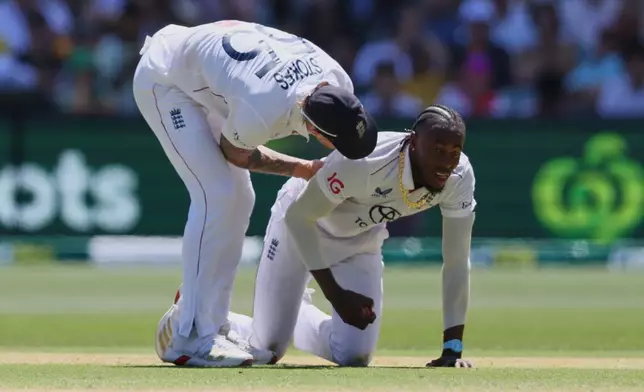
England's Jofra Archer is congratulated by teammate Ben Stokes after taking a catch off his own bowling to dismiss Australia's Scott Boland during play on day four of the third Ashes cricket test between England and Australia in Adelaide, Australia, Saturday, Dec. 20, 2025. (AP Photo/James Elsby)
England's Ben Stokes attends the presentation after losing the third Ashes Test against Australia in Adelaide, Australia, Sunday, Dec. 21, 2025. (AP Photo/James Elsby)
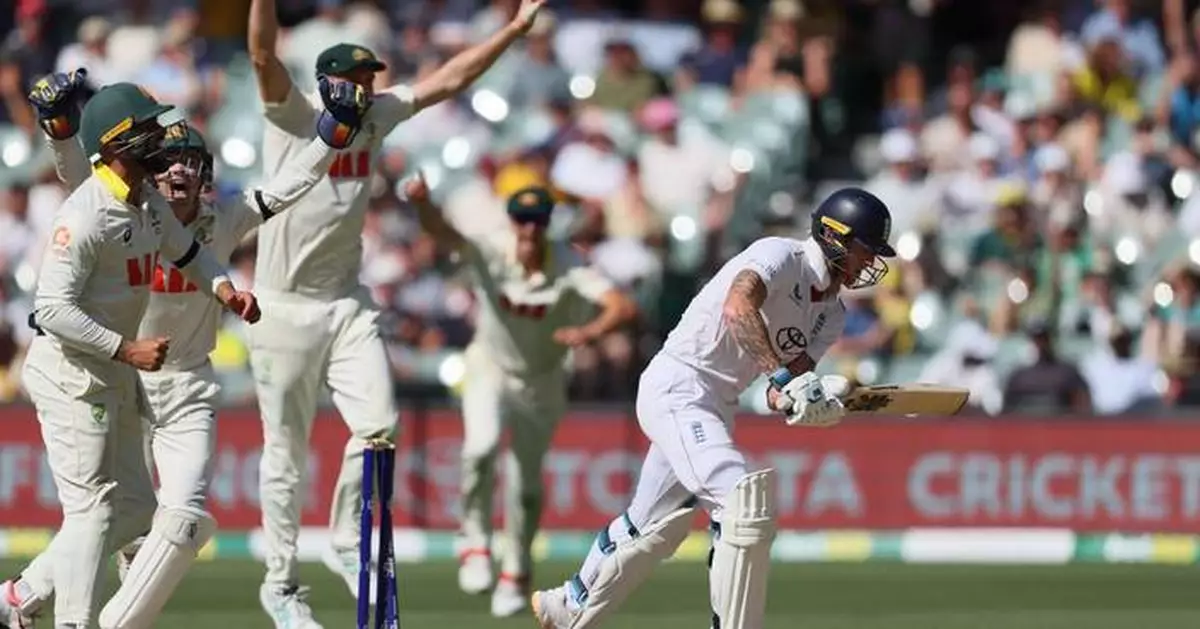
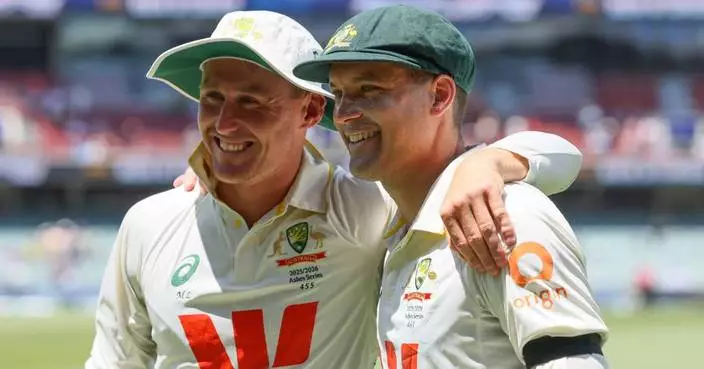
Australian players celebrate after England's Ben Stokes, right, was dismissed during play on day four of the third Ashes cricket test between England and Australia in Adelaide, Australia, Saturday, Dec. 20, 2025. (AP Photo/James Elsby)
After just one warmup game — an internal trial against the second-string England lineup — it quickly backfired.
Relying on a pragmatic, conventional approach to the game and long experience of the conditions, Australia retained the Ashes on Sunday with two matches remaining.
“Retrospectively, we lost 3-0 so you would probably say there was room for change there," McCullum told British broadcaster TNT Sport in terms of the preparations. “You put your hand up as a coach and say you might not have got that right.”
After England lost the first two tests by eight wickets, McCullum decided the squad had overdone it in training between the outings in Perth and Brisbane and decided to give the players a break at Noosa, one of Australia's premier beach resort villages.
The rest and relaxation did improve one statistic — in Adelaide England made it to Day 5 of a test for the first time on tour.
McCullum had been building for the Ashes series for years but hasn't yet been able to break the long drought in Australia extending back to 2011.
“We came here with high hopes, high ambitions and lofty goals,” he said. “And we’ve been outplayed across three test matches.”
The Bazball strategy was suspended late in Brisbane when Stokes played a conservative hand in trying to save the day-night test. In the last two days in Adelaide, with some glaring expectations, the batters at least tried to grit it out at the crease rather than hit the ball out of the ground every over.
“The last two days have been our best cricket, and that's because we've just played,” McCullum said. “The previous nine days, we were so caught up and so driven to achieve something and succeed that we've almost got in our own way and we've stymied our talent and our skill and our ability.”
McCullum said there were lessons to be taken from the differences in the contest in the third test.
“There's a lesson not just for the players. There's a lesson for the coach and the coaching staff,” he said. "Preparation, that'll be something that's questioned.
“But we do have a great opportunity in the next two tests. We need to find something out of this tour. We need to play for pride.”
England's bowling attack hasn't so far got its line and length right consistently on the hard, bouncy Australian wickets. Top-order batters have given away their wickets with poor shot selection — often attacking when conditions called for defense. There were too many catches put down, whereas Australia's catching has at times been exceptional.
Under Stokes and McCullum, whose nickname is “Baz,” England played an entertaining brand of cricket that earned the label “Bazball” that turned around the fortunes of England’s test team. But it has divided critics.
McCullum said some players had gone off script in the heat of the moment.
“I did think we were rock hard in our belief of the style we were going to play when we came down here, knowing that we were going to be challenged,” he said, “but I do think we got a little bit stuck.”
Stokes said there'd be no “restricting people’s mindset” in terms of how they believe they can succeed for the team.
“You never want to take away their ability to go out and score their runs in the way they feel is best going to suit them,” the England skipper said. "But then, marrying the skills and the ability that they have with the mentality that it takes to be successful as an international sportsman.
“You put those two together and I know that we’ve got a very, very exciting test team."
AP cricket: https://apnews.com/hub/cricket
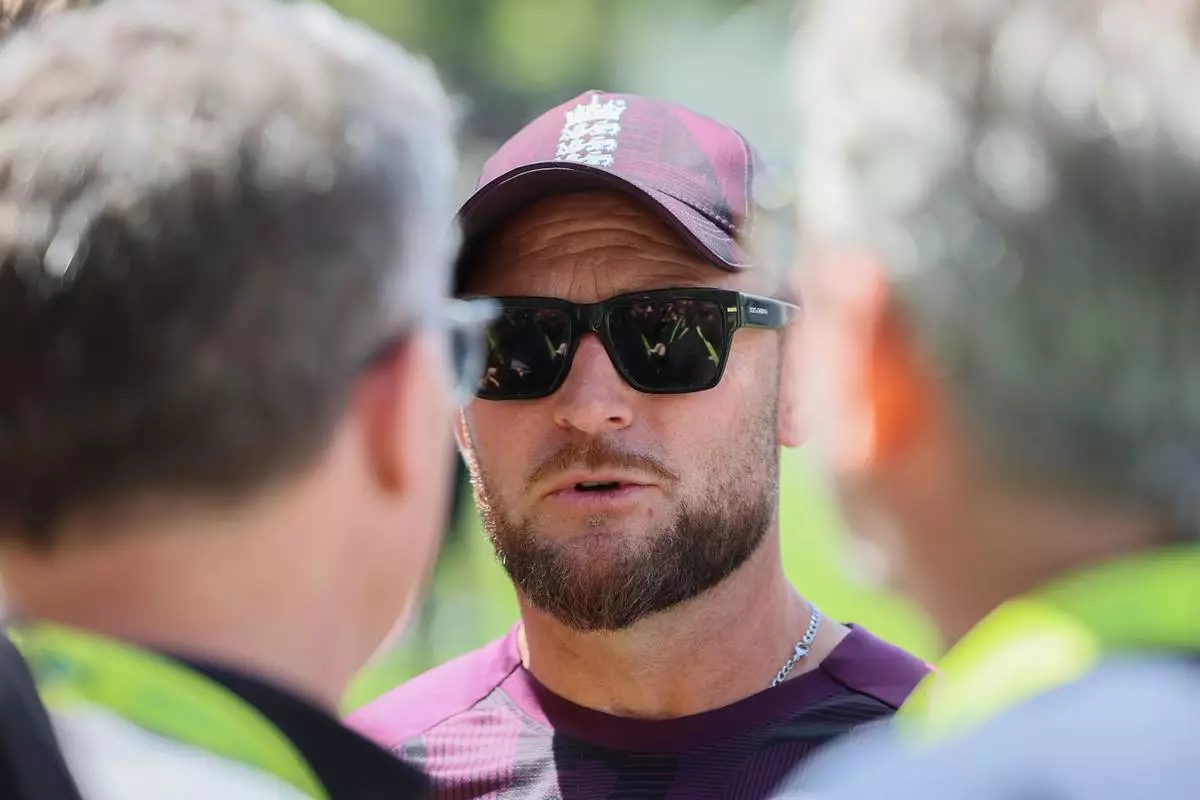
England head coach Brendon McCullum talks to the media after Australia won the third Ashes Test against England in Adelaide, Australia, Sunday, Dec. 21, 2025. (AP Photo/James Elsby)
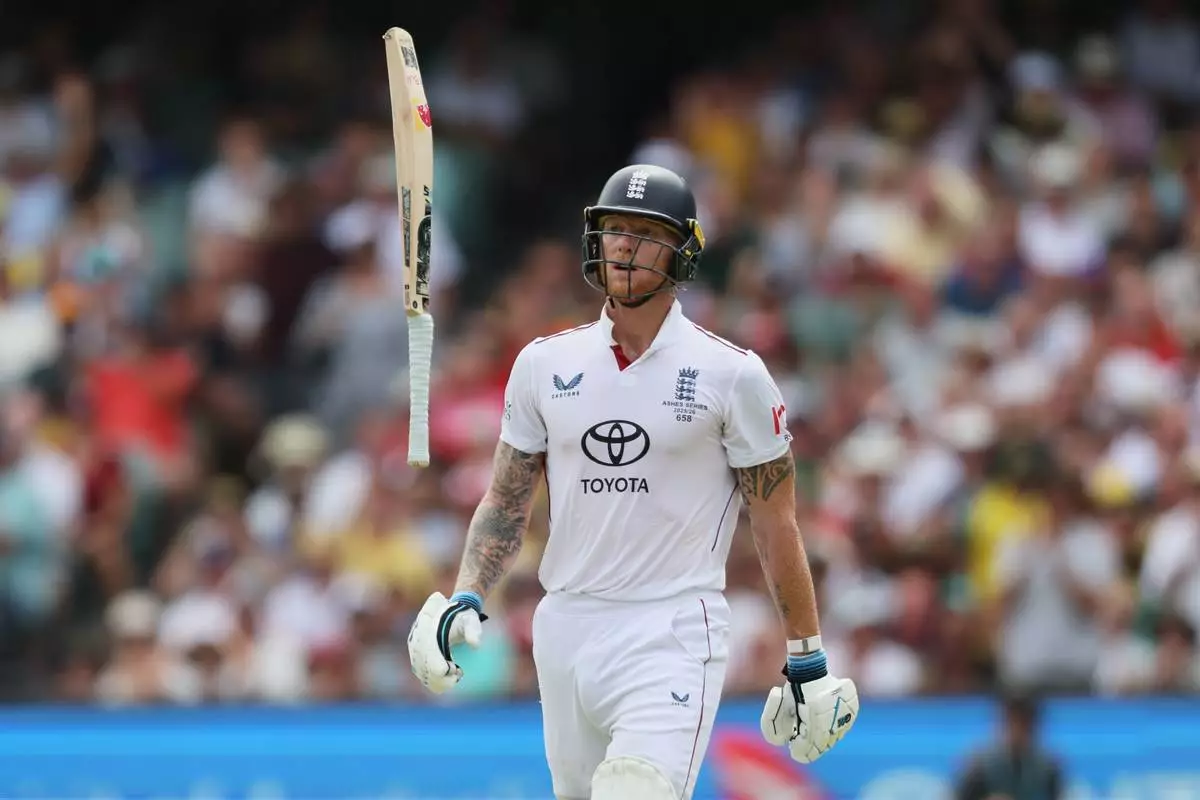
England's Ben Stokes throws his bat as he reacts after he was out bowled during play on day three of the third Ashes cricket test between England and Australia in Adelaide, Australia, Friday, Dec. 19, 2025. (AP Photo/James Elsby)
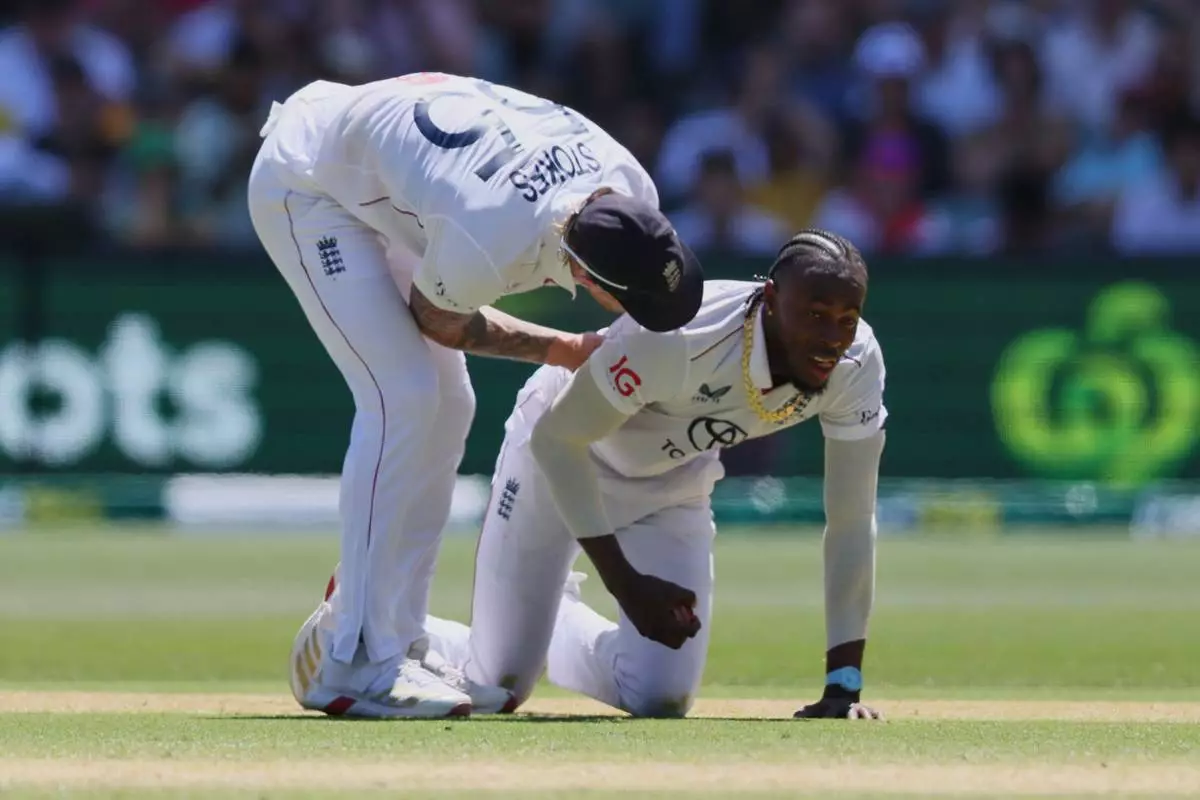
England's Jofra Archer is congratulated by teammate Ben Stokes after taking a catch off his own bowling to dismiss Australia's Scott Boland during play on day four of the third Ashes cricket test between England and Australia in Adelaide, Australia, Saturday, Dec. 20, 2025. (AP Photo/James Elsby)
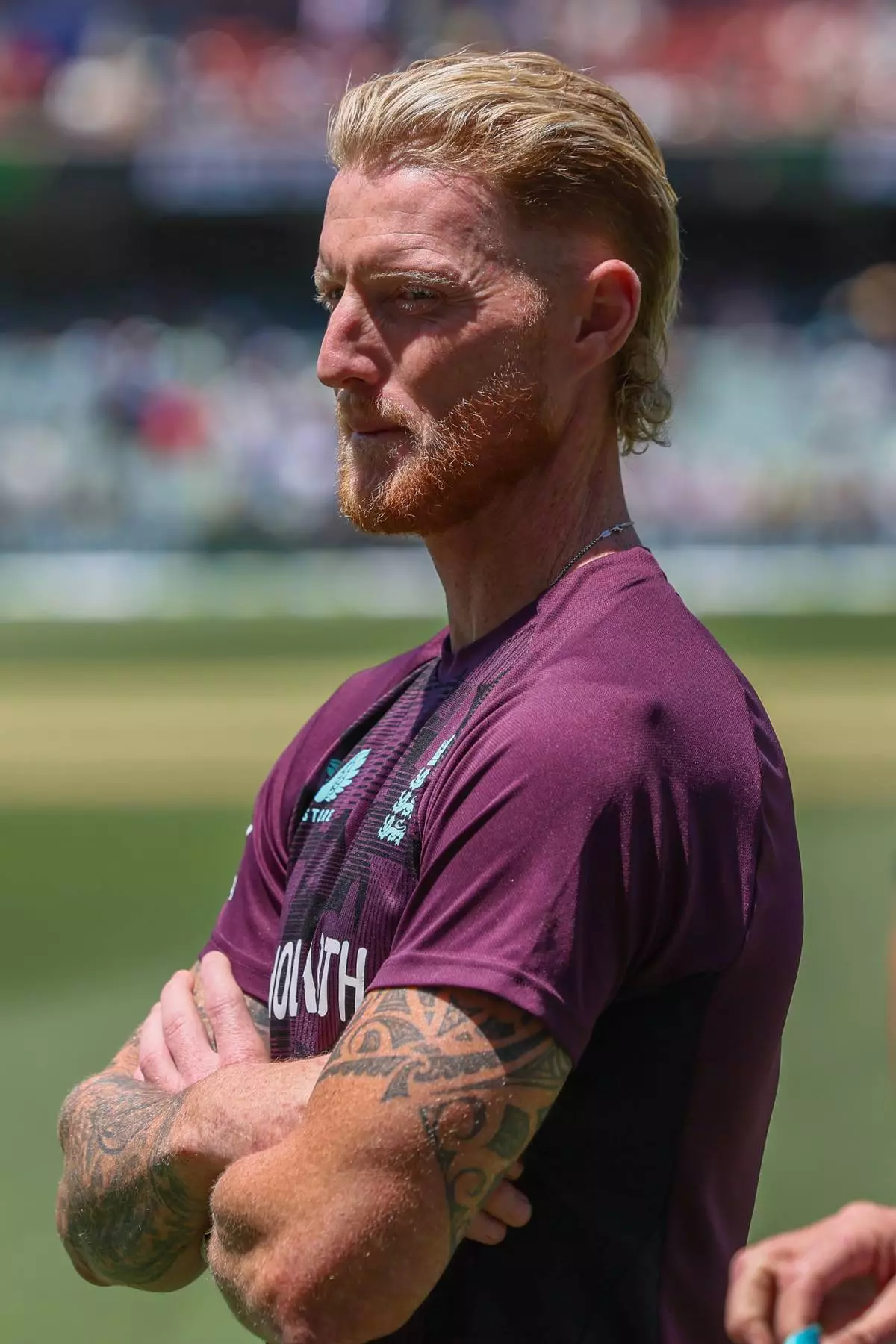
England's Ben Stokes attends the presentation after losing the third Ashes Test against Australia in Adelaide, Australia, Sunday, Dec. 21, 2025. (AP Photo/James Elsby)
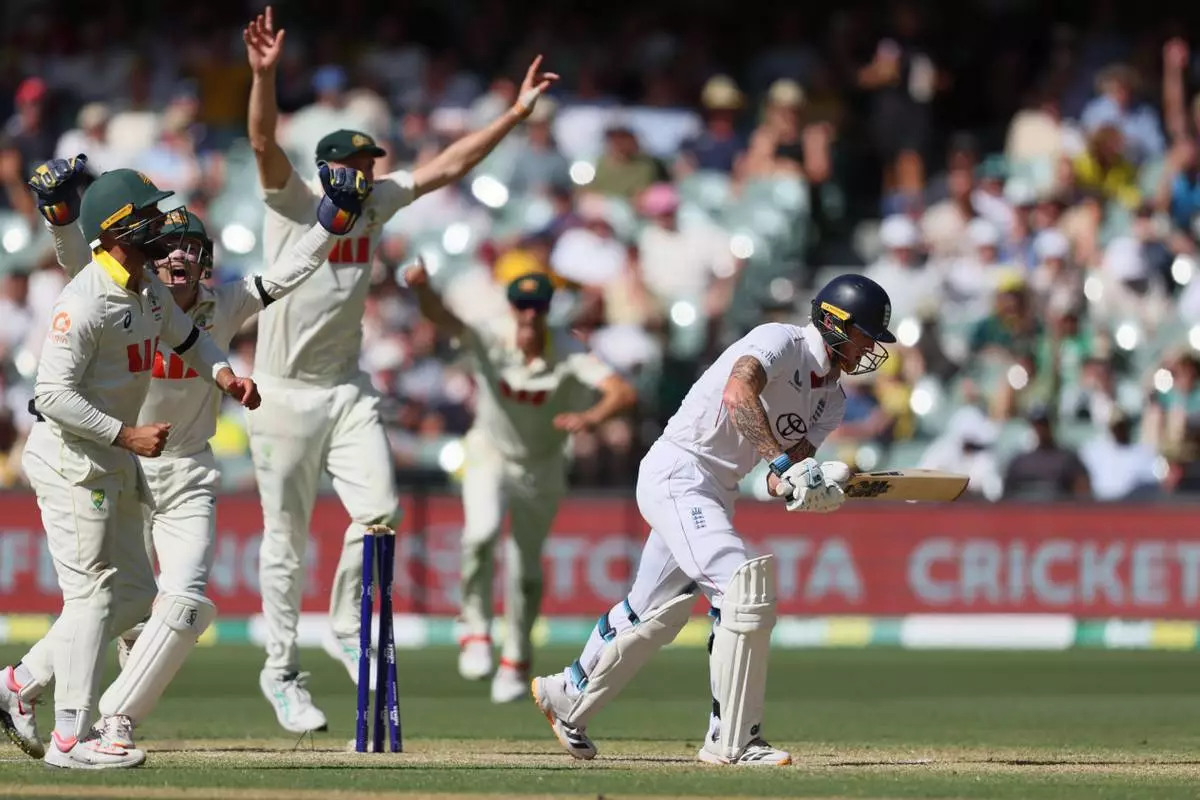
Australian players celebrate after England's Ben Stokes, right, was dismissed during play on day four of the third Ashes cricket test between England and Australia in Adelaide, Australia, Saturday, Dec. 20, 2025. (AP Photo/James Elsby)
BAGHDAD (AP) — Political factions in Iraq have been maneuvering since the parliamentary election more than a month ago to form alliances that will shape the next government.
The November election didn't produce a bloc with a decisive majority, opening the door to a prolonged period of negotiations.
The government that eventually emerges will be inheriting a security situation that has stabilized in recent years, but it will also face a fragmented parliament, growing political influence by armed factions, a fragile economy, and often conflicting international and regional pressures, including the future of Iran-backed armed groups.
Prime Minister Mohammed Shia al-Sudani's party took the largest number of seats in the election. Al-Sudani positioned himself in his first term as a pragmatist focused on improving public services and managed to keep Iraq on the sidelines of regional conflicts.
While his party is nominally part of the Coordination Framework, a coalition of Iran-backed Shiite parties that became the largest parliamentary bloc, observers say it’s unlikely that the Coordination Framework will support al-Sudani’s reelection bid.
“The choice for prime minister has to be someone the Framework believes they can control and doesn't have his own political ambitions,” said Sajad Jiyad, an Iraqi political analyst and fellow at The Century Foundation think tank.
Al-Sudani came to power in 2022 with the backing of the Framework, but Jiyad said that he believes now the coalition “will not give al-Sudani a second term as he has become a powerful competitor.”
The only Iraqi prime minister to serve a second term since 2003 was Nouri al-Maliki, first elected in 2006. His bid for a third term failed after being criticized for monopolizing power and alienating Sunnis and Kurds.
Jiyad said that the Coordination Framework drew a lesson from Maliki “that an ambitious prime minister will seek to consolidate power at the expense of others.”
He said that the figure selected as Iraq's prime minister must generally be seen as acceptable to Iran and the United States — two countries with huge influence over Iraq — and to Iraq’s top Shiite cleric, Grand Ayatollah Ali al-Sistani.
In the election, Shiite alliances and lists — dominated by the Coordination Framework parties — secured 187 seats, Sunni groups 77 seats, Kurdish groups 56 seats, in addition to nine seats reserved for members of minority groups.
The Reconstruction and Development Coalition, led by al-Sudani, dominated in Baghdad and in several other provinces, winning 46 seats.
Al-Sudani's results, while strong, don't allow him to form a government without the support of a coalition, forcing him to align the Coordination Framework to preserve his political prospects.
Some saw this dynamic at play earlier this month when al-Sudani's government retracted a terror designation that Iraq had imposed on the Lebanese Hezbollah militant group and Yemen’s Houthi rebels — Iran-aligned groups that are allied with Iraqi armed factions — just weeks after imposing the measure, saying it was a mistake.
The Coalition Framework saw its hand strengthened by the absence from the election of the powerful Sadrist movement led by Shiite cleric Muqtada Sadr, which has been boycotting the political system since being unable to form a government after winning the most seats in the 2021 election.
Hamed Al-Sayed, a political activist and official with the National Line Movement, an independent party that boycotted the election, said that Sadr’s absence had a “central impact.”
“It reduced participation in areas that were traditionally within his sphere of influence, such as Baghdad and the southern governorates, leaving an electoral vacuum that was exploited by rival militia groups,” he said, referring to several parties within the Coordination Framework that also have armed wings.
Groups with affiliated armed wings won more than 100 parliamentary seats, the largest showing since 2003.
Sunni forces, meanwhile, sought to reorganize under a new coalition called the National Political Council, aiming to regain influence lost since the 2018 and 2021 elections.
The Kurdish political scene remained dominated by the traditional split between the Kurdistan Democratic Party and Patriotic Union of Kurdistan parties, with ongoing negotiations between the two over the presidency.
By convention, Iraq’s president is always a Kurd, while the more powerful prime minister is Shiite and the parliamentary speaker Sunni.
Parliament is required to elect a speaker within 15 days of the Federal Supreme Court’s ratification of the election result, which occurred on Dec. 14.
The parliament should elect a president within 30 days of its first session, and the prime minister should be appointed within 15 days of the president’s election, with 30 days allotted to form the new government.
The incoming government will face major economic and political challenges.
They include a high level of public debt — more than 90 trillion Iraqi dinars ($69 billion) — and a state budget that remains reliant on oil for about 90% of revenues, despite attempts to diversify, as well as entrenched corruption.
But perhaps the most delicate question will be the future of the Popular Mobilization Forces, a coalition of militias that formed to fight the Islamic State group as it rampaged across Iraq more than a decade ago.
It was formally placed under the control of the Iraqi military in 2016, but in practice still operates with significant autonomy. After the Hamas-led attack in southern Israel on Oct. 7, 2023 sparked the devastating war in Gaza, some armed groups within the PMF launched attacks on U.S. bases in the region in retaliation for Washington’s backing of Israel.
The U.S. has been pushing for Iraq to disarm Iran-backed groups — a difficult proposition, given the political power that many of them hold and Iran’s likely opposition to such a step.
Two senior Iraqi political officials, who spoke on condition of anonymity because they weren't authorized to comment publicly, said that the United States had warned against selecting any candidate for prime minister who controls an armed faction and also cautioned against letting figures associated with militias control key ministries or hold significant security posts.
“The biggest issue will be how to deal with the pro-Iran parties with armed wings, particularly those... which have been designated by the United States as terrorist entities,” Jiyad said.
Kataib Hezbollah, one of the most powerful militias in Iraq, designated by the U.S. as a terrorist organization, issued a statement Saturday rejecting the possibility of giving up its weapons.
The statement said the group's “weapons will remain in the hands of its fighters, and no discussions with the government can take place before the departure of all occupation forces, NATO troops, and Turkish forces, and before ensuring the protection of the people and the sacred sites from extremist groups.”

FILE - Election workers gather parliamentary election ballots after the polls closed in Baghdad, Iraq, Nov. 11, 2025. (AP Photo/Hadi Mizban, File)
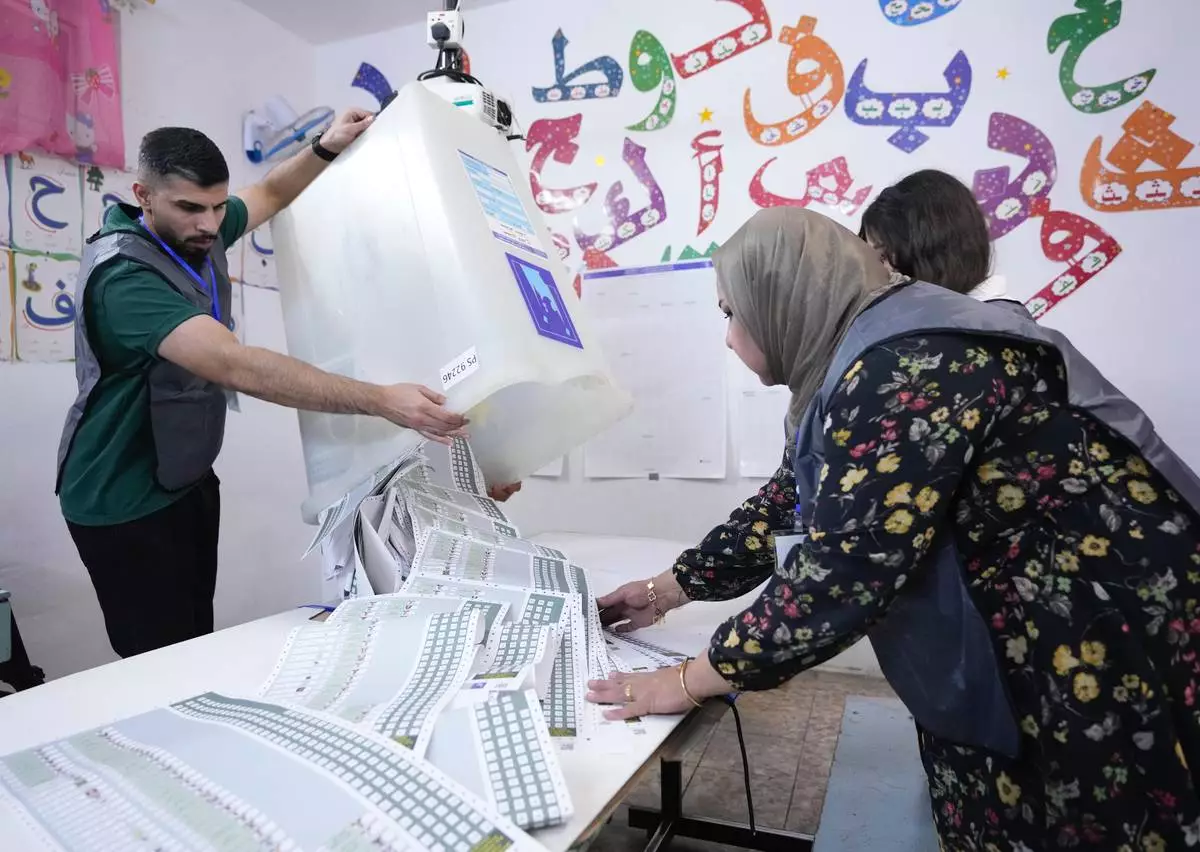
FILE - Election workers count ballots as they close a polling station, during the parliamentary elections in Baghdad, Iraq, Nov. 11, 2025. (AP Photo/Hadi Mizban, File)
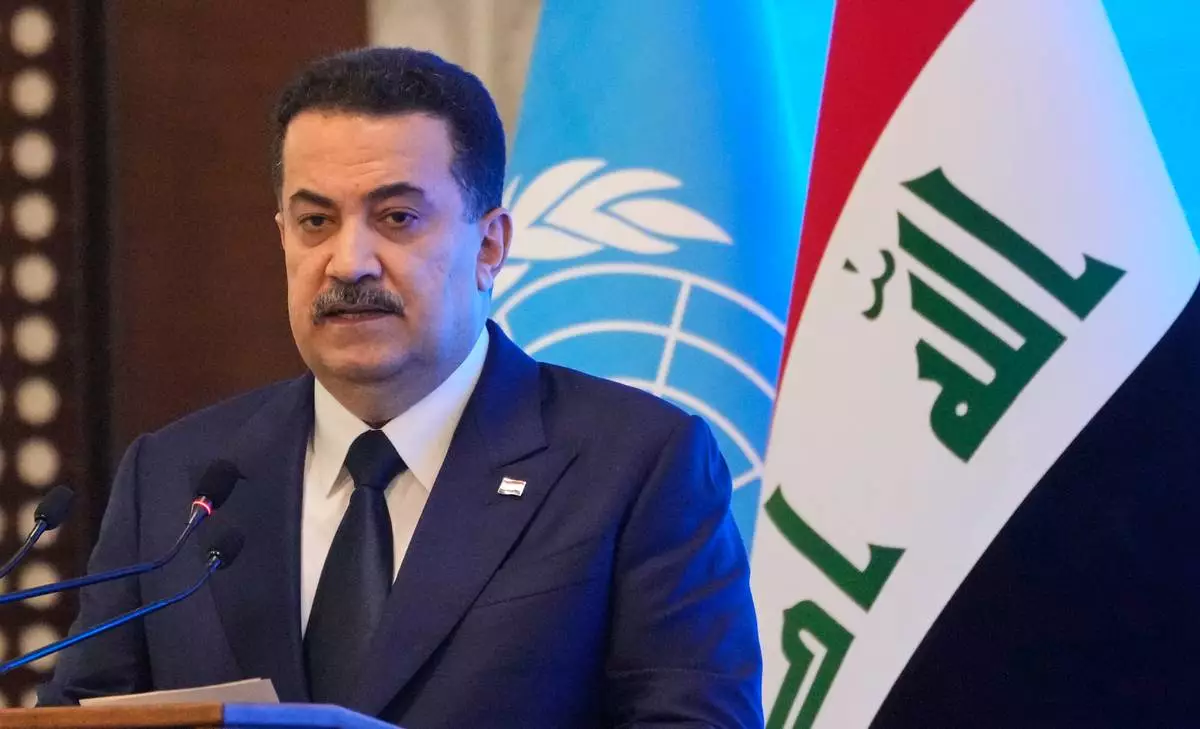
Iraqi prime minister Mohammed Shia al-Sudani speaks during an event to mark the end of the U.N. political mission in Baghdad, Iraq, Saturday, Dec. 13, 2025. (AP Photo/Hadi Mizban)