China is transforming sub-zero temperatures into a vibrant winter tourism boom, featuring dazzling light installations in Harbin City of northeast China's Heilongjiang Province, spectacular frozen waterfalls near Beijing, and steaming hot springs in Sichuan Province in the country's southwest.
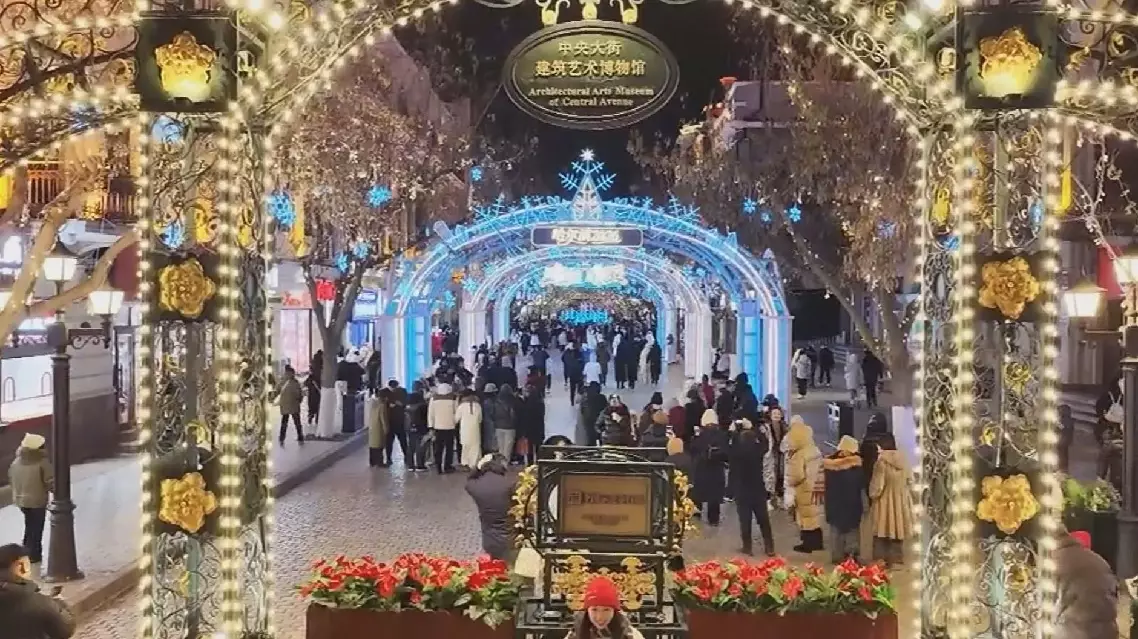
On Winter Solstice night Sunday, sub-zero temperatures failed to deter crowds from thronging Central Street, Harbin's iconic century-old boulevard famed for its European architecture, where the mercury hovered around minus 14 degrees Celsius.
Since Thursday, elaborate light installations have illuminated the street from 14:30 each day, transforming the winter landscape into a scene of enchantment.
One popular attraction among tourists is the dazzling "flying horse" installation, where a glowing horse with wings that appear to flutter under advanced lighting effects soars above a river of shimmering starry lights. This year, Central Street in Harbin has introduced new "warming artifacts", rows of outdoor heaters with flickering flames. They draw tourists from across the country together, as visitors gather around to warm themselves by the fire while exchanging travel tips, warming both their bodies and bringing them closer together.
In the mountainous suburbs of Beijing, plummeting temperatures have transformed Yunpugou and Yudushan scenic spots into ice-sculpted wonderlands. At Yunpugou, massive frozen waterfalls hang from cliffs like curtains, towers, or crystal columns, glistening in the sunlight like scenes from a frozen fairytale.
Meanwhile, at the nearby Yudushan's Wangyou Lake, frozen waterfalls sit alongside flowing mountain springs, offering a dynamic winter vista. The site has also set up an ice-climbing base, drawing outdoor adventure seekers.
In southwest China's Sichuan Province, the Hailuogou scenic area in Ganzi Tibetan Autonomous Prefecture has emerged as a sought-after winter destination, drawing surging crowds of visitors. Located on the eastern slope of Gongga Mountain, the site features low-altitude glaciers, primeval forests, and natural hot springs.
New tourism models such as "ice plus hot springs" and "glacier plus science study tours" are enhancing the winter holiday experience.
Starting from Camp No. 1 at an altitude of 1,940 meters, tourists can hike through snow-covered forests and learn about glacier formation under the guidance of scientific experts. At Camp No. 3, visitors relax in hot spring resorts while taking in views of snow-capped mountains.
"The itinerary of 'science exploration' in the morning followed by afternoon hot springs truly offers educational value and a sense of well-being. It completely shatters our preconceived notion that winter tourism is only about viewing snow-covered landscape and taking photographs," said tourist Wang Ruiji.
To support this growth, local authorities are investing in wellness resorts and boutique guest houses, and accelerating the upgrading of hot spring hotels. The Luding-Shimian Expressway, whose Hailuogou section will open for test operation by the end of December, is set to significantly reduce travel time between Chengdu and Hailuogou from about five hours to just three.
China’s winter tourism booms with light shows, ice, hot springs