Skip to Content Facebook Feature Image

US signs new health deals with 9 African countries that mirror Trump's priorities

News

US signs new health deals with 9 African countries that mirror Trump's priorities
News

News

US signs new health deals with 9 African countries that mirror Trump's priorities

2025-12-23 05:32 Last Updated At:05:40

JOHANNESBURG (AP) — The U.S. government has signed health deals with at least nine African countries, part of its new approach to global health funding, with agreements that reflect the Trump administration’s interests and priorities and are geared toward providing less aid and more mutual benefits.

The agreements signed so far, with Kenya, Nigeria and Rwanda among others, are the first under the new global health framework, which makes aid dependent on negotiations between the recipient country and the U.S.

Some of the countries that have signed deals either have been hit by U.S. aid cuts or have separate agreements with the Trump administration to accept and host third-country deportees, although officials have denied any linkage.

The Trump administration says the new “America First” global health funding agreements are meant to increase self-sufficiency and eliminate what it says are ideology and waste from international assistance. The deals replace a patchwork of previous health agreements under the now-dismantled United States Agency for International Development.

U.S. aid cuts have crippled health systems across the developing world, including in Africa, where many countries relied on the funding for crucial programs, including those responding to outbreaks of disease.

The new approach to global health aligns with President Donald Trump’s pattern of dealing with other nations transactionally, using direct talks with foreign governments to promote his agenda abroad. It builds on his sharp turn from traditional U.S. foreign assistance, which supporters say furthered American interests by stabilizing other countries and economies and building alliances.

The deals mark a sharp departure from how the U.S. has provided health care funding over the years and mirrors the Trump administration's interests.

South Africa, which has lost most of its U.S. funding — including $400 million in annual support — due in part to its disputes with the U.S., has not signed a health deal, despite having one of the world's highest HIV prevalence rates.

Nigeria, Africa’s most populous country, reached a deal but with an emphasis on Christian-based health facilities, although it has a slight majority Muslim population. Rwanda and Uganda, which each have deportation deals with the U.S., have announced the health pacts.

Cameroon, Eswatini, Lesotho, Liberia and Mozambique also are among those that have signed health deals with the U.S.

According to the Center for Global Development, a Washington think tank, the deals “combine U.S. funding reductions, ambitious co-financing expectations, and a shift toward direct government-to-government assistance.”

The deals represent a reduction in total U.S. health spending for each country, the center said, with annual U.S. financial support down 49% compared with 2024.

Under its deal, Nigeria, a major beneficiary of USAID funds, would get support that has a “strong emphasis” on Christian faith-based health care providers.

The U.S. provided approximately $2.3 billion in health assistance to Nigeria between 2021 and 2025, mostly through USAID, official data shows. The new five-year agreement will see U.S. support at over $2 billion, while Nigeria is expected to raise $2.9 billion to boost its health care programs.

The agreement "was negotiated in connection with reforms the Nigerian government has made to prioritize protecting Christian populations from violence and includes significant dedicated funding to support Christian health care facilities,” the State Department said in a statement.

The department said “the president and secretary of state retain the right to pause or terminate any programs which do not align with the national interest,” urging Nigeria to ensure "that it combats extremist religious violence against vulnerable Christian populations.”

For several other countries, the new deals could be a lifeline after U.S. aid cuts crippled their health care systems and left them racing to fill the gaps.

Under its deal, Mozambique will get U.S. support of over $1.8 billion for HIV and malaria programs. Lesotho, one of the poorest countries in the world, clinched a deal worth over $232 million.

In the tiny kingdom of Eswatini, the U.S. committed to provide up to $205 million to support public health data systems, disease surveillance and outbreak response, while the country agreed to increase domestic health expenditures by $37 million.

South Africa is noticeably absent from the list of signatories following tensions with the Trump administration.

Trump has said he will cut all financial assistance to South Africa over his widely rejected claims that it is violently persecuting its Afrikaner white minority.

The dismantling of USAID resulted in the loss of over $436 million in yearly financing for HIV treatment and prevention in South Africa, putting the program and thousands of jobs in the health care industry at risk.

At least four of the countries that have reached deals previously agreed to receive third-country deportees from the U.S., a controversial immigration policy that has been a trademark of the Trump administration.

The State Department has denied any linkage between the health care compacts and agreements regarding accepting third-country asylum seekers or third-country deportees from the United States. However, officials have said that political considerations unrelated to health issues may be part of the negotiations.

Rwanda, one of the countries with a deportation deal with the U.S., signed a $228 million health pact requiring the U.S. to support it with $158 million.

Uganda, another such country, signed a health deal worth nearly $2.3 billion in which the U.S. will provide up to $1.7 billion. Also Eswatini, which has started receiving flights with deported prisoners from the U.S.

Associated Press writers Evelyne Musambi in Nairobi, Kenya, Dyepkazah Shibayan in Abuja, Nigeria, Mark Banchereau in Dakar, Senegal, and Matthew Lee in Washington contributed to this report.
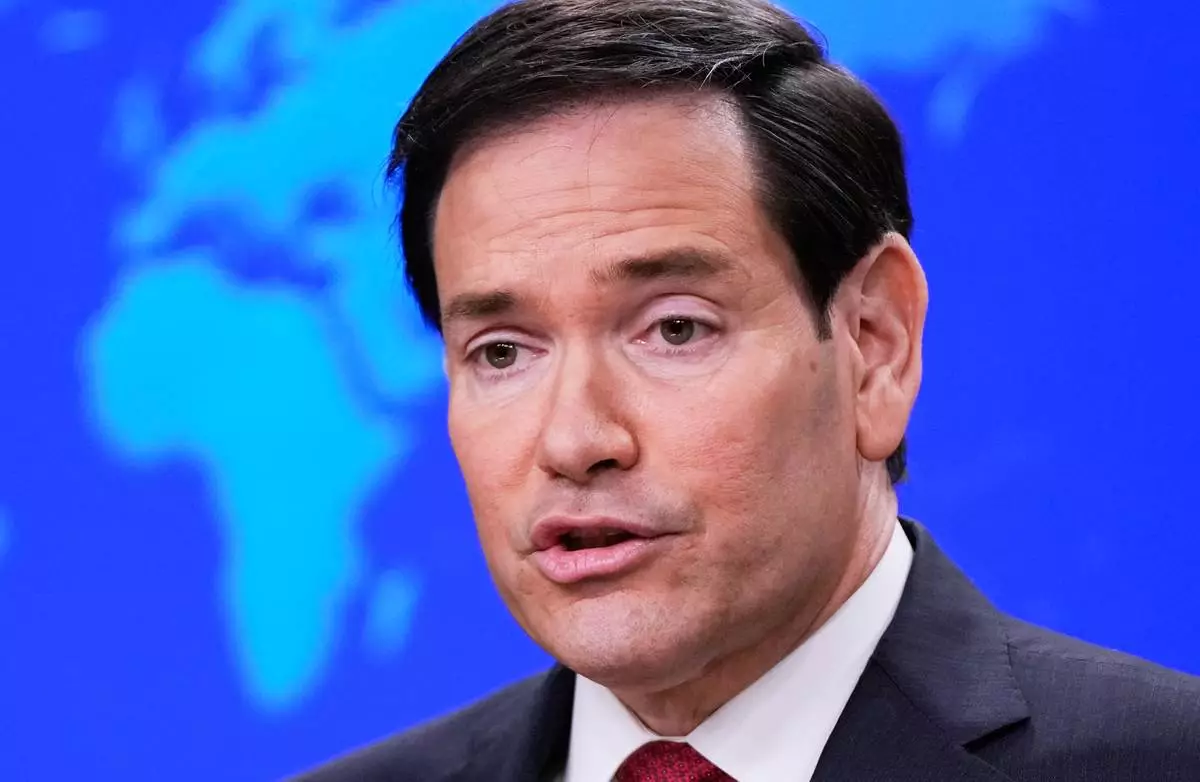
FILE - Secretary of State Marco Rubio speaks during a news conference at the State Department, Dec. 19, 2025, in Washington. (AP Photo/Julia Demaree Nikhinson, File)

FILE - Secretary of State Marco Rubio speaks during a news conference at the State Department, Dec. 19, 2025, in Washington. (AP Photo/Julia Demaree Nikhinson, File)

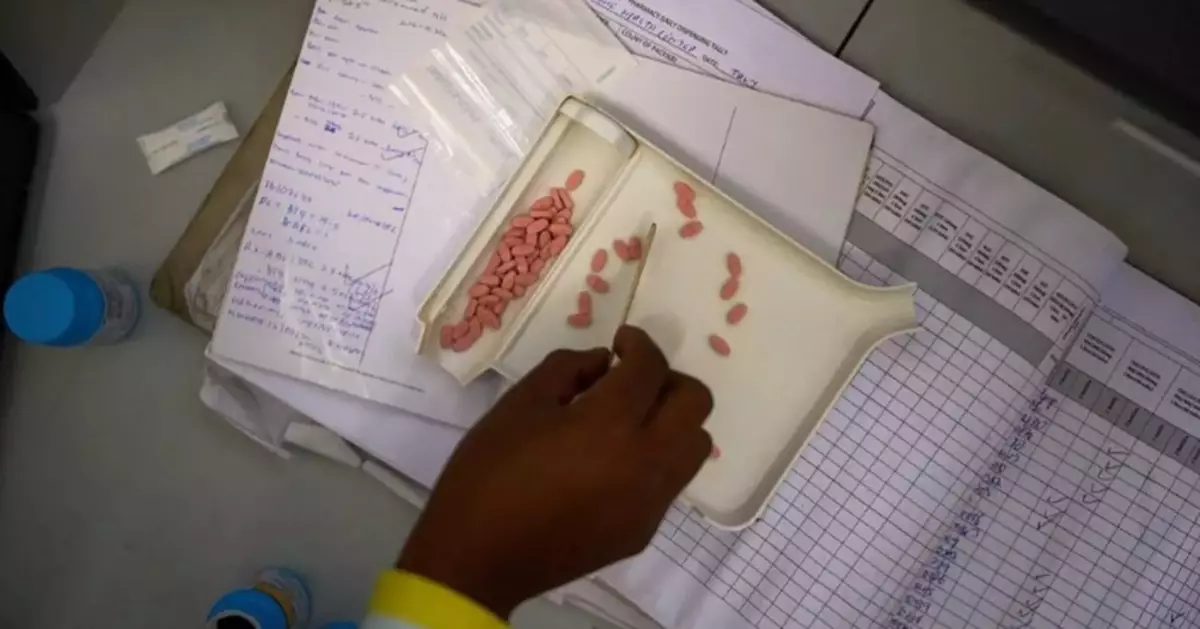
FILE - A pharmacist counts HIV medicine inside a clinic in Ha Lejone, Lesotho, July 16, 2025. (AP Photo/Bram Janssen, File)
FILE - A pharmacist counts HIV medicine inside a clinic in Ha Lejone, Lesotho, July 16, 2025. (AP Photo/Bram Janssen, File)

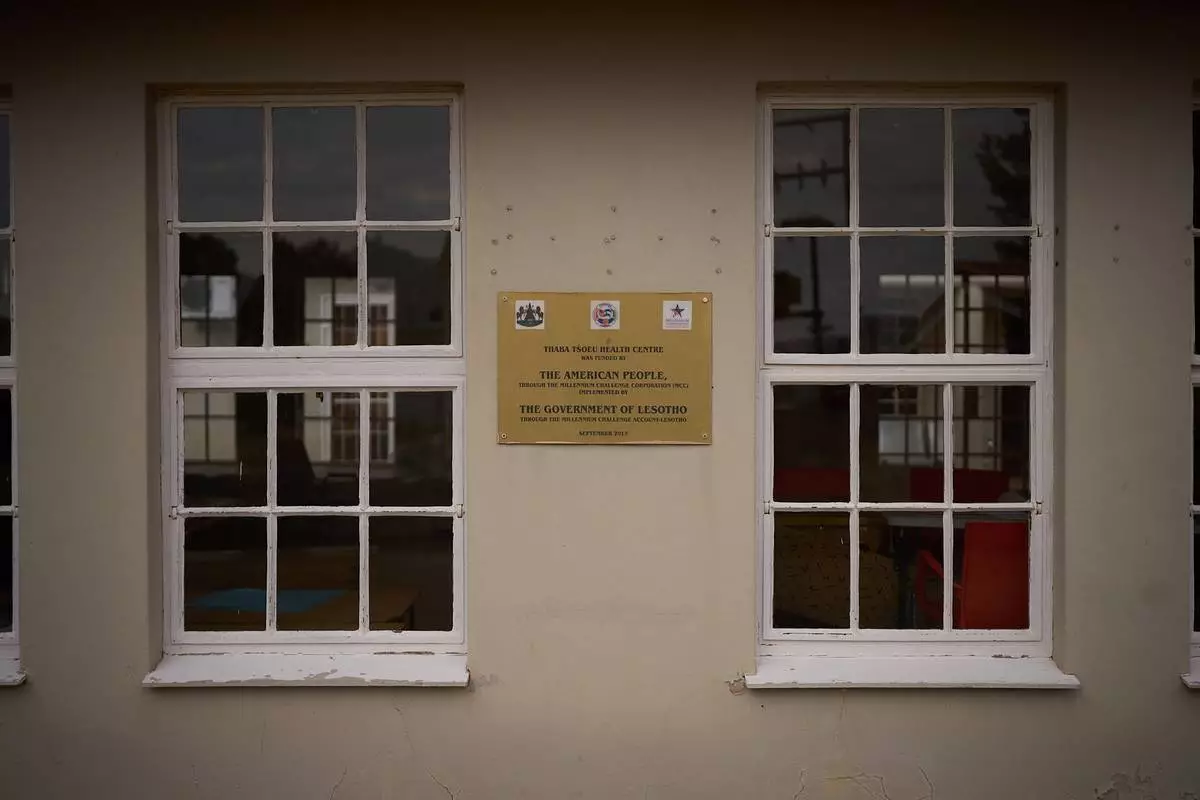
FILE - A donation plaque recognizing "The American People" hangs outside a clinic in Thaba-Tsoeu, Lesotho, July 13, 2025. (AP Photo/Bram Janssen, File)
FILE - A donation plaque recognizing "The American People" hangs outside a clinic in Thaba-Tsoeu, Lesotho, July 13, 2025. (AP Photo/Bram Janssen, File)
NEW YORK (AP) — Stocks rose on Wall Street Monday to open what's expected to be a relatively calm holiday week.

The gains were broad. Technology companies and banks did much of the heavy lifting. Industrial companies also gave a strong push to major indexes.

The S&P 500 rose 43.99 points, or 0.6%, to 6,878.49. The Dow Jones Industrial Average rose 227.79 points, or 0.5%, to 48,362.68. The Nasdaq composite rose 121.21 points, or 0.5%, to 23,428.83.

Smaller company stocks did particularly well. The Russell 2000 index outpaced other major indexes with a 1.2% gain.

The gains also helped major indexes push further into winning territory for the month as a choppy December nears its end. Technology companies, especially those focused on artificial intelligence, have been the main force behind the market's oscillations. The direction of AI-related stocks will likely determine whether the market closes out December with gains or losses.

“If a Santa Claus rally does kick in this year, St. Nick’s gift bag will likely need to be full of positive tech sentiment,” wrote Chris Larkin, managing director of trading and investing at E-Trade from Morgan Stanley.

Nvidia, which has had a big role in driving the broader tech sector higher this year, rose 1.5%. JPMorgan was among the bigger winners in the banking sector with a 1.9% gain.

Uber rose 2.5% and Lyft rose 2.7% after announcing plans to bring robotaxi services to London next year.

Paramount Skydance rose 4.3%. The company sweetened its hostile takeover bid for Warner Bros. Discovery with an “irrevocable personal guarantee” from Larry Ellison, the founder of Oracle and father of Paramount CEO David Ellison. He is putting up billions of dollars to back the deal as part of the latest move in Paramount's bidding war against Netflix.

Warner Bros. Discovery rose 3.5% and Netflix fell 1.2%.

Dominion Energy fell 3.7% after the Trump administration said it is pausing leases for five large-scale offshore wind projects. They include Dominion's Coastal Virginia Offshore Wind project.

Gold and silver touched records and oil prices jumped after the U.S. Coast Guard said it was pursuing another sanctioned oil tanker in the Caribbean.

Gold prices rose 1.9% to settle at $4,469.40, adding to its consistent gains throughout the year. Silver rose 1.6%.

Crude oil prices in the U.S. rose 2.4% to $58.01 a barrel. Prices for Brent crude oil, the international standard, rose 2.6% to $62.07 a barrel.

Treasury yields edged higher in the bond market. The yield on the 10-year Treasury rose to 4.16% from 4.15% late Friday.

Asian markets rose, and European markets slipped.

Markets in the U.S. will close early on Wednesday for Christmas Eve and remain closed on Thursday for Christmas. The short week for trading includes several economic reports that could shed more light on the condition and direction of the U.S. economy.

On Tuesday, the government releases the first of three estimates on gross domestic product, a reflection of how the broader U.S. economy fared in the third quarter. On Wednesday, the Labor Department will release its weekly data on applications for jobless benefits, which stands as a proxy for U.S. layoffs.

The Conference Board offers up results from its December consumer confidence survey on Tuesday as well.

The upcoming reports follow a mix of updates last week that show inflation remains elevated and consumer confidence has diminished over the last year. Overall, the job market has been slowing and retail sales have weakened.

The ongoing and wide-ranging U.S. trade war has been hanging over consumers and businesses already squeezed and worried by higher prices. The mix of stubbornly high inflation and a weaker jobs market has also put the Federal Reserve in a more difficult policy position moving forward.

The Fed has cut its benchmark interest rate at its last three meetings, despite inflation that has remained stubbornly above its 2% target. Fed officials have grown increasingly concerned about the slowing job market, pushing them to trim rates. Cutting interest rates to bolster the economy because of a weak job market could fuel inflation, however.

Wall Street is mostly betting that the Fed will hold steady on interest rates at its meeting in January.

Elaine Kurtenbach and Matt Ott contributed to this story.

James Denaro works on the floor at the New York Stock Exchange in New York, Wednesday, Dec. 10, 2025. (AP Photo/Seth Wenig)

James Denaro works on the floor at the New York Stock Exchange in New York, Wednesday, Dec. 10, 2025. (AP Photo/Seth Wenig)

Trader Jonathan Mueller works on the floor of the New York Stock Exchange, Thursday, Dec. 11, 2025. (AP Photo/Richard Drew)

Trader Jonathan Mueller works on the floor of the New York Stock Exchange, Thursday, Dec. 11, 2025. (AP Photo/Richard Drew)

Trader William Lawrence works on the floor of the New York Stock Exchange, Thursday, Dec. 11, 2025. (AP Photo/Richard Drew)

Trader William Lawrence works on the floor of the New York Stock Exchange, Thursday, Dec. 11, 2025. (AP Photo/Richard Drew)

A person looks at an electronic stock board showing Japan's Nikkei index at a securities firm Monday, Dec. 22, 2025, in Tokyo. (AP Photo/Eugene Hoshiko)

A person looks at an electronic stock board showing Japan's Nikkei index at a securities firm Monday, Dec. 22, 2025, in Tokyo. (AP Photo/Eugene Hoshiko)

People stand in front of an electronic stock board showing Japan's Nikkei index at a securities firm Monday, Dec. 22, 2025, in Tokyo. (AP Photo/Eugene Hoshiko)

People stand in front of an electronic stock board showing Japan's Nikkei index at a securities firm Monday, Dec. 22, 2025, in Tokyo. (AP Photo/Eugene Hoshiko)

A person stands in front of an electronic stock board showing Japan's Nikkei index at a securities firm Monday, Dec. 22, 2025, in Tokyo. (AP Photo/Eugene Hoshiko)

A person stands in front of an electronic stock board showing Japan's Nikkei index at a securities firm Monday, Dec. 22, 2025, in Tokyo. (AP Photo/Eugene Hoshiko)

A person walks in front of an electronic stock board showing Japan's Nikkei index at a securities firm Monday, Dec. 22, 2025, in Tokyo. (AP Photo/Eugene Hoshiko)

A person walks in front of an electronic stock board showing Japan's Nikkei index at a securities firm Monday, Dec. 22, 2025, in Tokyo. (AP Photo/Eugene Hoshiko)

Recommended Articles