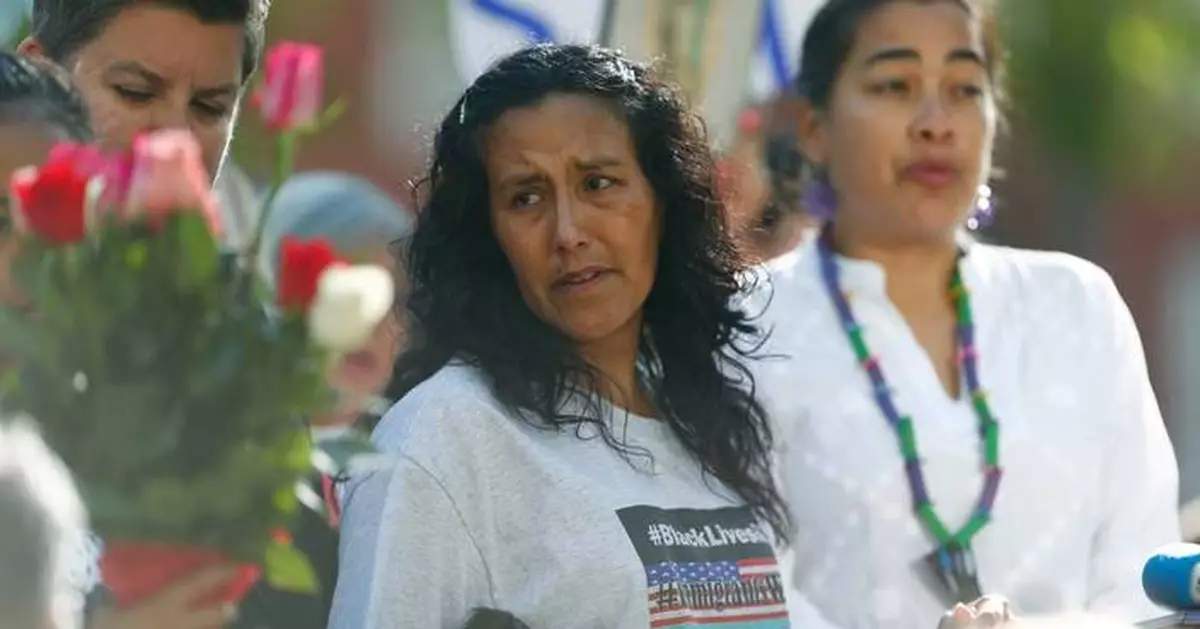
DENVER (AP) — A prominent Colorado immigration and labor activist was released Monday after spending nine months in immigration detention, supporters said.
Jeanette Vizguerra left an immigration detention center in suburban Denver a day after a judge ruled she could post a $5,000 bond, according to the American Friends Service Committee, which has been working with Vizguerra’s lawyers and her family.
The group released photos of Vizguerra, a mother of four, standing with her daughter, son-in-law and grandson just outside the gate of the center in Aurora, Colorado.
Vizguerra gained prominence after she took refuge in churches in Colorado to avoid deportation during the first Trump administration. Time magazine named her one of the world’s most influential people in 2017. She was arrested earlier this year in the parking lot of the Denver-area Target store where she worked.
In a statement Tuesday, the Department of Homeland Security said Vizguerra has received “full due process” and that it would continue to carry out its work.
“We will find, arrest and deport illegal aliens regardless of if they were a featured ‘Time Person of the Year,’” it said.
Vizguerra, who came to Colorado in 1997 from Mexico City, has been fighting deportation since 2009 after she was pulled over in suburban Denver and found to have a fraudulent Social Security card with her own name and birth date but someone else’s actual number, according to a 2019 lawsuit she brought against U.S. Immigration and Customs Enforcement. Vizguerra did not know the number belonged to someone else at the time, the lawsuit said.
Vizguerra’s lawyers have said ICE was attempting to deport her based on an order that was never valid and challenged her detention in federal court.
A federal judge recently ordered that a bond hearing be held in immigration court to determine whether Vizguerra should continue to be held in a suburban Denver detention facility as her case plays out.
Vizguerra thanked her lawyers, who have been mostly working on her case for free, in a statement released by the American Friends Service Committee.
"They understand that this case is bigger than me. This fight is about the constitutional rights we all share, human rights and dignity for all people,” she said.
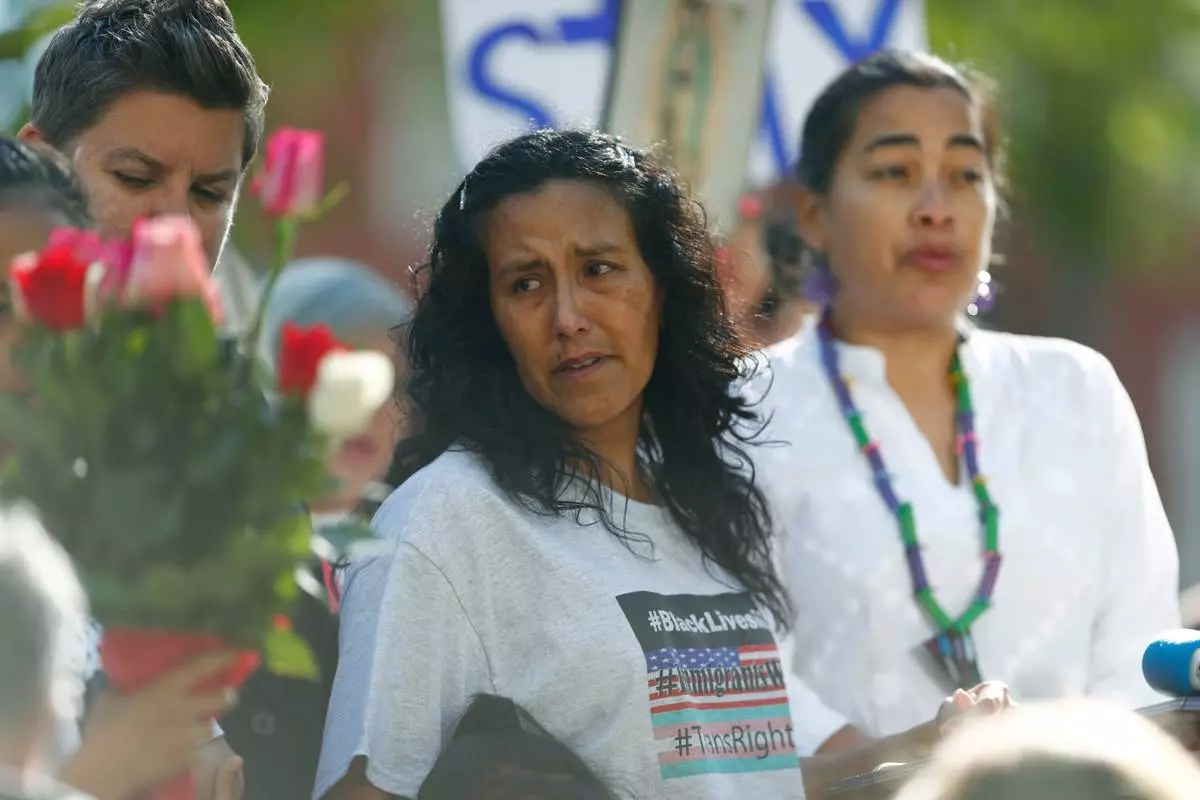
FILE - Jeanette Vizguerra, center, a Mexican immigrant who has lived in a church to avoid immigration authorities for the past three months, pauses as she speaks after leaving the church early May 12, 2017, in downtown Denver. (AP Photo/David Zalubowski, File)
KANSAS CITY, Mo. (AP) — Now that the Chiefs are moving across the state line from their longtime home in Missouri to a $3 billion domed stadium to be built in Kansas, attention in the area has swung to the Royals, who have a similar decision to make regarding their own future.
One thing is certain: They will not be playing at Kauffman Stadium once their lease there expires in January 2031.
Royals owner John Sherman has long said his preference is to build a downtown ballpark, but those plans have been bogged down at nearly every turn by politics and community backlash. Last year, voters in Jackson County, Missouri, soundly defeated the extension of an existing sales tax that pays for the upkeep of Kauffman Stadium and would have helped to fund the new ballpark.
The question now is whether the Royals continue their pursuit of downtown baseball, build a new stadium elsewhere on the Missouri side of the state divide, or follow the Chiefs in moving their new home to the Kansas side of the border.
“The Royals are also a great legacy team that we would love to keep in Missouri. We will do everything we can to continue those conversations,” said Gov. Mike Kehoe, who responded with scorn to the news Monday that the Chiefs had accepted a bond package approved by Kansas lawmakers that will cover 60% of a total project expected to exceed $4 billion.
The Chiefs also plan to build a $300 million training city in the Kansas City-metro suburb of Olathe, Kansas.
“If I’m the Royals," Kehoe said, “I’m in the driver’s seat now. I’m THE team.”
In their bid to keep the Chiefs at Arrowhead Stadium, Missouri lawmakers authorized bonds in June during a special legislative session that would cover up to 50% of the cost of new or renovated stadiums, plus up to $50 million of tax credits.
That is the financing package that still could be used by the Royals to build their ballpark.
But the bond package put forth by Kansas lawmakers, which would not tax residents but instead be paid off by state sales and liquor taxes generated in a defined area around the project, provides the potential to cover up to 70% of overall costs.
In the case of the Chiefs, the term sheet signed by owner Clark Hunt and Lt. Gov. David Toland calls for a stadium with at least 65,000 seats to be built by August 1, 2031, and the Chiefs to stay there for at least 30 years, with an option to remain up to 30 years more.
Along with the $3 billion stadium, the Chiefs committed to at least $1 billion in “ancillary development,” which includes a headquarters and training facility in Olathe and at least $700 million worth of retail, entertainment and other commercial space.
The agreement allows $100 million of that space to be built outside the two counties containing most of Kansas’ side of the metro.
The state agreed to issue a little more than $2.4 billion in bonds to cover roughly 60% of the costs, though if the extra development exceeds $1 billion, it would cover 70%. That makes it the largest public subsidy ever for a U.S. Stadium project.
“Missouri put together a very competitive package,” Kehoe said of the state's attempts to keeping the Chiefs at Arrowhead Stadium, adding: “Kansas is about to leverage ... Kansas taxpayer revenue to make this deal happen. I can’t see where the numbers would pencil on that, as a business person, where it would be a good deal for Missourians.”
The Royals have considered multiple sites around downtown Kansas City, but all have had issues, whether it be traffic flow, community support or something else. They also have provided renderings in the past of a stadium and ballpark district that would be built across the Missouri River in Clay County, which is technically North Kansas City, Missouri.
But momentum of late appears to be behind a move to the suburb of Overland Park, Kansas, and a tract of land known as the Aspiria Campus, where an affiliate of the Royals already holds the mortgage. The property, once home to Sprint and still the headquarters of T-Mobile and several other companies, lies just off Interstate 435 in the south part of the metro.
Those plans have been met by opposition from residents in the affluent neighboring suburb of Leawood, Kansas.
John Mosley, a 65-year-old fan from Kansas City, Missouri, said Monday that he had been hearing people talk about Kansas using a bond package to lure the Chiefs — and, perhaps, even the Royals — across the state line for years.
“To me personally, it doesn’t matter. But I’m noticing that most things are going over into Kansas,” he said. “I’m not sure what’s going on in Missouri. I think it’s a money issue. Maybe over in Kansas things are much better. It just seems like everything is moving.”
Associated Press writers John Hanna, David Lieb and Heather Hollingsworth contributed.
AP NFL: https://apnews.com/hub/nfl
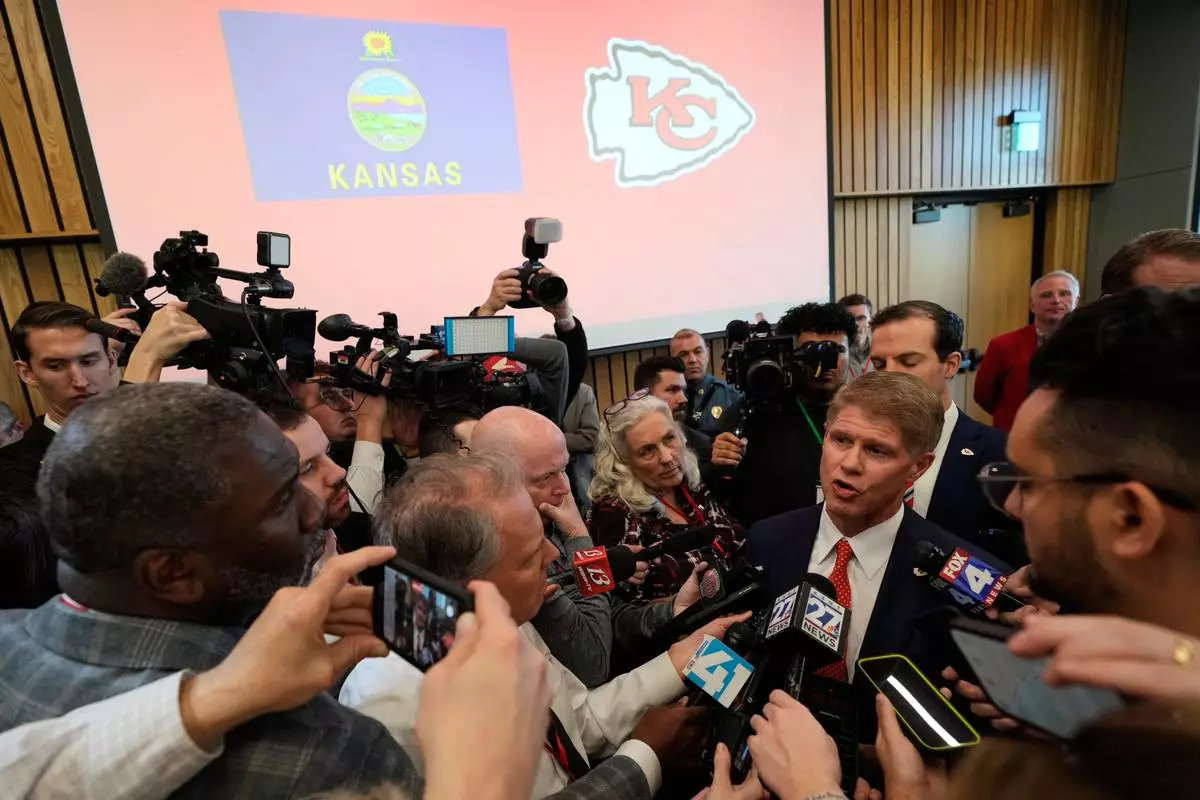
Kansas City Chiefs owner Clark Hunt, center right, talks to the media during an event Monday, Dec. 22, 2025, in Topeka, Kan., after announcing the team will leave Arrowhead Stadium in Kansas City, Mo., for a new stadium that will be built across the Kansas-Missouri state line and be ready for the start of the 2031 season. (AP Photo/Charlie Riedel)
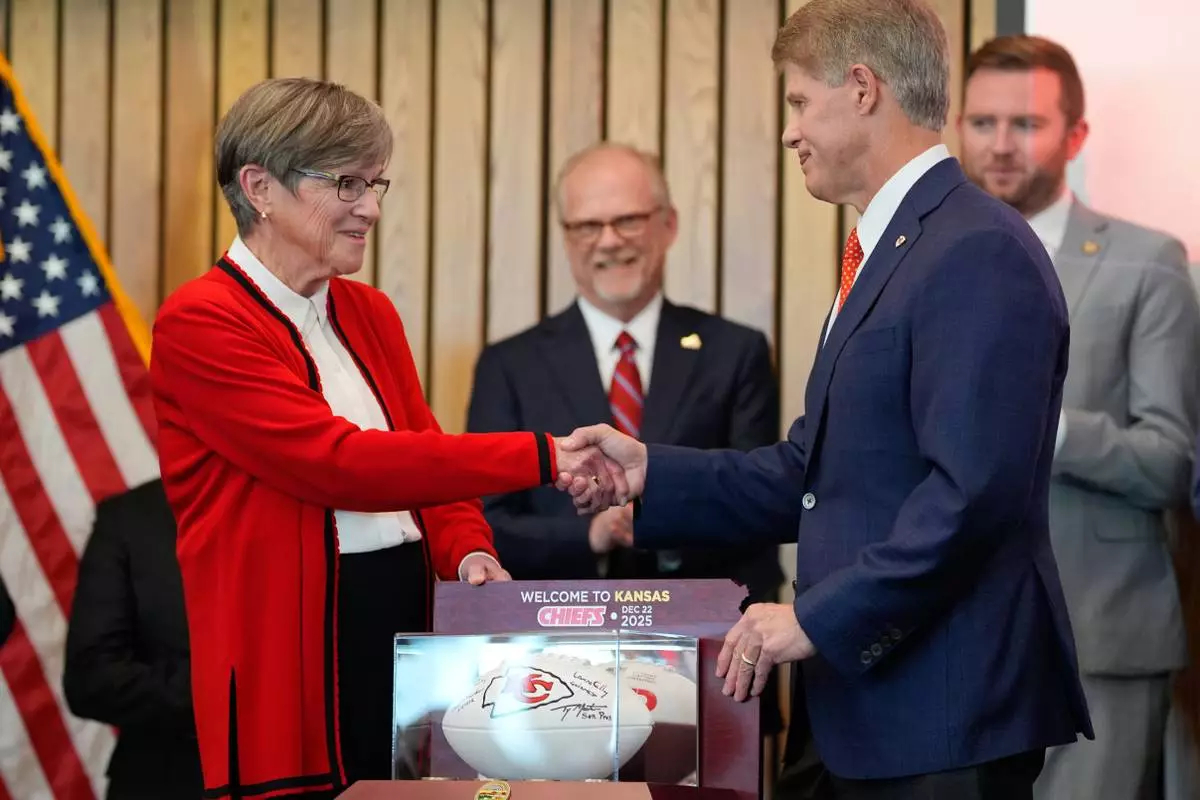
Kansas City Chiefs owner Clark Hunt, right, and Kansas Gov. Laura Kelly, shake hands during an event announcing the team will leave Arrowhead Stadium in Kansas City, Mo. for a new stadium that will be built across the Kansas-Missouri state line and be ready for the start of the 2031 season, during an event Monday, Dec. 22, 2025 in Topeka, Kan. (AP Photo/Charlie Riedel)
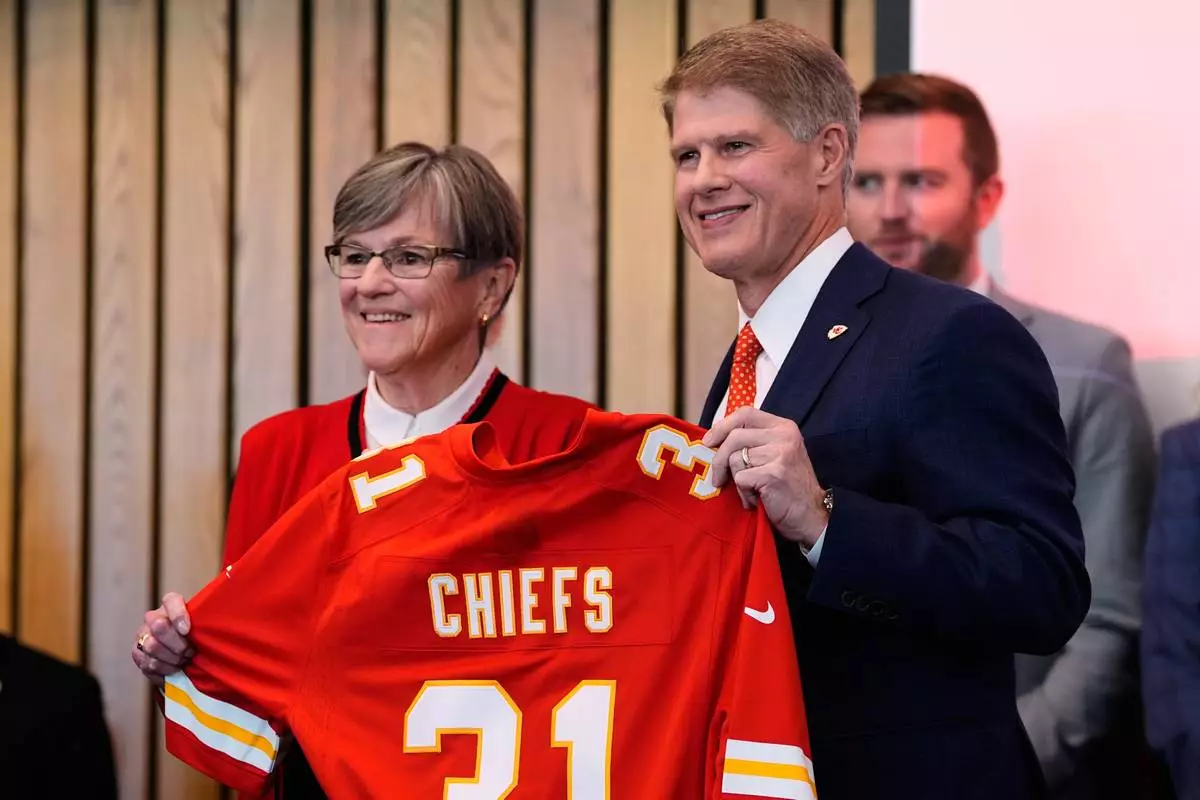
Kansas City Chiefs owner Clark Hunt, right, and Kansas Gov. Laura Kelly, pose for a photo during an event announcing the team will leave Arrowhead Stadium in Kansas City, Mo. for a new stadium that will be built across the Kansas-Missouri state line and be ready for the start of the 2031 season, during an event Monday, Dec. 22, 2025 in Topeka, Kan. (AP Photo/Charlie Riedel)
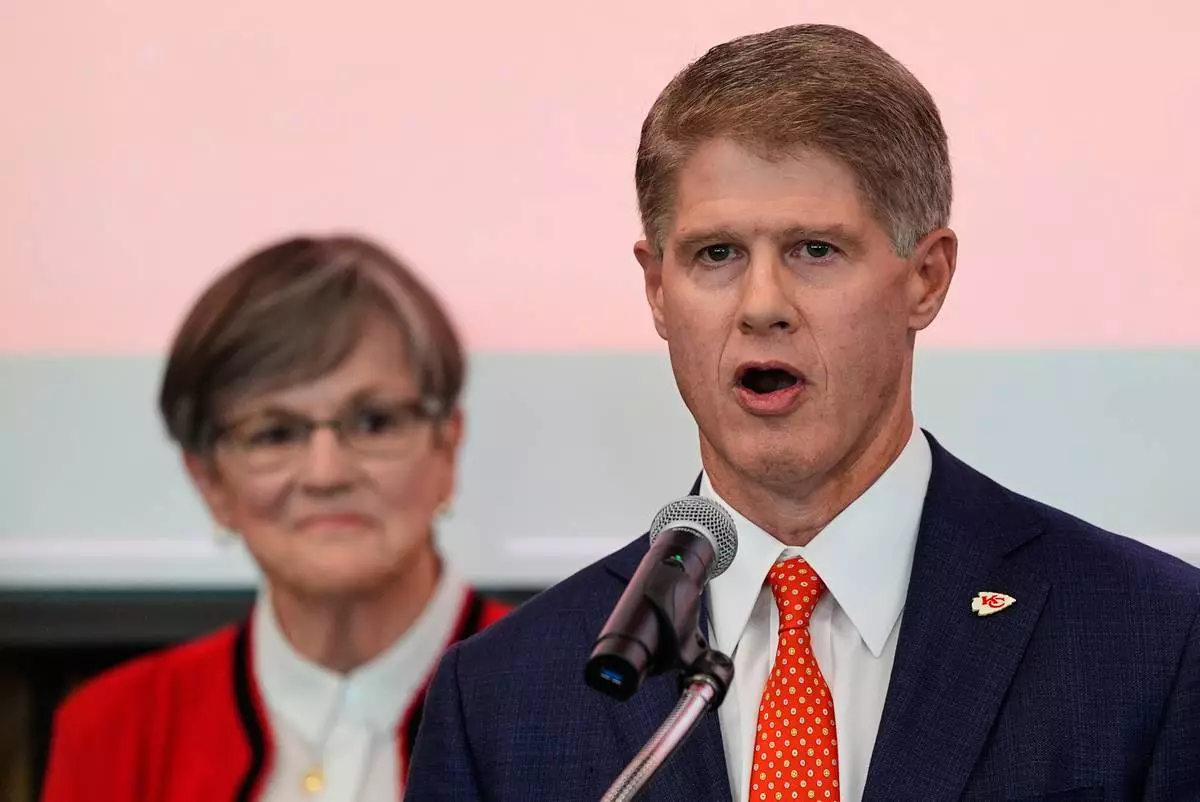
Kansas City Chiefs owner Clark Hunt, right, addresses attendees while Kansas Gov. Laura Kelly, left, looks on during an event Monday, Dec. 22, 2025, in Topeka, Kan., announcing the team will leave Arrowhead Stadium in Kansas City, Mo. for a new stadium that will be built across the Kansas-Missouri state line and be ready for the start of the 2031 season. (AP Photo/Charlie Riedel)