BAMAKO, Mali (AP) — The head of an alliance of Mali, Burkina Faso and Niger declared Tuesday that the launch of a joint battalion “must be followed by large-scale operations in the coming days" in a region plagued by deadly extremism.
Burkina Faso leader Capt. Ibrahim Traoré gave no details in his comments after being named the new head of the Alliance of Sahel States, whose three military-led members withdrew from West Africa's regional bloc this year. The alliance formed in 2023.
Click to Gallery
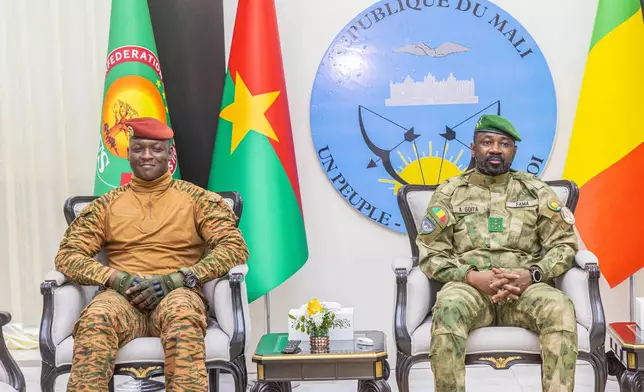
Captain Ibrahim Traoré of Burkina Faso, left, sits with General Assimi Goïta of Mali, during the second summit on security and development in Bamako, Mali, Tuesday, Dec. 23, 2025. (Mali Government Information Center via AP)
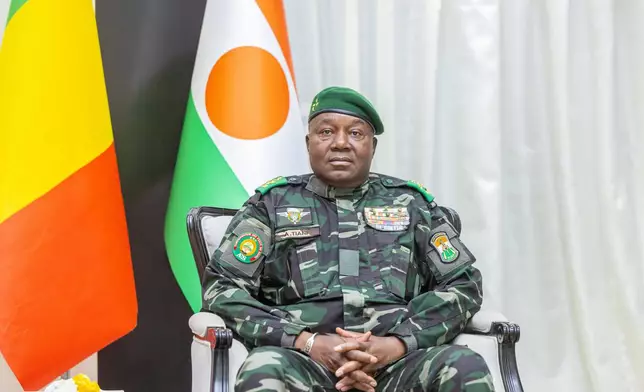
General Abdourahamane Tchiani of Niger attends the Alliance of Sahel States (AES) second summit on security and development in Bamako, Mali, Tuesday, Dec. 23, 2025. (Mali Government Information Center via AP)
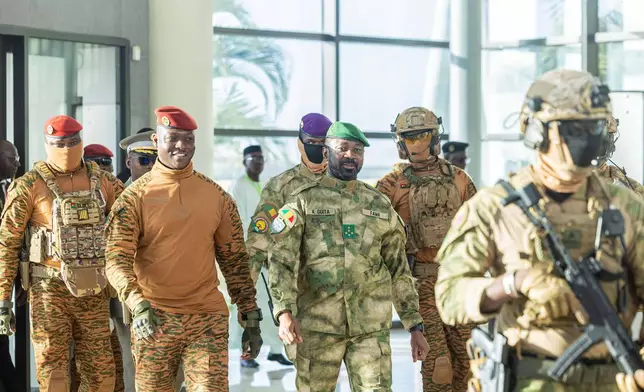
Burkina Faso's President Captain Ibrahim Traoré, second left, walks alongside Mali's President General Assimi Goïta during the Alliance of Sahel States (AES) second summit on security and development in Bamako, Mali, Tuesday, Dec. 23, 2025. (Mali Government Information Center via AP)
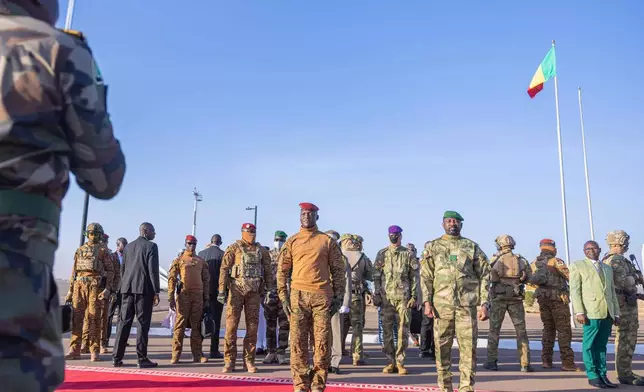
Burkina Faso's President Captain Ibrahim Traoré, left, and Mali's President General Assimi Goïta stand during a welcome ceremony of the Confederation of the Alliance of Sahel States (AES), to the second summit on security and development in Bamako, Mali, Tuesday, Dec. 23, 2025. (Mali Government Information Center via AP)
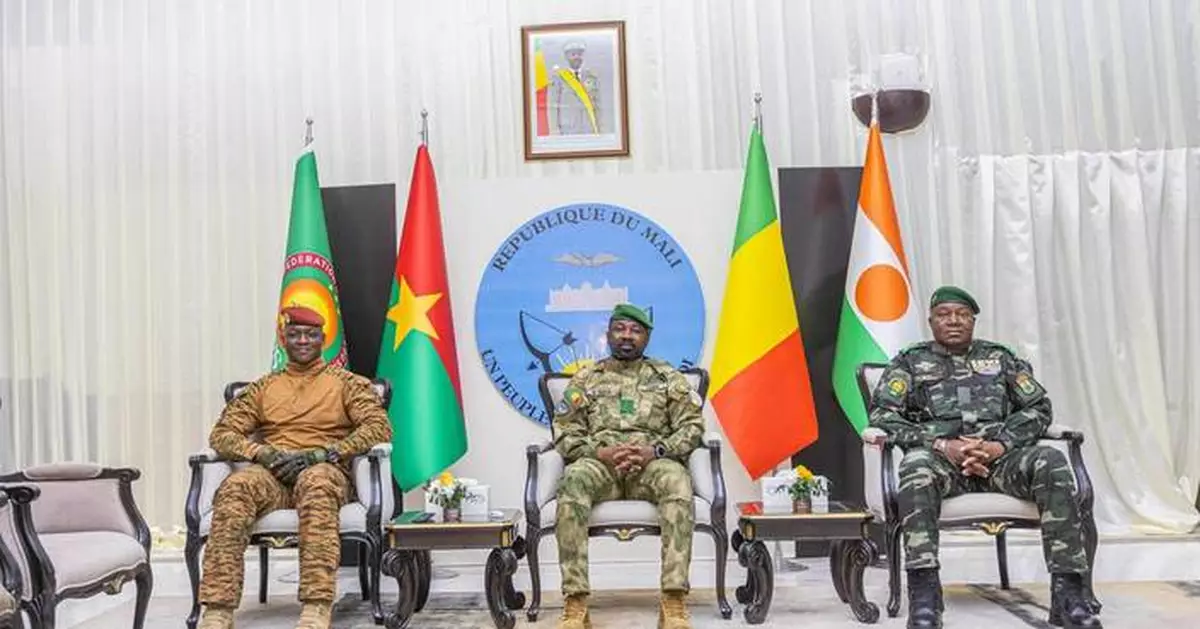
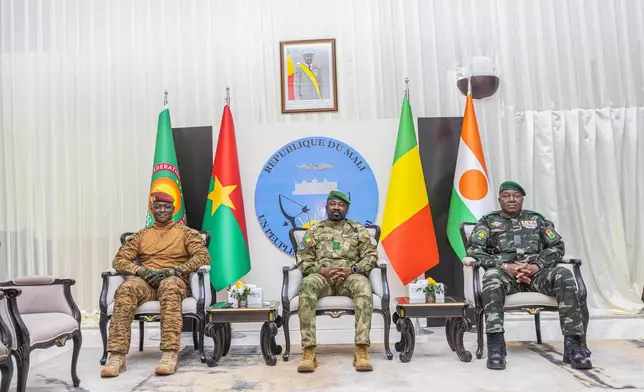
Captain Ibrahim Traoré of Burkina Faso, left, General Assimi Goïta of Mali, center, and General Abdourahamane Tchiani of Niger attend the second summit on security and development in Bamako, Mali, Tuesday, Dec. 23, 2025. (Mali Government Information Center via AP)
Mali, Burkina Faso and Niger are the most affected as the vast Sahel region south of the Sahara has become the deadliest place in the world for extremism, with armed groups linked to al-Qaida and the Islamic State group. All three countries have seen coups in recent years and struggled with overstretched security forces.
The countries' leaders agreed in a summit Tuesday to boost security and economic ties, days after the weekend launch of the joint military battalion that's meant to fight the armed groups. It is expected to have 5,000 personnel.
The alliance has “put an end to all occupation forces in our countries,” said Niger’s junta leader, Abdourahamane Tchiani, alluding to member states' decisions to kick out longtime partners France and the United States.
“No country or interest group will decide for our countries anymore,” Tchiani added.
Mali, Burkina Faso and Niger, however, have turned to Russia as a major security ally.
The Sahel's complex security crisis remains “very difficult to defeat” no matter who’s engaged with the alliance, said Rida Lyammouri, a Sahel specialist with the Policy Center for the New South think tank in Morocco.
The second annual summit shows growing collaboration among the three countries despite fractured relations and coup-related sanctions from global partners, said Ulf Laessing, head of the Sahel program at the Konrad Adenauer Foundation.
The alliance “enjoys popularity among citizens of the three countries” and is trying to keep momentum going by deepening cooperation beyond cross-border military operations, Laessing said.
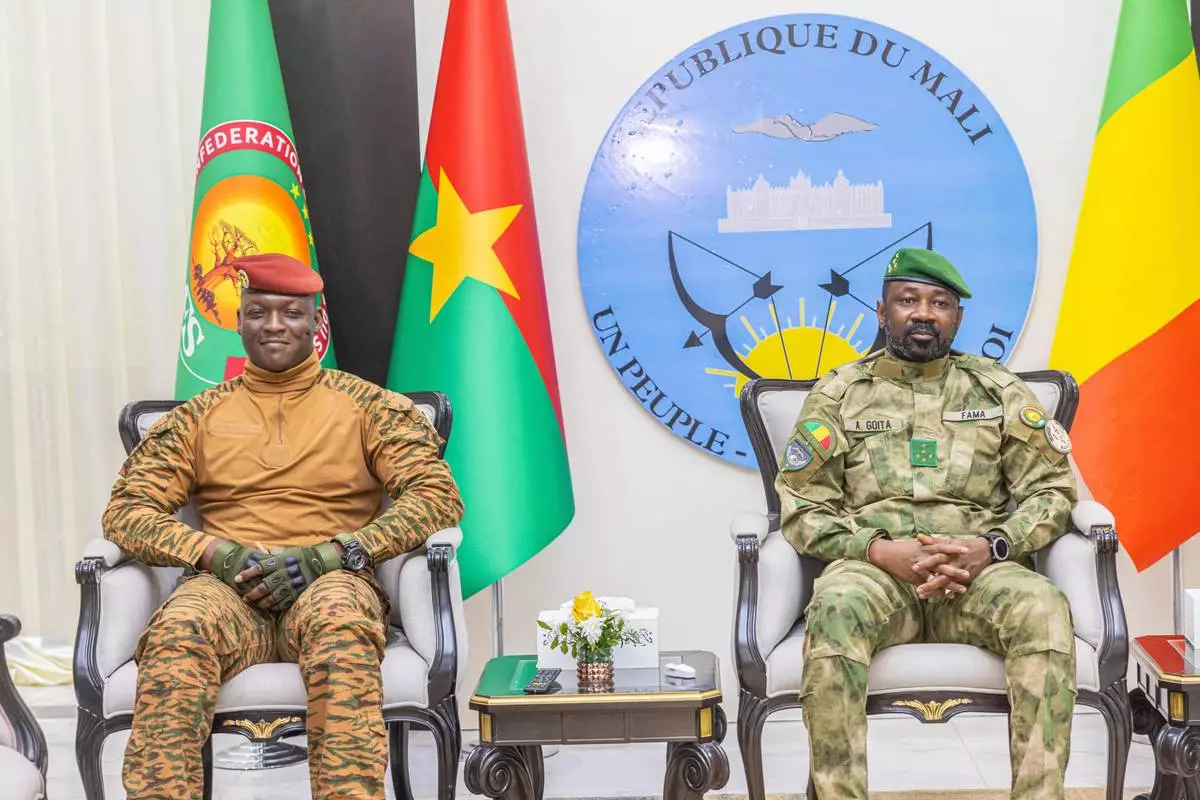
Captain Ibrahim Traoré of Burkina Faso, left, sits with General Assimi Goïta of Mali, during the second summit on security and development in Bamako, Mali, Tuesday, Dec. 23, 2025. (Mali Government Information Center via AP)
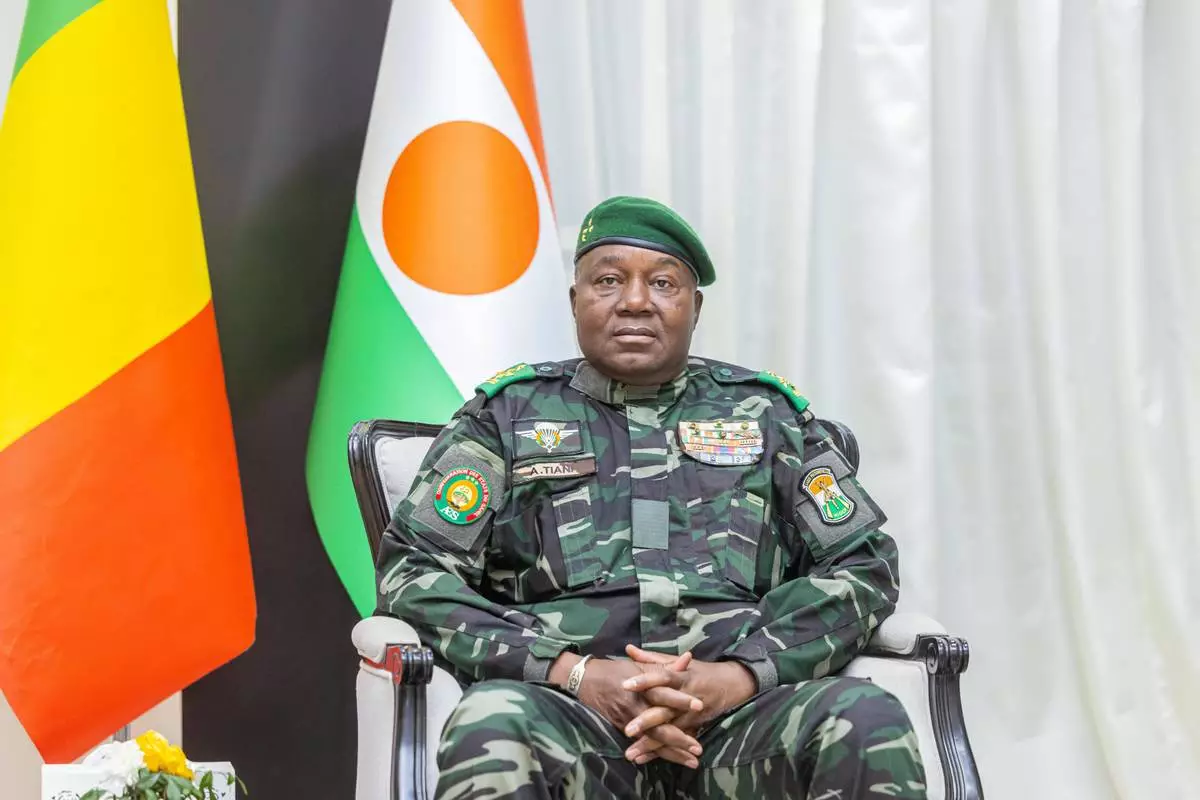
General Abdourahamane Tchiani of Niger attends the Alliance of Sahel States (AES) second summit on security and development in Bamako, Mali, Tuesday, Dec. 23, 2025. (Mali Government Information Center via AP)
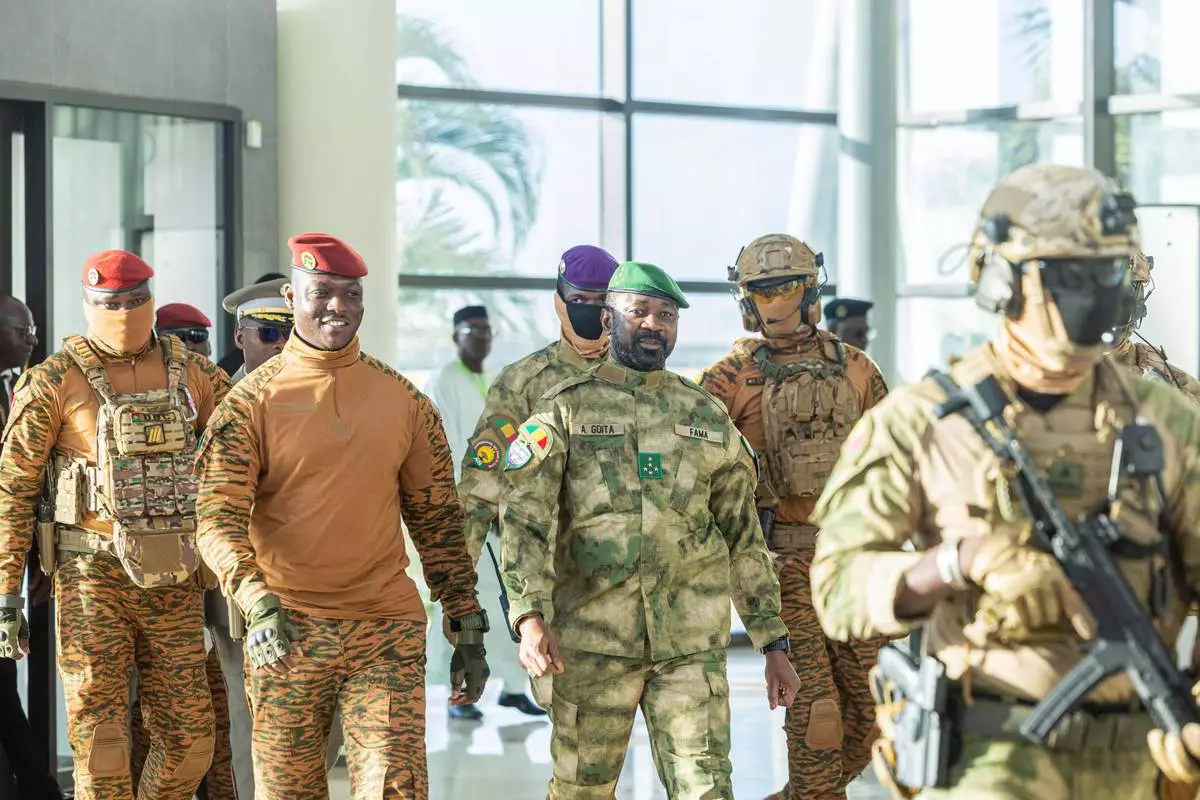
Burkina Faso's President Captain Ibrahim Traoré, second left, walks alongside Mali's President General Assimi Goïta during the Alliance of Sahel States (AES) second summit on security and development in Bamako, Mali, Tuesday, Dec. 23, 2025. (Mali Government Information Center via AP)
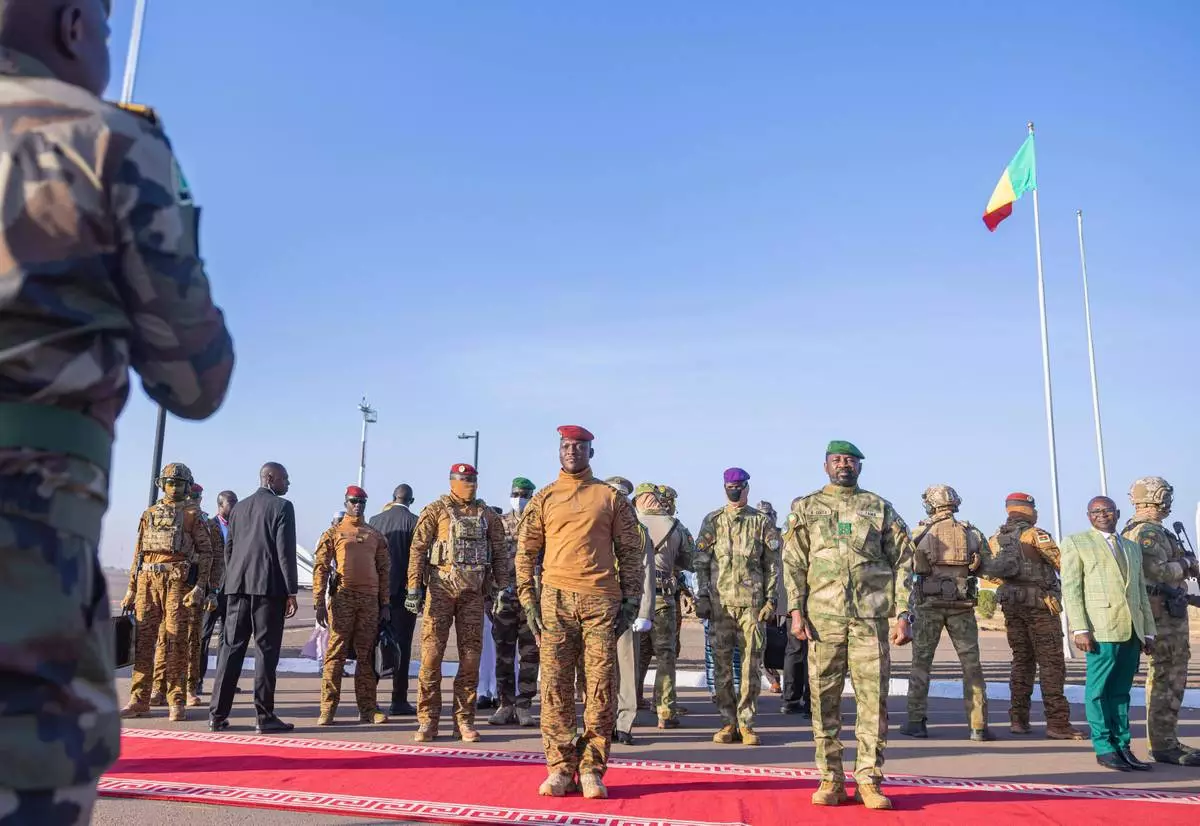
Burkina Faso's President Captain Ibrahim Traoré, left, and Mali's President General Assimi Goïta stand during a welcome ceremony of the Confederation of the Alliance of Sahel States (AES), to the second summit on security and development in Bamako, Mali, Tuesday, Dec. 23, 2025. (Mali Government Information Center via AP)
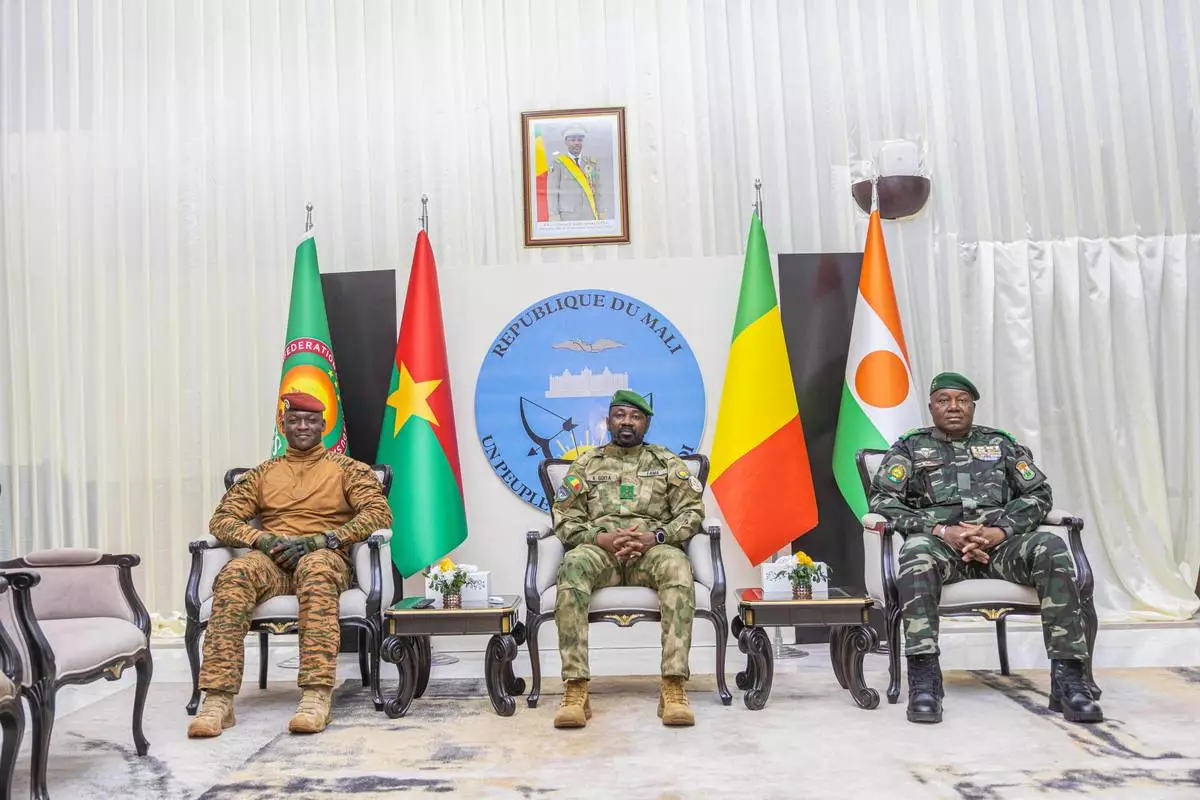
Captain Ibrahim Traoré of Burkina Faso, left, General Assimi Goïta of Mali, center, and General Abdourahamane Tchiani of Niger attend the second summit on security and development in Bamako, Mali, Tuesday, Dec. 23, 2025. (Mali Government Information Center via AP)
Harvard University professor Robert Coles, the psychiatrist and Pulitzer Prize-winning author who championed the cause of children grappling with poverty and segregation, has died at 97, his son said Sunday.
The son, also named Robert Coles, told The Associated Press that his father died Thursday at a hospice center in Lincoln, Massachusetts.
The elder Coles was famed for documenting the needs of children, particularly those caught in the crucible of social upheaval. The second and third parts of his five-volume "Children of Crisis" won him a Pulitzer Prize in 1973 for general nonfiction.
In a 1965 Washington Post essay, he wrote that, expecting to find many psychiatric problems among the children of poverty, that instead "I was constantly surprised at the endurance shown by children we would all call poor or, in the current fashion, 'culturally disadvantaged.'"
"What enabled such children from such families to survive emotionally and educationally ordeals I feel sure many white middle-class boys and girls would find impossible?"
He would visit the same families repeatedly in order to get to know them well, and brought along crayons to allow the children he studied to draw pictures about their experiences and perceptions.
He received the Presidential Medal of Freedom in 1998. He also was one of the first recipients of a MacArthur Foundation "genius grant." In 1999, a panel of judges ranked "Children of Crisis" as No. 44 on its list of the century's 100 best English-language works of nonfiction.
The "Children of Crisis" books came out from 1967 to 1978. His first book focused on the effects of desegregation on children. The second looked at life among migrant workers, sharecroppers and others dwelling in mountain areas.
He subtitled the third volume "The South Goes North" as it focused on both Black and white Southerners who moved into urban areas in the North. The fourth looked at children of Native American origin, as well as Alaska Natives and Hispanic children. A fifth volume examined children of wealth and privilege.
His other books included "Their Eyes Meeting the World," exploring the meanings of children's drawings; "The Moral Life of Children," "The Political Life of Children" and "The Spiritual Life of Children." He also wrote books on psychoanalyst Anna Freud and reformer Dorothy Day.
While many of his books probed conditions in the United States, he also studied children around the world. In all, he wrote more than 50 books and hundreds of articles and essays.
Some of his peers found his work to be more that of a reporter and advocate than that of a psychiatrist or scientist.
"He's a very good journalist who talks to kids sensitively and tells stories well," the late Harvard professor Lawrence Kohlberg, a leading authority on moral development, told AP in 1986. "But no psychiatrist would take what he says seriously."
He had gotten interested in children's reaction to crises in the early 1960s while serving in the South as an Air Force doctor. He was particularly taken by Ruby Bridges, who was only 6 when she became the center of a storm of abuse as the first Black child in a previously all-white school in New Orleans.
"She demonstrated moral stamina; she possessed honor, courage," he said in 1986. He even wrote a children's book about her, "The Story of Ruby Bridges," in 1995. (Ruby's heroism also caught the eye of artist Norman Rockwell, who depicted her brave entrance into the school in his 1964 work "The Problem We All Live With.")
Coles' wife, Jane, helped out during the interviews with children.
"At first the children were frightened to death of us — they'd never had white people in their homes before," Coles told People magazine. "But I began to throw away my questions. I threw away my necktie. I began to sit on the floor."
The 1995 PBS documentary "Listening to Children: A Moral Journey with Robert Coles" showed him at work, interviewing a cross-section of American children and analyzing their drawings, as he had done in his books.
"A child is an opportunity and a moral challenge. How are we going to do justice to this new life with all its possibilities?" he said. "If we fail as parents, we are failing also as citizens."
Coles held a longtime appointment as a research psychiatrist at Harvard's University Health Services. In 1977, he was named professor of psychiatry and medical humanities, and in 1995, he was appointed as a professor of social ethics in the School of Education.
In a popular Harvard class he taught called the Literature of Social Reflection — jokingly called "Guilt 105" — he stressed that "we should look inward and think about the meaning of our life and its purposes," he told People magazine in 1990.
Born in Boston, Coles went on to graduate from Harvard in 1950. He received a medical degree from Columbia University's College of Physicians and Surgeons in 1954. A 1972 Time magazine cover profile said he became interested in psychiatry as "the most philosophical of the disciplines" — and besides, he found he was unnerved when children cried when being vaccinated.
He acknowledged that he and his own family lived well, telling The New York Times in 1997, "It makes me uncomfortable, seeing the disparities between the world I document and the world I inhabit."
His wife died in 1993. They had three sons.
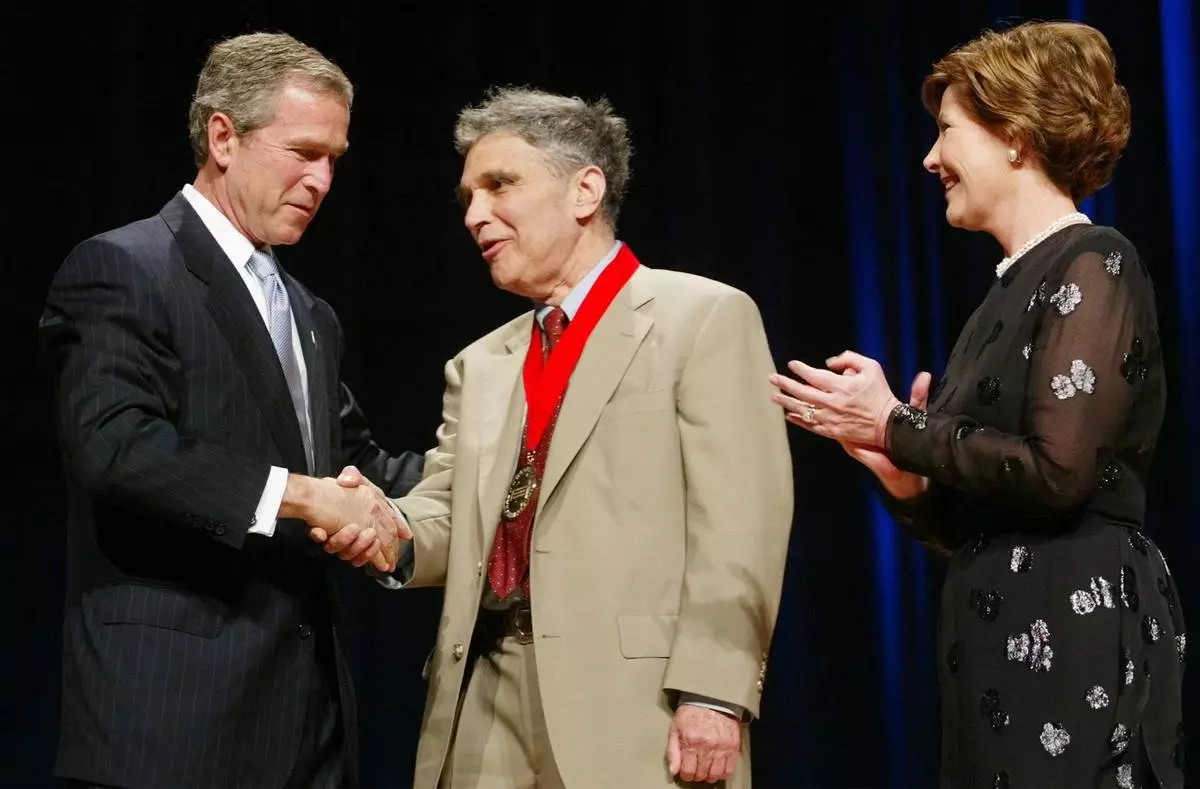
FILE - President Bush, left, shakes hands with Robert Coles, center, a child psychologist, researcher and professor of psychiatry from Cambridge, Mass., as first lady Laura Bush looks on during the National Endowment for the Arts Awards ceremony at Constitution Hall, April 22, 2002, in Washington. (AP Photo/Pablo Martinez Monsivais, File)