NEW YORK (AP) — The National Women’s Soccer League has created a rule to give clubs flexibility to sign “high-impact players” to contracts that go over the salary cap.
The issue has attracted attention as the Washington Spirit have attempted to re-sign Trinity Rodman, one of the league’s biggest stars.
“Ensuring our teams can compete for the best players in the world is critical to the continued growth of our league,” NWSL Commissioner Jessica Berman said. “The High Impact Player Rule allows teams to invest strategically in top talent, strengthens our ability to retain star players, and demonstrates our commitment to building world-class rosters for fans across the league.”
Hours later on Tuesday, the NWSL Players Association announced its opposition to the rule.
“Under federal labor laws, changes to compensation under the salary cap are a mandatory subject of bargaining — not a matter of unilateral discretion,” the union wrote in a post on Instagram.
The Spirit and Rodman struck a multiyear deal that was vetoed by the league. The NWSLPA filed a grievance in response, maintaining that the denial violated Rodman’s free agency rights.
The league's rule would allow teams to exceed the salary cap by $1 million for a player, or players, who meet certain criteria, including their ranking among the the world's top soccer players and the most marketable athletes in any sport.
The league said the CBA allows it to use its discretion to establish the High Impact Player roster classification, adding the new rule would take effect on July 1.
AP soccer: https://apnews.com/hub/soccer

FILE - Washington Spirit's forward Trinity Rodman runs for a ball during the first half of a NWSL soccer match against Bay FC on Saturday, Aug. 23, 2025, in San Francisco. (AP Photo/Benjamin Fanjoy, File)
NEW YORK (AP) — Stocks closed at another record on Wall Street Tuesday following a surprisingly strong report on economic growth over the summer.
The U.S. government's first assessment of economic growth during the third quarter also showed that inflation remains high. A separate report showed that consumer confidence continued fading in December. All of it added to a complicated picture of the economy.
The latest record for the S&P 500 came even as most stocks within the benchmark index lost ground. Technology stocks, which have been main force pushing major indexes to records all year, once again were able to counter weakness elsewhere in the market.
The S&P 500 rose 31.30 points, or 0.5%, to 6,909.79, surpassing the record set earlier in December. The Dow Jones Industrial Average rose 79.73 points, or 0.2%, to 48,442.41. The Nasdaq composite rose 133.02 points, or 0.6%, to 23,561.84.
Nvidia jumped 3% and was biggest force helping to push the market higher. It is among several big tech companies with outsized valuations that tend to have more impact on the broader market’s direction. Google's parent company, Alphabet, rose 1.5%.
Novo Nordisk jumped 7.3% after U.S. regulators approved a pill version of the blockbuster weight-loss drug Wegovy, the first daily oral medication to treat obesity.
Wall Street received the latest economic updates during an otherwise quiet holiday-shortened week. Markets in the U.S. will close early Wednesday for Christmas Eve and remain closed for Christmas on Thursday.
The U.S. economy grew at a 4.3% annual rate during the third quarter. That builds on 3.8% growth during the second quarter and marks a sharp turnaround from the first quarter, when the U.S. economy shrank for the first time in three years.
The latest report also showed that stubborn inflation continues to hover over the economy. The Federal Reserve’s favored inflation gauge — called the personal consumption expenditures index, or PCE — climbed to a 2.8% annual pace last quarter, up from 2.1% in the second quarter.
The yield on the 10-year Treasury rose to 4.16% from 4.15% just before the report on gross domestic product for the third quarter was released. The yield on the two-year Treasury, which more closely tracks expectations for Fed actions, rose to 3.53% from 3.49% just prior to the report’s release.
The Fed has been taking a more cautious policy approach amid mixed signals from the economy. Economic growth has been occurring at the same time that inflation remains stubbornly above the central bank's 2% target. The job market is also slowing, adding another layer of concern to whether the central bank should continue cutting interest rates.
On Wednesday, the Labor Department will release its weekly data on applications for jobless benefits, which stands as a proxy for U.S. layoffs.
“The Fed has been balancing off inflation risks versus weakening labor markets and today’s report further complicates their dilemma,” wrote Dominic Pappalardo, chief multi-asset strategist at Morningstar Wealth, in a note to investors.
The Fed has cut interest rates three times in 2025 and the central bank's rate-setting committee is divided about additional rate cuts in 2026. The committee members, at their last meeting, projected a wide range of possibilities from holding rates steady to two or more reductions.
Wall Street expects the Fed to hold rates steady at its upcoming meeting in January.
Consumer spending and confidence has been shaky amid worries about high prices, especially with a wide-ranging U.S. trade war that could drive prices for many goods even higher.
The latest update from business group The Conference Board showed that consumer confidence fell in December to its lowest level since tariffs were rolled out in April. Meanwhile, retail sales have been weakening, with consumers growing more cautious.
Consumers have become more targeted in their buying during the holiday shopping season, according to Visa's Consulting and Analytics division. From Nov. 1 through Sunday, cash and credit card sales rose 4.2%, which is less than the 4.8% increase during the same period a year ago.
Markets were mixed in Asia and Europe.
The price of gold continued rising. It rose 0.8% to $4,505.70 per ounce Tuesday and is up about 70% for the year.
Oil prices were relatively stable after jumping a day prior. U.S. benchmark crude rose 0.6% to $58.38 per barrel. The price of Brent crude, the international standard, rose 0.5% to $62.38 a barrel.
Matt Ott and Elaine Kurtenbach contributed to this report.
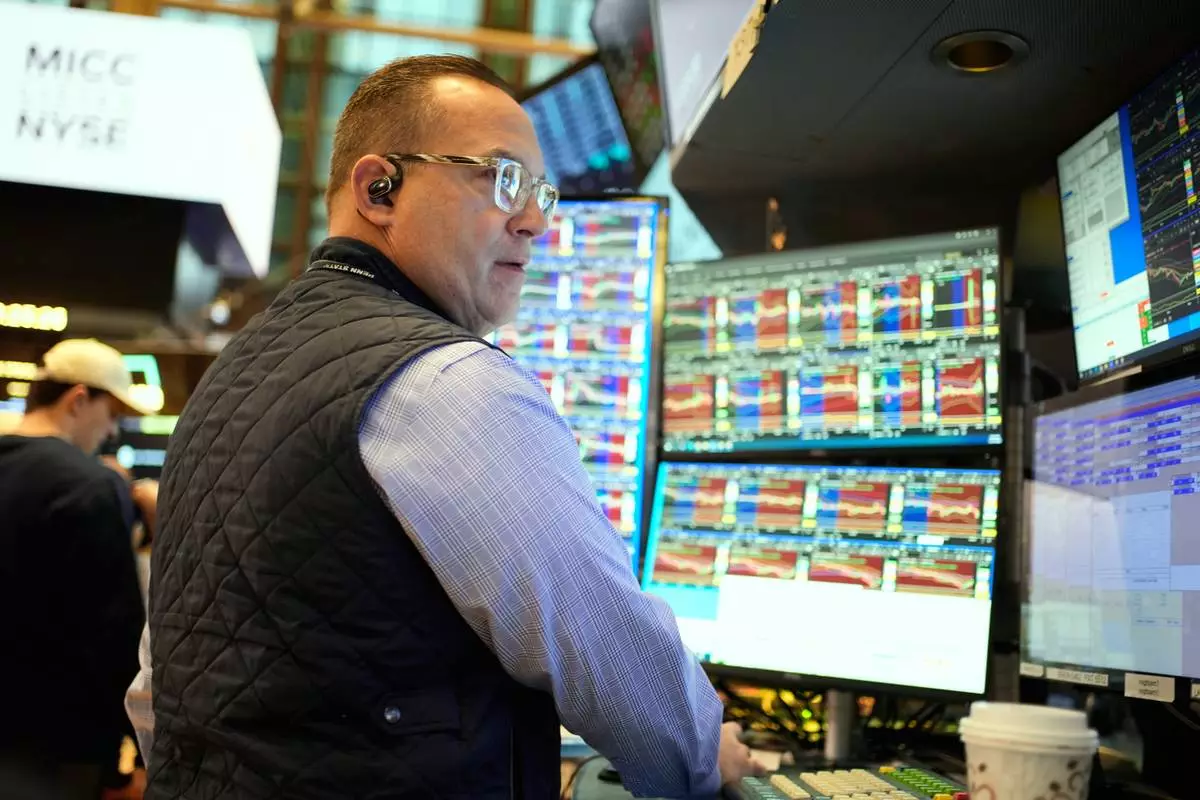
Anthony Matesic works on the floor at the New York Stock Exchange in New York, Wednesday, Dec. 10, 2025. (AP Photo/Seth Wenig)

Trader Jonathan Mueller works on the floor of the New York Stock Exchange, Thursday, Dec. 11, 2025. (AP Photo/Richard Drew)
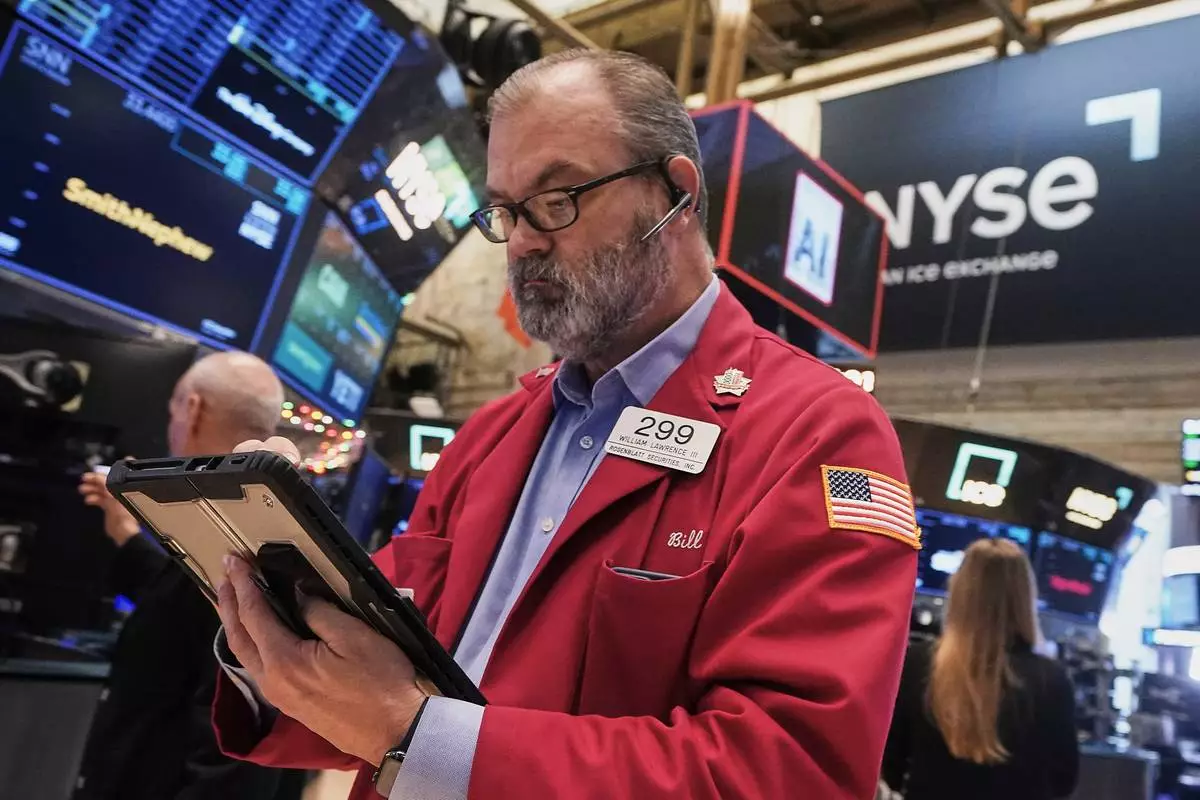
Trader William Lawrence works on the floor of the New York Stock Exchange, Thursday, Dec. 11, 2025. (AP Photo/Richard Drew)

Walmart is displayed on the facade of the Nasdaq MarketSite, in New York, Tuesday, Dec. 9, 2025. (AP Photo/Richard Drew)

A dealer works near the screens showing the Korea Composite Stock Price Index (KOSPI), left, and the foreign exchange rate between U.S. dollar and South Korean won at a dealing room of Hana Bank in Seoul, South Korea, Thursday, Dec. 18, 2025. (AP Photo/Lee Jin-man)
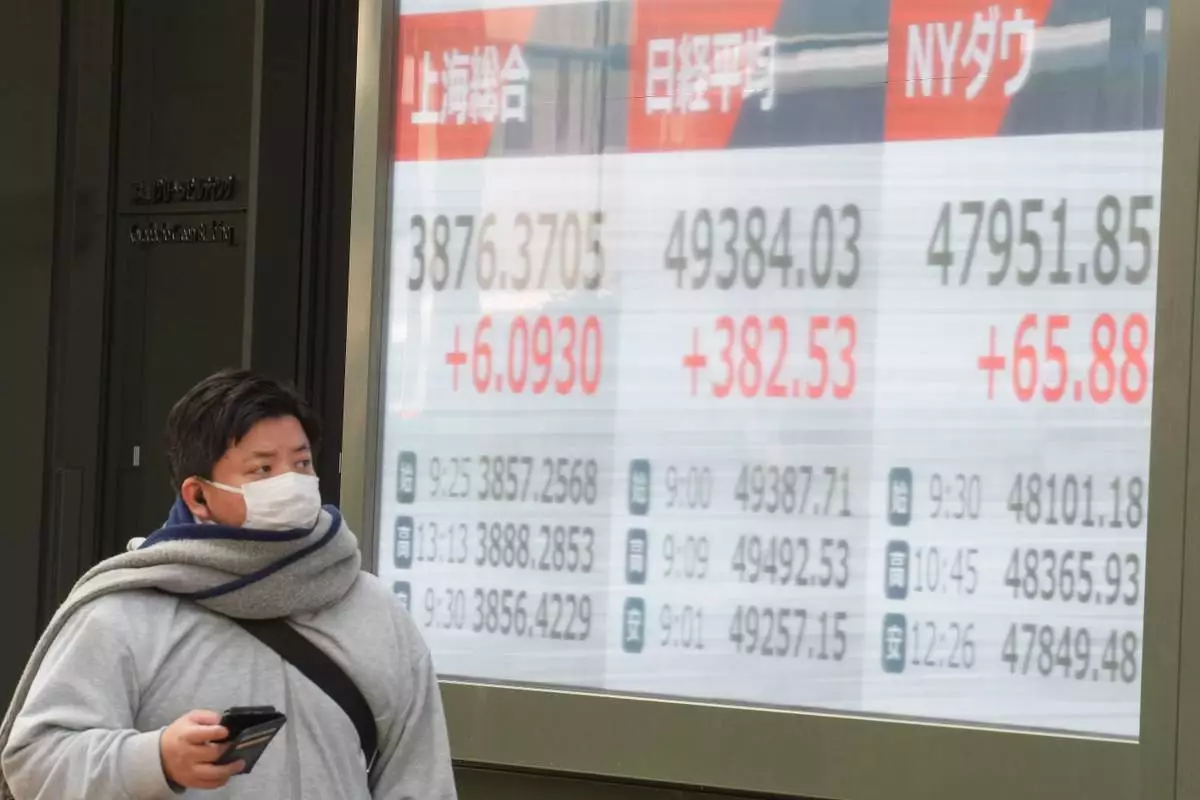
A person walks in front of an electronic stock board showing the market indexes of Shanghai, Tokyo and New York Dow at a securities firm Friday, Dec. 19, 2025, in Tokyo. (AP Photo/Eugene Hoshiko)

A dealer watches computer monitors at a dealing room of Hana Bank in Seoul, South Korea, Thursday, Dec. 18, 2025. (AP Photo/Lee Jin-man)