Hong Kong's Southbound Travel for Guangdong Vehicles scheme was officially implemented from midnight on Tuesday.
Under the scheme, approved private car owners from south China's Guangdong Province with confirmed travel bookings may drive into Hong Kong's urban area via the Zhuhai Port of the Hong Kong-Zhuhai-Macao Bridge.
The first phase of the scheme covers the cities of Guangzhou, Zhuhai, Jiangmen, and Zhongshan, and will be expanded to other cities across Guangdong after six months.
Applications for Guangdong private cars to enter Hong Kong's urban area opened at 09:00 local time on Dec 9. With an initial daily quota of 100 vehicles, each Guangdong vehicle may stay in Hong Kong for up to three days per visit. The Hong Kong Special Administrative Region (HKSAR) government initially implemented the Southbound Travel scheme from 0:00 on No 15, when eligible and approved private cars from Guangdong may park at the automated carparks on the artificial island at the Hong Kong Port (port carparks) via the Zhuhai Port of the Hong Kong-Zhuhai-Macao Bridge, after which the drivers and passengers may transfer to a flight via Hong Kong International Airport (HKIA) or enter and visit Hong Kong by taking Hong Kong local transportation.
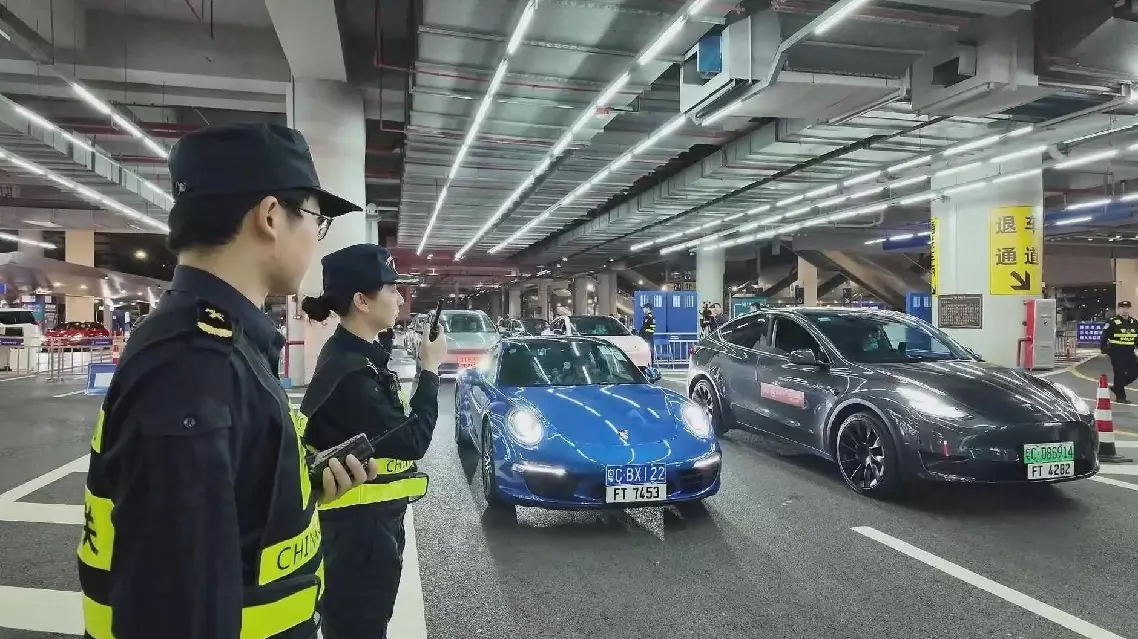
Hong Kong's Southbound Travel for Guangdong Vehicles scheme officially implemented
The 32nd Asia-Pacific Economic Cooperation (APEC) Ministers Responsible for Trade Meeting concluded in east China's Suzhou on Saturday, yielding fruitful results and laying significant groundwork for the APEC Economic Leaders' Meeting in November.
The trade ministers' meeting focused on "building an open and predictable regional and multilateral economic and trade order" and "fostering new engines of innovative and dynamic trade and investment cooperation."
Chinese Commerce Minister Wang Wentao briefed the media on the meeting's outcomes at a press conference.
Wang said the meeting issued a joint statement titled the Suzhou Statement, and approved the latest edition of the APEC Roadmap for Innovative, Competitive and Resilient Services.
All parties agreed to advance policy innovation and reform in services trade, build an open and predictable investment environment, improve regional trade facilitation and supply chain resilience, strengthen standards coordination, and enhance intellectual property protection, Wang told the media.
He also said that substantial progress was made on a framework document for regional digital trade cooperation and the ministers emphasized promoting inclusive AI development, strengthening AI-related trade, and bridging the digital divide to ensure shared benefits from digital transformation.
The minister noted that the outcomes of the meeting demonstrated strong cooperation willingness, highlighted an innovation-oriented approach, and reflected inclusiveness and shared benefits. "The fact that Asia-Pacific economies can come together, uphold the original aspiration of promoting trade and investment liberalization and facilitation while supporting economic growth and prosperity, and engage in in-depth discussions on the important issue of 'where multilateral and regional economic and trade cooperation is headed,' fully demonstrates that open regionalism and true multilateralism enjoy broad support, and that mutual success and shared development serve the fundamental interests of all economies," Wang said.
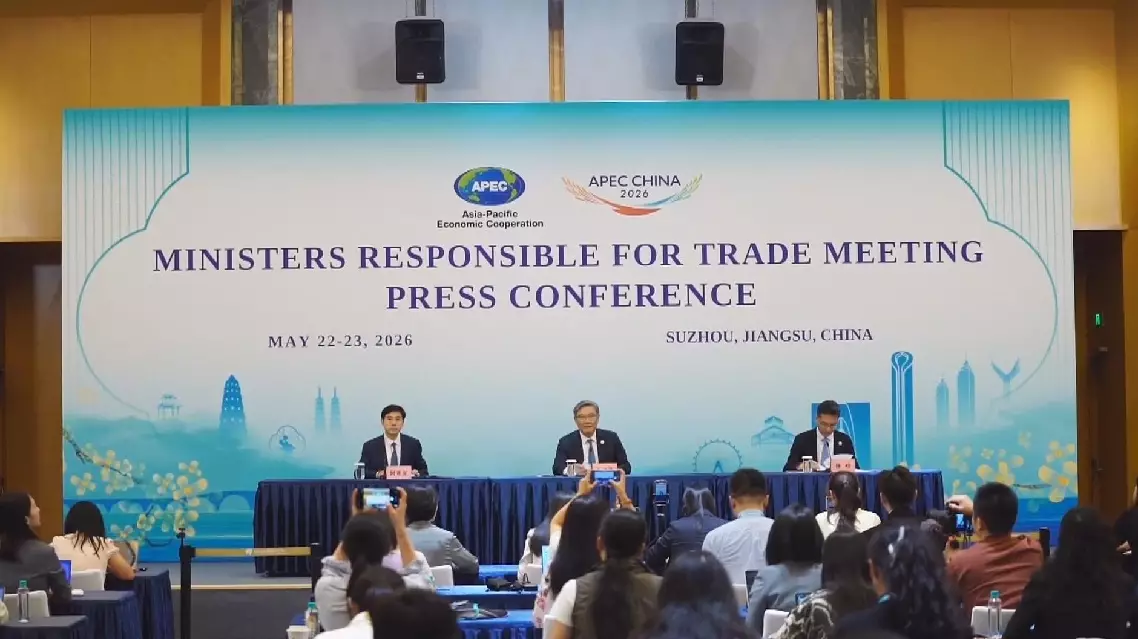
2026 APEC trade ministers' meeting concludes with fruitful results