Skip to Content Facebook Feature Image

What to know about the Central African Republic ahead of its election

News

What to know about the Central African Republic ahead of its election
News

News

What to know about the Central African Republic ahead of its election

2025-12-24 13:14 Last Updated At:13:31

BANGUI, Central African Republic (AP) — Central African Republic on Dec. 28 will hold presidential and legislative elections as concerns over armed groups have led to a growing reliance on Russia for security.

President Faustin Archange Touadera has led the country since 2016 and is seen as likely to win a third term after a constitutional referendum in 2023 removed term limits. His decision to run again sparked a street protest by thousands of people earlier this year.

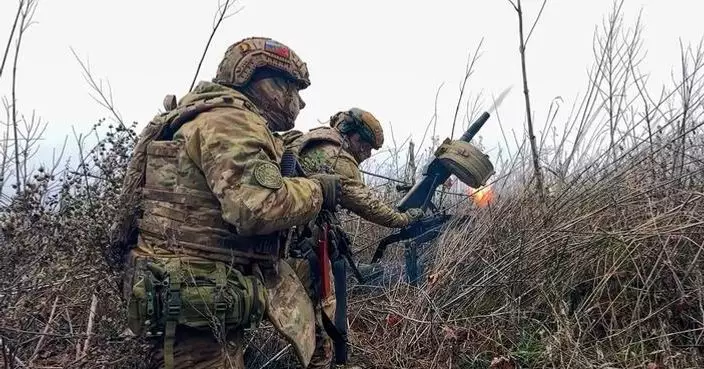
Touadera is one of Russia’s closest allies in Africa, but tensions have grown this year over Moscow’s demand to replace the private Wagner mercenary group with the Russian military unit Africa Corps.

Meanwhile, rights groups have raised concerns about repression ahead of the vote’s first round, while a major opposition group vows to boycott it.

Here is what to know about Central African Republic.

The landlocked country of around 5.5 million people has been plagued by fighting between pro-government forces and armed groups.

In 2013, predominantly Muslim rebels seized power and forced the president from office. A 2019 peace deal was signed, but six of the 14 armed groups involved later withdrew.

Central African Republic’s government has signed peace agreements with armed groups in recent months that have created conditions for stability not seen in years, according to Human Rights Watch.

“Because of the peace deals, United Nations peacekeeping efforts and security support from Wagner and from the Rwandans, the country is in a more secure place than it was during the last electoral cycle in 2020,” said Lewis Mudge, the rights group’s Central Africa director.

The peacekeeping mission, MINUSCA, has been present since 2014. It currently has around 14,000 military personnel and 3,000 police members, and they will help guard election sites.

Last month, the U.N. Security Council extended the force’s mission for a year but said its presence would scale down due to budget constraints. MINUSCA spokesperson Florence Marchal told The Associated Press it was unclear how many peacekeepers will leave before the election but asserted that the reduction will not compromise its security.

Central African Republic is one of the first countries where Wagner established operations, with a pledge to fight rebel groups and restore peace. But disagreements around the nature of Russia’s military presence have cast a shadow over relations with Moscow.

In August, local government and military officials told the AP that Russia has called on the country to replace Wagner with Africa Corps and wants payment for further security services.

The government has been reluctant to agree to Russia’s demands because it sees Wagner as more effective and prefers to pay for services with minerals, not in cash, local officials told the AP earlier this year. They spoke on condition of anonymity as they were not allowed to publicly discuss the matter.

Wagner has been protecting Touadera and his government and helped him win the constitutional referendum that removed presidential term limits. In exchange, the mercenary group has enjoyed access to the country’s rich minerals, including gold.

Regional powerhouse Rwanda also has an important military presence. Aside from taking part in the U.N. peacekeeping mission, 1,000 special forces were deployed following a rebel attack on the capital, Bangui, in 2021.

Their presence in is part of Rwanda’s “military diplomacy,” said Charles Bouëssel, a Central Africa analyst with the International Crisis Group.

In 2021, the countries signed agreements in which Rwanda, a densely populated country, got access to farmland and mining concessions in exchange for military support against armed groups.

“For Rwanda, the Central African Republic is seen as a potential backup to their mining interests in (neighboring) eastern Congo,” which have created tensions with Congo’s government, Bouëssel said.

Congo, the U.S. and U.N. experts accuse Rwanda of backing the M23 rebel group, which recently launched a deadly new offensive in eastern Congo. Rwanda has denied it.

Last month, Human Rights Watch warned that the election’s credibility is at risk, pointing to incomplete voter lists and insufficiently trained polling staff, particularly outside Bangui.

The rights group also documented what it described as a pattern of administrative tactics that have disproportionately hindered opposition candidates.

Two of the country’s most prominent political figures, former prime ministers Anicet Georges Dologuélé and Henri-Marie Dondra, were barred from entering the race until Nov. 14, when the Constitutional Council decided to allow them to run as candidates for president.

The main opposition coalition, the Republican Bloc for the Defense of the Constitution, announced in October it will boycott the election, denouncing what it called an unequal political environment. Neither Dologuélé nor Dondra are part of it.

Analysts say the boycott, and the limited window for campaigning by Dologuélé and Dondra, likely will pave the way for a Touadera victory and a parliament dominated by the governing party.

Banchereau reported from Dakar, Senegal.

FILE - Electoral workers start to count votes at the Lycée Boganda polling station in the capital Bangui, Central African Republic Sunday, Dec. 27, 2020. (AP Photo/File)

FILE - Electoral workers start to count votes at the Lycée Boganda polling station in the capital Bangui, Central African Republic Sunday, Dec. 27, 2020. (AP Photo/File)

FILE - In this image from video, President of the Central African Republic Faustin-Archange Touadera casts his ballot at a polling station in Bangui, Central African Republic, Sunday, July 30, 2023. (AP Photo/File)


FILE - In this image from video, President of the Central African Republic Faustin-Archange Touadera casts his ballot at a polling station in Bangui, Central African Republic, Sunday, July 30, 2023. (AP Photo/File)

A prominent California farmer was arrested Tuesday on suspicion of murder in the shooting death of his estranged wife in a remote mountain community in Arizona, the Navajo County Sheriff's Office said.

Michael Abatti, 63, was arrested in El Centro and booked into jail on a first-degree murder charge. He is awaiting extradition to Arizona.

Authorities say they believe he drove to Arizona on Nov. 20 and fatally shot Kerri Ann Abatti, 59, before returning home to California. She was found dead in her family’s tree-shrouded vacation home in Pinetop, Arizona, where she moved after splitting with her husband.

An attorney for Michael Abatti didn’t immediately respond to an email and text message seeking comment.

Authorities searched his home in far Southern California on Dec. 2 as part of the investigation into his wife's death.

El Centro is a city of 44,000 people just minutes from the Mexican border in the crop-rich Imperial Valley, which is the biggest user of Colorado River water and known for growing leafy greens, melons and forage crops.

Michael Abatti comes from a long line of farmers in the region bordering Arizona, and his grandfather, an Italian immigrant, was among the region’s early settlers. His father, Ben, helped start the Imperial Valley Vegetable Growers Association, and the Abatti name is known throughout the region and tied to farming enterprises, scholarship funds and leadership in local boards and groups.

Michael Abatti has grown onions, broccoli, cantaloupes and other crops in the Imperial Valley and served on the board of the powerful Imperial Irrigation District from 2006 to 2010.

Michael and Kerri Abatti were married in 1992 and had three children.

Kerri Abatti is a descendant of one of the first Latter-day Saints families to settle Pinetop in the 1880s. The community, located 190 miles (305 kilometers) northeast of Phoenix in the White Mountains, was briefly called Penrodville after Kerri’s forbearers before adopting the Pinetop name.

The couple split in 2023 and Kerri Abatti filed for divorce in proceedings that were pending in California at the time of her death.

The Abattis were sparring over finances with Kerri telling the court the couple had lived an upper-class lifestyle during more than three decades of marriage. They owned a large home in California, a vacation home in Pinetop and ranch land in Wyoming and vacationed in Switzerland, Italy and Hawaii while sending their children to private school, she said.

After the split, Kerri was granted $5,000 a month in temporary spousal support but last year asked for an increase to $30,000, saying she couldn’t maintain her standard of living as she quit her job as a bookkeeper and office manager for the family farm in 1999 to stay home with the couple’s three children. Kerri, who previously held a real estate license in Arizona, also asked for an additional $100,000 in attorney’s fees, court filings show.

“I am barely scraping by each month, am handling all of the manual labor on our large property in Arizona and continuing its upkeep,” she wrote in court filings earlier this year, adding she was living near her elderly parents. Kerri said she also needed to buy a newer car because her 2011 vehicle had more than 280,000 miles (450,600 kilometers) on it and sorely needed repairs.

Michael Abatti said in a legal filing that he couldn’t afford the increase after two bad farming years took a toll on his monthly income. He said European shifts in crop-buying to support war-plagued Ukrainian farmers and rising shipping costs were to blame along with an unusually cold and wet winter.

He said in mid-2024 it cost $1,000 to grow an acre of wheat that he could sell for $700, and that he was receiving about $22,000 a month to run the farm as the business struggled to pay its creditors in full.

“The income available at this time does not warrant any increase in the amount to which the parties stipulated, let alone an increase to $30,000 per month,” Lee Hejmanowski, Michael Abatti’s family law attorney, wrote in court papers.

Days later, Michael Abatti agreed to increase temporary spousal support payments to $6,400 a month, court filings show.

He studied in the agricultural business management program at Colorado State University in Fort Collins before returning to California, according to a 2023 book about water issues written by his college friend, Craig Morgan, titled “The Morality of Deceit.”

In 2009, Michael Abatti almost died from an infection caused by a flesh-eating bacteria and was hospitalized and placed in a medically induced coma for treatment, Morgan wrote in the book.

The home of Michael Abatti is seen Friday, Dec. 12, 2025, in El Centro, Calif. (AP Photo/Gregory Bull)

The home of Michael Abatti is seen Friday, Dec. 12, 2025, in El Centro, Calif. (AP Photo/Gregory Bull)

The home of Michael Abatti is seen Friday, Dec. 12, 2025, in El Centro, Calif. (AP Photo/Gregory Bull)

The home of Michael Abatti is seen Friday, Dec. 12, 2025, in El Centro, Calif. (AP Photo/Gregory Bull)

Water droplets from sprinklers cover an irrigated field Friday, Dec. 12, 2025, in El Centro, Calif. (AP Photo/Gregory Bull)

Water droplets from sprinklers cover an irrigated field Friday, Dec. 12, 2025, in El Centro, Calif. (AP Photo/Gregory Bull)

Water sits in a ditch Friday, Dec. 12, 2025, in El Centro, Calif. (AP Photo/Gregory Bull)

Water sits in a ditch Friday, Dec. 12, 2025, in El Centro, Calif. (AP Photo/Gregory Bull)

Water sits in a canal alongside irrigated fields Friday, Dec. 12, 2025, near El Centro, Calif. (AP Photo/Gregory Bull)

Water sits in a canal alongside irrigated fields Friday, Dec. 12, 2025, near El Centro, Calif. (AP Photo/Gregory Bull)

Recommended Articles