Skip to Content Facebook Feature Image

Government Releases Accrual-Based Financial Accounts for 2024-25, Highlighting Key Differences from Cash-Based Reports

HK

Government Releases Accrual-Based Financial Accounts for 2024-25, Highlighting Key Differences from Cash-Based Reports
HK

HK

Government Releases Accrual-Based Financial Accounts for 2024-25, Highlighting Key Differences from Cash-Based Reports

2025-12-24 16:30 Last Updated At:17:17

Accrual-based Consolidated Government Accounts for 2024-25

The Government published today (December 24) its accrual-based consolidated accounts for the financial year 2024-25.

A government spokesman said that the accrual-based accounts differ from the cash-based ones in the purposes they serve. "Compiled on the basis of actual cash revenue and expenditure within a financial year, the cash-based accounts serve mainly to demonstrate that public money has been paid within the limits and ambits approved by the legislature. The accrual-based accounts, on the other hand, aim to present more information on the financial performance and position of the Government," he said.

"The cash-based accounts consolidate the General Revenue Account (GRA) and the Funds established under section 29 of the Public Finance Ordinance (Cap. 2) except the Bond Fund, the balance of which is not part of the Fiscal Reserves. In addition to the GRA and Funds consolidated in the cash-based accounts, the accrual-based accounts include the Exchange Fund, the Hong Kong Housing Authority (HKHA), government business enterprises such as the MTR Corporation Limited and the Kowloon-Canton Railway Corporation, and other government funds such as the Bond Fund and the Quality Education Fund. There are also more comprehensive disclosures of the Government's assets and liabilities in the accrual-based accounts, e.g. fixed assets, provision for pensions and government debts."

The key figures shown in the accrual-based accounts as compared with those in the cash-based accounts are highlighted below:

2024-25

Cash-based

(HK$ billion)

Accrual-based

(HK$ billion)

-------------

-------------

Financial results

• Fiscal deficit

• Net deficit

(80.3)

(14.1)

Reserves

• Fiscal Reserves

• General Reserve

• Exchange Fund Reserve

• Capital Expenditure Reserve

654.3

171.5

780.5

684.2

--------------

--------------

654.3

1,636.2

--------------

--------------

Net assets

654.3

1,636.2

The accrual-based Consolidated Statement of Financial Performance reports a deficit of HK$14.1 billion, whereas the cash-based accounts show a deficit of HK$80.3 billion. This is mainly due to inclusion of the surpluses of the Exchange Fund, the HKHA and other funds.

According to the accrual-based Consolidated Statement of Financial Position, the Government's net assets were HK$1,636.2 billion as at March31,2025. These net assets were represented by three reserves: General Reserve of HK$171.5billion, Exchange Fund Reserve of HK$780.5 billion and Capital Expenditure Reserve of HK$684.2 billion. Notwithstanding these, the cash resources available for the Government's spending remain to be the Fiscal Reserves, which stood at HK$654.3 billion as at March 31, 2025.

"The General Reserve represents the net financial assets of the Government. The Exchange Fund Reserve refers to the net assets of the Exchange Fund, the use of which is governed by the Exchange Fund Ordinance (Cap. 66), whereas the Capital Expenditure Reserve represents the total net book value of fixed assets," the spokesman added.

"The Government's General Reserve as at March31,2025, was HK$171.5billion, HK$482.8billion less than the Fiscal Reserves of HK$654.3billion reported in the cash-based accounts. The difference arises because the net financial assets of the Government in the accrual-based accounts take into account the Government's liabilities such as government bonds, pensions and untaken leave of staff, partly offset by financial assets such as investments in the MTR Corporation Limited and the Airport Authority.

"Totalling HK$483.5billion, the government bonds refer to the debt instruments issued under the Government Sustainable Bond Programme, Infrastructure Bond Programme and Government Bond Programme. The provision for pensions of HK$924.8 billion, in terms of present value, represents the statutory liabilities in relation to civil servants' pensions.

"Apart from the liabilities shown in the accrual-based Consolidated Statement of Financial Position, there are also outstanding commitments, largely for capital works, of HK$1,248.6billion and guarantees of HK$314.7billion provided under various schemes."

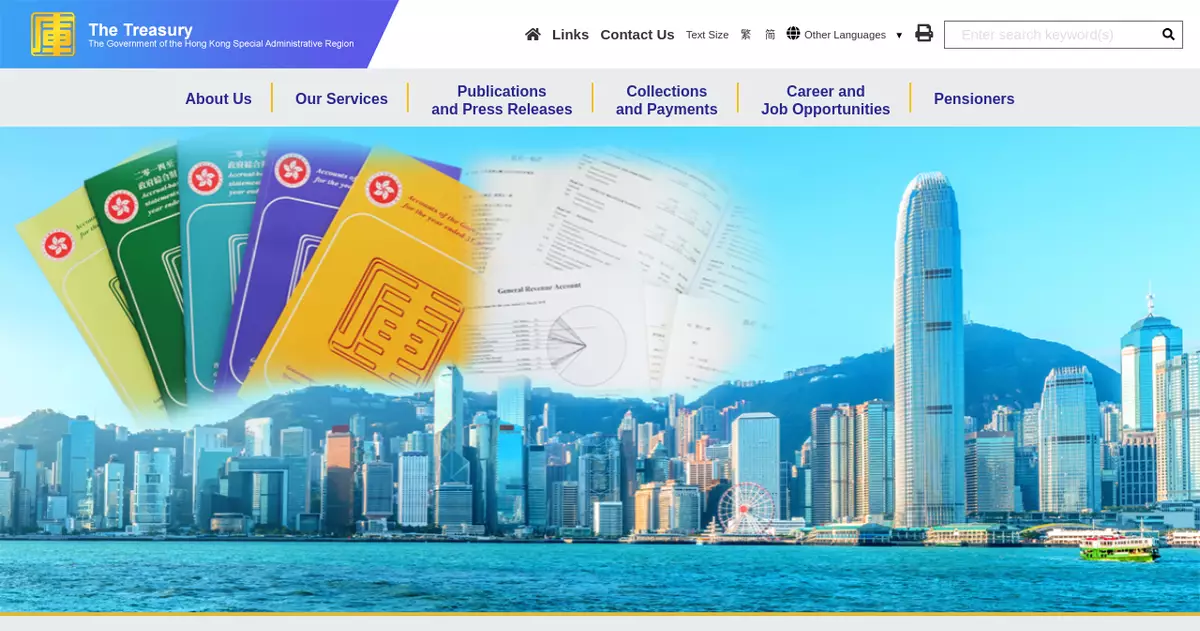
The public can access the accrual-based and cash-based accounts at the Treasury's website: www.try.gov.hk.
Source: AI-found images
Source: AI-found images

FEHD releases fourth batch of gravidtrap indexes for Aedes albopictus in December

The Food and Environmental Hygiene Department (FEHD) today (December 24) released the fourth batch of gravidtrap indexes and density indexes for Aedes albopictus in December, covering 25 survey areas, as follows:

District

Survey Area

December 2025

First Phase Gravidtrap Index

First Phase Density Index

Eastern

Shau Kei Wan and Sai Wan Ho

0.0%

N/A

Islands

Cheung Chau South

0.0%

N/A

Kowloon City

Lok Fu West

0.0%

N/A

North

Fanling

0.0%

N/A

Tsuen Wan

Tsuen Wan Town

0.0%

N/A

District

Survey Area

December 2025

Area Gravidtrap Index

Area Density Index

Central and Western

Sheung Wan and Sai Ying Pun

0.0%

N/A

Sai Wan

0.0%

N/A

Southern

Pok Fu Lam

0.0%

N/A

Islands

Cheung Chau North

0.0%

N/A

Tung Chung

0.0%

N/A

Mong Kok

Mong Kok

0.0%

N/A

Sham Shui Po

Cheung Sha Wan

0.0%

N/A

Lai Chi Kok

0.0%

N/A

Wong Tai Sin

Wong Tai Sin West

0.0%

N/A

Ngau Chi Wan

0.0%

N/A

Sai Kung

Tseung Kwan O East

0.0%

N/A

Tseung Kwan O North

1.1%

1.0

Sai Kung Town

0.9%

1.0

Ngau Liu and Muk Min Shan

0.0%

N/A

Tai Po

Tai Po West

0.0%

N/A

Yuen Long

Yuen Long Town

0.0%

N/A

Tuen Mun

Tuen Mun North

0.8%

1.0

Tsuen Wan

Sheung Kwai Chung

0.0%

N/A

Kwai Tsing

Kwai Chung

0.0%

N/A

Lai King

0.0%

N/A

Among the fourth batch of First Phase Gravidtrap Indexes covering five survey areas and Area Gravidtrap Indexes covering 20 survey areas in December, all were below 10 per cent, and most of the areas recorded zero per cent, indicating that the distribution of Aedes albopictus mosquitoes was not extensive.

The FEHD has so far released four batches of gravidtrap indexes for Aedes albopictus in December 2025, covering 55 survey areas. Among these 55 survey areas, 52 recorded a decrease or remained unchanged in the individual gravidtrap index as compared to the Area Gravidtrap Index last month, i.e. November 2025, representing that the areas' mosquito infestation improved or maintained a low level. Three other areas recorded a slight increase, but the indexes were lower than 10 per cent.

The eggs of Aedes albopictus can withstand long periods of desiccation and will hatch when the temperature becomes suitable and water is present. Members of the public should continue to take mosquito control measures during winter to eliminate mosquito eggs.

Public participation is crucial to the effective control of mosquito problems. The FEHD appeals to members of the public to continue to work together in strengthening personal mosquito control measures, including:

  • tidy up their premises and check for any accumulation of water inside their premises;
  • remove all unnecessary water collections and eliminate the sources;
  • check household items (those placed in outdoor and open areas in particular), such as refuse containers, vases, air conditioner drip trays, and laundry racks to prevent stagnant water;
  • change the water in flower vases and clear the water in saucers of potted plants at least once every seven days;
  • properly cover all containers that hold water to prevent mosquitoes from accessing the water;
  • properly dispose of articles that can contain water, such as empty lunch boxes and cans; and
  • scrub drains and surface sewers with alkaline detergent at least once a week to remove any mosquito eggs.
  • Starting in August this year, following the completion of the surveillance of individual survey areas, and once the latest gravidtrap index and the density index are available, the FEHD has been disseminating relevant information through press releases, its website and social media. It aims to allow members of the public to quickly grasp the mosquito infestation situation and strengthen mosquito control efforts, thereby reducing the risk of chikungunya fever (CF) transmission.

    Following recommendations from the World Health Organization and taking into account the local situation in Hong Kong, the FEHD sets up gravidtraps in districts where mosquito-borne diseases have been recorded in the past, as well as in densely populated places such as housing estates, hospitals and schools to monitor the breeding and distribution of Aedes albopictus mosquitoes, which can transmit CF and dengue fever. At present, the FEHD has set up gravidtraps in 64 survey areas of the community. During the two weeks of surveillance, the FEHD will collect the gravidtraps once a week. After the first week of surveillance, the FEHD will immediately examine the glue boards inside the retrieved gravidtraps for the presence of adult Aedine mosquitoes to compile the Gravidtrap Index (First Phase) and Density Index (First Phase). At the end of the second week of surveillance, the FEHD will instantly check the glue boards for the presence of adult Aedine mosquitoes. Data from the two weeks of surveillance will be combined to obtain the Area Gravidtrap Index and the Area Density Index. The gravidtrap and density indexes for Aedes albopictus in different survey areas, as well as information on mosquito prevention and control measures, are available on the department's webpage (www.fehd.gov.hk/english/pestcontrol/dengue_fever/Dengue_Fever_Gravidtrap_Index_Update.html#).

    Source: AI-found images

    Source: AI-found images

    Recommended Articles