BRUSSELS (AP) — The European Union's executive on Wednesday warned that it would take action against any “unjustified measures” after the U.S. State Department barred five Europeans it accuses of pressuring U.S. technology firms to censor or suppress American viewpoints.
The Europeans were characterized by U.S. Secretary of State Marco Rubio as “radical” activists and “weaponized” nongovernmental organizations. They include the former EU commissioner responsible for supervising social media rules, Thierry Breton.
Breton, a businessman and former French finance minister, clashed last year on social media with tech billionaire Elon Musk over broadcasting an online interview with Donald Trump in the months leading up to the U.S. election.
The European Commission, the EU’s powerful executive branch and which supervises tech regulation in Europe, said that it “strongly condemns the U.S. decision to impose travel restrictions” and that it has requested clarification about the move. French President Emmanuel Macron also condemned it.
“If needed, we will respond swiftly and decisively to defend our regulatory autonomy against unjustified measures,” the commission said in a statement, without elaborating.
Rubio wrote in an X post on Tuesday that “for far too long, ideologues in Europe have led organized efforts to coerce American platforms to punish American viewpoints they oppose.”
“The Trump Administration will no longer tolerate these egregious acts of extraterritorial censorship,” he posted.
The European Commission countered that “the EU is an open, rules-based single market, with the sovereign right to regulate economic activity in line with our democratic values and international commitments.”
“Our digital rules ensure a safe, fair, and level playing field for all companies, applied fairly and without discrimination,” it said.
Macron said that the visa restrictions “amount to intimidation and coercion aimed at undermining European digital sovereignty,” he posted on X.
Macron said that the EU’s digital rules were adopted by “a democratic and sovereign process” involving all member countries and the European Parliament. He said that the rules “ensure fair competition among platforms, without targeting any third country.”
He underlined that “the rules governing the European Union’s digital space are not meant to be determined outside Europe.”
Breton and the group of Europeans fell afoul of a new visa policy announced in May to restrict the entry of foreigners deemed responsible for censorship of protected speech in the United States.
The four others are: Imran Ahmed, chief executive of the Centre for Countering Digital Hate; Josephine Ballon and Anna-Lena von Hodenberg, leaders of HateAid, a German organization; and Clare Melford, who runs the Global Disinformation Index.
Rubio said the five had advanced foreign government censorship campaigns against Americans and U.S. companies, which he said created “potentially serious adverse foreign policy consequences” for the United States.
The action to bar them from the U.S. is part of a Trump administration campaign against foreign influence over online speech, using immigration law rather than platform regulations or penalties.
In a post on X on Tuesday, Sarah Rogers, the U.S. under secretary of state for public diplomacy, called Breton the “mastermind” behind the EU’s Digital Services Act, which imposes a set of strict requirements designed to keep internet users safe online. This includes flagging harmful or illegal content like hate speech.
Breton responded on X by noting that all 27 EU member countries voted for the Digital Services Act in 2022. “To our American friends: ‘Censorship isn’t where you think it is,’” he wrote.
Angela Charlton contributed to this report from Paris.
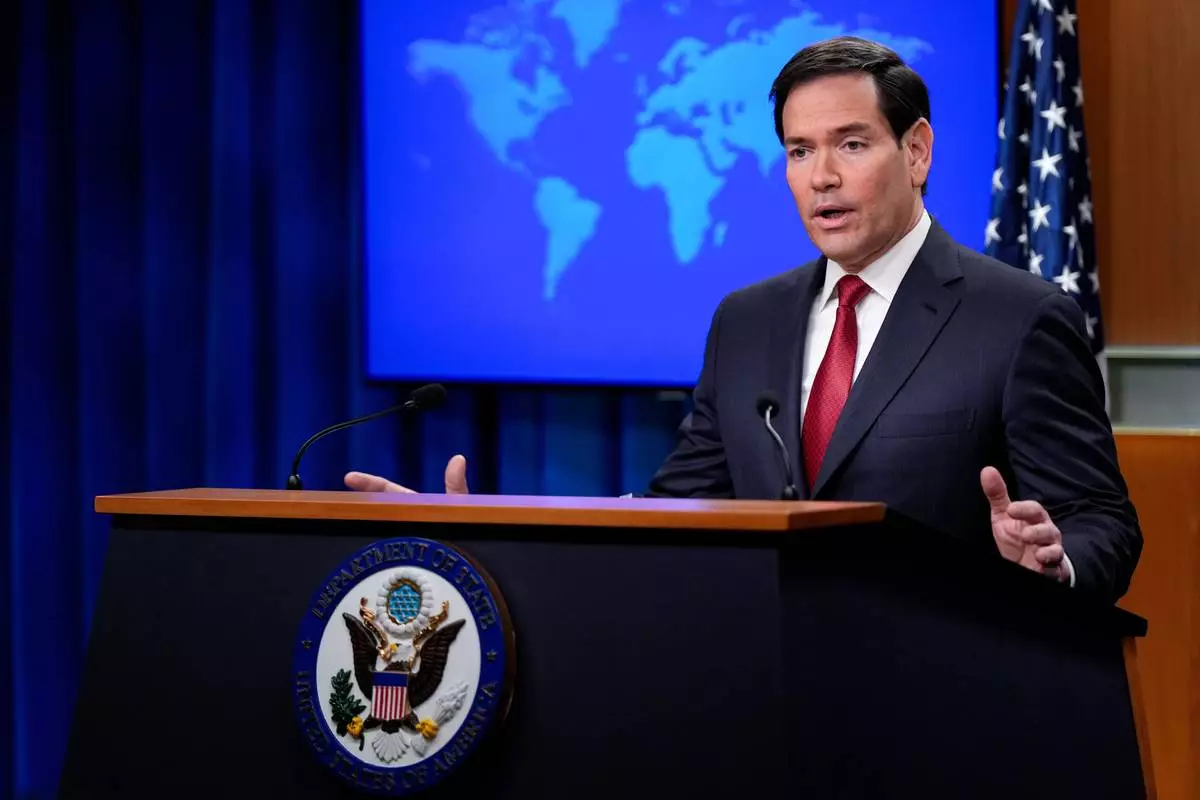
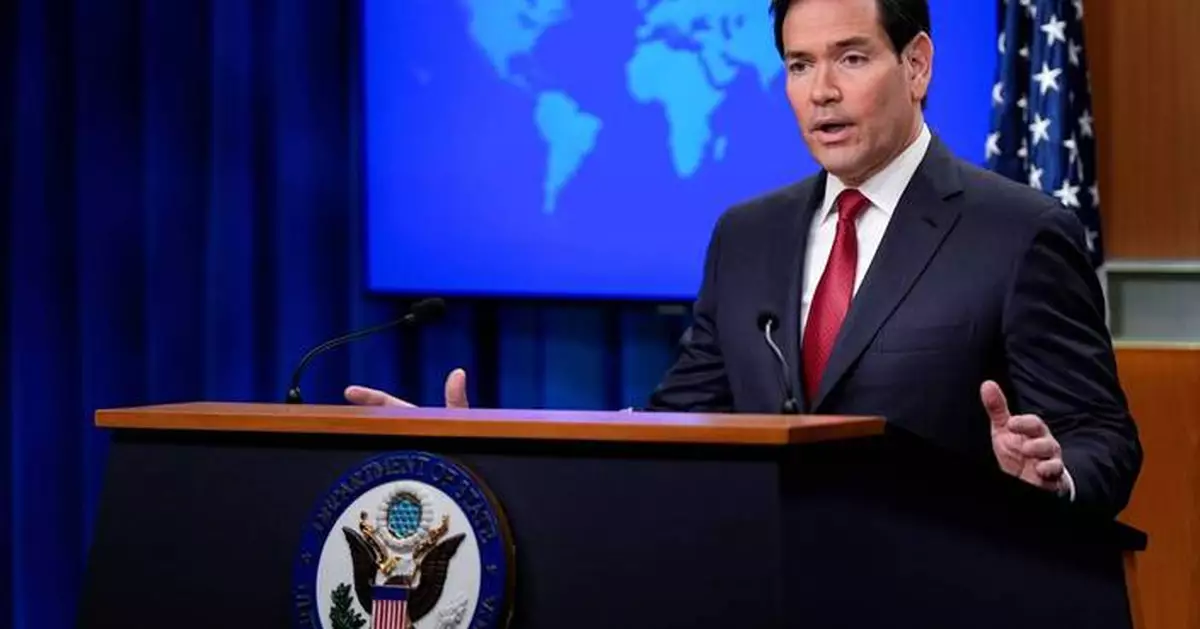
Secretary of State Marco Rubio speaks during a news conference at the State Department, Friday, Dec. 19, 2025, in Washington. (AP Photo/Julia Demaree Nikhinson)
ANKARA, Turkey (AP) — Search teams on Wednesday recovered the cockpit voice and flight data recorders from the jet that crashed and killed Libya’s military chief and other senior officers, while efforts to retrieve the victims' remains were still underway, Turkey's interior minister said.
The private jet carrying Gen. Muhammad Ali Ahmad al-Haddad, four other officers and three crew members crashed in Turkey on Tuesday after taking off from the capital, Ankara, killing everyone on board. Libyan officials said the cause of the crash was a technical malfunction on the plane.
The high-level Libyan delegation was on its way back to Tripoli after holding defense talks in Ankara aimed at boosting military cooperation between the two countries.
Interior Minister Ali Yerlikaya told journalists at site of the crash that wreckage was scattered across an area covering three square kilometers (about 1.2 square miles), complicating recovery efforts. Authorities from the Turkish forensic medicine authority were working to recover and identify the remains, he said.
A 22-person delegation — including five family members — arrived from Libya early on Wednesday to assist in the investigation, he said.
Libyan Prime Minister Abdul-Hamid Dbeibah confirmed the deaths on Tuesday, describing the incident on Facebook as a “tragic accident” and a “great loss” for Libya.
Turkish President Recep Tayyip Erdogan held a telephone call with Dbeibah during which conveyed his condolences and expressed his sorrow over the deaths, his office said.
Al-Hadad was the top military commander in western Libya and played a crucial role in the ongoing, U.N.-brokered efforts to unify Libya’s military, which has split, much like Libya’s other institutions.
The four other officers who died in the crash were Gen. Al-Fitouri Ghraibil, the head of Libya’s ground forces, Brig. Gen. Mahmoud Al-Qatawi, who led the military manufacturing authority, Mohammed Al-Asawi Diab, advisor to the chief of staff, and Mohammed Omar Ahmed Mahjoub, a military photographer with the chief of staff’s office.
The identities of the three crew members were not immediately released.
Turkish officials said the Falcon 50 type business jet took off from Ankara’s Esenboga airport at 8:30 p.m. and that contact was lost some 40 minutes later. The plane notified air traffic control of an electrical fault and requested an emergency landing. The aircraft was redirected back to Esenboga, where preparations for its landing began.
The plane, however, disappeared from the radar while descending for the emergency landing, the Turkish presidential communications office said.
The Libyan government declared a three-day period of national mourning. Flags would be flown half-mast at all state institutions, according to the government’s announcement on Facebook.
The wreckage was found near the village of Kesikkavak, in Haymana, a district some 70 kilometers (about 45 miles) south of Ankara.
At the crash site, search and recovery teams intensified their operations on Wednesday after a night of heavy rain and fog, the state-run Anadolu Agency reported. Gendarmerie police sealed off the area while the Turkish disaster management agency, AFAD, set up a mobile coordination center. Specialized vehicles, such as tracked ambulances, were deployed because of the muddy terrain.
Turkey has assigned four prosecutors to lead the investigation and Yerlikaya said the Turkish search and recovery teams numbered 408 personnel.
While in Ankara, al-Haddad had met with Turkish Defense Minister Yasar Guler and other officials.
Libya plunged into chaos after the country’s 2011 uprising toppled and killed longtime dictator Moammar Gadhafi. The country split, with rival administrations in the east and west, backed by an array of rogue militias and foreign governments.
Turkey has been allied with Libya’s government in the west, but has recently taken steps to improve ties with the eastern-based government as well.
Tuesday’s visit by the Libyan delegation came a day after Turkey’s parliament approved to extend the mandate of Turkish troops serving in Libya for two years. Turkey deployed troops following a 2019 security and military cooperation agreement that was reached between Ankara and the Tripoli-based government.
Abuelgasim reported from Cairo. Fatma Khaled in Cairo contributed.
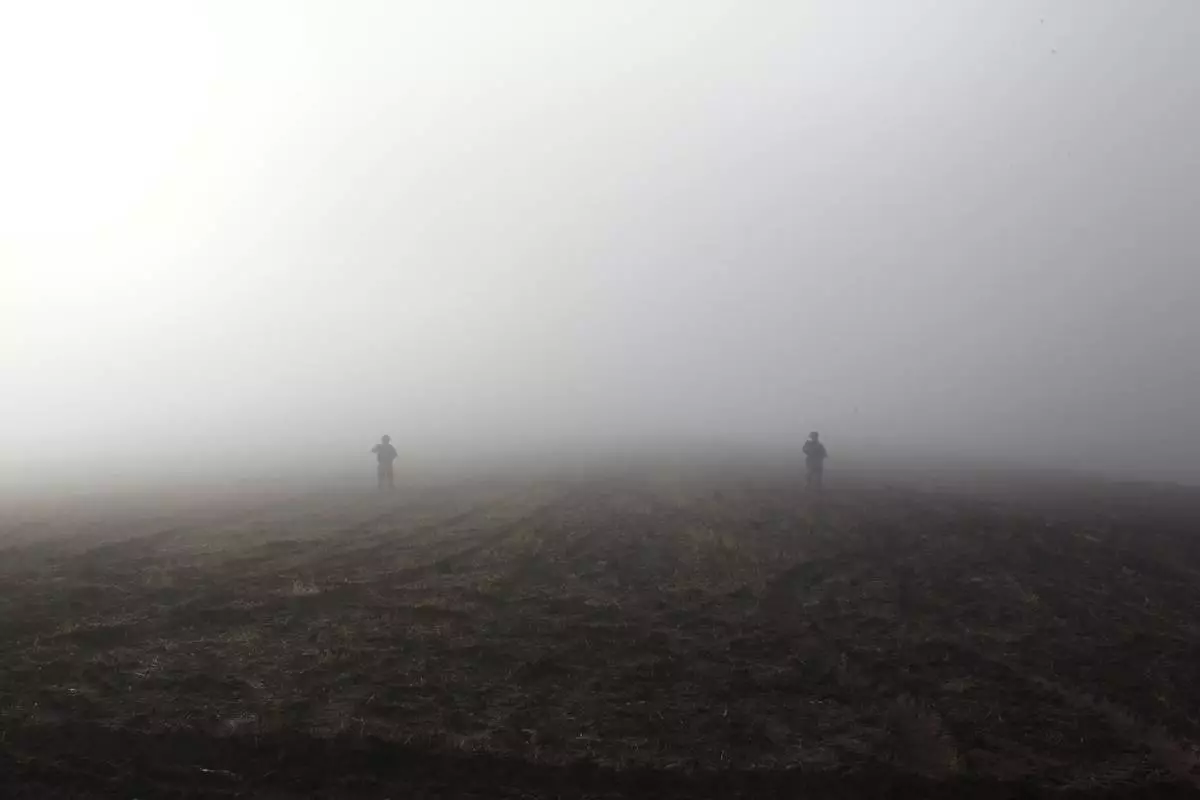
Turkish army soldiers stand guard as rescue teams search for the remains of a private jet carrying Libya's military chief and four others that crashed after taking off from Ankara, killing everyone on board, in Ankara, Turkey, early Wednesday, Dec. 24, 2025. (AP Photo/Efekan Akyuz)
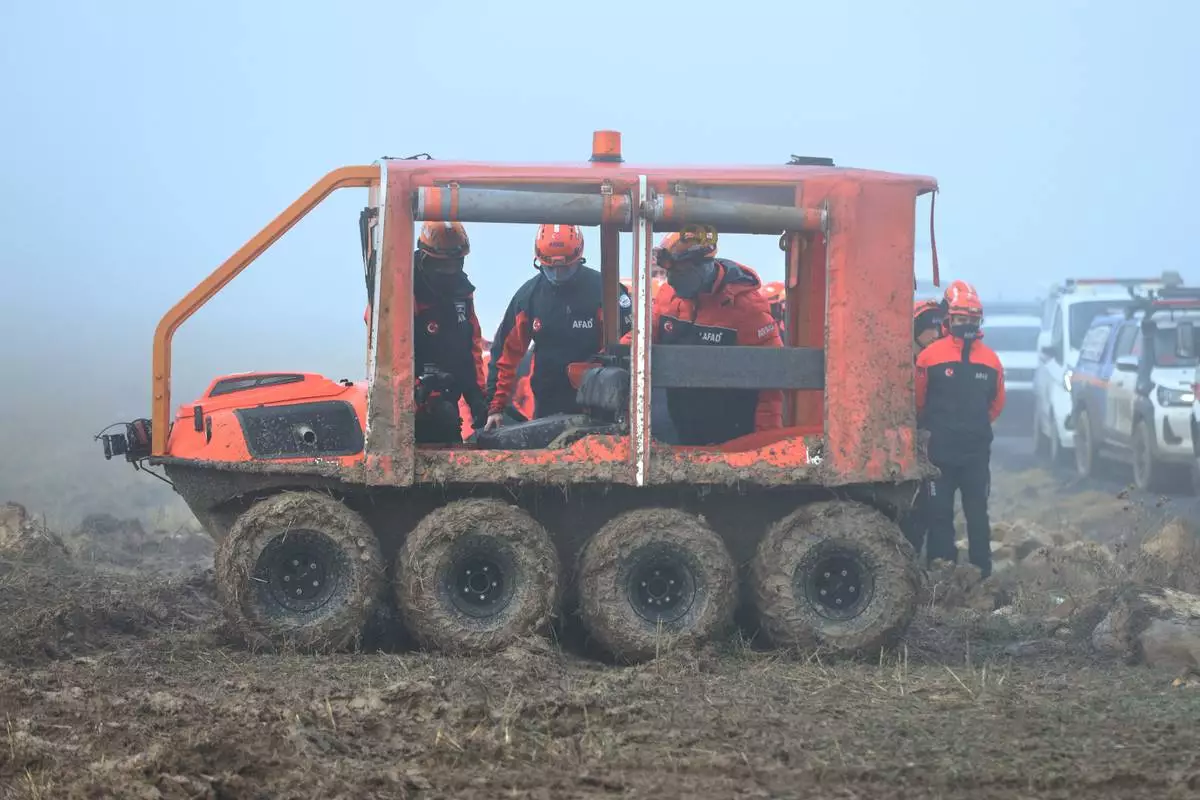
Turkish rescue teams search for the remains of a private jet carrying Libya's military chief and four others that crashed after taking off from Ankara, killing everyone on board, in Ankara, Turkey, early Wednesday, Dec. 24, 2025. (AP Photo/Efekan Akyuz)
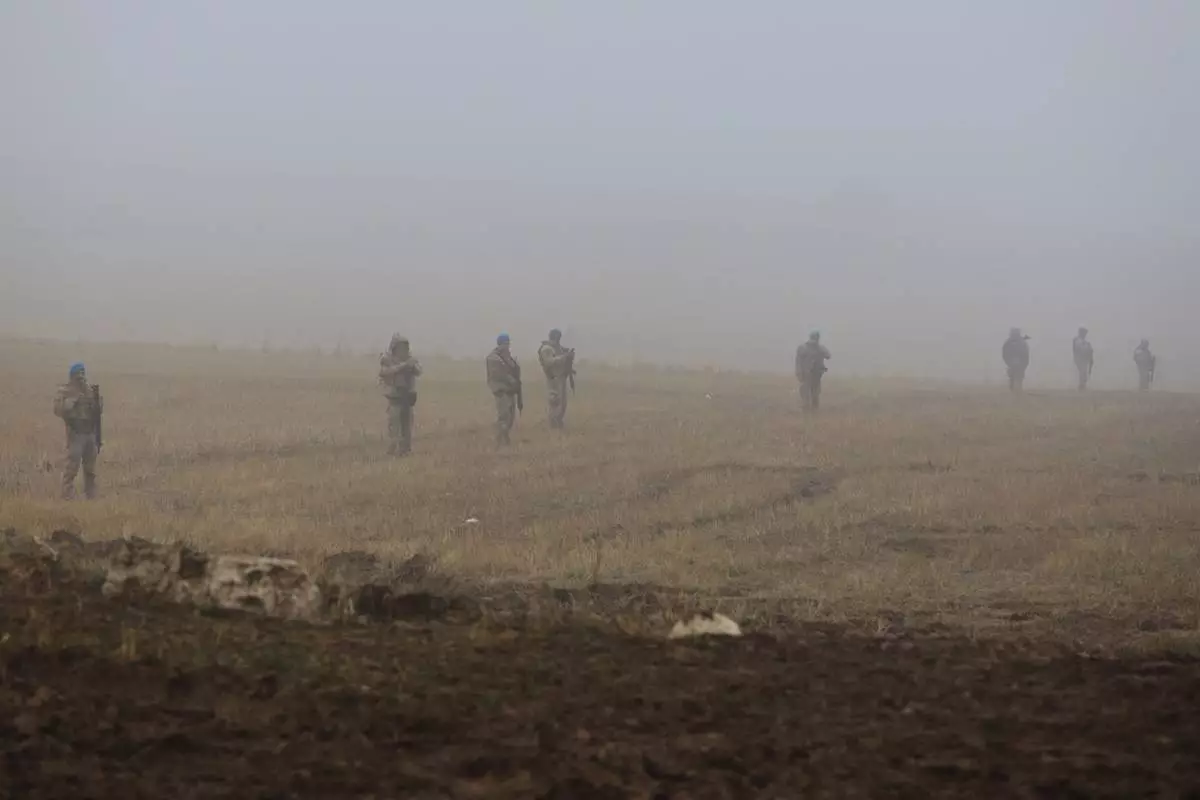
Turkish army soldiers stand guard as rescue teams search for the remains of a private jet carrying Libya's military chief and four others that crashed after taking off from Ankara, killing everyone on board, in Ankara, Turkey, early Wednesday, Dec. 24, 2025. (AP Photo/Efekan Akyuz)
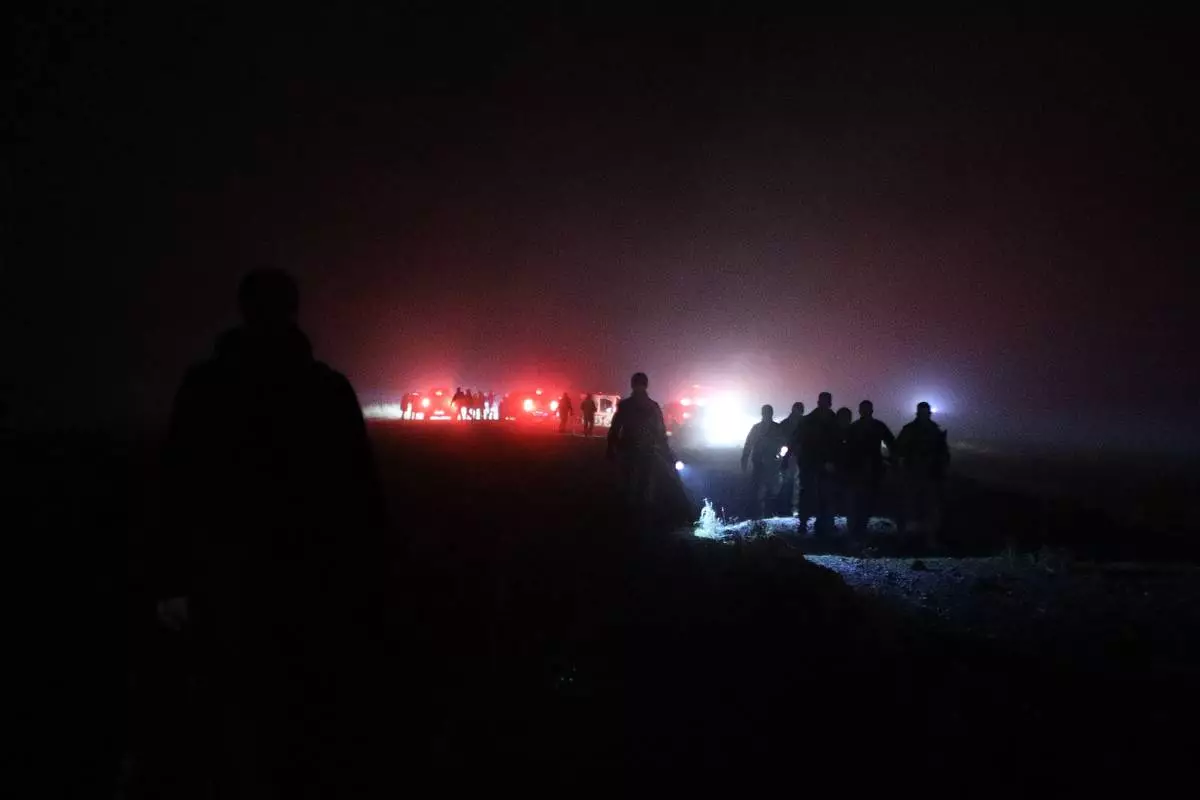
Turkish rescue teams search for the remains of a private jet carrying Libya's military chief and four others that crashed after taking off from Ankara, killing everyone on board, in Ankara, Turkey, Tuesday, Dec. 23, 2025. (AP Photo/Efekan Akyuz)
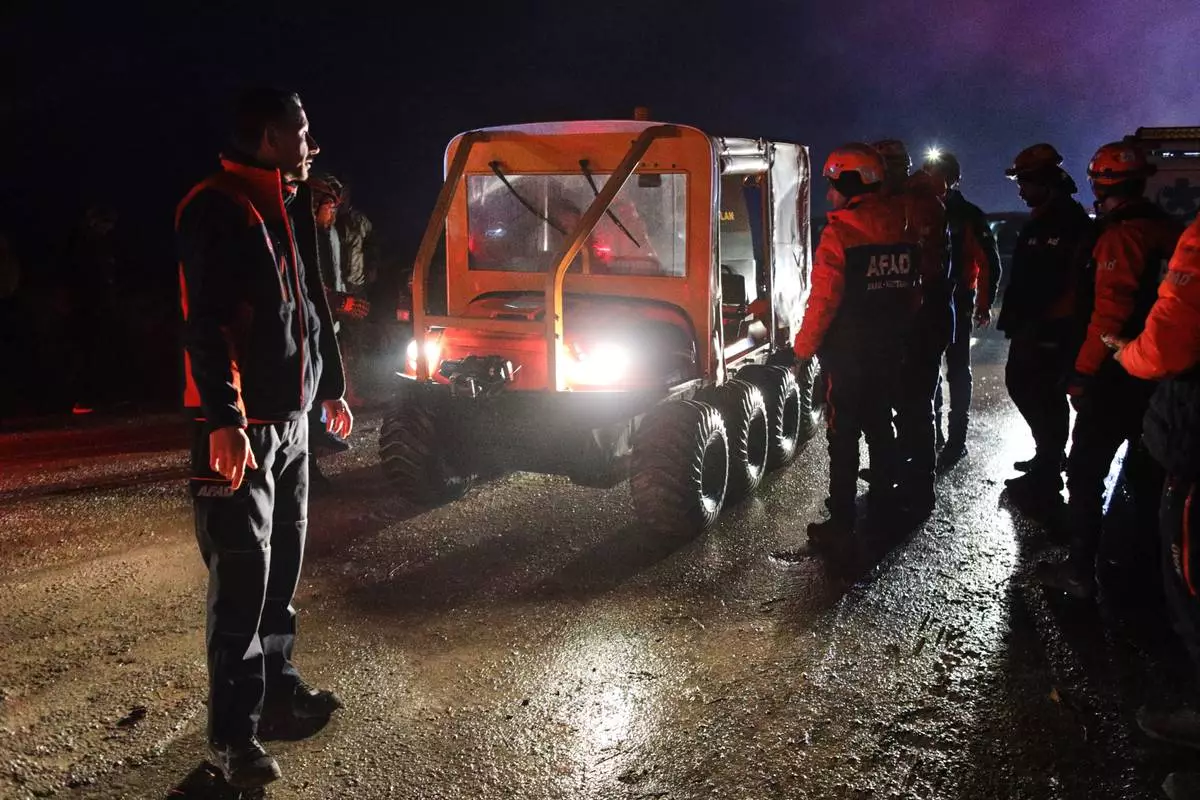
Turkish rescue teams search for the remains of a private jet carrying Libya's military chief and four others that crashed after taking off from Ankara, killing everyone on board, in Ankara, Turkey, Tuesday, Dec. 23, 2025. (AP Photo/Efekan Akyuz)
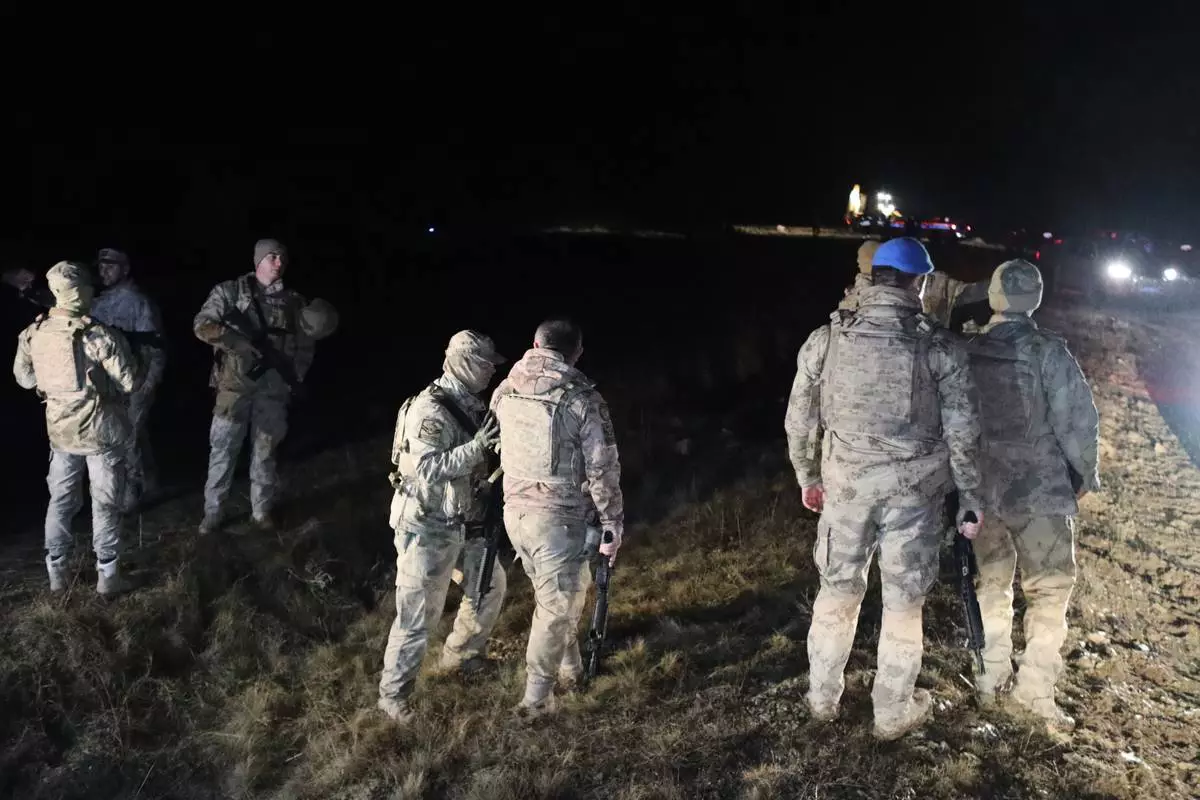
Turkish soldiers and rescue teams search for the remains of a private jet carrying Libya's military chief and four others that crashed after taking off from Ankara, killing everyone on board, in Ankara, Turkey, Tuesday, Dec. 23, 2025. (AP Photo/Efekan Akyuz)
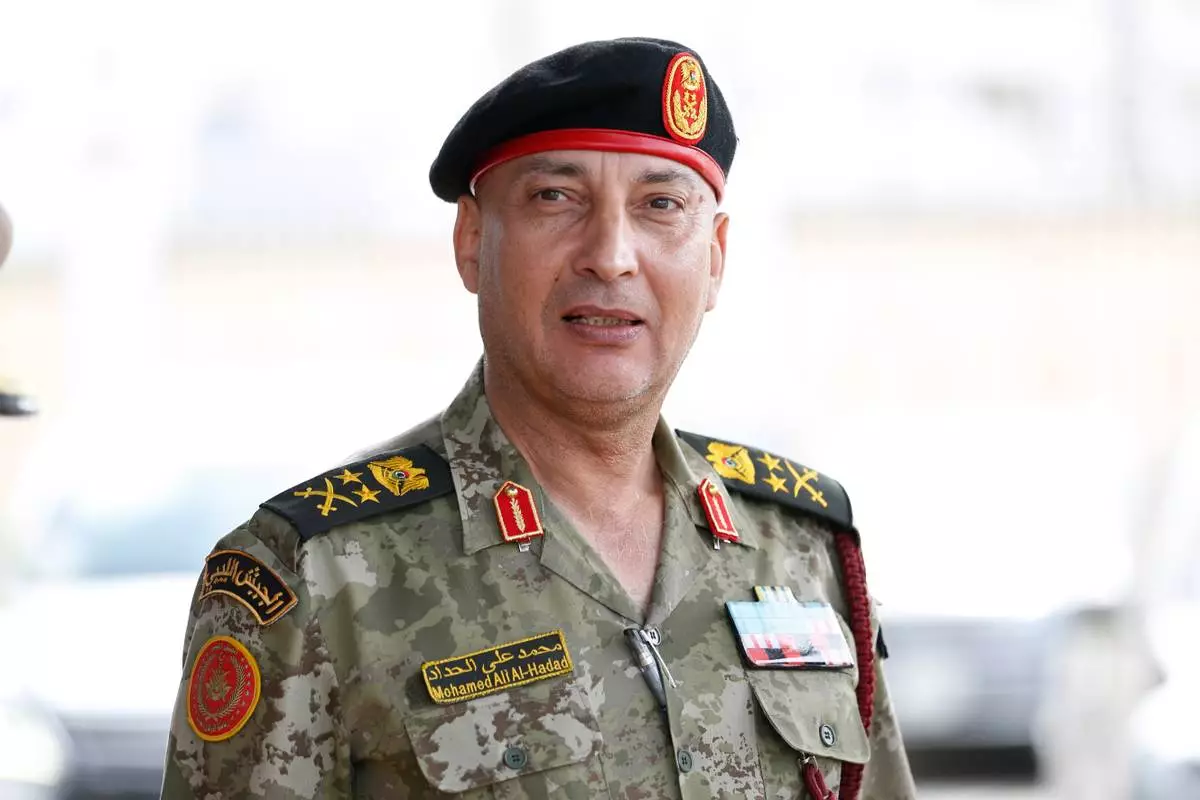
FILE - Libya's army chief of staff Gen. Muhammad Ali Ahmad al-Haddad poses for a photo in Tripoli, Libya, Oct. 3, 2022. (AP Photo/Yousef Murad, File)