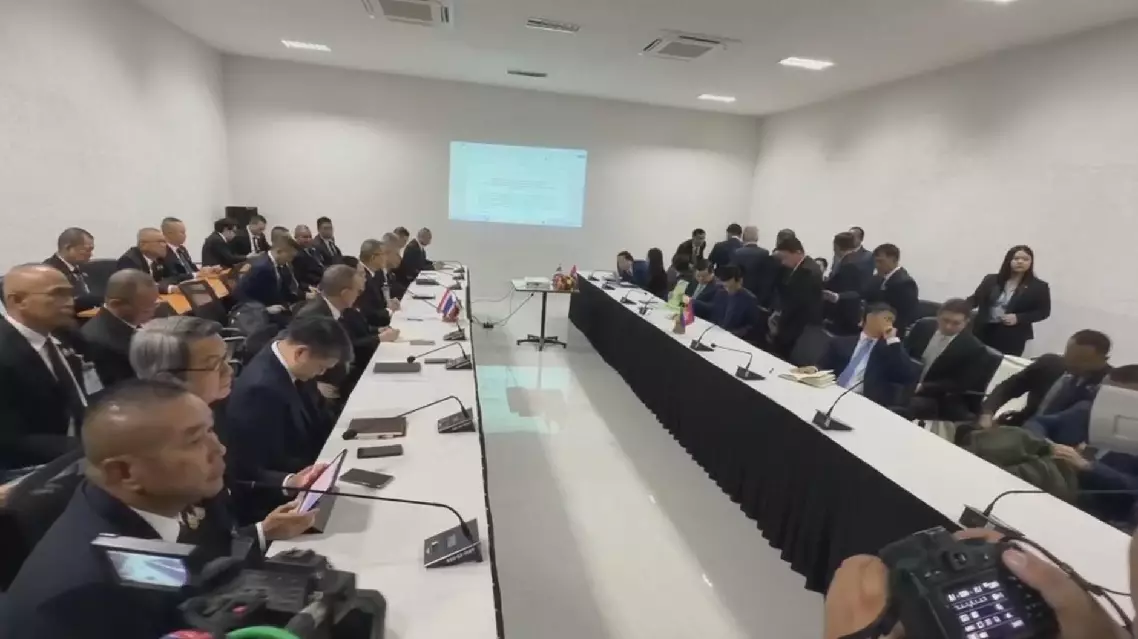
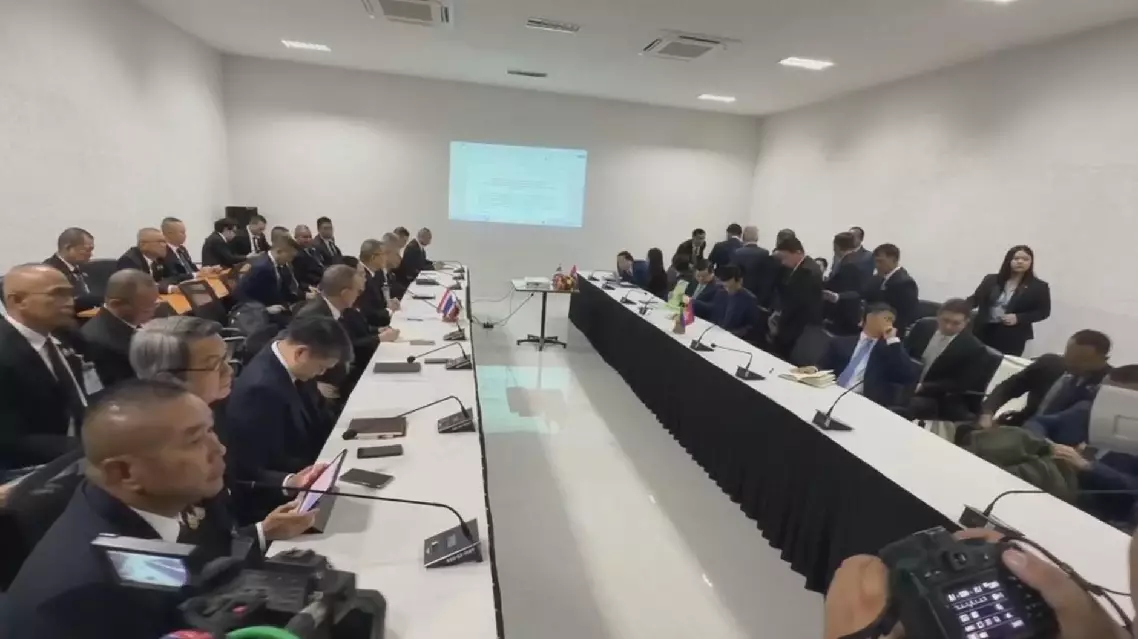
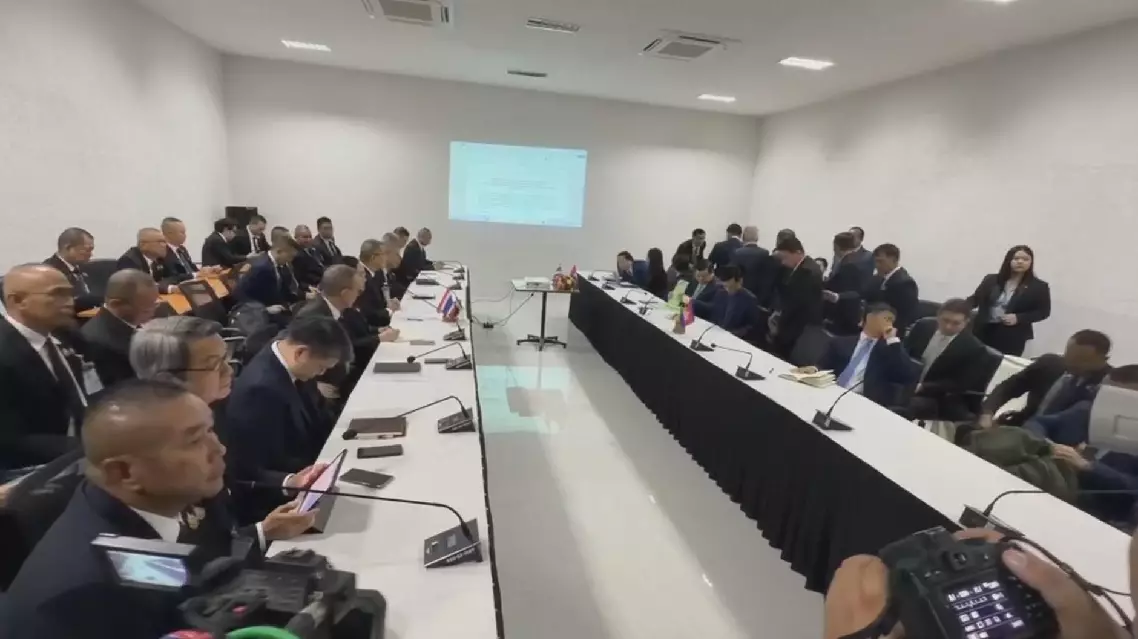
The second day of the Thailand-Cambodia General Border Committee secretariat meeting began at the Thai side of the border in Chanthaburi Province on Thursday morning, with about 30 delegates from each side engaged in the peace talks.
Only four people from each side participated in the initial talks at the Ban Phak Kat permanent checkpoint on Wednesday, which set the agenda for today's full-delegation meeting.
Earlier on the day, the Cambodian Ministry of National Defense said in a statement that the General Border Committee secretariat began its second day of meeting at 9:05.
In the meeting, the two sides continued in-depth discussions to ensure the cessation of hostilities and find solutions to restore stability between the two countries, as well as to facilitate a swift return to normalcy, according to the statement.
The meeting also prepared for the upcoming 3rd Special General Border Committee meeting, which will be held on December 27, 2025, the ministry added.
The Thailand-Cambodia border clashes reignited on Dec 7, with both sides accusing the other of initiating the attack. More than 100 civilians have since been killed and hundreds of thousands evacuated.
Thailand-Cambodia peace talks enter second day with expanded delegations
Recent Taiwan-related remarks by Japanese Prime Minister Sanae Takaichi, along with statements by a senior Japanese official suggesting Japan should possess nuclear weapons, have continued to draw criticism from the international community.
Commentators from multiple countries said the remarks openly challenge the one-China principle and the principle of non-interference in internal affairs, warning that Japan's nuclear rhetoric is extremely dangerous and poses a serious threat to global security and peace.
Richard Morales, Professor of Political Science at the University of Panama, said the Japanese prime minister's remarks amount to hostility and aggression toward China.
"Such statements are a blatant provocation against the one-China principle and the principle of non-interference in other countries' internal affairs. The advocacy of nuclear weapons is undoubtedly a dangerous stance at a time when the world is seeking disarmament rather than nuclear proliferation. The remarks reflect Japan's lack of historical memory and understanding of the crimes it committed during World War II, particularly crimes against the Chinese people. Japan has not apologized for those crimes and instead has issued provocative statements related to Taiwan," said Morales.
"Japan's recent statements point in a dangerous direction. This not only represents a betrayal of the post-World War II international order but also violates Japan's pacifist constitution and its commitments under the Treaty on the Non-Proliferation of Nuclear Weapons. These statements by Japanese leaders and officials, especially those related to acquiring nuclear weapons, could trigger a series of conflicts in the future and expose the region to enormous risks," said Hussein Ismail, researcher at the Political Institute of the Egyptian News Agency.
"I think the remarks by Prime Minister Takaichi, which in my mind would be exceedingly dangerous. I don't think Japan should acquire nuclear weapons, it should take leadership in opposing the spread of nuclear weapons, and certainly should not be seeking nuclear weapons for itself," said Michael T. Klare, Professor Emeritus of Peace and World Security Studies at Hampshire College, USA.
Japanese official's remarks on possessing nuclear weapons spark global alarm