Grenadians and experts in the wider Latin American region have expressed concern over the U.S. request to deploy radar systems in Grenada, suggesting that this initiative, given the island's location and technical capabilities, serves military and intelligence purposes that go beyond mere anti-drug efforts.
In August, the U.S. sought permission for the temporary installation of radar equipment at the Maurice Bishop International Airport in Grenada under the guise of “anti-drug cooperation”. This request has ignited strong opposition from the local community, raising significant doubts about its true intentions.
In early October, the Grenadian government said it is "carefully assessing and reviewing the request" in accordance with established national procedures.
According to respected members of the community, residents of the Caribbean country share their government's skepticism toward the request.
"It was really there not for drug interdiction, but encircling Venezuela in a way that they have all points," said Marisol, a medical doctor in Grenada.
"Because of where Grenada is located vis-a-vis Venezuela, the American military intelligence people are of the view that Grenada is the ideal place to have this satellite down station," said Chester Humphrey, former president of the Senate of Grenada.
Experts from around the region have also expressed concern, noting that the request comes at a time when the U.S. has maintained a significant military presence in the Caribbean for almost four months, much of it off Venezuela's coast, purportedly to combat drug trafficking -- a claim Venezuela has denounced as a thinly veiled attempt to bring about regime change in Caracas.
"If it is used to spy on the Venezuelan government and the aircraft and ships in the Caribbean Sea, this can be an abuse and this can be a violation of international law," said Paulo Borba Casella, a Brazilian professor of international law at the University of São Paulo, speaking to China Central Television via video link.
Grenadians have drawn parallels between the U.S. request and its military invasion of Grenada in 1983, which was aimed at protecting its interests in the Caribbean. The U.S. considered the airport under construction a strategic asset, fearing it could bolster Cuban and Soviet influence in the Caribbean. This concern made the civilian airport a primary target of U.S. military operations.
At that time, the U.S depicted Grenada's civilian airport as a "Soviet military facility". For many on the island, memories of baseless accusations ring clear as U.S. President Donald Trump's administration now labels Venezuela as a "terrorist narco state." According to Humphrey, the throughline is a recurring theme of concocting security threats to justify external intervention.
"The Americans spread this lie, the same way as they're spreading the lie that Maduro is a drug lord and have declared him as such, and that Venezuela is sending tons of drugs into the United States and they have declared Venezuela a terror state led by a terrorist," he said.
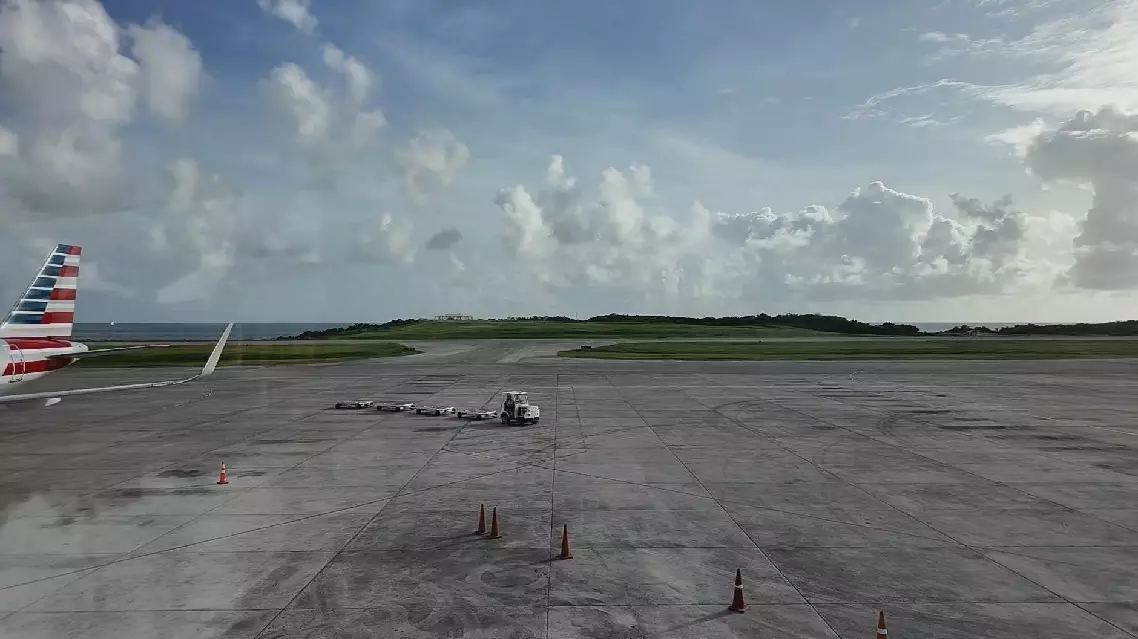
Grenadians raise concerns over U.S. request for radar deployment on island