China Media Group (CMG) on Wednesday unveiled its list of top 10 domestic science and technology news for 2025.
Topping the list is the Central Economic Work Conference, which, held from Dec 10 to 11, put forward the task of developing international technological innovation centers in Beijing (Beijing-Tianjin-Hebei region), Shanghai (Yangtze River Delta), and the Guangdong-Hong Kong-Macao Greater Bay Area.
Second, China issued a guideline on Aug 26 to implement the "AI Plus" initiative, promoting the extensive and in-depth integration of AI across various fields to accelerate the cultivation of new quality productive forces. According to the guideline released by the State Council, China will bolster the application of AI in science and technology, industrial development, consumption upgrades, people's well-being, governance and global cooperation.
Third, China launched its first asteroid sample-return mission, Tianwen-2, on May 29, an endeavor to shed light on the formation and evolution of asteroids and the early solar system. The Tianwen-2 mission aims to achieve multiple goals over a decade-long expedition: collecting samples from the near-Earth asteroid 2016HO3 and exploring the main-belt comet 311P, which is more distant than Mars.
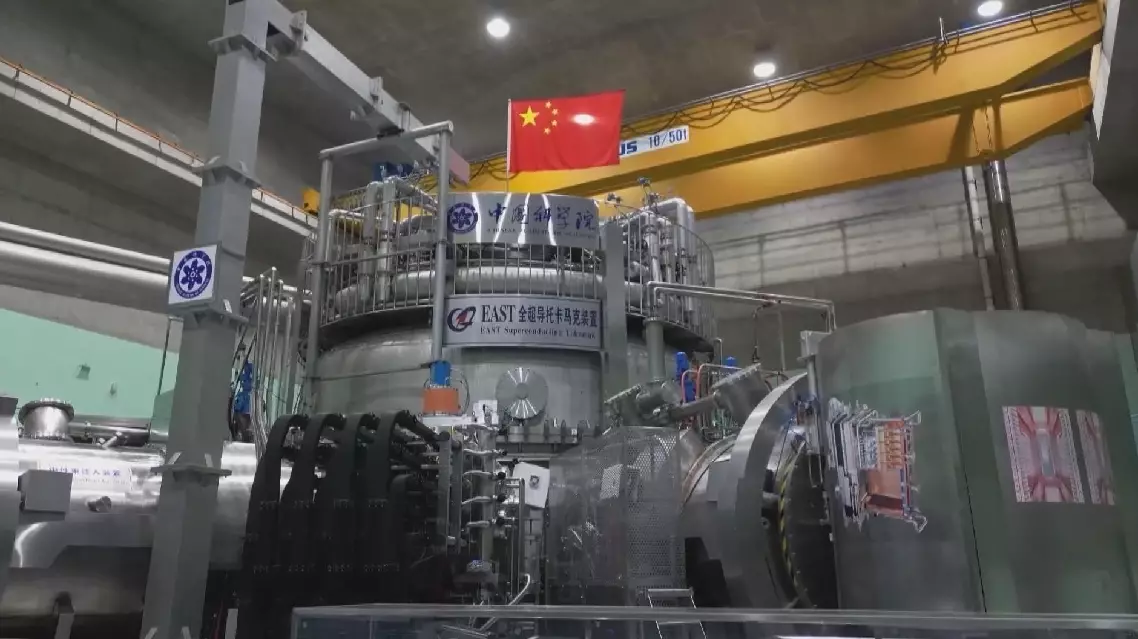
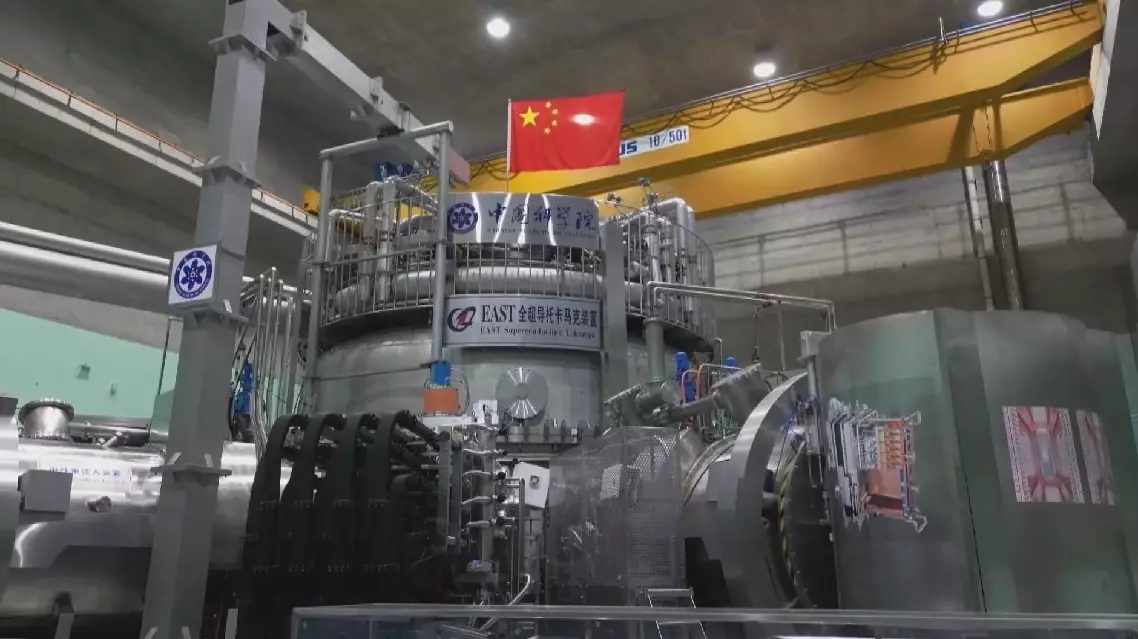
Fourth, the Experimental Advanced Superconducting Tokamak (EAST), dubbed China's "artificial sun," on Jan 20 maintained a steady-state high-confinement plasma operation for a remarkable 1,066 seconds in temperatures over 100 million degrees Celsius, setting a new world record and marking a breakthrough in the quest for fusion power generation.
Fifth, China's artificial intelligence (AI) model DeepSeek featuring low costs and open-source sharing drew international attention, helping to promote the extensive application of AI technology around the world. In September this year, a research paper on DeepSeek's model R1 was featured on the cover of the academic journal Nature, marking the first large language model to pass authoritative peer review.
Sixth, Chinese scientists unveiled a superconducting quantum computer prototype named "Zuchongzhi 3.0" with 105 qubits on March 3, marking a breakthrough in China's quantum computing advancements. "Zuchongzhi 3.0" features 105 readable qubits and 182 couplers. It processes quantum random circuit sampling tasks at a speed quadrillion times faster than the world's most powerful supercomputer and 1 million times faster than Google's latest results published in Nature in October 2024.
Seventh, China's first aircraft carrier equipped with electromagnetic catapults, the Fujian, was commissioned into active service at a naval port in Sanya City, south China's Hainan Province on Nov 5. The ship (Hull 18), independently designed and built by China, features world-class electromagnetic catapult technology. It is China's third aircraft carrier, after the Shandong and the Liaoning.
Eighth, China successfully sent the unmanned Shenzhou-22 spaceship into orbit on Nov 25, marking the first emergency launch mission in the country's manned space program. The spaceship successfully docked with the space station combination after just over three hours of space flight.
Ninth, the world's largest transparent spherical detector began operation in Jiangmen, south China’s Guangdong Province on Aug 26, making it the world's first operational ultra-large scientific facility dedicated to neutrino research with ultra-high precision. Having completed the filling of its 20,000-tonne liquid scintillator detector, the Jiangmen Underground Neutrino Observatory (JUNO) began taking data after more than a decade of preparation and construction.
Tenth, China hosted multiple robotics competitions and events in 2025, including the World Humanoid Robot Games, the world's first humanoid robot half-marathon, the CMG World Robot Skills Competition, and the CMG Nanny Robot Conference. China has seen a thriving embodied intelligence industry and made remarkable progress in hardware, algorithms and data for humanoid robots.
CMG unveils top 10 domestic sci-tech news for 2025
CMG unveils top 10 domestic sci-tech news for 2025