China's first aircraft carrier equipped with electromagnetic catapults, the Fujian, has verified the performance in its first-ever maritime live-force training.
The Fujian was commissioned into active service on Nov 5 this year at a naval port in the city of Sanya. It is the largest warship in the navy. Named after Fujian Province in east China and launched in June 2022, this gigantic vessel was independently designed and built by China.
In the training, carrier-based aircraft, including fighter jets such as the J-35, J-15T, J-15DT, and the KongJing-600 early warning aircraft, completed catapult takeoffs and landings on the Fujian, effectively verifying the capacities of the electromagnetic catapult system equipped on the aircraft carrier.
"With continuous practical training, we have gained a more accurate understanding of the performance of electromagnetic catapults and arresting gear, become more proficient in the operation and use of various types of equipment, and achieved a better synergy between each battle position and carrier-based pilots," said Bao Yu, an officer of the aircraft carrier.
During the mission, the formation also conducted other training exercises, including fleet navigation and vessel-aircraft joint search and rescue.
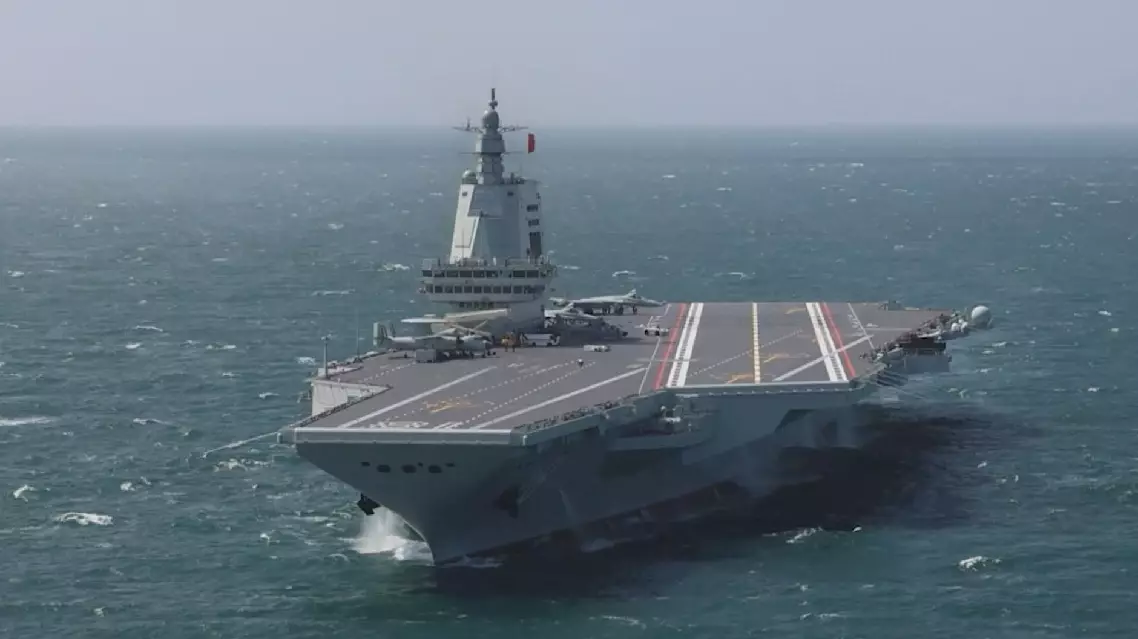
China's aircraft carrier Fujian verifies performance in first maritime live-force training
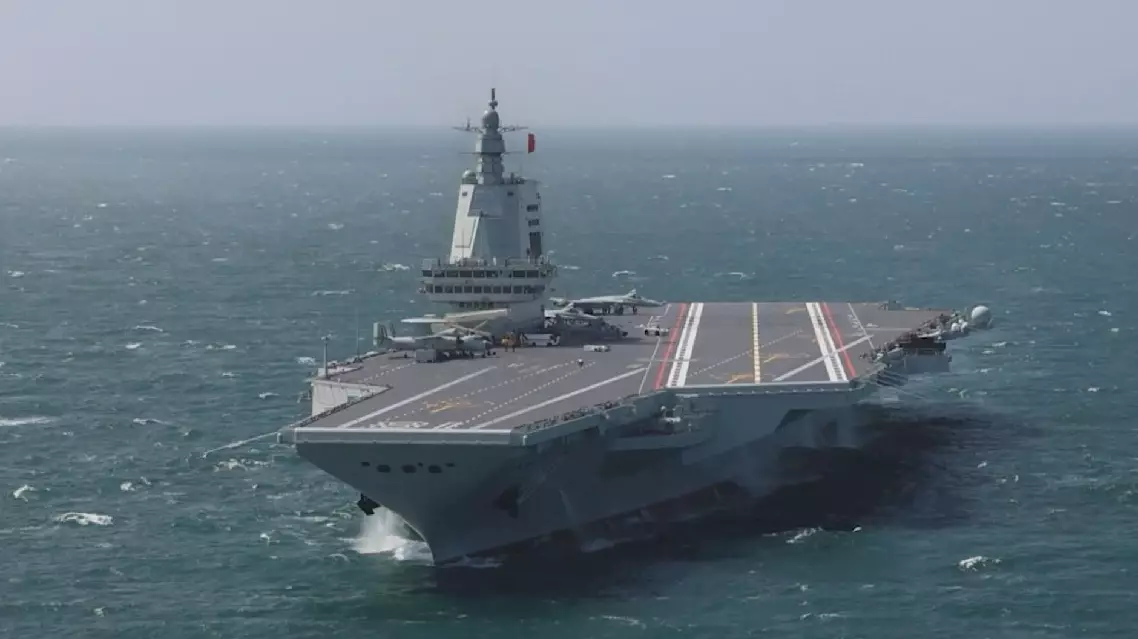
China's aircraft carrier Fujian verifies performance in first maritime live-force training
China has a clear basis to scrutinize Meta's acquisition of Chinese-founded AI startup Manus on security grounds, a Chinese law expert said on Tuesday.
In late December last year, U.S. tech giant Meta announced plans to acquire Manus for 2 billion U.S. dollars. Chinese regulators have since launched an investigation into the deal for national security reasons.
China's top economic planner, the National Development and Reform Commission, announced on Monday that the office of the foreign investment security review working mechanism had issued a decision to prohibit foreign investment in Manus and has ordered the parties involved to revoke the acquisition deal.
The ruling offers a rare but telling look into how China is applying its foreign investment screening rules to the AI sector.
"In Manus' case, much of its early R and D was conducted in China, and its core technical team consisted of Chinese engineers. These features mean that the movement of people, control over technology, and data flows are inherently connected to China's interests, creating a clear basis for security scrutiny," said Professor Zhang Linghan, director of the Institute of AI Law and Governance at China University of Political Science and Law.
Manus develops general-purpose AI agents and launched its first such agent in March 2025. But just months later, the company moved its headquarters to Singapore, cut most of its China-based workforce, and stopped serving users in the country.
By December 2025, Manus announced plans to be sold to the American tech giant Meta. Manus executives joined the staff of the American tech giant soon after.
Although Manus attempted to sever ties with China prior to the sale, Chinese regulators focused on the actual origin of the technology and personnel. Professor Zhang believes this approach is entirely reasonable, as other countries have conducted similar reviews in the past.
"Similar patterns exist in the U.S. and the UK. The U.S. scrutinized ByteDance's acquisition of Musical.ly, later TikTok, over concerns about U.S. user data and algorithmic control long after the deal closed. In the UK, the proposed acquisition of Arm triggered security concerns regarding core IP and defense autonomy, leading the buyer to withdraw during deeper review," she said.
Experts said that China's high-standard opening-up and security are not contradictory, as a rigorous national security review does not deter foreign investment.
They also recommended adding foundational AI technologies to the investment review catalogue, making advance filings mandatory rather than intervening retroactively.

China right to scrutinize Meta’s planned acquisition of Chinese AI firm Manus: law expert