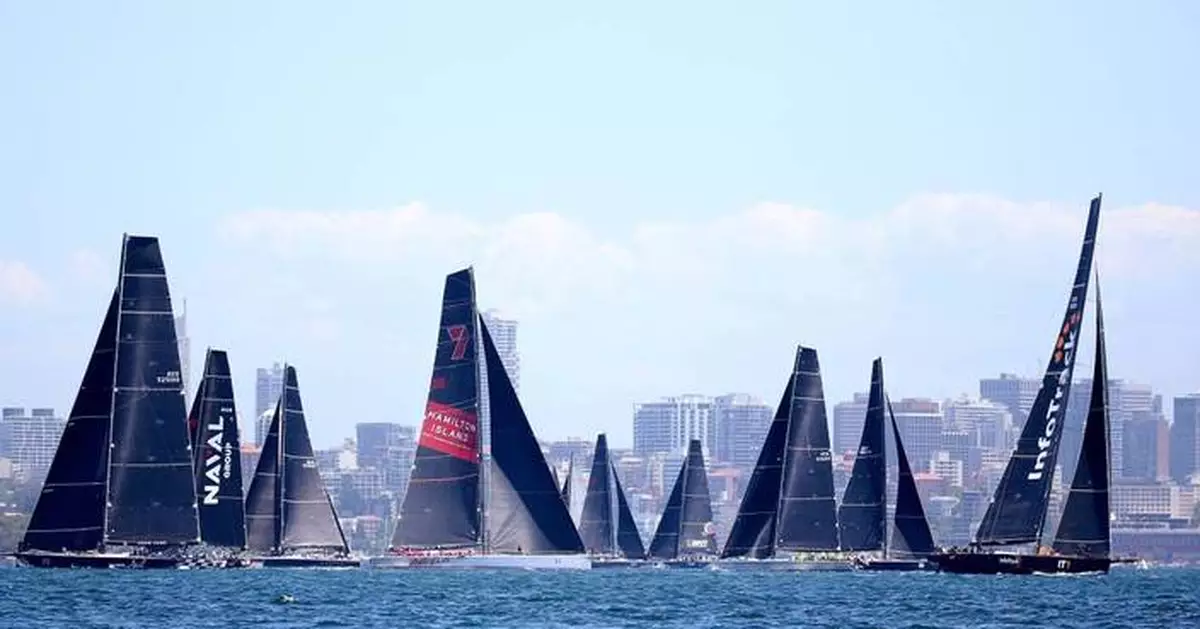
SYDNEY (AP) — Defending champion and 100-foot supermaxi LawConnect led the Sydney to Hobart fleet out of Sydney harbor on Friday for the 80th running of the ocean race to the island state of Tasmania.
LawConnect’s pursuit of a third straight line honors title started well, with the crew claiming an early lead over supermaxi rival Master Lock Comanche after the cannon was fired.
It was the most overcast start to the race in recent years, with boats flying spinnakers from the starting gun to make the best of the windy conditions.
The 129-strong fleet paid tribute to the victims of the Dec. 14 terror attack by scattering rose petals off the coast of Bondi Beach as they passed the area early in the race. At the final briefing, extra rose petals were made available, with the whole fleet expected to participate.
Friday’s final weather briefing confirmed the fleet would face a strong southerly wind going down the New South Wales state coast. Crews were warned to expect a cold first night with swell between three and four meters (10 to 13 feet), with upwind conditions also increasing the chance of damage to boats.
Conditions were unlikely to be as treacherous as last year, when two sailors died in storms, but the fleet was on guard.
“I think there will be retirements, it’s tough on boats in the early part of this race,” said Celestial V70 skipper Sam Haynes, who is also commodore of the Cruising Yacht Club of Australia which organizes the race.
“The crash bang, the waves, the gear itself is going to be under stress so it is a hard race in that sense'" he added. "Also it’s hard on crews: seasickness and potentially some injuries. They can put boats out. I think there will be some retirements in these conditions.”
LawConnect, owned by Australian tech millionaire Christian Beck, won last year's event in 1 day, 13 hours, 35 minutes and 13 seconds for the 628-nautical mile (722 miles, 1,160 kilometers) race.
The race record set by LDV Comanche — 1 day, 9 hours, 15 minutes, 24 seconds — has stood since 2017 and only appears under threat in very strong downwind conditions, which are not expected this year.
AP sports: https://apnews.com/sports
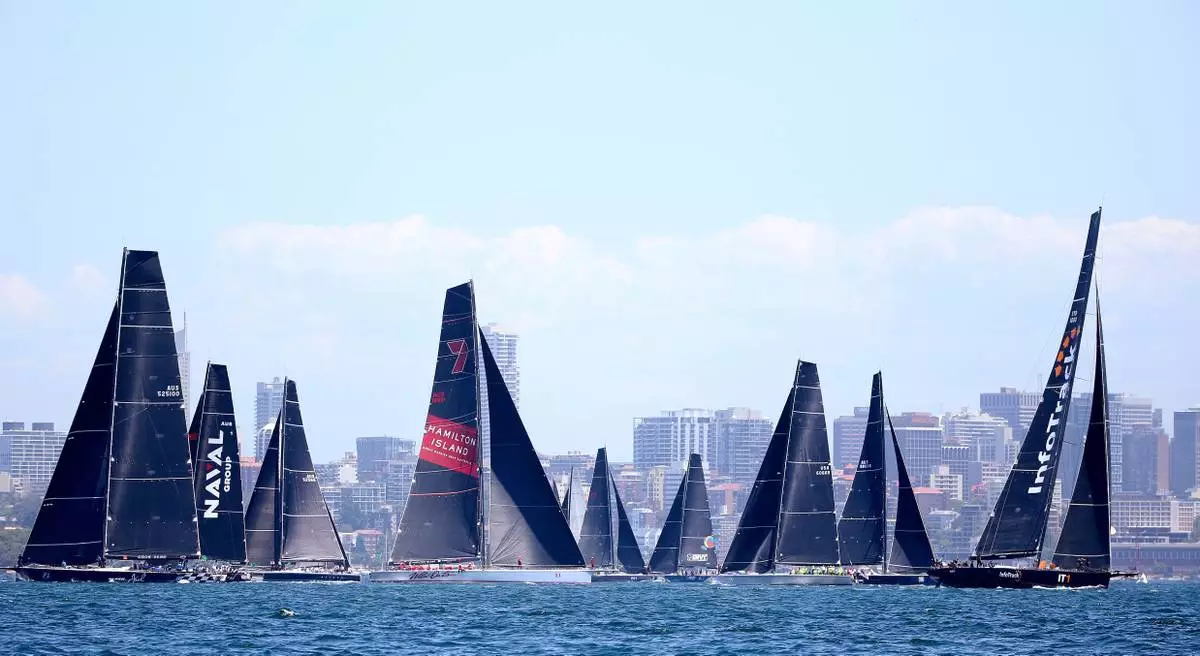
FILE - Yachts jockey for position during the start of the Sydney Hobart yacht race in Sydney, Wednesday, Dec. 26, 2018. (AP Photo/Rick Rycroft, File)
SAN DIEGO (AP) — Nick Castellanos hit a tying, two-run homer with two outs in the ninth inning and Manny Machado delivered a sacrifice fly in the 10th to rally the San Diego Padres past the St. Louis Cardinals 3-2 on Sunday.
Walker Buehler pitched six solid innings for the Padres, who earned a split of the four-game series and pulled into a tie with the rival Los Angeles Dodgers atop the NL West.
Jordan Walker launched a two-run homer for St. Louis in the fourth. Kyle Leahy allowed only two hits in five shutout innings.
Xander Bogaerts singled against Cardinals closer Riley O'Brien leading off the ninth. O’Brien struck out the next two batters and got ahead 0-2 on Castellanos, who then worked the count full and drove the ninth pitch he saw, a 98 mph sinker, to left field for his second home run in his first season with San Diego.
Adrian Morejon (3-1) retired pinch-hitter José Fermín on a popup with two on to end the top of the 10th.
In the bottom half, the Padres loaded the bases against Gordon Graceffo (2-1) on an intentional walk to Jackson Merrill and a free pass to Fernando Tatis Jr. that moved automatic runner Ramón Laureano to third.
St. Louis brought in Fermín from left field to form a five-man infield, and Machado hit a 299-foot fly to right. Laureano scored with a headfirst slide ahead of Walker’s one-hop throw.
Cardinals: RHP Andre Pallante (3-3, 4.34 ERA) starts Tuesday’s series opener against the Athletics.
Padres: RHP Matt Waldron (1-1, 7.71) pitches Tuesday against the Milwaukee Brewers.
AP MLB: https://apnews.com/hub/MLB
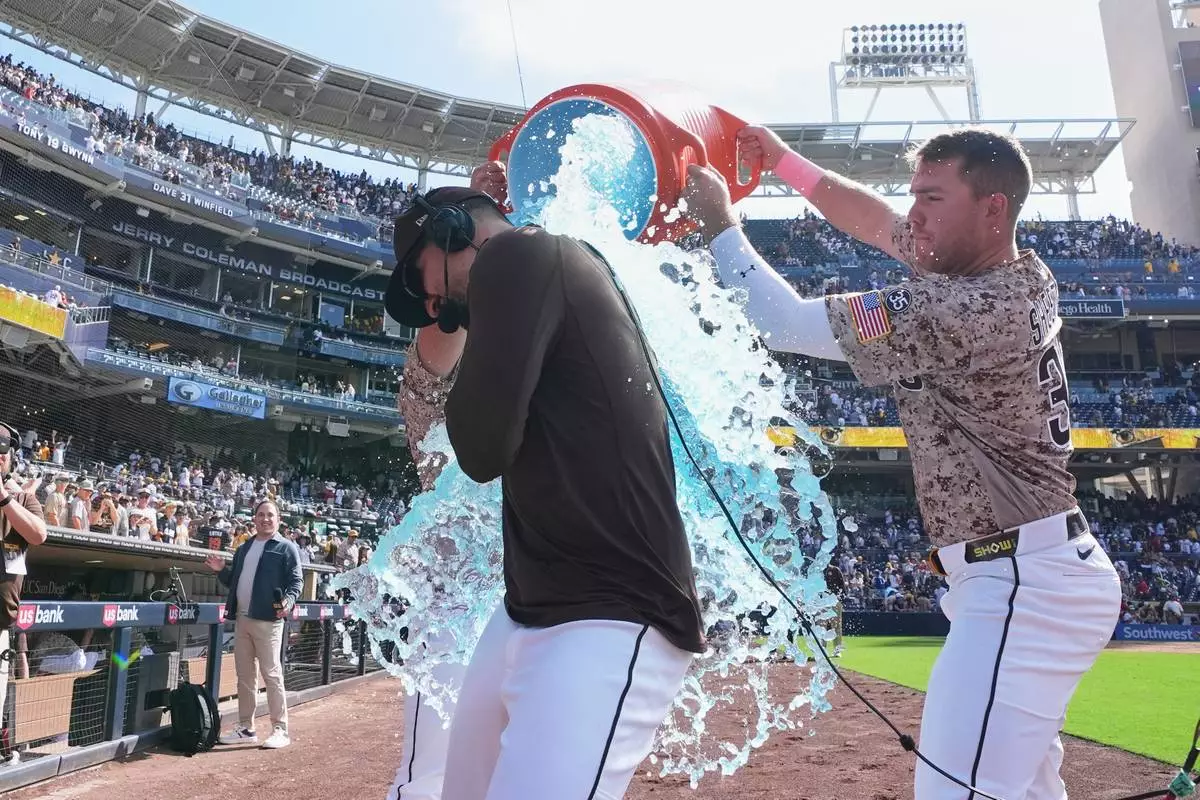
San Diego Padres' Nick Castellanos, center, is doused by teammate Gavin Sheets after the Padres defeated the St. Louis Cardinals 3-2 in a baseball game Sunday, May 10, 2026, in San Diego. (AP Photo/Gregory Bull)
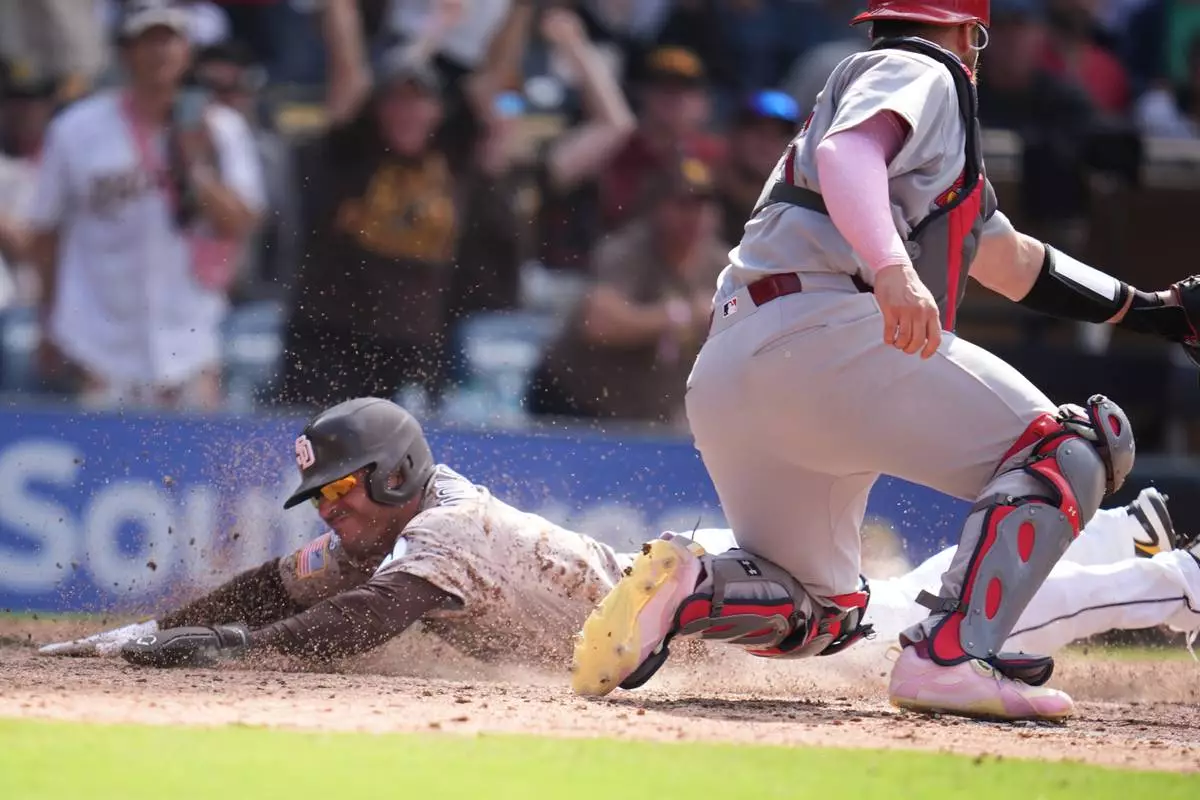
San Diego Padres' Nick Castellanos, left, slides in to score from third base off a walk off sacrifice fly by Manny Machado as St. Louis Cardinals catcher Pedro Pagés waits for the throw during the tenth inning of a baseball game Sunday, May 10, 2026, in San Diego. (AP Photo/Gregory Bull)
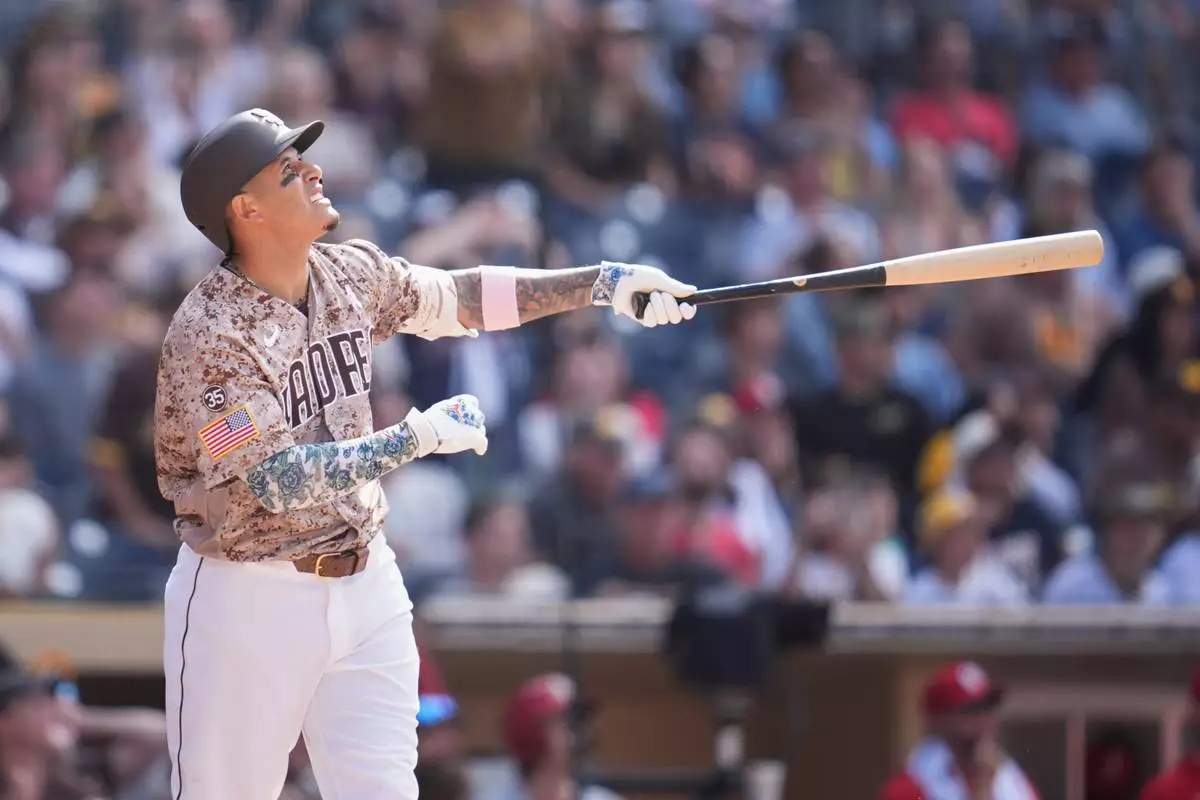
San Diego Padres' Manny Machado watches his walk off sacrifice fly during the tenth inning of a baseball game against the St. Louis Cardinals Sunday, May 10, 2026, in San Diego. San Diego Padres' Nick Castellanos scored from third base on the play. (AP Photo/Gregory Bull)
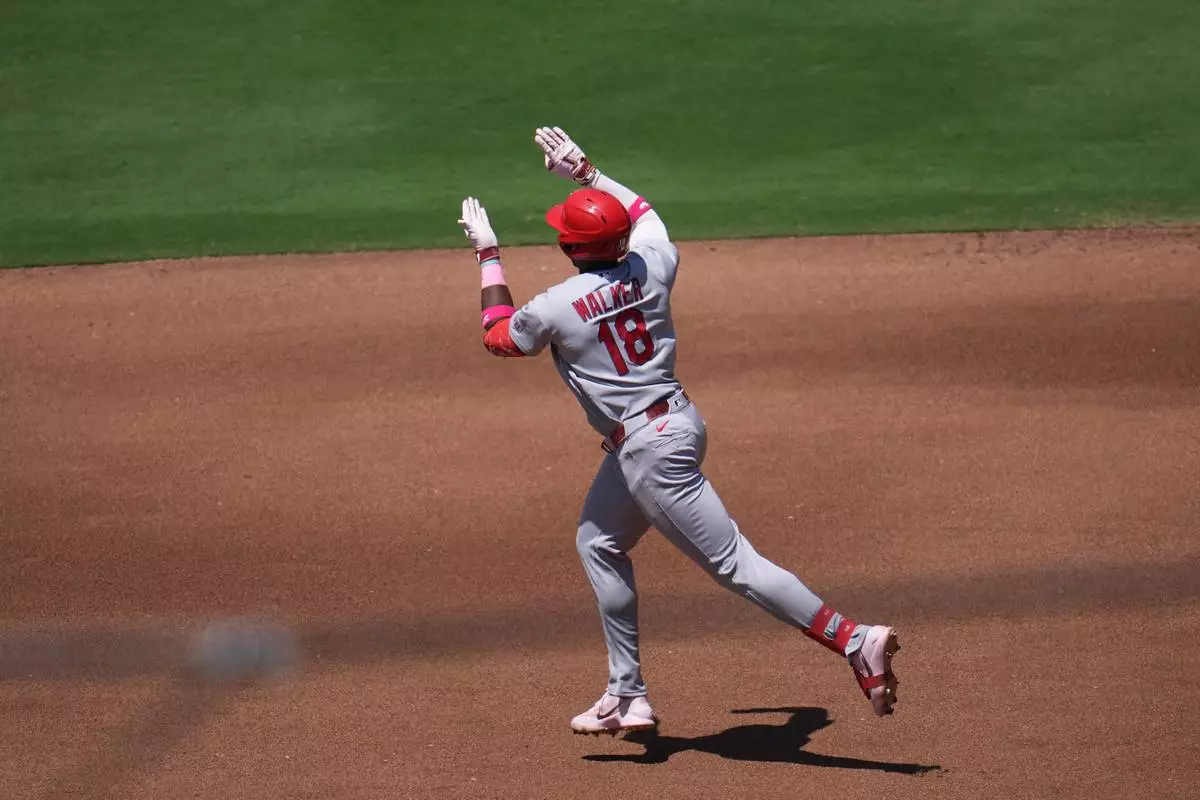
Jordan Walker celebrates his two-run home run during the fourth inning of a baseball game against the San Diego Padres Sunday, May 10, 2026, in San Diego. (AP Photo/Gregory Bull)
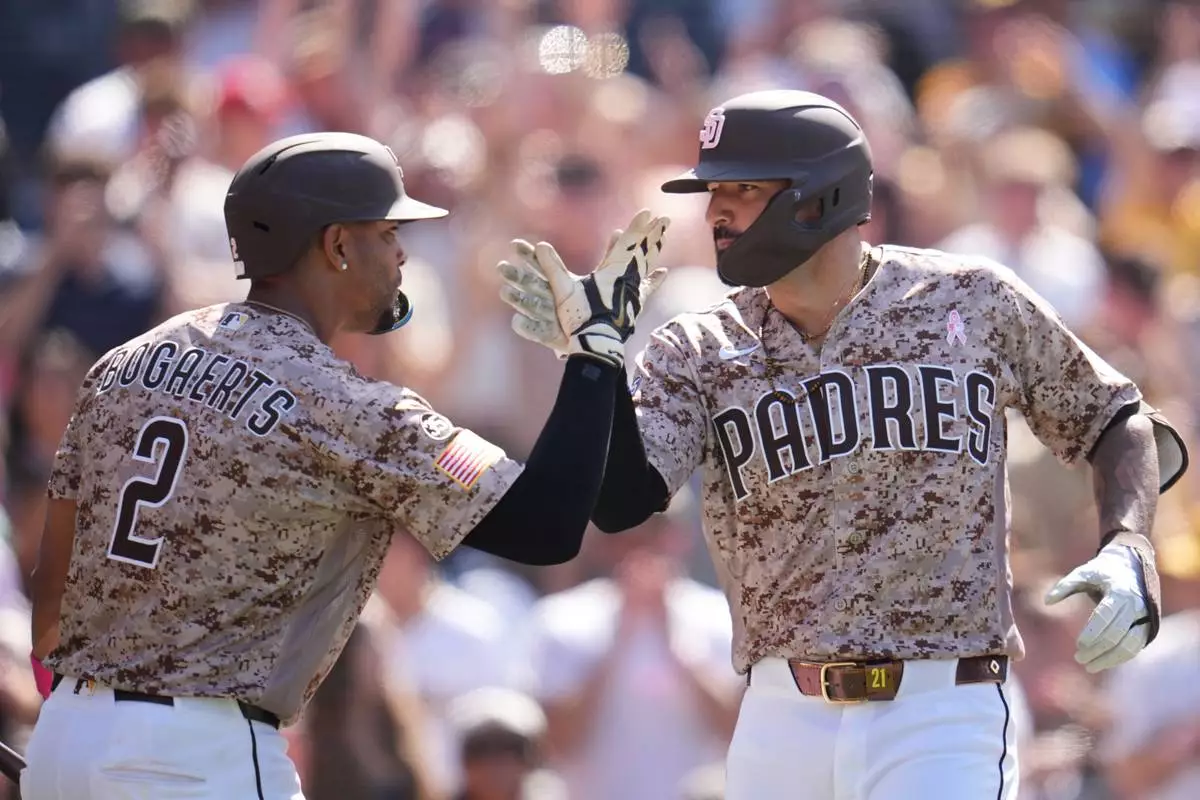
San Diego Padres' Nick Castellanos, right, celebrates his two-run home run with teammate Xander Bogaerts (2) during the ninth inning of a baseball game against the St. Louis Cardinals Sunday, May 10, 2026, in San Diego. (AP Photo/Gregory Bull)
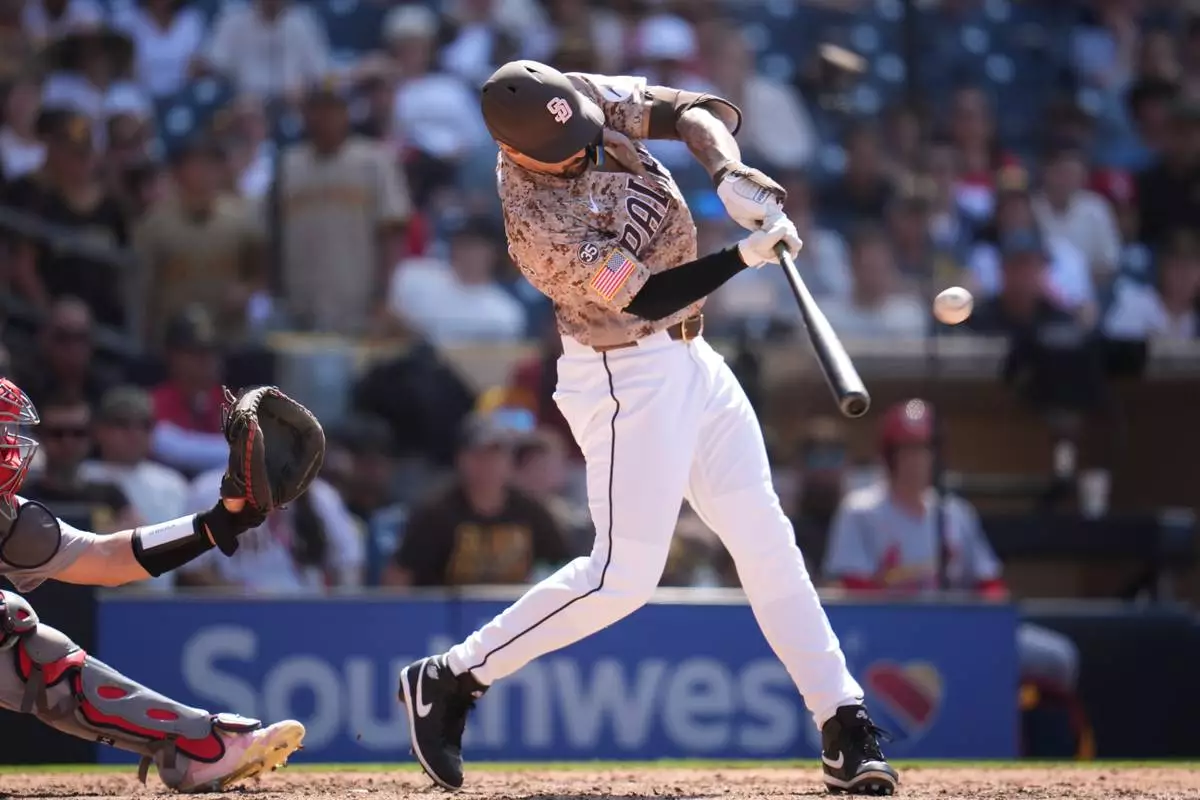
San Diego Padres' Nick Castellanos hits a two-run home run during the ninth inning of a baseball game against the St. Louis Cardinals Sunday, May 10, 2026, in San Diego. (AP Photo/Gregory Bull)
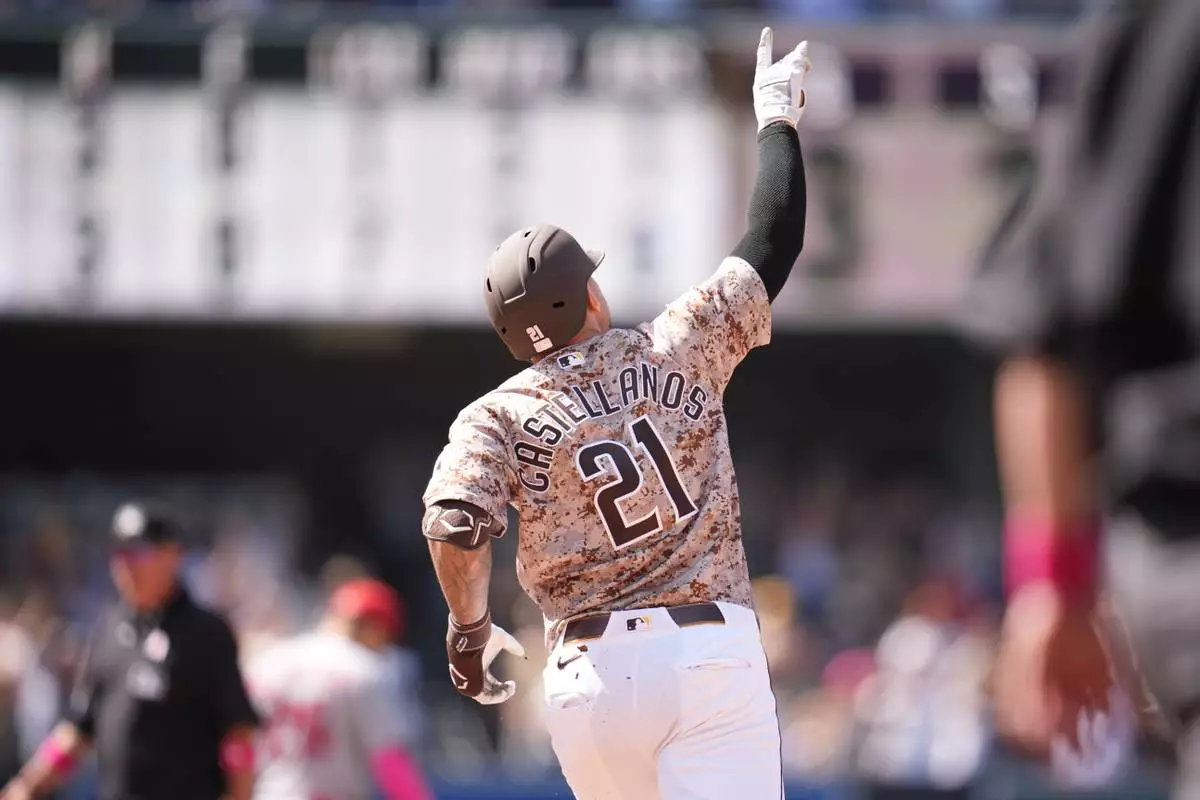
San Diego Padres' Nick Castellanos celebrates his two-run home run during the ninth inning of a baseball game against the St. Louis Cardinals Sunday, May 10, 2026, in San Diego. (AP Photo/Gregory Bull)