International analysts have sternly rebuked the erroneous remarks by Japanese Prime Minister Sanae Takaichi on China's Taiwan region, urging the international community to remain vigilant against any resurgence of Japanese militarism.
During a recent parliamentary hearing, Takaichi cited the so-called "survival-threatening situation" -- a trigger designed by the controversial 2015 law -- and linked it to the Taiwan question, suggesting Japan might treat the Taiwan question as grounds for military involvement under the legislation.
International scholars have said the remarks are not only provocative but strategically confounding.
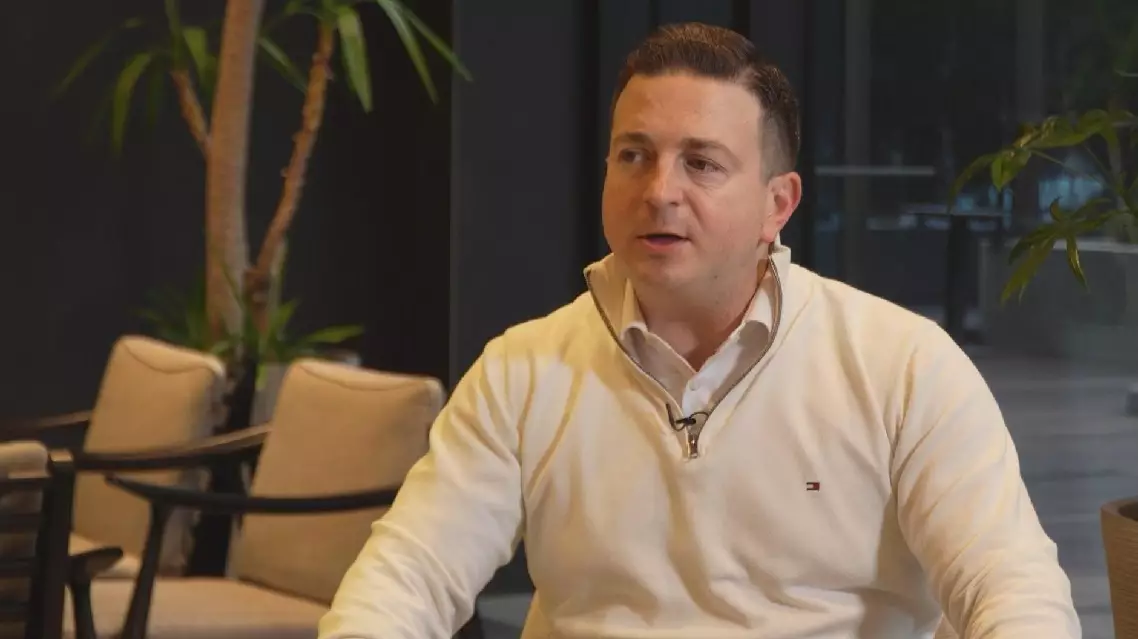
"First of all, I'm not certain or sure why the Japanese side at this moment has decided to act in that way, especially bearing in mind the negative consequences during World War II and the need to change the image which came afterwards. So any kind of military tensions are not good for the Japanese side. Making these kinds of remarks usually rises up tensions. And tensions and uncertainty are not good for the global economy. So any kind of tensions of this way would definitely, would negatively act on the entire region. And that is something that has to be, I would say, stopped and omitted at all costs," said Veljko Mijuskovic, an assistant professor of economics at Belgrade University in Serbia.
"For me, this is provocation and interference in China's internal affairs. There is a universal consensus, which was conclusively arrived in 1971 on the platform of the United Nations, that the Taiwan question is an internal Chinese question. So, referencing any situation in Taiwan that could be considered a threatening situation to Japan is interference in China's internal affairs. I think the countries in the world should be extra vigilant, should muster vigilance, regional organizations, international organizations should raise their voices once more to ensure that Japan never gets back to its old ways, which was completely destructive of the global order," said Charles Onunaiju, director of the Centre for China Studies in Nigeria.
Ken Stone, head of the Hamilton Coalition to Stop the War -- a prominent Canadian peace organization -- condemned Prime Minister Takaichi's remarks as "dangerous."
"I think that Prime Minister Takaichi's remarks are very unfortunate, very warlike, and very dangerous. Because of the war crimes committed by the Japanese people during World War II against the U.S., the Chinese, the Filipinos, the people of Southeast Asia, that Japan should never be allowed again to threaten any of its neighbors with military force. They created a new constitution for Japan, which said that Japan renounced war -- Article 9. So what she's doing is she's trying to make Japan into a military player in the Asia-pacific. They have to remember that the Japanese, as well as the Americans, the Canadians, they all have to remember that back in 1970s, we signed on to the one-China policy and the Japanese Prime Minister should be censured by Canada, the United States and all those countries that had to lose soldiers during World War II to put down the Japanese militarism," Stone said.
Fyodor Lukyanov, Editor-in-Chief of Russia in Global Affairs, warned that Takaichi's erroneous remarks could easily give rise to a military and political crisis.
"In my opinion, the Japanese Prime Minister's remarks reflect that those who are engaged in foreign affairs and security affairs in Japan are generally in a state of great confusion. They are not very clear about the current situation and what will happen. I want to emphasize once again that some impulsive actions are quite dangerous swings. If one or two related remarks are made, external reactions will follow, which may turn into a military and political crisis," Lukyanov said.
Int'l analysts condemn Japanese prime minister's 'warlike', 'dangerous' remarks