Skip to Content Facebook Feature Image

Lebanese Cabinet approves a draft law to return funds wiped out with the 2019 collapse of banks

News

Lebanese Cabinet approves a draft law to return funds wiped out with the 2019  collapse of banks
News

News

Lebanese Cabinet approves a draft law to return funds wiped out with the 2019 collapse of banks

2025-12-27 02:42 Last Updated At:02:50

BEIRUT (AP) — Lebanon’s Cabinet on Friday approved a draft law to determine the extent of losses suffered by Lebanese banks during the country's financial meltdown in 2019 and provide a mechanism to return depositors' funds that were wiped out at the time.

The financial collapse, which wiped out billions in savings and left many unable to access their funds, was part of a fiscal crisis that followed decades of corruption, financial mismanagement and nefarious profiteering.

The draft legislation, which still has to be approved by parliament to become law, marked the first move by the government to try and return funds to individual depositors whose bank accounts were frozen.

Thirteen ministers voted in favor and nine against the draft law, dubbed “financial gap law.” During the Cabinet meeting, a sit-in protest outside the government headquarters demanded action and expressed skepticism over the legislation.

It remained unclear when Lebanon's parliament could take up the draft. Its passage in the assembly could face delays — a pattern seen with many previous efforts to reform the financial system.

There has been an ongoing blame game over who is ultimately responsible for Lebanon’s economic crisis and the evaporation of people’s deposits.

Banks have blamed government corruption, while critics argue that the banks operated a Ponzi-like scheme, using new deposits to pay off earlier depositors rather than maintaining adequate reserves. The former central bank governor, Riad Salameh, who is wanted internationally on corruption charges, has claimed he consistently opposed such practices.

Lebanese Prime Minister Nawaf Salam issued a statement after the Cabinet meeting, promising that once the legislation is in place, smaller depositors — who “comprise 85% of depositors" — will receive their full deposits over four years, while larger depositors will recover their money more gradually — first up to $100,000 in cash.

The remainder of the large deposits will be converted into tradable bonds backed by the Central Bank’s revenues and assets, which total around $50 billion, Salam said.

He rejected accusations that the bonds were “worthless,” adding that large depositors can recover a part of their funds every year. “For example, a depositor with $3 million could recover about $60,000 per year,” he said.

Salam also said there was a clause in the law ensuring accountability, and denied claims the law was a “forgive and forget” measure.

The bill will offer a legislative framework for restructuring Lebanon’s battered financial sector after years of paralysis among political groups, banks and the central bank governor.

It touches on measures that the International Monetary Fund has long sought, including clear rules for returning depositors’ funds, restructuring bank liabilities and improving transparency.

The IMF has previously expressed frustration over more than half a decade of talks with Lebanon that have yet to produce an approved recovery plan aimed at reforming the economy and restoring investor confidence.

The Lebanese currency has lost over 90% of its value against the dollar, leaving over half the population in poverty

Lebanon’s financial woes were compounded by Israel's war with the Lebanese militant Hezbollah group that ended with a U.S-brokered ceasefire last November. A World Bank report has said that the estimated cost of reconstruction and recovery for Lebanon following the 14-month war is about $11 billion.

Lebanon's recently elected President Joseph Aoun and Salam, the prime minister, have pledged to implement reforms, including tackling the long-standing economic crisis. The crisis has been so severe that for years the country has relied largely on a cash-based economy, with widespread public distrust of banks and low levels of investment.
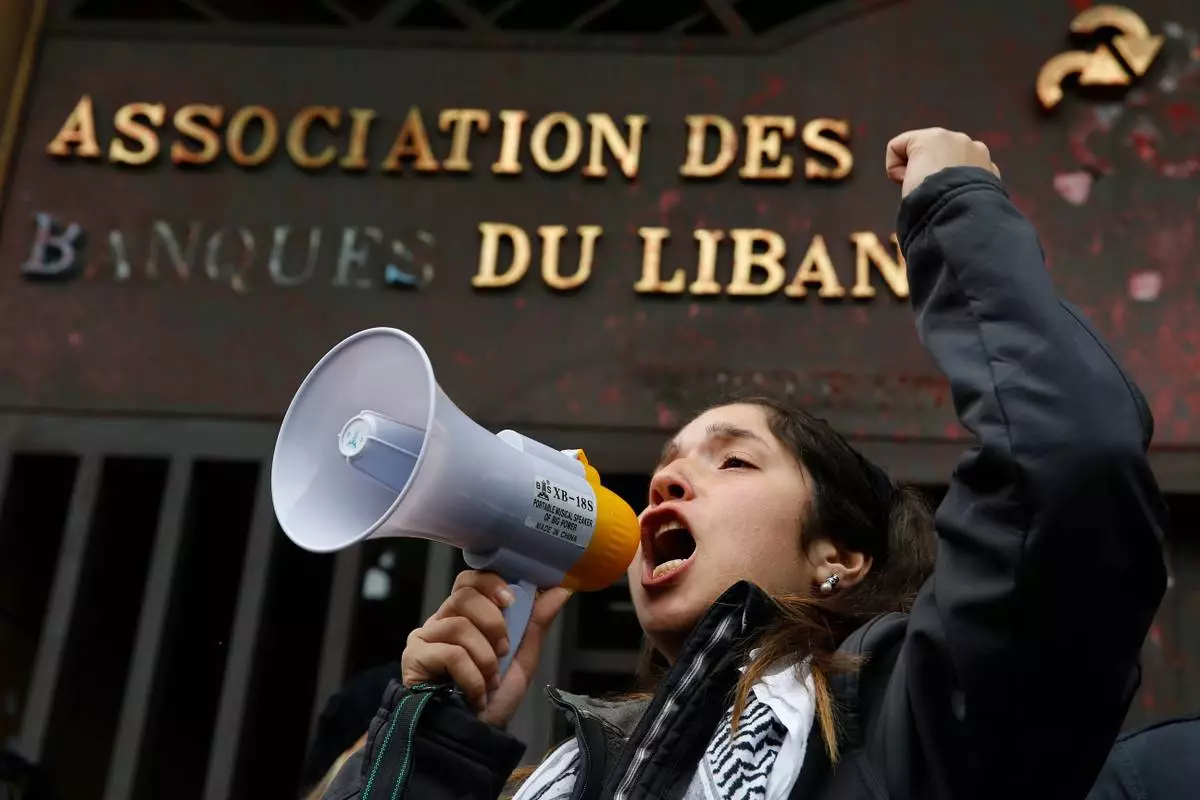
FILE - A protester leads a chant during ongoing protests against the Lebanese political class, in front of the building of the Lebanese Association of Banks in Beirut, Lebanon, Thursday, Dec. 26, 2019. (AP Photo/Bilal Hussein, File)
FILE - A protester leads a chant during ongoing protests against the Lebanese political class, in front of the building of the Lebanese Association of Banks in Beirut, Lebanon, Thursday, Dec. 26, 2019. (AP Photo/Bilal Hussein, File)
NEW YORK (AP) — Two sisters testified at Harvey Weinstein’s most recent criminal trial. Kaja Sokola accused the disgraced movie mogul of sexual assault. Ewa Sokola was called as a witness to boost her claims, but ultimately ended up helping the defense.

Now, Ewa Sokola is suing Kaja for defamation, alleging in a lawsuit filed Tuesday in Manhattan federal court that the psychotherapist and ex-model’s public remarks amount to libel and are damaging Ewa’s reputation and business as a cardiologist in Poland.

Ewa Sokola says that her younger sister has made false statements subjecting her to public hatred, shame, contempt, ridicule, ostracism and disgrace in Wrocław, Poland. She seeks unspecified damages.

Messages seeking comment were left for Kaja Sokola’s lawyers and spokesperson on Thursday and Friday.

In a split verdict in June, Weinstein was convicted of forcibly performing oral sex on film and television production assistant and producer Miriam Haley and acquitted on a charge involving Kaja Sokola’s allegations of similar conduct. Both women said they were assaulted in 2006.

The judge declared a mistrial on the final charge, alleging Weinstein raped former actor Jessica Mann, after the jury foreperson declined to deliberate further.

Weinstein has not yet been sentenced as a judge weighs a defense request to throw out the verdict after two jurors told Weinstein’s lawyers that other jurors had bullied them into convicting him. Judge Curtis Farber is expected to rule on Jan. 8.

Kaja Sokola has said her sister’s testimony at Weinstein's state court trial in New York earlier this year undermined her own testimony that he forced oral sex at a Manhattan hotel just before her 20th birthday.

Weinstein had arranged for Kaja Sokola to be an extra for a day in the film “The Nanny Diaries,” and separately agreed to meet her and Ewa. After they chatted, she testified, Weinstein told her he had a script to show her in his hotel room, and she went up with him. There, she said, Weinstein pushed her onto a bed and assaulted her.

After the trial, Kaja Sokola criticized her sister's testimony, saying that though she was called as a prosecution witness, she ended up serving Weinstein's cause by providing his lawyers with a journal in which she wrote about the men who had sexually assaulted her in her life but did not include Weinstein.

According to the lawsuit, Kaja Sokola repeatedly characterized her sister's testimony as a personal “betrayal" and falsely accused her of omitting journals in which she described what happened with Weinstein.

The lawsuit also said Kaja Sokola had falsely accused Ewa Sokola of homicide, theft, falsification of medical records, sexual impropriety and immoral conduct, and of colluding with Weinstein's defense team.

The lawsuit said Kaja Sokola's false claims have cost Ewa Sokola referrals and led to a reduction in patients and employees for her medical practice while damaging her professional reputation and her standing within the medical community.

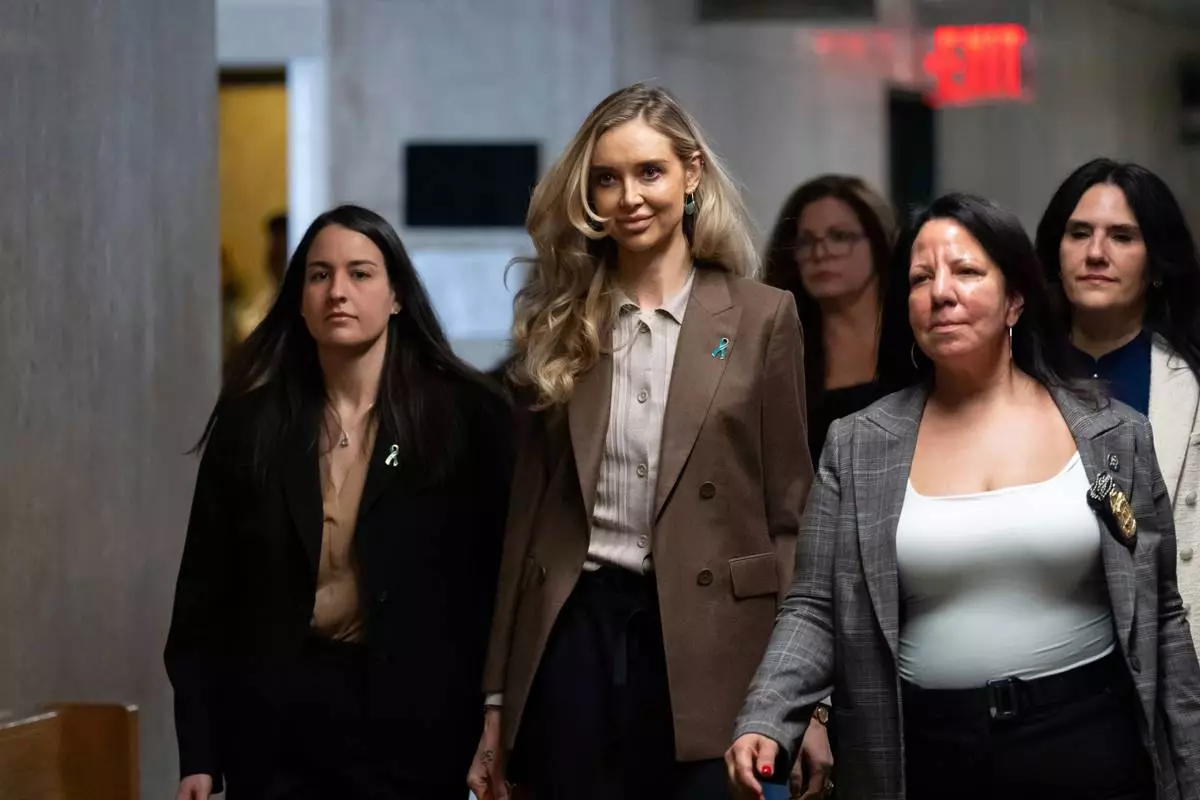
FILE - Kaja Sokola arrives at Manhattan criminal court before Harvey Weinstein's trial on Thursday, May 8, 2025 in New York. (AP Photo/Adam Gray, File)

FILE - Kaja Sokola arrives at Manhattan criminal court before Harvey Weinstein's trial on Thursday, May 8, 2025 in New York. (AP Photo/Adam Gray, File)

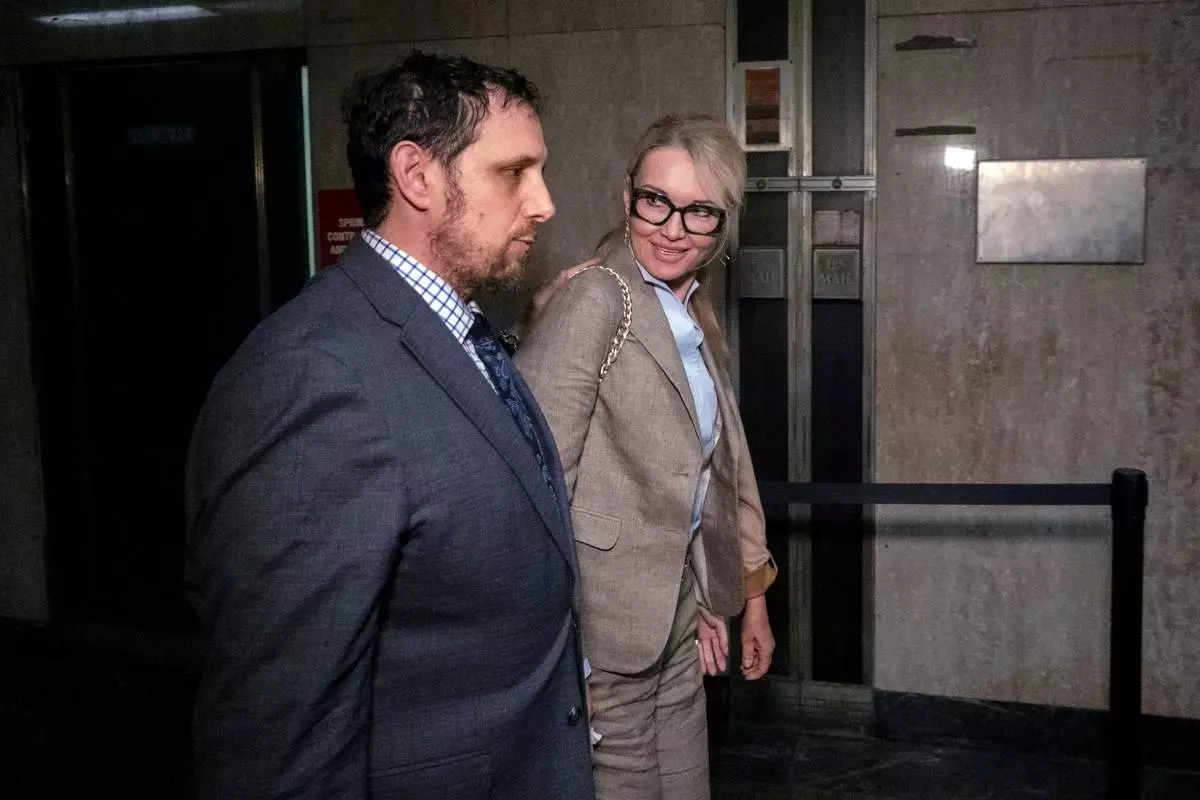
FILE - Prosecution witness Ewa Sokola, sister of Weinstein accuser Kaja Sokola, appears at court in the case against former film producer Harvey Weinstein at state court in Manhattan, Wednesday, May 7, 2025, in New York. (AP Photo/Ted Shaffrey, File)

FILE - Prosecution witness Ewa Sokola, sister of Weinstein accuser Kaja Sokola, appears at court in the case against former film producer Harvey Weinstein at state court in Manhattan, Wednesday, May 7, 2025, in New York. (AP Photo/Ted Shaffrey, File)

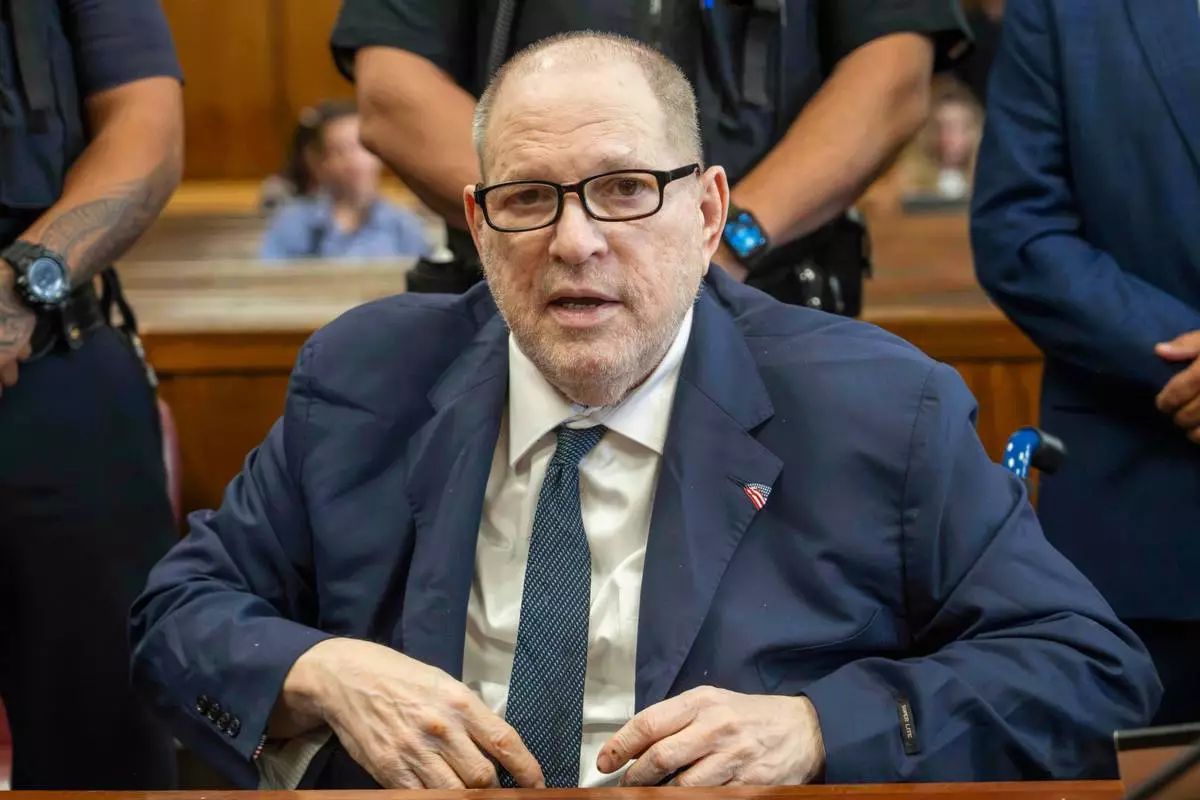
FILE - Harvey Weinstein appears in state court in Manhattan after a mistrial on a rape charge, Aug. 13, 2025 in New York. (Steven Hirsch /New York Post via AP, Pool, File)

FILE - Harvey Weinstein appears in state court in Manhattan after a mistrial on a rape charge, Aug. 13, 2025 in New York. (Steven Hirsch /New York Post via AP, Pool, File)

Recommended Articles