Skip to Content Facebook Feature Image

Japanese protesters strongly oppose government to restart nuclear plant

HotTV

HotTV

HotTV

Japanese protesters strongly oppose government to restart nuclear plant

2025-12-27 13:56 Last Updated At:14:28

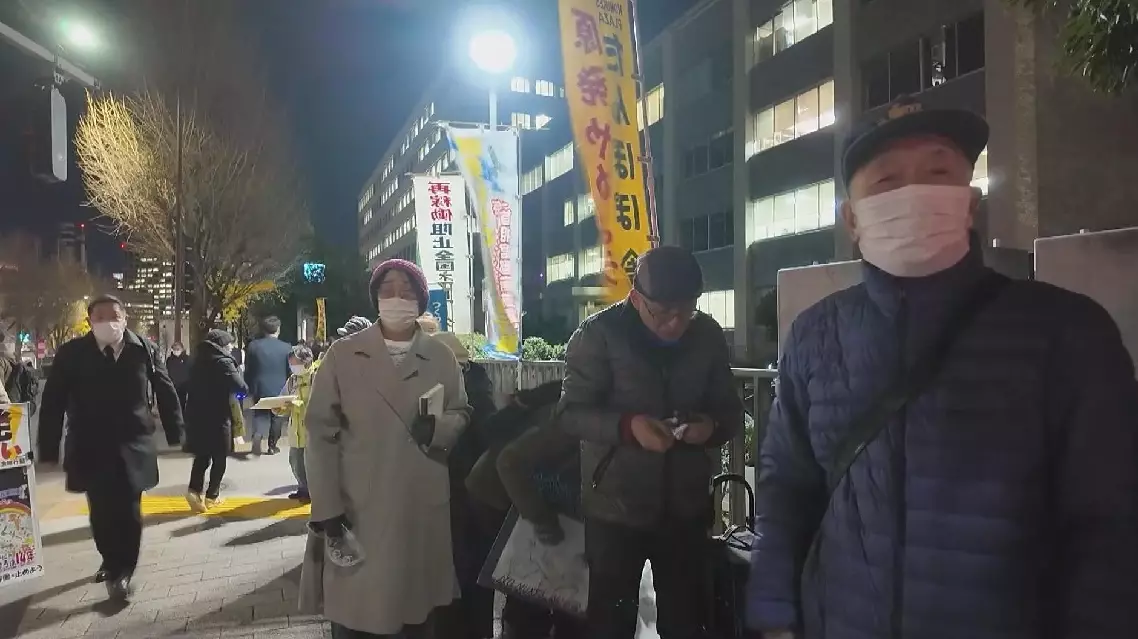
A group of Japanese protesters gathered in front of the prime minister's official residence in Tokyo on Friday evening to show opposition to the government's decision to restart the world's largest nuclear power plant based in Niigata Prefecture in north central Honshu of Japan due to its aging facilities, inadequate oversight and disregard for historical disasters.

On Monday, Niigata Prefecture approved the restart of the Kashiwazaki-Kariwa nuclear power plant, more than a decade after the Fukushima nuclear disaster, local media reported.

The prefectural assembly endorsed the decision of Niigata Governor Hideyo Hanazumi, who backed the restart last month, effectively allowing the restart of Tokyo Electric Power Company (TEPCO)'s Kashiwazaki-Kariwa plant.

The Kashiwazaki-Kariwa plant was among the 54 reactors shut down in Japan following the March 2011 core meltdowns at TEPCO's tsunami-stricken Fukushima Daiichi plant.

"This marks the first time for TEPCO to restart a nuclear power plant since the Fukushima nuclear accident. The Kashiwazaki-Kariwa nuclear power plant previously experienced fires during earthquakes, and there are also reports of a fault line in the area. Niigata Prefecture was hit by a major earthquake 50 or 60 years ago. This inevitably makes people feel uneasy," said a protester.

"The Kashiwazaki-Kariwa nuclear power plant in Niigata Prefecture, which is scheduled to restart, belongs to TEPCO, the company linked to the accident at Fukushima Daiichi nuclear power plant, and this is what worries me the most. I believe it should not be restarted under any circumstances," said another protester. The protesters said that although more than 14 years have passed since the Fukushima accident, issues such as the resettlement of evacuees and the rising incidence of thyroid cancer among children in the disaster area have not been properly addressed, and the relevant responsibilities of the Japanese government have not been established.

"The Fukushima nuclear accident is far from over. There are still 20,000 to 30,000 people in a state of refuge, and children are suffering from thyroid cancer. The government refuses to acknowledge any connection between this and the nuclear accident, which is utterly absurd. Now, they even want to push for the restart of the Kashiwazaki-Kariwa nuclear power plant," said a protester.

In addition, the protesters expressed dissatisfaction with the Liberal Democratic Party's discussions on revising the Three Non-Nuclear Principles, believing that this would lead Japan to repeat the mistakes of war.

"Japan is heading towards war. Eighty years have passed since the end of World War II, and that's precisely why we must not repeat past mistakes. Although we are all getting old, we still need to pass these lessons on to young people so that they can live in peace and pursue peace," said another protester.

Hit by a 9.0-magnitude earthquake and an ensuing tsunami on March 11, 2011, the Fukushima nuclear plant suffered core meltdowns that released radiation, resulting in a level-7 nuclear accident, the highest on the International Nuclear and Radiological Event Scale.
Japanese protesters strongly oppose government to restart nuclear plant

Japanese protesters strongly oppose government to restart nuclear plant

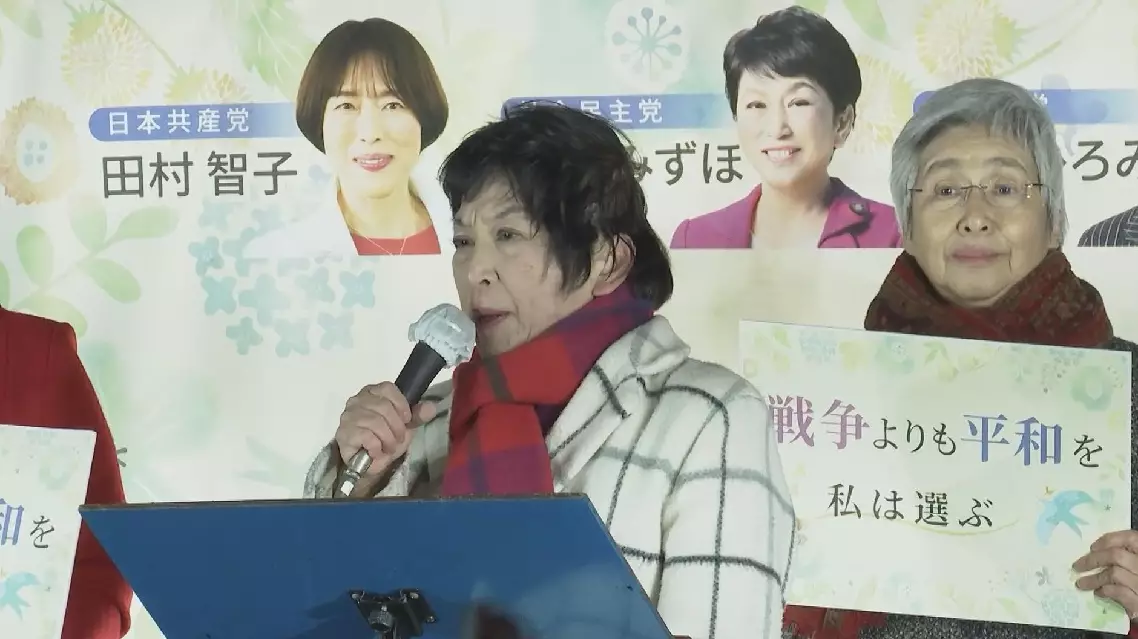
Several members of the National Diet of Japan, along with a large number of residents, attended a rally in Tokyo on Friday night to show opposition to Japanese Prime Minister Sanae Takaichi's erroneous remarks regarding China's Taiwan and her advancement on arms expansion.

At a Diet meeting in early November, Takaichi claimed that the Chinese central authorities' "use of force on Taiwan" could constitute a "survival-threatening situation" for Japan and implied the possibility of armed intervention in the Taiwan Strait, which has drawn strong criticism at home and from abroad.

Local media reported Friday that Japan's draft defense budget was set at a record 9.04 trillion yen (about 58 billion U.S. dollars) for fiscal 2026. The figure exceeds the then record initial budget of 8.7 trillion yen for the current fiscal 2025 starting in April.

Meanwhile, an 18.3 trillion yen supplementary budget enacted last week for the current fiscal year included 1.7 trillion yen for security and diplomacy, allowing Japan to bring defense-related spending to its target of 2 percent of gross domestic product within fiscal 2025, two years ahead of the previous schedule, according to reports.

These developments have triggered strong dissatisfaction at home and from abroad, with officials and citizens demanding that Takaichi step down.

"The budget related to the people's livelihood has not been increased as it should be. However, only the defense expense, the defense budget, has been growing abnormally. I would like to ask: Is this really Okay?" said Tomoko Tamura, member of the House of Representatives.

"At the time when Takaichi took office, I gave a name to her administration -- the 'war-preparing cabinet'. What happened later on is exactly the case. Her war preparation has been advancing at a snowballing pace. Such a prime minister who tramples on the Constitution and on the law, and who doesn't care about the existing position of the government must step down. What do you guys think? A prime minister who doesn't withdraw erroneous remarks must resign," said Mizuho Fukushima, member of the House of Councilors.

Local residents who took part in the rally also expressed strong opposition to the actions of Takaichi to advance the country's arms expansion.

"I think this is an issue of not facing up to historical facts, especially when it comes to possessing weapons of mass destruction. Once they are used, it will cause tremendous destruction. Japan once caused great harm to other Asian peoples by carrying out colonial rule, launching aggression, seizing territories and wreaking havoc. Regarding these historical facts, Japan should conduct full reflection and pass them on correctly. However, Japan has done far too little in this respect," said a rally participant.

Japan’s Diet members, citizens rally against PM's erroneous remarks on China's Taiwan

Japan’s Diet members, citizens rally against PM's erroneous remarks on China's Taiwan

Recommended Articles