Chinese lawmakers on Saturday voted to adopt a revision to the Foreign Trade Law.
The revised law, which was passed at a session of the National People's Congress Standing Committee, will take effect on March 1, 2026.
The revised law incorporates provisions on safeguarding national sovereignty, security and development interests, while highlighting that China's foreign trade shall serve the national economic and social development.
In implementing related reform measures, the revision adds provisions on advancing China's efforts to actively align with high-standard international economic and trade rules, and to participate in the formulation of international economic and trade regulations.
To further optimize the development environment for foreign trade, the revised law clarifies that China will strengthen intellectual property protection related to foreign trade and enhance the compliance and risk response capabilities of foreign trade operators regarding intellectual property rights.
The revision also enriches and improves China's legal toolkit on struggles in foreign trade arena, and supplements and refines corresponding countermeasures.
China's Foreign Trade Law took effect in 1994 and was revised for the first time in 2004. The newly revised law now consists of 11 chapters.
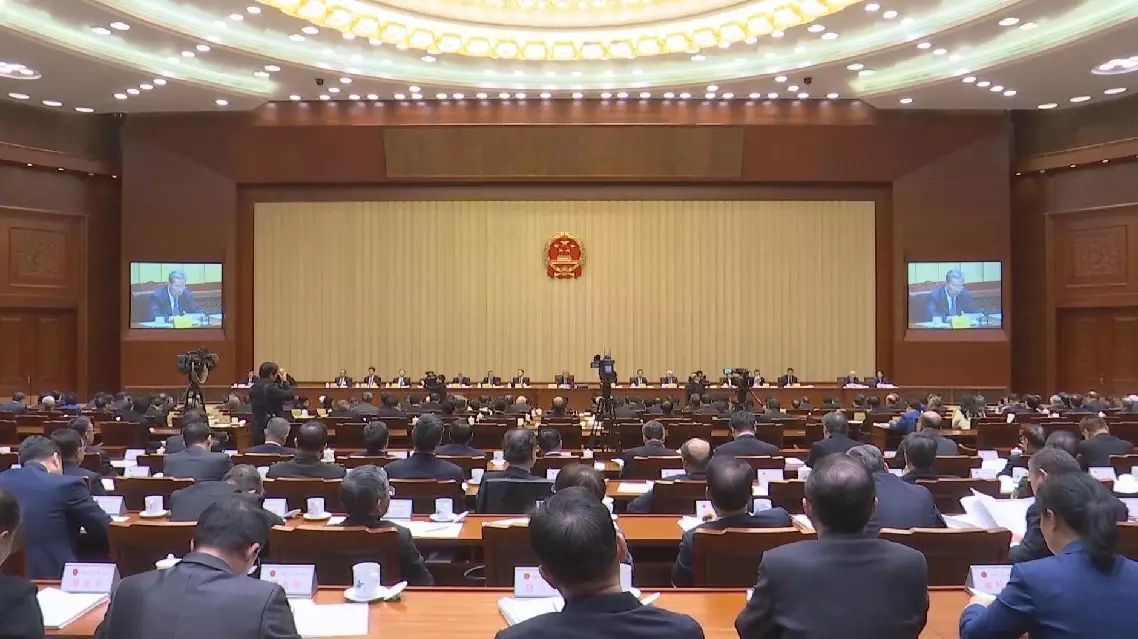
China adopts revised Foreign Trade Law
Sri Lankan Prime Minister Harini Amarasuriya described the current state of bilateral relations with China as entering a "stronger chapter" grounded in mutual respect, commitment and trust.
In an interview with China Media Group (CMG) aired on Friday, Amarasuriya emphasized the enduring friendship between the two countries and expressed confidence that the relationship is poised for even greater stability.
"We've had a long standing relationship. And this is a new chapter. And I think a stronger chapter, because I only see the relationship getting stronger, becoming stronger, because the thinking process is aligned, the vision is more aligned, and the strategies are more aligned. So, this relationship, I am confident, will continue to be an example of what a good, strong bilateral relationship [is] -- one that is based on mutual respect and commitment and trust, and what it can deliver for both countries," she said.
Her remarks build on assurances made during her October 2025 visit to Beijing, when President Xi Jinping underscored the Five Principles of Peaceful Coexistence and pledged support for Sri Lanka’s sovereignty and independence. At that time, both sides highlighted the relationship as a model of friendly ties and mutually beneficial cooperation, with Sri Lanka reaffirming its adherence to the one-China principle.
While the earlier discussions centered on Belt and Road projects and China’s global initiatives, Amarasuriya’s latest comments mark a shift toward strategic alignment, stressing shared vision and coordinated pathways.

Sri Lanka PM highlights stronger chapter in China ties built on trust, shared vision

Sri Lanka PM highlights stronger chapter in China ties built on trust, shared vision