|
- Global DMS mandates: Europe requires DMS in new vehicles from 2026 while the U.S., China, and Japan actively pursue mandates in the autonomous driving era.
- AI image restoration: Delivers sharp visuals via AI, increasing design freedom and image quality.
- Growth of sensing business: Expands camera/LiDAR/Radar solutions, targeting USD 1.4 billion in sales by 2030.
SEOUL, South Korea, Dec. 29, 2025 /PRNewswire/ -- On December 26, LG Innotek (CEO Moon Hyuksoo) announced its success in developing a 'Next-Generation Under-Display Camera Module(UDC)' installed behind a vehicle's instrument cluster to monitor the driver, with plans to unveil it at CES 2026.
The UDC is a core component of the Driver Monitoring System (DMS), which integrates a camera and software within the vehicle to continuously monitor the driver. Mounted behind the vehicle's instrument cluster display, which serves as the dashboard, the UDC remains invisible to the driver and passengers while sensing and monitoring key status indicators such as drowsiness and attention level while on the road.
DMSs are gaining significant attention as essential safety devices to prevent careless driving, particularly as autonomous driving technologies advance. Europe now mandates DMSs in new vehicles from July 2026 under the General Safety Regulation, while the U.S., China, and Japan are considering similar requirements.
The market is increasingly focusing on cameras as the core component of DMSs. The demand for invisible UDCs is thus surging, driven by the need for sophisticated, refined vehicle interior designs that prioritize seamless aesthetics, particularly in the premium and advanced autonomous vehicle segments. The invisible UDC is gaining popularity by alleviating drivers' psychological discomfort and privacy concerns associated with visible, protruding cameras in DMSs.
Overcoming image quality degradation in DMS cameras, caused by the dashboard display blocking light transmission, has long been a critical industry challenge for under-display technologies. Carmakers have hesitated to adopt UDCs due to such persistent image quality degradation.
To address this challenge, LG Innotek partnered with LG Display—a leader in automotive displays—to launch the joint development of a next-generation UDC in 2024. After about one year of intensive research and development, LG Innotek successfully introduced the industry's first 'Next-Generation UDC', which solves the problem of poor image quality while neatly concealing the camera behind the display.
- AI image restoration: Delivers sharp visuals via AI, improving design freedom and image quality
Existing DMS cameras typically protrude from the dashboard or steering wheel. By remaining visible to the driver, they hinder clean and refined interior designs.
LG Innotek's 'Next-Generation UDC' mounts seamlessly behind the vehicle display panel serving as the dashboard, rendering the camera completely invisible and undetectable. LG Innotek expects this differentiated invisible design to strongly appeal to high-end automakers seeking premium aesthetics.
LG Innotek's 'Next-Generation UDC' also delivers image quality equivalent to that of existing products. It achieves image fidelity of at least 99% compared to unobstructed cameras positioned directly in front of the driver, without display panel interference. It near-perfectly resolves the inevitable image quality degradation caused by mounting a camera behind the display panel.
Clear picture quality stands as a key element of DMS camera performance, requiring the ability to accurately detect the driver's facial expressions, eye blinking, and head movements. However, existing UDCs suffer from views obscured by the display panel, degrading image quality by about 30% compared to standard DMS cameras.
LG Innotek applied its independently developed 'AI image restoration software' to resolve the persistent image quality degradation issue. The company's software perfectly recovers degraded image quality using algorithms such as deblur (converting fuzzy images to clear ones) and denoise (removing noise captured during imaging). Carmakers are closely watching LG Innotek's 'Next-Generation UDC' for its breakthrough performance.
The company plans to continuously enhance this 'Next-Generation UDC' capabilities. An LG Innotek official stated, "Going forward, the 'Next-Generation UDC' will recognize colors and passengers as well as the driver, enabling customized conveniences such as seat adjustment and interior temperature setting."
- Growth of sensing business Expands camera/LiDAR/Radar solutions, targeting USD 1.4 billion in sales by 2030
With the development of this 'Next-Generation UDC', LG Innotek has strengthened its lineup of autonomous driving sensing solutions, covering both in-cabin and exterior vehicle monitoring.
The company aims to lead the global market by launching integrated solutions that combine vehicle camera modules, LiDAR, and Radar, leveraging its leadership in smartphone camera modules to establish itself as a 'leading provider of autonomous driving sensing solutions'.
Last year, LG Innotek launched a high-performance heated camera that halves snow and frost removal time as well as an 'RGB-IR in-cabin camera module' that monitors both driver and passengers through a single unit.
In July this year, LG Innotek signed a strategic partnership with Aeva, a leading U.S. LiDAR technology company. In September, it also made an equity investment in Smart Radar System, a Korean firm specializing in 4D imaging radar technology, to secure advanced autonomous driving sensing solutions.
CEO Moon Hyuksoo stated, "LG Innotek aims to grow its vehicle sensing solutions business to USD 1.4 billion in sales by 2030. By continuously delivering innovative components that provide distinguished customer value, we will become a trusted technology partner that realizes our customers' visions."
According to S&P Global, the global in-cabin camera module market is projected to grow from USD 1.8 billion in 2025 to USD 5.1 billion in 2035, at a CAGR of 11%.
- Global DMS mandates: Europe requires DMS in new vehicles from 2026 while the U.S., China, and Japan actively pursue mandates in the autonomous driving era.
- AI image restoration: Delivers sharp visuals via AI, increasing design freedom and image quality.
- Growth of sensing business: Expands camera/LiDAR/Radar solutions, targeting USD 1.4 billion in sales by 2030.
SEOUL, South Korea, Dec. 29, 2025 /PRNewswire/ -- On December 26, LG Innotek (CEO Moon Hyuksoo) announced its success in developing a 'Next-Generation Under-Display Camera Module(UDC)' installed behind a vehicle's instrument cluster to monitor the driver, with plans to unveil it at CES 2026.
The UDC is a core component of the Driver Monitoring System (DMS), which integrates a camera and software within the vehicle to continuously monitor the driver. Mounted behind the vehicle's instrument cluster display, which serves as the dashboard, the UDC remains invisible to the driver and passengers while sensing and monitoring key status indicators such as drowsiness and attention level while on the road.
DMSs are gaining significant attention as essential safety devices to prevent careless driving, particularly as autonomous driving technologies advance. Europe now mandates DMSs in new vehicles from July 2026 under the General Safety Regulation, while the U.S., China, and Japan are considering similar requirements.
The market is increasingly focusing on cameras as the core component of DMSs. The demand for invisible UDCs is thus surging, driven by the need for sophisticated, refined vehicle interior designs that prioritize seamless aesthetics, particularly in the premium and advanced autonomous vehicle segments. The invisible UDC is gaining popularity by alleviating drivers' psychological discomfort and privacy concerns associated with visible, protruding cameras in DMSs.
Overcoming image quality degradation in DMS cameras, caused by the dashboard display blocking light transmission, has long been a critical industry challenge for under-display technologies. Carmakers have hesitated to adopt UDCs due to such persistent image quality degradation.
To address this challenge, LG Innotek partnered with LG Display—a leader in automotive displays—to launch the joint development of a next-generation UDC in 2024. After about one year of intensive research and development, LG Innotek successfully introduced the industry's first 'Next-Generation UDC', which solves the problem of poor image quality while neatly concealing the camera behind the display.
- AI image restoration: Delivers sharp visuals via AI, improving design freedom and image quality
Existing DMS cameras typically protrude from the dashboard or steering wheel. By remaining visible to the driver, they hinder clean and refined interior designs.
LG Innotek's 'Next-Generation UDC' mounts seamlessly behind the vehicle display panel serving as the dashboard, rendering the camera completely invisible and undetectable. LG Innotek expects this differentiated invisible design to strongly appeal to high-end automakers seeking premium aesthetics.
LG Innotek's 'Next-Generation UDC' also delivers image quality equivalent to that of existing products. It achieves image fidelity of at least 99% compared to unobstructed cameras positioned directly in front of the driver, without display panel interference. It near-perfectly resolves the inevitable image quality degradation caused by mounting a camera behind the display panel.
Clear picture quality stands as a key element of DMS camera performance, requiring the ability to accurately detect the driver's facial expressions, eye blinking, and head movements. However, existing UDCs suffer from views obscured by the display panel, degrading image quality by about 30% compared to standard DMS cameras.
LG Innotek applied its independently developed 'AI image restoration software' to resolve the persistent image quality degradation issue. The company's software perfectly recovers degraded image quality using algorithms such as deblur (converting fuzzy images to clear ones) and denoise (removing noise captured during imaging). Carmakers are closely watching LG Innotek's 'Next-Generation UDC' for its breakthrough performance.
The company plans to continuously enhance this 'Next-Generation UDC' capabilities. An LG Innotek official stated, "Going forward, the 'Next-Generation UDC' will recognize colors and passengers as well as the driver, enabling customized conveniences such as seat adjustment and interior temperature setting."
- Growth of sensing business Expands camera/LiDAR/Radar solutions, targeting USD 1.4 billion in sales by 2030
With the development of this 'Next-Generation UDC', LG Innotek has strengthened its lineup of autonomous driving sensing solutions, covering both in-cabin and exterior vehicle monitoring.
The company aims to lead the global market by launching integrated solutions that combine vehicle camera modules, LiDAR, and Radar, leveraging its leadership in smartphone camera modules to establish itself as a 'leading provider of autonomous driving sensing solutions'.
Last year, LG Innotek launched a high-performance heated camera that halves snow and frost removal time as well as an 'RGB-IR in-cabin camera module' that monitors both driver and passengers through a single unit.
In July this year, LG Innotek signed a strategic partnership with Aeva, a leading U.S. LiDAR technology company. In September, it also made an equity investment in Smart Radar System, a Korean firm specializing in 4D imaging radar technology, to secure advanced autonomous driving sensing solutions.
CEO Moon Hyuksoo stated, "LG Innotek aims to grow its vehicle sensing solutions business to USD 1.4 billion in sales by 2030. By continuously delivering innovative components that provide distinguished customer value, we will become a trusted technology partner that realizes our customers' visions."
According to S&P Global, the global in-cabin camera module market is projected to grow from USD 1.8 billion in 2025 to USD 5.1 billion in 2035, at a CAGR of 11%.
** The press release content is from PR Newswire. Bastille Post is not involved in its creation. **
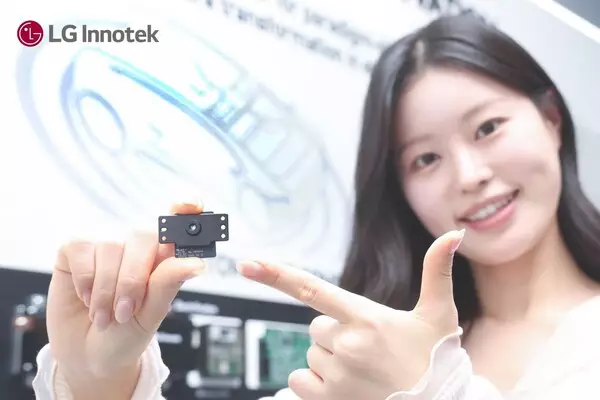
"Hidden Behind the Dashboard"… LG Innotek Unveils 'Next-Generation Under-Display Camera' at CES 2026
MONROE, N.J. and RANCHO CUCAMONGA, Calif., May 9, 2026 /PRNewswire/ -- MimiSilk, the clinical-grade at-home beauty device brand, launched its 2026 Mother's Day campaign, offering a limited-time promotion across its full product collection. The campaign aims to provide consumers with accessible, professional skincare solutions as a gifting choice for the holiday, offering mothers a way to experience medical-grade skin rejuvenation from the comfort of home.
About MimiSilk: Silk Your Skin, Love Your Glow
MimiSilk was founded on a clear mission: to make clinical-grade skincare part of everyday life — offering an effective standalone solution for those seeking skin rejuvenation at home, and a powerful complement to in-clinic treatments for long-term maintenance and lasting results. Its devices are designed to be safe, accessible, and built into daily life – supporting women in building consistent self-care habits that help soften visible signs of aging, restore a natural inner glow, and achieve a texture as smooth as silk. At the core of the brand is a simple belief: beauty is about confidence, control, and taking time to care for yourself.
MimiSilk Iris: Multi-Benefit Anti-Aging in One Device
The flagship product of this season's campaign is the MimiSilk Iris, a non-ablative fractional laser device for at-home use. Operating at a clinically proven 1450 nm wavelength, Iris stimulates natural collagen production to address the appearance of wrinkles, refine pore visibility, and improve overall skin radiance. The device is non-invasive and requires no recovery downtime, making it compatible with a standard nightly skincare routine.
A Limited-Time Mother's Day 2026 Offer
The Mother's Day promotion is available across MimiSilk's collection, catering to both individual consumers and gift shoppers, making it a practical gifting choice for those looking to offer a practical, results-oriented skincare solution.
MimiSilk believes skincare can be more than a beauty step — it can be a meaningful part of how women feel refreshed, confident, and cared for in daily life. A few focused moments each week can become a quiet ritual of restoration and self-care. This Mother's Day and beyond, the brand hopes mothers everywhere feel seen, appreciated, and beautifully radiant.
Further details on the campaign and products are available on the MimiSilk official website.
** This press release is distributed by PR Newswire through automated distribution system, for which the client assumes full responsibility. **

MimiSilk Celebrates Mother's Day 2026: The Gift of Skin Confidence