Skip to Content Facebook Feature Image

Hong Kong's latest diet study shows pesticide exposure remains below health risk levels for residents

HK

Hong Kong's latest diet study shows pesticide exposure remains below health risk levels for residents
HK

HK

Hong Kong's latest diet study shows pesticide exposure remains below health risk levels for residents

2025-12-29 11:00 Last Updated At:13:05

CFS announces Second Hong Kong Total Diet Study findings on pesticide residues

The Centre for Food Safety (CFS) of the Food and Environmental Hygiene Department today (December 29) released the fourth report under the Second Hong Kong Total Diet Study, which assessed the dietary exposure of the Hong Kong population to residues of pesticides or their metabolites and the associated health risks. The findings showed that the dietary exposure estimates of both average and high consumers in the local adult and younger populations to the pesticide or metabolite residues analysed were all below the respective Health-based Guidance Values (HBGVs), indicating that they would be unlikely to pose health risks to the local population. Moreover, the dietary exposure of the adult population to residues of the relevant pesticides or their metabolites was comparable to or lower than those reported in the First Hong Kong Total Diet Study.

A total of 101 pesticides or their metabolites, including 75 under four groups, namely neonicotinoids (neonics), organophosphorus pesticides (OPPs), carbamates, and dithiocarbamate (DTC) metabolites, and 26 other individual pesticides, were analysed in 374 composite samples involving 187 food items.

Results showed that 39 pesticides (39 per cent) were not detected in any composite samples and the remaining 62pesticides or metabolites (61 per cent) were detected at low levels in the composite samples, either singly or in combination, predominantly in plant-based food such as fruits and vegetables. Among the four groups of pesticides or metabolites, neonics was the most commonly detected, in 49 per cent of all composite samples, followed by OPPs (37 per cent) and carbamates (26 per cent). Overall, the dietary exposure estimates of the Hong Kong population to the pesticide or metabolite residues analysed were below their respective HBGVs.

A spokesman for the CFS said, "The pesticides or their metabolites analysed in the study are commonly employed on crops as insecticides, herbicides, fungicides, etc. The adverse health effects of pesticides on humans depend on their toxicity, as well as the amount and duration of exposure to the pesticide residues. In general, when pesticides are used under strict adherence to Good Agricultural Practice, only acceptable amounts of pesticide residues should remain in the crops or foods of animal origin, which would not pose health risks to the public."

The spokesman emphasised that the findings re-affirmed the safety of basic dietary advice on healthy eating, i.e. have a balanced and varied diet which includes a wide variety of fruits and vegetables.

The Second Hong Kong Total Diet Study aims to estimate the latest dietary exposure of the Hong Kong population and various population subgroups to some chemical substances of potential food safety concern, and assess the associated health risks. The public can download the relevant study reports released thus far from the CFS webpage at www.cfs.gov.hk/english/programme/programme_firm/programme_tds_2nd_HKTDS_report.html.
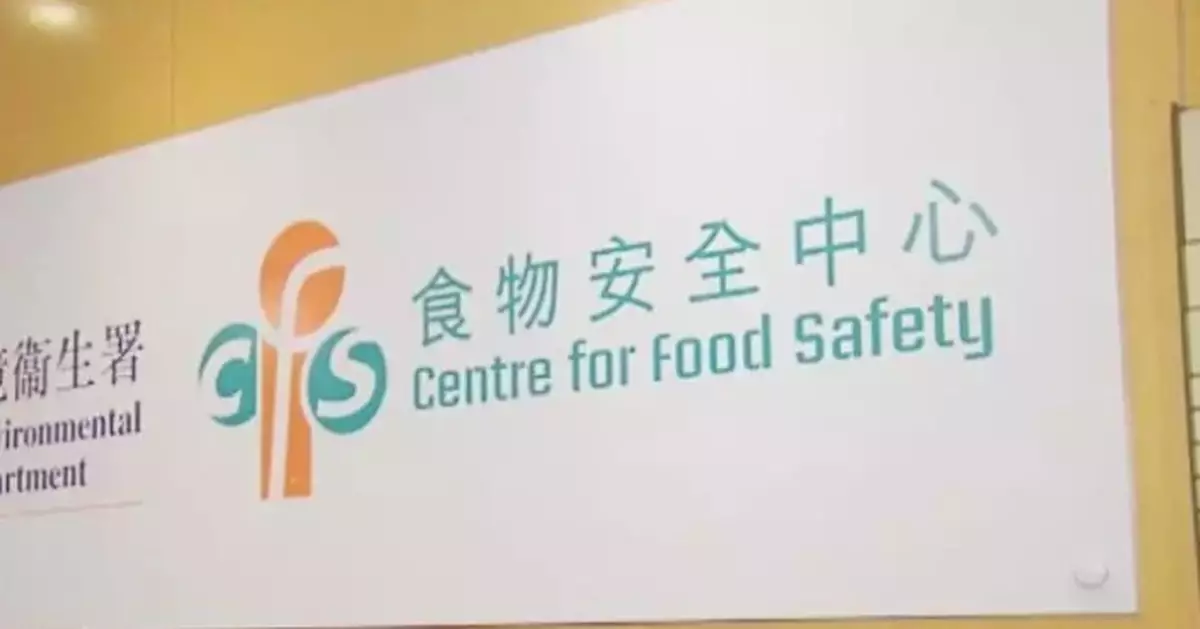
The Centre for Food Safety (CFS), Photo source: reference image

The Centre for Food Safety (CFS), Photo source: reference image

Government launches industry consultation on proposed legislative amendments to facilitate digitalisation of business-to-business trade documents

The Government published a consultation paper today (December 29) to gather industry opinions on the proposed legislative amendments to facilitate digitalisation of "Business-to-Business" (B2B) trade documents in Hong Kong.

International trade involves presentment or submission of various trade documents, including "Business-to-Government" (B2G) documents (such as import and export declarations, cargo manifests and various licences or permits) and B2B documents (such as bills of lading and bills of exchange). While the trade may already submit most of the B2G trade documents through the Government Electronic Trading Services and the Trade Single Window, transactions involving certain B2B trade documents still rely largely on paper-based means due to legal requirements and industry practice. As technology advances, the digitalisation of these documents has emerged as a new trend.

As announced in the 2025-26 Budget and the 2025 Policy Address, the Government will make reference to the Model Law on Electronic Transferable Records (MLETR) advocated by the United Nations Commission on International Trade Law and consider legislative amendments to facilitate digitalisation of trade documents. Upon careful consideration by relevant authorities, the consultation paper outlines and seeks industry opinions on the proposed framework to amend the Electronic Transactions Ordinance (Cap. 553) (ETO) and relevant legislation for implementing MLETR provisions, covering various key aspects including the scope of application, assessment of reliability and operational requirements.

The legislative amendments will provide the legal basis for the use of electronic transferable records, which are the electronic version of transferable documents or instruments. Suitable MLETR provisions will be codified into the ETO as far as practicable, with a view to aligning with international standards and promote cross-border interoperability.

A spokesman for the Commerce and Economic Development Bureau (CEDB) said, "The Government endeavours to maintain a business-friendly environment to enhance Hong Kong's competitiveness in international trade. Digitalisation of B2B trade documents may reduce processing time and costs, enhance transparency and integrity, and facilitate international trade. We hope that the legislative proposal would empower the industry to develop technical solutions that suit their actual needs, thereby further enhancing Hong Kong's competitiveness as an international financial, maritime and trade centre."

The consultation paper is available on the CEDB website (www.cedb.gov.hk). Stakeholders are welcome to submit their views to the Government through email (MLETR_consultation@cedb.gov.hk), fax (2147 3065) or post (Division 4, Commerce and Economic Development Bureau, 23/F, West Wing, Central Government Offices, 2 Tim Mei Avenue, Tamar, Hong Kong) on or before March 27, 2026.

Recommended Articles