New "continuous contract" requirement under Employment Ordinance applicable from January 18, 2026
A spokesperson for the Labour Department (LD) said today (December 29) that the amendments to the "continuous contract" requirement under the Employment Ordinance (EO) (Cap. 57) made by the Employment (Amendment) Ordinance 2025 will be applicable from January 18, 2026.
The new requirement will lower the working hours threshold of the "continuous contract" and introduce flexibility in the calculation of working hours, reducing the circumstances that disrupt the continuity of an employee's employment when the working hours of a week occasionally fall below the threshold. This change makes it easier for employees to enjoy comprehensive employment rights, such as statutory holiday pay and paid annual leave.
Upon the application of the new requirement, an employee is regarded as being employed under a "continuous contract" if he has been employed continuously by the same employer for four weeks or more; and has met one of the working hours requirements: (i) worked for at least 17 hours each week; or (ii) (if worked less than 17 hours in any week) worked for the employer concerned for 68 hours or more in a four-week periodcomprising that week and the three weeks next preceding that week.
The new requirement has no retrospective effect. For an employment period before the new requirement is applicable, an employee is still required to be employed continuously by the same employer for four weeks or more and has worked for at least 18 hours or more each week to meet the "continuous contract" requirement.
Other provisions of the EO will operate as they currently do, and employees will continue to enjoy various statutory benefits.
Members of the public may visit the LD's dedicated webpage www.labour.gov.hk/eng/news/EAO2025.htm for further details, or call the LD's 24-hour hotline 2717 1771 (manned by 1823) for enquiries.
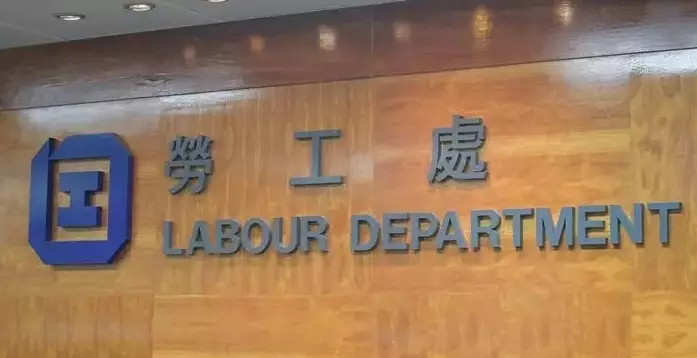
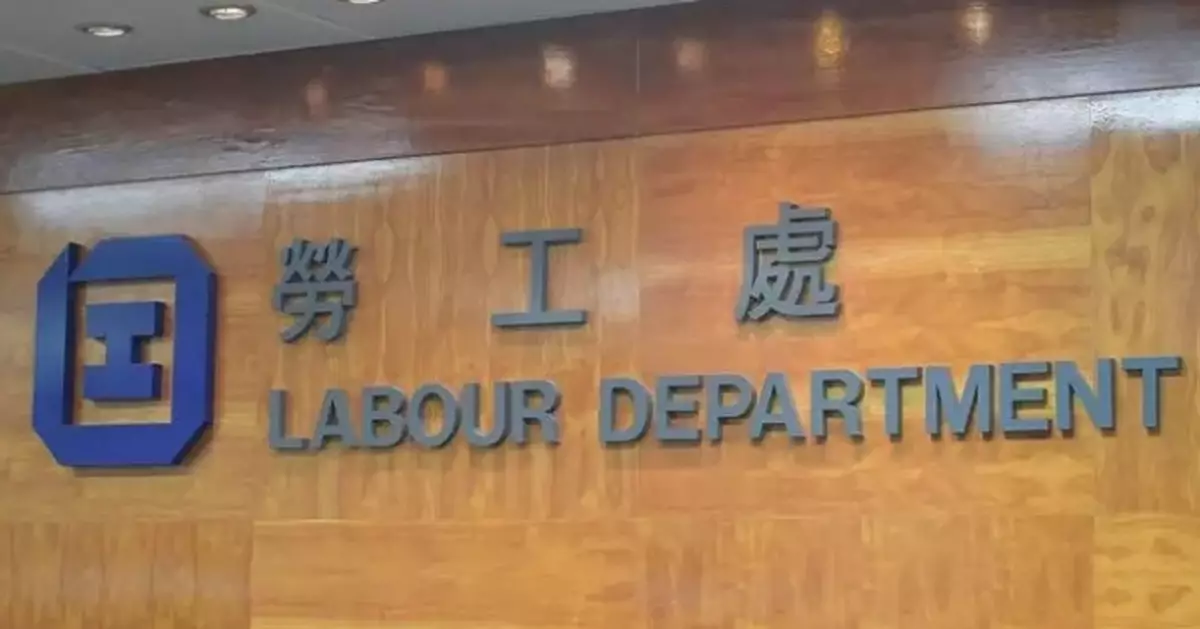
The Labour Department, Photo source: reference image

Government launches industry consultation on proposed legislative amendments to facilitate digitalisation of business-to-business trade documents
The Government published a consultation paper today (December 29) to gather industry opinions on the proposed legislative amendments to facilitate digitalisation of "Business-to-Business" (B2B) trade documents in Hong Kong.
International trade involves presentment or submission of various trade documents, including "Business-to-Government" (B2G) documents (such as import and export declarations, cargo manifests and various licences or permits) and B2B documents (such as bills of lading and bills of exchange). While the trade may already submit most of the B2G trade documents through the Government Electronic Trading Services and the Trade Single Window, transactions involving certain B2B trade documents still rely largely on paper-based means due to legal requirements and industry practice. As technology advances, the digitalisation of these documents has emerged as a new trend.
As announced in the 2025-26 Budget and the 2025 Policy Address, the Government will make reference to the Model Law on Electronic Transferable Records (MLETR) advocated by the United Nations Commission on International Trade Law and consider legislative amendments to facilitate digitalisation of trade documents. Upon careful consideration by relevant authorities, the consultation paper outlines and seeks industry opinions on the proposed framework to amend the Electronic Transactions Ordinance (Cap. 553) (ETO) and relevant legislation for implementing MLETR provisions, covering various key aspects including the scope of application, assessment of reliability and operational requirements.
The legislative amendments will provide the legal basis for the use of electronic transferable records, which are the electronic version of transferable documents or instruments. Suitable MLETR provisions will be codified into the ETO as far as practicable, with a view to aligning with international standards and promote cross-border interoperability.
A spokesman for the Commerce and Economic Development Bureau (CEDB) said, "The Government endeavours to maintain a business-friendly environment to enhance Hong Kong's competitiveness in international trade. Digitalisation of B2B trade documents may reduce processing time and costs, enhance transparency and integrity, and facilitate international trade. We hope that the legislative proposal would empower the industry to develop technical solutions that suit their actual needs, thereby further enhancing Hong Kong's competitiveness as an international financial, maritime and trade centre."
The consultation paper is available on the CEDB website (www.cedb.gov.hk). Stakeholders are welcome to submit their views to the Government through email (MLETR_consultation@cedb.gov.hk), fax (2147 3065) or post (Division 4, Commerce and Economic Development Bureau, 23/F, West Wing, Central Government Offices, 2 Tim Mei Avenue, Tamar, Hong Kong) on or before March 27, 2026.