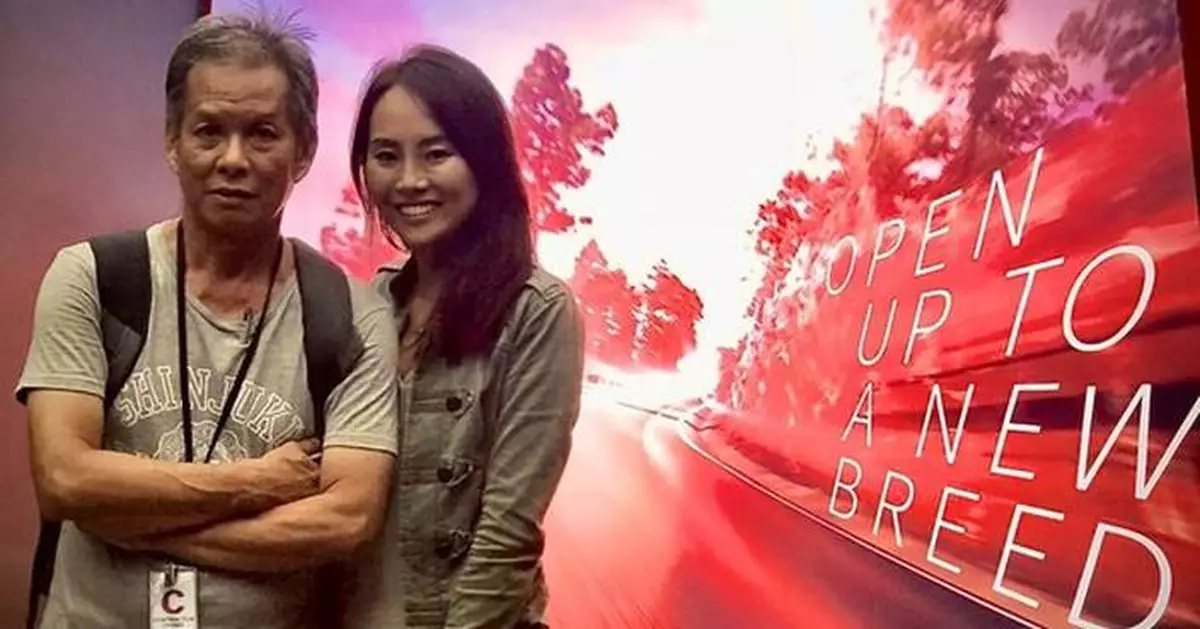
SINGAPORE, Dec. 30, 2025 /PRNewswire/ -- Singapore-based exhibition and event agency Leon Exhibition Pte Ltd has announced a leadership transition, with second-generation leader Shuhui Mai taking the lead.
When Shuhui Mai stepped into her family's exhibition business, it was never part of a long-term succession plan. She had built a promising career far removed from exhibition halls, carpentry workshops, and the intensity of on-site coordination work. But when her father's company faced a defining crisis, the decision to return became personal—and irreversible.
Today, Shuhui represents a new generation of leadership at LeonEx, a Singapore-based exhibition and event agency that has evolved from a local operator into a trusted partner for regional and Asia-Pacific brands. Her journey is not only about growth, but about rebuilding trust, redefining design, and carrying forward a legacy shaped by resilience.
A Business Built on Perseverance
LeonEx was founded in 2009 by Shuhui's father, Xun Yao Mai, with a simple goal: to give his family a better life. Like many first-generation entrepreneurs, his path was neither smooth nor predictable.
"What started as a group idea eventually became a solo responsibility," he recalls. "When difficulties came, others stepped away. I chose to continue."
Operating in the demanding exhibition and events industry—where margins are tight and execution must be precise—LeonEx survived through grit and persistence. But its most difficult challenge did not come from the market. It came from within.
Without delving into specifics, both father and daughter describe a period when the business was left hollowed out, forcing a complete reset. For the founder, it was deeply painful. For his daughter, it became a turning point.
An Unplanned Return
Before joining LeonEx, Shuhui worked as a headhunter, recruiting talent across the public sector as well as banking and finance. For nearly two years, she thrived in a fast-paced environment that sharpened her understanding of people, systems, and organisational structure.
"I never planned to join the family business," she says. "Recruitment allowed me to understand different industries without being inside them."
Her return was driven not by ambition, but conviction.
"My father went through a very difficult period, and I felt he had been wronged," she says. "I initially came in to protect his name and the decades of work he put in. Over time, that responsibility turned into purpose."
What she inherited was not a thriving company, but an empty shell—no factory, no workers, no active clients. What followed was a rebuild from the ground up.
Reimagining LeonEx
Rather than replicate the past, Shuhui redefined what LeonEx could stand for. At the heart of her vision is a belief that exhibition booths should do more than occupy space—they should tell stories.
"Too many booths are square, predictable, and forgettable," she explains. "We wanted to create conversation points that help clients engage meaningfully during the short window of an exhibition."
Design became LeonEx's strongest differentiator. Shuhui works closely with her team to translate client objectives into physical environments that clearly communicate brand identity.
At the same time, LeonEx began balancing traditional building excellence with digital and hybrid experiences. Touchscreen activations and interactive mini-games are being explored and incorporated into booths to increase engagement and dwell time.
"Technology should enhance interaction, not distract from it," Mai says. "If it helps our clients start better conversations, then it adds real value."
Growing with Regional Brands
LeonEx began working with Moomoo Financial in 2019 and grew alongside the brand as it expanded regionally, developing a consistent exhibition identity across markets. The agency has also supported Longbridge and, for the fifth consecutive year, won the tender for Sentosa's pavilion at ITB Asia—one of the leading exhibitions in the global travel and tourism industry.
Another project especially close to Shuhui's heart is the FG2 Pavilion at FHA. Entering its third year in 2026, the pavilion brings together second-generation F&B business owners under one collective platform—brands such as BoBo Fishball, Song Fa Bak Kut Teh, and Defu Garlic.
"The idea is to help second-generation founders bring their businesses to the next level, while retaining the heritage built by the first generation," Shuhui explains. "As a second-gen myself, this feels like second-gen serving second-gens."
Leadership and the Road Ahead
In a male-dominated industry, Shuhui admits she had to work harder early on to be taken seriously. "Consistency and results eventually speak louder than assumptions," she says.
For her father, stepping back was a deliberate decision. "Regional expansion was her vision," he says. "She needed full authority to lead."
Today, LeonEx continues to grow steadily under next-generation leadership. For Shuhui, the journey is no longer about proving a point.
"It started with pressure," she reflects. "Now, it's about building something meaningful—something my father can be proud of, and something that can stand on its own."
In a business shaped by resilience and reinvention, LeonEx's story reflects a broader truth about family enterprises: legacy does not end with inheritance—it evolves with leadership.
** The press release content is from PR Newswire. Bastille Post is not involved in its creation. **
Her Turn to Lead: How a Family Event Business Found New Life--and New Markets