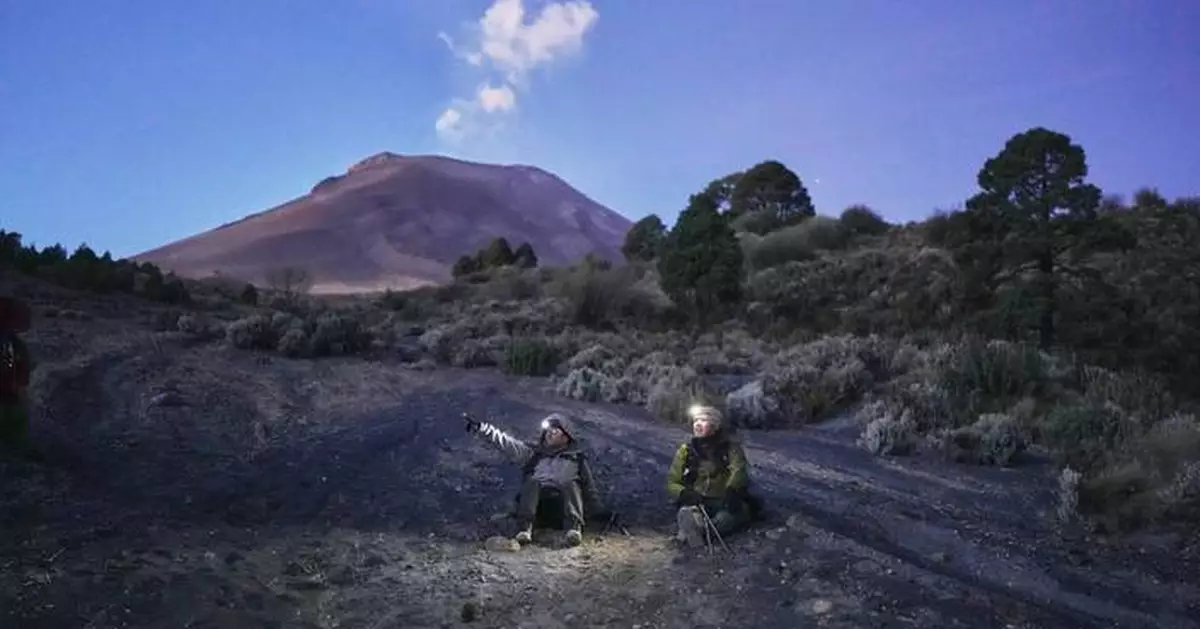
POPOCATÉPETL VOLCANO, Mexico (AP) — In the predawn darkness, a team of scientists climbs the slope of Mexico's Popocatépetl volcano, one of the world’s most active and whose eruption could affect millions of people. Its mission: figure out what is happening under the crater.
For five years, the group from Mexico’s National Autonomous University has climbed the volcano with kilos of equipment, risked data loss due to bad weather or a volcanic explosion and used artificial intelligence to analyze the seismic data. Now, the team has created the first three-dimensional image of the 17,883-foot (5,452-meter) volcano’s interior, which tells them where the magma accumulates and will help them better understand its activity, and, eventually, help authorities better react to eruptions.
Click to Gallery
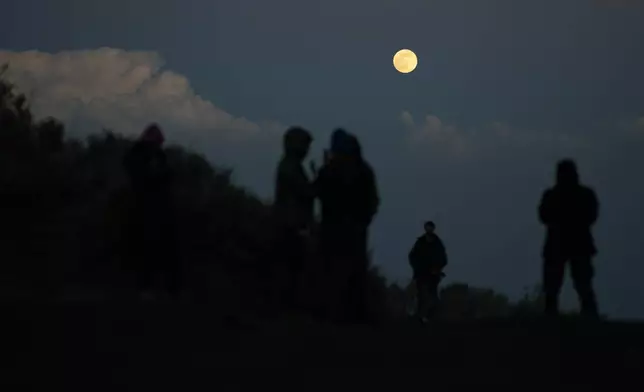
Students observe the moon near the campsite on the slopes of the Popocatepetl volcano, Mexico, Thursday, Dec. 4, 2025. (AP Photo/Eduardo Verdugo)
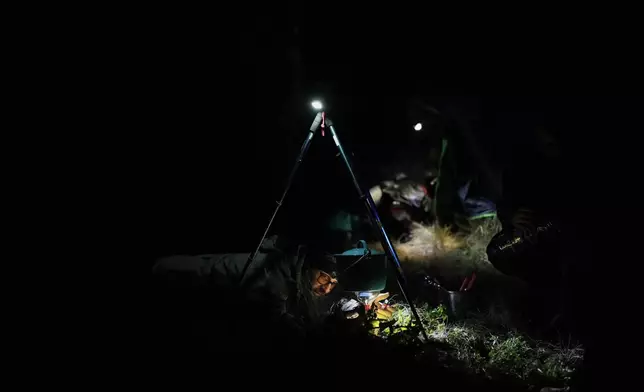
Marco Calo, a geophysicist at the National Autonomous University of Mexico (UNAM), prepares food at the campsite on the slopes of the Popocatepetl volcano, Mexico, Thursday, Dec. 4, 2025. (AP Photo/Eduardo Verdugo)
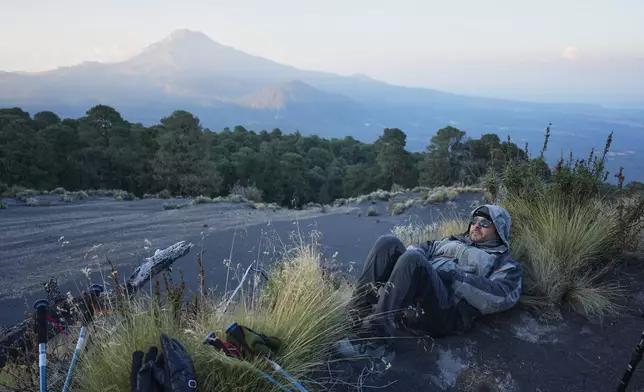
Marco Calo, a geophysicist at the National Autonomous University of Mexico (UNAM), rests near the campsite on the slopes of the Popocatepetl volcano, Mexico, Thursday, Dec. 4, 2025. (AP Photo/Eduardo Verdugo)
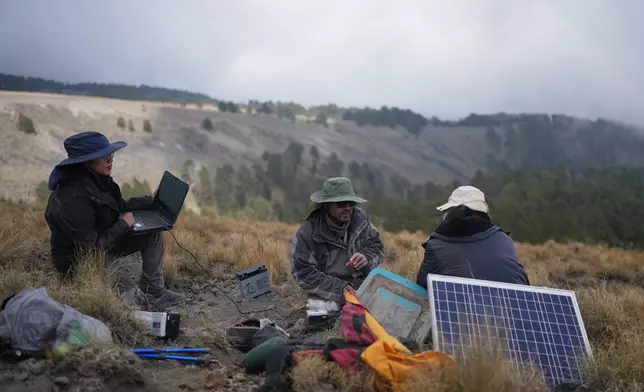
Karina Rodriguez, left, a master's student, and Marco Calo, center, a geophysicist at the National Autonomous University of Mexico (UNAM), collect information from a monitoring station on the slopes of the Popocatepetl volcano in Mexico, Friday, Dec. 5, 2025. (AP Photo/Eduardo Verdugo)
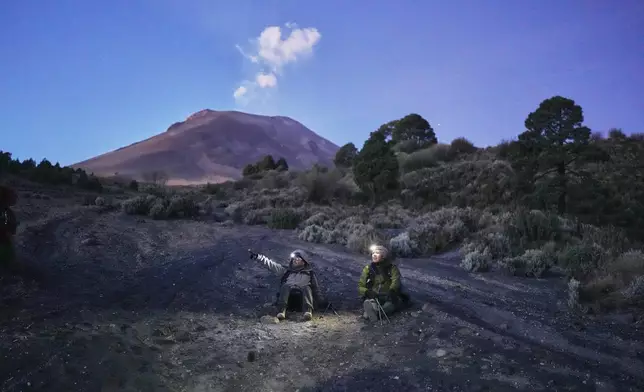
Marco Calo, left, a geophysicist at the National Autonomous University of Mexico (UNAM), take a break on the slopes of the Popocatepetl volcano in Mexico, Friday, Dec. 5, 2025. (AP Photo/Eduardo Verdugo)
Marco Calò, professor in the UNAM's Geophysics Institute’s vulcanology department and the project leader, invited The Associated Press to accompany the team on its most recent expedition, the last before its research on the volcano will be published.
Inside an active volcano, everything is moving: the rocks, magma, gas and aquifers. It all generates seismic signals.
Most of the world’s volcanoes that pose a risk to humans already have detailed maps of their interiors, but not Popocatépetl, despite the fact that some 25 million people live within a 62-mile (100 kilometers) radius and houses, schools, hospitals and five airports could be affected by an eruption.
Other scientists took some early images 15 years ago, but they showed contradictory results and did not have sufficient resolution to see “how the volcanic edifice was being built,” and above all, where the magma gathered, Calò said.
His team increased the number of seismographs from the 12 provided by Mexico’s National Disaster Prevention Center to 22 to cover the entire perimeter of the volcano. Even though just three can alert to an emergency, many more are needed to understand what is behind those emergencies.
The devices measure vibrations in the ground 100 times per second and generate data that Karina Bernal, 33, a doctoral student and researcher on the project, processed by using artificial intelligence to adapt algorithms developed for other volcanoes.
“I taught the machine about the different types of tremors there are in El Popo” and with that they were able to catalog the different kinds of seismic signals, she said.
Little by little the scientists began to infer what kinds of material were where, in what state, at what temperature and at what depth. Later they were able to map it.
The result is far more complex than the drawings of volcanoes most saw in school, with a main vent connecting a chamber of magma with the surface.
This first three-dimensional cross-sectional image goes 11 miles (18 kilometers) below the crater and shows what appear to be various pools of magma at different depths, with rock or other material between them and more numerous toward the southeast of the crater.
Popocatépetl emerged in the crater of other volcanoes in its current form more than 20,000 years ago and has been active since 1994, spewing plumes of smoke, gas and ash more or less daily. The activity periodically forms a dome over the main vent, which eventually collapses, causing an eruption. The last was in 2023.
Calò, a 46-year-old Sicilian, speaks passionately about El Popo, as Mexicans call the volcano, rattling off trivia.
He explains that its height can change because of eruptions and recounts how Popocatépetl, in the first century, had its own “little Pompeii” when a village on its flanks, Tetimpa, was buried in ash. In the early 20th century, it was human actions — using dynamite to extract sulfur from the crater — that provoked an eruption. And even though El Popo emanates more greenhouse gases than almost any other volcano, its emissions are still a small fraction of what humans generate in nearby Mexico City.
For years Calò studied volcanic activity from his computer, but trying to “understand how something works without touching it” spurred a feeling of disappointment, he said.
That changed with Popocatépetl, a volcano he describes as “majestic.”
After hours of walking up the volcano’s flank, Calò’s team sets up camp in a pine grove at about 12,500 feet of elevation, an apparent safe spot from pyroclastic explosions, since the trees have managed to grow to significant height.
A short distance higher on the mountain, the trees and scrub give way to ash and sediment.
They must cross a lahar, a mixture of rock and ash that during the rainy season becomes a dangerous mudflow carrying away everything in its path. Now, the dry clearing provides a spectacular view: to the east the Pico de Orizaba — Mexico’s tallest volcano and mountain — and the inactive volcano La Malinche; to the north, Iztaccíhuatl, a dormant volcanic peak known as “the sleeping woman.”
Popocatépetl’s sounds seem to multiply at night with the echoes. An explosion like a rocket might sound like it’s coming from one direction, but a puff of smoke from the crater belies the real source.
Karina Rodríguez, a 26-year-old master’s student on the team, said you can also hear small tremors in the earth or even ash falling like rain when the volcano is more active. On dark nights, the rim of the crater glows orange.
Having direct knowledge of the volcano provides a much more objective sense of the limits of their analysis, Calò said.
“We have a natural laboratory here,” he said. It’s “very important to be able to understand and give residents detailed, trustworthy information about what is happening inside the volcano.”
At 13,780 feet (4,200 meters), their backpacks full of computers, equipment to analyze gases, batteries and water begin to weigh more and their pace slows.
Ash, dark and warm, dominates the landscape here.
At a seismographic station, the team digs up the equipment and celebrates that it’s still working. They download its data and rebury it.
A “volcanic bomb,” a rock a yard and a half in diameter and weighing tons, marks the way and gives an idea of what the start of an eruption can mean. That is why the top area of the volcano is restricted, though not everyone pays heed. In 2022, a person died after being hit by a rock about 300 yards (meters) from the crater.
A bottle of tequila near a rocky hollow, known as El Popo’s belly button, hints at some of the traditions surrounding the volcano, including an annual pilgrimage to what some consider a point of connection to the underworld.
Digging up one of the last seismic stations, Calò’s face falls. The last registered data are from months earlier. The battery died. Sometimes rats chew the machines’ wires or an explosion causes more serious damage.
The project has yielded some certainties and if repeated will allow the analysis of changes that eventually will help authorities make better decisions when eruptions occur.
But Calò says that, as always happens with science, it has also generated new questions that they will have to try to address, like why the tremors are more frequent on the southeast side — where there is more accumulated magma — and what implications that could have.
This was the last expedition before their years of work to map the volcano’s interior is published. Watching the volcano’s interior move in 3D on a computer screen makes all of the effort worthwhile.
“It’s what drives you to start another project and keep climbing,” Rodríguez, the master's student, said.
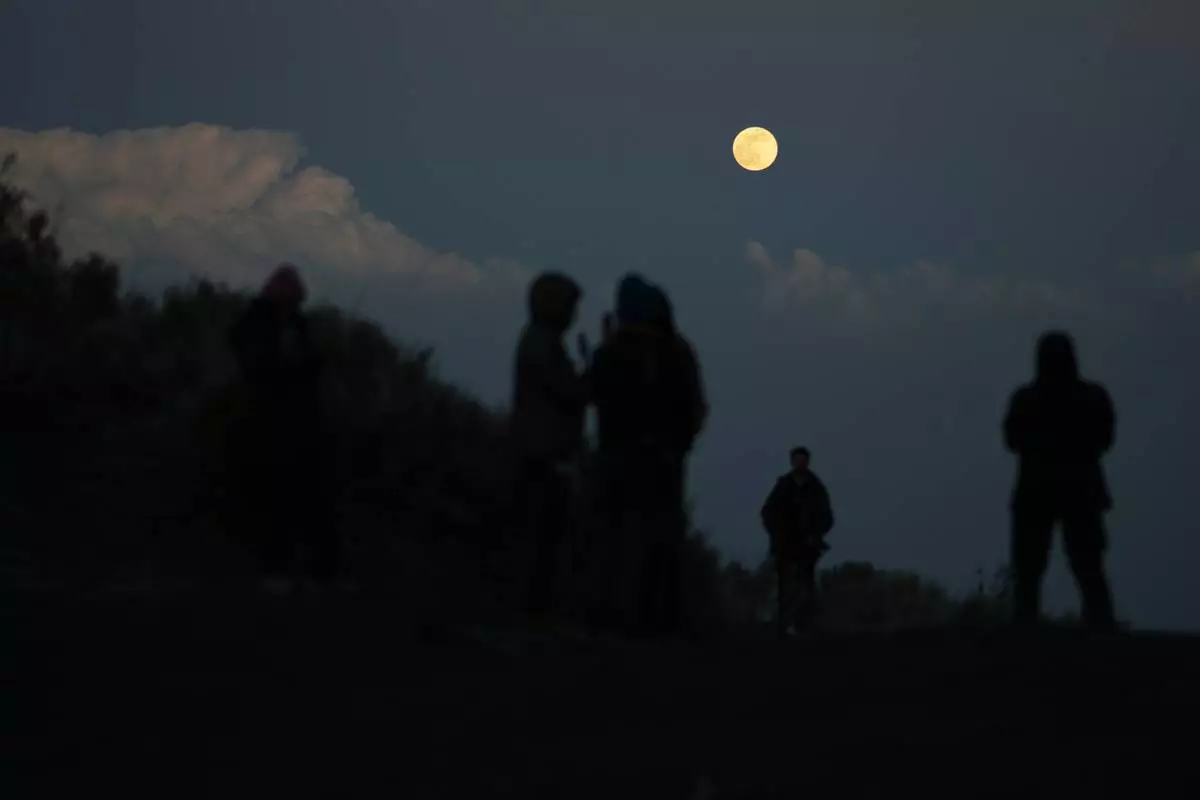
Students observe the moon near the campsite on the slopes of the Popocatepetl volcano, Mexico, Thursday, Dec. 4, 2025. (AP Photo/Eduardo Verdugo)
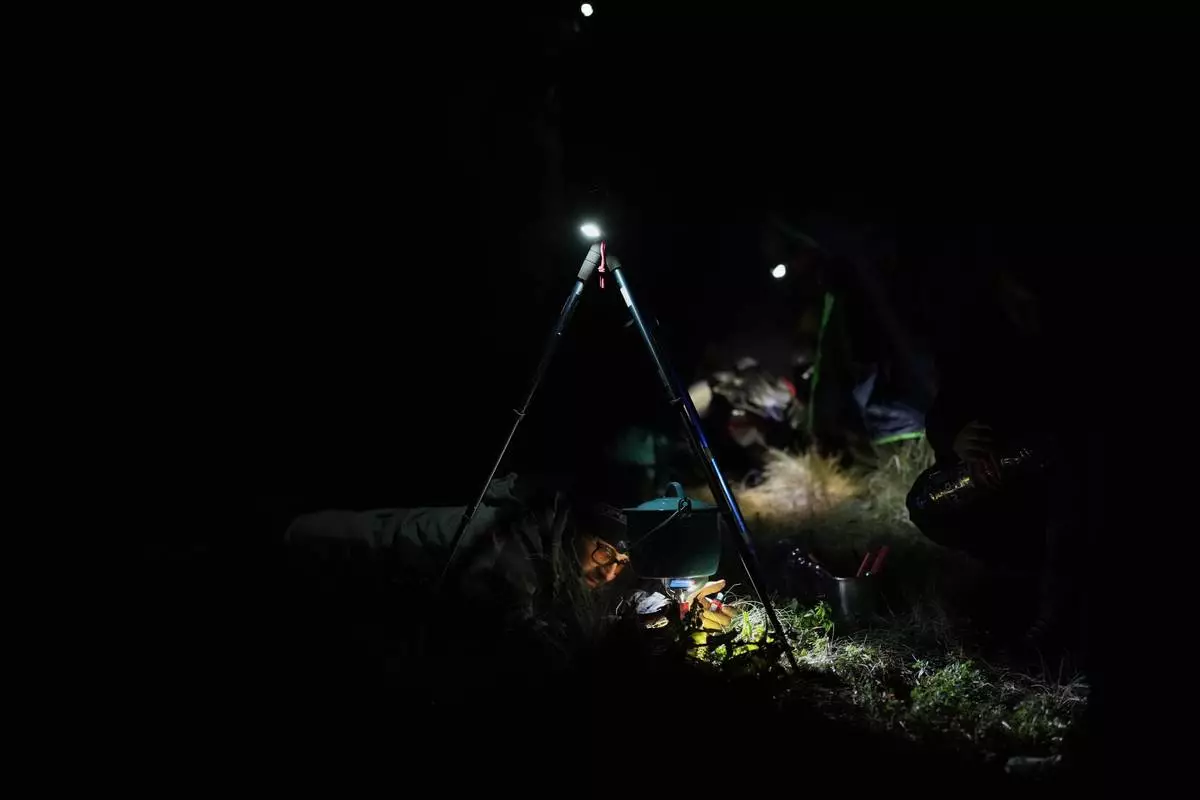
Marco Calo, a geophysicist at the National Autonomous University of Mexico (UNAM), prepares food at the campsite on the slopes of the Popocatepetl volcano, Mexico, Thursday, Dec. 4, 2025. (AP Photo/Eduardo Verdugo)
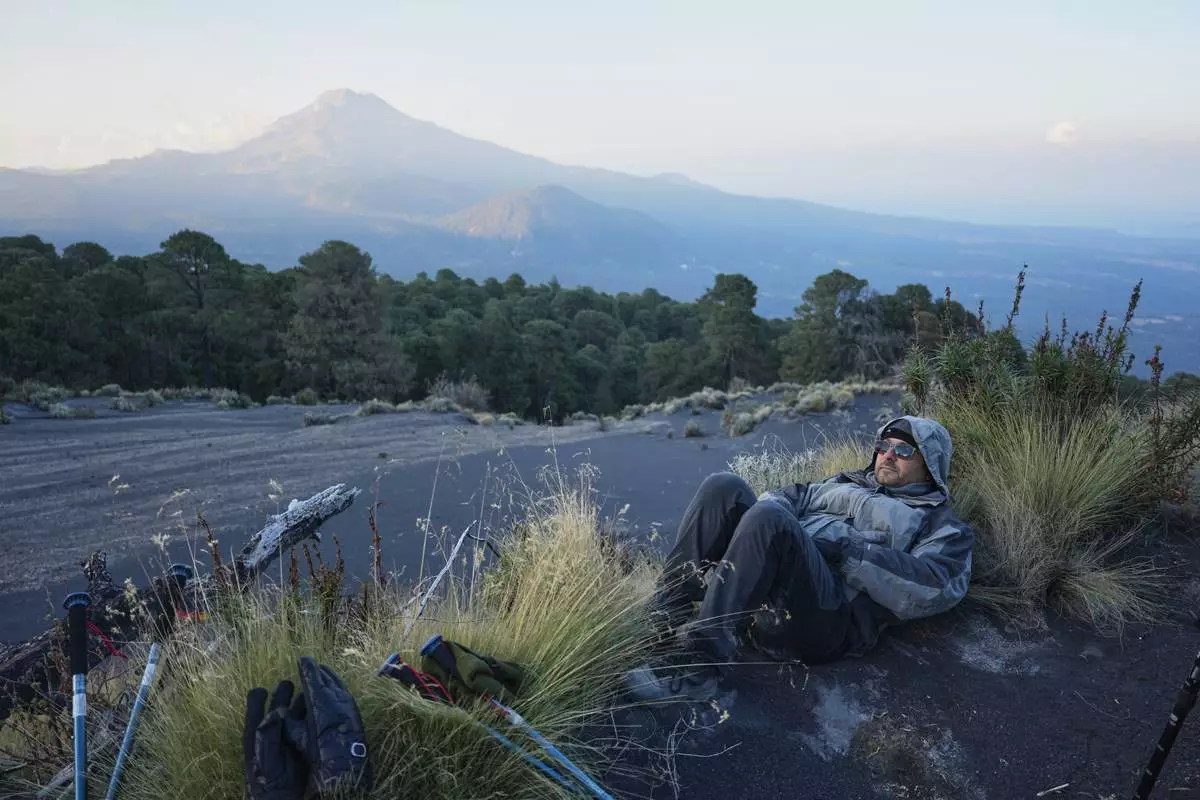
Marco Calo, a geophysicist at the National Autonomous University of Mexico (UNAM), rests near the campsite on the slopes of the Popocatepetl volcano, Mexico, Thursday, Dec. 4, 2025. (AP Photo/Eduardo Verdugo)
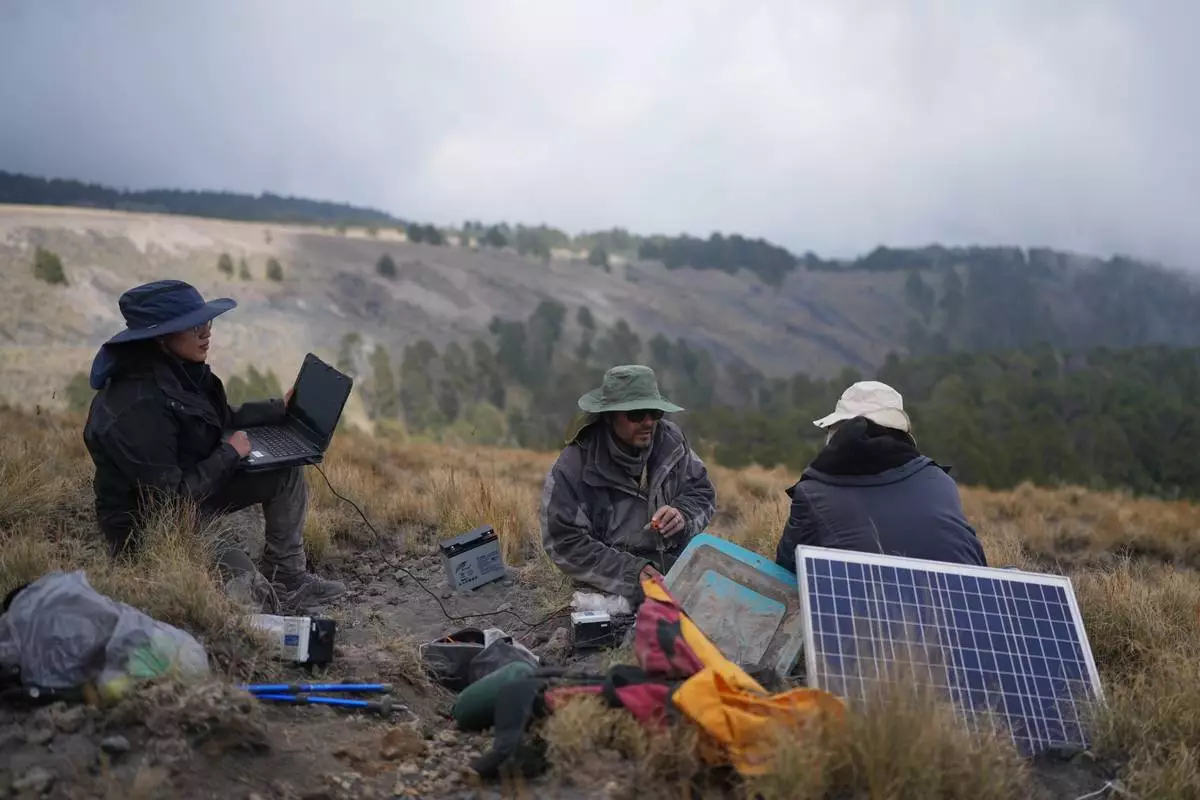
Karina Rodriguez, left, a master's student, and Marco Calo, center, a geophysicist at the National Autonomous University of Mexico (UNAM), collect information from a monitoring station on the slopes of the Popocatepetl volcano in Mexico, Friday, Dec. 5, 2025. (AP Photo/Eduardo Verdugo)
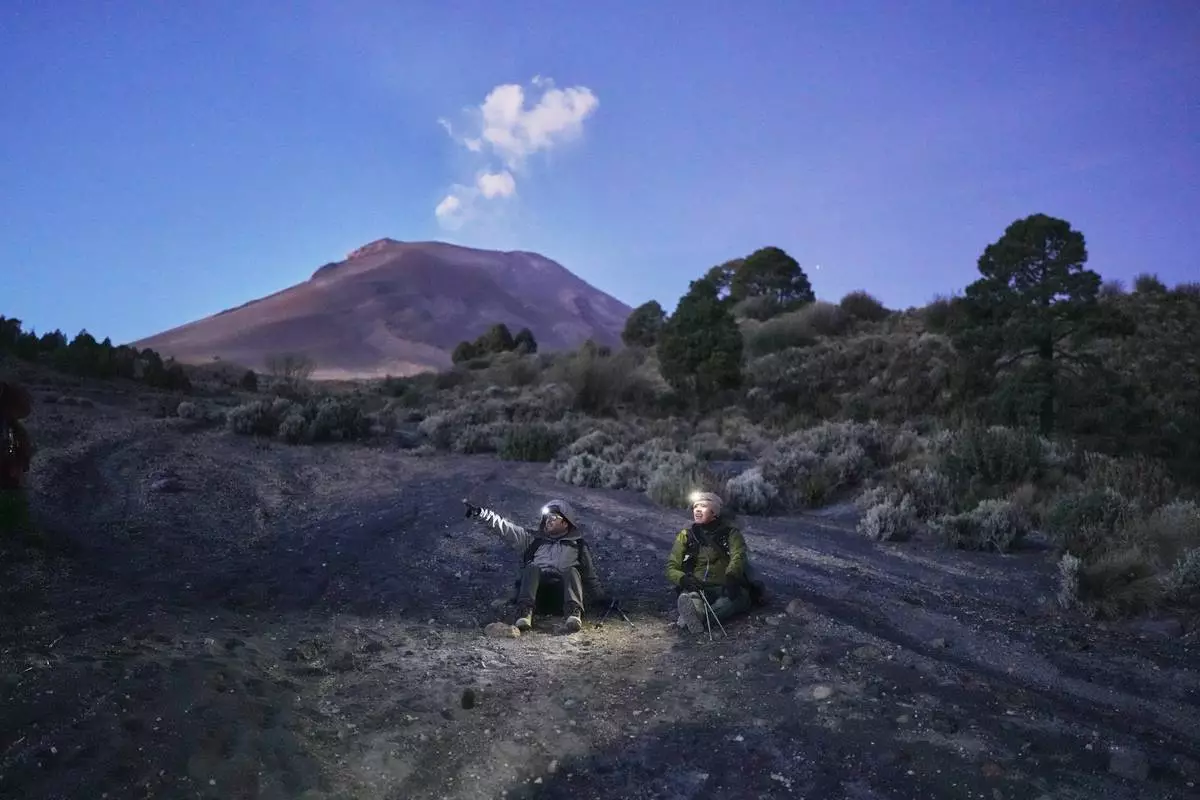
Marco Calo, left, a geophysicist at the National Autonomous University of Mexico (UNAM), take a break on the slopes of the Popocatepetl volcano in Mexico, Friday, Dec. 5, 2025. (AP Photo/Eduardo Verdugo)