Japanese Prime Minister Sanae Takaichi should either retract her recent erroneous remarks on China's Taiwan region, or step down as soon as possible, said a Japanese scholar. In a recent interview with China Media Group (CMG), Masahiko Shimizu, a professor of constitutional law at Nippon Sport Science University, said the Japanese government's position on the Taiwan issue has been clearly stated in documents such as the 1972 Sino-Japanese Joint Statement.
Takaichi's erroneous remarks not only lack validity under both international law and Japanese domestic law, but also seriously deviate from the fundamental stance the Japanese government has long committed to, he added.
"Takaichi's remarks violate both the Legislation for Peace and Security and the UN Charter, thus posing serious issues. She also denied the 1972 Sino-Japanese Joint Statement, disregarded the law, and exposed her own ignorance, making her a destabilizing factor in East Asia. Therefore, her remarks should be retracted. If retraction is impossible, I believe she should step down as soon as possible," said Shimizu.
The scholar warned that the Japanese government is steadily easing existing institutional constraints to pave way for constitutional revision and military normalization, a trend he described as extremely dangerous.
"In the National Diet, opposition parties persistently question the constitutional legitimacy of the Japan Self-Defense Forces (JSDF). The government established a series of restrictions, such as prohibiting overseas deployment of the forces, the exclusively defense-oriented policy, the Three Principles on Arms Exports, the Three Non-Nuclear Principles, prohibiting the exercise of collective self-defense rights, and limiting defense spending to no more than 1 percent of Gross National Product (GNP). Unfortunately, these restrictions have been continuously weakened in recent years," said Shimizu.
He pointed out that the Japanese government's substantial increase in military spending in recent years has significantly squeezed funding for social welfare programs.
"If calculated according to the U.S. demand at 3.5 percent of GDP, defense spending would balloon to approximately 20 trillion yen. If such funds were truly available, they should be invested in education and social welfare," said the professor.
He emphasized that as the only nation in the world to have suffered atomic bombings, Japan ought to maintain the most cautious stance on nuclear issues. Yet the current trend within Japan's political arena to discuss nuclear armament and attempt to undermine the Three Non-Nuclear Principles not only disregards historical lessons but also severely deviates from the long-established anti-nuclear consensus within Japanese society.
"Japan experienced the atomic bombings of Hiroshima and Nagasaki. It was precisely based on the stance that Japan must never possess nuclear weapons that the relevant principles were established. Attempting to alter these principles without any Diet deliberation, completely disregarding the sovereignty of the people and the policies of the Diet elected by the people, is absolutely unacceptable under a constitution that pursues peace," said Shimizu.
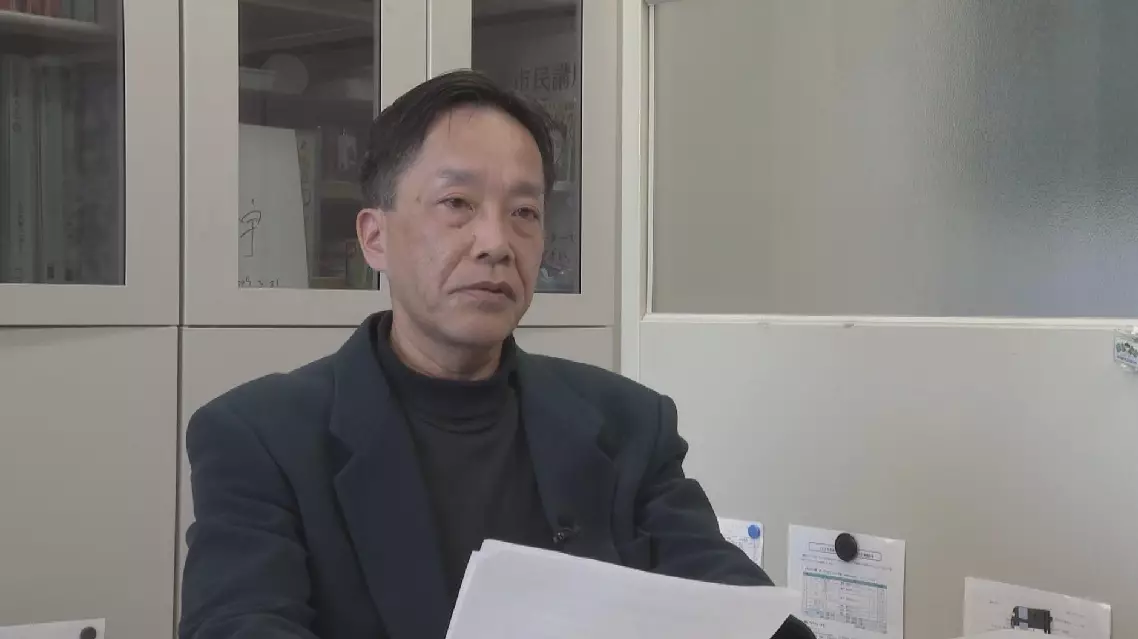
Takaichi should either retract erroneous remarks or resign: Japanese scholar