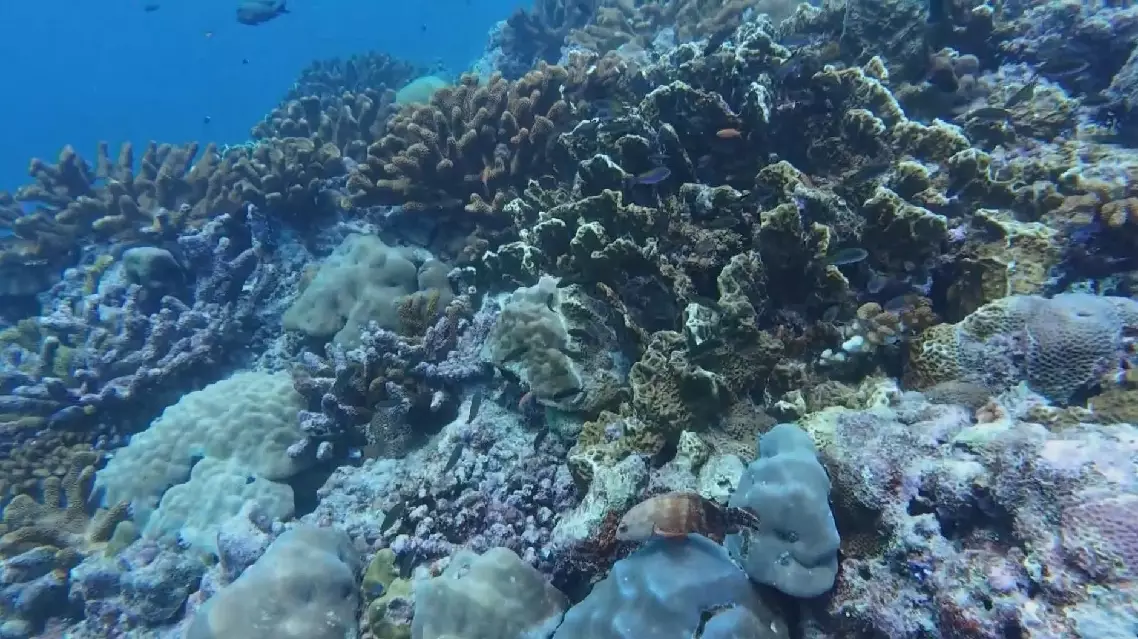
A scientific survey of Huangyan Dao in the South China Sea has revealed a healthy and recovering coral reef ecosystem, with local seagrass beds now covering an average of 19 percent of the area - the highest recorded level.
The findings were detailed in a survey report on the coral reef ecosystem of Huangyan Dao in Sansha City, the southernmost city in Hainan Province.
"Overall, this survey surpasses previous expeditions at China's Huangyan Dao in scale, scope, and methods. It found the coral reef ecosystem to be in good condition, with high-quality habitats and rich biodiversity," said Lyu Yihua, senior engineer of the South China Sea Ecological Center under the Ministry of Natural Resources.
A key indicator of recovery is the expansion of seagrass. Since 2010, coverage in the atoll's northern lagoon has grown steadily from 0.6 square kilometers to 1.8 square kilometers, transforming from scattered patches into a more continuous ecosystem.
Researchers attribute this positive trend to reduced human disturbance.
"This positive transformation is the result of the China Coast Guard's regular law enforcement patrols, effective management measures and reductions in disruptions from vessel traffic and human activities," said Xiong Xiaofei, senior engineer of the South China Sea Ecological Center under the Ministry of Natural Resources.
The report also highlights ongoing environmental pressures, including rising sea temperatures from climate change, tropical cyclones, and the risk of Acanthaster solaris outbreaks, all of which threaten reef health.
To strengthen conservation, China established the Huangyan Dao National Nature Reserve in September 2025, focusing on protecting coral reefs and other key marine ecosystems.
"Following the establishment of the Huangyan Dao National Nature Reserve, we will implement more scientific and proactive conservation measures to better maintain and enhance the diversity, stability, and sustainability of the coral reef ecosystem in this area," said Huang Huamei, senior engineer of the South China Sea Ecological Center under the Ministry of Natural Resources.
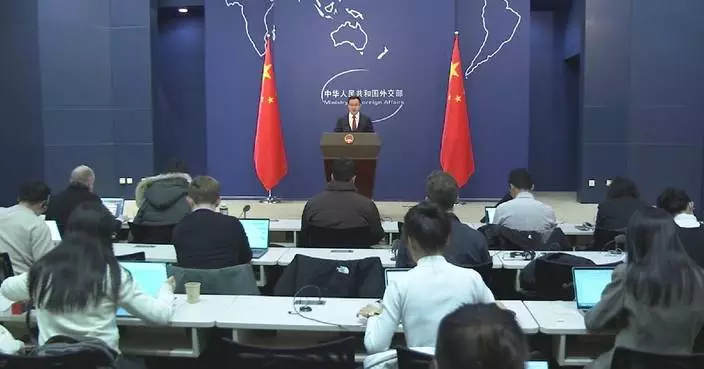
The report was released Monday by the South China Sea Ecological Center of the Ministry of Natural Resources, together with other relevant units and scientific innovation platforms.
Huangyan Dao survey shows resilient ecosystems despite human, climate pressures