China's 42nd Antarctic expedition hit a new milestone as the Xuelong icebreaker successfully arrived at the country's Qinling Station on Sunday evening after a challenging two-week voyage through treacherous sea ice.
Xuelong is currently conducting the unloading of about 1,400 tons of vital supplies, including logistical support, engineering materials, scientific equipment, and fuel for the Qinling Station.
The vessel departed two weeks ago from an unloading site in the waters near Zhongshan Station. En route, it braved a range of extreme polar conditions, including dense floating ice, and multiple cyclones.
Traveling with its sister ship, Xuelong 2, the pair first navigated the solid ice region of Prydz Bay and then the chaotic outer ice zone. However, worsening weather and increasingly dense ice made forward progress difficult.
"The ice ahead was too dense to pass through, and we ended up getting stranded for seven or eight hours. We reassessed the ice maps and found a new route out," said Wu Jicai, second officer aboard Xuelong.
As time passed and the pack ice began to shift, Xuelong managed to break free, entering navigable waters after repeated forward pushes. A day later, Xuelong 2 also found a new ice channel and exited the hazardous zone. The two ships then split, Xuelong heading east toward Qinling Station and Xuelong 2 heading west on separate research missions.
China's 42nd Antarctic expedition team set sail from Shanghai on November 1 for a 19-month scientific campaign, which is scheduled to conclude in May 2026 with both vessels expected to return to China.
After the arrival, the real work has begun for the 38-member Qinling Station team, who had been aboard the vessel since departure.
"After two months of drifting at sea, it's been a long time coming. Our team has been waiting for this moment. We are eager to begin our work immediately and make all our missions this year for the construction, research, and logistical support at Qinling Station a success, " said Wang Tao, director of Qinling Station.
Qinling Station, China's fifth Antarctic research station, began operation on Feb 7, 2024. Built in 1989, Zhongshan Station is China's second permanent research property in Antarctica.

China's polar research icebreaker Xuelong reaches Qinling Station
Mounting inflation and household strain are amplifying calls across the United States to end the war with Iran, with residents urging the government to shift focus to restoring economic stability at home.
The war, which U.S. President Donald Trump claimed "could be ended in four days," has now dragged on for more than 100, fueling domestic inflation and public frustration.
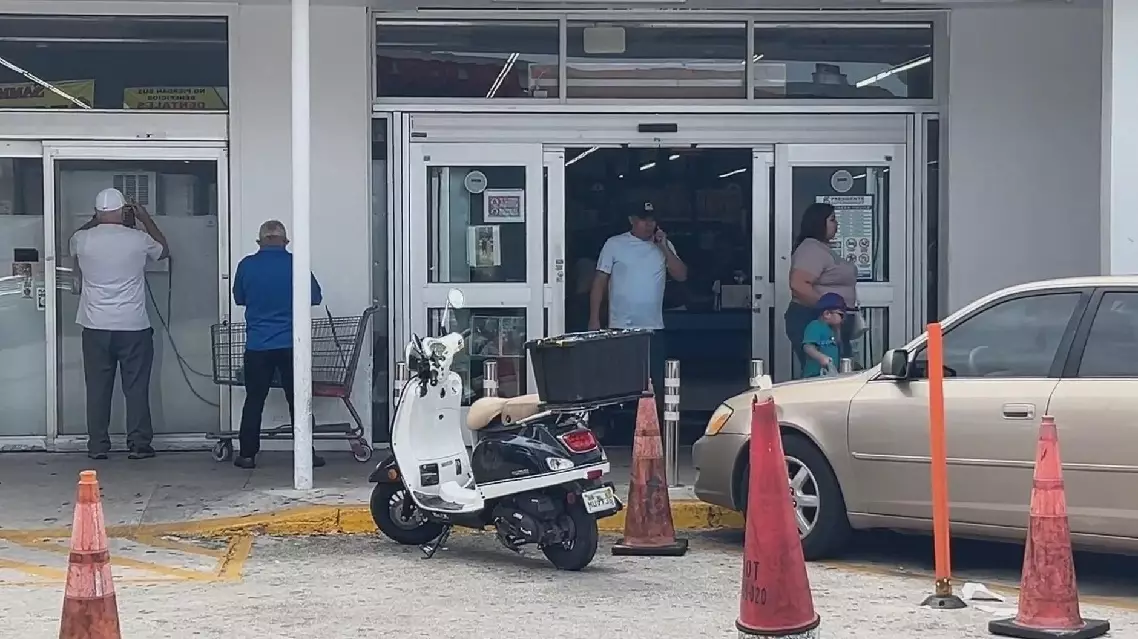
Across Massachusetts, residents described how rising costs for fuel, food and utilities are straining household budgets and sharpening frustration with the conflict.
"I commute about 20 miles to work every day, luckily I do have a Prius, but the prices have gone up significantly. And for hardworking Americans like me and a lot of people out there, the prices can hurt the bank account," said one resident.
Beyond gasoline, consumers are reporting sharp increases in grocery bills and utility costs.
"Most especially, energy prices, natural gas that we use to heat the house," another local resident in Massachusetts said.
"Absolutely. I have noticed so many increases in like gas prices. You go over to the gas (station), it's like 4 U.S. dollars or 5 U.S. dollars (per gallon). You know what I mean? How are you supposed to live on this? It's insane. Food. You know (compared to) just a couple of months ago, you go to a grocery store and food is just so much more expensive. It's just the price of taxes going up," said a third.
While Trump defended the strikes on Iran as a necessary measure to defend the American people by eliminating imminent threats, residents said that the government's top priority should be restoring economic stability for the sake of people's livelihoods.
"I mean I understand where Trump is coming from, trying to blot out, as you would say, Iran's capabilities of having nuclear possibilities. However, at the same time, we're suffering in the wake of everything that he has done thus far. So economically, energy, all those things are making the American people upset and unhappy. So he should concentrate on dealing with America first," said a resident.
"I also think that the priority should always be the American people. And I think the American people have already been struggling. And I think it's just the price of living has just gone up. It has become even harder to live and just to make ends meet. So I think the priority first and foremost should always be to helping the American people (to have) a stable economy," another resident said.
On Feb 28, the United States and Israel launched coordinated strikes on Iran, hitting Tehran, Isfahan and Karaj, and killing Supreme Leader Ali Khamenei along with senior officials. Iran's Islamic Revolution Guard Corps retaliated the same day with missile and drone attacks on U.S. bases in the Middle East and Israeli targets.
After more than a month of fighting, a temporary ceasefire was announced on April 8, followed by talks in Pakistan on April 11-12 that produced no breakthrough. Sporadic clashes resumed in May and intensified toward the end of the month. Since May 30, U.S. forces have struck Iranian positions along the Strait of Hormuz, while Iran has repeatedly targeted American bases across the region.
US residents voice frustration as costs climb amid Iran war