Skip to Content Facebook Feature Image

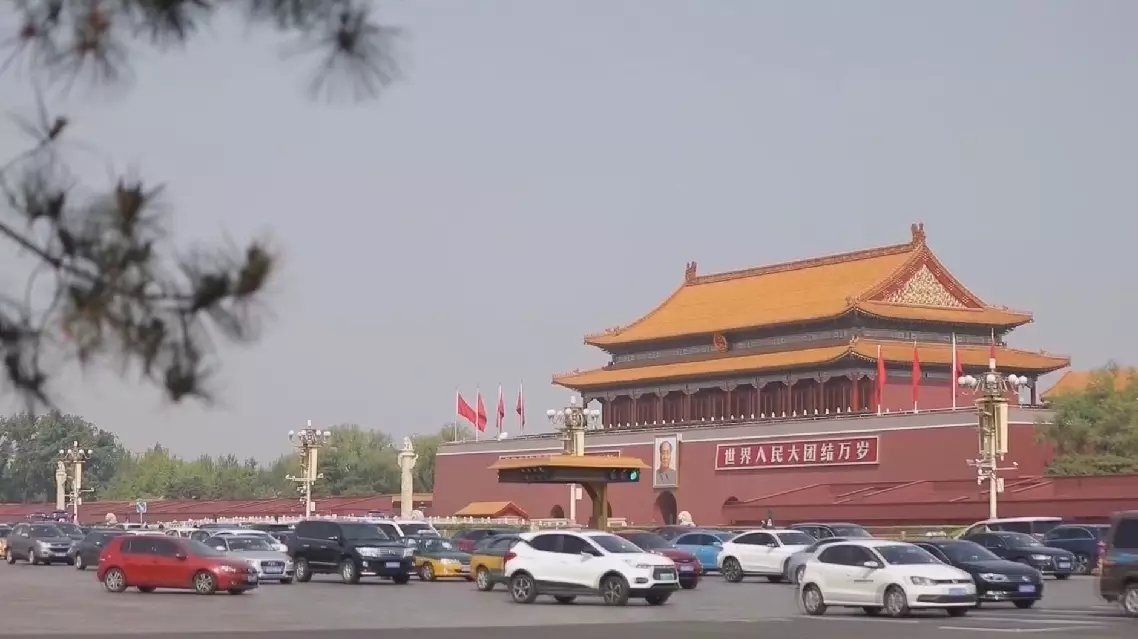
Multiple countries reiterate firm adherence to one-China principle

China

China

China

Multiple countries reiterate firm adherence to one-China principle

2026-01-02 16:52 Last Updated At:20:07

Multiple countries have reiterated their firm adherence to the one-China principle and expressed opposition to any separatist attempt and external interference in China's internal affairs.

Palestine reiterated its full adherence to the one-China principle, support for China in safeguarding its territorial integrity, and opposition to interference in China's internal affairs. It emphasized that China's reunification and its wise policies at the international level contribute to maintaining regional stability and global peace and security.

Zaw Min Tun, leader of the Information Team of Myanmar's National Defense and Security Council, reaffirmed that Myanmar has consistently and firmly adhered to the one-China principle, a stance that remains steadfast.

Taiwan is an inalienable part of China and the Taiwan question is purely part of China's internal affairs, Zaw Min Tun said, adding that Myanmar condemns any interference by external forces.

The Lao Ministry of Foreign Affairs on Wednesday issued a statement to reaffirm its firm commitment to the one-China principle and express opposition to any form of separatist attempt or interference in China's internal affairs.

According to the statement, the ministry reiterated its consistent position on the Taiwan question, emphasizing its strong support for United Nations General Assembly Resolution 2758.

The statement also underscored Laos' adherence to the one-China principle, recognizing Taiwan as an inseparable part of China and rejecting all separatist attempt and external interference in China's internal affairs.

The Ministry of Foreign Affairs of the Interim Government of Bangladesh said that Bangladesh firmly adheres to the one-China principle, cherishes and highly values ​​the long-standing friendly and cooperative relations with China, adding that bilateral relations have maintained a good momentum of development, with mutual trust and cooperation continuously deepening.

Kazakhstan's Minister of Foreign Affairs Yermek Kosherbayev on Tuesday also reiterated his country's firm support for the one-China principle, noting that Taiwan is an inalienable part of China's territory.

Kosherbayev said the government of the People's Republic of China is the sole legitimate government representing the whole of China, voicing Kazakhstan's firm support for the Chinese government's efforts to safeguard national sovereignty and territorial integrity.
Multiple countries reiterate firm adherence to one-China principle
Multiple countries reiterate firm adherence to one-China principle

Multiple countries reiterate firm adherence to one-China principle

Multiple countries reiterate firm adherence to one-China principle
Yemen's transport ministry on Thursday rejected new Saudi-imposed flight restrictions, calling a requirement for planes to stop in Saudi Arabia for security inspections an "air blockade" that undermines national sovereignty.

Officials loyal to the secessionist Southern Transitional Council (STC) have refused to comply with the new protocols ordered by Yemen's Saudi-backed central government, and have partially halted operations in Aden International Airport, the country's primary gateway, a source within the Yemeni government told China's Xinhua News Agency.

The standoff is the latest sign of a deepening fracture within the coalition fighting the Houthi group. While the STC is technically part of Yemen's ruling Presidential Leadership Council (PLC), the group seeks independence for southern Yemen and is frequently at odds with the internationally recognized government.

Saudi Arabia recently ordered all international flights departing and entering Yemen to undergo security screenings at Jeddah Airport before continuing to their final destinations. While some of those restrictions were later eased, they remain in place for all flights traveling to and from the United Arab Emirates (UAE), which is allegedly the main backer of STC.

Government officials said the measures are intended to curb the movement of STC leaders between Yemen and the UAE, effectively cutting off external support for the secessionist movement.

Tensions between the factions escalated this week after the STC seized large swathes of the oil-rich Hadramout province and the eastern province of Al-Mahrah. Riyadh considers these areas a "red line" due to their proximity to the Saudi border and their concentration of Yemen's remaining energy reserves.

On Tuesday, a Saudi-led coalition airstrike targeted vehicles at the port of Mukalla in Hadramout. Saudi officials said the vehicles were intended for STC forces. Following the strike, PLC Chairman Rashad al-Alimi canceled a joint defense agreement with the UAE and ordered all Emirati forces to leave the country within 24 hours. The UAE confirmed Thursday it has begun withdrawing its remaining troops from Hadramout, citing safety concerns.

The STC commands significant control over Aden and other southern cities. Several cabinet members, including Transport Minister Abdulsalam Saleh Humaid, are loyal to the STC rather than the central leadership.

Aden's pro-separatist officials reject Saudi flight restrictions, partially halt airport operations

Aden's pro-separatist officials reject Saudi flight restrictions, partially halt airport operations

Aden's pro-separatist officials reject Saudi flight restrictions, partially halt airport operations

Aden's pro-separatist officials reject Saudi flight restrictions, partially halt airport operations

Recommended Articles