Skip to Content Facebook Feature Image

Arab, Islamic countries voice concern over worsening humanitarian crisis in Gaza

HotTV

HotTV

HotTV

Arab, Islamic countries voice concern over worsening humanitarian crisis in Gaza

2026-01-03 17:15 Last Updated At:01-04 13:58

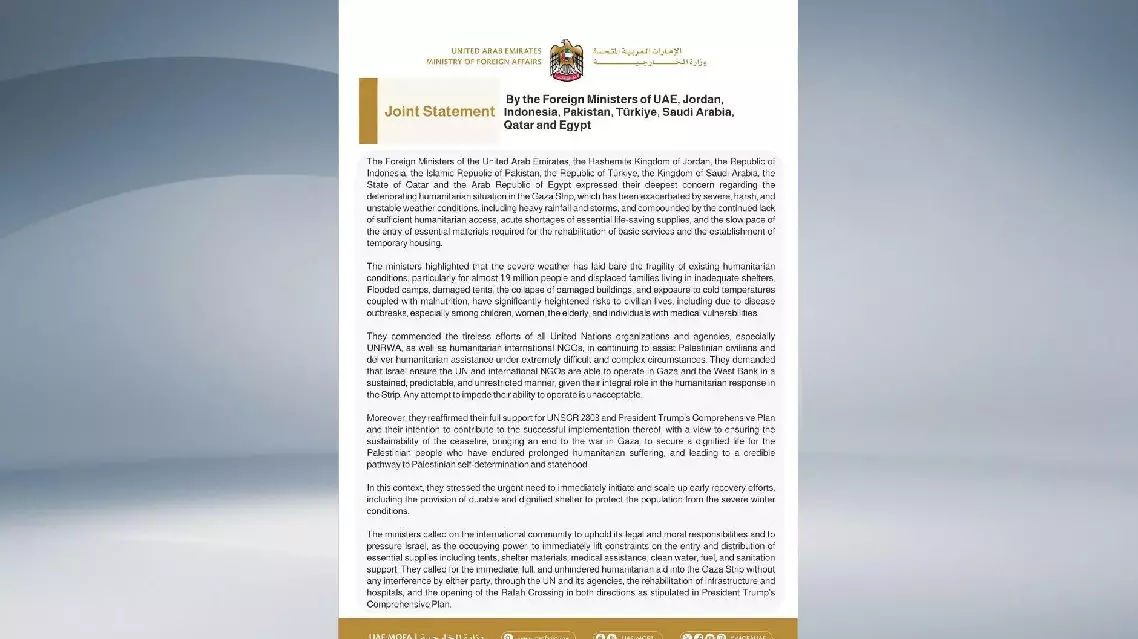
The foreign ministers of eight Arab and Islamic countries expressed concern on Friday over the deteriorating humanitarian situation in the Gaza Strip, calling on Israel to ensure the sustained operation of the United Nations (UN) and non-governmental organizations (NGOs) in Gaza and the West Bank.

In a joint statement, the foreign ministers of Egypt, Jordan, the United Arab Emirates, Indonesia, Pakistan, Türkiye, Saudi Arabia, and Qatar stressed that any attempt to impede the operation of these organizations is unacceptable.

They said insufficient humanitarian access, acute shortages of life-saving supplies and delays in the entry of materials needed for basic services and shelters have further aggravated the humanitarian crisis in Gaza, particularly for nearly 1.9 million displaced people living in inadequate conditions.

Flooded camps, damaged tents, the collapse of damaged buildings, and exposure to the cold, coupled with malnutrition, have significantly heightened risks to civilian lives, including the threat of disease outbreaks, especially among children, women, the elderly, and individuals with medical vulnerabilities, according to the statement.

The ministers commended the efforts of UN organizations and agencies, especially the United Nations Relief and Works Agency for Palestine Refugees, as well as humanitarian NGOs, in continuing to assist Palestinian civilians and deliver humanitarian assistance under extremely difficult and complex circumstances.

They reaffirmed support for UN Security Council Resolution 2803 and a U.S. peace plan on Gaza, stressing the need to ensure a lasting ceasefire, end the war and advance a credible path toward Palestinian self-determination.

The statement also urged the international community to press for the immediate, full and unhindered delivery of humanitarian aid, the rehabilitation of infrastructure and hospitals, and the opening of the Rafah crossing in both directions.

The joint statement follows Israel's announcement on Thursday that new regulations banning access to Gaza and the West Bank for dozens of aid organizations had come into effect, despite calls from UN agencies and international humanitarian groups to halt the move.
Arab, Islamic countries voice concern over worsening humanitarian crisis in Gaza
Arab, Islamic countries voice concern over worsening humanitarian crisis in Gaza

Arab, Islamic countries voice concern over worsening humanitarian crisis in Gaza
Arab, Islamic countries voice concern over worsening humanitarian crisis in Gaza
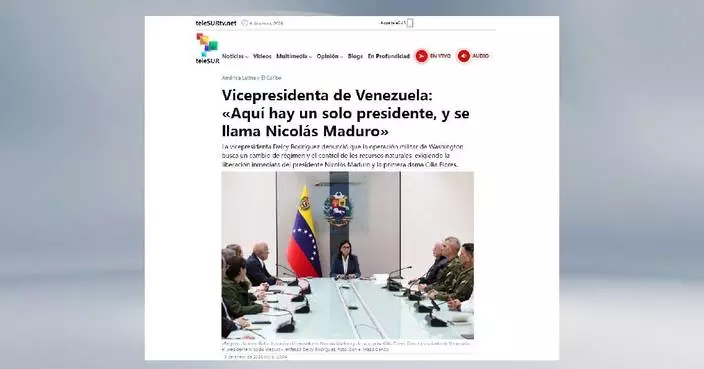
The United States cannot legitimize an operation that attacked Venezuela and captured its president, a Chinese scholar said Sunday.

On Saturday, the United States launched a large-scale strike on Venezuela, during which Venezuelan President Nicolas Maduro and his wife were 'captured and flown out of Venezuela' according to a post by U.S. President Donald Trump on his Truth Social account.

Teng Jianqun, director of the Center for Diplomatic Studies at Hunan Normal University, said in an interview with China Global Television Network (CGTN) that the aim of this operation is to take full control of Venezuela’s natural resources.

"I don't think the United States can legitimize this operation to take custody of the president of Venezuela. And also I don't think the United States can legitimize its any action in taking the oil reserves of that country. This is actually a very dangerous game played by the Trump administration. And of course, the United States would like to take full control of that country and to take full control of the natural resources, especially the large reserve of oil in Venezuela," said Teng.

Teng said Venezuela is not an isolated case but a common practice by the United States. The United States launched an invasion of Panama on Dec. 20, 1989, which continued until January 1990, with the stated objective of capturing Panamanian strongman Manuel Noriega on charges of drug trafficking and organized crime.

"We still remember the so-called sentence of the former president of Panama in the late 1980s. And this time, the president of Venezuela will be under some judicial condition (judicial proceedings) for the so-called drug trafficking and some other crimes. So I think this is not a single case for the Venezuela country, but also this is actually a practice by the United States -- to use force, to use so-called justice under law against any leaders in Latin America and the Caribbean waters," he said.

US cannot legitimize operation against Venezuela: Chinese scholar

US cannot legitimize operation against Venezuela: Chinese scholar

Recommended Articles