Throughout 2025, Palestinians in Gaza shifted between fleeting moments of hope and repeated humanitarian collapses, as international efforts continued for a path to lasting peace.
Gaza saw a short breath of calm at the start of the year as the January 19 ceasefire between Hamas and Israel took effect. The agreement included a prisoner exchange and a temporary halt to hostilities.
A week later, on January 26, a historic moment unfolded. After 471 days of war, more than one million displaced Palestinians walked back from the southern parts of Gaza toward the north, returning on foot to their homes and neighborhoods for the first time after they were forcibly displaced.
But that fragile calm was short-lived. On March 18, the ceasefire collapsed as Israel launched a new wave of intense airstrikes, sending Gaza back into a months-long cycle of fear, displacement, destruction and death.
By October 2025, the war had lasted two years. Palestinian deaths exceeded 70,000, more than 20,000 of them children.
Hospitals across Gaza were struggling, having to treat mass casualties in the face of critical medicine shortages and failing equipment.
Every single one of Gaza's 2.3 million residents has been displaced at least once. Ninety percent of water and sanitation systems have collapsed. Eighty percent of buildings were destroyed or badly damaged.
Israel's closures of Gaza's crossings have blocked aid, fueling widespread famine across the Strip.
Hunger has claimed 361 lives, 130 of them children. Chaos at aid trucks and distribution points, including shootings at U.S.-run sites, have killed another 410 people.
Once-bustling markets have fallen silent as food supplies vanished. Desperate families now roam on foot each day, searching for food, water, anything to survive another day.
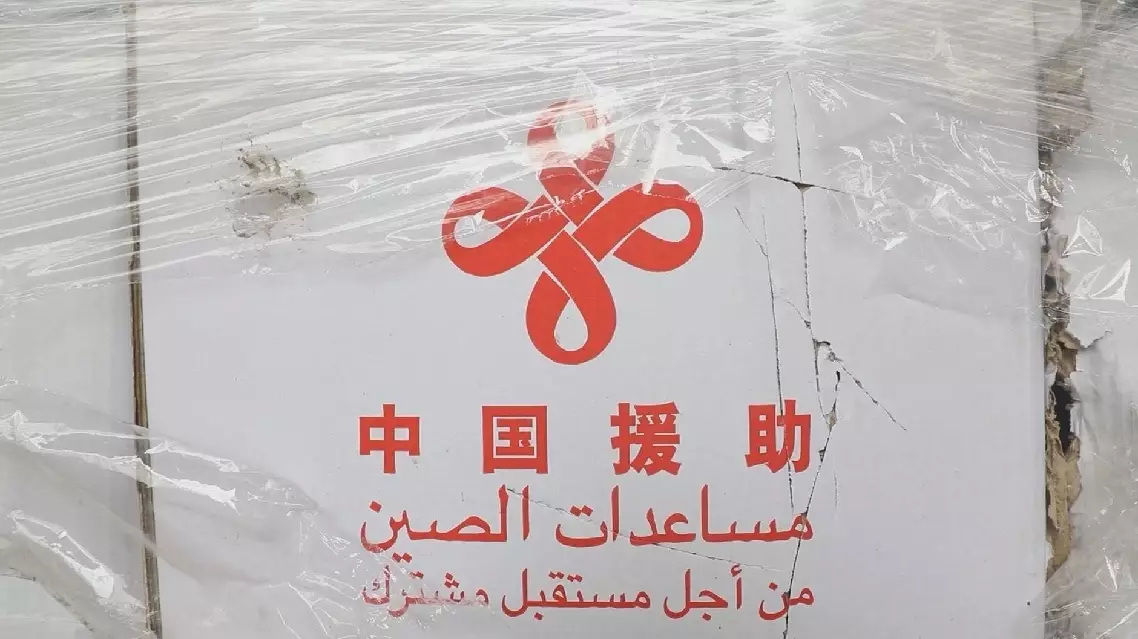
As hunger took hold, China was among the first countries to send food convoys, medicine, tents and emergency supplies to thousands of displaced families. For many, this aid became a lifeline amid months of severe shortages.
On the political front, China has maintained a firm stance: supporting a two-state solution and the Palestinian right to self-determination.
"China has long been a true supporter of the Palestinian people, politically, diplomatically, and economically. It has consistently upheld the Palestinian right to self-determination and the establishment of a state on the 1967 borders. Since the early days of the Palestinian tragedy, China has been, and remains, one of the steadfast allies of our cause," said Mustafa Ibrahim, a Palestinian writer and political analyst.
Then in October, the announcement of a fresh ceasefire brought new hope. Airstrikes eased, and displaced families cautiously returned to parts of Gaza City left in ruins by earlier bombardments. But as UNICEF warned, the suffering was far from over.
"Living in a ceasefire for many families does not mean living with ease. The suffering continues. As you can see, it's been raining here in Gaza and families in this site I've spoken to have told me horrible stories about the wet rain water washing through their tents, wetting all of their belongings and leaving families exposed to the cold. As UNICEF, we're really concerned about what that means for children, about diseases spreading and really threatening the lives of infants and children with malnutrition," said Tess Ingram, UNICEF spokesperson in Gaza.
By early December, the first phase of the ceasefire was nearing completion, with Hamas handing over Israeli captives and the remains of the deceased, to the International Committee of the Red Cross.
"[We transported] hostages back to the place where they will be taken by the Israeli authorities and on the other side as well, when the Palestinian detainees were brought back to the Gaza Strip, we also transported them to the place where they were then reunited with their families and received by the local authorities," said Sarah Avrillaud, head of Sub-delegation in Gaza at the International Committee of the Red Cross or ICRC.
The United Nations estimates that rebuilding Gaza and the occupied West Bank will take at least 53 billion U.S. dollars over the next 10 years. But with strict Israeli restrictions on construction materials and the collapse of basic infrastructure, much of the Strip remains uninhabitable.
Today, Gaza stands at a crossroads, after two years of brutal war between the ruins of its past and a fragile hope for a future still uncertain. Peace remains fragile, and survival is a daily struggle, yet Palestinians cling to hope, even in the darkest moments.
Palestinians shift between fleeting hopes, repeated humanitarian collapses throughout 2025