Chinese President Xi Jinping has urged areas with large ethnic minority populations to preserve their distinctive culture and pursue high-quality development through the integrated development of culture and tourism.
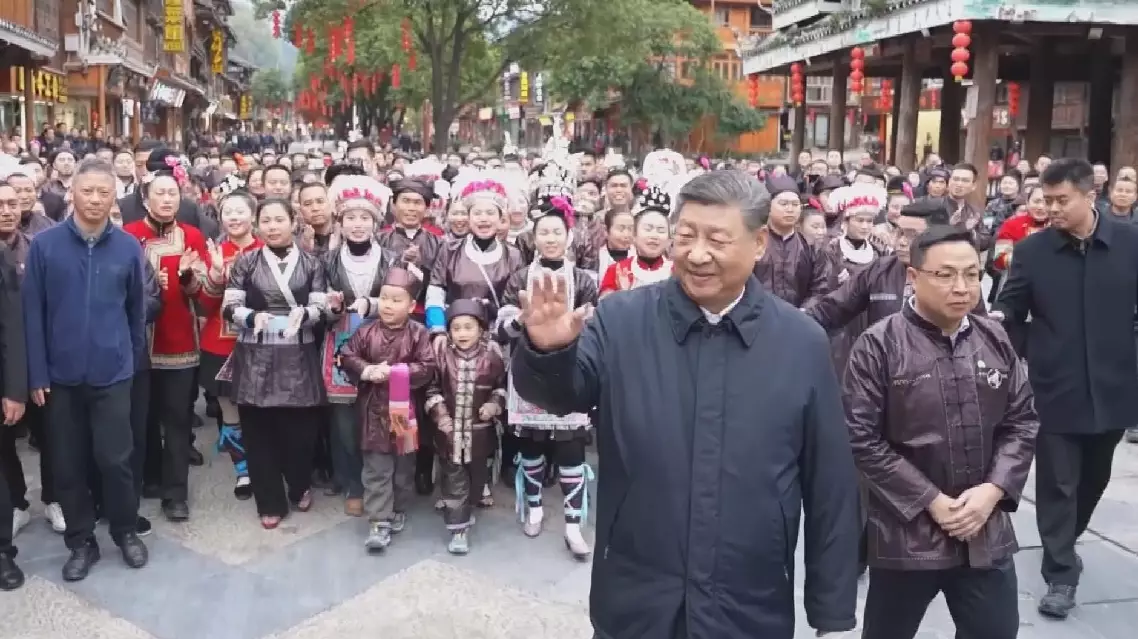
On March 17, 2025, Xi, also general secretary of the Communist Party of China Central Committee and chairman of the Central Military Commission, visited Qiandongnan Miao and Dong Autonomous Prefecture in southwest China's Guizhou Province, a region renowned for its rich ethnic diversity.
In Zhaoxing Dong Village, one of the country's best-preserved Dong ethnic settlements, Xi and villagers sat around a firepit to discuss all-around rural revitalization at a drum tower, a unique architecture for the Dong ethnic group that serves as a communal gathering spot.
"Tourism has become a major industry and rural tourism is thriving. Areas with large ethnic minority populations should preserve their distinctive culture and let it shine through the integrated development of culture and tourism," said Xi.
Two days later, he traveled to the picturesque Lijiang City in southwest China's Yunnan Province.
A gentle spring snowfall had turned the Old Town of Lijiang, a UNESCO World Heritage Site with over 800 years of history, into a living ink-wash painting.
At one point, a local coffee vendor warmly invited Xi to try a cup of Yunnan-grown coffee, to which Xi responded, "Yunnan coffee truly represents China."
Yunnan, known for its ideal high-altitude climate and distinctive farming methods, produces coffee beans prized for their plumpness, rich aroma, and smooth, full-bodied flavor. The province has emerged as a rising star in China's burgeoning domestic coffee industry, increasingly recognized both nationally and internationally.
Xi calls on ethnic regions to preserve unique culture, boost tourism
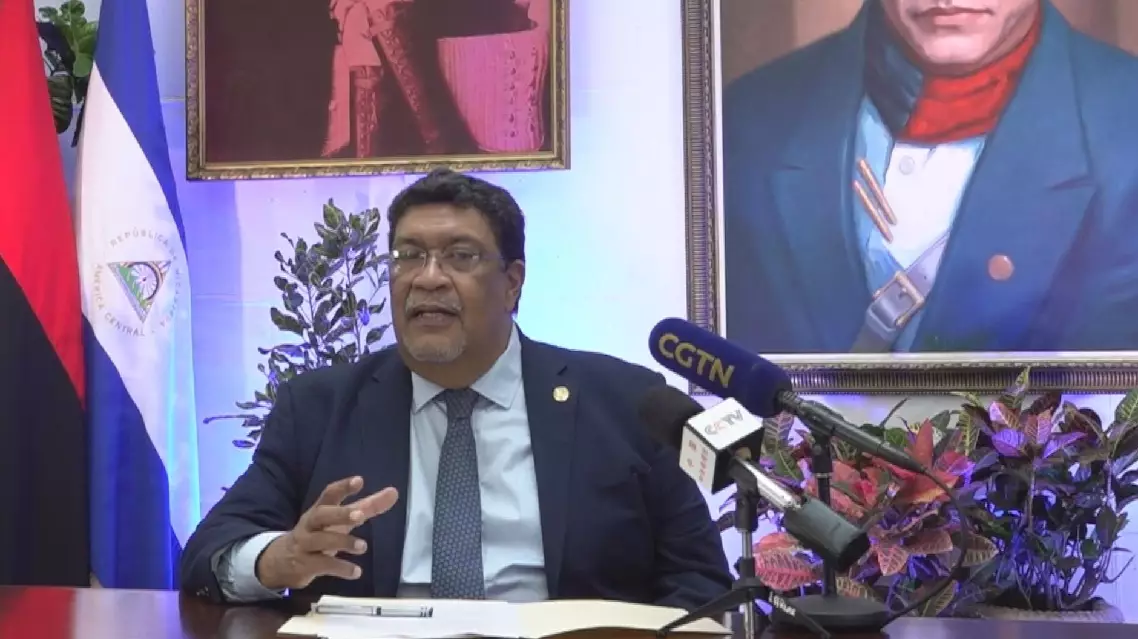
Nicaragua's co-foreign minister Valdrack Jaentschke has warned that militarism must never be allowed to rise again, as Japan's recent moves to lift its arms export ban and revise the pacifist Constitution continue to draw international concern.
This year marks the 80th anniversary of the opening of the Tokyo Trials, where Japan's Class-A war criminals from World War II were brought to justice.
In an interview with China Global Television Network (CGTN), Valdrack Jaentschke voiced his concern that today's world order is being undermined by interventionism and other challenges.
"It is necessary for us to remember that after the end of World War II, countries worked hard to build a new international order based on international law. However, regrettably, more than 80 years later, we are seeing that this once explored and attempted order is being challenged by interventionism, a confrontational mindset, and tendencies like 'might makes right.' These are precisely the conditions that gave rise to fascism and militarism in the past, which ultimately led to the tragedy of World War II," he said.
He said the international community has a responsibility to pursue a new international order -- one fundamentally grounded in peace.
"Looking back at the history more than eight decades ago and comparing it with today's reality, it is our responsibility to recognize that the world should, and must, build a new international order that is more just, fairer, rooted in international law, based on a logic of mutual benefit and shared success, and fundamentally grounded in peace," said the minister.
"Today, as we revisit the Tokyo Trials, it is meant to remind the world that such a tragedy must never be repeated -- and that we must do everything in our power to prevent it from happening again. We must stop that dark world -- born from militarism, interventionism, and fascism -- from ever returning," he said.
Nicaraguan FM warns of militarism revival