Japanese people held a rally in Shibuya, Tokyo, on Saturday to oppose Prime Minister Sanae Takaichi's erroneous remarks about China's Taiwan region and attempts to revive militarism.
At a Diet meeting in early November 2025, Takaichi claimed that the Chinese central authorities' "use of force on Taiwan" could constitute a "survival-threatening situation" for Japan and implied the possibility of armed intervention in the Taiwan Strait, which drew strong criticism worldwide.
At the rally, protesters chanted slogans of "Oppose remarks on advocating 'Taiwan emergency' and "Oppose remarks on possessing nuclear weapons."
"To lead Japan towards nuclear armament, [the Takaichi administration] came up with the so-called rhetoric on 'Taiwan emergency.' It is advancing the war under such context. They aim to move toward war step by step by destroying Japan's Constitution and abolishing the Three Non-Nuclear Principles. Therefore, we must strive to prevent war before it happens," said a protester.
At the year end of 2025, Takaichi approved a record 782 billion U.S. dollars budget for the next fiscal year, including the largest defense budget on record.
Earlier in December 2025, the Japanese parliament passed a 118 billion U.S. dollar supplementary budget to fund a new stimulus package, including over 10 billion U.S. dollars for security and diplomacy.
"I think every Japanese is clearly aware that Takaichi's government is a right-wing regime in nature. The Takaichi administration has walked on the path -- bringing defense-related spending to 2 percent of gross domestic product within fiscal 2025 by a supplementary budget. From the perspective of this thoroughly militarized system and approach, I feel a strong sense of crisis," said another protester.
For decades, Japan capped its annual defense budget at around 1 percent of GDP, roughly 5 trillion yen, reflecting its postwar pacifist stance under the war-renouncing Constitution. Since fiscal 2023, Japan's annual defense budget has successively exceeded 6 trillion yen, 7 trillion yen, 8 trillion yen, and 9 trillion yen.
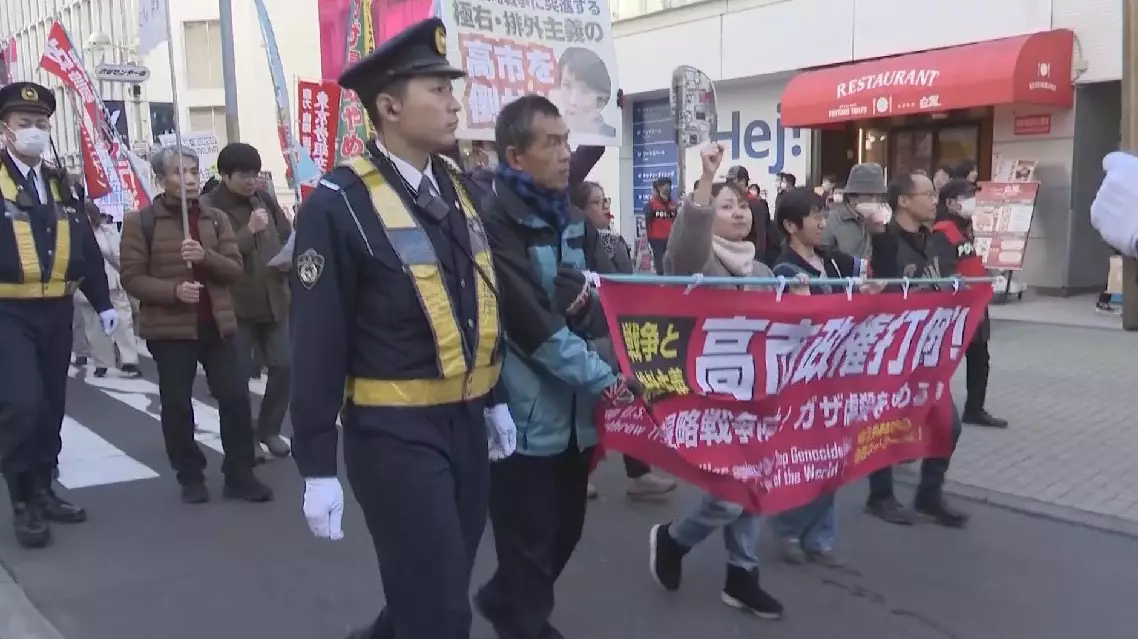
Japanese protest against Takaichi's erroneous remarks on China's Taiwan
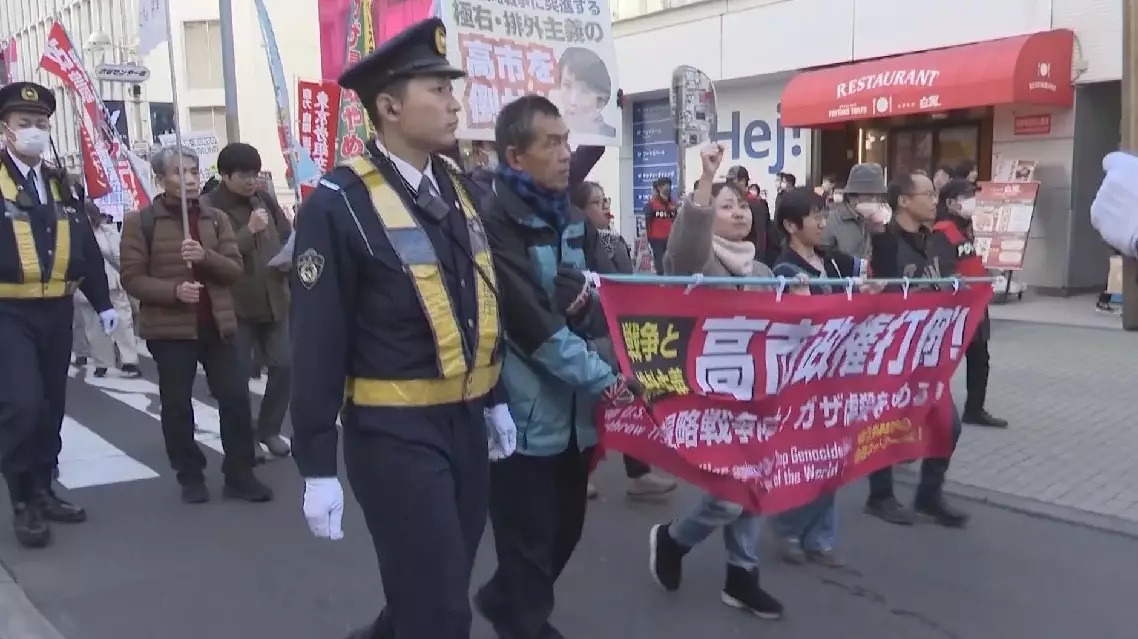
Japanese protest against Takaichi's erroneous remarks on China's Taiwan
Citizens of the Republic of Korea (ROK) have shared their views and expectations for future cooperation with China ahead of President Lee Jae Myung's state visit, which began in Beijing on Sunday.
Lee is making his first visit to China since assuming office in June 2025, with the state visit scheduled to run until Wednesday.
Street food vendor Jang Dong Il said he had high expectations for the visit, hoping it would lead to effective cooperation between the two countries and improvements in the economic environment for mutual benefit.
"More exchanges between the two countries would boost for the two economies. I am full of hope for a strong cooperation between President Lee Jae-myung and President Xi Jinping," he said.
"I have high hopes for this meeting between our countries' leaders. President Lee Jae Myung is visiting China between January 4 and January 7, to discuss economic, cultural and tourism exchanges.I understand about 200 to 300 South Korean corporate executives have traveled with him. I have high hopes for this. If this visit helps strengthen relations between two leaders,I believe it could lead to a win-win outcome and bring ROK and China closer together," Yang said.
"The leaders' meeting can spark dynamic exchanges in economy and culture. More exchanges between the two countries would boost the two economies. I am full of hope for a strong cooperation between President Lee Jae-myung and President Xi Jinping," said Noh Yun Ji, a teacher.
"The two can complement each other economically and continue to develop," said Kim Yoon Jung, a Seoul resident.
Dancer Yoon Ji Eun shared her experience of visiting Shanghai, saying that the delicious food suited her taste and that the city’s fashionable, clean urban environment left her with a positive impression of China.
"Last summer, I took a trip to Shanghai, and after seeing it for myself, I found the food was to my taste, and the city was modern and clean. So I came to see China as a captivating country," Yoon said.
"First of all, China is a very large country. And the food is delicious. I enjoy dishes like malatang and hot pot.I love Chinese food," Noh said.
The ROK citizens also expressed hope for strengthened people to people exchanges with China.
Recalling her time studying dance in China, Yoon said her experience highlighted the role of education in fostering cultural understanding.
"Although I don’t know much about this, as I mentioned, I went to Shanghai for dance lessons. It shows education can offer cultural experiences," she said.
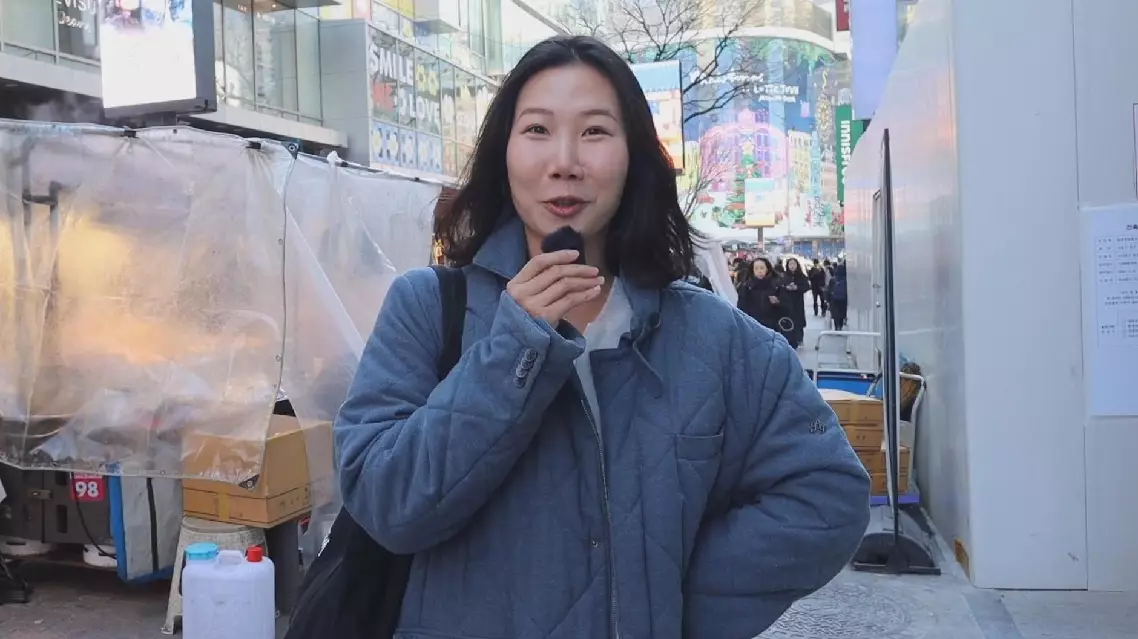
South Koreans hope president’s first visit to China will enhance exchanges