Since the U.S. has launched military action against Venezuela, the Security Bureau reminds Hong Kong residents who plan to travel to Venezuela or have already been there to be vigilant about their safety and the situation.

The Security Bureau, Photo by Bastille Post
The Security Bureau stated that Venezuela was not included in the Outbound Travel Alert (OTA) System. Nevertheless, considering the latest situation in the country, the Security Bureau has updated the relevant information about Venezuela on the OTA webpage to remind Hong Kong residents who plan to travel to Venezuela or have already been there to be vigilant and avoid gathering places where protesters or crowds are present.

The Immigration Department, Photo source: reference image
The Immigration Department stated that after learning about the military action, the Department immediately obtained an update from the Office of the Commissioner of the Ministry of Foreign Affairs of the People's Republic of China in the Hong Kong Special Administrative Region, the Embassy of the People's Republic of China in the Republic Bolivariana of Venezuela, and the Travel Industry Authority. To date, the Immigration Department has not received any requests for assistance from Hong Kong residents.
The Immigration Department stated that if the Hong Kong residents in Venezuela need assistance, they can call the 24-hour assistance hotline of the "the Assistance to Hong Kong Residents Unit" of the Immigration Department: (852) 1868.
The Ministry of Foreign Affairs also reminds Chinese citizens not to travel to Venezuela recently. As for those already in Venezuela, the Ministry of Foreign Affairs stated that they should keep a close eye on the local security situation, enhance preventive measures and emergency preparations, avoid unnecessary travel, and stay away from conflict or sensitive areas.
The co-pilot suspected in this week's FlyDubai attack has been identified as an Omani national. Meanwhile, a hospital in Gaza says Israeli strikes have killed five people, including four women.
Here is the latest news from the Middle East on Saturday. Full coverage is available here.
The co-pilot suspected of stabbing the captain of an Israel-bound FlyDubai flight before passengers and others stopped the attack is an Omani national named Hamam al-Hammami, three people with knowledge of the situation, including a Gulf and a Western diplomat, said.
All spoke on condition of anonymity because they were not authorized to speak to the media. The Gulf diplomat said investigations are underway to establish whether he acted as a “lone wolf or has any connection with any extremist groups.”
The United Arab Emirates said the co-pilot attacked the captain with the cockpit’s crash axe and tried to take control of the plane in a “terrorist attack.”
The co-pilot, who officials said nearly crashed the sharply plummeting flight with 182 people aboard, was barred from flying by Oman over concerns he had adopted extremist views, a separate person familiar with the matter said, speaking on the condition of anonymity to discuss the ongoing investigation.
- By Samy Magdy, Sam Mednick, Anna Johnson
Israeli strikes overnight in Gaza killed five people, according to al-Shifa Hospital, where the casualties were taken. Four women were among the dead. A mother and daughter among them were Christians, a minority in Gaza, the hospital said,
A large fire burned at the site, where the strikes tore a gaping hole in the ground floor of a multistory building. The hospital said people were still reported missing beneath the debris.
Israel's military did not immediately comment, saying it was checking for information.
Israeli strikes have killed at least 1,439 Palestinians in Gaza since a ceasefire was reached with the Hamas militant group nearly a year ago, according to the territory’s Health Ministry. Its figures are seen as generally reliable by U.N. agencies and independent experts. It does not give a breakdown of civilians and militants.
Israel says it is targeting Hamas and other militants who pose a threat, and in response to ceasefire violations, including occasional attacks.
Iran executed a man convicted of firing at police during widespread unrest in January, the state-run IRNA news agency reported.
The report identified the man as Siavash Jamshidi Kheirabadi, a resident of Shahrekord in central Iran. It said he confessed to possessing weapons and firing at police, and was convicted on charges including moharebeh, Farsi for "waging war against God."
The report did not say how the execution was carried out, though Iran typically carries out executions by hanging. Earlier this week, IRNA reported that Iran had executed two other men over violence during the January protests.
This report will be updated throughout the day as new developments emerge.
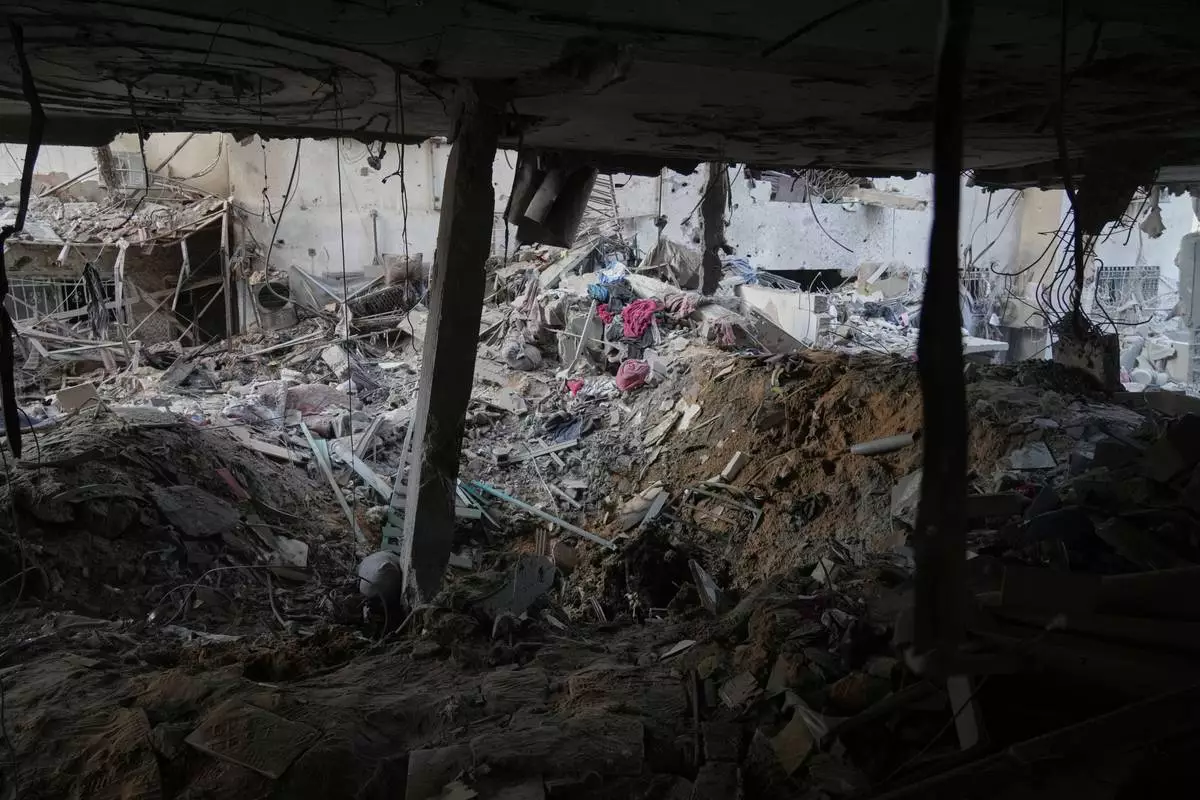
A destroyed building is seen at the site of an early morning Israeli airstrike in Gaza city, Saturday, Oct. 3, 2026. (AP Photo/Jehad Alshrafi)
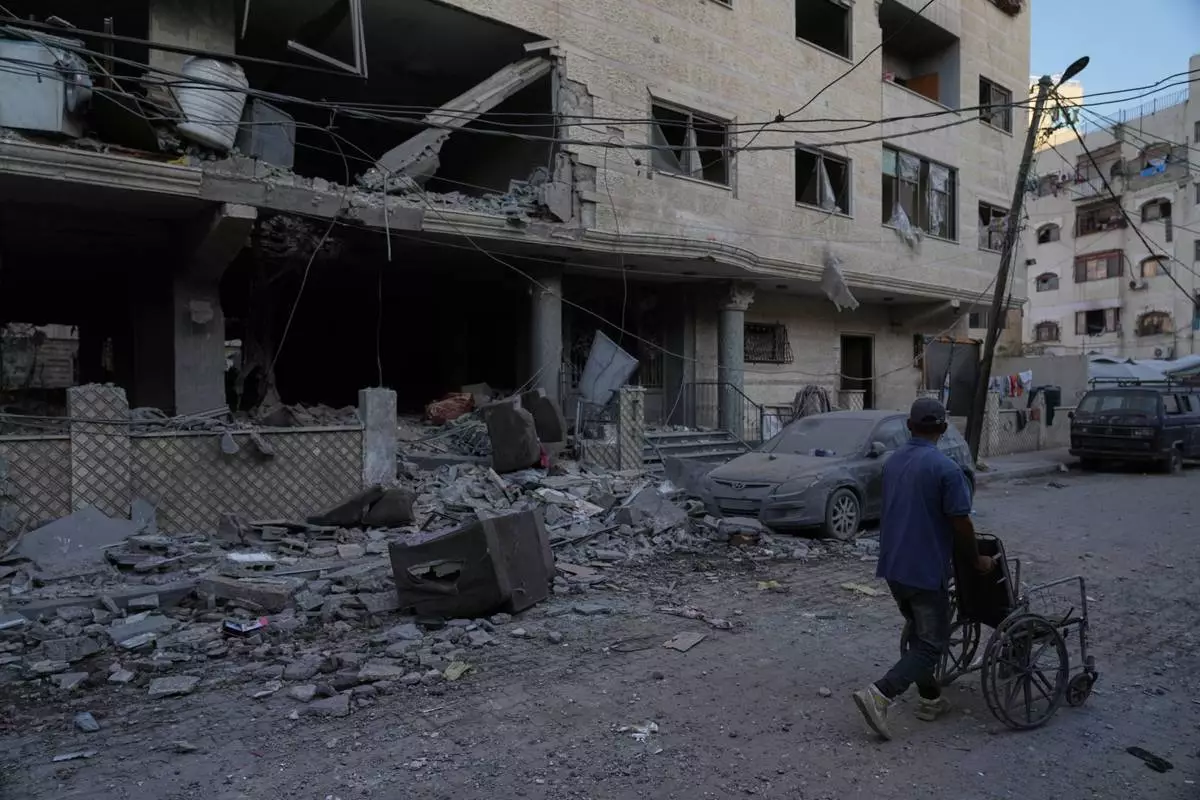
Palestinians inspect the site of an early morning Israeli airstrike in Gaza city, Saturday, Oct. 3, 2026. (AP Photo/Jehad Alshrafi)