In detailing the U.S. military action that led to the arrest of Venezuelan leader Nicolás Maduro, President Donald Trump referenced the Monroe Doctrine, a maxim that has shaped American foreign policy for two centuries.
The doctrine formulated by President James Monroe was originally aimed at opposing European meddling in the Western Hemisphere. It has since been invoked repeatedly by subsequent presidents angling to justify U.S. intervention in the region.
On Saturday, the consequential doctrine of America's fifth president was cited by the 47th president as partial justification for the capture of a foreign leader to face criminal charges in the United States. Trump even quipped that some now called it “the Don-roe Doctrine."
Political scientists are now looking back on the use of the Monroe Doctrine through history and drawing connections to how the Trump administration is seeking to apply it to current foreign policy, including the Republican president's assertion that Washington would “run” Venezuela until a suitable replacement for Maduro was in place,
Here's a look at the Monroe Doctrine, how it has been invoked over time and how it has informed Trump's decision making:
Articulated in Monroe's 1823 address to Congress, it was intended to ward off European colonization or other interference in independent nations of the Western Hemisphere. In return, the U.S. also agreed to stay out of European wars and internal affairs.
At the time, many Latin American countries had just gained independence from European empires. Monroe wanted both to prevent Europe from reclaiming control and to assert U.S. influence in the hemisphere.
Through the centuries, much of that has included Venezuela, according to Jay Sexton, a history professor at the University of Missouri.
“Historically, Venezuela has been the pretext or the trigger for a lot of corollaries to the Monroe Doctrine,” said Sexton, author of “The Monroe Doctrine: Empire and Nation in Nineteenth-Century America," citing instances from the late 1800s, all the way through Trump’s first administration.
“And going back to the 19th century, this has been a divided, fractious country that’s had difficult relations with foreign powers and is also courted, relationships with rivals of the United States.”
European leaders initially paid little attention to the proclamation, but the Monroe Doctrine has been invoked in the two centuries since to justify U.S. military interventions in Latin America.
The first direct challenge came after France installed Emperor Maximilian in Mexico in the 1860s. After the end of the Civil War, France relented under U.S. pressure and withdrew.
In 1904, President Theodore Roosevelt's argument that the U.S. should be allowed to intervene in unstable Latin American countries became known as the Roosevelt Corollary, a justification invoked in a number of places, including supporting Panama’s secession from Colombia, which helped secure the Panama Canal Zone for the U.S.
The Cold War era saw the Monroe Doctrine invoked as a defense against communism, such as the U.S. demand in 1962 that Soviet missiles be withdrawn from Cuba, as well as the Reagan administration's opposition of the leftist Sandinista government in Nicaragua.
Gretchen Murphy, a professor at the University of Texas, described Trump’s reference to the doctrine as in line with how it had been used by his predecessors, including Roosevelt, who she said “claimed that the Monroe Doctrine could be extended to justify interventions that instead of defending Latin American nations from European intervention, policed them to make sure their governments acted in U.S. commercial and strategic interests.”
“I think Trump is jumping on this familiar pattern -– citing the Monroe Doctrine to legitimate interventions that undermine real democracy, and ones where various kinds of interests are served, including commercial interests,” said Murphy, author of “Hemispheric Imaginings: The Monroe Doctrine and Narratives of U.S. Empire.”
Trump said that Venezuela, under Maduro's rule, had been “increasingly hosting foreign adversaries in our region and acquiring menacing offensive weapons that could threaten U.S. interests.” Trump called those actions “in gross violation of the core principles of American foreign policy dating back more than two centuries.”
But, Trump added, “under our new national security strategy, American dominance in the Western Hemisphere will never be questioned again.”
“We want to surround ourselves with good neighbors, we want to surround ourselves with stability, and we want to surround ourselves with energy,” Trump said. “We have tremendous energy in that country. It’s very important that we protect it. We need that for ourselves. We need that for the world.”
Asked Saturday how the U.S. running a country represented his “America First” mentality, Trump defended the move as one that, similarly to the Monroe Doctrine’s origin story, was aimed at strengthening America itself.
The administration’s national security strategy references “a ‘ Trump Corollary ’ to the Monroe Doctrine," intended to “restore American preeminence in the Western Hemisphere.”
“Under our new national security strategy, American dominance in the Western Hemisphere will never be questioned again, won’t happen," Trump said. "For decades, other administrations have neglected or even contributed to these growing security threats in the Western Hemisphere. Under the Trump administration, we are reasserting American power in a very powerful way in our home region.”
“What presidents used to do is they would cloak whatever their agenda was in the Monroe Doctrine by issuing corollaries," Sexton said.
After World War II, Sexton said, rather than devising corollaries to the Monroe Doctrine, presidents started issuing their own, citing Harry S. Truman and Richard Nixon. He Sexton said he assumed Trump might take similar action.
“When you’re talking about a Trump Corollary, I just knew Trump wouldn’t want to be a corollary to another president’s doctrine, that somehow this would evolve into a Trump doctrine,” he said.
The national security strategy released by the White House in December portrayed European allies as weak and aimed to reassert America’s dominance in the Western Hemisphere.
Laying out a series of military strikes on alleged drug trafficking boats in the Caribbean Sea and the eastern Pacific Ocean as “a ‘Trump Corollary’ to the Monroe Doctrine” to “restore American preeminence in the Western Hemisphere,” the document said it aimed to combat the flow of narcotics and control migration. The strategy marked a reimagining of the U.S. military footprint in the region even after building up the largest military presence there in generations.
Sexton said the military operation to capture Maduro — and a possible protracted U.S. involvement in Venezuela — could cause another split among supporters of Trump's “Make America Great Again” movement, similar to the one after the administration's strikes last year on Iran's nuclear facilities.
“This is not just the sort of hit-and-run kind of job where, like in Iran a couple months ago, we dropped the missiles, and then you can then you can go on and carry on as normal,” Sexton said. “This is going to be potentially quite a mess and contradict the administration’s policies on withdrawing from forever wars — and there’s a lot of isolationists, within the MAGA coalition.”
Meg Kinnard can be reached at http://x.com/MegKinnardAP
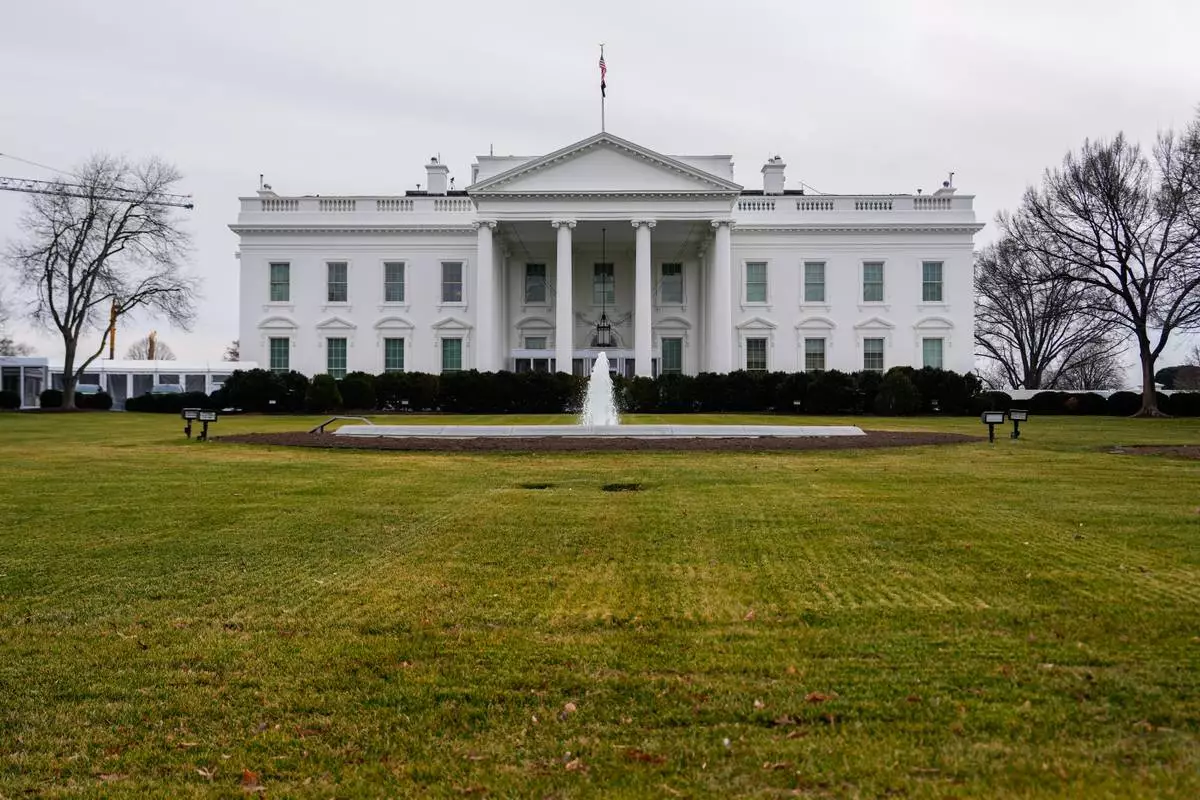
The White House is seen Saturday, Jan. 3, 2026, in Washington, after the U.S. captured Venezuelan President Nicolás Maduro and his wife in a military operation. (AP Photo/Julia Demaree Nikhinson)

FILE - Venezuelan President Nicolas Maduro raises up his closed fists during a news conference at Miraflores presidential palace in Caracas, Venezuela, July 31, 2024, three days after his disputed reelection. (AP Photo/Matias Delacroix, File)
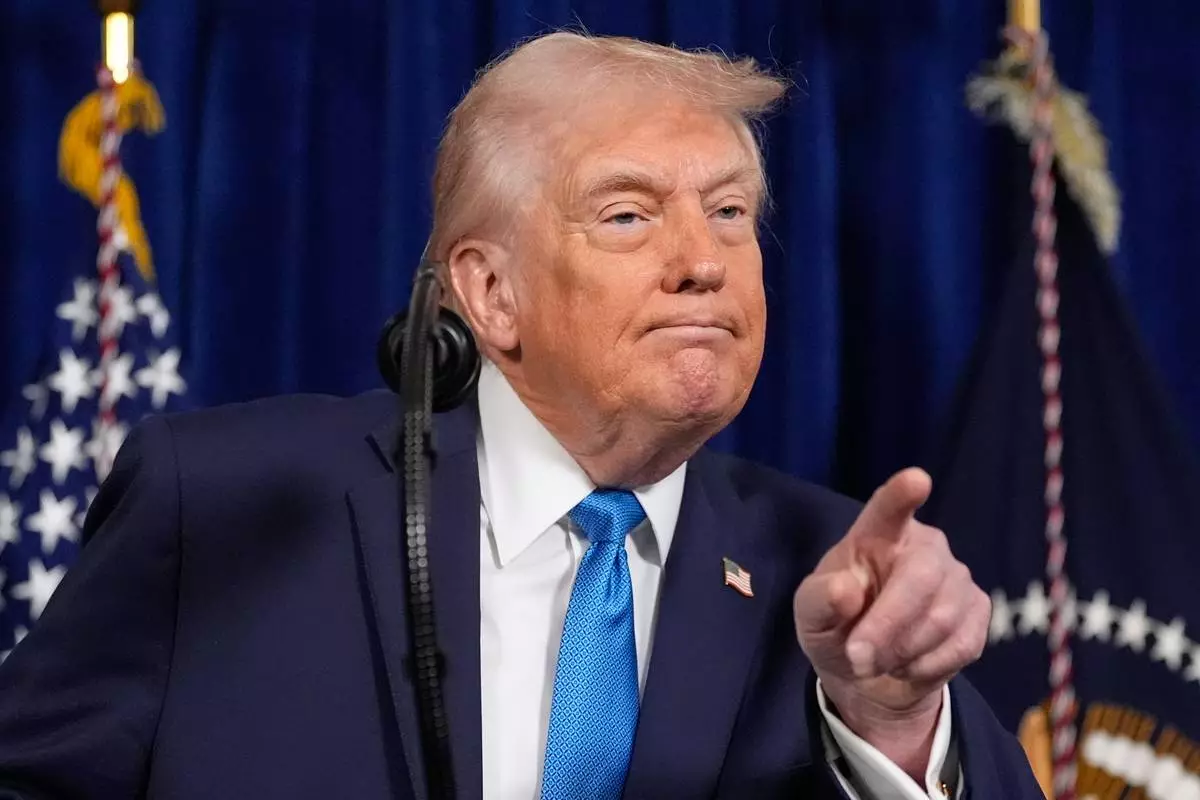
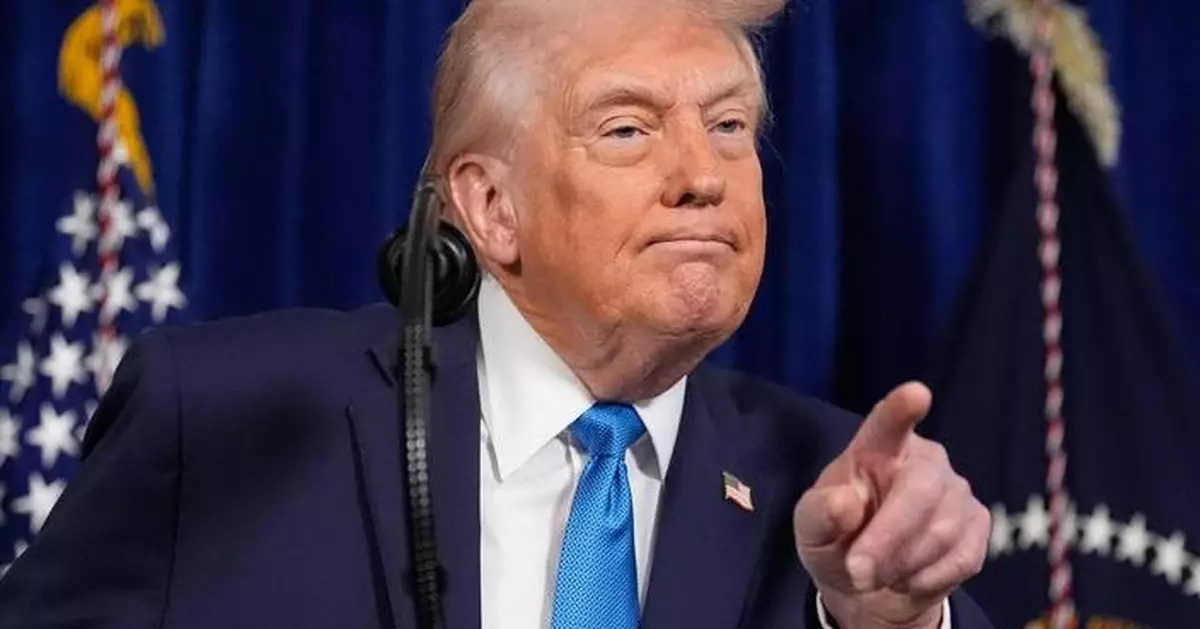
President Donald Trump points to a reporter to ask a question during a news conference at Mar-a-Lago, Saturday, Jan. 3, 2026, in Palm Beach, Fla. (AP Photo/Alex Brandon)