Skip to Content Facebook Feature Image

US capture of Maduro divides a changed region, thrilling Trump's allies and threatening his foes

News

US capture of Maduro divides a changed region, thrilling Trump's allies and threatening his foes
News

News

US capture of Maduro divides a changed region, thrilling Trump's allies and threatening his foes

2026-01-05 13:29 Last Updated At:13:50

MEXICO CITY (AP) — In his celebratory news conference on the U.S. capture of Venezuelan strongman leader Nicolás Maduro, President Donald Trump set out an extraordinarily forthright view of the use of U.S. power in Latin America that exposed political divisions from Mexico to Argentina as Trump-friendly leaders rise across the region.

“American dominance in the Western Hemisphere will never be questioned again," Trump proclaimed just hours before Maduro was perp-walked through the offices of the U.S. Drug Enforcement Administration in New York.

The scene marked a stunning culmination of months of escalation in Washington's confrontation with Caracas that has reawakened memories of a past era of blatant U.S. interventionism in the region.

Since assuming office less than a year ago — and promptly renaming the Gulf of Mexico as the Gulf of America — Trump has launched boat strikes against alleged drug traffickers in the Caribbean, ordered a naval blockade on Venezuelan oil exports and meddled in elections in Honduras and Argentina.

Through a combination of tariffs, sanctions and military force, he has pressured Latin American leaders to advance his administration’s goals of combating drug trafficking, halting immigration, securing strategic natural resources and countering the influence of Russia and China.

The new, aggressive foreign policy — which Trump now calls the “Donroe Doctrine," in reference to 19th-century President James Monroe’s belief that the U.S. should dominate its sphere of influence — has carved the hemisphere into allies and foes.

“The Trump administration in multiple different ways has been trying to reshape Latin American politics,” said Gimena Sanchez, Andes director for the Washington Office on Latin America, a think tank. “They’re showing their teeth in the whole region."

Saturday's dramatic events — including Trump’s vow that Washington would “run” Venezuela and seize control of its oil sector — galvanized opposite sides of the polarized continent.

Argentine President Javier Milei, Trump's ideological soulmate, characterized one side as supporting “democracy, the defense of life, freedom and property.”

“On the other side," he added, “are those accomplices of a narco-terrorist and bloody dictatorship that has been a cancer for our region.”

Other right-wing leaders in South America similarly seized on Maduro's ouster to declare their ideological affinity with Trump.

In Ecuador, conservative President Daniel Noboa issued a stern warning for all followers of Hugo Chávez, Maduro’s mentor and the founder of the Bolivarian revolution: “Your structure will completely collapse across the entire continent."

In Chile, where a presidential election last month marked by fears over Venezuelan immigration brought down the leftist government, far-right President-elect José Antonio Kast hailed the U.S. raid as “great news for the region."

But left-wing presidents in Latin America — including Brazil's Luiz Inácio Lula da Silva, Mexico's Claudia Sheinbaum, Chile's Gabriel Boric and Colombia's Gustavo Petro — expressed grave concerns over what they saw as U.S. bullying.

Lula said the raid set “an extremely dangerous precedent.” Sheinbaum warned it “jeopardizes regional stability.” Boric said it “violated an essential pillar of international law.” Petro called it “aggression against the sovereignty of Venezuela and of Latin America.”

Trump has previously punished or threatened all four leaders for failing to fall in line with his demands, while boosting and bailing out allies who show loyalty.

For Lula — among the last surviving icons of the so-called “pink tide,” the leftist leaders who dominated Latin American politics from the turn of the 21st century — Trump's military action in Venezuela “recalls the worst moments of interference in the politics of Latin America.”

Those moments range from American troops occupying Central American and Caribbean nations to promote the interests of U.S. companies like Chiquita in the early 1900s to Washington supporting repressive military dictatorships in Argentina, Brazil, Chile, Paraguay and Uruguay to fend off Soviet influence in the 1970s.

The historical echoes in Maduro's downfall fueled not only harsh condemnations and street protests among Trump's left-wing opponents but also uneasy responses from some of his close allies.

Usually effusive in his support for Trump, President Nayib Bukele was oddly quiet in El Salvador, a nation still scarred by a brutal civil war between a repressive U.S.-allied government and leftist guerillas. He posted a meme mocking Maduro after his capture Saturday, but expressed none of the jubilation seen from regional counterparts.

In Bolivia, where old anti-American dogmas die hard due to memories of the bloody U.S.-backed war on drugs, new conservative President Rodrigo Paz praised Maduro’s removal insomuch as it fulfilled “the true popular will” of Venezuelans who tried to vote the autocrat out of office in a 2024 election widely seen as fraudulent.

“Bolivia reaffirms that the way out for Venezuela is to respect the vote,” Paz said.

His message didn't age well. Hours later, Trump announced he would work with Maduro's loyalist vice president, Delcy Rodríguez, rather than the opposition that prevailed in the 2024 election.

“The Trump administration, it appears at this point, is making decisions about the democratic future of Venezuela without referring back to the democratic result," said Kevin Whitaker, former deputy chief of mission for the State Department in Caracas.

When asked Sunday about when Venezuela will hold democratic elections, Trump responded: “I think we’re looking more at getting it fixed.”

The Trump administration’s attack on Venezuela extends its broader crusade to assemble a column of allied — or at least acquiescent — governments in Latin America, sailing with the political winds blowing in much of the region.

Recent presidential elections from Chile to Honduras have elevated tough, Trump-like leaders who oppose immigration, prioritize security and promise a return to better, bygone eras free of globalization and “wokeness.”

“The president is going to be looking for allied and partner nations in the hemisphere who share his kind of broader ideological affinity,” said Alexander Gray, a senior fellow at the Atlantic Council, a Washington research institute.

Those who don't share that ideology were put on notice this weekend. Trump said Cuba’s Communist government “looks like it’s ready to fall.” He slammed Sheinbaum’s failure to root out Mexican cartels, saying that “something’s going to have to be done with Mexico.” He repeated allegations that Petro “likes making cocaine” and warned that “he's not going to be doing it very long."

“We’re in the business of having countries around us that are viable and successful, where the oil is allowed to really come out," he told reporters Sunday on Air Force One. “It's our hemisphere.”

DeBre reported from Buenos Aires, Argentina. Associated Press writers Maria Verza in Mexico City and Darlene Superville aboard Air Force One contributed to this report.
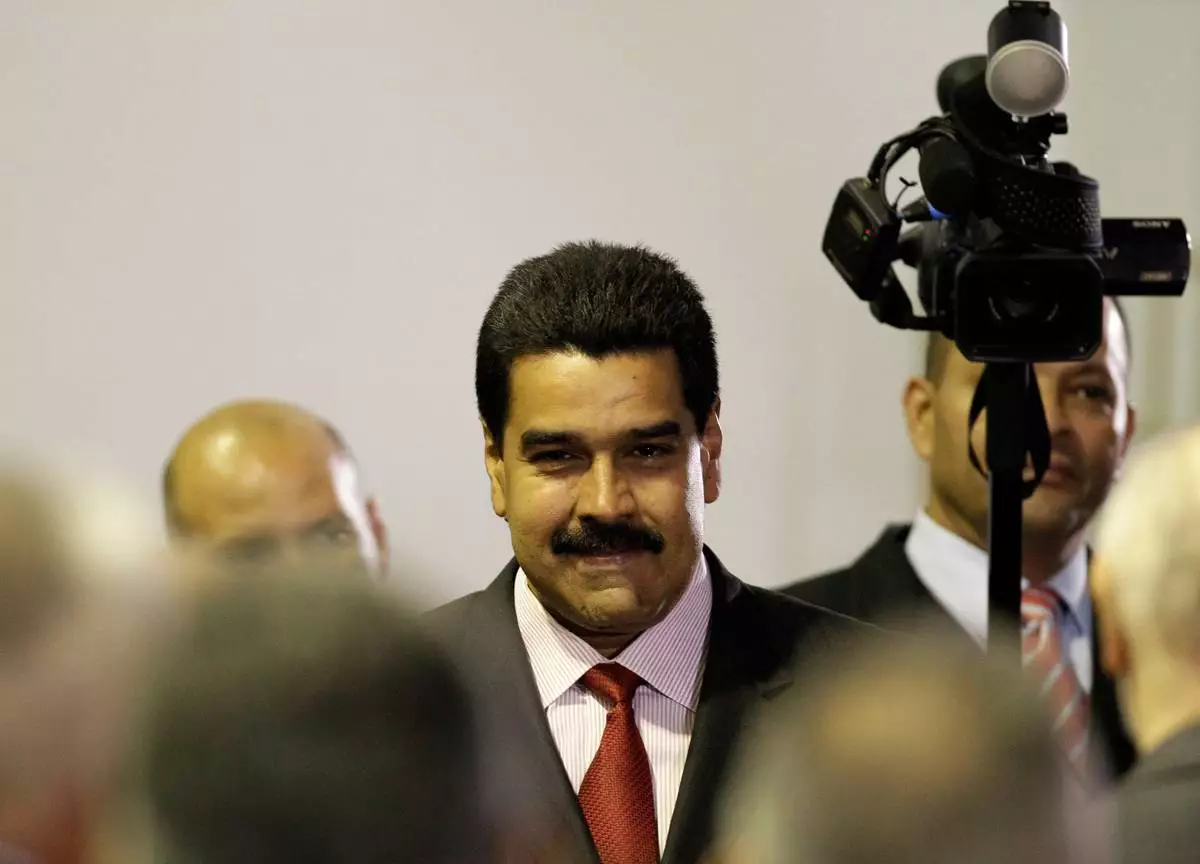
FILE - Venezuela's long time Foreign Minster Nicolas Maduro attends a ceremony declaring President Hugo Chavez official winner of the presidential elections at the Electoral Council in Caracas, Venezuela, Oct. 10, 2012, where Chavez announced he was naming Maduro as his new vice president. (AP Photo/Ariana Cubillos, File)
FILE - Venezuela's long time Foreign Minster Nicolas Maduro attends a ceremony declaring President Hugo Chavez official winner of the presidential elections at the Electoral Council in Caracas, Venezuela, Oct. 10, 2012, where Chavez announced he was naming Maduro as his new vice president. (AP Photo/Ariana Cubillos, File)

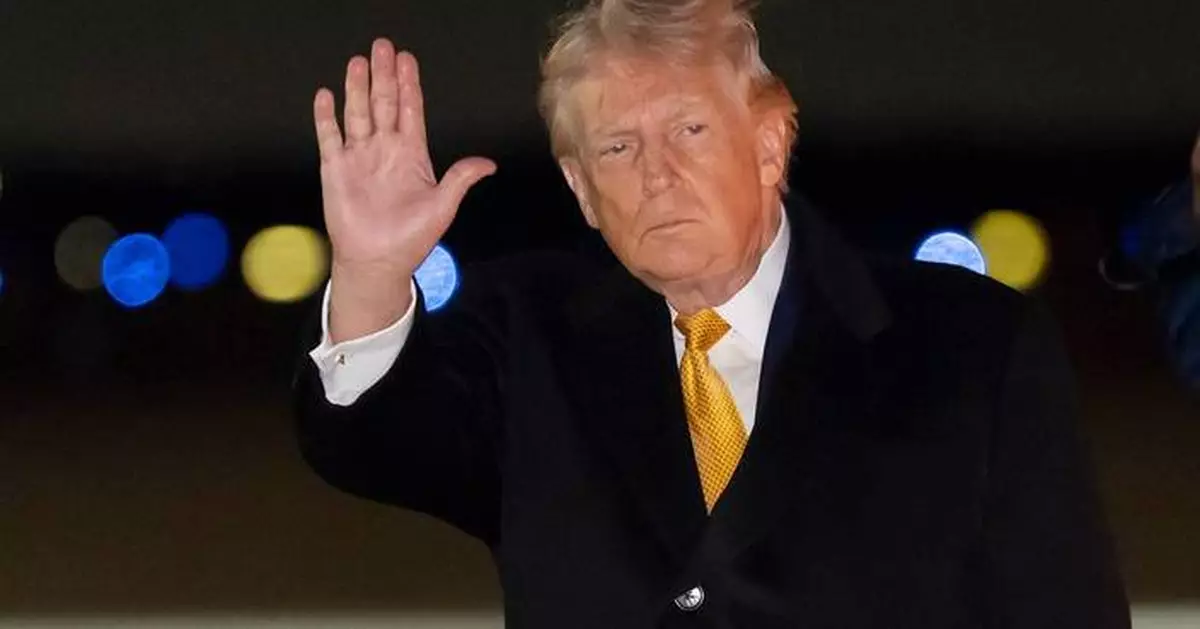
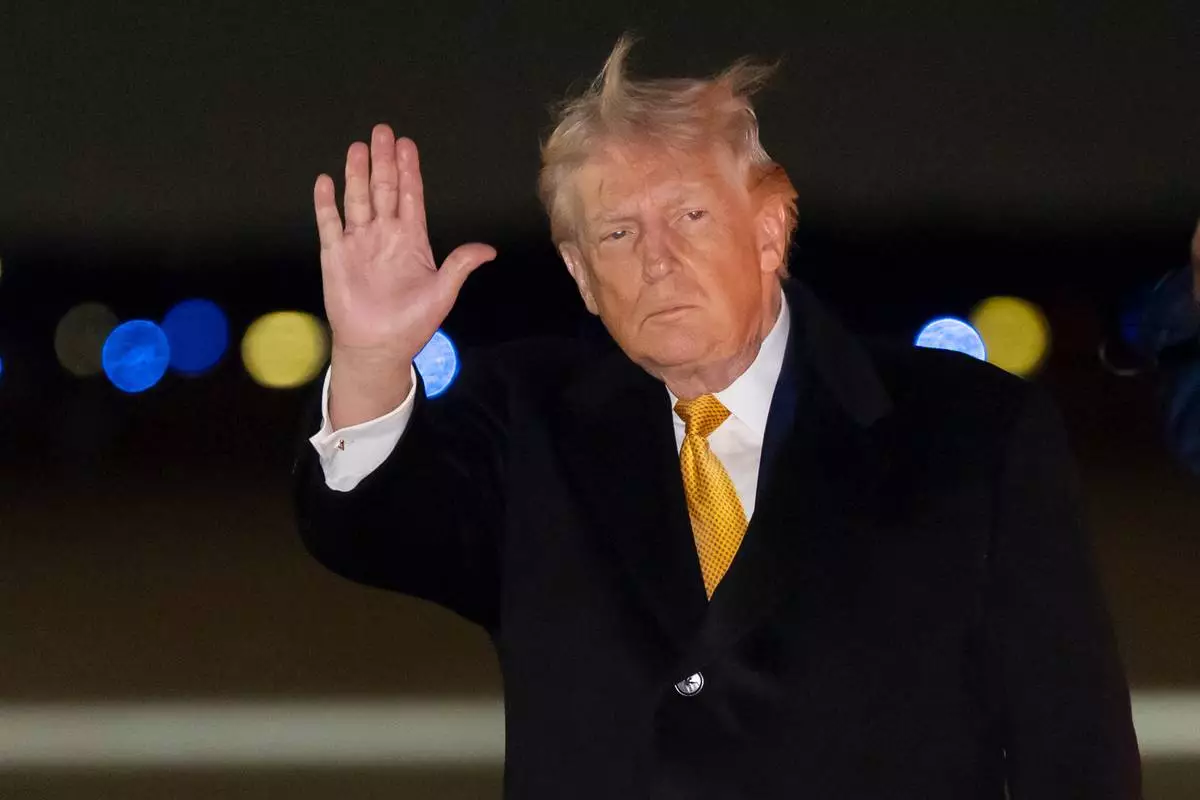
President Donald Trump waves as he arrives on Air Force One, Sunday, Jan. 4, 2026, at Joint Base Andrews, Md. (AP Photo/Alex Brandon)
President Donald Trump waves as he arrives on Air Force One, Sunday, Jan. 4, 2026, at Joint Base Andrews, Md. (AP Photo/Alex Brandon)
NEW YORK (AP) — Stocks gained ground on Wall Street Monday to kick off their first full week of the new year.

The gains were broad, with particularly big jumps for energy companies and banks. Elsewhere, industrial companies and retailers joined in to help boost major indexes.

The S&P 500 rose 43.58 points, or 0.6%, to 6,902.05. The benchmark index is just below its record set in late December. The Dow Jones Industrial Average set a record, rising 594.79 points, or 1.2%, to 48,977.18.

The Nasdaq composite rose 160.19 points, or 0.7%, to 23,395.82.

Smaller company stocks had a particularly strong day, outpacing other indexes, in a sign of broader investor confidence. The Russell 2000 rose 1.6%.

Markets in Europe also gained ground.

Energy companies and the oil market were a key focus after U.S. forces captured Venezuelan President Nicolás Maduro in a weekend raid. The price of U.S. crude jumped 1.7% to $58.32 per barrel. The price of Brent crude, the international standard, rose 1.7% to $61.76 per barrel.

President Donald Trump has floated a plan for U.S. oil companies to help rebuild Venezuela’s oil industry. Chevron jumped 5.1%, Exxon Mobil rose 2.2% and Halliburton surged 7.8% for some of the strongest gains in the market.

After years of neglect and international sanctions, Venezuela’s oil industry is in disrepair. It could take years and major investments before production can increase dramatically. But some analysts expect its current output of about 1.1 million barrels a day could double or triple fairly quickly.

Big banks also made solid gains. JPMorgan Chase rose 2.6% and Bank of America jumped 1.7%.

Wall Street is also watching the technology sector as the industry kicks off its annual CES trade show in Las Vegas. Nvidia fell 0.4% and Applied Materials jumped 5.7%.

Investors are particularly focused on advancements in artificial intelligence, or AI. The sector led the broader market to a series of records in 2025 on expectations that AI will continue to drive advancements and profits for a wide range of technology companies. The latest updates on AI from influential technology companies could help shed more light on whether the big investments are worth the potential financial risks.

Companies like Nvidia have been heavily investing in the technology, while investors on Wall Street have made those companies among the most valuable in the world. Their outsized valuations now drive much of the movement for major indexes, including the record run for major indexes in 2025.

The broader market is poised to gain even more ground as last year's momentum continues with growing corporate earnings and several other factors, according to Mark Hackett, chief market strategist at Nationwide.

“The market’s broad, confident and consistent march upward, and the absence of emotion-based selling, tells you we’re starting the year on pretty solid footing,” Hackett wrote, in a note to investors.

Gold gained 2.8% and the price of silver soared 7.9%. Such assets are often considered safe havens in times of geopolitical turmoil. The metals have notched record prices over the last year amid lingering economic concerns brought on by conflicts and trade wars.

Bitcoin rose to its highest level since mid-November, hitting $94,700. Coinbase jumped 7.8% and Robinhood Markets jumped 7% for two of the markets biggest gains.

Treasury yields fell in the bond market. The yield on the 10-year Treasury fell to 4.15% from 4.19% late Friday. The yield on the two-year Treasury, which moves more closely with expectations for what the Federal Reserve will do, fell to 3.45% from 3.48% late Friday.

Wall Street will get several economic updates this week that will also be watched by the Fed as it determines interest rate policy.

On Monday, the Institute for Supply Management released its manufacturing index for December showing the sector continued shrinking. More importantly, the business group will release its December report on the services sector on Wednesday. The services sector makes up the bulk of the U.S. economy and it grew, even if only slightly, throughout most of 2025.

Reports on the job market later this week, which include updates for job openings and overall employment, will be a bigger focus for the Fed. The central bank has been weighing a slowing job market against risks for rising inflation as it decides whether to cut interest rates. It cut its benchmark rate three times late in 2025, but inflation has remained above its 2% target and that has made the Fed more cautious.

Wall Street still expects the Fed to hold rates steady at its upcoming meeting later in January.

AP business writer Elaine Kurtenbach and AP video journalist Mayuko Ono contributed to this report.

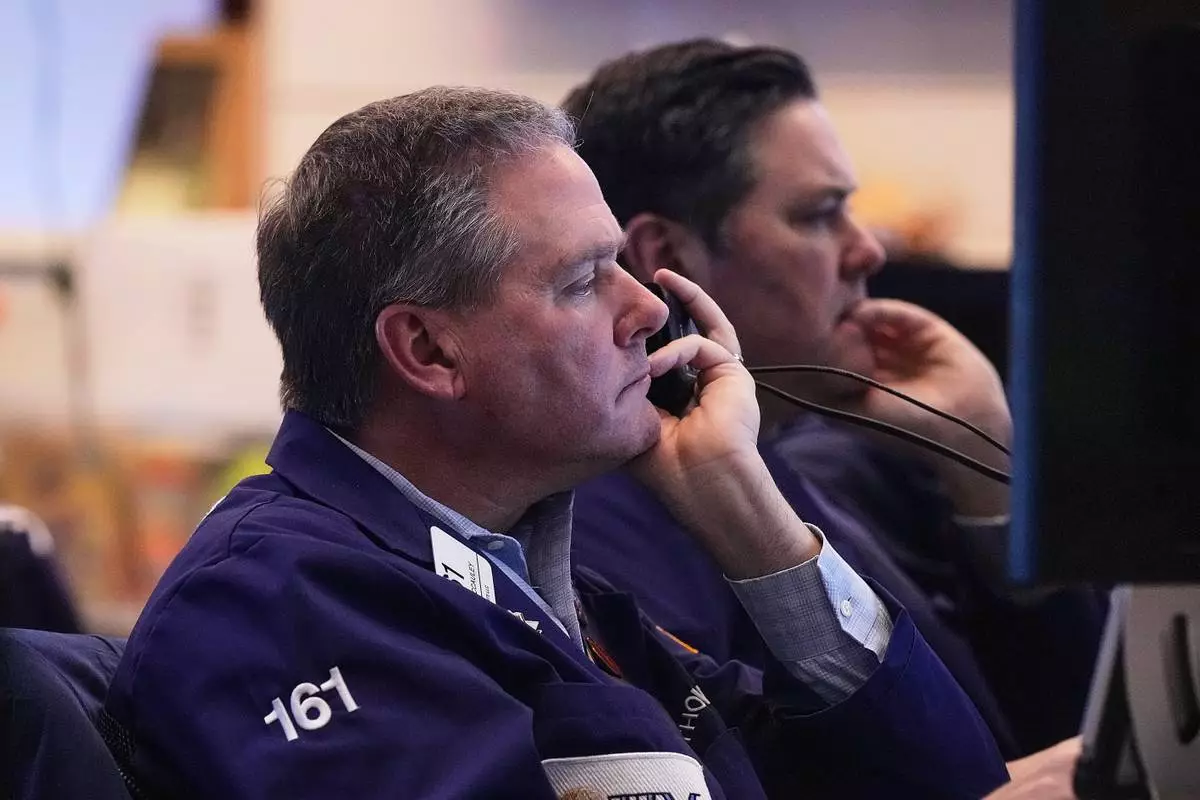
Trader Thomas McCauley, foreground, and a colleague work on the floor of the New York Stock Exchange, Friday, Jan. 2, 2026. (AP Photo/Richard Drew)

Trader Thomas McCauley, foreground, and a colleague work on the floor of the New York Stock Exchange, Friday, Jan. 2, 2026. (AP Photo/Richard Drew)

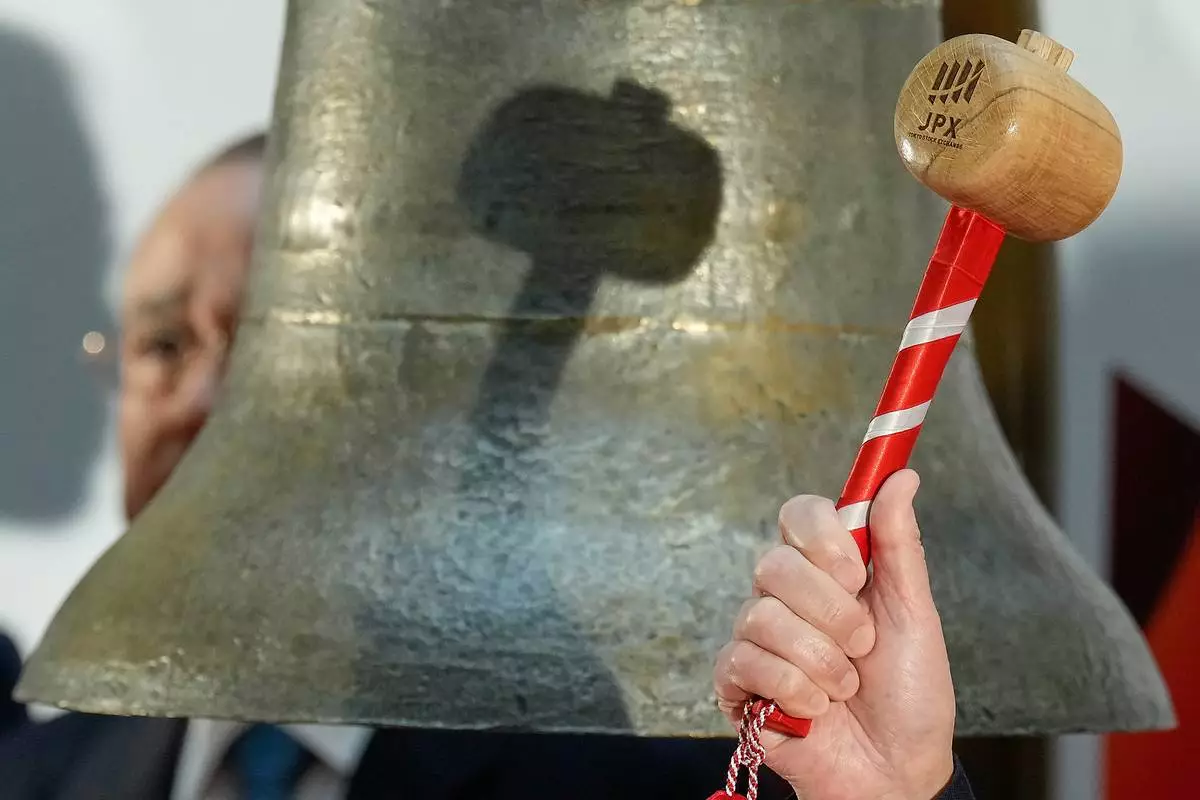
Yoshinobu Tsutsui, the head of Keidanren, Japan's major business federation, holds a wooden mallet to ring the bell during a ceremony marking the start of trading at the Tokyo Stock Exchange, Monday, Jan. 5, 2026, in Tokyo. (AP Photo/Eugene Hoshiko)

Yoshinobu Tsutsui, the head of Keidanren, Japan's major business federation, holds a wooden mallet to ring the bell during a ceremony marking the start of trading at the Tokyo Stock Exchange, Monday, Jan. 5, 2026, in Tokyo. (AP Photo/Eugene Hoshiko)

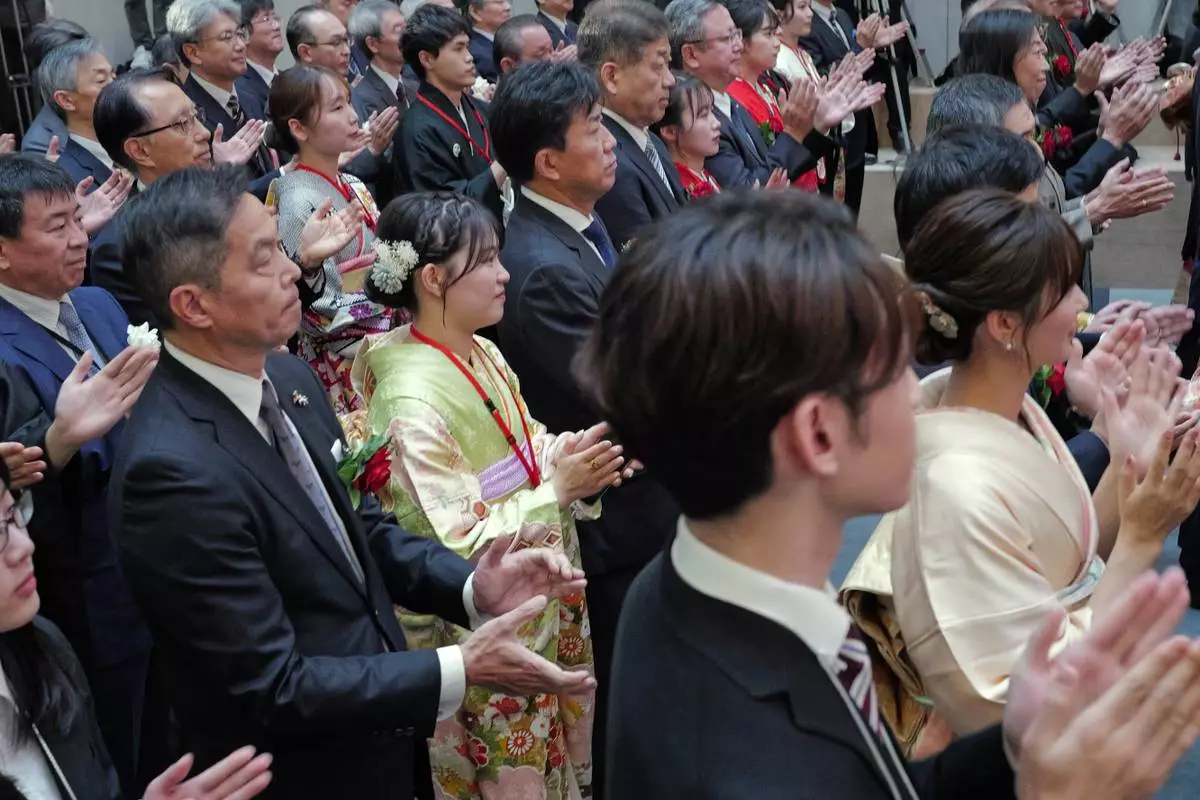
Staff of the Tokyo Stock Exchange and guests make a ceremonial hand-clapping during a ceremony marking the start of trading at the Tokyo Stock Exchange, Monday, Jan. 5, 2026, in Tokyo. (AP Photo/Eugene Hoshiko)

Staff of the Tokyo Stock Exchange and guests make a ceremonial hand-clapping during a ceremony marking the start of trading at the Tokyo Stock Exchange, Monday, Jan. 5, 2026, in Tokyo. (AP Photo/Eugene Hoshiko)

Finance Minister Satsuki Katayama rings the bell during a ceremony marking the start of trading at the Tokyo Stock Exchange, Monday, Jan. 5, 2026, in Tokyo. (AP Photo/Eugene Hoshiko)

Finance Minister Satsuki Katayama rings the bell during a ceremony marking the start of trading at the Tokyo Stock Exchange, Monday, Jan. 5, 2026, in Tokyo. (AP Photo/Eugene Hoshiko)

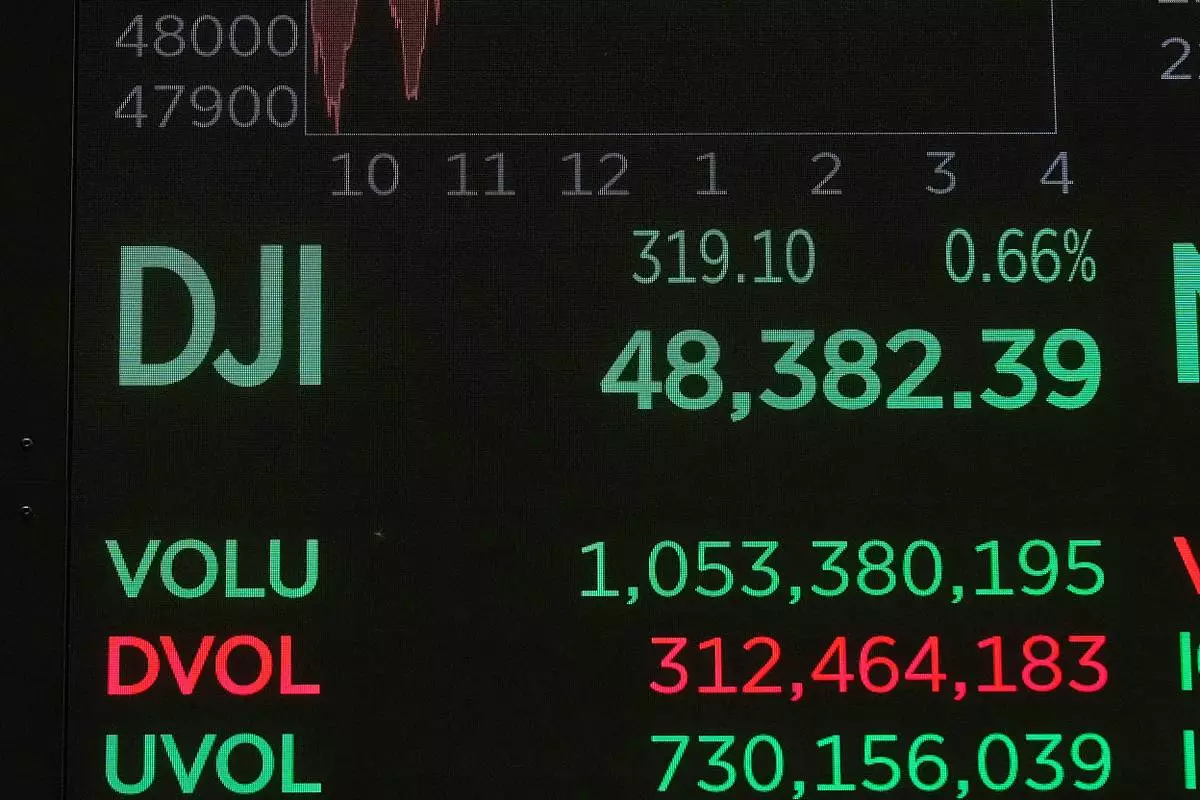
A board above the trading floor of the New York Stock Exchange displays the closing number for the Dow Jones industrial average Friday, Jan. 2, 2026. (AP Photo/Richard Drew)

A board above the trading floor of the New York Stock Exchange displays the closing number for the Dow Jones industrial average Friday, Jan. 2, 2026. (AP Photo/Richard Drew)

A dealer watches computer monitors at a dealing room of Hana Bank in Seoul, South Korea, Monday, Jan. 5, 2026. (AP Photo/Lee Jin-man)

A dealer watches computer monitors at a dealing room of Hana Bank in Seoul, South Korea, Monday, Jan. 5, 2026. (AP Photo/Lee Jin-man)

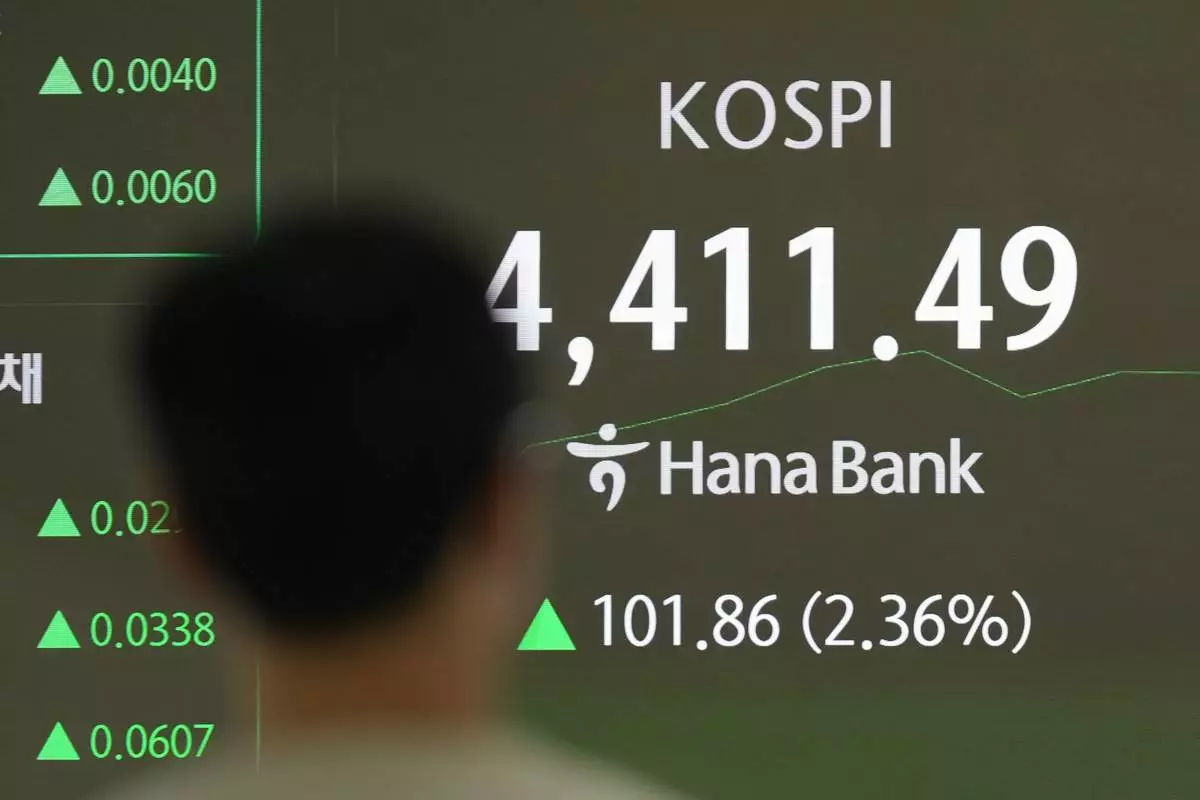
A dealer walks past near the screen showing the Korea Composite Stock Price Index (KOSPI) at a dealing room of Hana Bank in Seoul, South Korea, Monday, Jan. 5, 2026. (AP Photo/Lee Jin-man)

A dealer walks past near the screen showing the Korea Composite Stock Price Index (KOSPI) at a dealing room of Hana Bank in Seoul, South Korea, Monday, Jan. 5, 2026. (AP Photo/Lee Jin-man)

Recommended Articles