Skip to Content Facebook Feature Image

This Jan. 6 plaque was made to honor law enforcement. It's nowhere to be found at the Capitol

News

This Jan. 6 plaque was made to honor law enforcement. It's nowhere to be found at the Capitol
News

News

This Jan. 6 plaque was made to honor law enforcement. It's nowhere to be found at the Capitol

2026-01-06 10:33 Last Updated At:10:40

WASHINGTON (AP) — Approaching the fifth anniversary of the Jan. 6, 2021, attack on the Capitol, the official plaque honoring the police who defended democracy that day is nowhere to be found.

It’s not on display at the Capitol, as is required by law. Its whereabouts aren't publicly known, though it’s believed to be in storage.

More Images
A replica plaque commemorating the Jan. 6, 2021 Capitol riot hangs outside the office of Speaker Emerita Nancy Pelosi, D-Calif., Tuesday, Dec. 30, 2025, at the Longworth House Office Building on Capitol Hill in Washington. (AP Photo/Julia Demaree Nikhinson)

A replica plaque commemorating the Jan. 6, 2021 Capitol riot hangs outside the office of Speaker Emerita Nancy Pelosi, D-Calif., Tuesday, Dec. 30, 2025, at the Longworth House Office Building on Capitol Hill in Washington. (AP Photo/Julia Demaree Nikhinson)

A replica plaque commemorating the Jan. 6, 2021 Capitol riot hangs outside the office of Rep. Jamie Raskin, D-Md., Tuesday, Dec. 30, 2025, at the Rayburn House Office Building on Capitol Hill in Washington. (AP Photo/Julia Demaree Nikhinson)
A replica plaque commemorating the Jan. 6, 2021 Capitol riot hangs outside the office of Rep. Jamie Raskin, D-Md., Tuesday, Dec. 30, 2025, at the Rayburn House Office Building on Capitol Hill in Washington. (AP Photo/Julia Demaree Nikhinson)

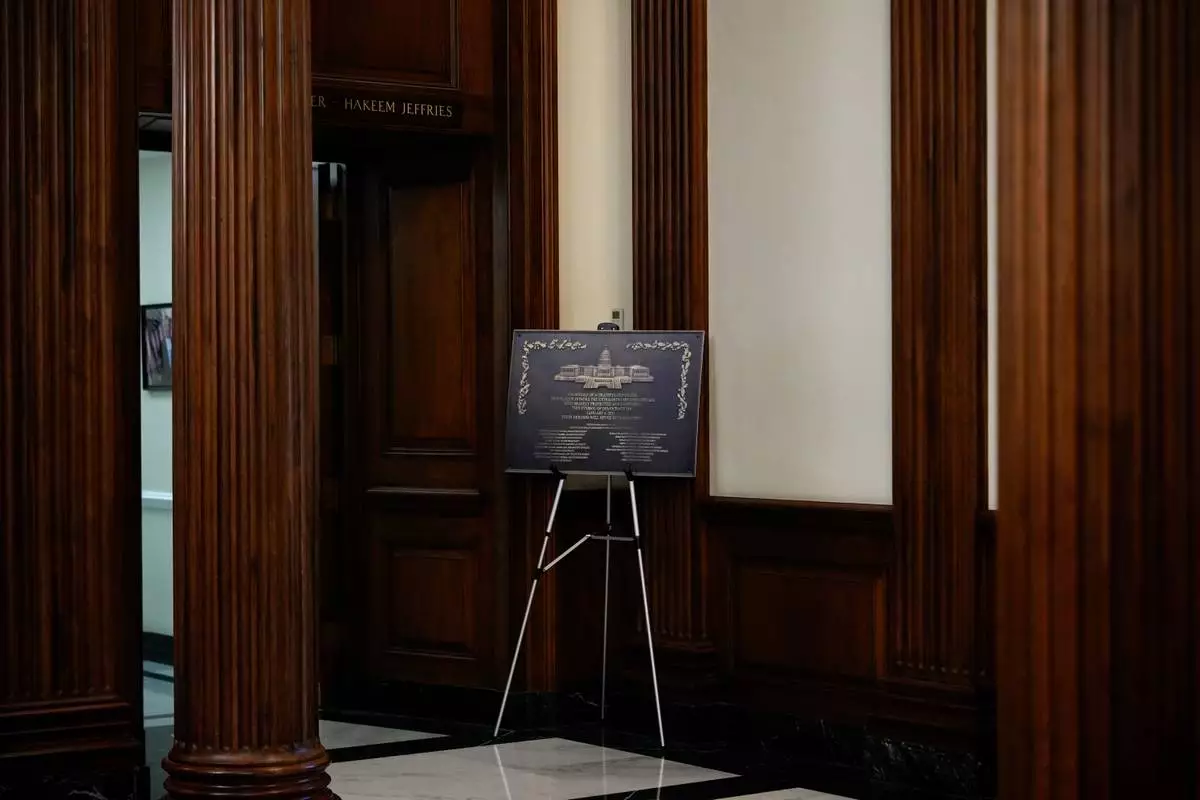
A replica plaque commemorating the Jan. 6, 2021 Capitol riot stands outside the office of House Minority Leader Hakeem Jeffries, D-N.Y, Tuesday, Dec. 30, 2025, at the U.S. Capitol in Washington. (AP Photo/Julia Demaree Nikhinson)

A replica plaque commemorating the Jan. 6, 2021 Capitol riot stands outside the office of House Minority Leader Hakeem Jeffries, D-N.Y, Tuesday, Dec. 30, 2025, at the U.S. Capitol in Washington. (AP Photo/Julia Demaree Nikhinson)

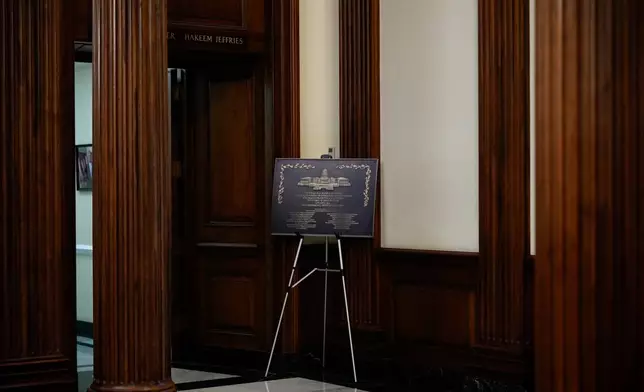
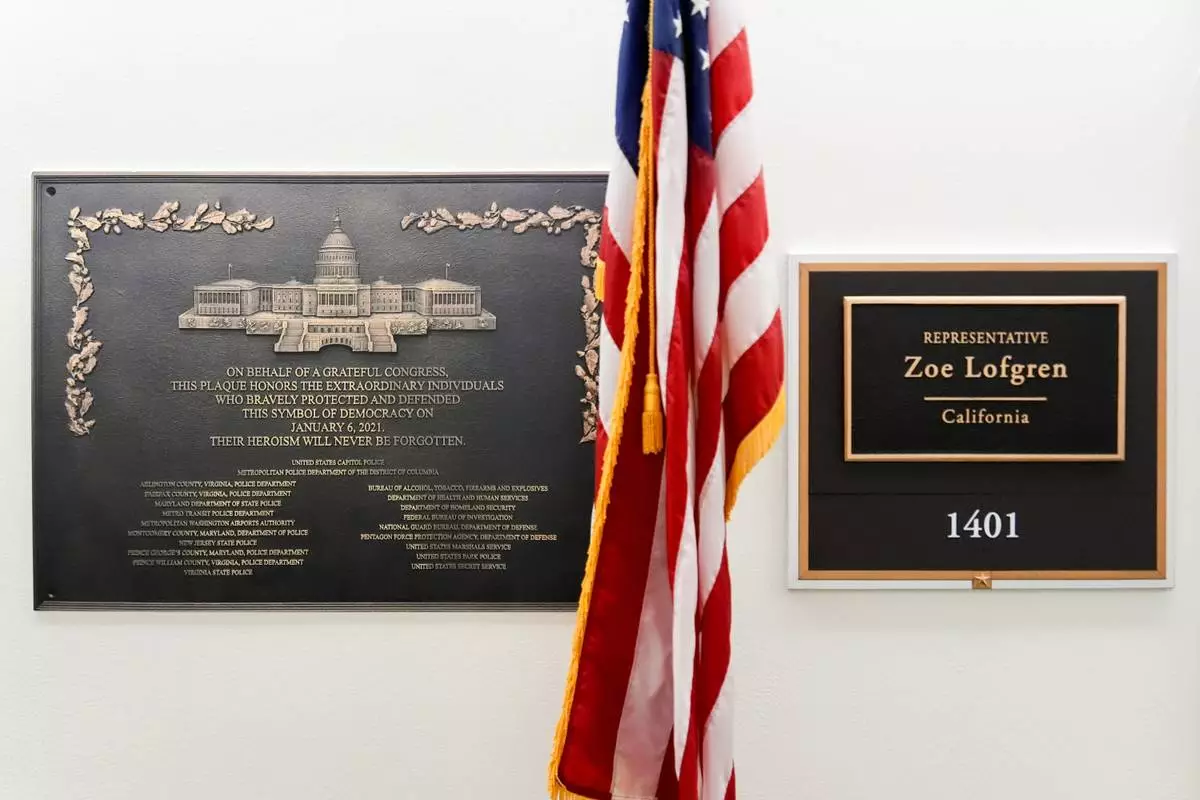
A replica plaque commemorating the Jan. 6, 2021 Capitol riot hangs outside the office of Rep. Zoe Lofgren, D-Calif., Tuesday, Dec. 30, 2025, at the Longworth House Office Building on Capitol Hill in Washington. (AP Photo/Julia Demaree Nikhinson)

A replica plaque commemorating the Jan. 6, 2021 Capitol riot hangs outside the office of Rep. Zoe Lofgren, D-Calif., Tuesday, Dec. 30, 2025, at the Longworth House Office Building on Capitol Hill in Washington. (AP Photo/Julia Demaree Nikhinson)

A replica plaque commemorating the Jan. 6, 2021 Capitol riot stands outside the office of House Minority Leader Hakeem Jeffries, D-N.Y, Tuesday, Dec. 30, 2025, at the U.S. Capitol in Washington. (AP Photo/Julia Demaree Nikhinson)

A replica plaque commemorating the Jan. 6, 2021 Capitol riot stands outside the office of House Minority Leader Hakeem Jeffries, D-N.Y, Tuesday, Dec. 30, 2025, at the U.S. Capitol in Washington. (AP Photo/Julia Demaree Nikhinson)

House Speaker Mike Johnson, a Louisiana Republican, has yet to formally unveil the plaque. And the Trump administration’s Department of Justice is seeking to dismiss a police officers' lawsuit asking that it be displayed as intended. The Architect of the Capitol, which was responsible for obtaining and displaying the plaque, said in light of the federal litigation, it cannot comment.

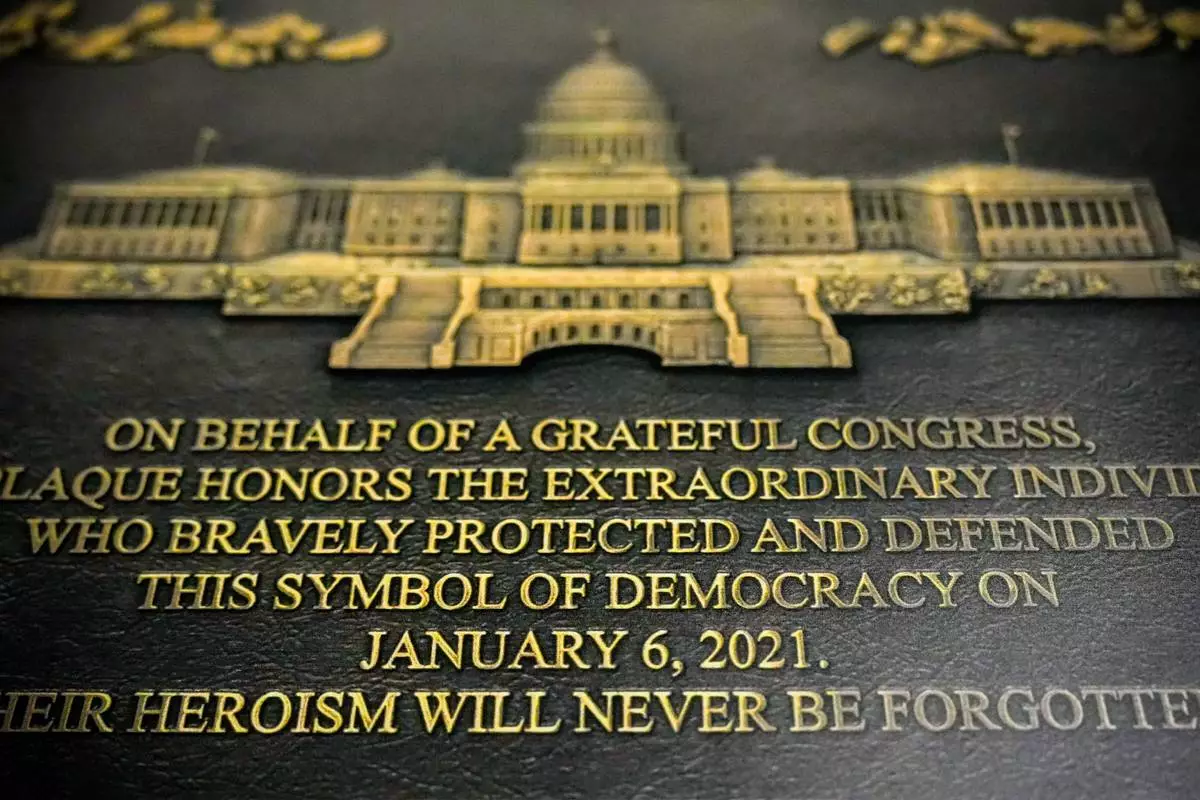
Determined to preserve the nation's history, some 100 members of Congress, mostly Democrats, have taken it upon themselves to memorialize the moment. For months, they've mounted poster board-style replicas of the Jan. 6 plaque outside their office doors, resulting in a Capitol complex awash with makeshift remembrances.

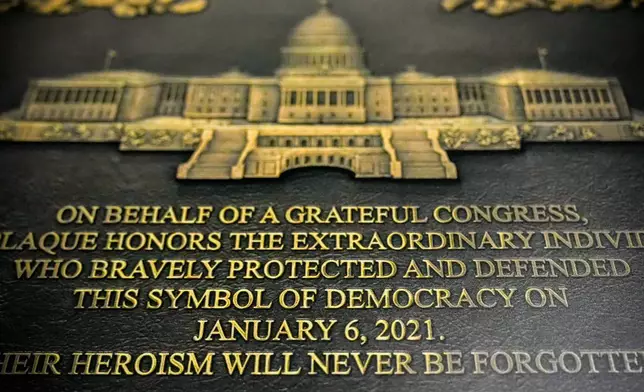
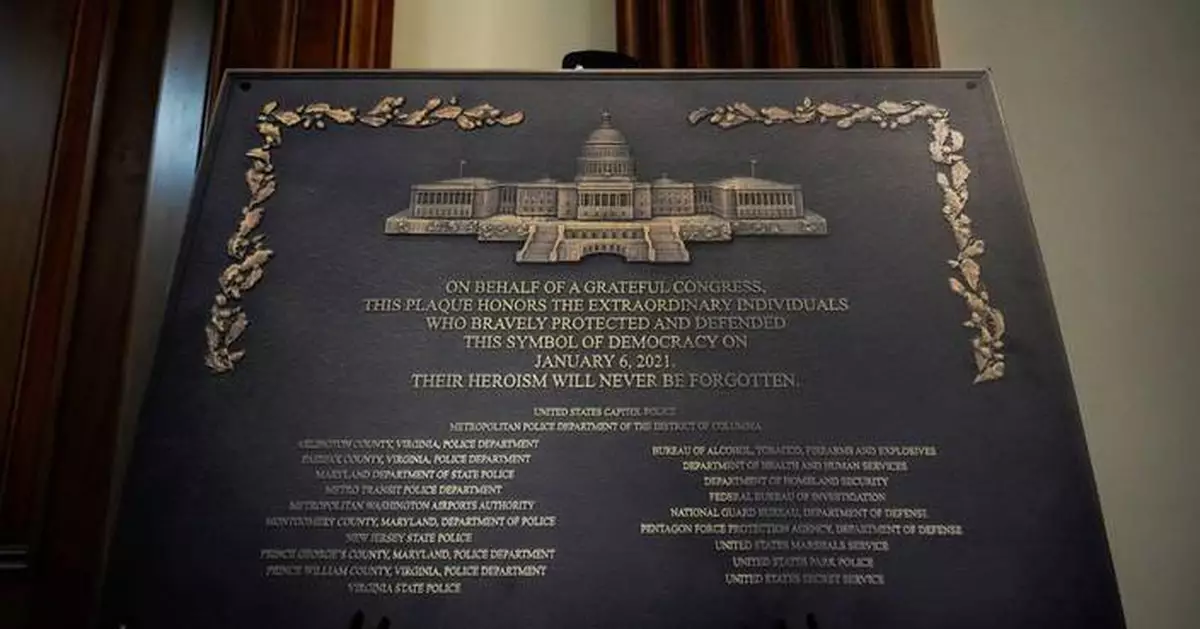
“On behalf of a grateful Congress, this plaque honors the extraordinary individuals who bravely protected and defended this symbol of democracy on Jan. 6, 2021,” reads the faux bronze stand-in for the real thing. “Their heroism will never be forgotten.”

In Washington, a capital city lined with monuments to the nation’s history, the plaque was intended to become a simple but permanent marker, situated near the Capitol’s west front, where some of the most violent fighting took place as rioters breached the building.

But in its absence, the missing plaque makes way for something else entirely — a culture of forgetting.

Visitors can pass through the Capitol without any formal reminder of what happened that day, when a mob of President Donald Trump's supporters stormed the building trying to overturn the Republican's 2020 reelection defeat to Democrat Joe Biden. With memory left unchecked, it allows new narratives to swirl and revised histories to take hold.

Five years ago, the jarring scene watched the world over was declared an “insurrection” by the then-GOP leader of the Senate, while the House GOP leader at the time called it his “saddest day” in Congress. But those condemnations have faded.

Trump calls it a “day of love.” And Johnson, who was among those lawmakers challenging the 2020 election results, is now the House speaker.

“The question of January 6 remains – democracy was on the guillotine — how important is that event in the overall sweep of 21st century U.S. history,” said Douglas Brinkley, a professor of history at Rice University and noted scholar.

“Will January 6 be seen as the seminal moment when democracy was in peril?” he asked. Or will it be remembered as “kind of a weird one-off?”

“There’s not as much consensus on that as one would have thought on the fifth anniversary,” he said.

At least five people died in the riot and its aftermath, including Trump supporter Ashli Babbitt, who was fatally shot by police while trying to climb through a window toward the House chamber. More than 140 law enforcement officers were wounded, some gravely, and several died later, some by suicide.

All told, some 1,500 people were charged in the Capitol attack, among the largest federal prosecutions in the nation’s history. When Trump returned to power in January 2025, he pardoned all of them within hours of taking office.

Unlike the twin light beams that commemorated the Sept. 11, 2001, attack or the stand-alone chairs at the Oklahoma City bombing site memorial, the failure to recognize Jan. 6 has left a gap not only in memory but in helping to stitch the country back together.

“That’s why you put up a plaque,” said Rep. Mary Gay Scanlon, D-Pa. “You respect the memory and the service of the people involved.”

The speaker’s office said in a statement late Monday the statute authorizing the plaque is “not implementable” and proposed alternatives also “do not comply.” Johnson's spokesman said if Democrats are serious about commemorating the police, they're free to work with the appropriate committees to develop a framework for proper vetting and consideration.

Lawmakers approved the plaque in March 2022 as part of a broader government funding package. The resolution said the U.S. "owes its deepest gratitude to those officers,” and it set out instructions for an honorific plaque listing the names of officers “who responded to the violence that occurred.” It gave a one-year deadline for installation at the Capitol.

This summer, two officers who fought the mob that day sued over the delay.

"By refusing to follow the law and honor officers as it is required to do, Congress encourages this rewriting of history," said the claim by officers Harry Dunn and Daniel Hodges. “It suggests that the officers are not worthy of being recognized, because Congress refuses to recognize them.”

The Justice Department is seeking to have the case dismissed. U.S. Attorney Jeanine Pirro and others argued Congress “already has publicly recognized the service of law enforcement personnel" by approving the plaque and displaying it wouldn't alleviate the problems they claim to face from their work.

“It is implausible,” the Justice Department attorneys wrote, to suggest installation of the plaque "would stop the alleged death threats they claim to have been receiving."

The department also said the plaque is required to include the names of "all law enforcement officers" involved in the response that day — some 3,600 people.

Lawmakers who've installed replicas of the plaque outside their offices said it’s important for the public to know what happened.

“There are new generations of people who are just growing up now who don’t understand how close we came to losing our democracy on Jan 6, 2021,” said Rep. Jamie Raskin, D-Md., a member of the Jan. 6 committee, which was opposed by GOP leadership but nevertheless issued a nearly 1,000-page report investigating the run-up to the attack and the attempt to overturn the 2020 election.

Raskin envisions the Capitol one day holding tours around what happened. “People need to study that as an essential part of American history,” he said.

“Think about the dates in American history that we know only by the dates: There’s the 4th of July. There's December 7th. There’s 9/11. And there's January 6th,” said Rep. Zoe Lofgren, D-calif., who also served on the committee and has a plaque outside her office.

“They really saved my life, and they saved the democracy and they deserve to be thanked for it,” she said.

But as time passes, there are no longer bipartisan memorial services for Jan. 6. On Tuesday, the Democrats will reconvene members from the Jan. 6 committee for a hearing to “examine ongoing threats to free and fair elections,” House Democratic Leader Hakeem Jeffries of New York announced. It's unlikely Republicans will participate.

The Republicans under Johnson have tapped Rep. Barry Loudermilk of Georgia to stand up their own special committee to uncover what the speaker calls the “full truth” of what happened. They're planning a hearing this month.

“We should stop this silliness of trying to whitewash history -- it’s not going to happen,” said Rep. Joe Morelle, D-N.Y., who helped lead the effort to display the replica plaques.

“I was here that day so I’ll never forget,” he said. “I think that Americans will not forget what happened."

The number of makeshift plaques that fill the halls is a testimony to that remembrance, he said.

Instead of one plaque, he said, they’ve “now got 100.”
A replica plaque commemorating the Jan. 6, 2021 Capitol riot hangs outside the office of Speaker Emerita Nancy Pelosi, D-Calif., Tuesday, Dec. 30, 2025, at the Longworth House Office Building on Capitol Hill in Washington. (AP Photo/Julia Demaree Nikhinson)
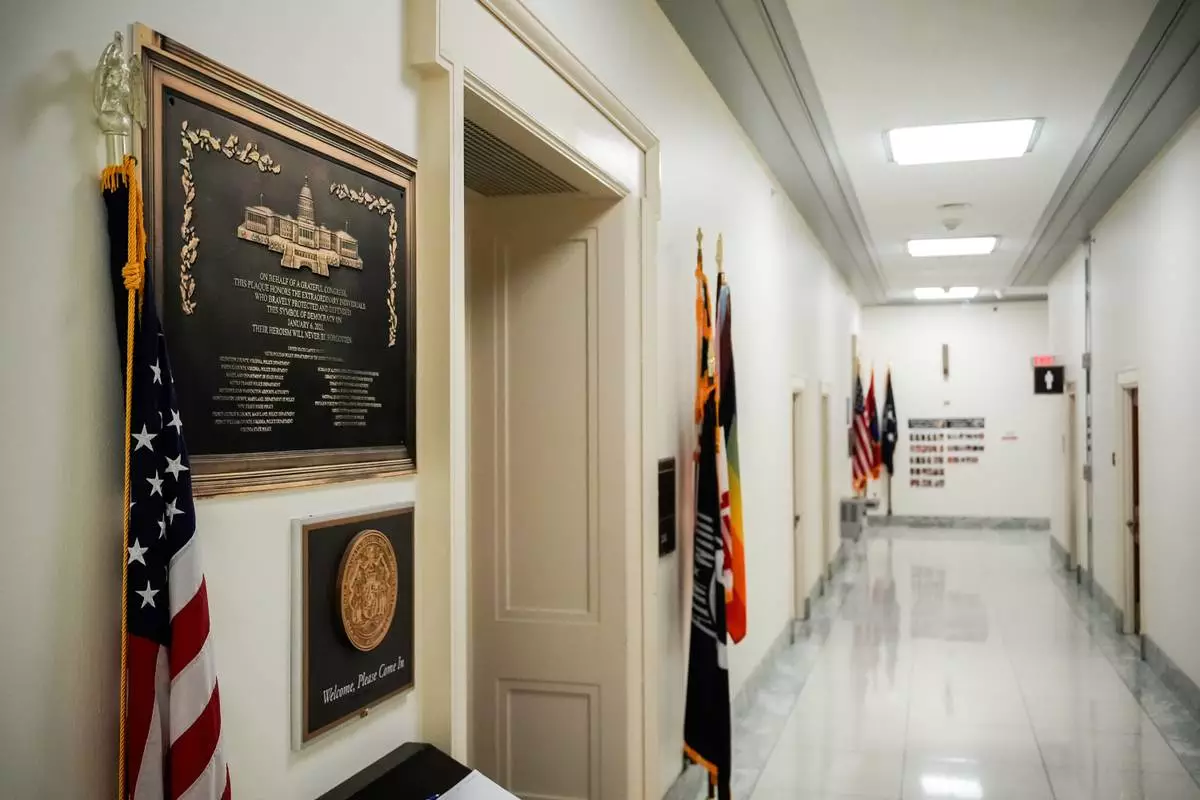
A replica plaque commemorating the Jan. 6, 2021 Capitol riot hangs outside the office of Speaker Emerita Nancy Pelosi, D-Calif., Tuesday, Dec. 30, 2025, at the Longworth House Office Building on Capitol Hill in Washington. (AP Photo/Julia Demaree Nikhinson)

A replica plaque commemorating the Jan. 6, 2021 Capitol riot hangs outside the office of Rep. Jamie Raskin, D-Md., Tuesday, Dec. 30, 2025, at the Rayburn House Office Building on Capitol Hill in Washington. (AP Photo/Julia Demaree Nikhinson)
A replica plaque commemorating the Jan. 6, 2021 Capitol riot hangs outside the office of Rep. Jamie Raskin, D-Md., Tuesday, Dec. 30, 2025, at the Rayburn House Office Building on Capitol Hill in Washington. (AP Photo/Julia Demaree Nikhinson)

A replica plaque commemorating the Jan. 6, 2021 Capitol riot stands outside the office of House Minority Leader Hakeem Jeffries, D-N.Y, Tuesday, Dec. 30, 2025, at the U.S. Capitol in Washington. (AP Photo/Julia Demaree Nikhinson)
A replica plaque commemorating the Jan. 6, 2021 Capitol riot stands outside the office of House Minority Leader Hakeem Jeffries, D-N.Y, Tuesday, Dec. 30, 2025, at the U.S. Capitol in Washington. (AP Photo/Julia Demaree Nikhinson)

A replica plaque commemorating the Jan. 6, 2021 Capitol riot hangs outside the office of Rep. Zoe Lofgren, D-Calif., Tuesday, Dec. 30, 2025, at the Longworth House Office Building on Capitol Hill in Washington. (AP Photo/Julia Demaree Nikhinson)
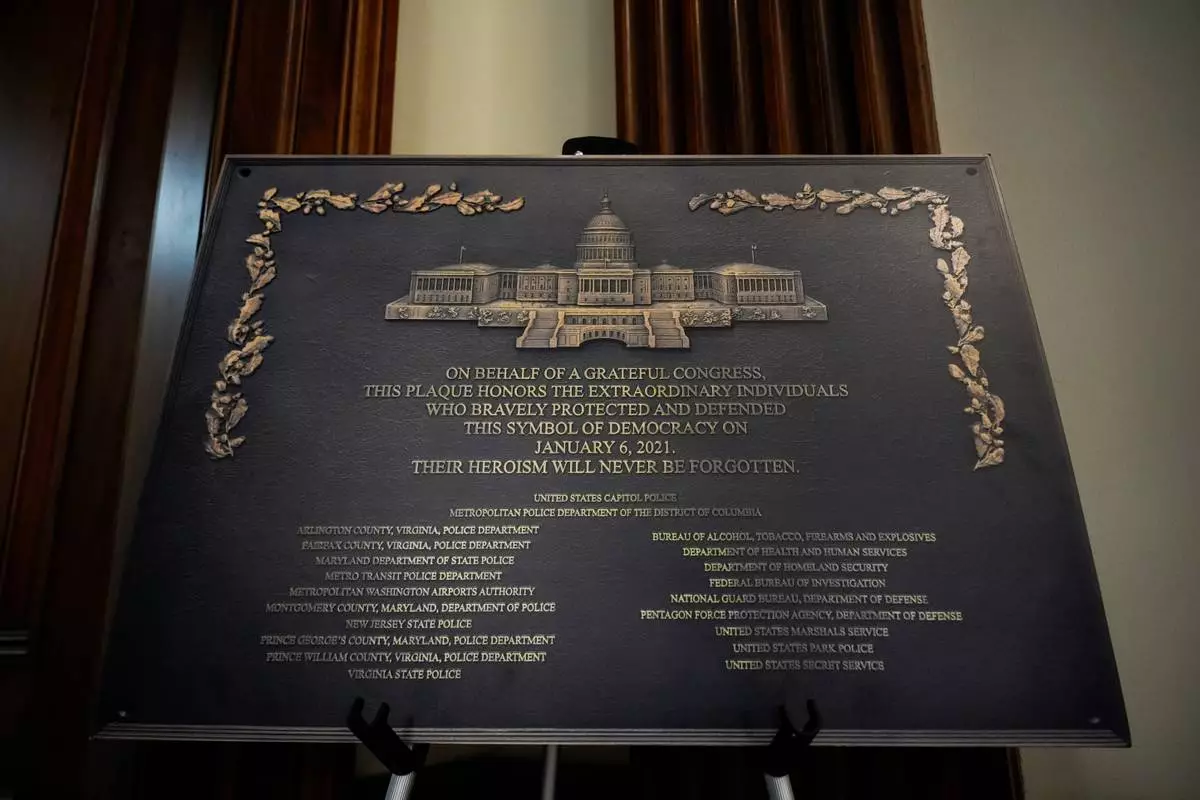
A replica plaque commemorating the Jan. 6, 2021 Capitol riot hangs outside the office of Rep. Zoe Lofgren, D-Calif., Tuesday, Dec. 30, 2025, at the Longworth House Office Building on Capitol Hill in Washington. (AP Photo/Julia Demaree Nikhinson)

A replica plaque commemorating the Jan. 6, 2021 Capitol riot stands outside the office of House Minority Leader Hakeem Jeffries, D-N.Y, Tuesday, Dec. 30, 2025, at the U.S. Capitol in Washington. (AP Photo/Julia Demaree Nikhinson)
A replica plaque commemorating the Jan. 6, 2021 Capitol riot stands outside the office of House Minority Leader Hakeem Jeffries, D-N.Y, Tuesday, Dec. 30, 2025, at the U.S. Capitol in Washington. (AP Photo/Julia Demaree Nikhinson)

The Virginia Supreme Court on Friday struck down a voter-approved Democratic congressional redistricting plan, delivering another major setback to the party in a nationwide battle against Republicans for an edge in this year's midterm elections.

The court ruled 4-3 that the state's Democratic-led legislature violated procedural requirements when it placed the constitutional amendment on the ballot to authorize the mid-decade redistricting. Voters narrowly approved the amendment April 21, but the court's ruling renders the results of that vote meaningless.

Writing for the majority, Justice D. Arthur Kelsey wrote that the legislature submitted the proposed constitutional amendment to voters “in an unprecedented manner.”

“This violation irreparably undermines the integrity of the resulting referendum vote and renders it null and void," he wrote.

Democrats had hoped to win as many as four additional U.S. House seats under Virginia's redrawn U.S. House map as part of an attempt to offset Republican redistricting done elsewhere at the urging of President Donald Trump. That ruling, combined with a recent U.S. Supreme Court decision severely weakening the Voting Rights Act, has supercharged the Republicans' congressional gerrymandering advantage heading into this year's midterm elections.

Richard Hudson, chairman of the National Republican Congressional Committee said the ruling was another sign of GOP momentum heading into the midterms.

"We’re on offense, and we’re going to win,” he said in a statement.

Don Scott, the Democratic speaker of the Virginia House of Delegates, said Democrats respect the court’s opinion but lamented that it overturned the will of the voters: “They voted YES because they wanted to fight back against the Trump power grab.”

Suzan DelBene, chairwoman of the Democratic Congressional Campaign Committee, criticized the court majority for what she said was a decision that “cast aside the will of the voters,” but she said the people will have the final say.

“In November, they will, and they’ll power Democrats to the House majority,” she said in a statement.

Legislative voting districts typically are redrawn once a decade after each census to account for population changes. But Trump started an unusual flurry of mid-decade redistricting last year when he encouraged Republican officials in Texas to redraw districts in a bid to win several additional U.S. House seats and hold on to their party's narrow majority in the midterm elections.

California responded with new voter-approved districts drawn to Democrats' advantage, and Utah's top court imposed a new congressional map that also helps Democrats. Meanwhile, Republicans stand to gain from new House districts passed in Florida, Missouri, North Carolina, Ohio and Tennessee. They could add even more after the U.S. Supreme Court's ruling in the Voting Rights Act case, which has prompted some other Republican states to consider redrawing their maps in time for this year’s elections.

Virginia currently is represented in the U.S. House by six Democrats and five Republicans who were elected from districts imposed by a court after a bipartisan redistricting commission failed to agree on a map after the 2020 census. The new districts could have given Democrats an improved chance to win all but one of the state's 11 congressional seats.

The Supreme Court's majority was critical of the state’s redrawing of the congressional maps to benefit one political party. Those justices noted that 47% of the state’s voters supported GOP congressional candidates in 2024 but the new map could result in Democrats making up 91% of the state’s House delegation.

Under the Democratic-drawn map, five districts would have been anchored in the Democratic stronghold of northern Virginia, including one stretching out like a lobster to consume Republican-leaning rural areas. Revisions to four other districts across Richmond, southern Virginia and Hampton Roads would have diluted the voting power of conservative blocs in those areas. And a reshaped district in parts of western Virginia would have lumped together three Democratic-leaning college towns to offset other Republican voters.

The state Supreme Court’s seven justices are appointed by the state legislature, which has toggled back and forth between Democratic, Republican and split control over recent years. Legal experts say the body doesn’t have a set ideological profile

The case before the court focused not on the shape of the new districts but rather on the process the General Assembly used to authorize them.

Because the state’s redistricting commission was established by a voter-approved constitutional amendment, lawmakers had to propose an amendment to redraw the districts. That required approval of a resolution in two separate legislative sessions, with a state election sandwiched in between, to place the amendment on the ballot.

The legislature’s initial approval of the amendment occurred last October — while early voting was underway but before it concluded on the day of the general election. The legislature’s second vote on the amendment occurred after a new legislative session began in January. Lawmakers also approved a separate bill in February laying out the new districts, subject to voter approval of the constitutional amendment.

Judicial arguments focused on whether the legislature’s initial approval of the amendment came too late, because early voting already had begun for the 2025 general election.

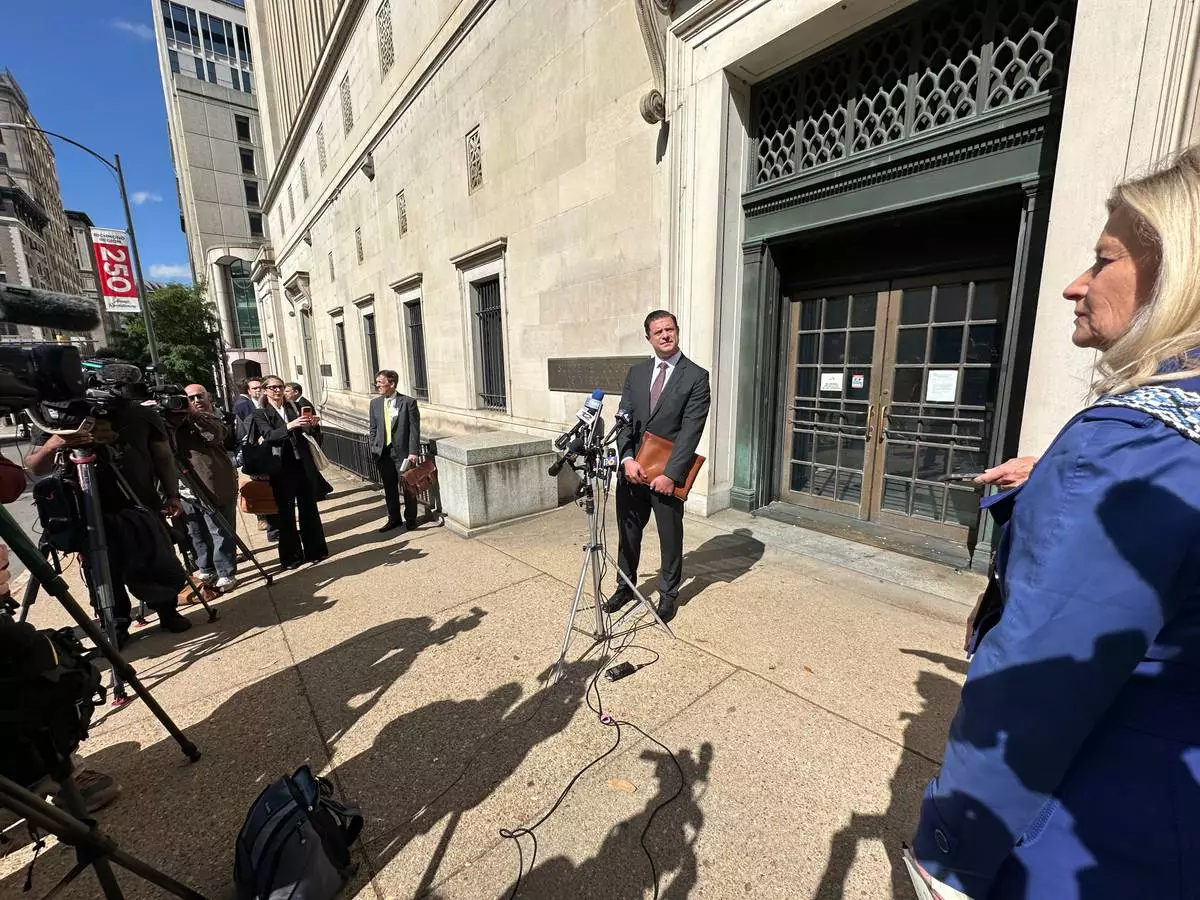
Attorney Matthew Seligman, who defended the legislature, argued that the “election” should be defined narrowly to mean the Tuesday of the general election. In that case, the legislature’s first vote on the redistricting amendment occurred before the election and was constitutional, he told judges.

But, the Supreme Court said in its ruling, “this view appears to be wholly unprecedented in Virginia’s history.”

An attorney for the plaintiffs, Thomas McCarthy, argued that an “election” should be interpreted to cover the entire period during which people can cast ballots, which lasts several weeks in Virginia. If that’s the case, he told justices, then the legislature’s initial endorsement of the redistricting amendment came too late to comply with the state constitution.

The Supreme Court agreed with that argument, writing: “The General Assembly passed the proposed constitutional amendment for the first time well after voters had begun casting ballots during the 2025 general election.”

By the time lawmakers initially endorsed the constitutional amendment, statewide voters already had cast more than 1.3 million ballots in the general election, about 40% of the total votes ultimately cast, the court said.

The Supreme Court’s ruling affirms a decision by a judge in rural Tazewell County, in southwestern Virginia. The court had placed a hold on that ruling and allowed the redistricting vote to proceed before hearing arguments on the case.

In the dissent to Friday's ruling, Chief Justice Cleo Powell said the election for the purpose of considering the amendment does not include the early voting period.

“The majority’s definition creates an infinite voting loop that appears to have no established beginning,” she wrote, “only a definitive end: Election Day.”

Attorney Matthew Seligman, representing Democratic state legislators, speaks with the media following a hearing on new congressional maps before the state Supreme Court in Richmond, Va., on Monday, April 27, 2026. (AP Photo/Allen G. Breed)

Attorney Matthew Seligman, representing Democratic state legislators, speaks with the media following a hearing on new congressional maps before the state Supreme Court in Richmond, Va., on Monday, April 27, 2026. (AP Photo/Allen G. Breed)

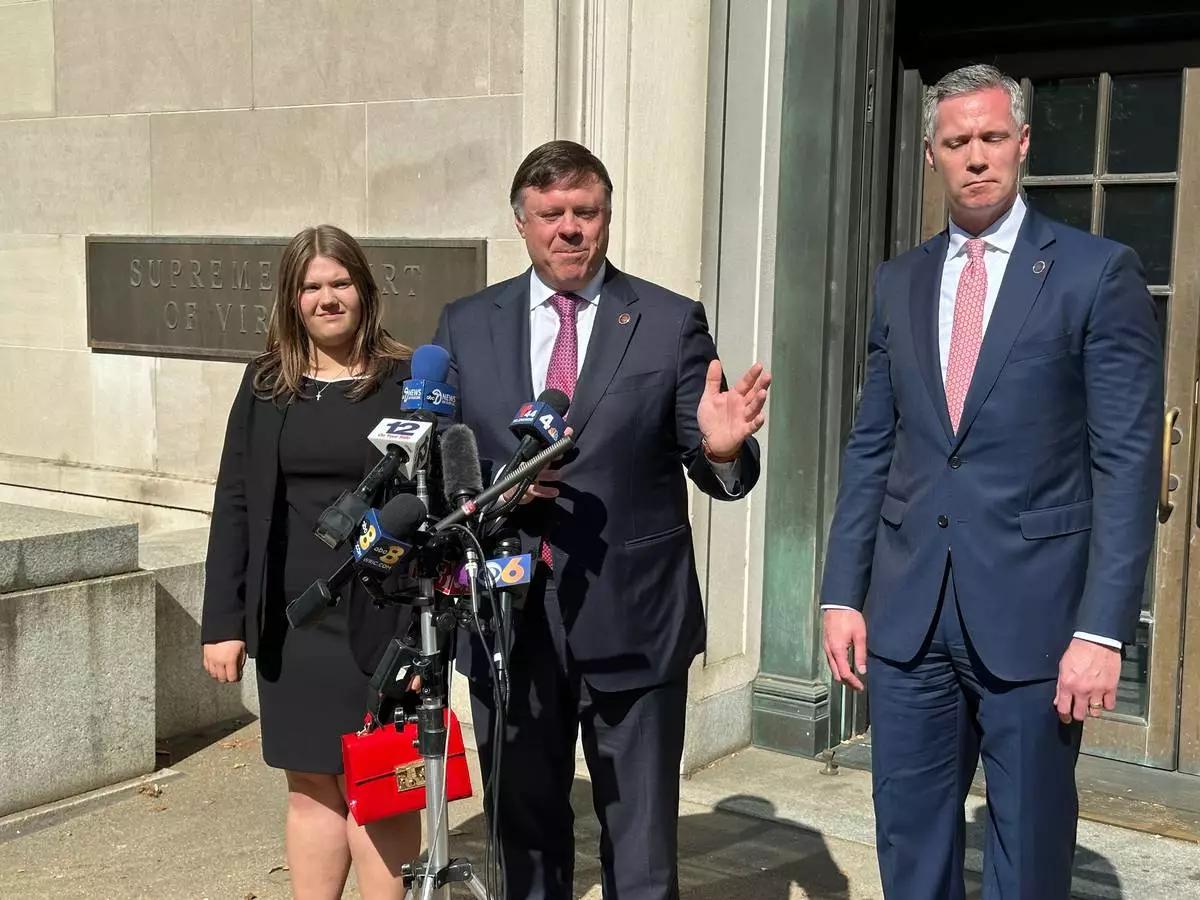
State Senate Minority Leader Ryan McDougle, center, speaks outside the Supreme Court of Virginia after arguments were heard in a redistricting-related case at the court in Richmond, Va., on Monday, April 27, 2026. (AP Photo/Allen G. Breed)

State Senate Minority Leader Ryan McDougle, center, speaks outside the Supreme Court of Virginia after arguments were heard in a redistricting-related case at the court in Richmond, Va., on Monday, April 27, 2026. (AP Photo/Allen G. Breed)

Recommended Articles