Skip to Content Facebook Feature Image

AEye Sets the Pace for Lidar Industry by Announcing Stratos™ Ultra-Long-Range Third Generation Lidar Capable of Detecting Objects at up to 1.5 Kilometers

Business

AEye Sets the Pace for Lidar Industry by Announcing Stratos™ Ultra-Long-Range Third Generation Lidar Capable of Detecting Objects at up to 1.5 Kilometers
Business

Business

AEye Sets the Pace for Lidar Industry by Announcing Stratos™ Ultra-Long-Range Third Generation Lidar Capable of Detecting Objects at up to 1.5 Kilometers

2026-01-05 21:03 Last Updated At:01-06 13:20

PLEASANTON, Calif.--(BUSINESS WIRE)--Jan 5, 2026--

AEye, Inc. (Nasdaq: LIDR), a global leader in software-defined lidar solutions and the manufacturer of the Apollo lidar sensor, continues to set new standards in lidar detection with today’s announcement of Stratos™, a new sensor that redefines the definition of “ultra-long-range” lidar. Capable of reliably detecting objects at distances of up to 1.5 kilometers, Stratos™ sets a new benchmark for performance, accuracy, and real-world deployment at a competitive price point.

This press release features multimedia. View the full release here: https://www.businesswire.com/news/home/20260105416212/en/

Stratos™ is specifically designed to address the most demanding requirements by combining cutting-edge optics with a software-defined architecture to deliver high resolution and range in a compact and scalable form factor. By extending reliable detection well beyond one kilometer, and at resolution greater than two times that of AEye’s Apollo, Stratos™ enables earlier object recognition, improved situational awareness, and enhanced decision-making in complex, high-speed, and safety-critical environments.

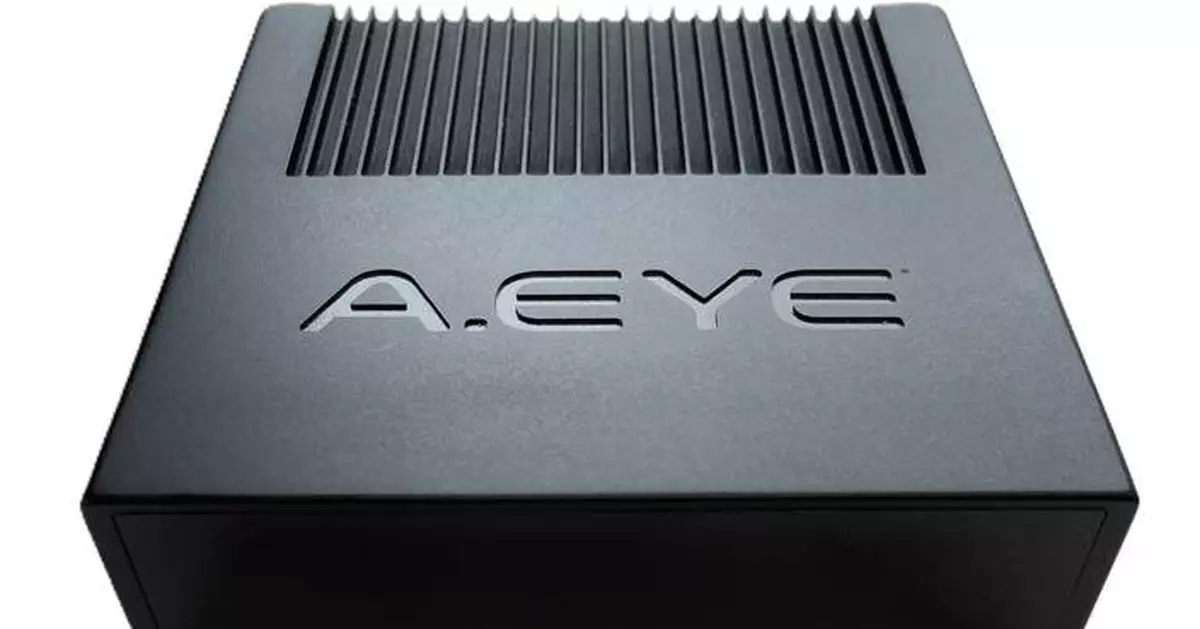
Stratos™ delivers ultra-long-range sensing in a compact package not much larger than a typical smartphone. When placed behind the windshield in automotive and trucking applications, Stratos™ can detect objects at up to 500 meters. Its ability to detect objects at distances of up to 1.5 kilometers also enables critical applications in aviation, defense, and rail.

“Stratos™ represents a significant leap forward in long-range lidar capability, bringing the ultimate perception capability to the realm of physical AI,” said Matt Fisch, CEO of AEye. “By extending detection out to 1.5 kilometers while maintaining precision and system efficiency in a small form factor, we’re providing a cost disruptive solution that enables our customers to detect the smallest objects much earlier, react sooner, and operate more safely in real-world conditions, even at high speeds.”

About AEye

AEye offers a suite of unique software-defined lidar solutions that address a wide range of real-world needs including advanced driver-assistance, vehicle autonomy, smart infrastructure, security, defense, and logistics applications. AEye’s flagship product, Apollo, has been widely recognized for its small form factor and its ability to detect objects at up to one kilometer. In addition to Apollo, AEye also offers Stratos™ with the ability to detect objects at up to one-and-half kilometers as well as a full-stack solution through its OPTIS™ platform. OPTIS™ provides a complete system that captures a high-resolution 3D image of the world, interprets it, and provides direction to act upon what it sees in real-time.

Forward-Looking Statements

Certain statements included in this press release that are not historical facts are forward-looking statements within the meaning of the federal securities laws, including the safe harbor provisions under the United States Private Securities Litigation Reform Act of 1995. Forward-looking statements are sometimes accompanied by words such as “believe,” “continue,” “project,” “expect,” “anticipate,” “estimate,” “intend,” “strategy,” “future,” “opportunity,” “predict,” “plan,” “may,” “should,” “will,” “would,” “potential,” “seem,” “seek,” “outlook,” and similar expressions that predict or indicate future events or trends, or that are not statements of historical matters. Forward-looking statements are predictions, projections, and other statements about future events that are based on current expectations and assumptions and, as a result, are subject to risks and uncertainties. Forward-looking statements included in this press release include statements about the range, resolution, and relative cost of AEye’s new Stratos™ product offering, the potential use cases the Stratos™ product is anticipated to enable, and AEye’s belief that Stratos sets a new benchmark for lidar performance, among others. These statements are based on various assumptions, whether or not identified in this press release. These forward-looking statements are provided for illustrative purposes only and are not intended to serve as and must not be relied on by an investor as a guarantee, an assurance, a prediction, or a definitive statement of fact or probability. Actual events and circumstances are very difficult or impossible to predict and will differ from the assumptions. Many actual events and circumstances are beyond the control of AEye. Many factors could cause actual future events to differ from the forward-looking statements in this press release, including, but not limited to: (i) the risks that reliable detection of objects at distances of up to 1.5 kilometers may not set nor remain a benchmark for performance, accuracy, and real-world deployment at a competitive price point due to unknown or future product releases by competitors, or otherwise; (ii) the risks that Stratos™ may not enable earlier object recognition, improve situational awareness, or enhance decision-making in complex, high-speed, and safety-critical environments to the extent anticipated, or at all; (iii) the risks that Stratos™ may not enable critical applications in aviation, defense, and rail to the extent or in the time frame anticipated, or at all; (iv) the risks that Stratos™ may not be a cost disruptive solution to the extent anticipated, or at all; (v) the risks that Stratos™ may not be able to detect all objects in all scenarios at distances of up to 1.5 kilometers; (vi) the risks that the lidar market may not continue to grow to the extent anticipated, or at all; (vii) the risks that lidar adoption may occur slower than anticipated or fail to occur at all; (viii) the risks that AEye’s products may not meet the diverse range of performance and functional requirements of target markets and customers; (ix) the risks that AEye’s products may not function as anticipated by AEye, or by target markets and customers; (x) the risks that AEye may not be in a position to adequately or timely address either the near or long-term opportunities that may or may not exist in the evolving autonomous transportation industry; (xi) the risks that laws and regulations are adopted impacting the use of lidar that AEye is unable to comply with, in whole or in part; (xii) the risks associated with changes in competitive and regulated industries in which AEye operates, variations in operating performance across competitors, and changes in laws and regulations affecting AEye’s business; (xiii) the risks that AEye is unable to adequately implement its business plans, forecasts, and other expectations, and identify and realize additional opportunities; and (xiv) the risks of economic downturns and a changing regulatory landscape in the highly competitive and evolving industry in which AEye operates. These risks and uncertainties may be amplified by current or future global conflicts and current and potential trade restrictions, trade tensions, and tariffs, all of which continue to cause economic uncertainty. You should carefully consider the foregoing factors and the other risks and uncertainties described in the “Risk Factors” section of the periodic report that AEye has most recently filed with the U.S. Securities and Exchange Commission, or the SEC, and other documents filed by us or that will be filed by us from time to time with the SEC. These filings identify and address other important risks and uncertainties that could cause actual events and results to differ materially from those contained in the forward-looking statements. Forward-looking statements speak only as of the date they are made.

Investors are cautioned not to put undue reliance on forward-looking statements; AEye assumes no obligation and does not intend to update or revise these forward-looking statements, whether as a result of new information, future events, or otherwise. AEye gives no assurance that AEye will achieve any of its expectations.
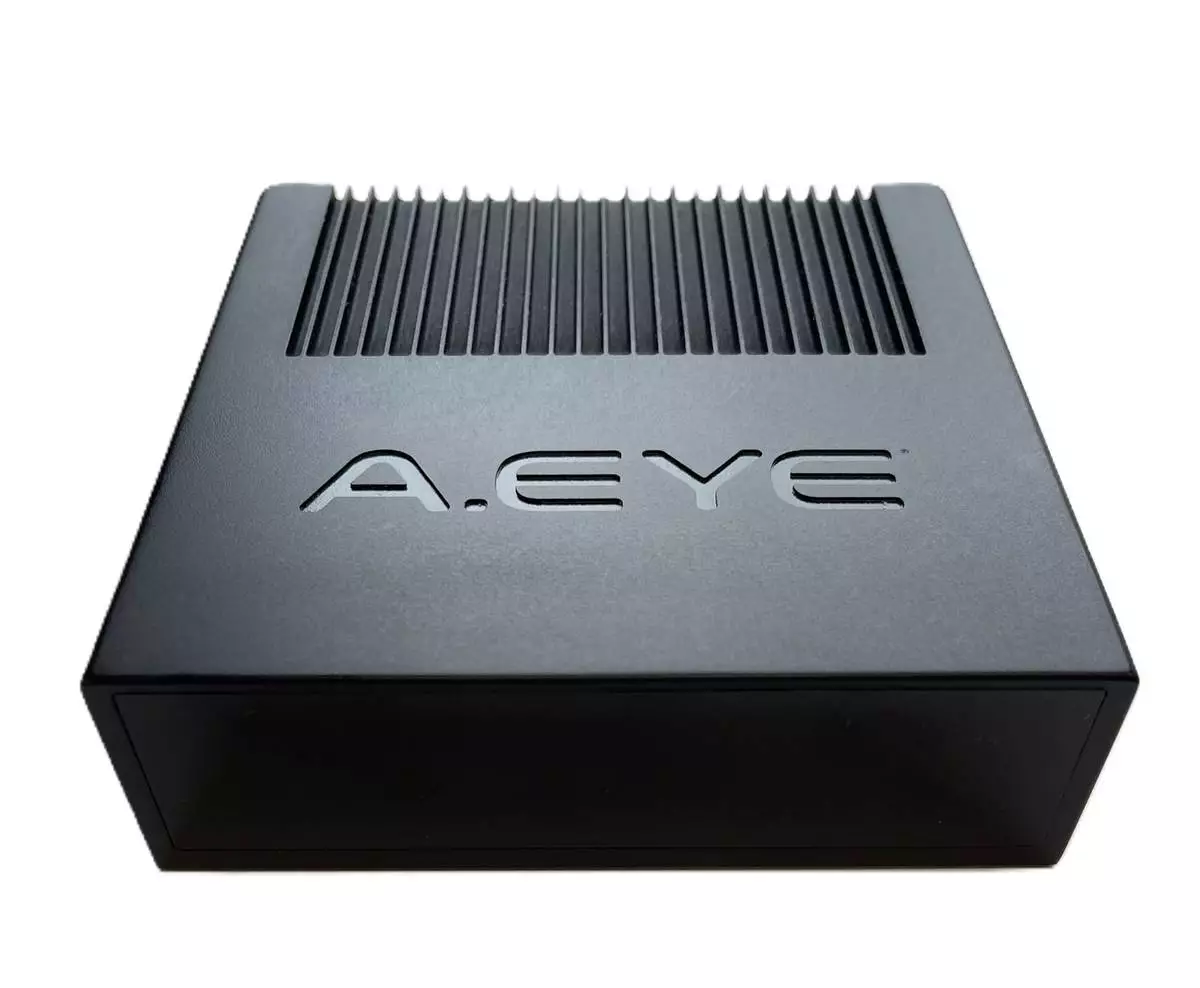
AEye's Stratos - Ultra-Long-Range and Ultra-Compact Lidar
AEye's Stratos - Ultra-Long-Range and Ultra-Compact Lidar
CORPUS CHRISTI, Texas (AP) — A school police officer in Uvalde, Texas, stood by during one of the deadliest school shootings in U.S. history and made no attempt to distract or stop the gunman before he opened fire inside the classrooms, a prosecutor told a jury Tuesday.

Adrian Gonzales, who was among the first to respond to the attack in 2022, arrived while the teenage assailant was still outside the building and did not make a move, even when a teacher pointed out the direction of the shooter, special prosecutor Bill Turner said during opening statements of a criminal trial.

The officer only went inside Robb Elementary minutes later “after the damage had been done,” Turner said.

Prosecutors focused sharply on Gonzales’ steps in the minutes after the shooting began and as the first officers arrived. They did not address the hundreds of other local, state and federal officers who arrived and waited more than an hour to confront the gunman.

Gonzales has pleaded not guilty in the case, which is a rare example of charges being brought against an officer who is accused of not doing more to save lives. His attorneys disputed accusations that he did nothing at what they called a chaotic scene, saying that Gonzales helped evacuate children as other police arrived.

“The government makes it want to seem like he just sat there,” said defense attorney Nico LaHood. “He did what he could, with what he knew at the time.”

Gonzales, who is no longer a Uvalde schools officer, faces 29 counts of child abandonment or endangerment and could be sentenced to a maximum of two years in prison if convicted.

“He could have stopped him, but he didn’t want to be the target," said Velma Lisa Duran, sister of teacher Irma Garcia, who was among the 19 students and two teachers who were killed.

Duran, who arrived at the courthouse to watch the beginning of the trial, said authorities stood by more than three years ago while her sister “died protecting children.”

Defense attorneys described an officer who tried to assess where the gunman was while thinking he was being fired on without protection against a high-powered rifle.

Gonzales was among the first group to go into the building before they took fire from Ramos, the officer's attorneys said.

“This isn’t a man waiting around. This isn’t a man failing to act," defense attorney Jason Goss said.

Gonzales and former Uvalde schools police chief Pete Arredondo are the only two officers to face criminal charges over the response. Arredondo’s trial has not been scheduled.

Gonzales, a 10-year veteran of the police force, had extensive active shooter training, the special prosecutor said. “When you hear gunshots, you go to the gunfire,” Turner said.

“When a child calls 911, we have a right to expect a response,” Turner said, his voice trembling with emotion.

As Gonzales waited outside, children and teachers hid inside darkened classrooms and grabbed scissors “to confront a gunman,” Turner said. “They did as they had been trained.”

Some families of the victims were upset that more officers were not charged given that nearly 400 federal, state and local officers converged on the school soon after the attack.

Terrified students inside the classrooms called 911 and parents outside begged for intervention by officers, some of whom could hear shots being fired while they stood in a hallway. A tactical team of officers eventually went into the classroom and killed the shooter.

An investigation found 77 minutes passed from the time authorities arrived until the tactical team breached the classroom and killed Salvador Ramos, who was obsessed with violence and notoriety in the months leading up to the shooting.

The trial for Gonzales was expected to last about two weeks, Judge Sid Harle said.

Among the potential witnesses are FBI agents, Texas Rangers, emergency dispatchers, school employees and family members of the victims.

At the request of Gonzales’ attorneys, the trial was moved to Corpus Christi after they argued Gonzales could not receive a fair trial in Uvalde.

State and federal reviews of the shooting cited cascading problems in law enforcement training, communication, leadership and technology, and questioned why officers waited so long.

The officer’s attorneys told jurors that there was plenty of blame to go around — from the lack of security at the school to police policy — and that prosecutors will try to play on their emotions by showing photos from the scene.

“What the prosecution wants you to do is get mad at Adrian. They are going to try to play on your emotions,” Goss said.

“The monster who hurt these children is dead,” he said. “He did not get this justice.”

Prosecutors likely will face a high bar to win a conviction. Juries are often reluctant to convict law enforcement officers for inaction, as seen after the Parkland, Florida, school massacre in 2018.

Sheriff’s deputy Scot Peterson was charged with failing to confront the shooter in that attack. It was the first such prosecution in the U.S. for an on-campus shooting, and Peterson was acquitted by a jury in 2023.

Vertuno reported from Austin, Texas. Associated Press journalists Nicholas Ingram in Corpus Christi, Texas; Juan A. Lozano in Houston; and John Seewer in Toledo, Ohio, contributed to this report.

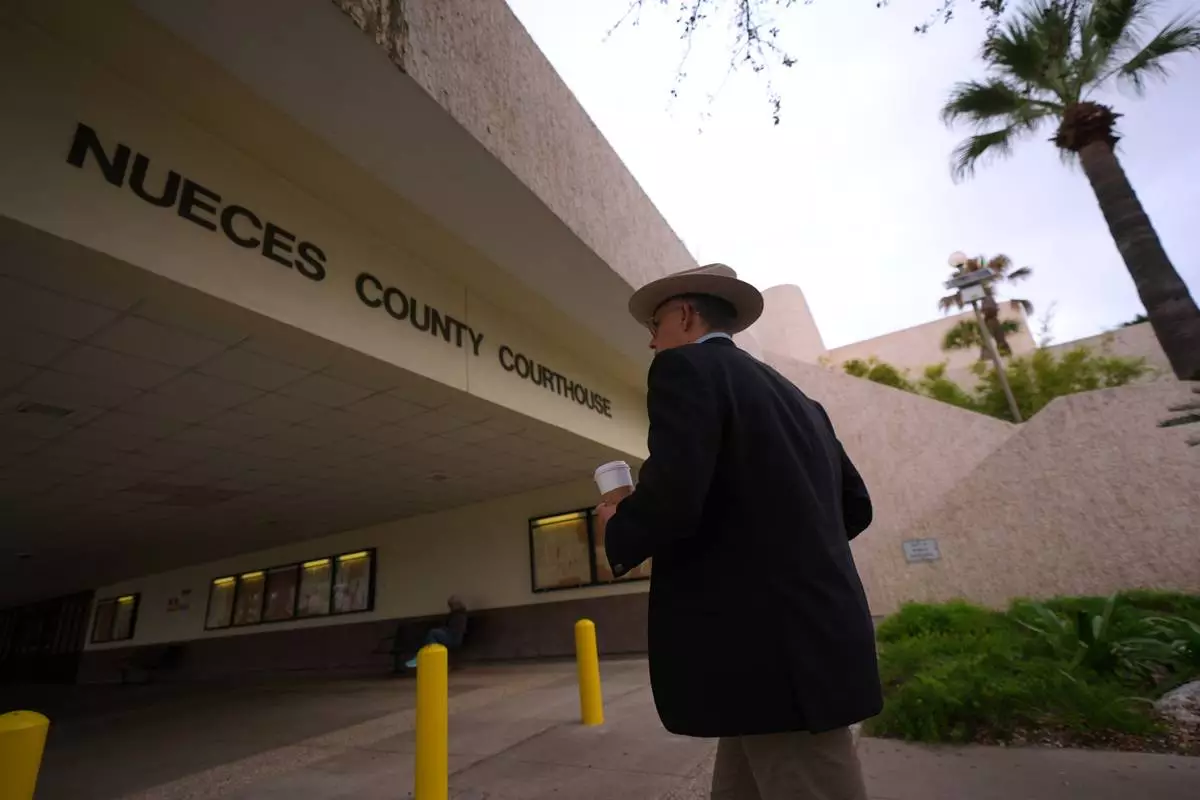
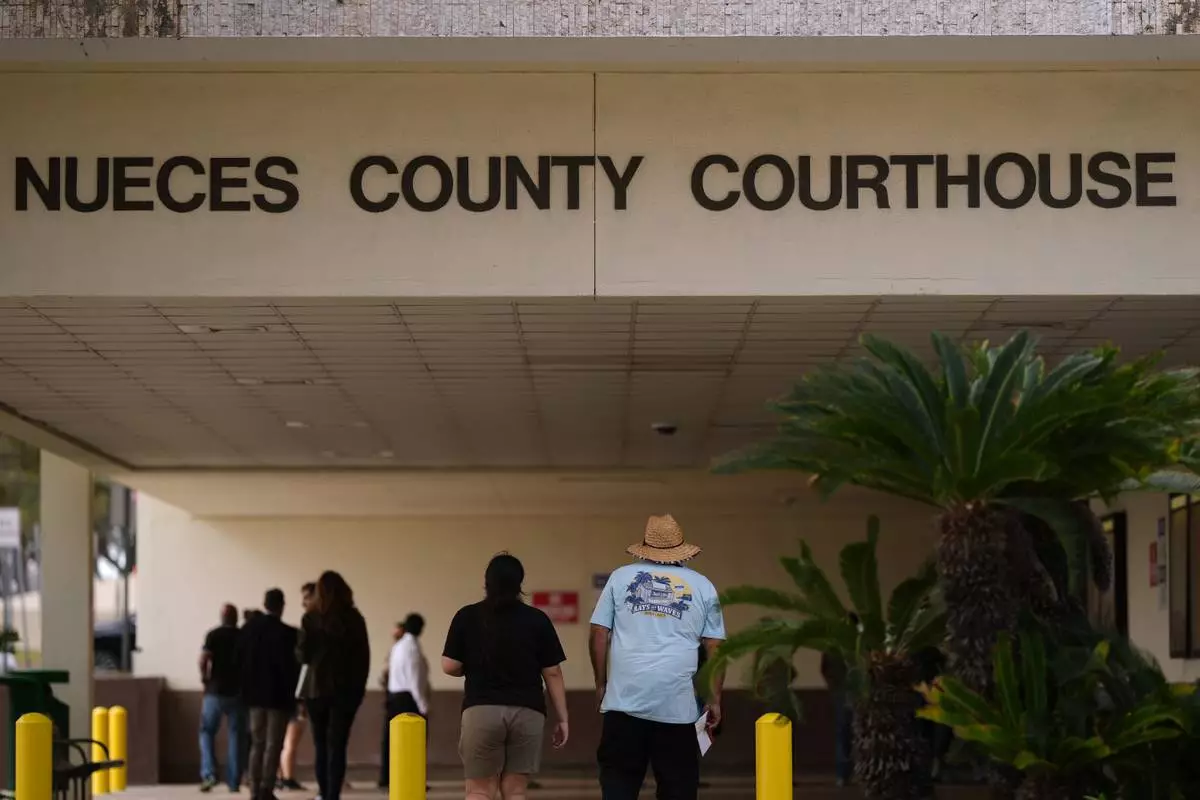
A man enters the Nueces County Courthouse in Corpus Christi, Texas, as jury selection continues in the trial for former Uvalde school district police officer Adrian Gonzales, Monday, Jan. 5, 2026. (AP Photo/Eric Gay)

A man enters the Nueces County Courthouse in Corpus Christi, Texas, as jury selection continues in the trial for former Uvalde school district police officer Adrian Gonzales, Monday, Jan. 5, 2026. (AP Photo/Eric Gay)

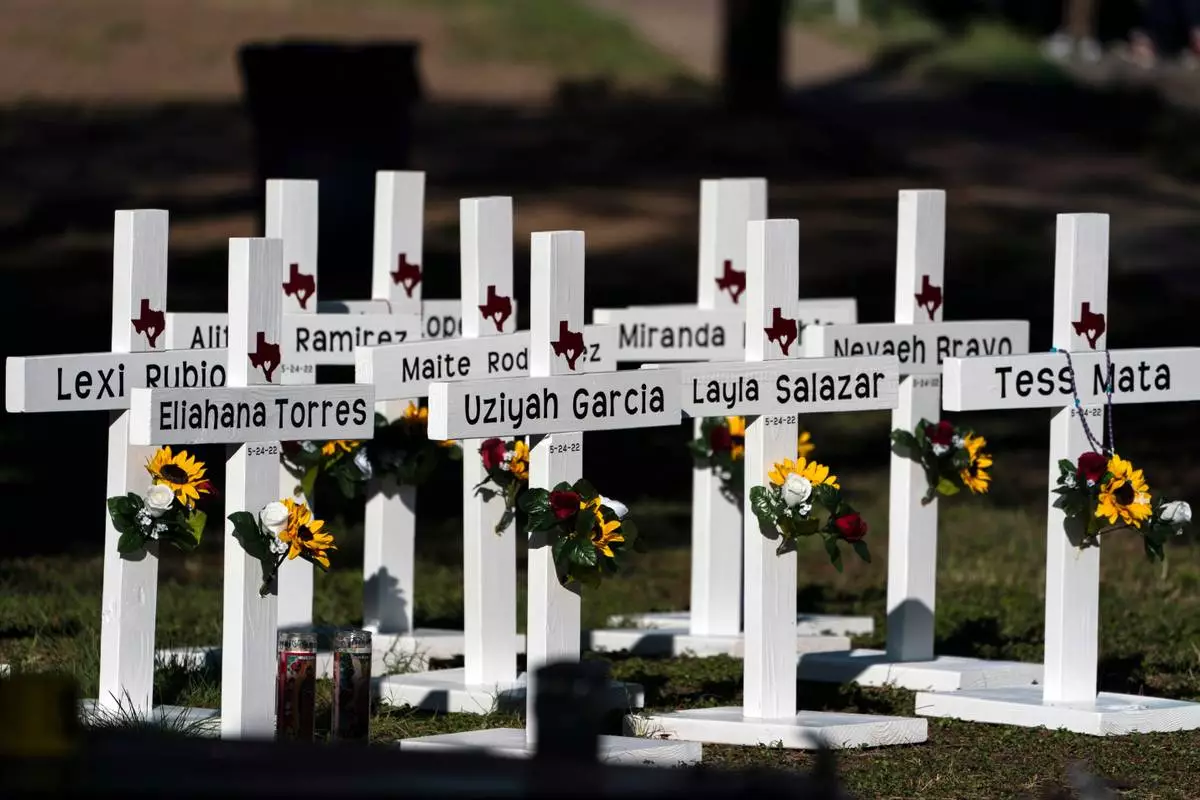
FILE - Crosses with the names of shooting victims are placed outside Robb Elementary School in Uvalde, Texas, May 26, 2022. (AP Photo/Jae C. Hong, File)

FILE - Crosses with the names of shooting victims are placed outside Robb Elementary School in Uvalde, Texas, May 26, 2022. (AP Photo/Jae C. Hong, File)

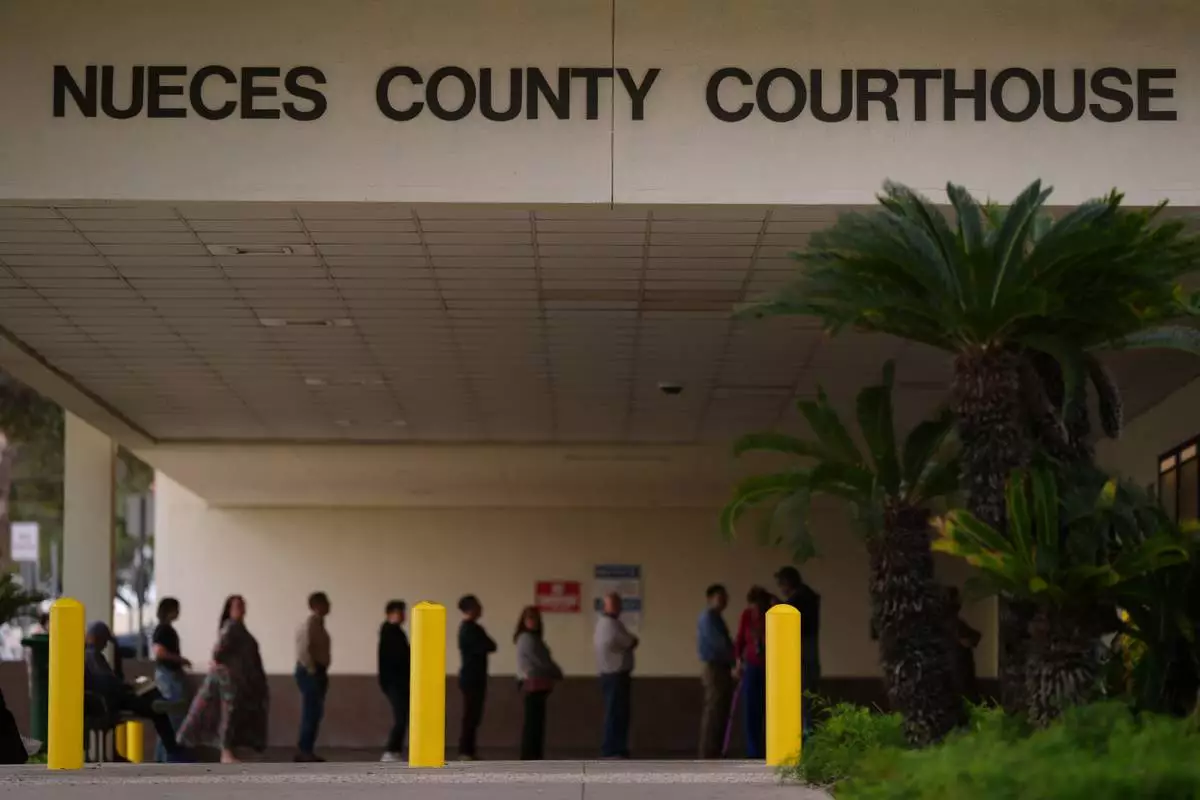
People enter the Nueces County Courthouse in Corpus Christi, Texas, as jury selection continues in the trial for former Uvalde school district police officer Adrian Gonzales, Monday, Jan. 5, 2026. (AP Photo/Eric Gay)

People enter the Nueces County Courthouse in Corpus Christi, Texas, as jury selection continues in the trial for former Uvalde school district police officer Adrian Gonzales, Monday, Jan. 5, 2026. (AP Photo/Eric Gay)

A line forms at the Nueces County Courthouse in Corpus Christi, Texas, as jury selection continues in the trial for former Uvalde school district police officer Adrian Gonzales, Monday, Jan. 5, 2026. (AP Photo/Eric Gay)

A line forms at the Nueces County Courthouse in Corpus Christi, Texas, as jury selection continues in the trial for former Uvalde school district police officer Adrian Gonzales, Monday, Jan. 5, 2026. (AP Photo/Eric Gay)

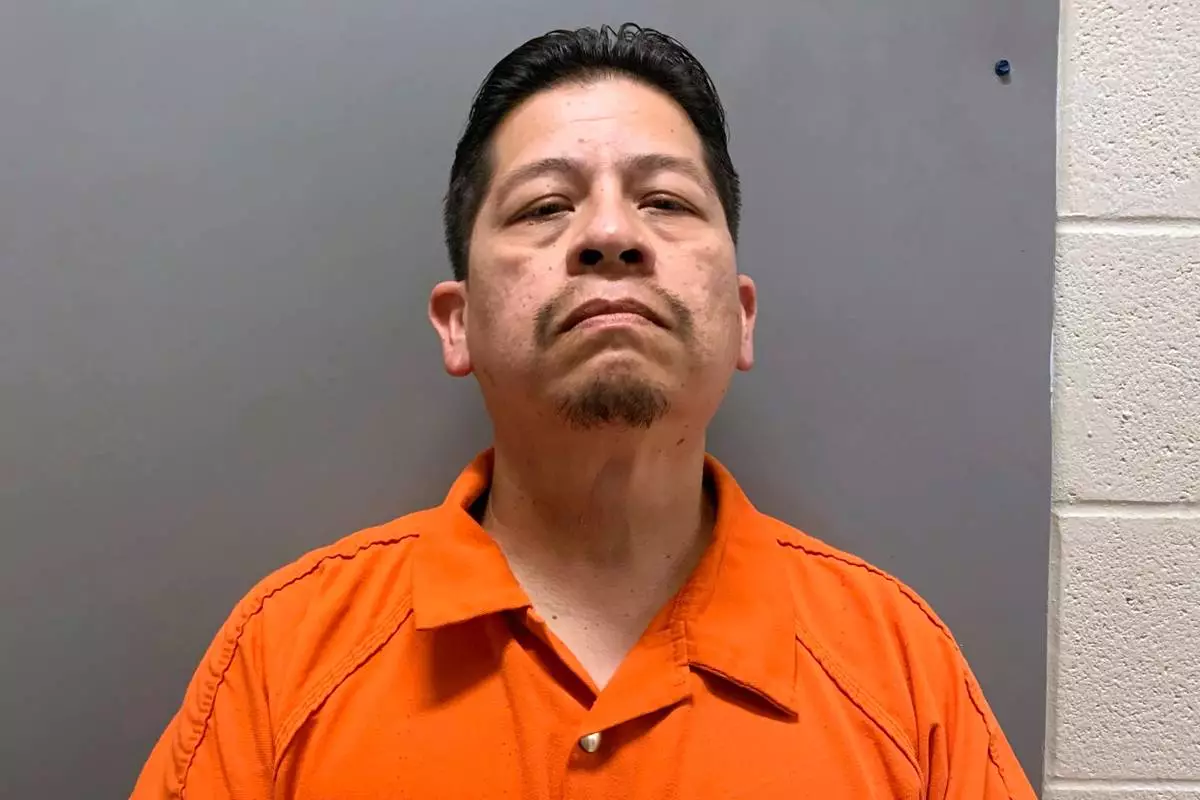
FILE - This booking image provided by the Uvalde County, Texas, Sheriff's Office shows Adrian Gonzales, a former police officer for schools in Uvalde, Texas. (Uvalde County Sheriff's Office via AP, File)

FILE - This booking image provided by the Uvalde County, Texas, Sheriff's Office shows Adrian Gonzales, a former police officer for schools in Uvalde, Texas. (Uvalde County Sheriff's Office via AP, File)

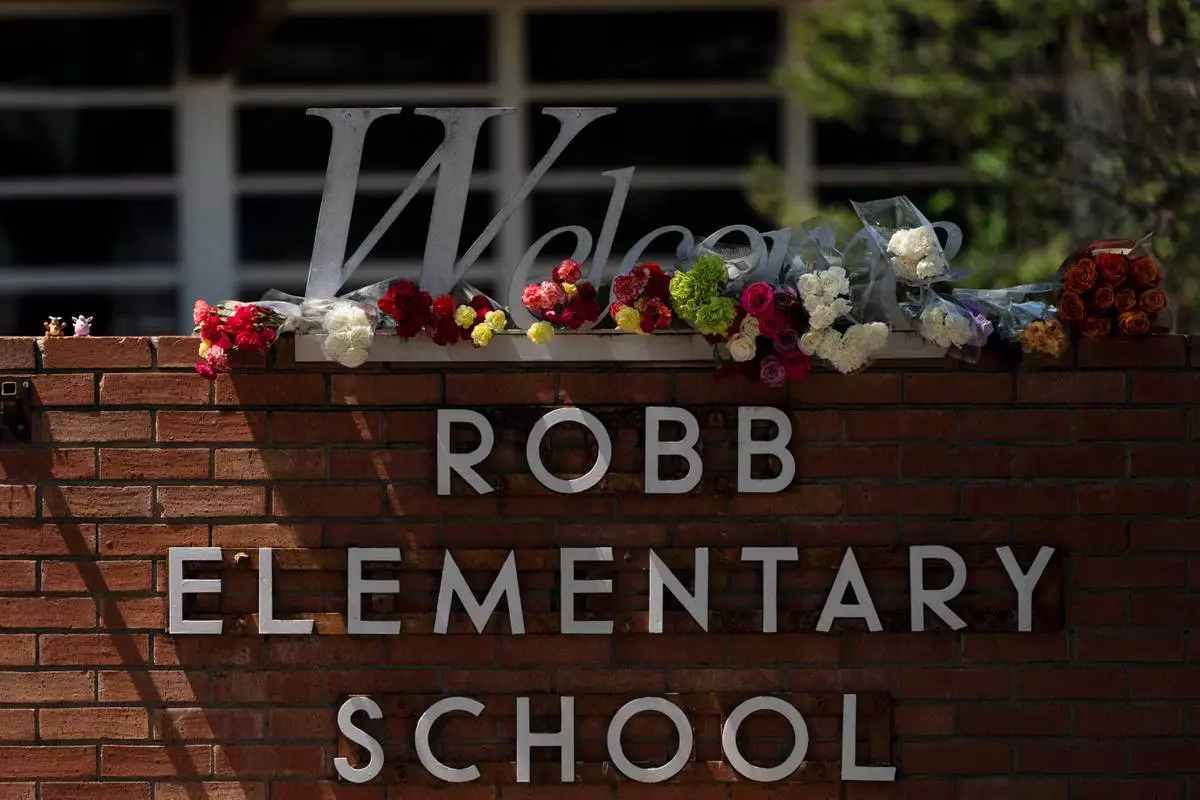
FILE - Flowers are placed around a welcome sign outside Robb Elementary School in Uvalde, Texas, May 25, 2022, to honor the victims killed in a shooting at the school. (AP Photo/Jae C. Hong, File)

FILE - Flowers are placed around a welcome sign outside Robb Elementary School in Uvalde, Texas, May 25, 2022, to honor the victims killed in a shooting at the school. (AP Photo/Jae C. Hong, File)

Recommended Articles