NEW YORK (AP) — U.S. flu infections surged over the holidays, and health officials are calling it a severe season that is likely to get worse.
New government data posted Monday — for flu activity through the week of Christmas — showed that by some measures this season is already surpassing the flu epidemic of last winter, one of the harshest in recent history.
The data was released the same day that the Trump administration said it will no longer recommend flu shots and some other types of vaccines for all children.
Forty-five states were reporting high or very high flu activity during the week of Christmas, up from 30 states the week before.
The higher numbers appear to be driven by the type of flu that’s been spreading, public health experts say.
One type of flu virus, called A H3N2, historically has caused the most hospitalizations and deaths in older people. So far this season, that’s the type most frequently reported. Even more concerning, more than 90% of the H3N2 infections analyzed were a new version — known as the subclade K variant — that differs from the strain in this year’s flu shots.
Flu seasons often don’t peak until January or February, so it’s too early to know how big a problem that mismatch will be.
“The fact that we’ve seen steady increases over the last several weeks without much of a decline or even a flattening would suggest to me that we’ve got the peak ahead of us,” said Dr. Robert Hopkins, medical director of the National Foundation for Infectious Diseases.
Last flu season was bad, with the overall flu hospitalization rate the highest since the H1N1 flu pandemic 15 years ago. Child flu deaths reached 288, the worst recorded for regular U.S. flu season.
Nine pediatric flu deaths have been reported so far this season. For children, the percentage of emergency department visits due to flu has already surpassed the highest mark seen during the 2024-2025 season.
Hopkins said H3N2 typically hits older adults hardest, and rising rates among children and young adults suggest a severe flu season across all age groups.
Another ominous sign: The percentage of doctor's office and medical clinic visits that were due to flu-like illness also was higher late last month than at any point during the previous flu season.
Deaths and hospitalizations have not reached last year's levels, but those are lagging indicators, Hopkins noted.
The U.S. Centers for Disease Control and Prevention estimates at least 11 million illnesses, 120,000 hospitalizations and 5,000 deaths from flu have already occurred this season.
Public health experts recommend that everyone 6 months and older get an annual influenza vaccine.
But federal health officials on Monday announced they will no longer recommend flu vaccinations for U.S. children, saying it's a decision parents and patients should make in consultation with their doctors.
However, flu vaccine will continue to be fully covered by private insurers and federal programs, including Medicaid, the Children’s Health Insurance Program and the Vaccines for Children program, a U.S. Department of Health and Human Services spokesperson said.
COVID-19 infections also have been rising, other federal data show, though so far this winter they remain less common than flu. The Trump administration stopped recommending COVID-19 shots for healthy children last year.
Hopkins voiced concern about a federal notice posted last week that said government Medicaid programs, which pay for medical services for low-income families, will no longer have to report on immunization rates.
CDC survey data suggests that U.S. flu vaccination rates are about the same as last year. But the Medicaid data — for flu as well as measles and other bugs — is a more comprehensive look at children who are at higher risk for many diseases, he said.
Federal health officials framed the move as part of an effort to distance how Medicaid doctors are rated and paid from how often they provided childhood vaccinations.
“Government bureaucracies should never coerce doctors or families into accepting vaccines or penalize physicians for respecting patient choice,” wrote Health Secretary Robert F. Kennedy Jr., who was a leading voice in the anti-vaccine community before President Donald Trump put him in charge of federal health agencies.
“That practice ends now,” Kennedy wrote on social media last week.
But Hopkins said the move will “eliminate a major source of data” that allows communities to assess efforts to protect children from vaccine-preventable diseases.
“This is a disastrous plan,” he added.
The Associated Press Health and Science Department receives support from the Howard Hughes Medical Institute’s Department of Science Education and the Robert Wood Johnson Foundation. The AP is solely responsible for all content.
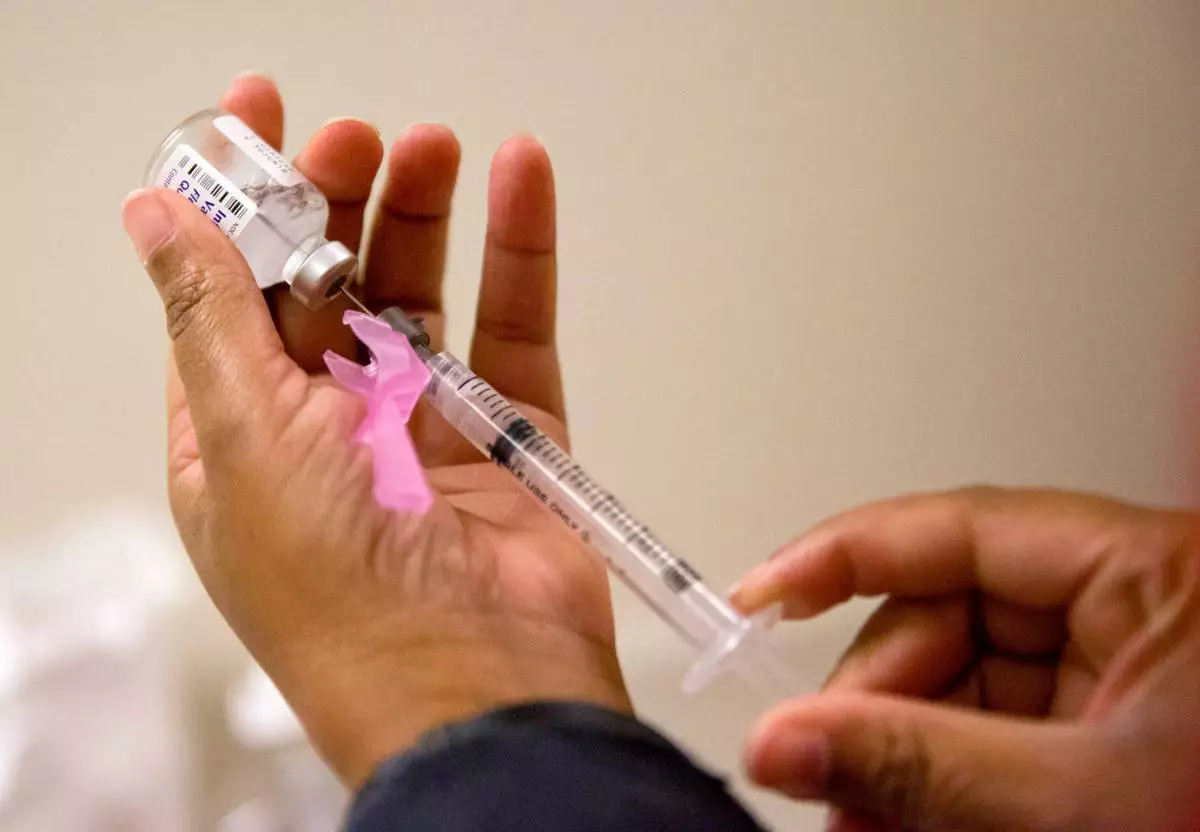
FILE - In this Feb. 7, 2018 file photo, a nurse prepares a flu shot at the Salvation Army in Atlanta. (AP Photo/David Goldman, File)
CLEVELAND, Miss. (AP) — A sparse crowd drifted into Walter Sillers Coliseum for Delta State’s first women’s basketball game in 1973.
It was a 4 p.m. tipoff against Holmes Community College — announced only in the local paper in rural Cleveland, Mississippi. There were no tickets, no concessions or buzz. Just a handful of curious women's basketball fans with no clue what this team led by a former high school coach named Margaret Wade could be.
“We had no expectations because, see, the coach came from the high school, and she had never coached college ball," said Dot Bright, a 1962 Delta State graduate who still lives just a few blocks from the school. "So we thought, 'Oh, OK. It’s all in the family. We thought it was just little hometown people.”
What Bright and a few others saw that day was the beginning of something bigger. Within a couple of years, Delta State became one of women's basketball's early powerhouses. The Lady Statesmen were the first No. 1 team when the women's college basketball poll debuted 50 years ago and won three straight national championships in the Association for Intercollegiate Athletics for Women (AIAW) from 1975-1977.
The Lady Statesmen will be recognized during “The AP Top 25 Fan Poll Experience” being held Thursday-Saturday at Arizona State’s First Amendment Forum in the Walter Cronkite School of Journalism and Mass Communication. The poll has served as a road map for the rise of the sport, though a lot has changed since the NCAA took over in 1982.
The women's basketball spotlight has since shifted elsewhere as money reshaped the sports landscape and large programs with big budgets — like the powerhouses in this weekend’s Final Four including UConn and South Carolina — began to dominate.
In Cleveland, Delta States' rich legacy still resonates.
“People still support it," Delta State athletic director Mike Kinnison said. "While we’ve had some ups and downs with it, it’s still a good program. That's still very important to me that we keep that tradition and keep that history and heritage out front.”
Reminders of that history are scattered across Delta State's campus. The basketball court is named after coach Lloyd Clark, who led the program to three national titles in 1989, 1990 and 1992 after its move to the NCAA's Division II. The jerseys of star players including women's basketball pioneer Lusia Harris are hanging in the gym. A “Hall of Fame” room of photos and trophies is set up in the athletic building chronicling those dominant days.
Current Delta State women's basketball coach Tracy Stewart-Lange makes sure prospective players are aware of the program's legacy when they arrive on campus.
Stewart-Lange, who just led the Lady Statesmen to an 18-11 record in her fourth season, stops recruits by the stadium's concourse to see a replica of the Wade Trophy given each year to the best player in women's basketball, which is encased near the front door, as well as a display of Delta State's national championship trophies under Wade and Clark.
Even Delta State football coaches bring up Wade, Clark and Harris when selling recruits on the school.
“You try to give them little snippets of, ‘Guys, this is where you are now,’” Stewart-Lange said. “'Don’t take it for granted. Step into those shoes and shine and push it forward. Get it back to the top.'”
Wade, who had coached at nearby Cleveland High School years before taking over at Delta State ahead of the 1973 season, had a roster that included the future Hall of Famer, Harris, who became one of the greatest women's players ever.
But publicity was scarce that first year. Former sports information director Langston Rogers recalled that many local and regional papers mostly ran box scores — until the wins and crowds became impossible to ignore.
The Lady Statesmen went undefeated in 1974, upsetting Philadelphia powerhouse Immaculata to win the AIAW national title and quickly building national credibility with wins over teams like Ole Miss and Auburn. They eventually drew thousands to venues like Madison Square Garden and UCLA's Pauley Pavilion, a rarity in women's hoops during that time.
Demand at home far exceeded the 3,000-seat Walter Sillers Coliseum, so portable bleachers were brought in and students sat along stage railings to squeeze inside.
"Everybody in Cleveland knew us and knew our names," said Debbie Brock, starting point guard from 1974-78. “You would drive up to the Sonic — and we didn’t have many restaurants or anything then — but I’d go to the Sonic, and the man would say, ‘Great game tonight.’”
Kinnison, athletic director since 2019, is now trying to recapture those times.
After the NCAA replaced the AIAW as the governing body for women's college sports, Delta State and other small colleges faced a major challenge to stay competitive on a national scale.
Recruiting advantages and national media attention have since dwindled, and for a while it was hard to bring in the same caliber of coaches.
“People don’t jump up and down when they find out they’re moving to the Mississippi Delta,” Bright said. “It’s hard to recruit here. I think the coach we have now, Coach Lange, she is doing an awesome job ... We have a very good record this year, some of the best since Lloyd Clark.”
Bright, 82, still never misses a game — though they're much quieter than they were 50 years ago.
Stewart-Lange runs into people around the Cleveland area who talk of their memories from those days. That gives her hope that local support can still remain even as the national spotlight has faded.
“I do feel like the undercurrent is there within the community,” Stewart-Lange said. “It’s been done before. And it can be done again.”
AP Top 25 Fan Poll Experience: https://apnews.com/https:/apnews.com/projects/arizona-state-fan-poll-experience/
AP March Madness bracket: https://apnews.com/hub/ncaa-womens-bracket and coverage: https://apnews.com/hub/march-madness
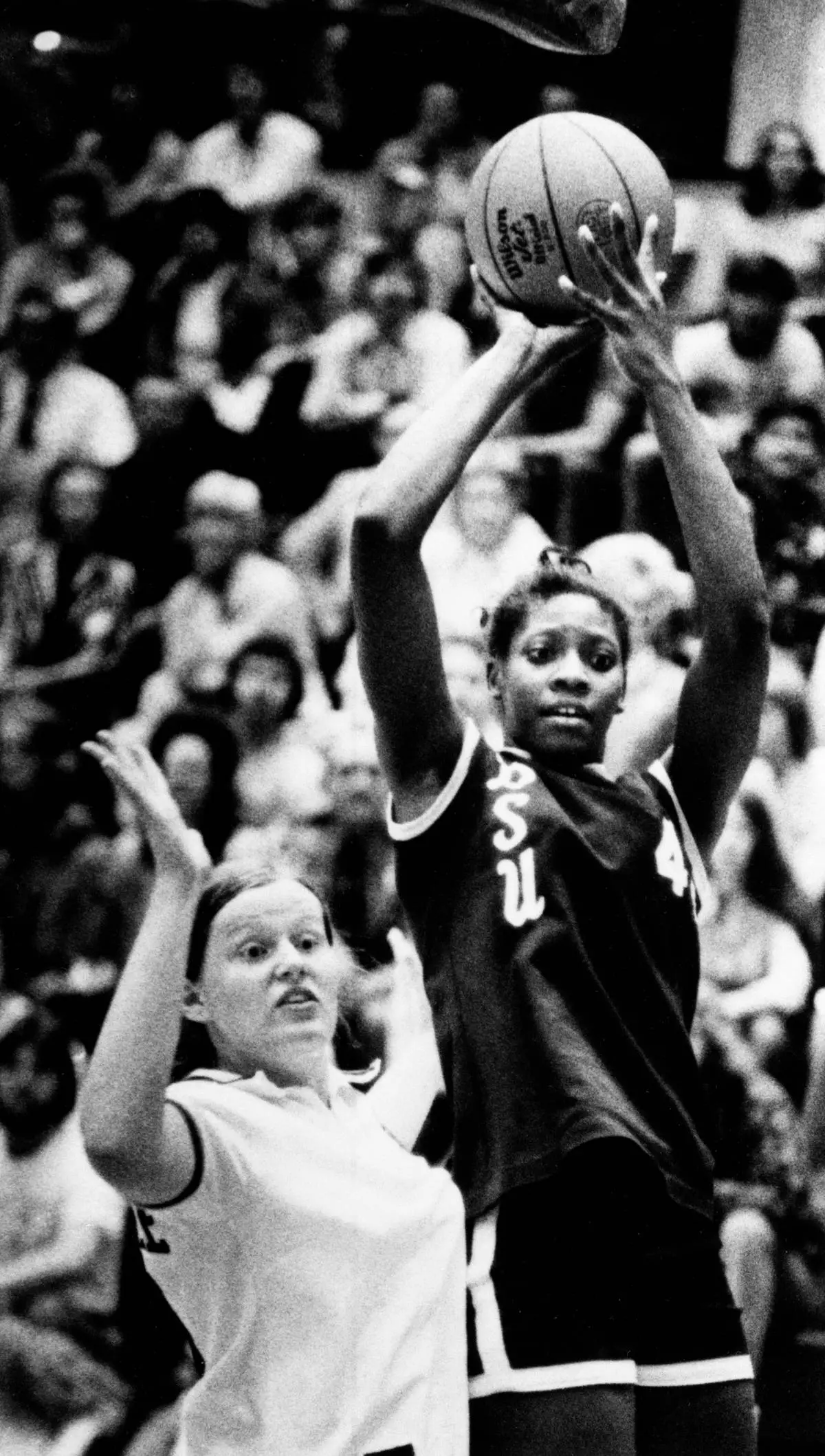
FILE - Delta State center Lusia Harris, right, towers over Penn State's Mag Strittmatter, left, as she pulls down a rebound at Penn State in University Park, Pa., March 24, 1976. (AP Photo, File)
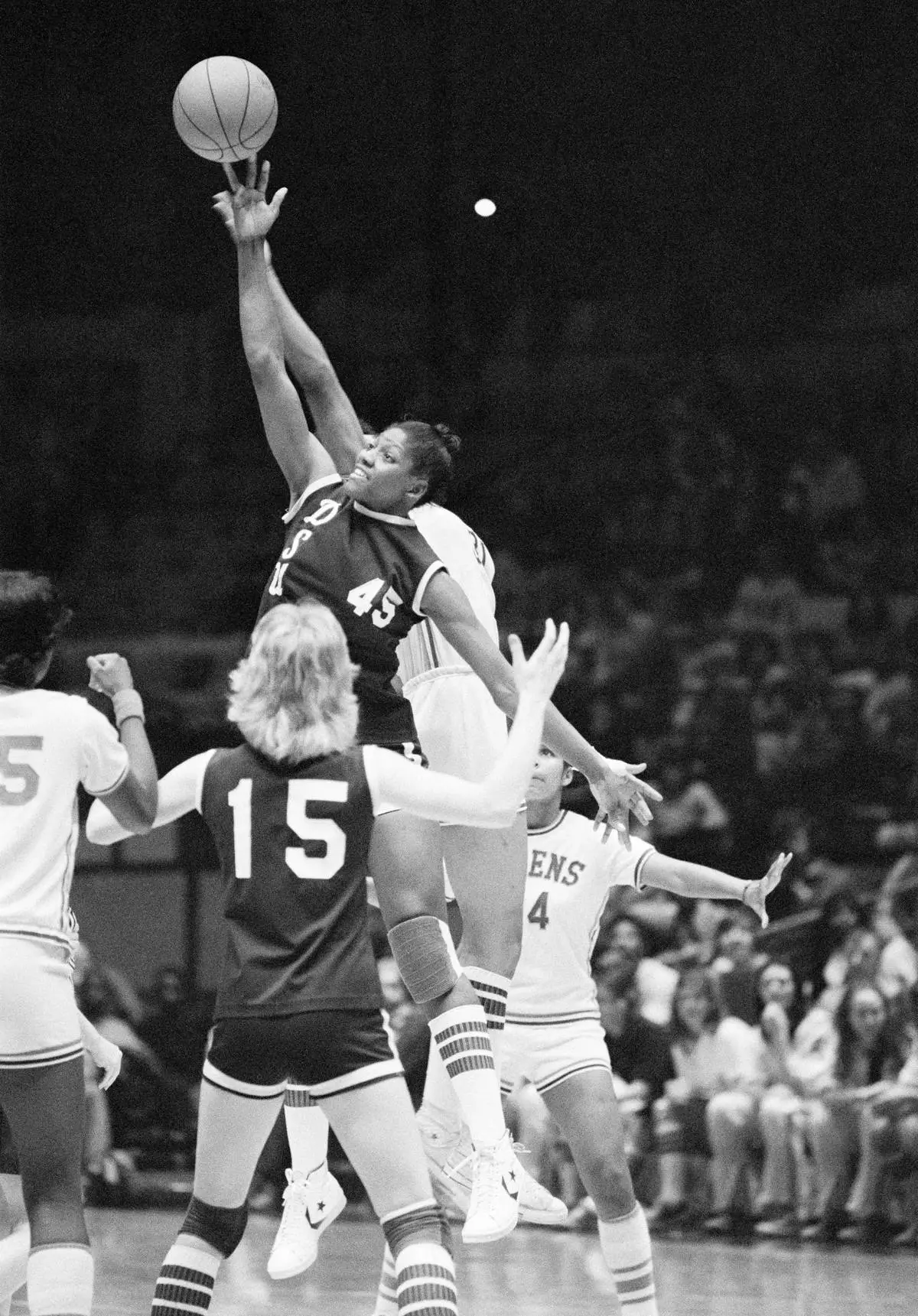
FILE - Delta State University's Lusia Harris (45) gets off a shot against Queens College during a women's college basketball game at Madison Square Garden in New York, Feb. 23, 1976. (AP Photo/Ron Frehm, File)
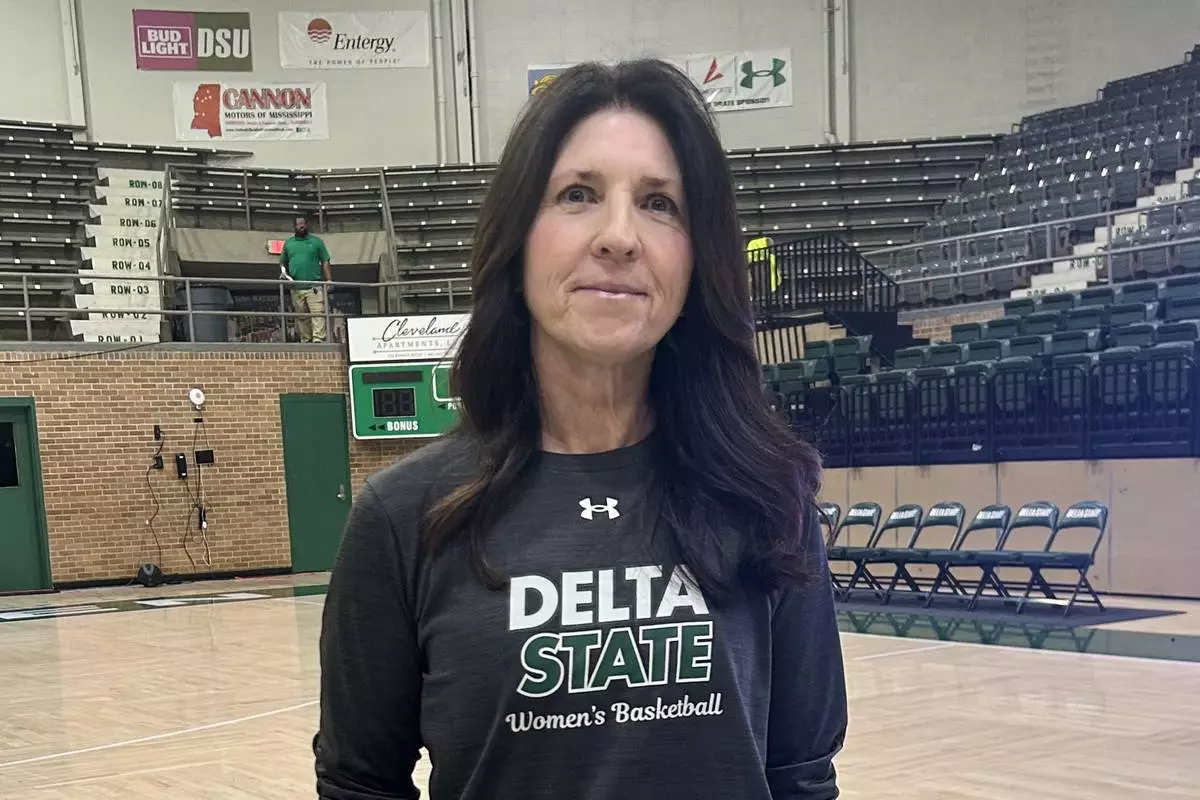
Delta State women's basketball coach Tracy Stewart-Lange poses for a photo, Feb. 17, 2026, in Cleveland, Miss. (AP Photo/Alanis Thames)
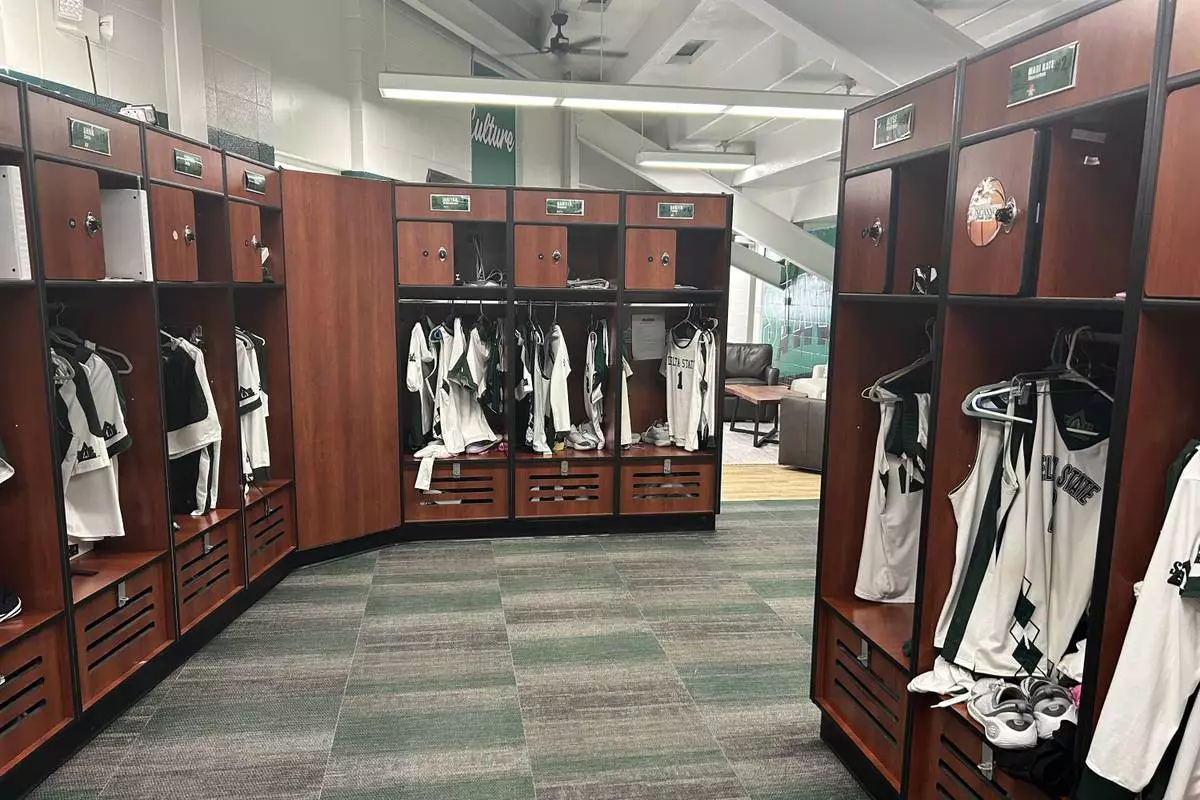
The Delta State women's basketball locker room is seen, Feb. 17, 2026, in Cleveland, Miss. (AP Photo/Alanis Thames)
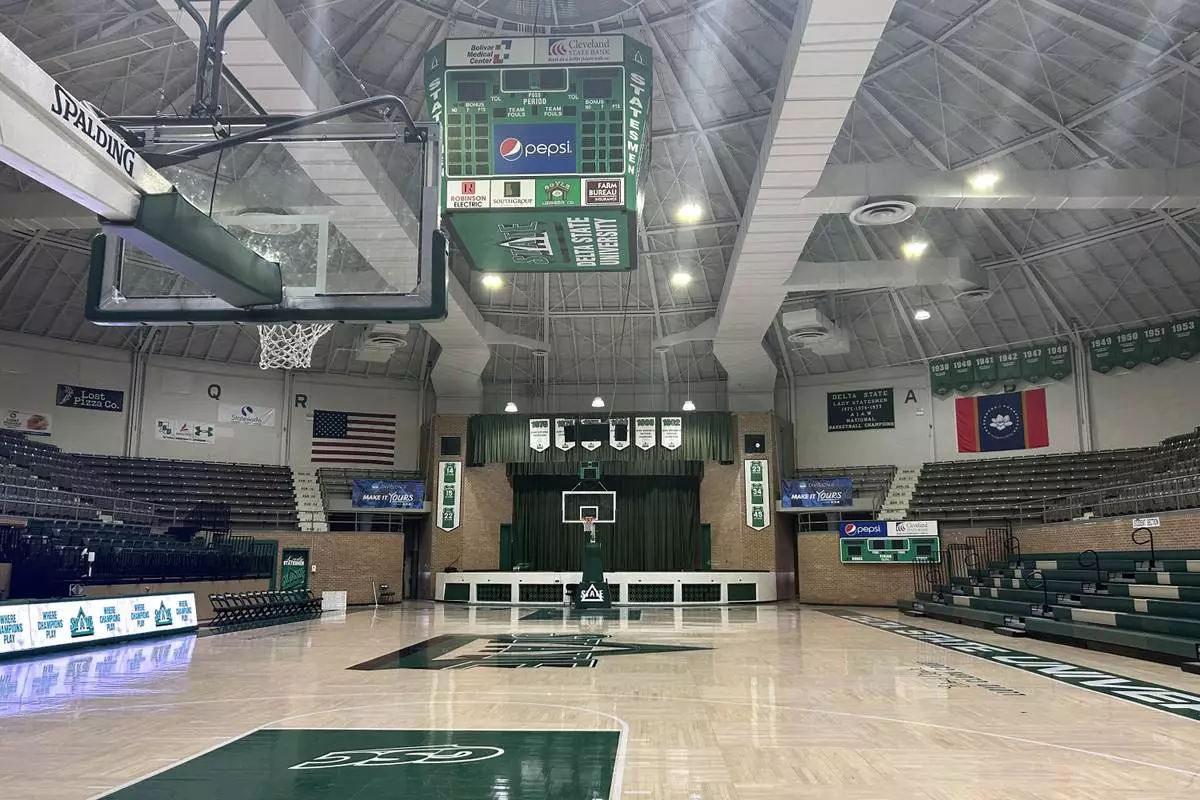
The Delta State basketball court is seen, Feb. 17, 2026, in Cleveland, Miss. (AP Photo/Alanis Thames)