Mohamed Salah's long goodbye to Liverpool begins on Saturday in the quarterfinals of the FA Cup, the competition which represents his best chance of a trophy in his final year at Anfield.
The Egypt winger announced last week that he will be leaving Liverpool at the end of the season after nine years at a club where he has broken scoring records and established himself as one of the world's best players.
Salah potentially has 15 games left in the famous red shirt: Seven in the Premier League as well as three in the FA Cup and five in the Champions League, should Liverpool reach the final in both of those competitions.
That won't be easy.
In the Champions League, defending champion Paris Saint-Germain is up next in the two-leg quarterfinals and it's pretty much as tough in the FA Cup, with Liverpool handed an away match at Manchester City.
Salah, who has 255 goals in 435 appearances for Liverpool, missed the Reds' last game before the international break — a 2-1 loss at Brighton in the league — with a muscle injury but has told manager Arne Slot he should be healthy enough to return this weekend.
“He just does so much for his body for such a long time that he recovers so fast," Slot said on Wednesday. "So, he will train with the team again tomorrow and if everything works well then he’s available to be with us at City.”
The 33-year-old Salah was left out of the Liverpool team for four straight games at the end of 2025 in what appeared to be a breakdown in his relationship with Slot and the club.
Since returning from the Africa Cup of Nations, Salah virtually has been an ever-present in the lineup, seemingly winning the Dutch coach round.
“That hunger never drops,” Slot said of Salah. "It's the thing I find most special about him. So many good players around the world — he's definitely one of them in the last 10 years — and to show that hunger every three days, that professionalism, that commitment to the club and to the team, wanting to score again, always wanting to play ...
“When you take him out three minutes before the end, he's like, ‘Ah, maybe I could have scored one extra.’”
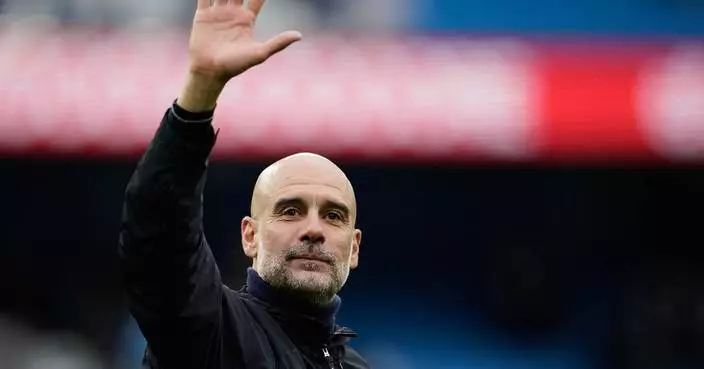
City, meanwhile, is seeking a domestic cup double after beating Arsenal in the English League Cup final on March 22. Pep Guardiola's team is also chasing Arsenal in the Premier League, which takes a break this weekend to give the FA Cup its own space in the calendar.
The other FA Cup quarterfinals take place across Saturday and Sunday.
After City-Liverpool in the early kickoff on Saturday, Chelsea hosts third-tier Port Vale — the lowest-ranked team left in the competition — before Arsenal visits second-tier Southampton.
On Sunday, West Ham hosts Leeds in an all-Premier League matchup.
Manchester City midfielder Phil Foden has less than two months to persuade England coach Thomas Thomas he is worthy of a place in the World Cup squad.
Foden started both of England’s recent friendly games — a draw with Uruguay and a loss to Japan — but failed to impress either in the No. 10 role or as a “false nine," prompting Tuchel to say it's “ not a guarantee ” that Foden will be at the World Cup.
Foden was English soccer's player of the year in the 2023-24 season but has not maintained his top form and has rarely started for City in recent months.
Arsenal's team sheet for the Southampton game will be heavily scrutinized, given 10 players missed games for their national team over the international break because of various issues.
Eberechi Eze, Jurrien Timber and Martin Odegaard already had injuries that caused them to miss the League Cup final, before Piero Hincapie, Bukayo Saka, Declan Rice, William Saliba, Gabriel Magalhaes and Leandro Trossard all pulled out of international duty.
England's Noni Madueke and Spain's Martin Zubimendi missed the second games for their respective countries after reporting injuries.
There might be growing disharmony at Chelsea, going off recent comments by two of the team's best players.
Enzo Fernandez said after elimination in the Champions League that he couldn't guarantee being at Chelsea next season, while Marc Cucurella told The Athletic during this international break that the team was “more stable” under coach Enzo Maresca, who was fired in January, and, "If you asked me, I would not have made this decision.”
Liam Rosenior, the current Chelsea coach, is under big pressure after four straight defeats.
AP soccer: https://apnews.com/hub/soccer
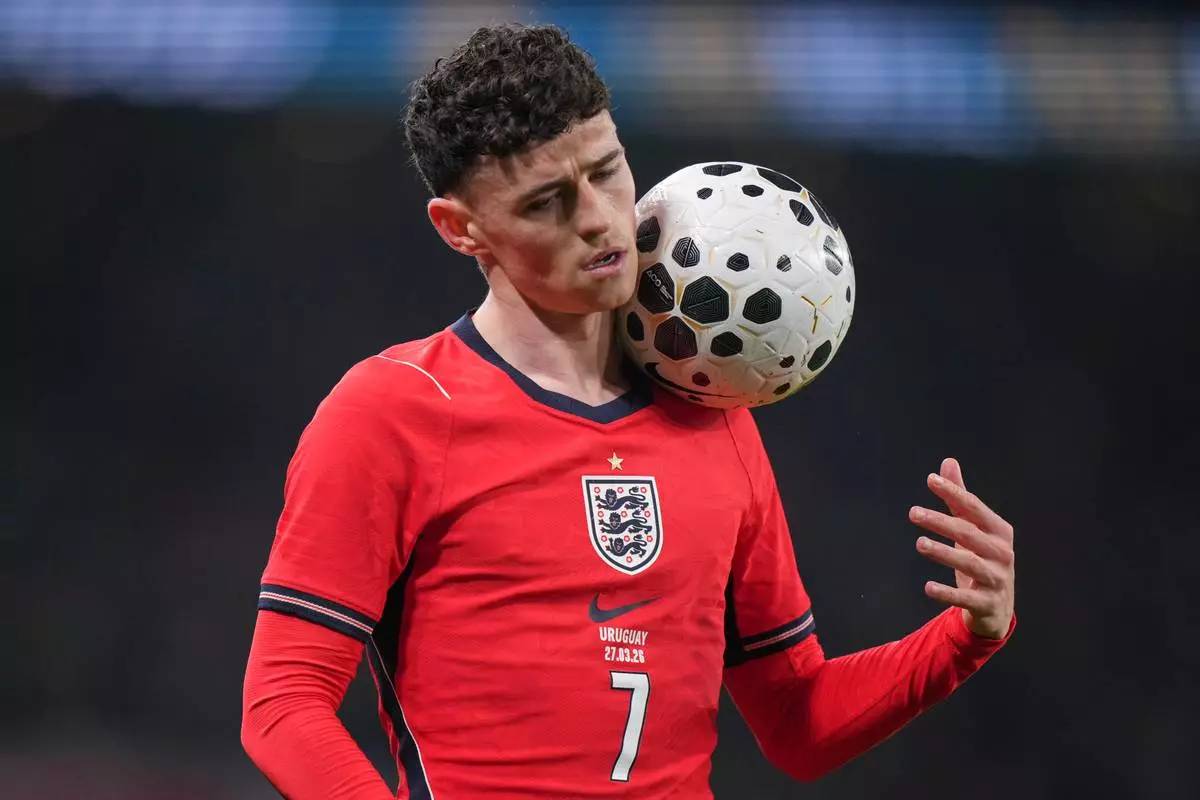
England's Phil Foden holds the ball during the international friendly soccer match between England and Uruguay in London, Friday, March 27, 2026. (AP Photo/Alastair Grant)
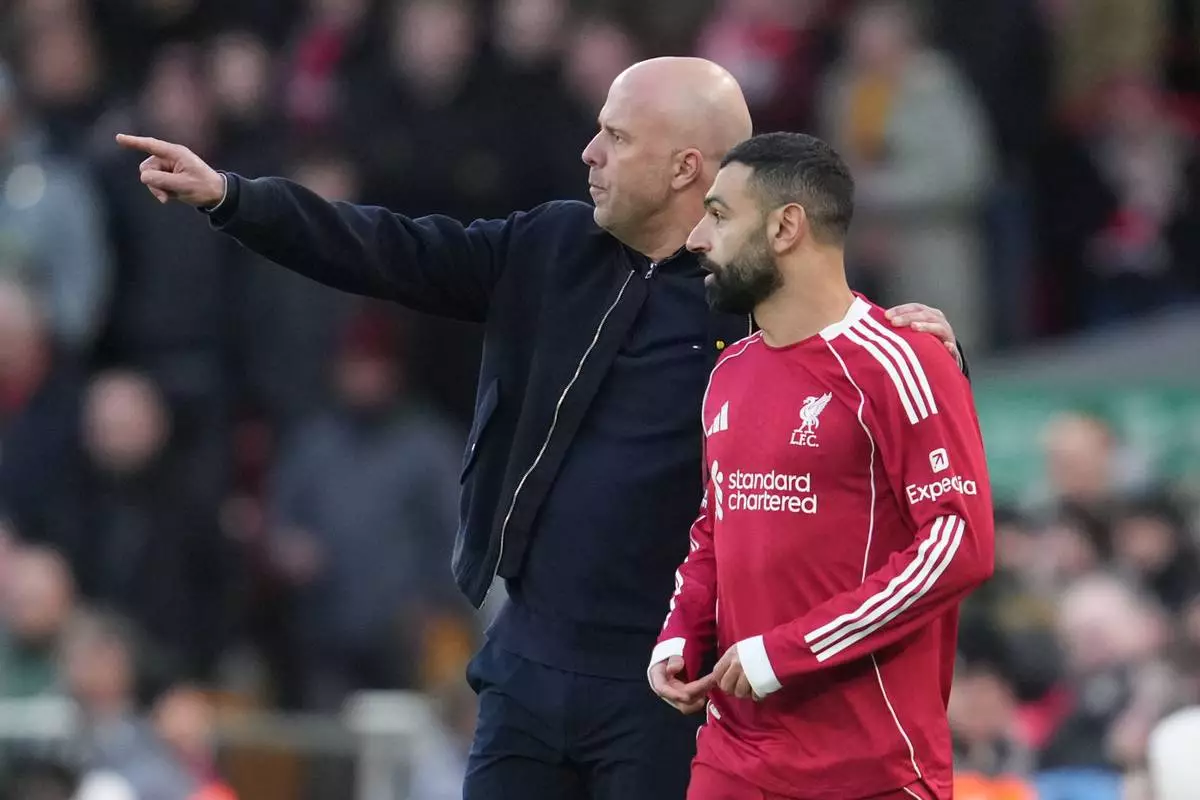
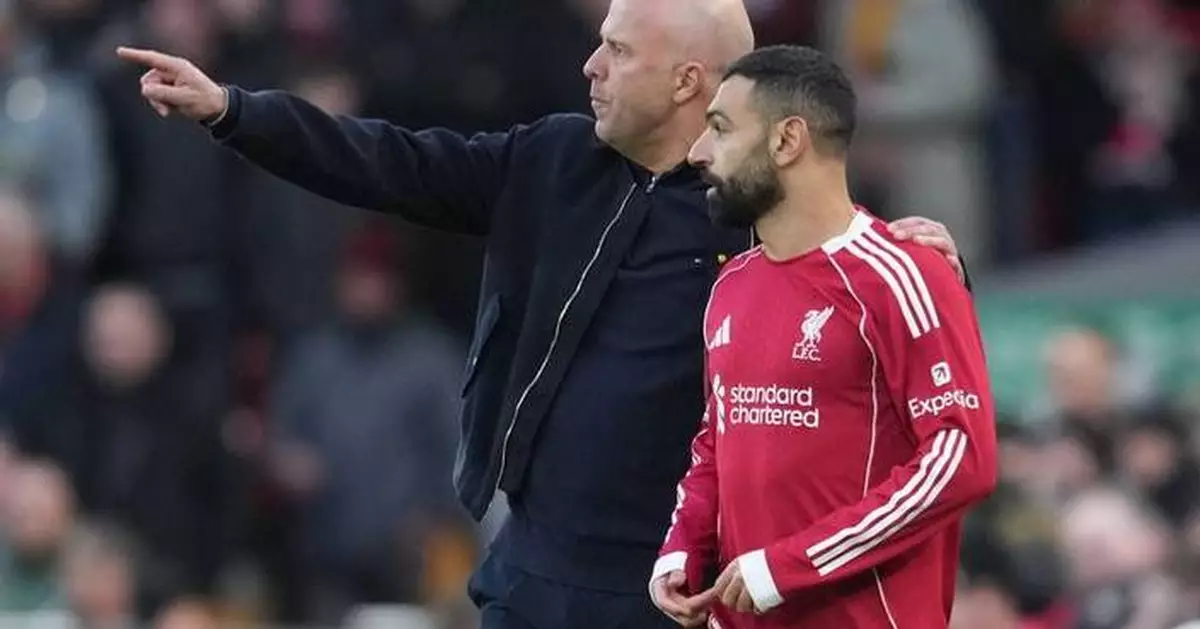
FILE - Liverpool's manager Arne Slot talks to Mohamed Salah during the Premier League soccer match between Liverpool and Tottenham in Liverpool, England, Sunday, March 15, 2026. (AP Photo/Jon Super, File)
HELSINGBORG, Sweden (AP) — NATO allies and defense officials expressed bewilderment Friday at U.S. President Donald Trump’s announcement that he would send 5,000 U.S. troops to Poland just weeks after ordering the same number of forces pulled out of Europe.
The apparent change of mind came after weeks of statements from Trump and his administration about reducing — not increasing — the U.S. military footprint in Europe. Trump's initial order set off a flurry of action among military commanders and left allies already doubtful about America's commitment to Europe's security to ponder what forces they might have to backfill on NATO's eastern flank with Russia and Ukraine.
Earlier this month, the Trump administration said it was reducing levels in Europe by about 5,000 troops, and U.S. officials confirmed about 4,000 service members were no longer rotating into Poland from Germany. The dispatch to Germany of U.S. personnel trained to fire long-range missiles was also halted.
But in a post on Truth Social on Thursday, Trump said he would now send "an additional 5,000 Troops to Poland,” citing his strong ties with Polish President Karol Nawrocki, whom Trump endorsed in elections last year.
“It is confusing indeed, and not always easy to navigate,” Swedish Foreign Minister Maria Malmer Stenergard told reporters Friday at a meeting she was hosting of her NATO counterparts, including U.S. Secretary of State Marco Rubio.
Ministers from the Netherlands and Norway were sanguine about Trump’s latest move, as was Latvian Foreign Minister Baiba Braže, who said allies knew the U.S. troop “posture was being reconsidered, and now there is no change of posture. For now.”
U.S. defense officials also expressed confusion. “We just spent the better part of two weeks reacting to the first announcement. We don’t know what this means either,” said one of two officials who spoke on condition of anonymity to discuss sensitive military matters.
But Rubio said Washington’s allies understand that changes in the U.S. troop presence in Europe will come as the Trump administration reevaluates its force needs. “I think there’s a broad recognition that there are going to be eventually less U.S. troops in Europe than there has historically been for a variety of reasons,” he said.
The latest surprise came despite a U.S. pledge to coordinate troop deployments, including one from NATO’s top military officer, U.S. Lt. Gen. Alex Grynkewich, on Wednesday.
Trump's initial announcement that he would withdraw troops came as he fumed over remarks by German Chancellor Friedrich Merz, who said that the U.S. was being “humiliated” by the Iranian leadership and criticized what he called a lack of strategy in that war.
Trump told reporters that the U.S. would be cutting even more than 5,000 and also announced new tariffs on European cars. Germany is the continent’s biggest auto producer.
Rubio insisted that Trump’s decision “is not a punitive thing. It’s just something that’s ongoing.”
About 80,000 U.S. troops are stationed in Europe. The Pentagon is required to keep at least 76,000 troops and major equipment on the continent unless NATO allies are consulted and there is a determination that such a withdrawal is in U.S. interests.
The withdrawal of 5,000 troops might drop numbers below that limit.
But Trump's latest post suggests that troop numbers in Europe would not change. Polish Foreign Minister Radek Sikorski welcomed the decision to send more forces to his country, saying it ensures that “the presence of American troops in Poland will be maintained more or less at previous levels.”
NATO Secretary-General Mark Rutte also welcomed the move. On Thursday, before Trump took to Truth Social again, Rutte had underlined that it was important for Europe to take care of its own security. “We have a process in place. This is normal business,” he told reporters.
At NATO headquarters in Brussels, meanwhile, U.S. officials briefed the allies on the Pentagon's aims for its commitments to the NATO Force Model, which involves contingency planning for Europe’s defense in the event of serious security concerns. It was widely expected that a further reduction of U.S. forces would be coming.
Asked whether any cuts were announced, Rutte said: “I’m afraid it’s much more complicated than that.” He said the procedure “is highly classified” and declined to give details.
Rubio played down concerns about a shift in U.S. force levels in Europe, saying: "Every country has to constantly reevaluate what their needs are, what their commitments are around the world, and how to properly structure that.”
Cook reported from Brussels. Associated Press writer Emma Burrows in London contributed.
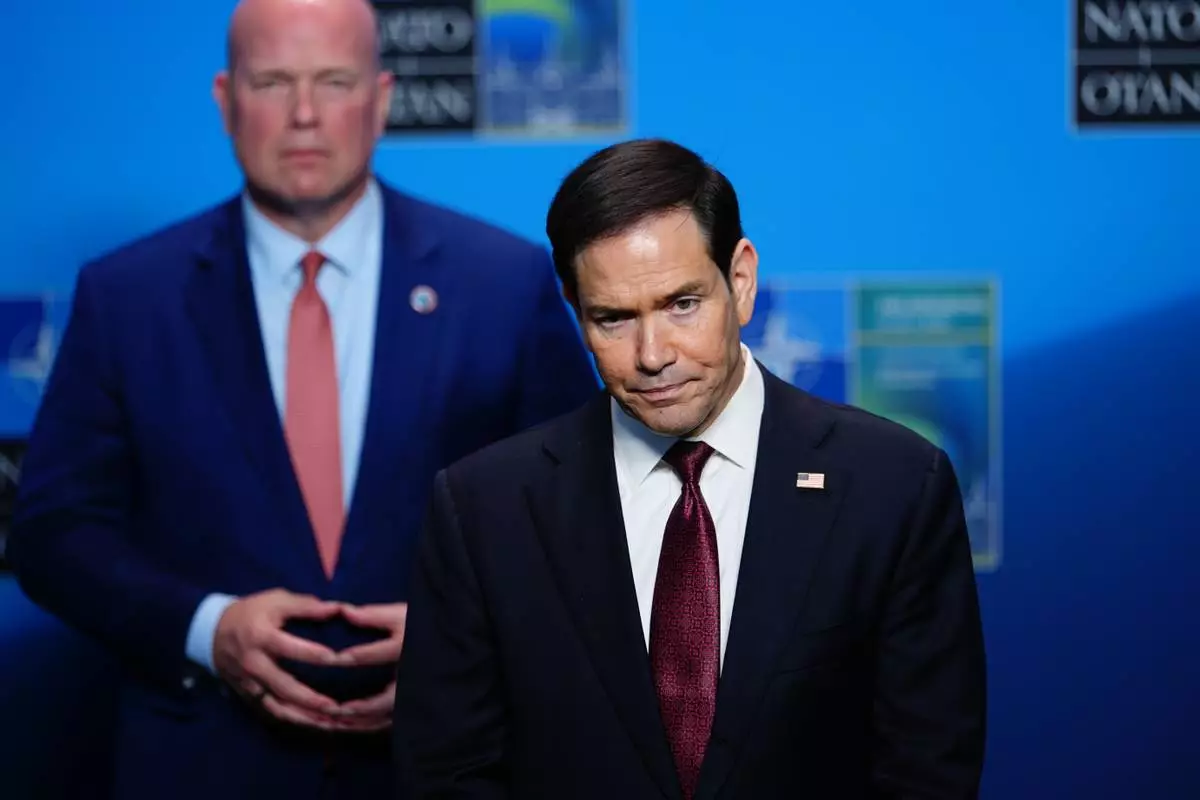
United States Secretary of State Marco Rubio speaks with journalists during a meeting of NATO foreign ministers in Helsingborg, Sweden, Friday, May 22, 2026. (AP Photo/Julia Demaree Nikhinson, Pool)
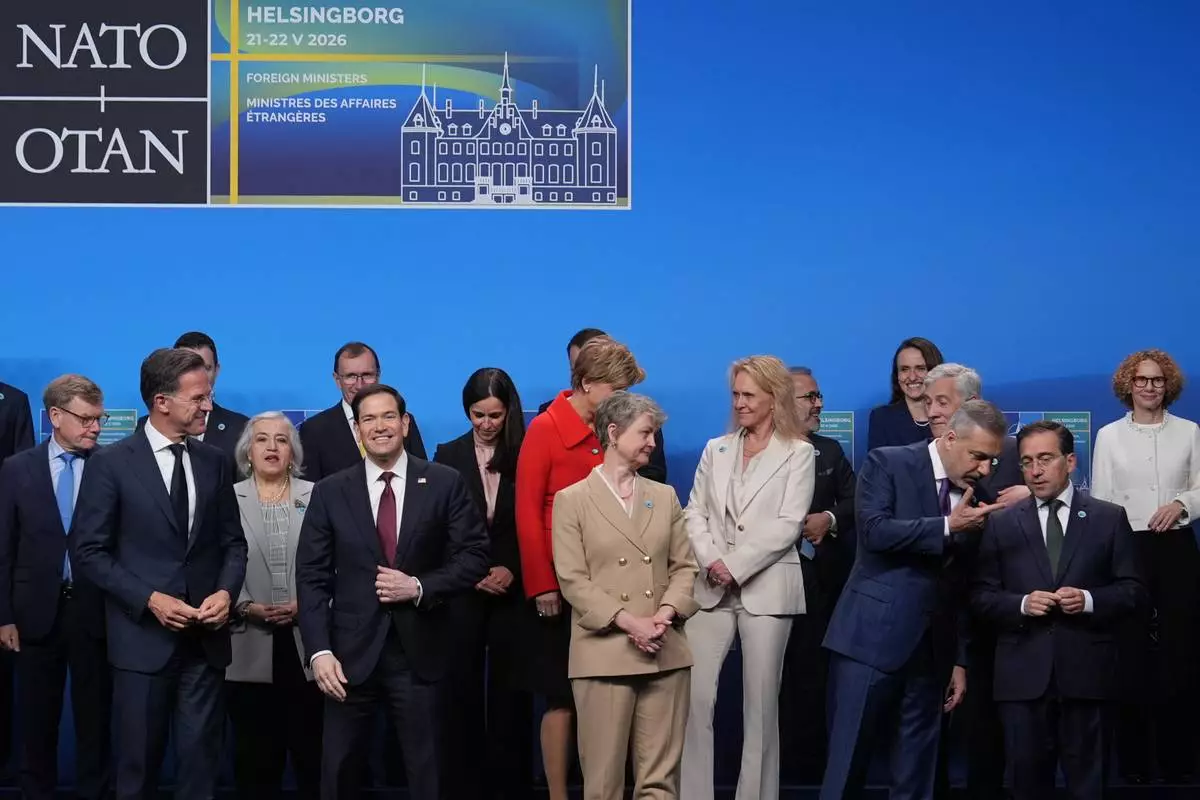
United States Secretary of State Marco Rubio, front second left, and NATO Secretary General Mark Rutte, front left, speak with each other during a group photo at a meeting of NATO foreign ministers in Helsingborg, Sweden, Friday, May 22, 2026. (AP Photo/Julia Demaree Nikhinson, Pool)
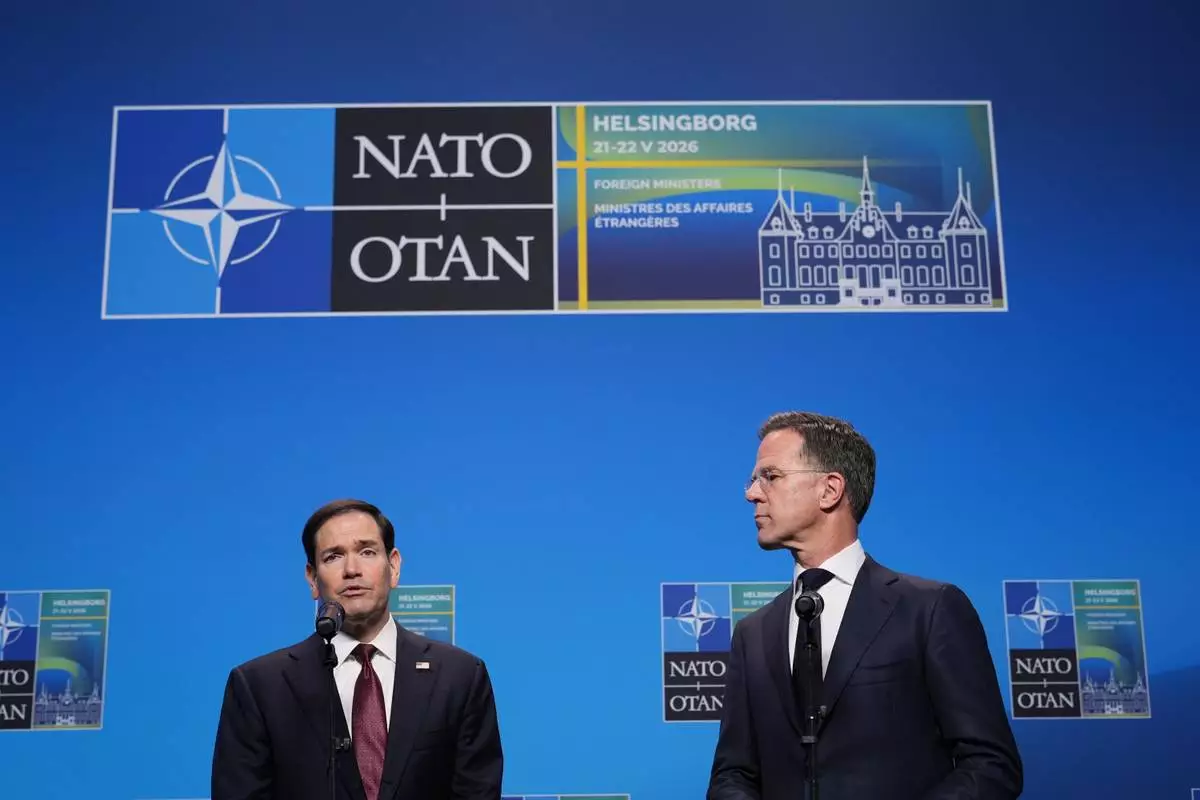
United States Secretary of State Marco Rubio, left, and NATO Secretary General Mark Rutte look at each other as they deliver a statement during a meeting of NATO foreign ministers in Helsingborg, Sweden, Friday, May 22, 2026. (AP Photo/Julia Demaree Nikhinson, Pool)
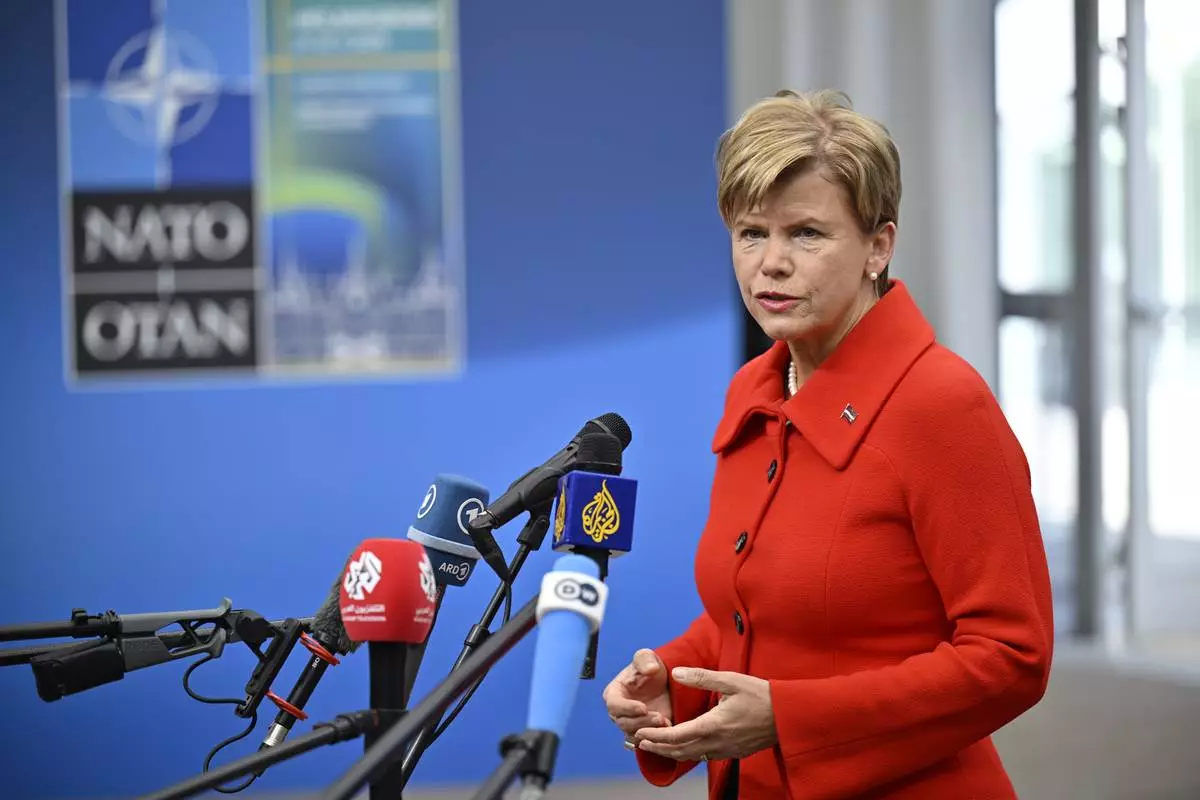
Latvian Foreign Minister Baiba Braže speaks at the doorstep of the NATO foreign ministers' meeting at Sea U in Helsingborg, Sweden, Friday, May 22, 2026. (Johan Nilsson/TT News Agency via AP)
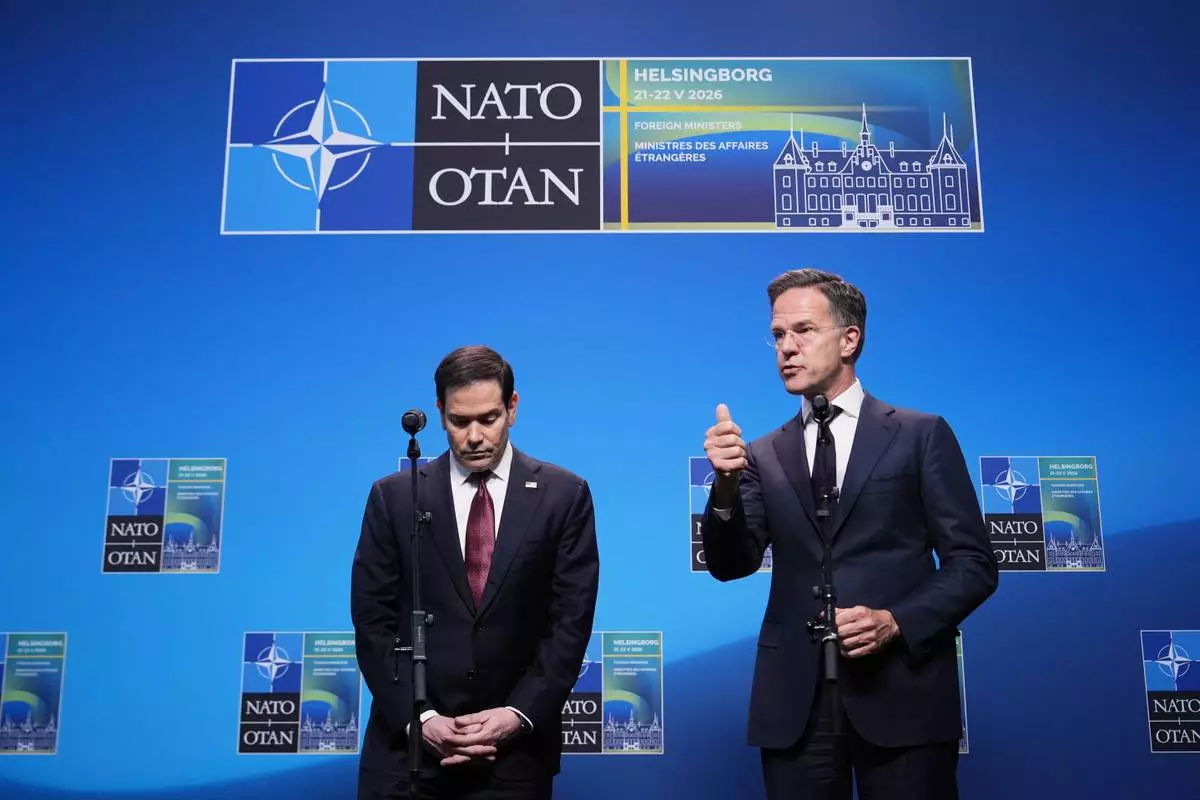
United States Secretary of State Marco Rubio, left, and NATO Secretary General Mark Rutte deliver a statement during a meeting of NATO foreign ministers in Helsingborg, Sweden, Friday, May 22, 2026. (AP Photo/Julia Demaree Nikhinson, Pool)
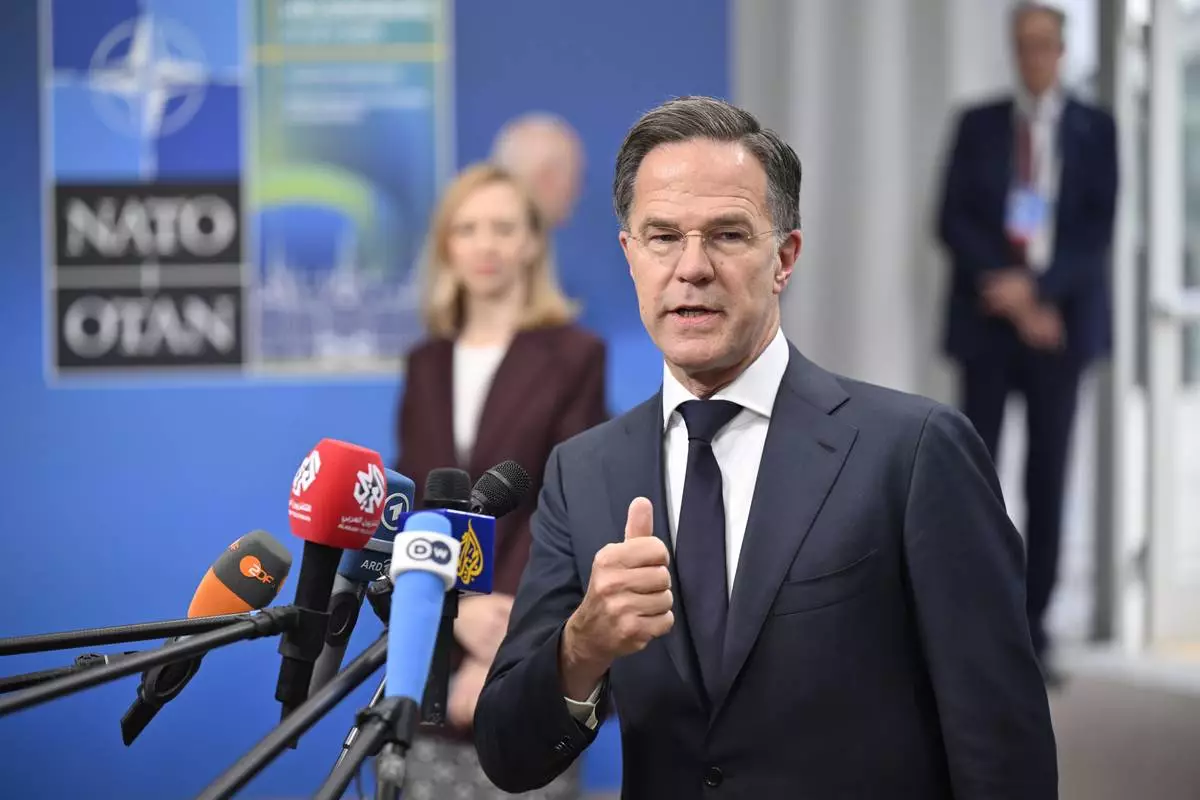
NATO Secretary General Mark Rutte speaks to media at the NATO Foreign Ministers' meeting in Helsingborg, Sweden, Friday, May 22, 2026. (Johan Nilsson/TT News Agency via AP)
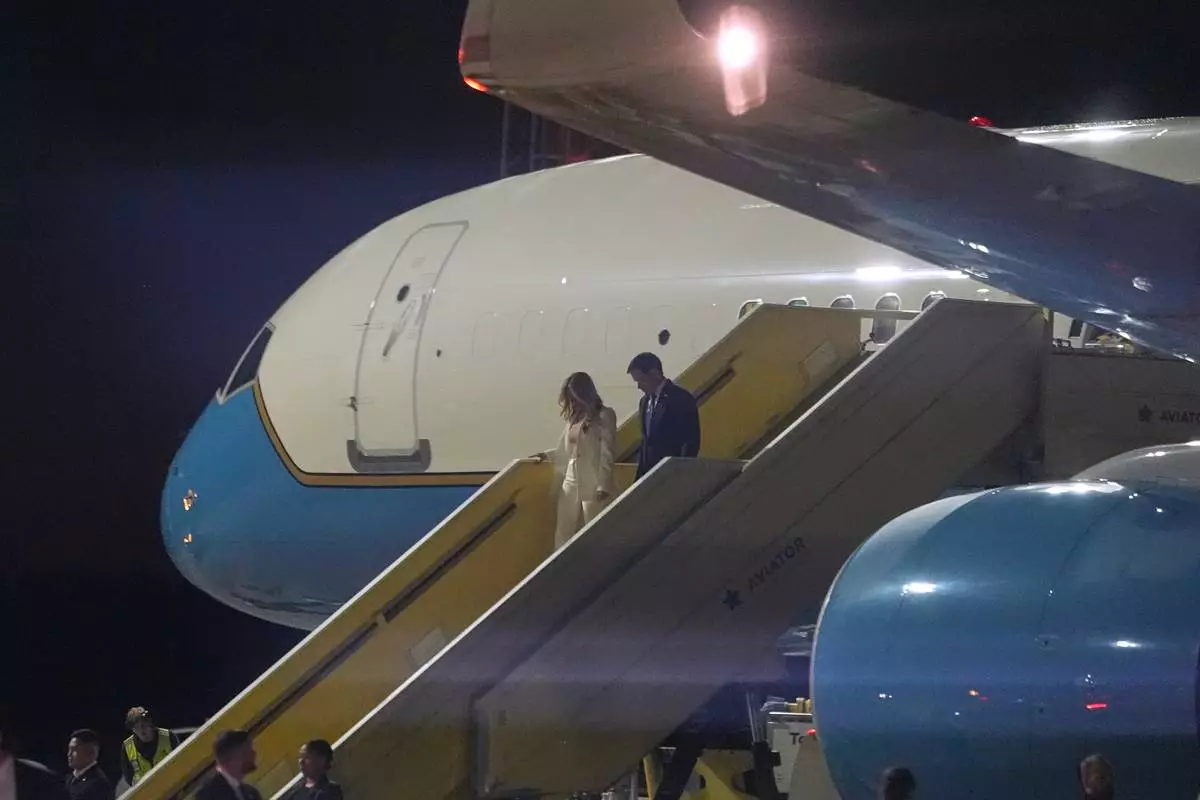
Secretary of State Marco Rubio arrives with his wife Jeanette at Malmo Airport, Friday, May 22, 2026, in Malmo-Sturup, Sweden, ahead of a NATO foreign ministers meeting. (AP Photo/Julia Demaree Nikhinson, Pool)
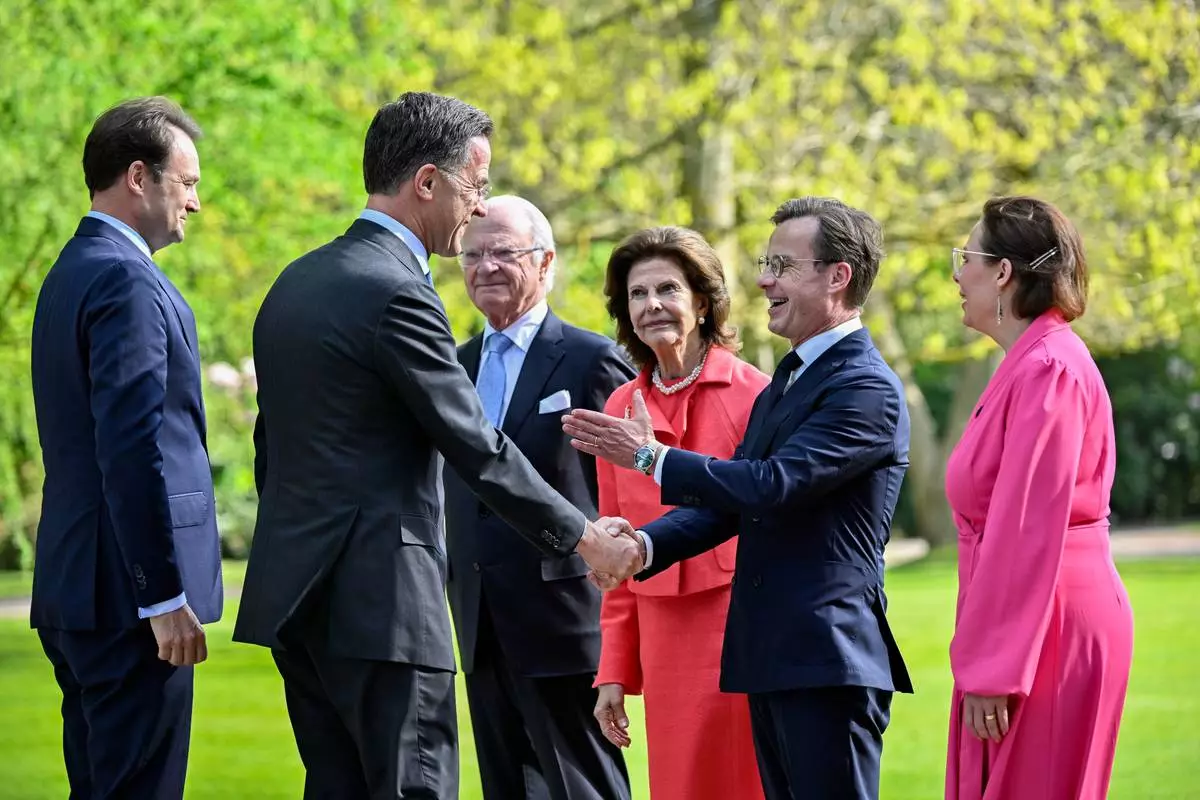
NATO Secretary General Mark Rutte, second from left, shakes hands with Prime Minister of Sweden Ulf Kristersson, as he is greeted by King Carl Gustaf of Sweden, Queen Silvia of Sweden and Minister for Foreign Affairs of Sweden Maria Malmer Stenergard, right, before a dinner at Sofiero Castle in Helsingborg, Sweden, Thursday May 21 2026. (Johan Nilsson/TT News Agency via AP)
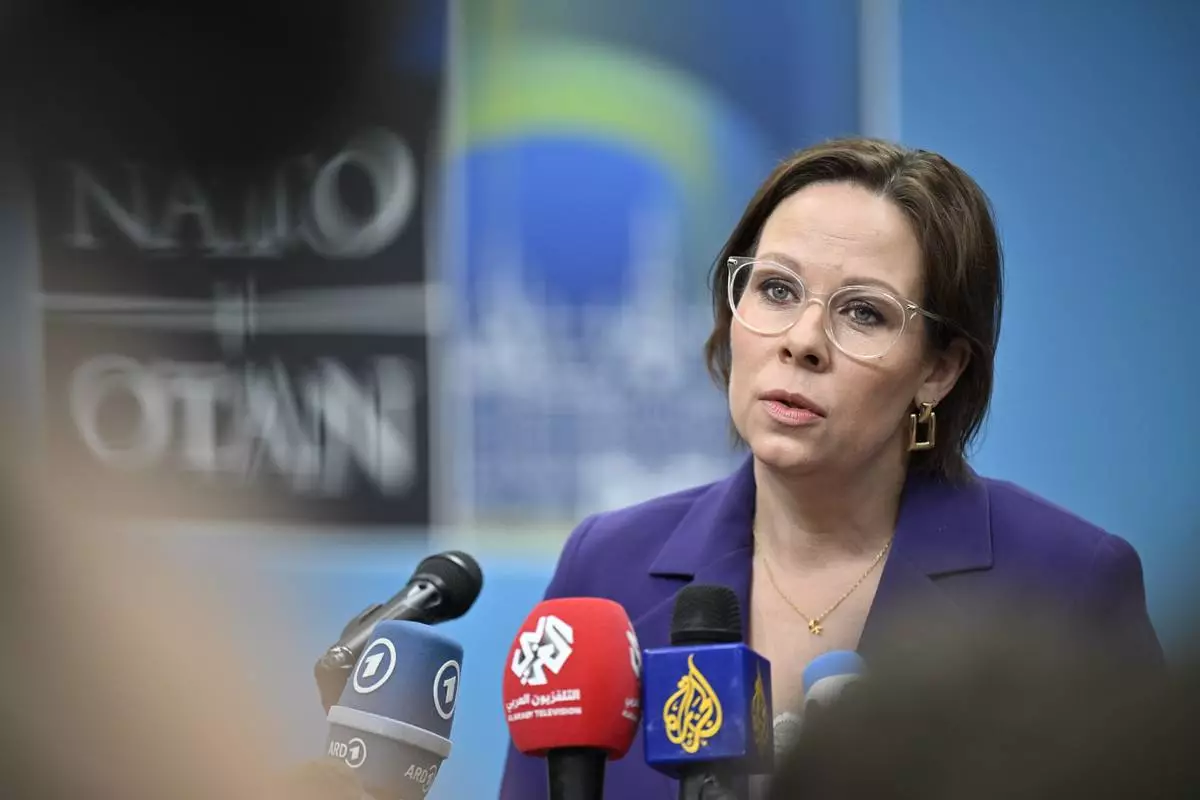
Swedish Foreign Minister Maria Malmer Stenergard speaks to media at the NATO Foreign Ministers' meeting in Helsingborg, Sweden, Friday, May 22, 2026. (Johan Nilsson/TT News Agency via AP)