|
Samsung Tech Forum series continues at CES 2026 with AI Platform Center discussion on the future of trust and AI
LAS VEGAS, Jan. 6, 2026 /PRNewswire/ -- Samsung Electronics Co., Ltd. today hosted a panel of global experts for "In Tech We Trust? Rethinking Security & Privacy in the AI Age" as part of its Tech Forum series at CES 2026. Held at The Wynn in Las Vegas, the session convened global experts in technology, research and ethics to explore how trust has emerged as one of the most critical factors shaping how people adopt and engage with AI as it becomes more seamlessly interwoven into daily life.
Making Invisible Intelligence Feel Trustworthy
As AI increasingly anticipates needs, curates routines and operates autonomously across devices, panelists Allie K. Miller, CEO of Open Machine; Amy Webb, CEO of the Future Today Strategy Group; Zack Kass, Global AI Advisor at ZKAI Advisory and former Head of Go-To-Market at Open AI; and Shin Baik, AI Platform Center (APC) Group Head at Samsung Electronics, emphasized that trust must be earned not through promises, but through consistent, understandable behavior.
At the session, Samsung shared its approach to trust-by-design, highlighting the importance of AI systems that are predictable, transparent and easy for users to control. "When it comes to AI, users are looking for transparency and control," Allie Miller said. "They want to be leaders in their own personalized experiences — to understand whether an AI model is running locally or in the cloud, to know their data is secure and to clearly see what is powered by AI and what is not. That level of visibility builds confidence. On the provider side, there is a responsibility to show up for users by designing personalized experiences around the core components of trust — clarity, security and accountability."
Samsung also underscored how on-device AI allows personal data to remain local whenever possible, while cloud-based intelligence can be used selectively when greater speed or scale is required, giving users flexibility without compromising privacy.
Security Built for an AI-Driven World
The panel also explored how, as intelligences becomes distributed across phones, TVs and home appliances, security must evolve. In the session, Samsung highlighted its Knox security platform — which now protects billions of devices from the chipset up — as well as Knox Matrix, a cross-device security framework that enables products to authenticate and protect one another.
"Trust in AI starts with security that's proven, not promised," Shin Baik said. "For more than a decade, Samsung Knox has provided a deeply embedded security platform designed to protect sensitive data at every layer. But trust goes beyond a single device — it requires an ecosystem that protects itself. With Knox, devices continuously authenticate and monitor one another, so each device acts as a shield for the rest, creating a resilient, secure environment users can rely on."
A Cross-Industry Conversation on the Future of Trust
Shin Baik emphasized how trust grows when AI behaves predictably and securely across devices, arguing that users need visible signals of control rather than "black box" systems. Samsung pointed to its partnerships with industry leaders such as Google and Microsoft as a way to strengthen shared security research, interoperability and ecosystem-wide protection, while Allie Miller highlighted the importance of transparency for users including clear visibility into where AI models run, how data is used and explicit labels that show what is powered by AI and what is not. Meanwhile, Zack Kass added that while misinformation and misuse present real challenges, "For every risk, there is also a countermeasure and technology itself will play a critical role in mitigating AI's downsides."
Amy Webb evaluated the relationship between trust and the purchasing habits of consumers. "I don't think they're making decisions based on trust alone," she said. "People aren't paying for trust. They don't buy things because of trust. They buy things because of convenience. So if the AI piece of this hooks people in it makes their lives easier and more convenient."
As AI becomes increasingly invisible, the panel concluded that the technologies that earn long-term
trust will be those that prioritize security, transparency and meaningful user choice from the start.
About Samsung Electronics Co., Ltd.
Samsung inspires the world and shapes the future with transformative ideas and technologies. The company is redefining the worlds of TVs, digital signage, smartphones, wearables, tablets, home appliances and network systems, as well as memory, system LSI and foundry. Samsung is also advancing medical imaging technologies, HVAC solutions and robotics, while creating innovative automotive and audio products through Harman. With its SmartThings ecosystem, open collaboration with partners, and integration of AI across its portfolio, Samsung delivers a seamless and intelligent connected experience. For the latest news, please visit the Samsung Newsroom at news.samsung.com.
Samsung Tech Forum series continues at CES 2026 with AI Platform Center discussion on the future of trust and AI
LAS VEGAS, Jan. 6, 2026 /PRNewswire/ -- Samsung Electronics Co., Ltd. today hosted a panel of global experts for "In Tech We Trust? Rethinking Security & Privacy in the AI Age" as part of its Tech Forum series at CES 2026. Held at The Wynn in Las Vegas, the session convened global experts in technology, research and ethics to explore how trust has emerged as one of the most critical factors shaping how people adopt and engage with AI as it becomes more seamlessly interwoven into daily life.
Making Invisible Intelligence Feel Trustworthy
As AI increasingly anticipates needs, curates routines and operates autonomously across devices, panelists Allie K. Miller, CEO of Open Machine; Amy Webb, CEO of the Future Today Strategy Group; Zack Kass, Global AI Advisor at ZKAI Advisory and former Head of Go-To-Market at Open AI; and Shin Baik, AI Platform Center (APC) Group Head at Samsung Electronics, emphasized that trust must be earned not through promises, but through consistent, understandable behavior.
At the session, Samsung shared its approach to trust-by-design, highlighting the importance of AI systems that are predictable, transparent and easy for users to control. "When it comes to AI, users are looking for transparency and control," Allie Miller said. "They want to be leaders in their own personalized experiences — to understand whether an AI model is running locally or in the cloud, to know their data is secure and to clearly see what is powered by AI and what is not. That level of visibility builds confidence. On the provider side, there is a responsibility to show up for users by designing personalized experiences around the core components of trust — clarity, security and accountability."
Samsung also underscored how on-device AI allows personal data to remain local whenever possible, while cloud-based intelligence can be used selectively when greater speed or scale is required, giving users flexibility without compromising privacy.
Security Built for an AI-Driven World
The panel also explored how, as intelligences becomes distributed across phones, TVs and home appliances, security must evolve. In the session, Samsung highlighted its Knox security platform — which now protects billions of devices from the chipset up — as well as Knox Matrix, a cross-device security framework that enables products to authenticate and protect one another.
"Trust in AI starts with security that's proven, not promised," Shin Baik said. "For more than a decade, Samsung Knox has provided a deeply embedded security platform designed to protect sensitive data at every layer. But trust goes beyond a single device — it requires an ecosystem that protects itself. With Knox, devices continuously authenticate and monitor one another, so each device acts as a shield for the rest, creating a resilient, secure environment users can rely on."
A Cross-Industry Conversation on the Future of Trust
Shin Baik emphasized how trust grows when AI behaves predictably and securely across devices, arguing that users need visible signals of control rather than "black box" systems. Samsung pointed to its partnerships with industry leaders such as Google and Microsoft as a way to strengthen shared security research, interoperability and ecosystem-wide protection, while Allie Miller highlighted the importance of transparency for users including clear visibility into where AI models run, how data is used and explicit labels that show what is powered by AI and what is not. Meanwhile, Zack Kass added that while misinformation and misuse present real challenges, "For every risk, there is also a countermeasure and technology itself will play a critical role in mitigating AI's downsides."
Amy Webb evaluated the relationship between trust and the purchasing habits of consumers. "I don't think they're making decisions based on trust alone," she said. "People aren't paying for trust. They don't buy things because of trust. They buy things because of convenience. So if the AI piece of this hooks people in it makes their lives easier and more convenient."
As AI becomes increasingly invisible, the panel concluded that the technologies that earn long-term
trust will be those that prioritize security, transparency and meaningful user choice from the start.
About Samsung Electronics Co., Ltd.
Samsung inspires the world and shapes the future with transformative ideas and technologies. The company is redefining the worlds of TVs, digital signage, smartphones, wearables, tablets, home appliances and network systems, as well as memory, system LSI and foundry. Samsung is also advancing medical imaging technologies, HVAC solutions and robotics, while creating innovative automotive and audio products through Harman. With its SmartThings ecosystem, open collaboration with partners, and integration of AI across its portfolio, Samsung delivers a seamless and intelligent connected experience. For the latest news, please visit the Samsung Newsroom at news.samsung.com.
** The press release content is from PR Newswire. Bastille Post is not involved in its creation. **

Samsung Explores How Trust, Security and Privacy Shape the Future of AI at CES 2026

Samsung Explores How Trust, Security and Privacy Shape the Future of AI at CES 2026

Samsung Explores How Trust, Security and Privacy Shape the Future of AI at CES 2026
|
ATLANTA, April 3, 2026 /PRNewswire/ -- Precision Aviation Group (PAG), a leading global provider of aftermarket aviation and aerospace services, today announced that EFIX and PAG Australia have been added to the Safran Electrical & Power Authorized Repair Center (ARC) Network, further expanding PAG's global OEM authorized repair capabilities.
With the addition of EFIX and PAG Australia, PAG now operates five Authorized Repair Centers within the Safran Electrical & Power ARC Network for its DC Generators and GCU, reinforcing the company's commitment to providing high-quality, OEM-approved MRO support across key global regions.
The five PAG companies authorized within the Safran Electrical & Power ARC Network include:
- Precision Aviation Group (PAG) – Atlanta, Georgia, USA
- PAI Canada – British Columbia, Canada
- Tuner Aviation – Glasgow, Scotland
- EFIX – Brazil
- PAI Australia – Queensland, Australia
"This expansion reflects the continued investment we're making across our Component Services organization to meet OEM standards while supporting customers where they operate," said Jordan Webber, Vice President of Component Services at Precision Aviation Group. "Adding EFIX and PAG Australia to the Safran Electrical & Power ARC Network allows us to extend trusted, authorized repair and distribution capabilities into new regions while maintaining the quality, consistency, and reliability our customers expect."
Safran Electrical & Power is a global leader in aircraft electrical systems, and its Authorized Repair Center Network is designed to ensure consistent standards of quality, compliance, and performance across approved service providers.
The inclusion of EFIX and PAG Australia enables PAG to offer expanded regional coverage in South America and the Asia-Pacific region, reducing turnaround times while maintaining the highest standards of safety and reliability.
About Precision Aviation Group (PAG)
Precision Aviation Group (PAG) is a leading provider of maintenance, repair, and overhaul (MRO) and value-added supply chain services to the aerospace and defense industries. With 26 Repair Stations, 28 locations worldwide, 1,280 employees, and over 1.2 million square feet of production and distribution facilities, PAG offers comprehensive MRO services on more than 200,000 product lines. PAG supports operators in the Airline, Business and General Aviation (BGA), Military, and Rotary Wing markets through its Inventory Supported Maintenance, Repair, and Overhaul (ISMRO®) business model.
www.precisionaviationgroup.com
About Safran
Safran is an international high-technology group, operating in the aviation (propulsion, equipment and interiors), defense and space markets. Its core purpose is to contribute to a safer, more sustainable world, where air transport is more environmentally friendly, comfortable and accessible. Safran has a global presence, with 100,000 employees and sales of 27.3 billion euros in 2024, and holds, alone or in partnership, world or regional leadership positions in its core markets. Safran is listed on the Euronext Paris stock exchange and is part of the CAC 40 and Euro Stoxx 50 indices.
Safran Electrical & Power is one of the world's leaders in aircraft electrical systems. The company is a key player in equipment electrification and in the electric and hybrid propulsion sector. It has more than 15,500 employees across 13 different countries.
For more information: www.safran-group.com
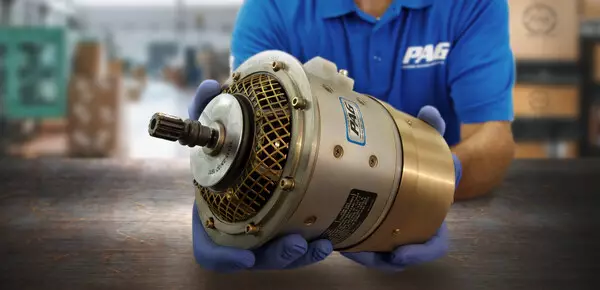
Photo - https://mma.prnasia.com/media2/2949133/Precision_Aviation_Group__PAG_employee_holds_an_aircraft_part.jpg?p=medium600
Logo - https://mma.prnasia.com/media2/1515200/Precision_Aviation_Group_Logo.jpg?p=medium600
ATLANTA, April 3, 2026 /PRNewswire/ -- Precision Aviation Group (PAG), a leading global provider of aftermarket aviation and aerospace services, today announced that EFIX and PAG Australia have been added to the Safran Electrical & Power Authorized Repair Center (ARC) Network, further expanding PAG's global OEM authorized repair capabilities.
With the addition of EFIX and PAG Australia, PAG now operates five Authorized Repair Centers within the Safran Electrical & Power ARC Network for its DC Generators and GCU, reinforcing the company's commitment to providing high-quality, OEM-approved MRO support across key global regions.
The five PAG companies authorized within the Safran Electrical & Power ARC Network include:
- Precision Aviation Group (PAG) – Atlanta, Georgia, USA
- PAI Canada – British Columbia, Canada
- Tuner Aviation – Glasgow, Scotland
- EFIX – Brazil
- PAI Australia – Queensland, Australia
"This expansion reflects the continued investment we're making across our Component Services organization to meet OEM standards while supporting customers where they operate," said Jordan Webber, Vice President of Component Services at Precision Aviation Group. "Adding EFIX and PAG Australia to the Safran Electrical & Power ARC Network allows us to extend trusted, authorized repair and distribution capabilities into new regions while maintaining the quality, consistency, and reliability our customers expect."
Safran Electrical & Power is a global leader in aircraft electrical systems, and its Authorized Repair Center Network is designed to ensure consistent standards of quality, compliance, and performance across approved service providers.
The inclusion of EFIX and PAG Australia enables PAG to offer expanded regional coverage in South America and the Asia-Pacific region, reducing turnaround times while maintaining the highest standards of safety and reliability.
About Precision Aviation Group (PAG)
Precision Aviation Group (PAG) is a leading provider of maintenance, repair, and overhaul (MRO) and value-added supply chain services to the aerospace and defense industries. With 26 Repair Stations, 28 locations worldwide, 1,280 employees, and over 1.2 million square feet of production and distribution facilities, PAG offers comprehensive MRO services on more than 200,000 product lines. PAG supports operators in the Airline, Business and General Aviation (BGA), Military, and Rotary Wing markets through its Inventory Supported Maintenance, Repair, and Overhaul (ISMRO®) business model.
www.precisionaviationgroup.com
About Safran
Safran is an international high-technology group, operating in the aviation (propulsion, equipment and interiors), defense and space markets. Its core purpose is to contribute to a safer, more sustainable world, where air transport is more environmentally friendly, comfortable and accessible. Safran has a global presence, with 100,000 employees and sales of 27.3 billion euros in 2024, and holds, alone or in partnership, world or regional leadership positions in its core markets. Safran is listed on the Euronext Paris stock exchange and is part of the CAC 40 and Euro Stoxx 50 indices.
Safran Electrical & Power is one of the world's leaders in aircraft electrical systems. The company is a key player in equipment electrification and in the electric and hybrid propulsion sector. It has more than 15,500 employees across 13 different countries.
For more information: www.safran-group.com
Photo - https://mma.prnasia.com/media2/2949133/Precision_Aviation_Group__PAG_employee_holds_an_aircraft_part.jpg?p=medium600
Logo - https://mma.prnasia.com/media2/1515200/Precision_Aviation_Group_Logo.jpg?p=medium600
** This press release is distributed by PR Newswire through automated distribution system, for which the client assumes full responsibility. **
Precision Aviation Group Expands Safran Electrical & Power Authorized Repair Center Network to Five Global Facilities