Location, location, location: Greenland’s position above the Arctic Circle makes the world’s largest island a key part of security strategy.
Increasing international tensions, global warming and the changing world economy have put Greenland at the heart of the debate over global trade and security, and U.S. President Donald Trump wants to make sure his country controls the mineral-rich island that guards the Arctic and North Atlantic approaches to North America.
Click to Gallery
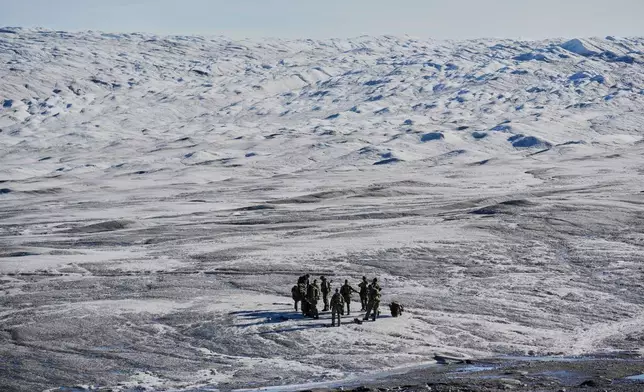
FILE -Danish military forces participate in an exercise with hundreds of troops from several European NATO members in Kangerlussuaq, Greenland, Sept. 17, 2025. (AP Photo/Ebrahim Noroozi, File)
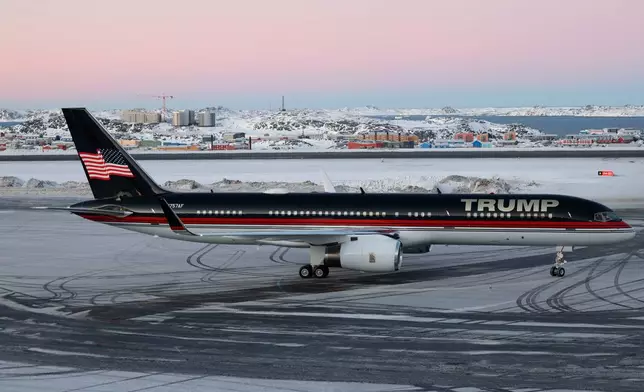
FILE - A plane carrying Donald Trump Jr. lands in Nuuk, Greenland, Jan. 7, 2025. (Emil Stach/Ritzau Scanpix via AP, file)
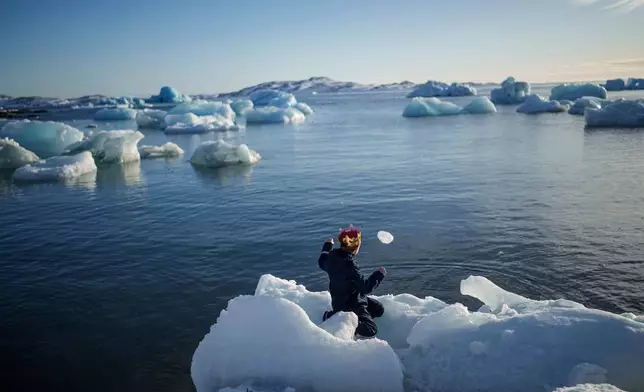
A boy throws ice into the sea in Nuuk, Greenland, March 11, 2025. (AP Photo/Evgeniy Maloletka, File)
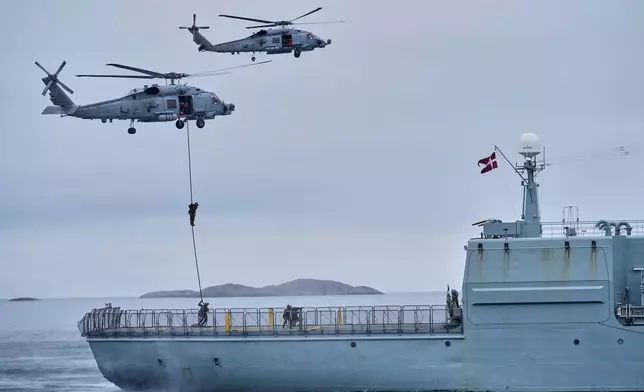
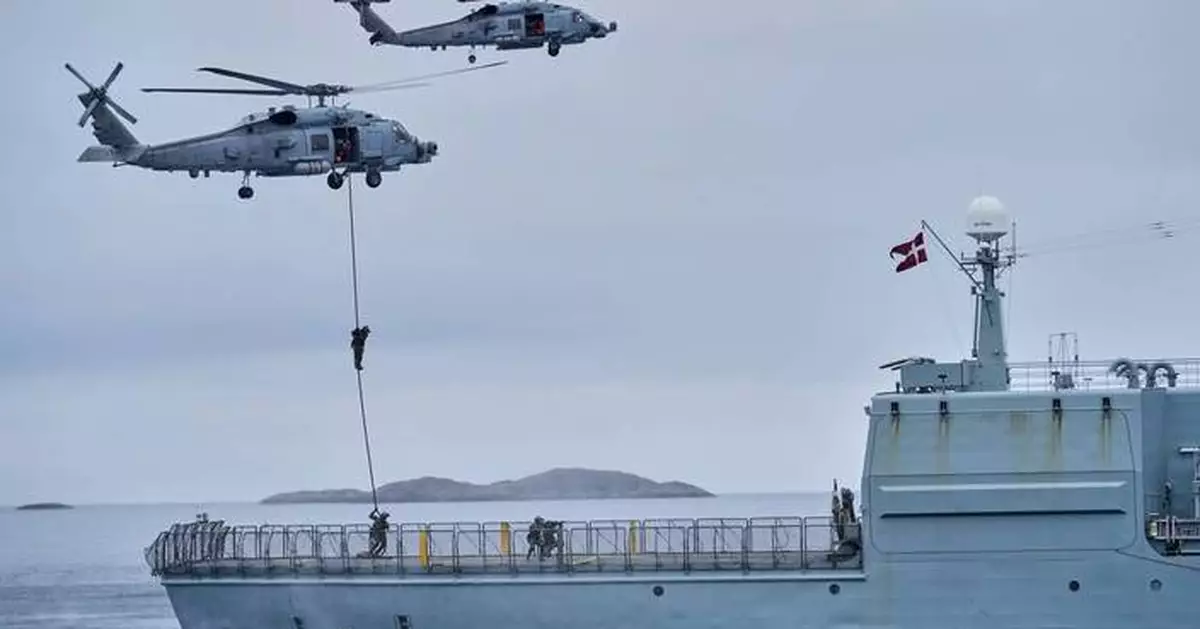
FILE - Danish military forces participate in an exercise with hundreds of troops from several European NATO members in the Arctic Ocean in Nuuk, Greenland, Sept. 15, 2025. (AP Photo/Ebrahim Noroozi, File)
Greenland is a self-governing territory of Denmark, a longtime U.S. ally that has rejected Trump’s overtures. Greenland’s own government also opposes U.S. designs on the island, saying the people of Greenland will decide their own future.
The island, 80% of which lies above the Arctic Circle, is home to about 56,000 mostly Inuit people who until now have been largely ignored by the rest of the world.
Here’s why Greenland is strategically important to Arctic security:
Greenland sits off the northeastern coast of Canada, with more than two-thirds of its territory lying within the Arctic Circle. That has made it crucial to the defense of North America since World War II, when the U.S. occupied Greenland to ensure it didn’t fall into the hands of Nazi Germany and to protect crucial North Atlantic shipping lanes.
Following the Cold War, the Arctic was largely an area of international cooperation. But climate change is thinning the Arctic ice, promising to create a northwest passage for international trade and reigniting competition with Russia, China and other countries over access to the region’s mineral resources.
In 2018, China declared itself a “near-Arctic state” in an effort to gain more influence in the region. China has also announced plans to build a “Polar Silk Road” as part of its global Belt and Road Initiative, which has created economic links with countries around the world.
Then U.S. Secretary of State Mike Pompeo rejected China’s move, saying: “Do we want the Arctic Ocean to transform into a new South China Sea, fraught with militarization and competing territorial claims?”
Meanwhile, Russia has sought to assert its influence over wide areas of the Arctic in competition with the U.S., Canada, Denmark and Norway. Moscow has also sought to boost its military presence in the polar region, home to its Northern Fleet and a site where the Soviet Union tested nuclear weapons. Russian military officials have said that the site is ready for resuming the tests, if necessary.
Russia's military has been restoring old Soviet infrastructure in the Arctic and building new facilities. Since 2014, the Russian military has opened several military bases in the Arctic and worked on reconstructing airfields.
European leaders’ concerns have been heightened since Russia launched a war in Ukraine on Feb. 24, 2022.
Last year, Russian President Vladimir Putin noted that Moscow is worried about NATO’s activities in the Arctic and will respond by strengthening the capability of its armed forces there. But he said that Moscow was holding the door open to broader international cooperation in the region.
The U.S. Department of Defense operates the remote Pituffik Space Base in northwestern Greenland, which was built after the U.S. and Denmark signed the Defense of Greenland Treaty in 1951. It supports missile warning, missile defense and space surveillance operations for the U.S. and NATO.
Greenland also guards part of what is known as the GIUK (Greenland, Iceland, United Kingdom) Gap, where NATO monitors Russian naval movements in the North Atlantic.
Thomas Crosbie, an associate professor of military operations at the Royal Danish Defense College, said that an American takeover wouldn't improve upon Washington’s current security strategy.
“The United States will gain no advantage if its flag is flying in Nuuk (Greenland's capital) versus the Greenlandic flag,” he told The Associated Press. “There’s no benefits to them because they already enjoy all of the advantages they want.
"If there’s any specific security access that they want to improve American security, they’ll be given it as a matter of course, as a trusted ally. So this has nothing to do with improving national security for the United States.”
Denmark’s parliament approved a bill last June to allow U.S. military bases on Danish soil. It widened a previous military agreement, made in 2023 with the Biden administration, where U.S. troops had broad access to Danish air bases in the Scandinavian country.
Danish Foreign Minister Lars Løkke Rasmussen, in a response to lawmakers’ questions, wrote over the summer that Denmark would be able to terminate the agreement if the U.S. tries to annex all or part of Greenland.
Denmark is moving to strengthen its military presence around Greenland and in the wider North Atlantic. Last year, the government announced a roughly 14.6 billion-kroner ($2.3 billion) agreement with parties including the governments of Greenland and the Faroe Islands, another self-governing territory of Denmark, to “improve capabilities for surveillance and maintaining sovereignty in the region.”
The plan includes three new Arctic naval vessels, two additional long-range surveillance drones and satellite capacity.
Denmark’s Joint Arctic Command is headquartered in Nuuk, and tasked with the “surveillance, assertion of sovereignty and military defense of Greenland and the Faroe Islands,” according to its website. It has smaller satellite stations across the island.
The Sirius Dog Sled Patrol, an elite Danish naval unit that conducts long-range reconnaissance and enforces Danish sovereignty in the Arctic wilderness, is also stationed in Greenland.
Greenland is also a rich source of the so-called rare earth minerals that are a key component of cellphones, computers, batteries and other high-tech gadgets that are expected to power the world’s economy in the coming decades.
That has attracted the interest of the U.S. and other Western powers as they try to ease China’s dominance of the market for these critical minerals.
Development of Greenland’s mineral resources is challenging because of the island’s harsh climate, while strict environmental controls have proved an additional hurdle for potential investors.
__
Dasha Litvinova contributed to this report from Tallinn, Estonia.
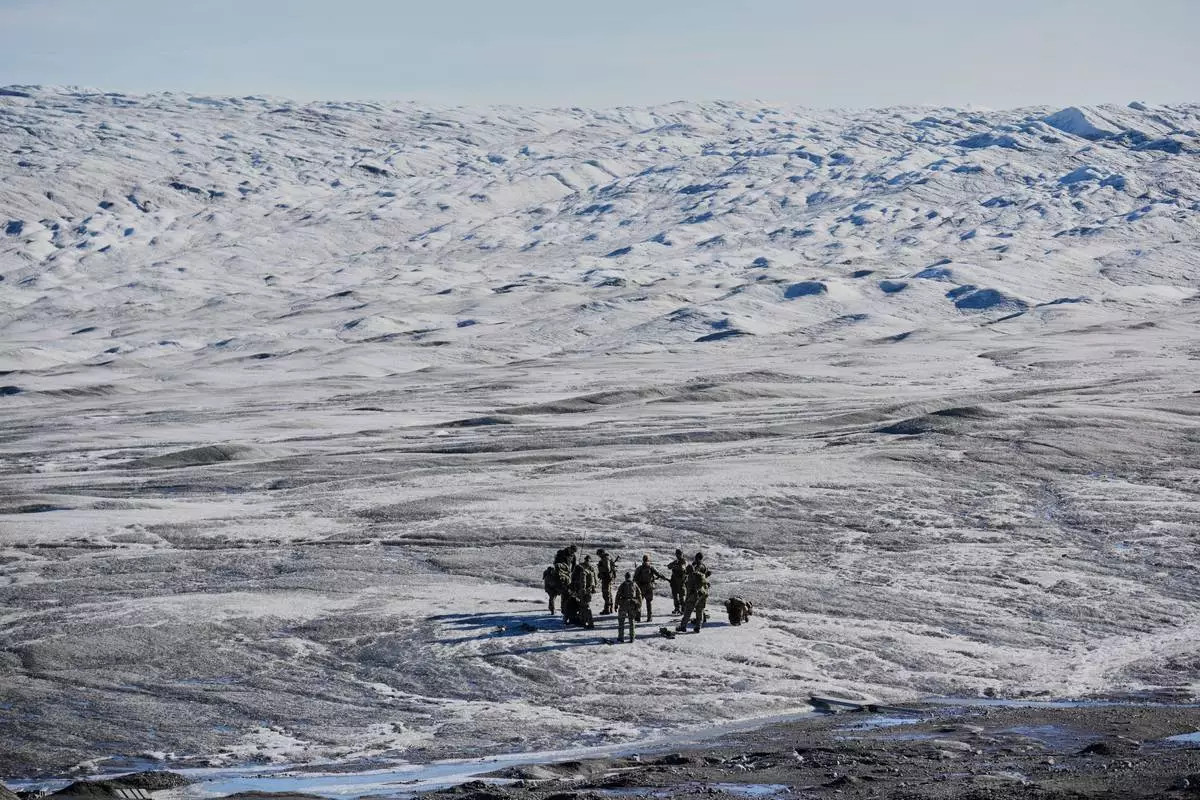
FILE -Danish military forces participate in an exercise with hundreds of troops from several European NATO members in Kangerlussuaq, Greenland, Sept. 17, 2025. (AP Photo/Ebrahim Noroozi, File)
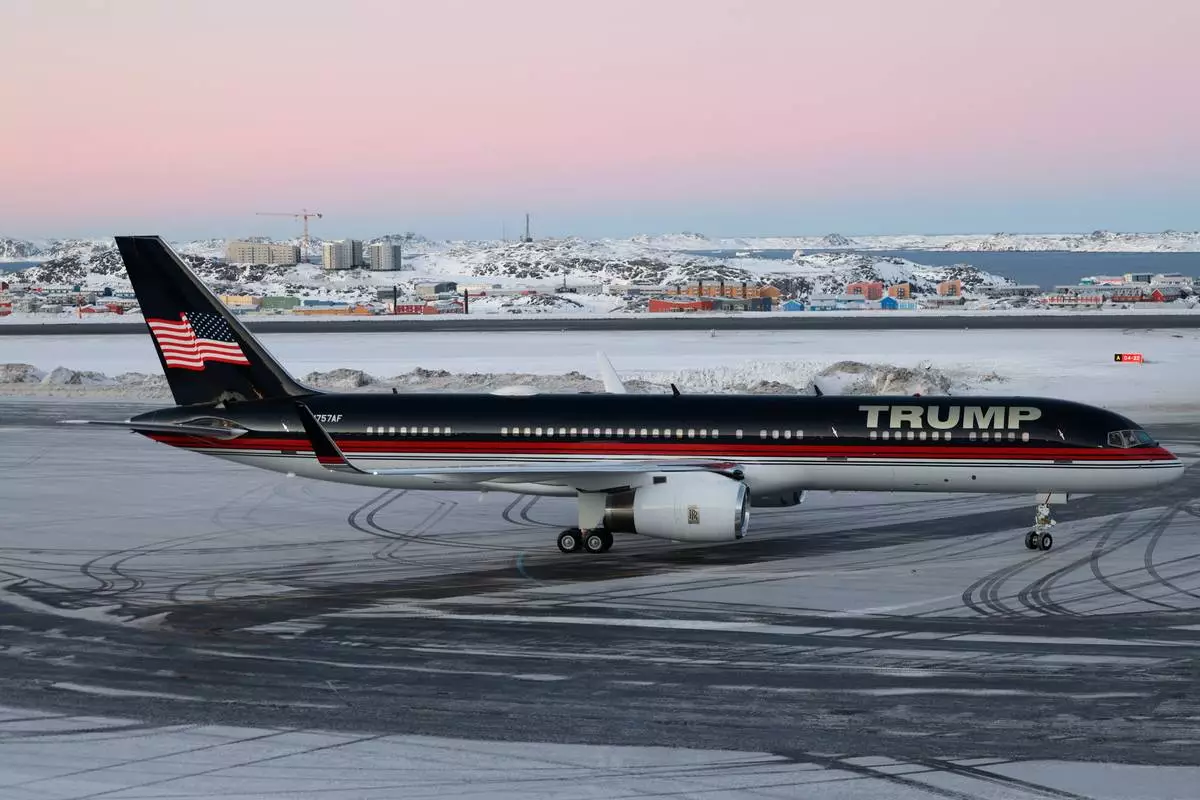
FILE - A plane carrying Donald Trump Jr. lands in Nuuk, Greenland, Jan. 7, 2025. (Emil Stach/Ritzau Scanpix via AP, file)
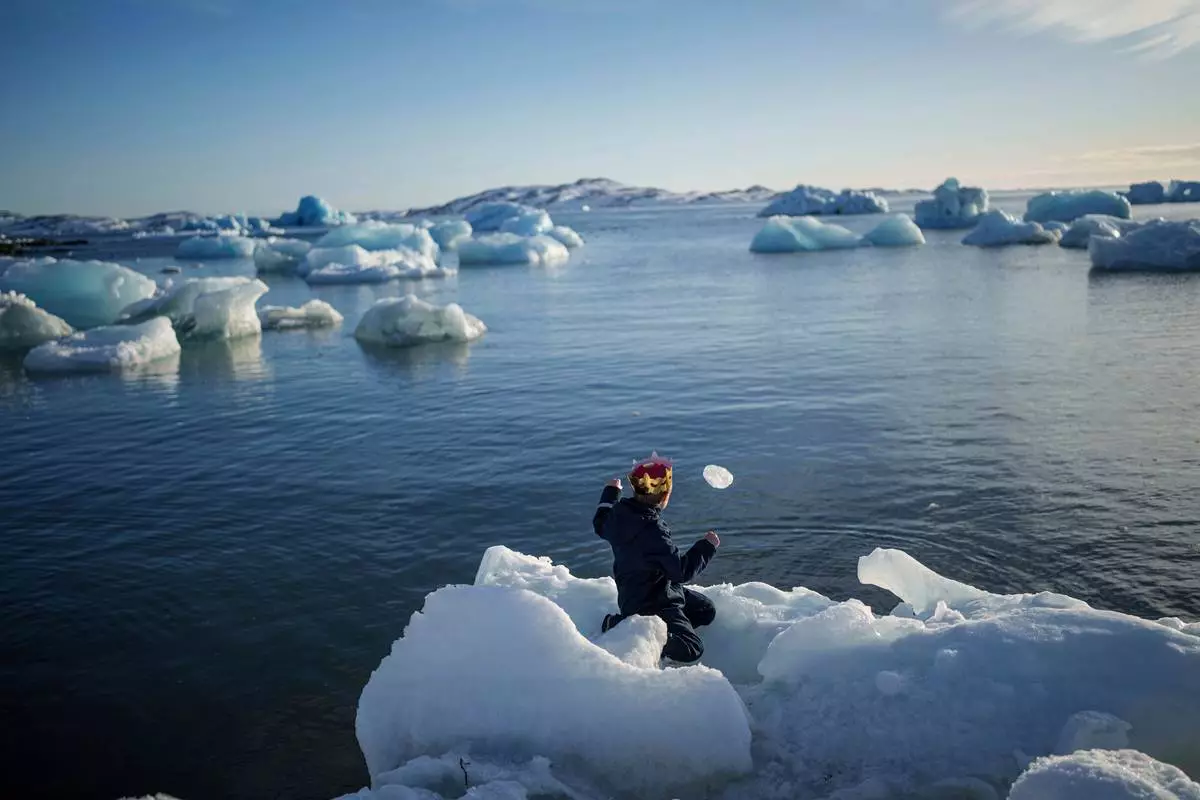
A boy throws ice into the sea in Nuuk, Greenland, March 11, 2025. (AP Photo/Evgeniy Maloletka, File)
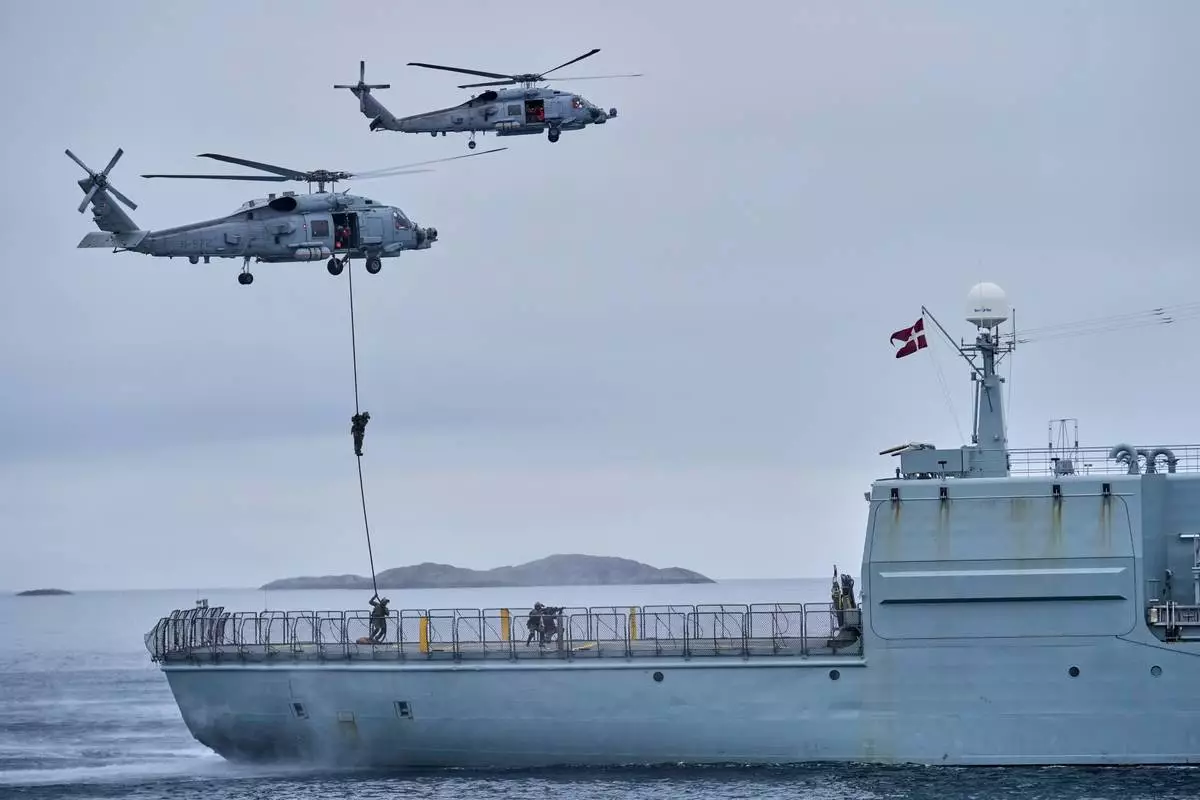
FILE - Danish military forces participate in an exercise with hundreds of troops from several European NATO members in the Arctic Ocean in Nuuk, Greenland, Sept. 15, 2025. (AP Photo/Ebrahim Noroozi, File)