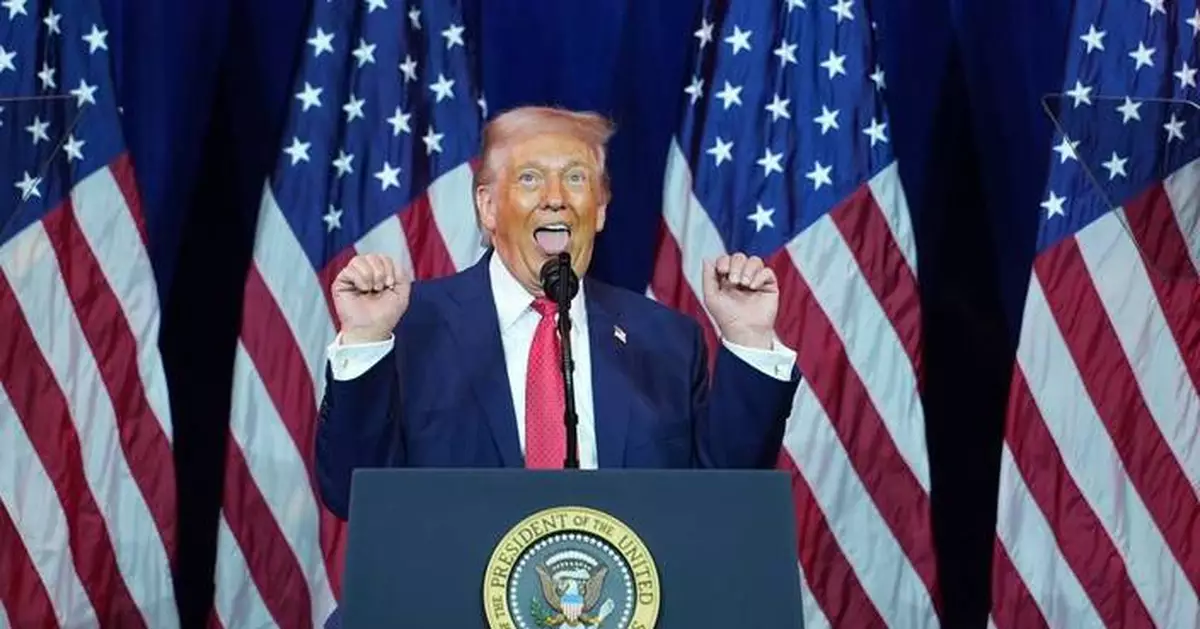
President Donald Trump on Wednesday signed an executive order suspending U.S. support for 66 organizations, agencies and commissions, including those affiliated with the United Nations, as the country further retreats from global cooperation.
The targets are primarily U.N.-related groups that focus on climate, labor and other issues that the Trump administration has criticized for catering to “woke” initiatives.
Click to Gallery
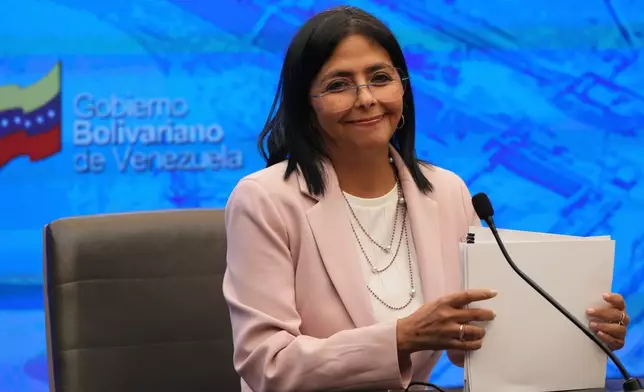
FILE - Venezuelan Vice President Delcy Rodriguez smiles during a press conference at the Miraflores presidential palace in Caracas Venezuela, Nov. 18, 2024. (AP Photo/Ariana Cubillos, File)
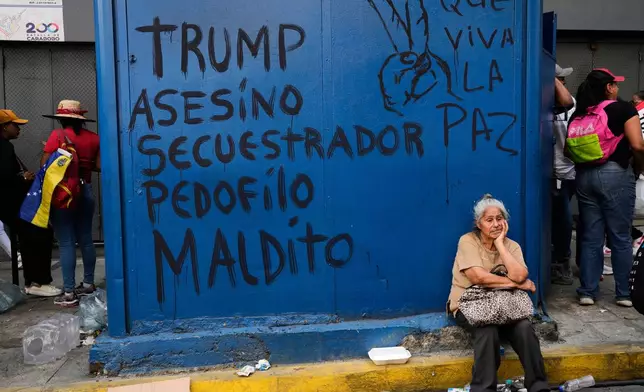
Graffiti that reads in Spanish, "Trump: murderer, kidnapper, pedophile, damned," left, and "Long live peace," covers a kiosk during a march to demand President Nicolas Maduro's return, in Caracas, Venezuela, Tuesday, Jan. 6, 2026, three days after U.S. forces captured him and his wife. (AP Photo/Matias Delacroix)
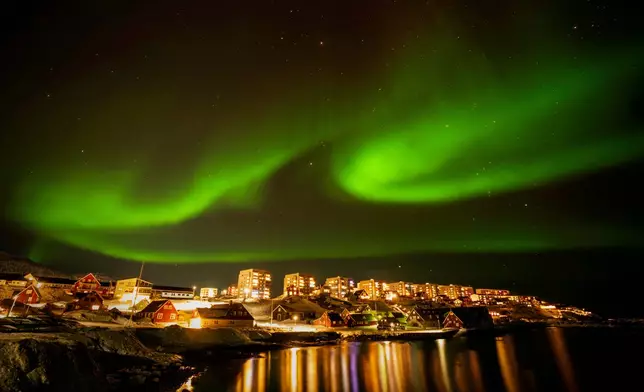
FILE - The northern lights appear over homes in Nuuk, Greenland, on Feb. 17, 2025. (AP Photo/Emilio Morenatti, File)
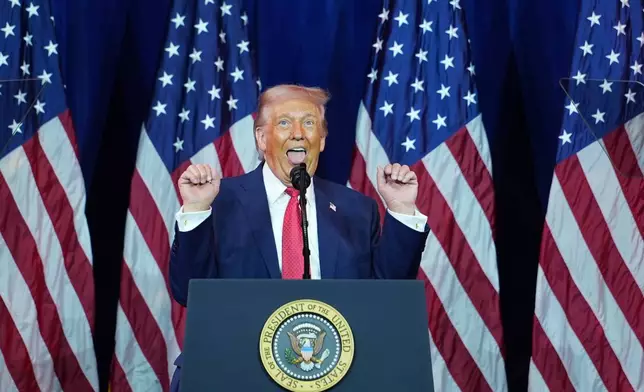
President Donald Trump speaks to House Republican lawmakers during their annual policy retreat, Tuesday, Jan. 6, 2026, in Washington. (AP Photo/Evan Vucci)
The decision to withdraw comes as ongoing U.S. military efforts and threats have rattled allies and adversaries alike, including the capture of Venezuelan leader Nicolás Maduro and indications of U.S. intention to take over Greenland.
On Wednesday morning, the Trump administration seized two Venezuela-linked sanctioned petroleum tankers, in its latest move to establish control over the world’s largest proven reserves of crude oil.
The Latest:
Diosdado Cabello on Wednesday said on state television that a similar number was injured during the attack.
He did not provide a breakdown of civilians and members of the armed forces. The government earlier this week said 24 military officers had died during the U.S. military operation in Venezuela’s capital.
Trump has abruptly changed his tone about his Colombian counterpart, Gustavo Petro, saying Wednesday that the two had exchanged a friendly phone call and that he’d invited the leader of the South American country to meet at the White House.
“It was a Great Honor to speak with the President of Colombia, Gustavo Petro, who called to explain the situation of drugs and other disagreements that we have had,” Trump posted on his social media site Wednesday night. “I appreciated his call and tone, and look forward to meeting him in the near future.”
▶ Read more about the meeting announcement
Trump posted on social media that the revenues the U.S. will be sharing with Venezuela from the sale of that country’s oil will be used to exclusively buy “American Made Products.”
The president has said the U.S. will control the distribution of Venezuelan oil worldwide and pay some of the revenues back to Venezuela. He’s now dictating that those funds be used in turn only on American goods.
“These purchases will include, among other things, American Agricultural Products, and American Made Medicines, Medical Devices, and Equipment to improve Venezuela’s Electric Grid and Energy Facilities,” Trump said on Truth Social. “In other words, Venezuela is committing to doing business with the United States of America as their principal partner.”
Trump has signed an executive order withdrawing the United States from 66 organizations, agencies and commissions, marking the country further retreating from global cooperation,
The order follows Trump’s instruction for his administration to review participation in and funding for all international organizations, including those affiliated with the United Nations.
Most of the targets are U.N.-related agencies, commissions and advisory panels that focus on climate, labor and other issues that this administration has categorized as catering to diversity and “woke” initiatives.
▶ Read more about the withdrawals
Trump called for the massive surge in spending days after he ordered a U.S. military operation to capture Venezuelan leader Nicolas Maduro and spirit him out of the country to face drug trafficking charges in the United States and as the U.S. forces continue to mass in the Caribbean Sea. The 2026 military budget is set at $901 billion.
Trump in recent days has also called for taking over the Danish territory of Greenland for national security reasons and suggested he’s open to carrying out military operations in Colombia, while Secretary of State Marco Rubio has ominously warned that longtime adversary Cuba “is in trouble.”
“This will allow us to build the “Dream Military” that we have long been entitled to and, more importantly, that will keep us SAFE and SECURE, regardless of foe,” Trump said in a posting on Truth Social announcing his proposal. He added that he feels comfortable surging spending on the military because of increased revenue created by his administration billions in new revenue through tariffs imposed on friends and foes around the globe since his return to office.
Vice President JD Vance said in an interview the U.S. can “control” Venezuela’s “purse strings” by dictating where its oil can be sold.
“We control the energy resources, and we tell the regime, you’re allowed to sell the oil so long as you serve America’s national interest, you’re not allowed to sell it if you can’t serve America’s national interest,” Vance said in an interview to air on FOX News Channel’s “Jesse Watters Primetime.”
The vice president added, “And that’s how we exert incredible pressure on that country without wasting a single American life.”
The Justice Department is investigating members of the Bella 1 vessel for failing to obey Coast Guard orders and “criminal charges will be pursued against all culpable actors,” Attorney General Pam Bondi said.
“The Department of Justice is monitoring several other vessels for similar enforcement action—anyone on any vessel who fails to obey instructions of the Coast Guard or other federal officials will be investigated and prosecuted to the fullest extent of the law,” Bondi said in a post on X.
Venezuelan state-owned oil company PDVSA said it is in negotiations with the U.S. government for the sale of crude oil.
“This process is developed under schemes similar to those in force with international companies, such as Chevron, and is based on a strictly commercial transaction, with criteria of legality, transparency and benefit for both parties,” the company said in the statement.
Energy Secretary Chris Wright says the United States will control the flow and sale of Venezuela’s oil “indefinitely” as it seeks leverage to drive “changes that simply must happen in Venezuela.”
Instead of oil being blockaded, “we’re going to ... let the oil flow, sell that market to United States refineries and around the world to bring better oil supplies,” Wright said Wednesday, adding that money from oil sales will be deposited into accounts controlled by the U.S. government and ultimately “flow back into Venezuela to benefit the Venezuelan people.”
The U.S. needs “to have that leverage and that control of those oil sales to drive the changes that simply must happen in Venezuela,” Wright said at an energy industry conference in Miami. Wright said he is in “active dialogue” with Venezuelan official and U.S. oil and gas companies to ensure the conditions that will make capital flow and work for all sides.
The State Department says it has suspended all U.S. assistance to Somalia’s federal government following an incident in which Somali officials allegedly destroyed an American-funded warehouse belonging to the World Food Program and seized 76 metric tons of food aid intended for impoverished civilians.
“The Trump Administration has a zero-tolerance policy for waste, theft, and diversion of life-saving assistance,” the department said in a statement.
“The State Department has paused all ongoing U.S. assistance programs which benefit the Somali Federal Government,” it said. “Any resumption of assistance will be dependent upon the Somali Federal Government, taking accountability for its unacceptable actions and taking appropriate remedial steps.”
It was not immediately clear how much assistance would be affected by the suspension.
Officials from both states on Wednesday defended their decision not to turn over voter information to the Trump administration. Connecticut Attorney General William Tong, a Democrat, said his state had tried to “work cooperatively” with the Department of Justice to understand the basis for their request of voter’s personal information.
“Rather than communicating productively with us, they rushed to sue,” said Tong, calling the federal lawsuit “meritless and deeply disappointing.”
In a video posted on X Tuesday, Arizona Secretary of State Adrian Fontes reiterated his refusal to provide the voter registration data, saying doing so would violate state and federal law.
“Pound sand,” Fontes said.
The Justice Department’s Civil Rights Division announced Tuesday it was suing Connecticut and Arizona, bringing the nationwide total to 23 states and the District of Columbia.
Attorney General Pamela Bondi said DOJ will “continue filing lawsuits to protect American elections,” saying accurate voter rolls are the ”foundation of election integrity.”
Some of the influencers and activists in Kennedy’s Make America Healthy Again movement have spent years calling for a crackdown on highly processed foods.
That made Wednesday’s dietary guidelines announcement discouraging their consumption a cause for celebration for them. It also handed a political win to the administration, which sees MAHA as an important voting bloc for Republicans in this year’s midterm elections.
Liana Werner-Gray, an influencer and author who hosted a welcome party for a national MAHA summit last year, wrote on Instagram that the new dietary guidelines marked “the most important announcement this country has EVER seen on nutrition.”
“It’s like it was made for us,” MAHA influencer Vani Hari, known as The Food Babe, wrote on X.
The president of the pro-Kennedy group MAHA Action, Tony Lyons, called Wednesday a “historic day that we will remember helped reverse the chronic disease epidemic.”
The North Carolina senator opened his Senate floor speech by saying he was there “to talk about what I think is amateurish behavior, with respect to the treatment of our NATO allies.”
Tillis — visibly angered — specifically pointed to recent comments from Stephen Miller about Greenland being a part of the U.S., saying that it was an “amateurish comment” and “absurd.”
“You know what makes me cranky? Stupid,” said Tillis. He continued, “Amateur hour is over. You don’t speak on behalf of this U.S. senator or the Congress.”
“I think he did make a comment, but he did it with a smile,” Johnson said at his weekly press conference.“I took that as a joke,” he said. “He was trying to be humorous about it.”
The Republican leader was recalling his understanding of what transpired at the closed-door meeting this week with the so-called gang of eight top congressional leaders and Trump administration officials.
“Do we know if there’s going to be some kind of financial arrangement in these negotiations? None of us know,” Johnson said.
“Marco Rubio did not go into the ‘gang of eight’ and say the president’s going to buy Greenland,” he said.
The former Republican Senate leader is warning the Trump administration against military threats against Denmark as the president tries to take possession of Greenland.
“Threats and intimidation by U.S. officials over American ownership of Greenland are as unseemly as they are counterproductive,” McConnell, a Kentucky Republican, said in a statement. “And the use of force to seize the sovereign democratic territory of one of America’s most loyal and capable allies would be an especially catastrophic act of strategic self-harm to America and its global influence.”
The action by the White House Council on Environmental Quality rescinds regulations implementing a landmark environmental law that requires federal agencies to consider a project’s possible environmental impacts before it is approved. The White House says the National Environmental Policy Act, or NEPA, needlessly delays federal approvals for energy and infrastructure projects.
In a statement Wednesday, CEQ Chairwoman Katherine Scarlett said the directive will “slash needless layering of bureaucratic burden and restore common sense to the environmental review and permitting process.” Under Trump, she added, “NEPA’s regulatory reign of terror has ended.”
The action comes as Congress considers legislation intended to speed up permitting reviews for new energy and infrastructure projects and limit judicial review. A bill approved by the Republican-controlled House would enact the most significant change in decades to NEPA.
White House adviser Stephen Miller has boasted on CNN this week that “nobody is going to fight the U.S. militarily” for Greenland.
After a classified Capitol Hill briefing Wednesday with administration officials, some senators expressed doubts that the president is seriously considering invading the resource-rich country.
“To invade Greenland and attack its sovereignty, a federal NATO country, would be weapons-grade stupid,” said Sen. John Kennedy, R-Louisiana.
“President Trump is not weapons-grade stupid, nor is Marco Rubio,” the secretary of state.
Sen. Rick Scott, R-Florida, said Trump is “fixated on Greenland” but “doesn’t want to go to war.”
Trump has ordered multiple military actions in his second presidency, most recently deposing Nicolas Maduro as Venezuela’s president. But Sen. Roger Marshall, R-Kansas, said it’s “apples and oranges” to use Trump’s Venezuela approach to Greenland.
“As far as I know,” he said, “there is no drug cartel leader that’s under indictment in Greenland.”
“I used to be a senator, too, that’s what you always say,” he said, when the other political party is in power.
Rubio outlined the Trump administration’s his three-point plan for Venezuela during a press gaggle after a classified briefing for senators at the Capitol.
“The bottom line is we’ve gone into great detail,” he said, about the planning of the military operation and its aftermath.
“It’s not just winging it,” Rubio said. “It’s not just saying or speculating what was going to happen. It’s already happening.”
Pressed on the potential costs to American taxpayers, Rubio said, “It’s not going to cost us any money.”
He said the oil revenues from Venezuela and the tankers being seized will be reinvested into the country.
Secretary of State Marco Rubio and several Republican senators said that the potential purchase of Greenland was discussed Wednesday during a classified briefing primarily focused on Venezuela, though many stopped short of supporting military action to acquire the territory – an option the White House has said is not off the table.
“I think Greenland would be a huge asset to America,” Sen. Roger Marshall said as he left the briefing. “It could be very critical to our national security going forward. I hope that we can work out a deal.”
GOP Sen. John Hoeven agreed, saying Greenland “has strategic importance,” but he added that some of the discussion about taking the territory by force has been “misconstrued.”
“One of the things about President Trump, you may have noticed, is he keeps our adversaries off balance by making sure they don’t know what we’re going to do,” Hoeven said.
Other Republican senators have openly opposed acquiring Greenland, whether by purchase or by force. Sen. Lisa Murkowski said she hates “the rhetoric around either acquiring Greenland by purchase or by force.”
“I think that it is very, very unsettling,” she said.
The press secretary said the crew of a merchant vessel seized earlier Wednesday would be “brought to the United States for such prosecution if necessary,” citing the presence of a “judicial seizure order” in place.
U.S. European Command earlier Wednesday announced the seizure of the Bella 1 for “violations of U.S. sanctions.” A Coast Guard cutter had pursued the tanker into the waters between Scotland and Iceland after it tried to avoid being ensnared by the U.S. blockade on sanctioned oil vessels around Venezuela.
According to an outline of the policies published Wednesday by the Energy Department, the Trump administration is “selectively” removing sanctions to enable the shipping and sale of Venezuelan oil to global markets.
Secretary of State Marco Rubio told reporters Wednesday that he’ll meet with officials in Denmark next week regarding President Donald Trump’s desire to acquire Greenland.
Greenland is a self-governing territory of Denmark, a longtime U.S. ally that has rejected Trump’s overtures. Greenland’s own government also opposes U.S. designs on the island, saying the people of Greenland will decide their own future.
Rubio said Trump has always intended to buy Greenland. Rubio declined to talk possible military intervention, but said the U.S. always retains the option when it comes to defending its national security interests.
Asked if Trump or Venezuela’s leader, Delcy Rodríguez, is running Venezuela, press secretary Karoline Leavitt said, “We obviously have maximum leverage over the interim authorities in Venezuela right now.”
During her briefing with reporters, Leavitt said, “The Trump administration -- led by Secretary Rubio, the vice president and the president’s entire national security team -- is in close correspondence with the interim authorities in Venezuela.”
She added that those “interim authorities agreed to release” seized oil to the U.S.
Secretary of State Marco Rubio told reporters Wednesday morning that President Donald Trump’s intention was always to buy Greenland
“That’s always been the president’s intent from the very beginning,” Rubio said. “He said it very early on. I mean this is not new. He talked about it in his first term. And he’s not the first U.S. president that has examined or looked at how we could acquire Greenland.”
He added: “Not only did Truman want to do it, but President Trump has been talking about this since his first term.”
Rubio did not directly answer a question about whether the Trump administration is willing to risk the NATO alliance by potentially moving ahead with a military option regarding Greenland. Rubio said every president retains the option to address national security threats to the United States through military means.
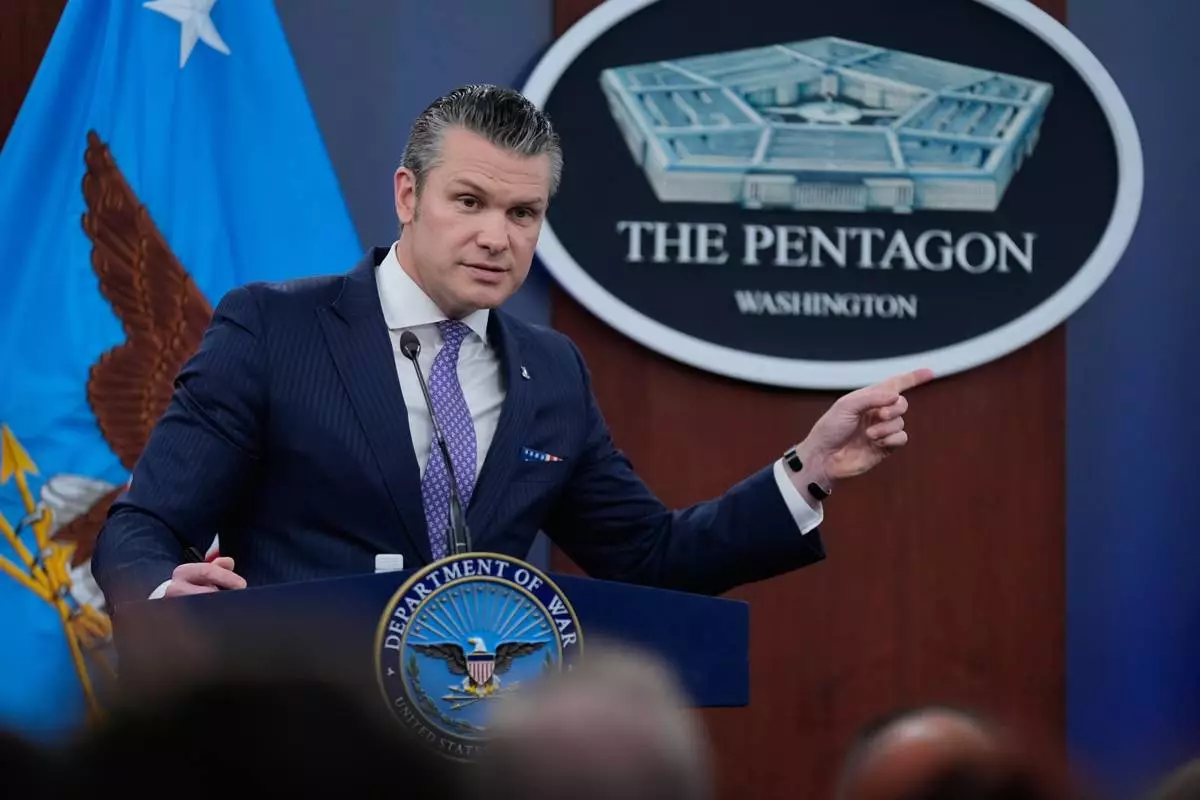
Defense Secretary Pete Hegseth tells reporters that the “leverage” of seizing sanctioned or stateless oil tankers out of Venezuela will continue.
“Our military is prepared to continue this,” Hegseth said. “The president when he speaks, he means it. He’s not messing around. We are an administration of action to advance our interests, and that is on full display.”
The comments came after Hegseth and Secretary of State Marco Rubio briefed lawmakers about the U.S.’s recent military action in Venezuela.
Secretary of State Marco Rubio told a select group of lawmakers that it was the Trump administration’s intention to eventually purchase Greenland, rather than through military force.
The remarks were made in a classified briefing Monday evening on Capitol Hill, according to a person with knowledge of his comments who was granted anonymity because it was a private discussion.
Rubio was again at the Capitol on Wednesday to brief the entire Senate and House, where questions from lawmakers centered not just on the administration’s operation to capture Maduro but also Trump’s future intentions for Greenland, a semiautonomous territory of NATO ally Denmark.
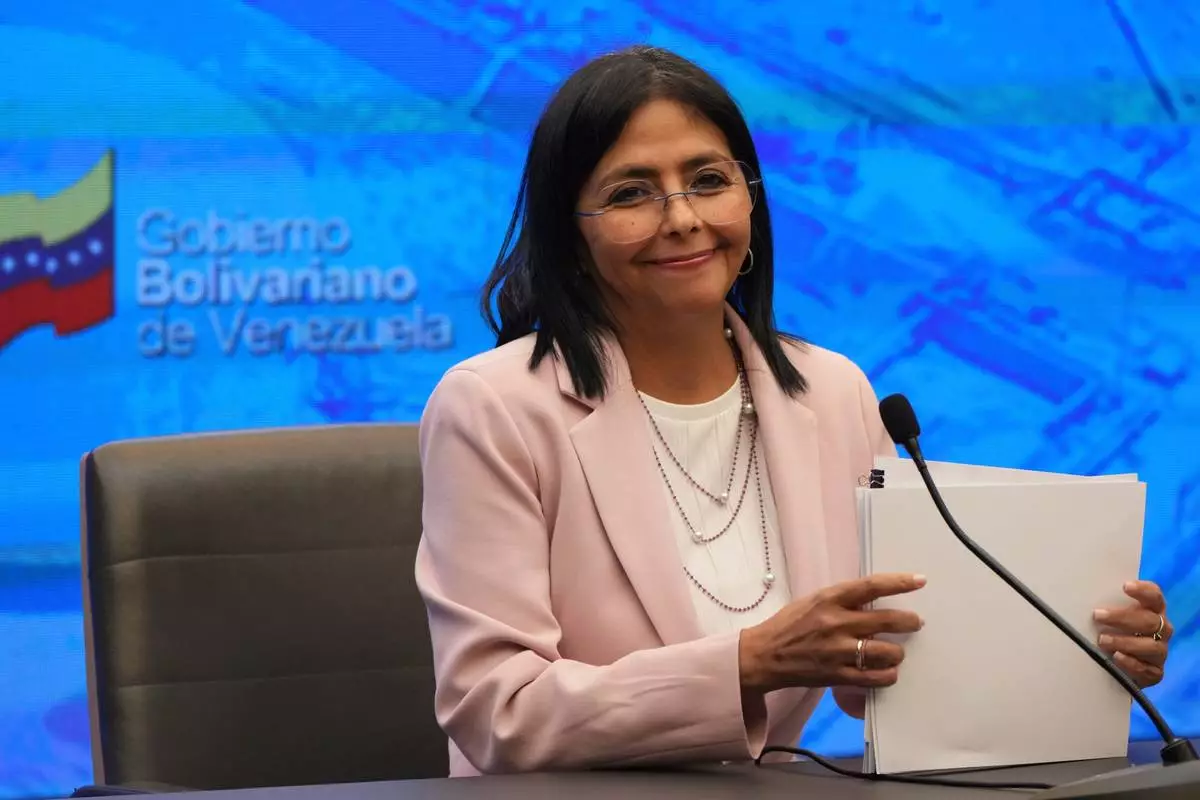
FILE - Venezuelan Vice President Delcy Rodriguez smiles during a press conference at the Miraflores presidential palace in Caracas Venezuela, Nov. 18, 2024. (AP Photo/Ariana Cubillos, File)
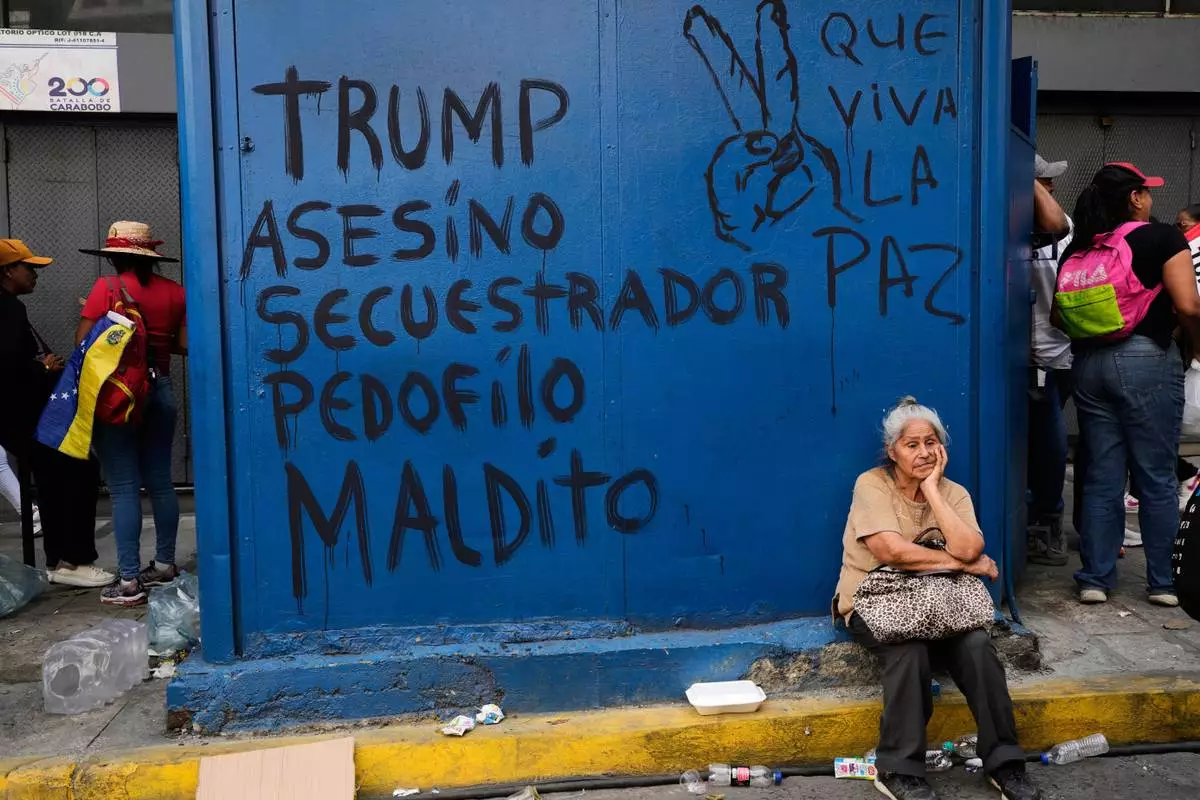
Graffiti that reads in Spanish, "Trump: murderer, kidnapper, pedophile, damned," left, and "Long live peace," covers a kiosk during a march to demand President Nicolas Maduro's return, in Caracas, Venezuela, Tuesday, Jan. 6, 2026, three days after U.S. forces captured him and his wife. (AP Photo/Matias Delacroix)
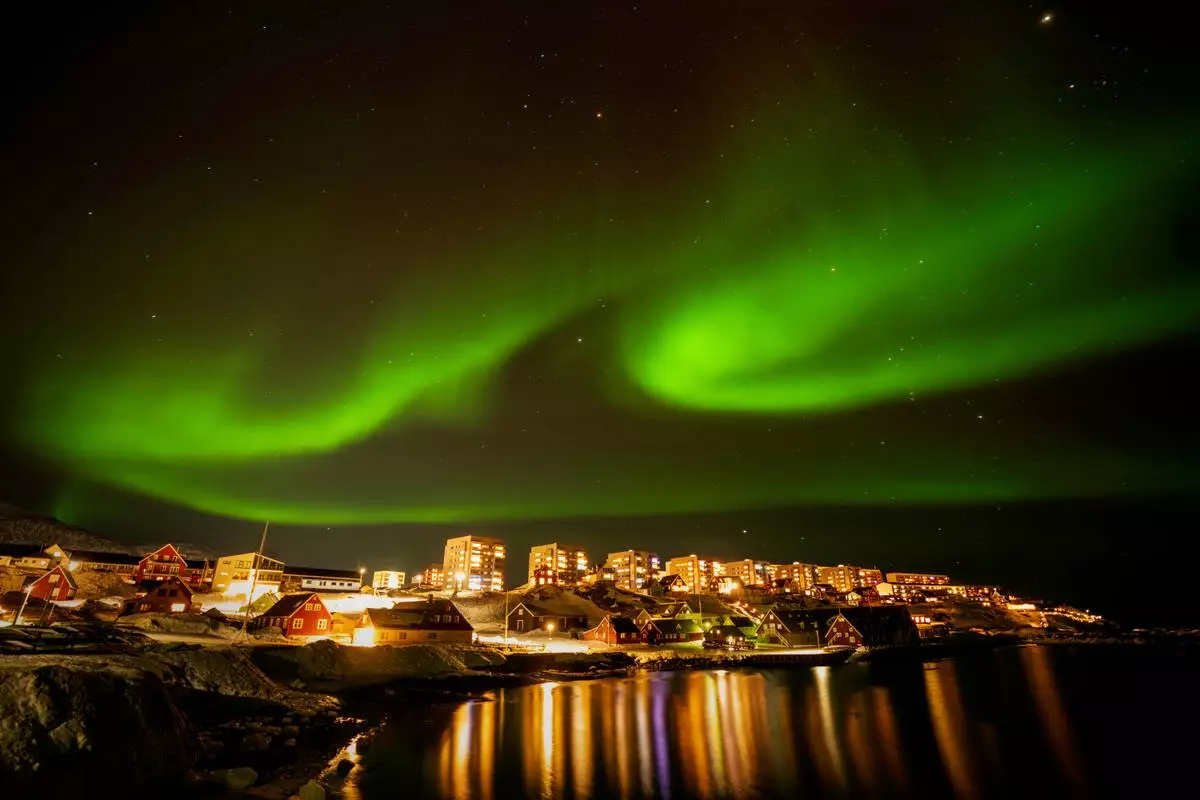
FILE - The northern lights appear over homes in Nuuk, Greenland, on Feb. 17, 2025. (AP Photo/Emilio Morenatti, File)
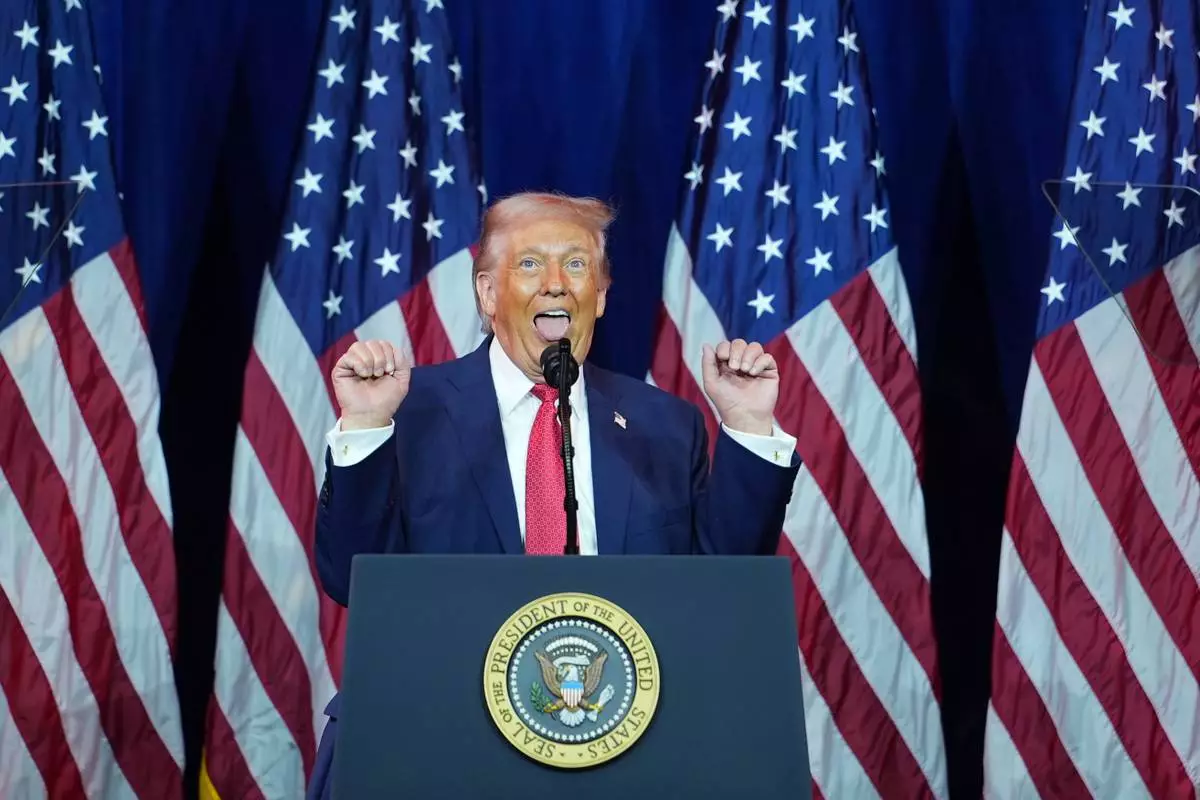
President Donald Trump speaks to House Republican lawmakers during their annual policy retreat, Tuesday, Jan. 6, 2026, in Washington. (AP Photo/Evan Vucci)