Skip to Content Facebook Feature Image

Orthopedic Care Partners Welcomes Rob Scoskie as Chief Development Officer

Business

Orthopedic Care Partners Welcomes Rob Scoskie as Chief Development Officer
Business

Business

Orthopedic Care Partners Welcomes Rob Scoskie as Chief Development Officer

2026-01-06 22:07 Last Updated At:01-07 13:34

GAINESVILLE, Fla.--(BUSINESS WIRE)--Jan 6, 2026--

Orthopedic Care Partners (OCP) today announced the appointment of Rob Scoskie as Chief Development Officer, reinforcing the organization’s commitment to disciplined growth, market expansion, and long-term value creation.

This press release features multimedia. View the full release here: https://www.businesswire.com/news/home/20260106426449/en/

Scoskie brings more than 25 years of healthcare leadership experience spanning physician-led platforms, integrated health systems, and private equity-backed organizations. In his new role, he will lead development strategy across market expansion, partnerships, and acquisitions, working closely with physician leadership and the executive team to advance the organization’s next phase of growth.

“Rob is a proven builder,” said Tim Corvino, MD, CEO of OCP. “He understands how to scale platforms thoughtfully, how to partner with physicians, and how to translate opportunity into execution. We are entering a phase where focus and momentum matter, and I am bullish on Rob’s ability to help lead this next chapter of growth with discipline, credibility, and pace.”

Most recently, Scoskie held senior growth leadership roles with Summit Health, CityMD, and Starling Physicians. He has led growth initiatives across multiple healthcare environments, guiding organizations through periods of expansion, transformation, and value creation. His experience includes scaling multi-market platforms, building development pipelines, and executing transactions that align clinical excellence with sustainable performance.

In his role as Chief Development Officer, Scoskie will focus on expanding OCP’s footprint in existing and new markets, strengthening strategic partnerships, and supporting development efforts that align with the organization’s clinical, cultural, and operational priorities.

“Growth is a team sport,” said Scoskie. “While accountability matters, the most successful growth strategies start with the people. OCP is led by a highly accomplished executive team and anchored in deeply respected clinical leaders and practices. The most effective growth happens when physicians and leadership are aligned around a shared goal, and I’m excited to work alongside this team to build the next phase of the organization together.”

Scoskie’s appointment reflects the organization’s continued investment in leadership and infrastructure to support long-term growth while maintaining a clear focus on quality, relationships, and strategic alignment.

About Orthopedic Care Partners

Since its founding in 2019, Orthopedic Care Partners (OCP) has grown from a single practice into a leading, scaled orthopedics platform in the United States and partner for high-performing, quality, and patient-focused orthopedic surgery practices. OCP provides a full spectrum of services and enhanced resources to help its family of practices thrive and grow while still fostering the unique identities that have made them so successful. Operating in five states, supporting 136 recognized physicians across a platform of 42 clinical locations and six ambulatory surgery centers, OCP’s portfolio includes practices recognized for delivering best-in-class care to both local communities and world-class athletes who travel to its centers for advanced treatment and surgical expertise. To learn more, visit www.ocpmgmt.com.
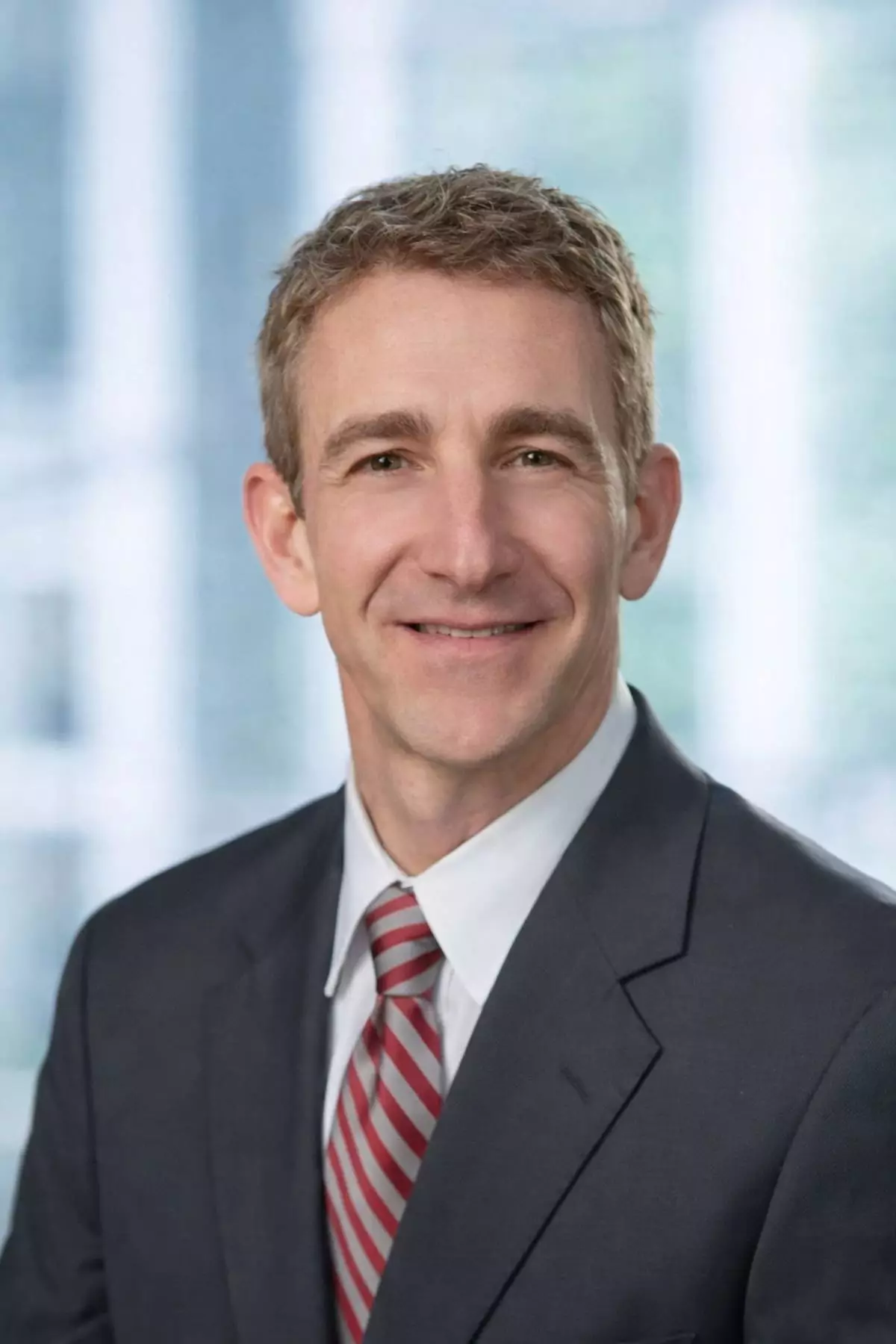
Rob Scoskie, Chief Development Officer, Orthopedic Care Partners


Rob Scoskie, Chief Development Officer, Orthopedic Care Partners

WASHINGTON (AP) — President Donald Trump's administration on Wednesday sought to assert its control over Venezuelan oil, seizing a pair of sanctioned tankers transporting petroleum and announcing plans to relax some sanctions so the U.S. can oversee the sale of Venezuela’s petroleum worldwide.

Trump's administration intends to control the distribution of Venezuela’s oil products globally following its ouster of President Nicolás Maduro in a surprise nighttime raid, with the Energy Department saying the “only oil transported in and out of Venezuela” will be through approved channels consistent with U.S. law and national security interests. That level of control over the world’s largest proven reserves of crude oil could give the Trump administration a tight hold on oil supplies globally in ways that could enable it to influence prices.

The seizures of the tankers in the North Atlantic and the Caribbean Sea reflect the Republican administration’s determination to enforce an existing oil embargo on Venezuela as Trump has pledged the U.S. will “run” the country.

Speaking to reporters on Capitol Hill, Secretary of State Marco Rubio suggested the oil seized by the U.S. with sanctioned vessels would be sold as part of the deal announced by Trump on Tuesday under which Venezuela would provide up to 50 million barrels of oil to the U.S.

“One of those ships that was seized that had oil in the Caribbean, you know what the interim authorities are asking for in Venezuela?” Rubio said. “They want that oil that was seized to be part of this deal. They understand that the only way they can move oil and generate revenue and not have economic collapse is if they cooperate and work with the United States.”

The press office for Venezuela’s government did not immediately respond to an Associated Press request for comment on the seizures.

U.S. European Command announced in a social media post the merchant vessel Bella 1 was seized in the North Atlantic for “violations of U.S. sanctions." The U.S. had been pursuing the tanker since last month after it tried to evade a blockade on sanctioned oil vessels around Venezuela.

Homeland Security Secretary Kristi Noem then revealed U.S. forces also took control of the motor tanker M Sophia in the Caribbean Sea. Noem said in a social media post both ships were “either last docked in Venezuela or en route to it."

The two ships taken over Wednesday join at least two others taken by U.S. forces last month, the Skipper and the Centuries.

The Bella 1 had been cruising across the Atlantic nearing the Caribbean on Dec. 15 when it abruptly turned and headed north, toward Europe. The change in direction came days after the first U.S. tanker seizure of a ship on Dec. 10 after it had left Venezuela carrying a cargo of oil.

The U.S. Coast Guard tried to board the Bella 1 in the Caribbean in December as it headed for Venezuela. Instead, the ship fled across the Atlantic. U.S. European Command said a Coast Guard vessel had tracked the ship “pursuant to a warrant issued by a U.S. federal court."

It was sanctioned by the U.S. in 2024 on allegations of smuggling cargo for a company linked to Lebanese militant group Hezbollah, which is backed by Iran.

As the U.S. pursued it, the Bella 1 was renamed Marinera and flagged to Russia, shipping databases show. A U.S. official, who spoke on the condition of anonymity to discuss sensitive military operations, also confirmed that the ship’s crew had painted a Russian flag on the side of the hull.

The Russian Foreign Ministry said Wednesday that it had information about Russian nationals among the Marinera's crew.

“Taking into account the incoming information about Russian citizens among the crew, we demand that the American side ensure humane and dignified treatment of them, strictly respect their rights and interests, and not hinder their speedy return to their homeland,” the ministry said in a statement carried by Russia’s state news agencies Tass and RIA Novosti.

Separately, senior Russian lawmaker Andrei Klishas decried the U.S. action as “blatant piracy.”

Meanwhile, the Trump administration is “selectively” removing sanctions to enable the shipping and sale of Venezuelan oil to markets worldwide, according to an outline of the policies published Wednesday by the Energy Department.

The oil sales are slated to begin immediately with the sale of 30 million to 50 million barrels from the South American country. The U.S. government said the sales “will continue indefinitely,” with the proceeds settling in U.S.-controlled accounts at “globally recognized banks.” The money would be disbursed to the U.S. and Venezuelan populations at the “discretion” of Trump’s government.

The U.S. plans to authorize the importation of oil field equipment, parts and services to increase Venezuela’s oil production, which has been roughly 1 million barrels a day. The Trump administration has indicated it also will invest in Venezuela’s electricity grid to increase production and the quality of life for people in Venezuela, whose economy has been unraveling amid changes to foreign aid and cuts to state subsidies, making necessities, including food, unaffordable to millions.

Earlier Wednesday, open-source maritime tracking sites showed the position of the now-named Marinera as between Scotland and Iceland, traveling north.

Flight tracking websites showed several U-28A U.S. special operations aircraft landing at Wick John O’Groats airport on the northern tip of Scotland, before flying further north toward Iceland. P8 Poseidon submarine-hunting aircraft and KC-135 refueling planes were also seen on tracking websites and heading to the area near the tanker.

After the seizure, the U.K. defense ministry said Britain’s military provided support, including surveillance aircraft and a support ship, for the operation. It said the “enabling support” — including the use of U.K. bases — was “in full compliance with international law.”

U.K. Defense Secretary John Healey said the action was part of global efforts to crack down on sanctions-busting.

“This ship, with a nefarious history, is part of a Russian-Iranian axis of sanctions evasion which is fueling terrorism, conflict, and misery from the Middle East to Ukraine,” he said. “The U.K. will continue to step up our action against shadow fleet activity to protect our national security, our economy, and global stability — making Britain secure at home and strong abroad.”

The capture of the second tanker announced Wednesday was much less prolonged. A ship named M Sophia is on the U.S. sanctions list for moving illicit cargos of oil from Russia.

The ship is “running dark,” not having transmitted location data since July. Tankers involved in smuggling often turn off their transponders or broadcast inaccurate data to hide their locations.

Samir Madani, co-founder of TankerTrackers.com, said his organization used satellite imagery and surface-level photos to document that at least 16 tankers had left the Venezuelan coast since Saturday, after the U.S. captured Maduro.

The M Sophia is among those ships, Madani said, citing a recent photo showing it in the waters near Jose Terminal, Venezuela’s main oil export hub.

Lawless reported from London.

A local walks past a mural featuring oil pumps and wells in Caracas, Venezuela, Tuesday, Jan. 6, 2026. (AP Photo/Matias Delacroix)

A local walks past a mural featuring oil pumps and wells in Caracas, Venezuela, Tuesday, Jan. 6, 2026. (AP Photo/Matias Delacroix)

A government supporter holds an image of President Nicolas Maduro during a women's march to demand his return in Caracas, Venezuela, Tuesday, Jan. 6, 2026, three days after U.S. forces captured him and his wife. (AP Photo/Matias Delacroix)

A government supporter holds an image of President Nicolas Maduro during a women's march to demand his return in Caracas, Venezuela, Tuesday, Jan. 6, 2026, three days after U.S. forces captured him and his wife. (AP Photo/Matias Delacroix)

Recommended Articles